

Stretching a fixed income to cover rising grocery costs requires strategy, but millions of older Americans leave valuable food benefits unused every year. You do not have to choose between buying nutritious meals and paying for essential medications or utility bills. Several federally funded and local assistance programs exist specifically to help seniors afford healthy food. Finding the right mix of benefits can easily add hundreds of dollars back into your monthly budget. By understanding the eligibility rules and application processes for these nine often-overlooked grocery assistance programs, you can secure your nutritional needs and protect your long-term financial health. Here are the exact steps you need to take to claim the grocery benefits legally available to you.

The Supplemental Nutrition Assistance Program (SNAP)
The Supplemental Nutrition Assistance Program remains the most robust food assistance program in the United States, yet participation among eligible seniors is alarmingly low. Many older adults skip applying because they assume they will only receive the minimum benefit—often just $23 a month—making the paperwork seem not worth the effort. However, strategic application of senior-specific rules can increase this amount significantly.
Seniors aged 60 and older benefit from special SNAP rules that deduct out-of-pocket medical expenses from their income calculations. If you spend more than $35 a month on medical care that Medicare does not cover, you can deduct those costs from your gross income. Lowering your calculated income directly increases your monthly SNAP grocery allotment.
Qualifying Medical Deductions Include:
- Medicare premiums, copayments, and deductibles
- Prescription drugs and over-the-counter medication approved by a doctor
- Dentures, hearing aids, and prescription eyeglasses
- Transportation costs to and from medical appointments
To streamline the process, many states now offer the Elderly Simplified Application Project (ESAP). This version of the SNAP application requires less documentation, waives the traditional interview requirement, and extends the certification period up to 36 months. According to official guidelines from Benefits.gov, utilizing their benefit finder tool is the fastest way to confirm your baseline eligibility before navigating your state’s specific application portal.
Commodity Supplemental Food Program (CSFP)
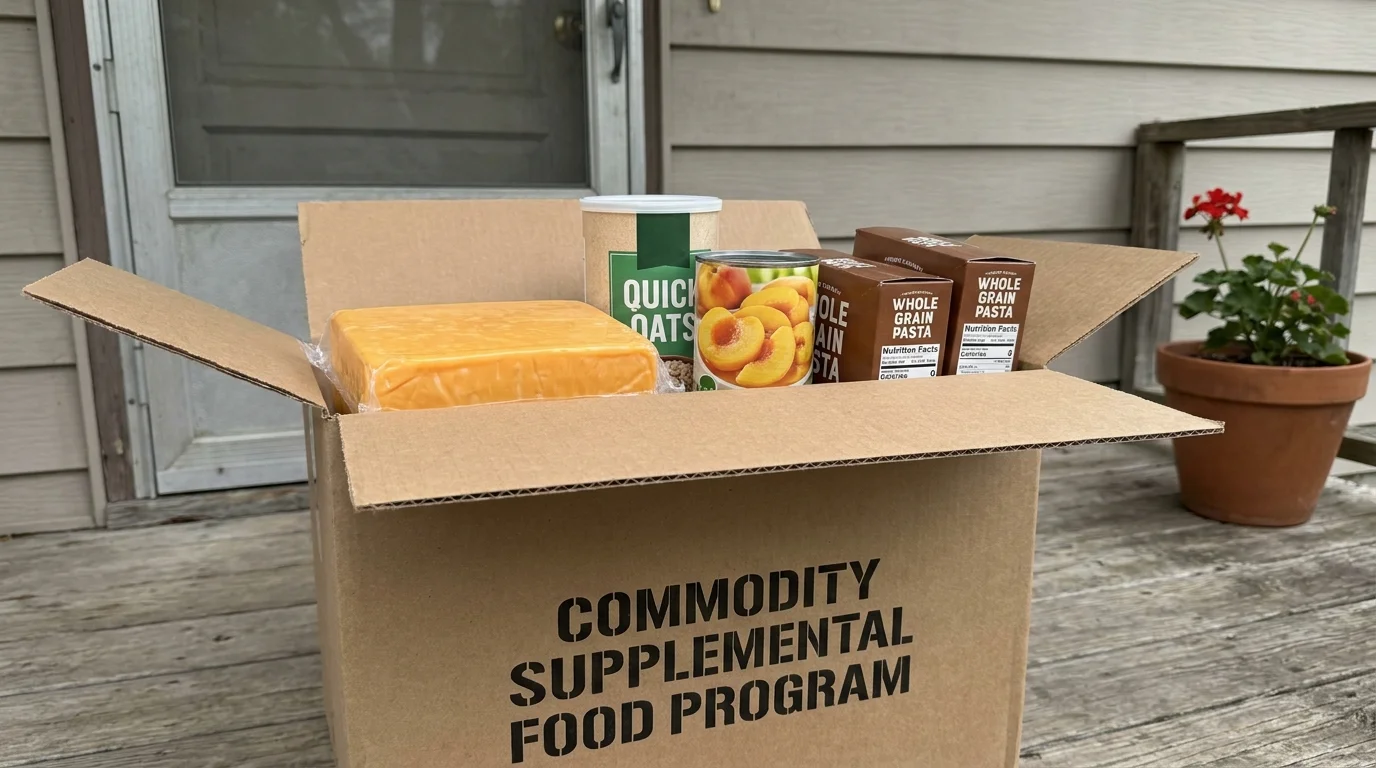
Often referred to as the “Senior Food Box Program,” the Commodity Supplemental Food Program delivers a monthly package of nutrient-rich, USDA-provided foods directly to low-income seniors. This program operates independently of SNAP; you can legally participate in both simultaneously.
The CSFP does not provide fresh meat or produce. Instead, it focuses on shelf-stable goods designed to fill nutritional gaps common in older adults. A typical monthly box includes canned fruits and vegetables, fruit juice, dried beans or peanut butter, cereal, pasta, and shelf-stable milk or cheese.
Eligibility and Application Steps:
- Age Requirement: You must be at least 60 years old.
- Income Limits: Your gross household income must fall at or below 130% of the Federal Poverty Guidelines. For a single individual in 2024, this roughly translates to an annual income of $19,578.
- Application Process: Local food banks or community action agencies administer the CSFP. Call your regional food bank to ask if they maintain a CSFP waiting list, as demand often exceeds federal funding allocations.

Seniors Farmers’ Market Nutrition Program (SFMNP)
The Seniors Farmers’ Market Nutrition Program provides eligible older adults with seasonal coupons that can be exchanged for fresh, unprepared fruits, vegetables, honey, and fresh-cut herbs. Unlike standard grocery assistance, this program channels federal funds directly into local agriculture while improving senior diets.
State agencies—usually the Department of Agriculture or the Department on Aging—distribute these booklets of coupons typically worth between $20 and $50 per season. You can spend them at approved farmers’ markets, roadside stands, and community-supported agriculture (CSA) programs.
If mobility is an issue, the SFMNP allows you to designate a “proxy.” You simply fill out a form authorizing a trusted friend, family member, or caregiver to take your coupons to the market and shop on your behalf.
Comparing Top Federal Food Programs
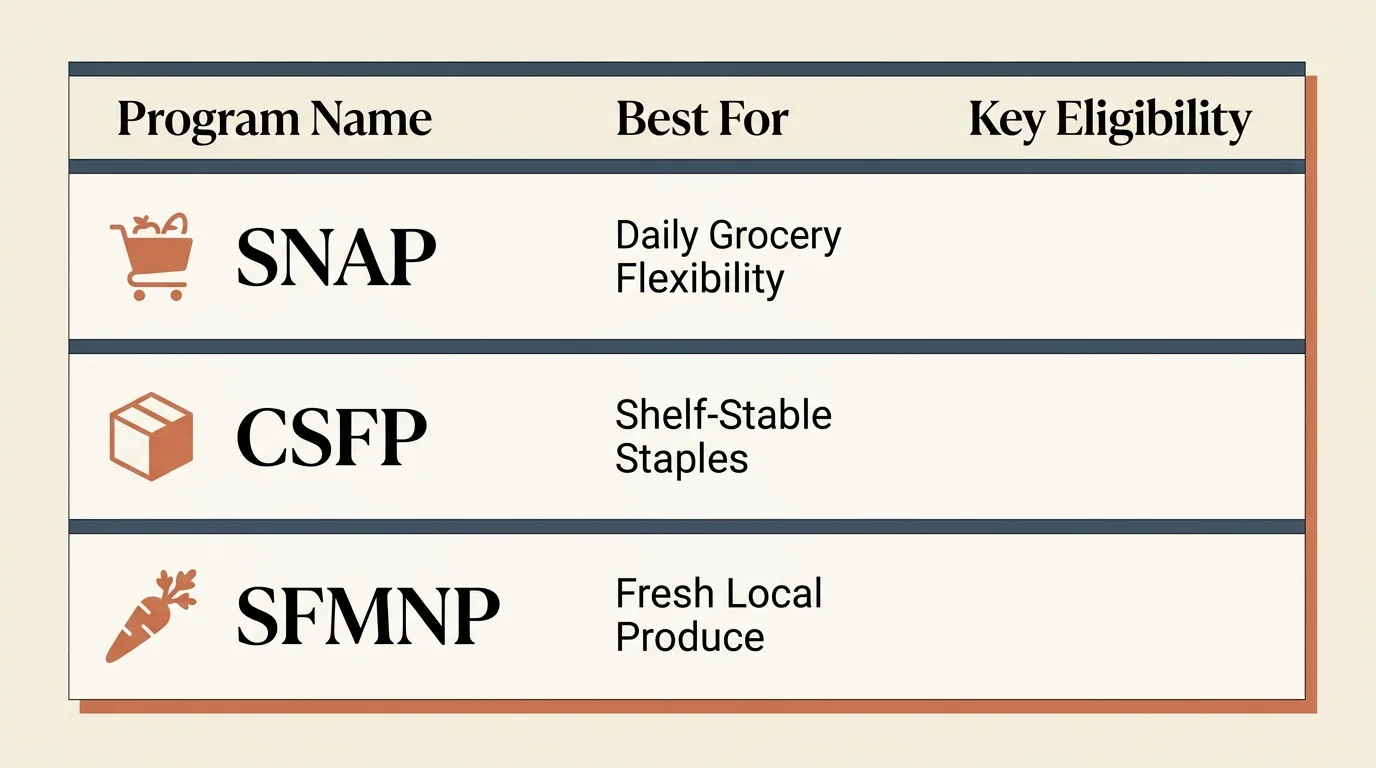
Understanding the differences between the major federal programs helps you plan your applications efficiently. You can use all three of the programs listed below simultaneously if you meet the criteria.
| Program | Age Requirement | Income Limit (Approximate) | Benefit Format |
|---|---|---|---|
| SNAP | No minimum (Special rules at 60+) | Varies by state (Often 130%-200% of Poverty Level) | EBT Card (Used like a debit card) |
| CSFP | 60 and older | 130% of Federal Poverty Level | Pre-packed box of shelf-stable food |
| SFMNP | 60 and older | 185% of Federal Poverty Level | Paper coupons for farmers’ markets |
Meals on Wheels and Home-Delivered Options
Preparing three meals a day becomes difficult if you face physical limitations, recover from surgery, or manage a chronic illness. Meals on Wheels provides home-delivered, nutritious meals tailored specifically to the dietary needs of older adults.
Each delivered meal must meet stringent federal guidelines, providing at least one-third of the recommended daily allowances for seniors. More importantly, the volunteer drivers conduct brief wellness checks during their deliveries. If a senior does not answer the door, the program immediately contacts emergency services or family members, providing a vital safety net for those living alone.
Funding for these programs varies by locality. Most organizations operate on a sliding scale based on what you can afford to pay. If your fixed income leaves no room for donations, you will not be denied service. Reach out to your local Meals on Wheels chapter to request a dietary and physical assessment.

Congregate Nutrition Programs at Senior Centers
Isolation damages mental and physical health just as severely as poor nutrition. Congregate Nutrition Programs solve both issues by serving hot, healthy meals in group settings like senior centers, churches, and community halls.
Funded by the Older Americans Act, these meal sites offer more than just food. They provide socialization opportunities, health screenings, and fitness classes. If you are 60 or older, you qualify to eat at a congregate meal site regardless of your income level. While a small voluntary donation of a few dollars is usually suggested, it is entirely optional. Spouses of eligible seniors can also eat at the site, even if the spouse is under 60.
Many senior centers recognize that transportation is a barrier. When you call your local center to inquire about their lunch schedule, ask if they provide a shuttle service or paratransit vouchers to help you travel safely to and from the facility.
The Emergency Food Assistance Program (TEFAP)
When unexpected expenses wipe out your grocery budget, waiting weeks for a SNAP application to process is not a viable option. The Emergency Food Assistance Program exists for immediate, short-term relief. TEFAP supplies high-quality USDA commodities directly to local food banks, soup kitchens, and neighborhood pantries.
TEFAP has exceptionally low barriers to entry. Many pantries operate on a “self-declaration” basis; you only need to sign a form stating your income falls below their guidelines, without presenting tax returns or bank statements. This makes TEFAP an excellent stopgap measure if you suddenly face a high utility bill or unexpected car repair and need groceries that same afternoon.

Medicare Advantage Grocery Allowance Cards
Traditional Medicare (Parts A and B) does not cover groceries. However, as outlined by Medicare.gov, certain Medicare Advantage (Part C) plans offer Special Supplemental Benefits for the Chronically Ill (SSBCI). These benefits often take the form of an over-the-counter (OTC) and grocery allowance card.
If you qualify, your health plan loads a set amount of money—ranging from $50 to $250 a month—onto a prepaid debit card. You can swipe this card at participating pharmacies and grocery stores to purchase healthy foods, fresh produce, and necessary over-the-counter medications.
Steps to Secure a Grocery Allowance:
- Review Your Plan: Check your current Medicare Advantage plan’s Evidence of Coverage document to see if grocery benefits are included.
- Verify Chronic Conditions: SSBCI benefits require a physician to confirm you suffer from a qualifying chronic illness, such as diabetes, cardiovascular disease, or end-stage renal disease.
- Look into D-SNPs: If you qualify for both Medicare and Medicaid, you can enroll in a Dual Eligible Special Needs Plan (D-SNP), which frequently includes generous quarterly food and utility allowances.
Supplemental Security Income (SSI) Food Allocations
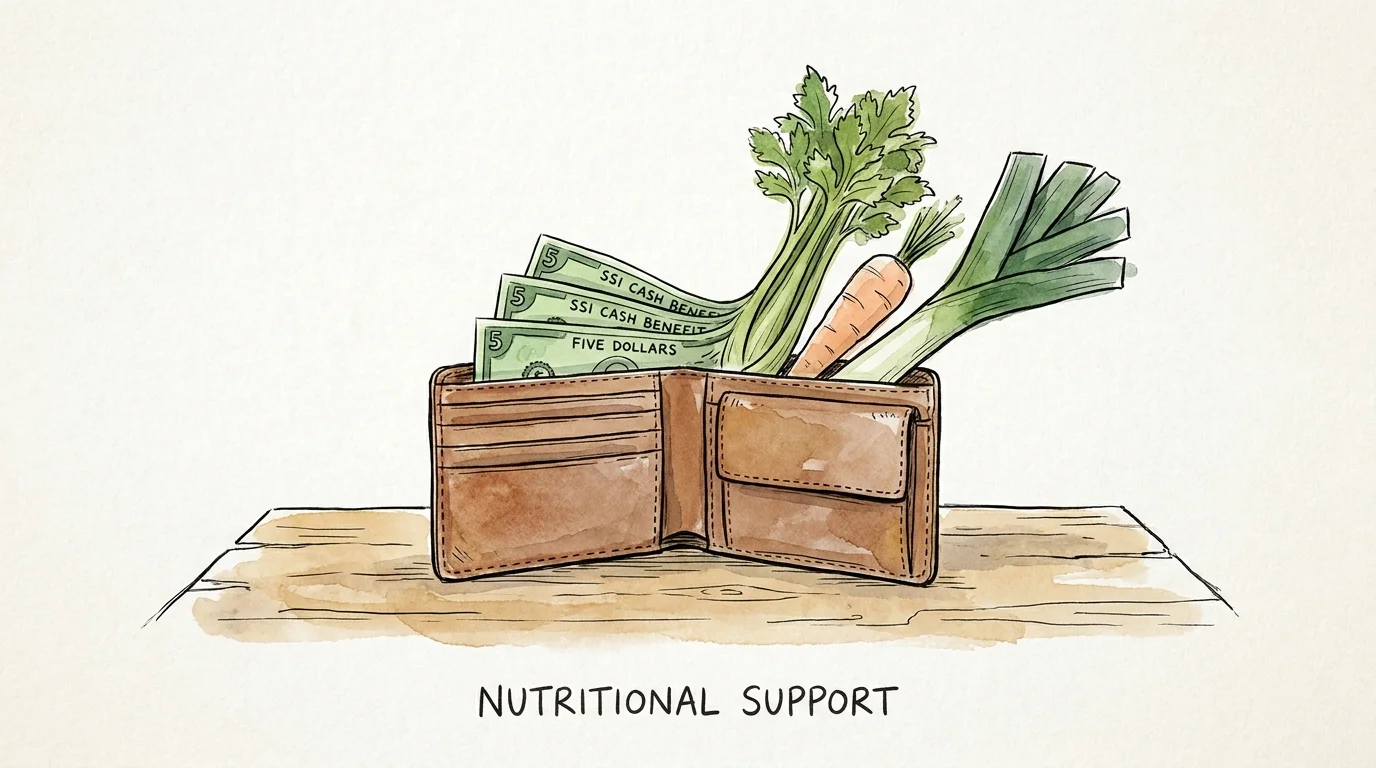
Supplemental Security Income (SSI) is entirely separate from standard Social Security retirement benefits. SSI provides monthly cash assistance to older adults, blind individuals, and people with disabilities who have extremely limited income and resources.
While SSI issues cash rather than food vouchers, receiving SSI opens the door to automatic grocery assistance. According to the Social Security Administration (SSA), qualifying for SSI means you meet the financial requirements for “categorical eligibility” in other assistance programs. In many states, an SSI approval results in a streamlined or automatic approval for SNAP and Medicaid.
If your sole income is a small Social Security check and you have less than $2,000 in the bank ($3,000 for couples), you should immediately evaluate your eligibility for SSI. The extra cash can be used freely at the grocery store, freeing up your budget for other pressing needs.

Area Agencies on Aging Emergency Funds
Your local Area Agency on Aging (AAA) serves as a central clearinghouse for senior services. While they administer federal funds, many AAAs also manage localized, private grant money designed to prevent seniors from going hungry.
If you find yourself in a crisis, your AAA can provide immediate grocery store gift cards, connect you with volunteers who shop for you, or enroll you in short-term meal delivery until a permanent solution is found. Because AAAs conduct comprehensive assessments, a single phone call can get you screened for utility assistance, property tax relief, and food programs simultaneously. Relieving pressure on your utility bills leaves more cash in your wallet for groceries.

How to Protect Yourself from Grocery Benefit Scams
Financial criminals actively target older adults who rely on food assistance. Because benefits like SNAP and Medicare grocery allowances function via loaded debit cards, scammers use deceptive tactics to steal these funds before you can spend them.
The Consumer Financial Protection Bureau (CFPB) warns that “EBT skimming” is currently one of the most widespread grocery scams. Criminals place hidden devices over the card readers at grocery store checkouts. When you swipe your SNAP card, the device copies your data and steals your monthly balance. To protect yourself, change your EBT PIN monthly and gently wiggle the card reader at the store; if the plastic housing moves or seems loose, do not swipe your card.
Other Common Red Flags:
- The Medicare “Flex Card” Bait: You may see television commercials promising a $3,000 grocery card if you call a toll-free number. These are aggressive marketing campaigns designed to trick you into dropping your current medical coverage. Never change your Medicare plan over the phone based on a TV ad.
- The Application Fee Scam: No government food assistance program charges an application fee. If a website or individual demands a processing fee to expedite your SNAP or Meals on Wheels application, cease communication immediately.
- The Phishing Text Message: If you receive a text message claiming your SNAP card has been locked and providing a link to “verify your identity,” delete it. Government agencies will correspond with you via official mail or secure online portals, not unsolicited text messages.
Frequently Asked Questions
Will applying for SNAP allow the government to take my house?
No. Your primary residence and the land it sits on do not count as assets when determining your eligibility for the Supplemental Nutrition Assistance Program. Receiving food benefits will not result in a lien on your property, nor will the government attempt to seize your home to recover the cost of the groceries you received.
Do I have to claim food assistance as taxable income?
No. The IRS does not consider SNAP, the Commodity Supplemental Food Program, Meals on Wheels, or TEFAP benefits as gross income. You do not have to report these grocery assistance benefits on your annual tax return, and they will not negatively impact your Social Security taxation thresholds.
Can I receive Meals on Wheels and SNAP at the same time?
Yes. You are legally allowed to utilize both programs simultaneously. Meals on Wheels covers your immediate daily need for prepared, hot food, while your SNAP benefits allow you to purchase additional groceries, snacks, and beverages to keep in your pantry.
Are my retirement accounts counted against me when applying for food benefits?
It depends on the state and the program. For SNAP, many states have eliminated the “asset test” altogether through expanded categorical eligibility, meaning your IRAs or 401(k)s may not disqualify you. However, the monthly distributions you take from those retirement accounts will count as regular income and must be reported on your application.
What if I cannot afford the suggested donation for congregate meals?
The donation requested at senior centers and community meal sites is entirely voluntary. The Older Americans Act strictly forbids these programs from denying a meal to an eligible senior based on an inability to pay. You can confidently attend and enjoy your meal without making a contribution.
For official financial guidance for seniors, visit
National Institute on Aging (NIA), Administration for Community Living (ACL) and Eldercare Locator.
Disclaimer: This article is for informational purposes and is not a substitute for professional financial or tax advice. Consult with a certified financial planner or tax professional for guidance on your specific situation.








Leave a Reply