
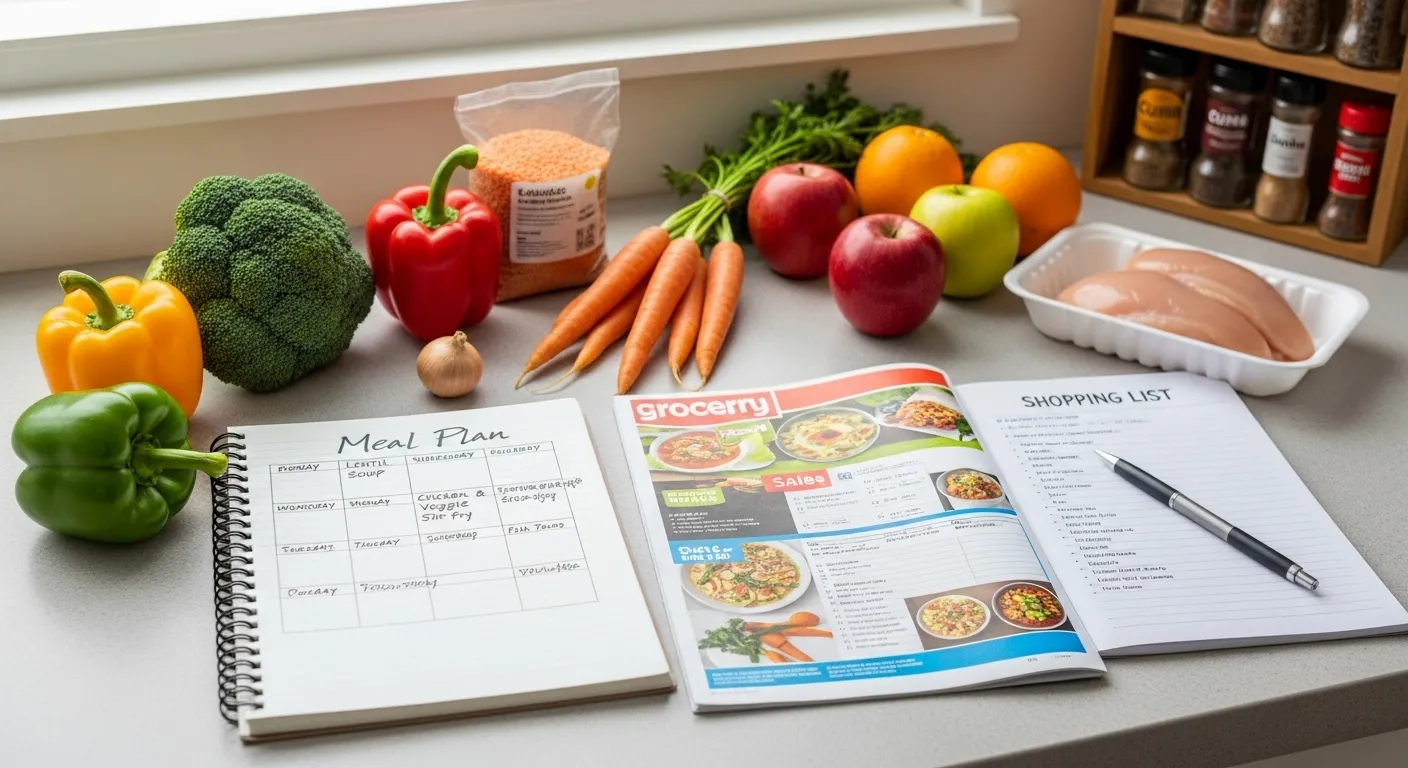
As we navigate our retirement years, managing a fixed income becomes a top priority. One of the most significant and variable expenses in any household budget is food. With rising grocery prices, the challenge of eating well without overspending can feel daunting, especially when cooking for just one or two people. The standard family-sized packaging at the supermarket can lead to food waste, and the motivation to cook a full meal for a small household can sometimes wane.
However, this is where you can take back control. Strategic meal planning is one of the most powerful financial tools at your disposal. It’s not about deprivation; it’s about empowerment. By planning your meals, you can eat healthier, reduce stress, and most importantly, make your money work harder for you. This guide will provide you with practical, actionable steps for budget-friendly meal planning that fits your lifestyle.
This article is for informational purposes only and is not intended to be financial advice. Please consult with a qualified financial professional for advice tailored to your individual situation.

The Financial Foundation: Why Meal Planning Matters for Seniors
Before we dive into the “how,” it’s crucial to understand the “why.” Why is meal planning more than just deciding what’s for dinner? For a senior on a fixed income, it’s a fundamental part of a sound financial strategy.
It Combats Food Price Inflation: You have likely noticed that your grocery bill is higher than it was a year ago. This is inflation at work. While you cannot control the prices at the store, you can control what you buy and how much you waste. A meal plan helps you focus your spending on items you will actually use, maximizing the value of every dollar.
It Drastically Reduces Food Waste: Cooking for one or two often means leftover ingredients. A bunch of celery, a carton of buttermilk, or a large head of lettuce can easily go bad before you have a chance to use it all. When you throw away food, you are literally throwing away money. Meal planning helps you create a roadmap for every ingredient you buy, ensuring it ends up on your plate instead of in the trash.
It Eliminates Costly Impulse Buys: How often have you gone to the store for a couple of items and left with a cart full of things that looked good but you didn’t need? Supermarkets are designed to encourage impulse buying. A shopping list, created from your meal plan, is your best defense. It keeps you focused, saving you from unplanned expenses that can quickly derail your budget. Saving just $25 a week on groceries by sticking to a list adds up to $1,300 in savings over a year.
Getting Started: Your 5-Step Meal Planning System
Getting started with meal planning doesn’t need to be complicated. The key is to create a simple, repeatable routine. Here is a five-step system designed for singles and couples that makes the process manageable and effective.

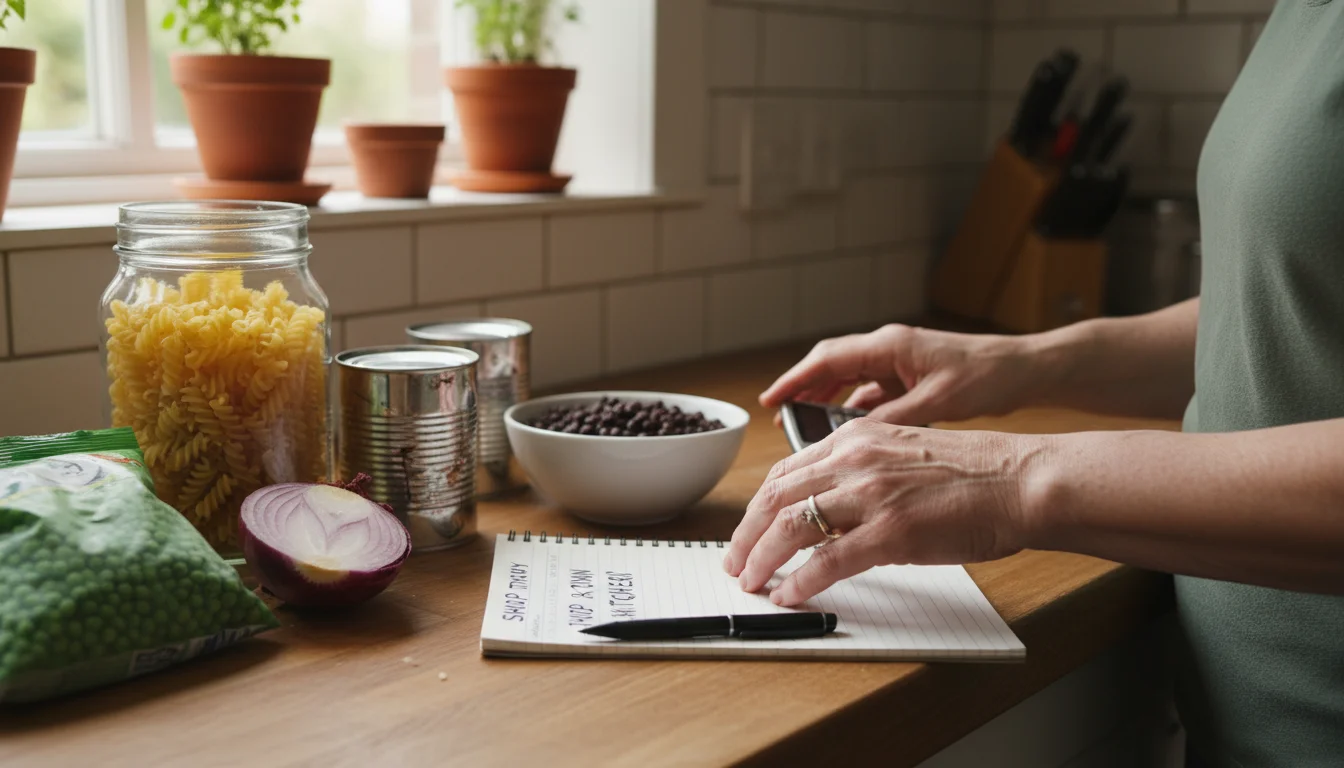
Step 1: Take Inventory of What You Already Have
Why this is important: The most budget-friendly ingredient is the one you’ve already paid for. Before you even think about what to cook, you must “shop” your own kitchen.
How to do it: Check your pantry, refrigerator, and freezer. Make a quick list of proteins (chicken, ground meat, beans), vegetables, grains (rice, pasta, oats), and canned goods that need to be used. This list becomes the foundation of your weekly plan. If you have half an onion, a can of tomatoes, and some ground turkey in the freezer, you’re already partway to a chili or pasta sauce.

Step 2: Check the Weekly Sales Flyers
Why this is important: Planning your meals around what’s on sale, rather than what you’re craving, is a core principle of frugal cooking. This allows the grocery store’s discounts to dictate your menu, ensuring you get the best price on key ingredients.
How to do it: Look at your local grocery store’s weekly ad, which is usually available online or in the newspaper. Are chicken breasts on sale? Plan for a roasted chicken one night and chicken salad sandwiches later in the week. Is broccoli the vegetable of the week? Plan for a broccoli soup or a side of steamed broccoli. Match these sale items with the ingredients you already have from your inventory.

Step 3: Create a Simple Weekly Menu
Why this is important: A written plan removes the daily stress of “what’s for dinner?” and provides a clear structure for your shopping. You don’t need a gourmet, complex menu. Simplicity is your friend.
How to do it: Using a notepad or a simple calendar, jot down dinner ideas for the week. Be realistic. You don’t have to plan every single meal, but aiming for 4-5 planned dinners is a great start. This leaves room for leftovers or a simple “pantry meal” like an omelet or soup. A good strategy is to plan for meals that can be repurposed. For example:
- Monday: Roasted Chicken with Potatoes and Carrots
- Tuesday: Leftover Chicken Sandwiches on Whole Wheat Bread
- Wednesday: Simple Pasta with a Jarred Sauce and a Salad
- Thursday: Leftover Pasta
- Friday: Homemade Chicken Noodle Soup (using the last of the chicken)

Step 4: Build Your Smart Shopping List
Why this is important: Your shopping list is the single most important tool for staying on budget at the store. It acts as a barrier against marketing tricks and impulse buys.
How to do it: Go through your weekly menu and list every single ingredient you need to buy. Be specific. Instead of just “lettuce,” write “1 head of romaine lettuce.” Cross-reference this with your inventory list to make sure you’re not buying something you already have. For maximum efficiency, organize your list by store section (Produce, Dairy, Meats, Canned Goods, Frozen) to avoid backtracking and temptation.

Step 5: Designate a Prep Day
Why this is important: One of the biggest hurdles to cooking at home is the effort it takes after a long day. A little prep work upfront makes weekday cooking faster and easier than ordering takeout.
How to do it: Set aside an hour or two after you get home from the grocery store. You can wash and chop vegetables, cook a batch of rice or quinoa, boil some eggs for easy snacks, or even cook a large pot of soup or chili for the week ahead. Storing these prepped ingredients in clear containers in your fridge makes assembling a healthy meal quick and simple.

The Art of Frugal Cooking and Portion Planning
Now that you have a plan, the next step is executing it in the kitchen. Frugal cooking for one or two is all about maximizing ingredients and minimizing waste through smart portion planning.

Embrace “Cook Once, Eat Twice (or Thrice)”
This is the golden rule for small households. Cooking a larger batch of a versatile main ingredient saves both time and money. A single cooking session can yield several different meals.
How to do it: Think in terms of “base” ingredients. A large pot roast on Sunday can become beef sandwiches on Monday and shredded beef for tacos on Tuesday. A batch of cooked lentils can be used in a soup, as a base for a salad, or mixed with vegetables for a hearty side dish. This strategy not only saves you from cooking every night but also ensures no food goes to waste.

Master Your Freezer
Your freezer is not just for ice cream and frozen peas; it’s a powerful financial tool. It allows you to buy in bulk when items are on sale, save leftovers perfectly, and have ready-made meals on hand.
What freezes well: Soups, stews, chilis, and casseroles are perfect for freezing. You can also freeze bread, shredded cheese, cooked rice, and even portions of milk in ice cube trays for use in recipes. When you bake a loaf of banana bread, slice it up, wrap the slices individually, and freeze them for a quick breakfast treat.
How to do it: The key to effective freezing is proper storage to prevent freezer burn. Use freezer-safe bags or airtight containers. Squeeze as much air out of bags as possible. Most importantly, label everything with the name of the dish and the date it was frozen. This prevents a freezer full of mystery meals.

Focus on Cost-Effective Recipes and Staples
You don’t need fancy ingredients to eat well. Building your meals around known budget-friendly staples is a cornerstone of frugal cooking.
What to buy:
- Proteins: Eggs, beans (canned or dried), lentils, and canned tuna are inexpensive powerhouses of nutrition. Look for sales on chicken thighs, which are often more flavorful and affordable than breasts.
- Grains: Oats, rice, and pasta are incredibly cheap and versatile.
- Produce: Focus on seasonal vegetables and fruits, as they are usually cheaper and taste better. Potatoes, onions, carrots, and cabbage are almost always affordable options.

Smart Shopping Strategies to Maximize Your Budget
Beyond your list, a few savvy habits at the grocery store can lead to significant savings.

Understand Unit Pricing
Don’t just look at the main price tag. Look for the unit price, which is usually in smaller print on the shelf label. This tells you the cost per ounce, per pound, or per item. It’s the only way to accurately compare the value between a large box and a small box, or between two different brands. The bigger package is not always the better deal, especially for a smaller household where it might go to waste.

Do Not Fear Generic or Store Brands
Many shoppers are loyal to name brands, but store brands often offer identical quality for a much lower price. In many cases, these products are made in the same factories as their name-brand counterparts. Give them a try on items like canned goods, flour, sugar, and dairy. The savings can be substantial.

Navigate the Bulk Bins (Wisely)
For a household of one or two, buying in bulk can be tricky. However, the bulk bins where you scoop your own ingredients can be a secret weapon. They allow you to buy the exact amount you need of things like spices, nuts, or specialty flours. This prevents you from having to buy a large, expensive jar of a spice you might only use once.

Conclusion: Your Path to Financial Confidence
Taking control of your grocery budget through meal planning is a tangible and deeply rewarding skill. It may feel like a bit of work at first, but with practice, it will become a simple routine that saves you hundreds, if not thousands, of dollars each year. More than that, it provides a sense of security and control over your finances, reducing stress and empowering you to live your retirement years with greater confidence and peace of mind.
Start small, be patient with yourself, and celebrate the progress you make. Every meal planned and every dollar saved is a step toward a more secure financial future.
For expert guidance on senior health and finance, visit National Institute of Mental Health (NIMH), National Institutes of Health (NIH), Centers for Medicare & Medicaid Services (CMS), Social Security Administration (SSA) and Consumer Financial Protection Bureau (CFPB).
|
Fact-Checked Content
Our editorial team reviews all content for accuracy and updates it regularly. Learn about our editorial process →
|









Leave a Reply