

You can travel the world, earn supplemental income, and enjoy luxury amenities by working part-time on a cruise ship. Many cruise lines actively recruit mature adults for their dependability, poise, and life experience.
These flexible positions let you see exotic ports without draining your retirement nest egg. You trade your professional skills for free room, board, and ocean voyages.
Discover the best cruise line jobs for seniors, along with essential financial and medical facts you must know before boarding. Here is how you can embark on your next maritime adventure.
In this guide8 sections
- Why Cruise Lines Value Older Workers
- Top 8 Part-Time Jobs at Sea for Seniors
- Compensation, Room, and Board Explained
- Health Realities and Medical Coverage at Sea
- Financial and Tax Rules for Working Retirees
- Common Pitfalls and Maritime Scams to Avoid
- Step-by-Step Guide to Landing a Shipboard Job
- Frequently Asked Questions

Why Cruise Lines Value Older Workers
Modern cruise demographics lean heavily toward mature travelers who appreciate shared life experiences. Cruise directors actively recruit older adults who communicate with warmth and genuine empathy.
Working on cruise ships retirees offer a steady, calming presence that younger seasonal hires often lack. Your professional maturity helps resolve customer service problems quickly and politely.
Punctuality and strong work ethics remain top priorities for maritime fleet supervisors. Retirees consistently demonstrate reliable attendance and deep respect for shipboard protocols.
Exploring retiree travel jobs provides cognitive stimulation and meaningful social connections. You expand your social network while visiting fascinating international ports.
These roles also allow you to remain physically active in a dynamic, structured setting. Daily walks across long ship decks keep your muscles moving and your mind sharp.
Many seniors find that shipboard life helps combat the isolation that sometimes follows retirement. Engaging with international passengers creates a refreshing sense of daily camaraderie and shared purpose.
Furthermore, part-time cruise jobs solve the affordability challenge of global travel for people on fixed incomes. You explore bucket-list destinations while keeping your living expenses near zero during contracts.

Top 8 Part-Time Jobs at Sea for Seniors
Part-time cruise jobs span multiple onboard departments, ranging from entertainment to guest hospitality. Review these eight rewarding positions to find the right match for your background.
1. Destination and Enrichment Lecturer
Enrichment speakers deliver educational presentations during sea days when ships sail between ports. Topics range from maritime military history and regional geography to astronomy and ocean ecology.
You typically deliver two or three 45-minute lectures per week in the main theater. Cruise lines expect engaging slideshows, clear speaking delivery, and friendly interactions after each presentation.
In exchange, you receive a guest-tier stateroom, complimentary meals, and full access to passenger lounges. Many contracts allow you to bring a travel companion at little to no extra charge.
Bring backup presentation files on multiple flash drives to avoid technical glitches at sea. Preparing your slide decks before boarding ensures a relaxed, stress-free performance.
2. Shore Excursion and Destination Host
Shore excursion staff manage tour departures, guide guests to tour buses, and verify ticketing. You act as a friendly liaison between the ship and local tour operators.
When you escort an excursion group, you participate in the tour at zero cost. This allows you to explore historical landmarks, wildlife preserves, and cultural sites for free.
The position requires clear communication, good mobility, and patient crowd-management skills. You must feel comfortable standing on pier docks and answering rapid guest questions.
Invest in supportive walking shoes and effective sun protection before embarking on excursion duties. Walking across uneven cobblestones and steep gangways requires sure footing and reliable stamina.
3. Gentleman Dance Host
Premium cruise lines hire single men aged 50 and older to dance with unaccompanied solo passengers. You attend evening ballroom events, cocktail parties, and big-band shows.
You must dance several distinct styles with grace, including the waltz, foxtrot, swing, and rumba. Hosts never single out one guest, ensuring all solo travelers feel welcomed and included.
In exchange, dance hosts receive complimentary passenger accommodations, fine dining, and laundry services. You pay only for personal bar tabs and shore spending.
Pack both black-tie formalwear and polished dance shoes with suede soles. Maintaining impeccable grooming and a courteous, gentlemanly attitude is essential for glowing passenger reviews.
4. Bridge and Card Game Instructor
Long transatlantic crossings and world cruises attract devoted card and board game players. Certified instructors organize daily duplicate bridge sessions, casual card games, and instructional workshops.
You typically work two hours each afternoon while the vessel travels open waters. The role requires patience, thorough rule knowledge, and an encouraging teaching demeanor.
Instructors enjoy passenger status, private guest cabins, and open access to ship entertainment. Your mornings and port days remain completely open for your personal enjoyment.
Bringing your own duplicate boards, bidding boxes, and scoring software makes organizing tournaments smooth. Guests appreciate instructors who keep game sessions competitive yet friendly and supportive.
5. Arts, Crafts, and Hobby Specialist
Creative seniors can lead craft workshops during afternoon sea days. Popular subjects include watercolor painting, origami, scrapbooking, knitting, and jewelry design.
The cruise line provides project supplies, while you provide step-by-step guidance to participating guests. These classes create relaxed social circles where passengers forge lasting friendships.
This job suits patient hobbyists who love inspiring creativity in beginners. You receive free ocean travel and stateroom lodging in exchange for your instruction.
Design simple projects that guests can finish within an hour and easily pack inside suitcases. Practical souvenirs like painted postcards or beaded bookmarks delight passengers of all skill levels.
6. Shipboard Librarian and Quiet Lounge Host
Cruise ship libraries offer quiet sanctuaries filled with thousands of books, board games, and puzzles. Librarians catalog returned books, organize jigsaw tables, and maintain a quiet, orderly atmosphere.
This role requires very low physical exertion compared to other shipboard jobs. It provides an ideal match for quiet book lovers who enjoy calm, polite conversations with fellow guests.
You work set morning and afternoon hours while enjoying passenger or staff cabin accommodations. Between shifts, you can read comfortably while admiring panoramic ocean views.
Organize book exchange shelves and recommend gripping titles to guests preparing for pool deck reading. Your personalized literary tips make the shipboard library a beloved destination.
7. Port Pier Greeter and Embarkation Coordinator
You can pursue cruise ship careers without ever leaving your home city for long voyages. Major coastal cruise ports hire local seniors to manage guest check-in on embarkation days.
Greeters verify passenger passports, scan boarding passes, and direct foot traffic through security terminals. You work dynamic six-to-eight-hour shifts primarily on weekends and turnaround days.
This role pays an hourly wage and offers generous employee cruise discounts for future personal vacations. Best of all, you sleep in your own bed every night after your shift.
Wear comfortable footwear and dress in breathable layers to handle varying terminal temperatures. A warm smile and calm demeanor reassure anxious travelers boarding their dream vacations.
8. Youth and Intergenerational Activity Assistant
During summer months and holiday breaks, cruise ships fill with multi-generational families. Lines hire retired teachers, counselors, and grandparents to run family game nights and storytelling circles.
Your presence brings a comforting, intergenerational warmth that parents and grandparents appreciate. You provide calm supervision while energetic youth counselors coordinate athletic games.
These seasonal positions provide structured daily routines and hourly wages or comped travel. They keep your teaching skills sharp while you sail along sunny coastlines.
Focus on collaborative activities like board game tournaments, trivia contests, and family puzzle challenges. Fostering wholesome fun across generations makes family cruises unforgettable for parents and children alike.
Compensation, Room, and Board Explained
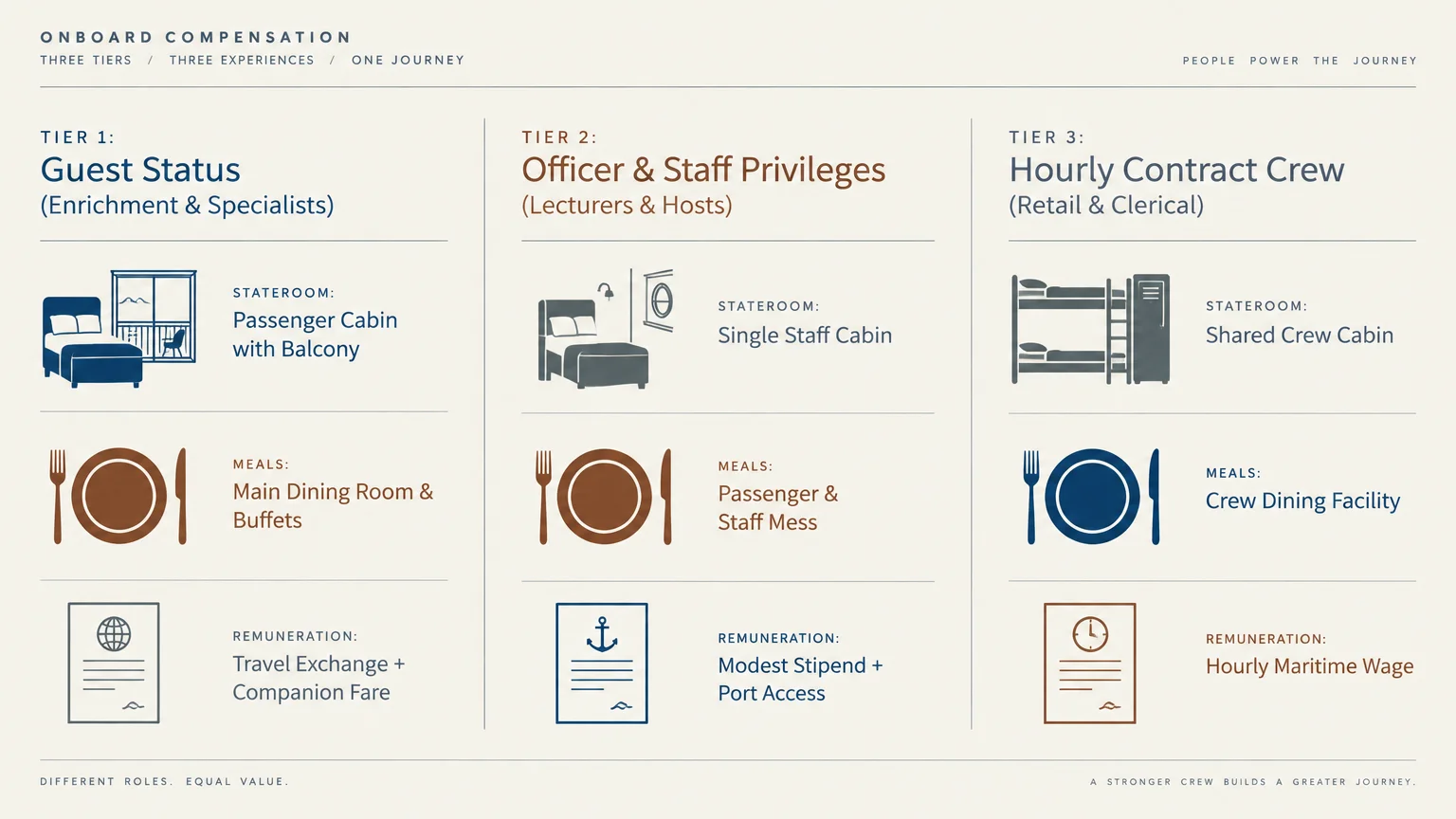
Understanding maritime compensation structures is vital before accepting any shipboard position. Cruise lines divide part-time roles into direct hourly employment and enrichment barter agreements.
Direct employees receive regular payroll checks, direct deposit, and basic crew accommodations. However, crew cabins often feature twin bunk beds and shared bathroom facilities below water decks.
Barter positions swap your teaching or speaking skills for complimentary passenger staterooms. In most cases, you pay only a modest booking fee to a specialized talent agency.
Barter participants usually pay an administrative agency fee between $35 and $75 per sailing day. This fee covers your booking management, cabin assignment, and onboard dining access.
| Role Type | Pay Structure | Cabin Class | Guest Area Access |
|---|---|---|---|
| Enrichment Lecturer | Barter (Comped Cruise) | Passenger Stateroom | Full Passenger Access |
| Dance Host | Barter / Small Daily Stipend | Passenger or Single Officer | Lounges & Dining Rooms |
| Bridge Instructor | Barter (Comped Cruise) | Passenger Stateroom | Full Passenger Access |
| Craft Specialist | Barter (Comped Cruise) | Passenger Stateroom | Full Passenger Access |
| Port Greeter (Local) | Hourly Wage ($16–$23/hour) | Non-Sailing (Sleep at Home) | Port Terminal Only |
| Shore Excursion Aide | Hourly or Day Rate | Shared Crew Cabin | Tours & Staff Mess |
Review your onboard privileges thoroughly before setting sail on any contract. Some positions allow you to eat in guest specialty restaurants, while others restrict staff to crew mess areas.
Clarify whether the line includes tipping in your package or if you must tip room stewards separately. Budgeting for daily gratuities ensures you treat hardworking service crew members fairly.
Health Realities and Medical Coverage at Sea
Working onboard requires good physical agility, balance, and endurance. You must navigate rocking ships, steep gangways, and narrow metal stairs safely during emergencies.
According to the Centers for Disease Control and Prevention (CDC), maintaining physical activity and mobility supports independence and lowers fall risks among older adults. Staying active at home prepares your body for the physical demands of ship life.
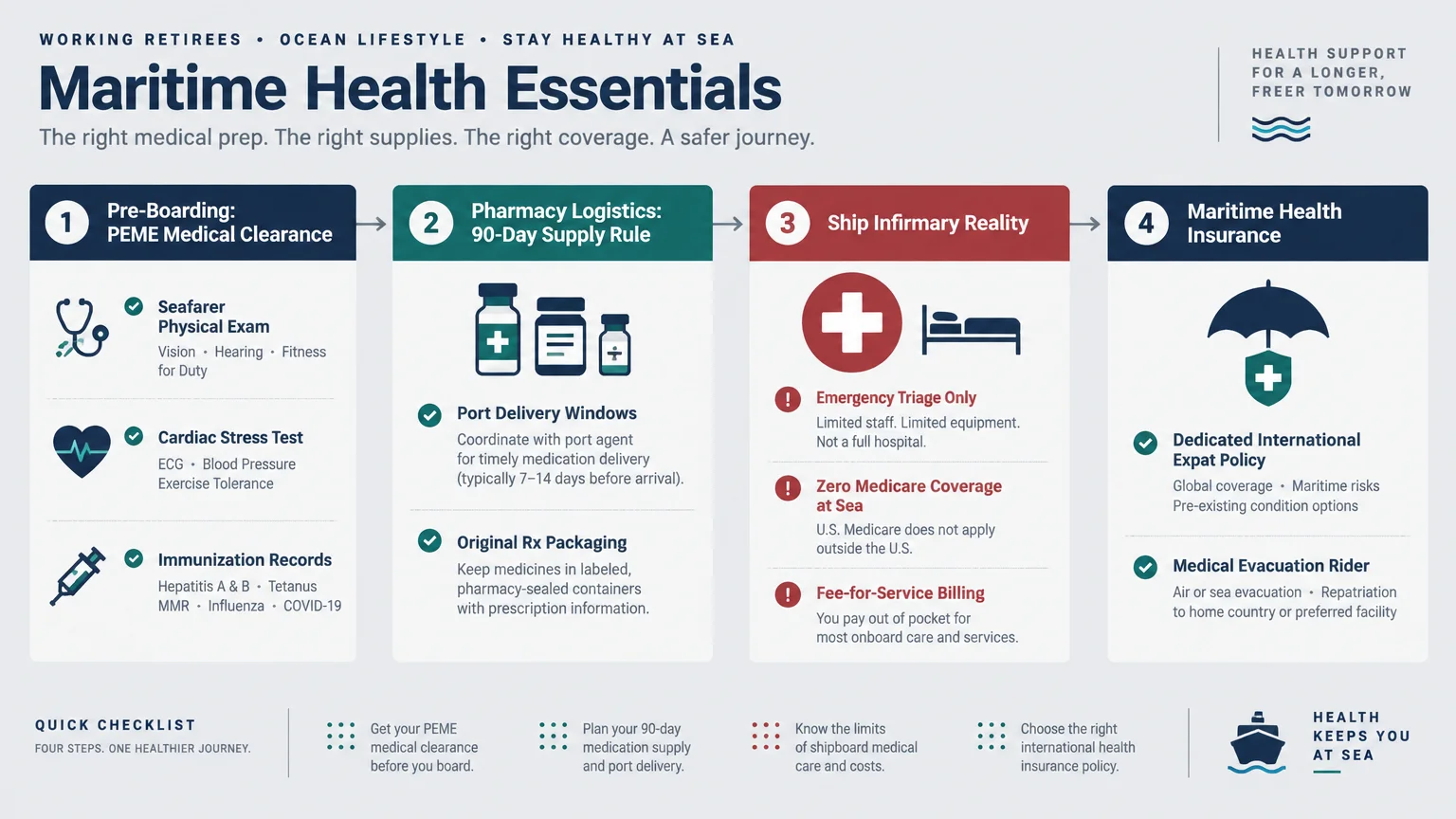
You must also plan for potential medical emergencies while traveling in international waters. Traditional Medicare does not pay for healthcare services rendered outside the United States.
As highlighted by Medicare.gov, coverage abroad remains very limited, leaving seniors vulnerable to high out-of-pocket costs during foreign travel. You must purchase specialized travel insurance that covers emergency medical care and air evacuations.
Shipboard medical centers offer advanced diagnostic equipment, but treatments come with steep private fees. An emergency helicopter evacuation at sea can easily cost tens of thousands of dollars without proper insurance.
Always pack ninety days of maintenance medications in their original prescription bottles. Maritime medical teams stock emergency medicines but cannot refill specialty domestic prescriptions.
Prevent seasickness by packing acupressure wristbands, ginger candies, and over-the-counter meclizine tablets. Taking motion sickness remedies before the vessel hits rough water keeps you feeling comfortable and alert.

Financial and Tax Rules for Working Retirees
Combining part-time wages with your retirement income requires careful tax planning. You should review how extra earnings interact with government benefits before taking a job.
According to the Social Security Administration (SSA), collecting wages before your full retirement age can temporarily reduce your monthly benefit payments. However, once you reach your full retirement age, you can earn unlimited income without any benefit reductions.
Non-cash barter benefits like complimentary luxury cruises can also have tax consequences. The Internal Revenue Service sometimes treats free travel perks as reportable taxable compensation.
Keep detailed records of your travel receipts, agency placement fees, and professional supplies. Many of these expenses can offset taxable earnings as legitimate business deductions.
Schedule a consultation with a certified public accountant who understands international maritime employment. Professional tax advice ensures you stay fully compliant with all state and federal guidelines.
Monitor your days spent outside your home state if you work extended seasonal contracts. Keeping clear travel logs helps protect your primary state tax residency status.
Common Pitfalls and Maritime Scams to Avoid
Fraudsters frequently target adventurous seniors with fake cruise hiring announcements on social media. Learning to spot deceptive employment offers protects your savings and personal identity.
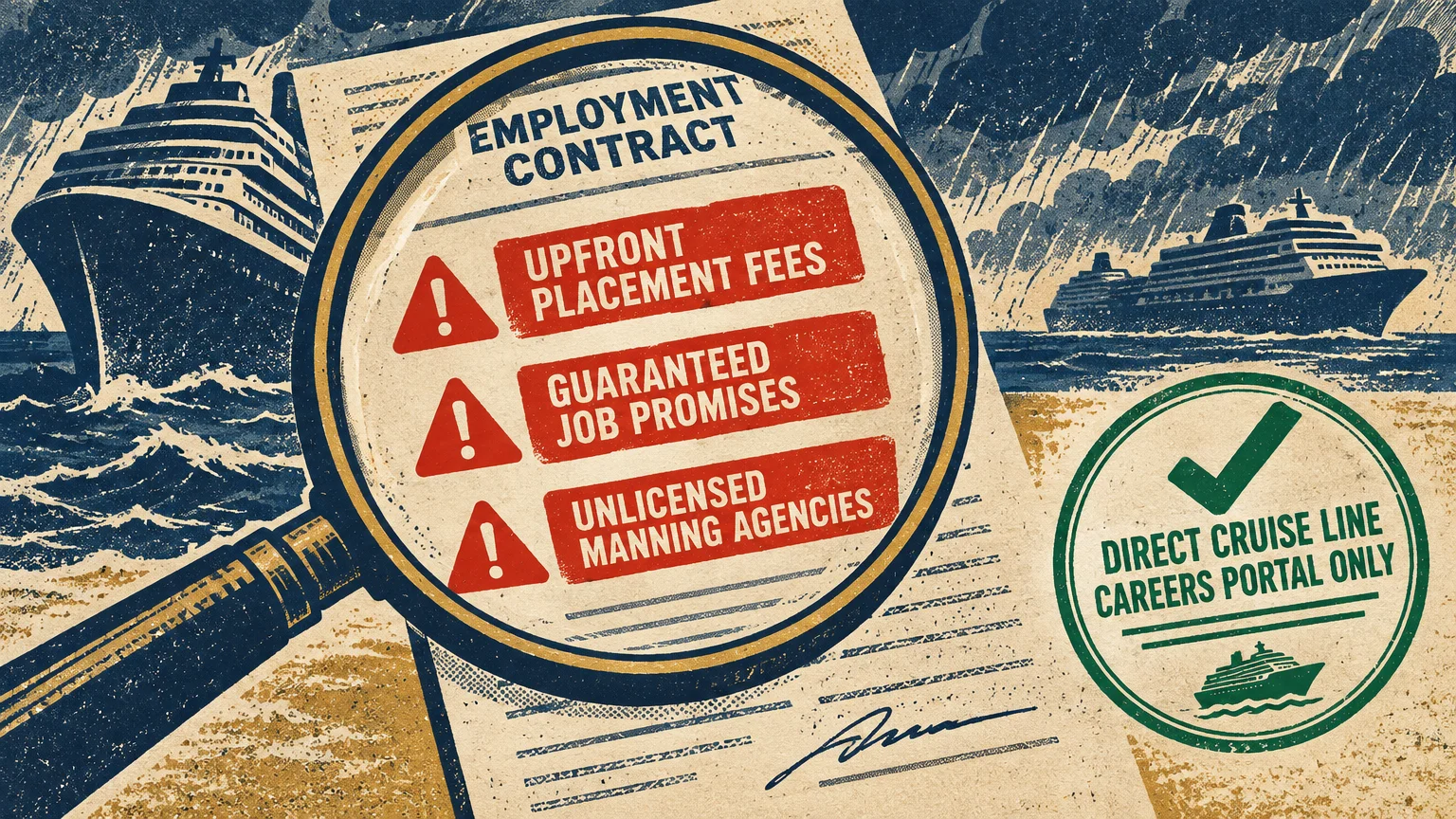
Real cruise lines never require job candidates to pay direct processing fees, visa deposits, or background check costs upfront. If a recruiter requests money via wire transfer or gift cards, walk away immediately.
As emphasized by AARP, job seekers should remain alert to employment scams that guarantee lucrative travel positions for an upfront payment. Always apply directly through official cruise line career portals to ensure legitimacy.
Distinguish between illegal recruitment scams and reputable enrichment talent agencies. Legitimate placement agencies charge administrative fees only after matching you with a confirmed cruise itinerary.
Another common pitfall involves underestimating the strictness of maritime safety regulations. All workers must participate in emergency evacuation drills, fire safety courses, and drug screening tests.
Always read contract cancellation policies carefully before booking non-refundable flights to embarkation ports. Cruise lines occasionally alter ship itineraries or cancel speaker slots due to mechanical issues or severe weather.
Step-by-Step Guide to Landing a Shipboard Job
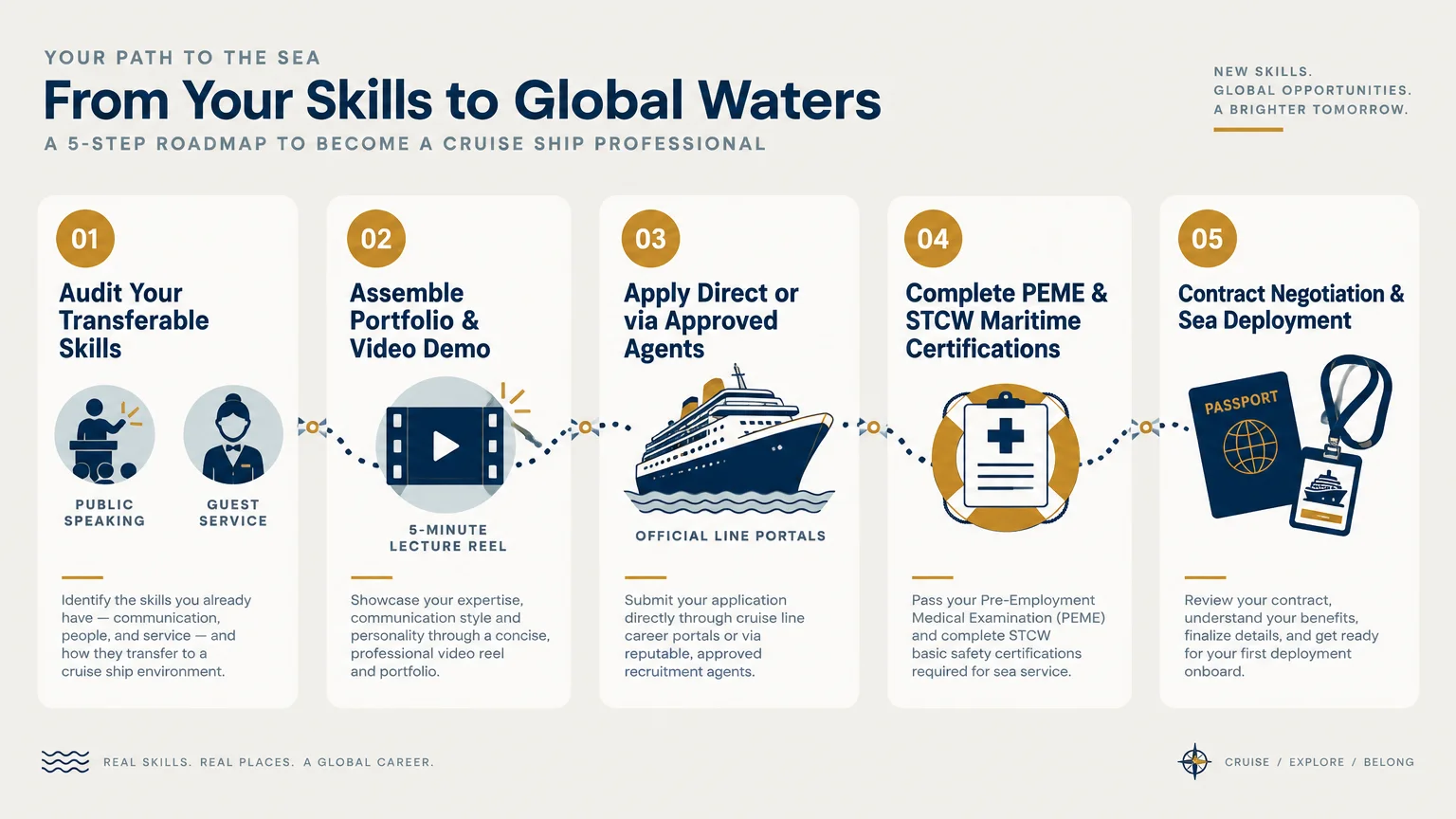
Launching your maritime career requires organized preparation and focused applications. Follow this step-by-step framework to secure your ideal part-time role at sea.
First, catalog your hobbies, former professional careers, and public speaking skills. Decide whether you want a local port job or extended voyages across global oceans.
Second, draft a clean one-page resume tailored specifically to guest hospitality and passenger care. Emphasize your reliability, patience, and adaptability over technical executive milestones.
Third, create a five-minute demonstration video showcasing your presentation or teaching style. Talent agencies and cruise directors rely on video reels to evaluate your stage poise and enthusiasm.
Fourth, submit applications to established enrichment agencies or directly to cruise line human resources departments. Apply six to nine months ahead of seasonal sailing schedules to secure prime itineraries.
Finally, renew your passport so that it has at least six months of validity remaining beyond your voyage. Complete any required maritime physicals promptly to clear all medical standards.
Practice your virtual interview techniques using good lighting, clear audio, and a quiet background. Showing natural enthusiasm and warm interpersonal manners during video interviews significantly boosts your hiring chances.
Frequently Asked Questions
Can my spouse or partner stay with me in my cabin?
Most enrichment barter roles include a double-occupancy passenger cabin that accommodates your travel companion. However, paid crew positions rarely allow spouses to join unless both partners secure separate employment contracts.
Is there an upper age limit for seniors working on cruise ships?
Cruise lines have no upper age limits for onboard employees or enrichment instructors. As long as you pass the required maritime medical examination, you can work well into your seventies or eighties.
Do part-time cruise jobs require safety training?
Enrichment lecturers and barter hosts only complete basic passenger safety briefings upon boarding. Paid crew members, however, must complete rigorous Standards of Training, Certification, and Watchkeeping (STCW) safety courses.
How reliable is shipboard internet access for remote tasks?
Most cruise ships now utilize high-speed satellite internet networks like Starlink. While connection speeds support messaging and video calls, severe weather or remote polar regions can occasionally interrupt service.
What occurs if I become ill during a sailing contract?
Shipboard medical teams will treat and monitor your condition in the vessel infirmary. If your illness prevents you from completing your duties, the cruise line will safely disembark you at the nearest port.
For additional senior resources, visit
National Institute on Aging (NIA),
Centers for Disease Control and Prevention (CDC),
Medicare.gov and
National Institute of Mental Health (NIMH).
Disclaimer: The information in this article is for educational purposes only and is not intended to be a substitute for professional financial, legal, or medical advice. Always consult with a qualified expert for advice tailored to your personal situation.