
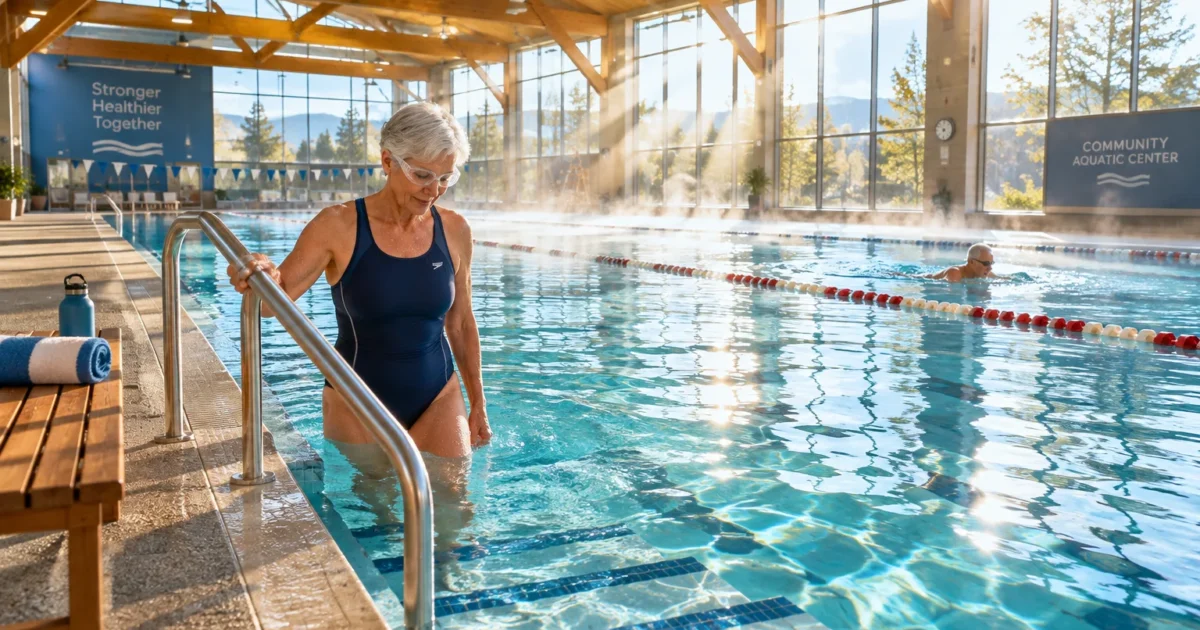
Finding an affordable retirement destination with first-class fitness amenities protects both your physical vitality and your savings. Active municipal recreation centers and heated aquatic complexes make daily exercise rewarding, low-impact, and social.
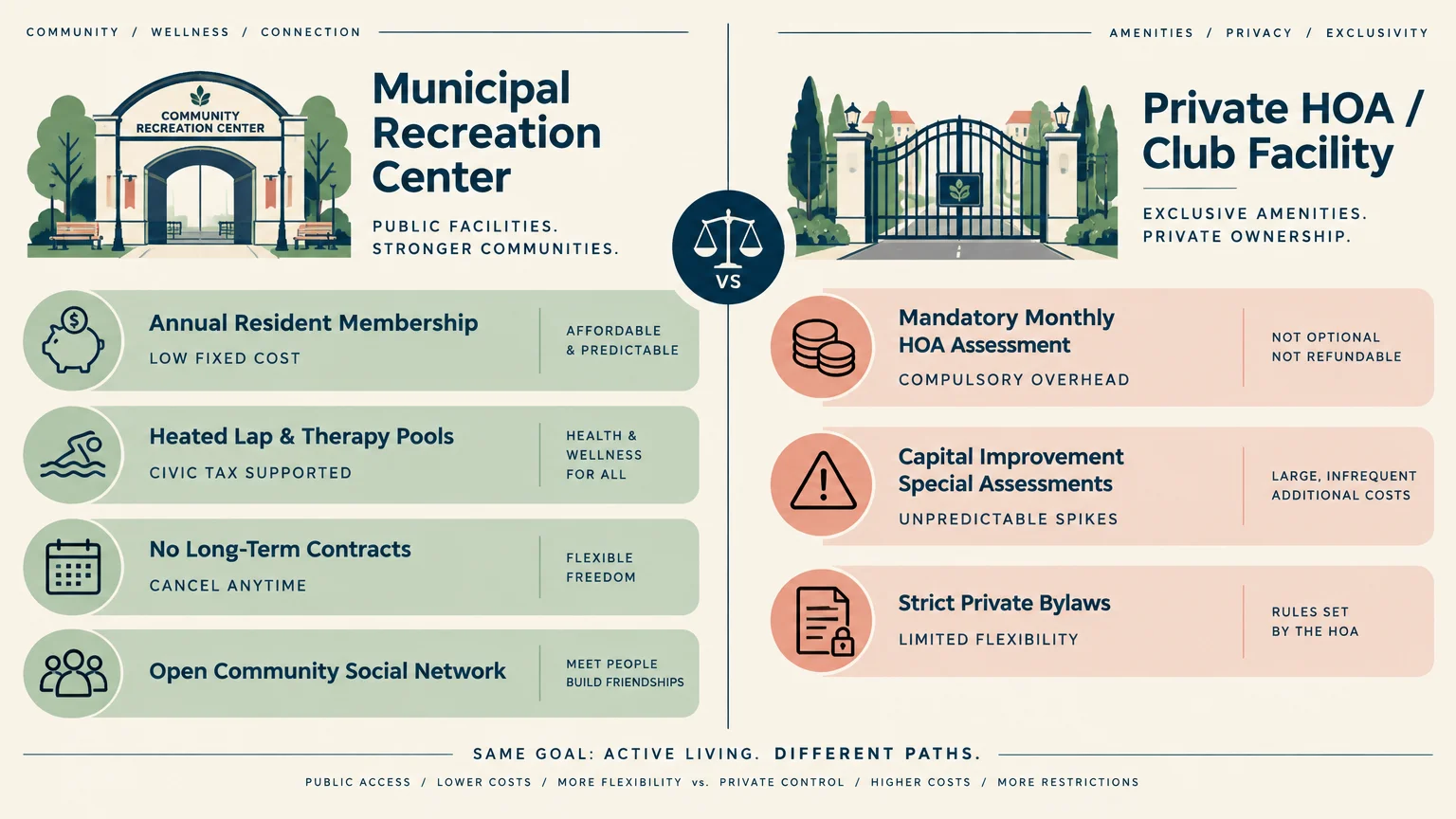
Many private active-adult developments burden residents with steep homeowners association fees and expensive dues. In contrast, municipal recreation departments maintain top-tier lap pools, therapy basins, and gymnasiums at budget-friendly resident prices.
Relocating to a community that invests in public wellness keeps your retirement active and engaged. Explore twelve standout American towns where public pools and recreation facilities help you thrive throughout your golden years.
Why Public Recreation Centers Matter for Seniors
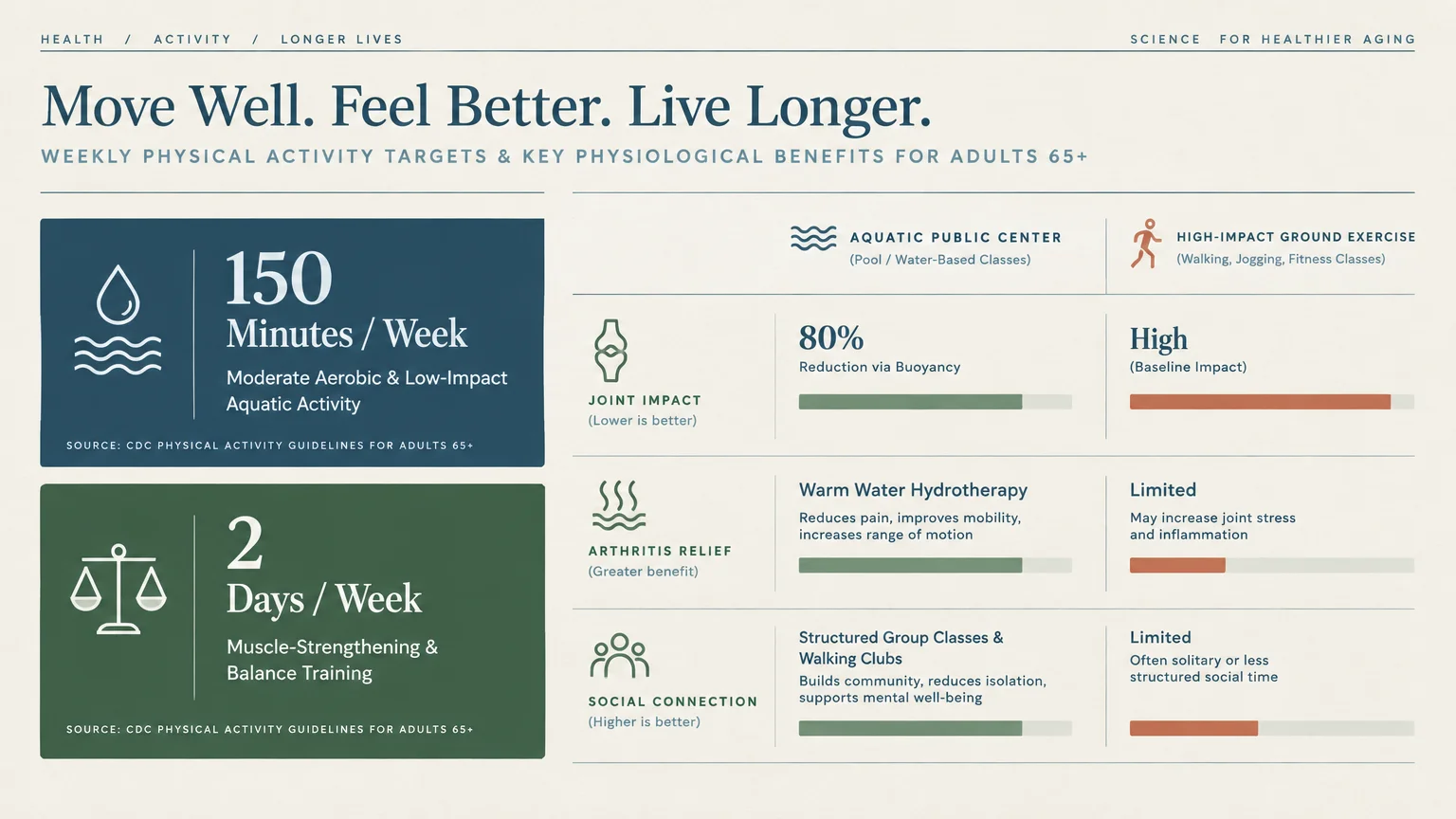
Regular physical movement serves as the cornerstone of vibrant, independent aging. Swimming and aquatic exercise offer buoyant resistance that protects delicate knees, hips, and spinal discs from high-impact jarring.
Warm water relaxes tight muscles and eases arthritis pain while expanding your functional range of motion. An aquatic workout allows you to build muscular endurance without causing debilitating joint inflammation the following morning.
Cardiovascular health also improves when you adopt structured aerobic activity. According to the Centers for Disease Control and Prevention (CDC), adults aged 65 and older need at least 150 minutes of moderate-intensity aerobic activity per week.
The CDC guidelines also urge older adults to schedule two weekly sessions of muscle-strengthening exercise and balance routines. Public recreation centers simplify meeting these benchmarks by placing heated lap lanes and weight rooms under one roof.
Social connections are equally critical for your long-term cognitive health and personal vitality. Group exercise classes, walking clubs, and open lap hours introduce you to neighborhood peers who share your active routine.
As noted by researchers at the National Institute on Aging (NIA), staying socially active helps combat the emotional isolation that frequently challenges retirees. Meaningful friendships keep your mind sharp and lift your daily spirits.
Public facilities also shield your retirement budget from unexpected strain. You gain access to high-end fitness equipment and certified aquatic staff without committing to steep private initiation fees or mandatory monthly assessments.
Sunbelt Havens With Standout Aquatics
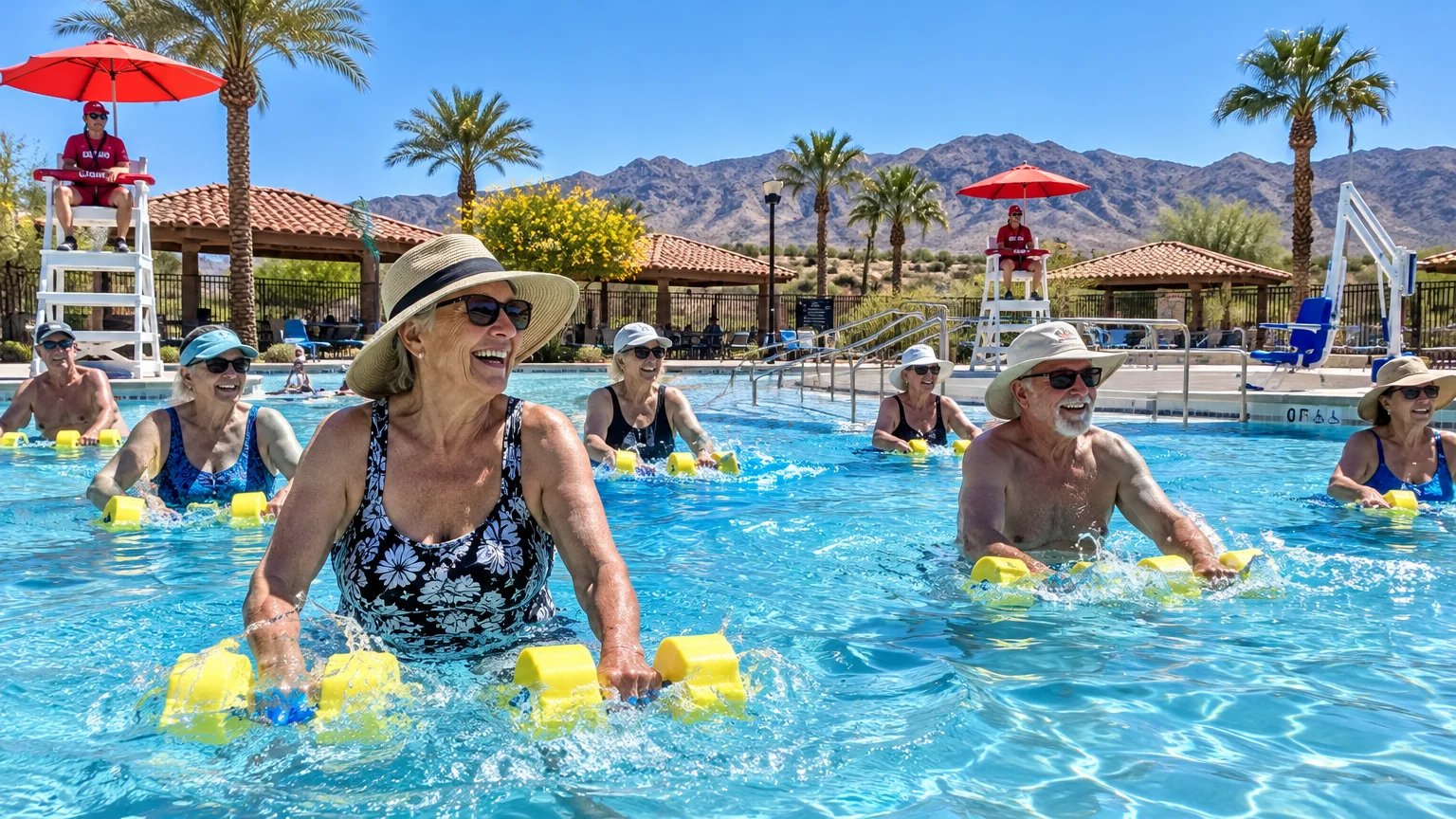
Sunny climates allow year-round outdoor recreation and attract retirees seeking warmth and consistent sunshine. These four southern cities have invested heavily in public aquatic infrastructure designed to serve active older adults.
Sarasota, Florida
Sarasota delivers exceptional cultural attractions alongside premier public athletic amenities. The municipal Arlington Park and Aquatic Complex stands out as the crown jewel of the city’s active wellness facilities.
Swimmers can train in the outdoor 50-meter lap pool or join low-impact classes in the 25-yard instructional pool. The complex also features an indoor gymnasium for pickleball, a dedicated weight room, and a half-mile paved walking trail.
Senior pricing remains remarkably modest for local residents aged 55 and older. Daily aquatic admission costs $2, while a 3-month seasonal pass is $90 and an annual pass runs $256.
General adult passes cost $4 daily or $400 annually, highlighting the substantial city discount for retirees. You only need to register a free account through the city eTrak portal to begin swimming.
Scottsdale, Arizona
Scottsdale blends breathtaking desert scenery with a world-class municipal park network. The city manages four dedicated aquatic centers, including the popular Eldorado, Cactus, Chaparral, and McDowell Mountain Ranch complexes.
Eldorado Aquatic and Fitness Center provides heated lap lanes, shaded spectator areas, and low-impact water exercise sessions. In addition, the city operates dedicated fitness centers inside both the Granite Reef and Via Linda Senior Centers.
Daily lap swim and fitness access at Eldorado and Cactus costs $4 for Scottsdale residents and $6 for non-residents. Frequent swimmers can buy a 10-visit card for $40 or a 30-visit pass for $96.
If you focus primarily on dry-land workouts, the senior centers offer fitness access for $3 daily. Scottsdale residents can also purchase senior fitness memberships for $15 per month or $40 for three months.
Henderson, Nevada
Located adjacent to Las Vegas, Henderson offers a peaceful suburban setting with state-of-the-art community facilities. The 84,120-square-foot Henderson Multigenerational Center ranks among the finest civic recreation facilities in the American Southwest.
This expansive campus features an aquatic complex with three indoor and outdoor pools, plus a suspended indoor jogging track. Members also enjoy a spacious fitness center, a teaching kitchen, and an adult lounge for social gatherings.
City recreation expanded further in October 2026 with the debut of Henderson Sport and Social. This $70 million, 180,000-square-foot indoor community fieldhouse hosts extensive senior sports programs and social activities.
Henderson seniors aged 60 and older pay $21 monthly or $156 annually for an Aquatics Pass. An all-access Platinum Pass covering pools, gyms, and racquetball courts costs $32 monthly or $237 annually.
Savannah, Georgia
Savannah combines coastal Georgia charm with an impressive commitment to public swimming access. The Chatham County Aquatic Center serves as the county’s flagship indoor aquatic hub for fitness enthusiasts of all ages.
Inside the facility, you will find an Olympic competition pool, a warm-water instructional pool, and regular water aerobics. During the summer, the City of Savannah also opens historic outdoor venues, including the 12-foot-deep Daffin Park Pool.
Summer lap and open swimming at Savannah municipal outdoor pools is completely free with no admission fees. For indoor swimming, Chatham County offers seniors aged 60 and older daily passes for $8.
Senior punch passes cost $70 for 10 visits or $140 for 20 visits. An annual senior pass costs $340, which includes unlimited lap swimming and instructor-led water aerobics courses.

Mountain and Western Destinations for Active Seniors
If you prefer crisp mountain air or red-rock desert vistas, these four western communities excel. Each town pairs inspiring natural scenery with modern indoor recreation centers designed for year-round fitness.
Boulder, Colorado
Boulder is internationally known for its active lifestyle culture and health-conscious community. A single municipal membership grants you access to three expansive rec centers: North Boulder, South Boulder, and East Boulder.
The East Boulder Community Center also houses the East Age Well Center, which provides specialized programming for older adults. You can transition seamlessly between heated lap pools, indoor ice rinks, therapy areas, and outdoor pickleball courts.
Residents aged 60 and older qualify for Boulder Older Adult Discount rates of $54 monthly or $567 annually. Senior couples who both meet the age threshold can purchase a joint annual pass for $999.
Part-time residents and seasonal visitors can buy the 10-visit Boulder Explorer pass. This multi-visit pass costs $89 for resident seniors and $99 for non-residents, offering complete flexibility without ongoing monthly contracts.
Bend, Oregon
Set along the eastern slopes of the Cascade Mountains, Bend provides endless outdoor recreation and exceptional civic fitness hubs. Juniper Swim and Fitness Center sits inside the 22-acre Juniper Park and anchors city athletic life.
This dynamic facility contains an indoor 25-meter pool, a seasonal 50-meter outdoor pool, hot tubs, steam rooms, and saunas. Across town, the modern Larkspur Community Center hosts the Bend Senior Center, an indoor track, and bright social lounges.
The Bend Park and Recreation District offers tiered rates for in-district residents. Older adults aged 65 to 79 pay $9 for a single visit or $77 for a 10-visit pass.
Honored Citizens aged 80 and older pay $8 per visit or $68 for a 10-visit pass. Larkspur drop-in social activities cost just $1.50 for older adults and $1.25 for residents over 80.
St. George, Utah
St. George attracts retirees with its mild southern Utah winters, sandstone panoramas, and clean suburban neighborhoods. The Sand Hollow Aquatic Center stands as one of the state’s most versatile municipal water complexes.
The center features a 25-meter by 25-yard indoor competition pool alongside an expansive 5,800-square-foot leisure pool. The zero-depth entry basin includes interactive water walks, gentle slides, and shallow areas perfect for water aerobics.
Residents of St. George, Ivins, and Santa Clara all qualify for low municipal resident rates. Seniors aged 60 and older enjoy daily pool admission for just $3.50, compared to $5.50 for non-residents.
If you swim frequently, an individual annual resident pass costs $250, or you can pay $25 per month. Non-residents pay $35 monthly or $315 per year for full access to the aquatic center.
Coeur d’Alene, Idaho
Surrounded by evergreen forests and pristine glacial lakes, Coeur d’Alene offers picturesque Pacific Northwest retirement living. The community gathers at The Salvation Army Kroc Center, a massive recreation complex built for all generations.
The aquatic center features a competition lap pool, a family cove leisure pool, a lazy river, and a hot tub. Beyond the water, you can utilize the cardio wellness center, an indoor gym, and free senior educational seminars.
Seniors aged 65 and older can join the Kroc Center for $46 per month, plus a one-time $75 registration fee. A two-person household membership for couples costs $79 monthly alongside a $100 registration fee.
Eligible seniors can also access the Kroc Center at no cost through Medicare fitness plans. The facility accepts Renew Active, Silver&Fit, Active&Fit, and FitOn Health insurance benefits.
Midwestern and Texas Communities With Elite Rec Centers
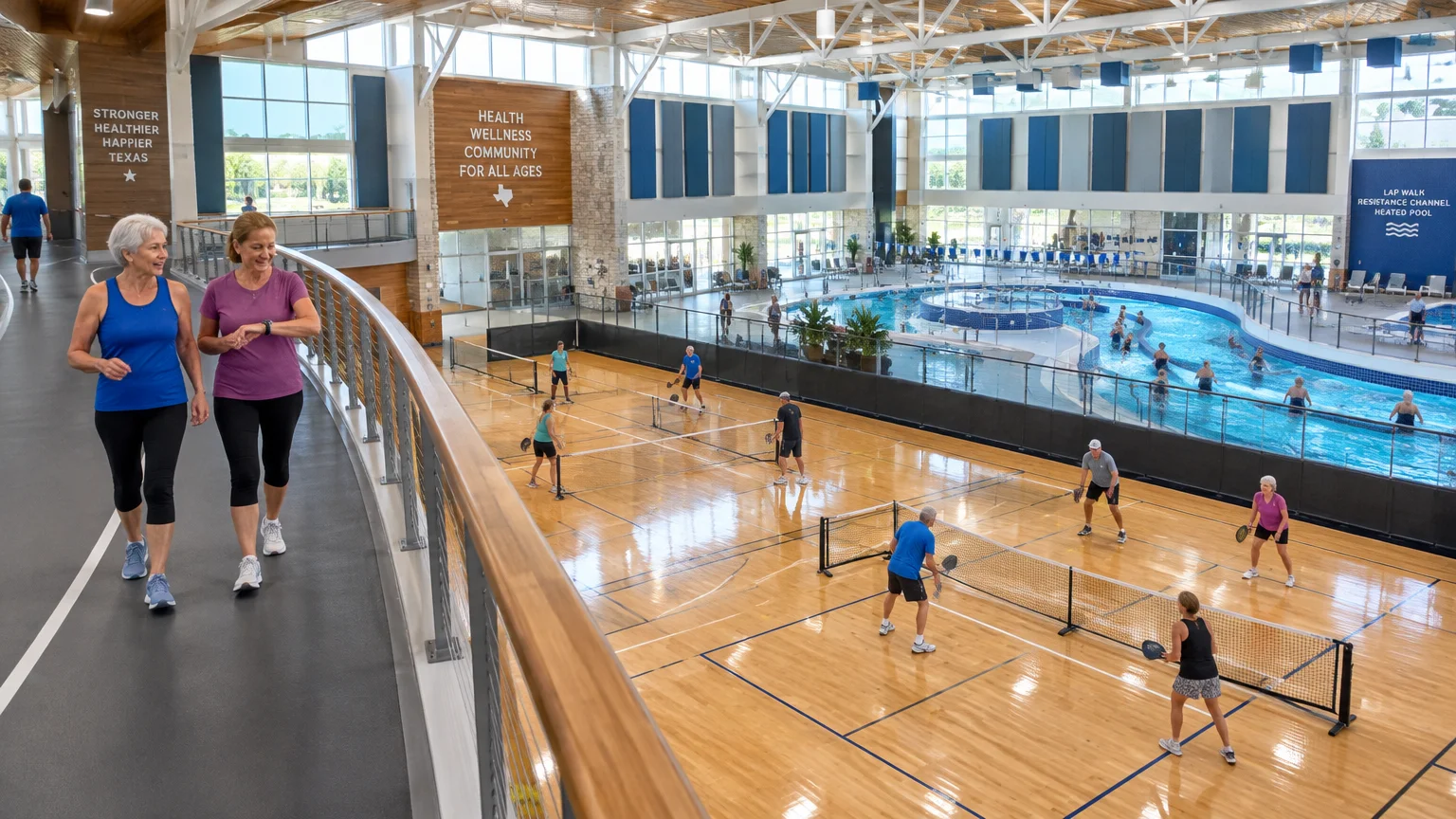
Strong community traditions and low living costs make the Midwest and Texas popular choices for budget-savvy retirees. These four cities demonstrate how dedicated public spending creates welcoming hubs for mature adults.
Westerville, Ohio
Westerville pairs historic charm with an award-winning recreation department located just northeast of Columbus. The expansive Westerville Community Center houses an indoor warm-water pool, a leisure pool, a lap pool, and walking tracks.
The building also connects directly to the dedicated Westerville Senior Center, uniting physical fitness and community social events. You can take gentle aquatic aerobics, lift weights, or join educational groups without leaving the climate-controlled facility.
For seniors aged 65 and older, daily admission is $7 for residents and $14 for non-residents. Resident monthly passes cost $25, while an annual pass costs $285 and unlocks a 20% discount on fitness classes.
Seniors aged 55 and older can also join the Senior Center Program Pass for $24 annually if they live locally. Non-resident seniors pay $42 per year for this dedicated social program membership.
Plano, Texas
Plano sits north of Dallas and offers exceptional parks, safe neighborhoods, and accessible city services. The Sam Johnson Recreation Center for Adults 50+ caters specifically to mature residents seeking fitness and fellowship.
The facility boasts a 2,800-square-foot cardio and strength room, a billiards lounge, fitness classrooms, and the Gazebo Café. Swimmers can also access multiple outdoor and indoor pools operated by Plano Parks and Recreation.
An annual membership to the Sam Johnson Recreation Center costs only $15 for Plano residents and $25 for non-residents. Daily drop-in rates cost an affordable $2 for residents and $3 for visitors.
For broader amenities, a full Senior Recreation Membership for ages 60+ costs $17 monthly or $131 annually. Renewing your annual pass within 30 days of expiration grants an extra 10% loyalty discount.
Ann Arbor, Michigan
Ann Arbor combines university-town energy with outstanding healthcare networks and scenic Huron River parklands. Washtenaw County operates the 51,000-square-foot Meri Lou Murray Recreation Center, an accessible local hub for all-weather exercise.
The center offers a wheelchair-accessible 25-yard heated indoor lap and leisure pool equipped with soothing whirlpool jets. On the upper level, you can walk along an elevated cushioned track that measures 12 laps per mile.
County residents aged 65 and older pay $9 for daily admission, $154 for a 6-month pass, or $236 annually. Non-residents pay $10 daily, $236 for six months, or $368 for a full year.
You can also visit the city-operated Ann Arbor Senior Center for dedicated clubs, art classes, and community lectures. Annual memberships for the senior center cost $25 for individuals or $35 for married couples.
Fort Collins, Colorado
Nestled against the Rocky Mountain foothills, Fort Collins provides scenic beauty, fresh air, and bike-friendly neighborhoods. The Fort Collins Senior Center holds national accreditation from the National Institute of Senior Centers (NISC).
The campus features a 25-yard indoor lap pool, a relaxing hot tub, an indoor track, and a billiards room. City swimmers can also use the Edora Pool Ice Center (EPIC) and the Mulberry Pool.
Seniors aged 60 and older can purchase a Single-Facility Unlimited Pass for $20 monthly, $100 for 6 months, or $180 annually. A Multi-Facility Unlimited Pass covering all city centers costs $35 monthly or $315 per year.
Long-term passes deliver exceptional savings on specialty programming throughout the year. Pass holders receive a 70% discount on group fitness classes and 20% off personal training sessions.
Comparing Senior Amenities and Costs
Reviewing membership costs and unique pool features helps you identify the best fit for your retirement lifestyle. Municipal recreation pricing varies depending on residency status, facility size, and included fitness classes.
The following table outlines annual senior rates and standout aquatic features across all twelve featured retirement destinations. Compare these options to find the facility that aligns with your active goals.
| Town and State | Primary Municipal Facility | Annual Senior Pass Rate | Signature Aquatic Features |
|---|---|---|---|
| Sarasota, Florida | Arlington Park & Aquatic Complex | $256 (Resident, 55+) | 50-meter outdoor lap pool, 25-yard instructional pool |
| Scottsdale, Arizona | Eldorado Aquatic & Fitness Center | $160 est. based on 3-month passes | Heated lap pools, four regional municipal aquatic parks |
| Henderson, Nevada | Henderson Multigenerational Center | $156 (Aquatics) / $237 (Platinum) | Three indoor/outdoor pools, suspended indoor walking track |
| Savannah, Georgia | Chatham County Aquatic Center | $340 (Senior, 60+) | Indoor Olympic pool, warm instructional pool, free city summer pools |
| Boulder, Colorado | Boulder Recreation Centers | $567 (Resident Older Adult, 60+) | Access to three rec centers, indoor pools, therapy basins |
| Bend, Oregon | Juniper Swim & Fitness Center | $77 for 10-visit pass (65-79) | Indoor 25m pool, outdoor 50m pool, hot tub, saunas |
| St. George, Utah | Sand Hollow Aquatic Center | $250 (Resident Individual) | 25m competition pool, 5,800-sq-ft zero-depth leisure pool |
| Coeur d’Alene, Idaho | The Salvation Army Kroc Center | $552 ($46/month, 65+) | Lap pool, leisure cove, lazy river, accepts Medicare plans |
| Westerville, Ohio | Westerville Community Center | $285 (Resident, 65+) | Indoor warm-water pool, leisure pool, lap pool, track |
| Plano, Texas | Sam Johnson Rec Center & City Pools | $131 (Full Senior Rec, 60+) | Dedicated 50+ center, citywide indoor/outdoor public pools |
| Ann Arbor, Michigan | Meri Lou Murray Recreation Center | $236 (County Resident, 65+) | Wheelchair-accessible warm lap/leisure pool, whirlpool jets |
| Fort Collins, Colorado | Fort Collins Senior Center & EPIC | $180 (Single) / $315 (Multi-Facility) | Accredited 50+ center, 25-yard indoor pool, ice center access |
Most municipal recreation centers require proof of local residency to grant discounted pricing. Bringing a recent utility bill, property tax statement, or state-issued driver’s license ensures you receive the lowest rate.
If you split your time between two states as a snowbird, evaluate 3-month seasonal passes or multi-visit punch cards. These short-term options save money when compared to paying full non-resident annual dues.
How Medicare and Insurance Can Fund Your Recreation
Many retirees overlook fitness perks built directly into their private health insurance policies. Enrolling in the right coverage can completely eliminate your monthly recreation center dues and pool admission fees.
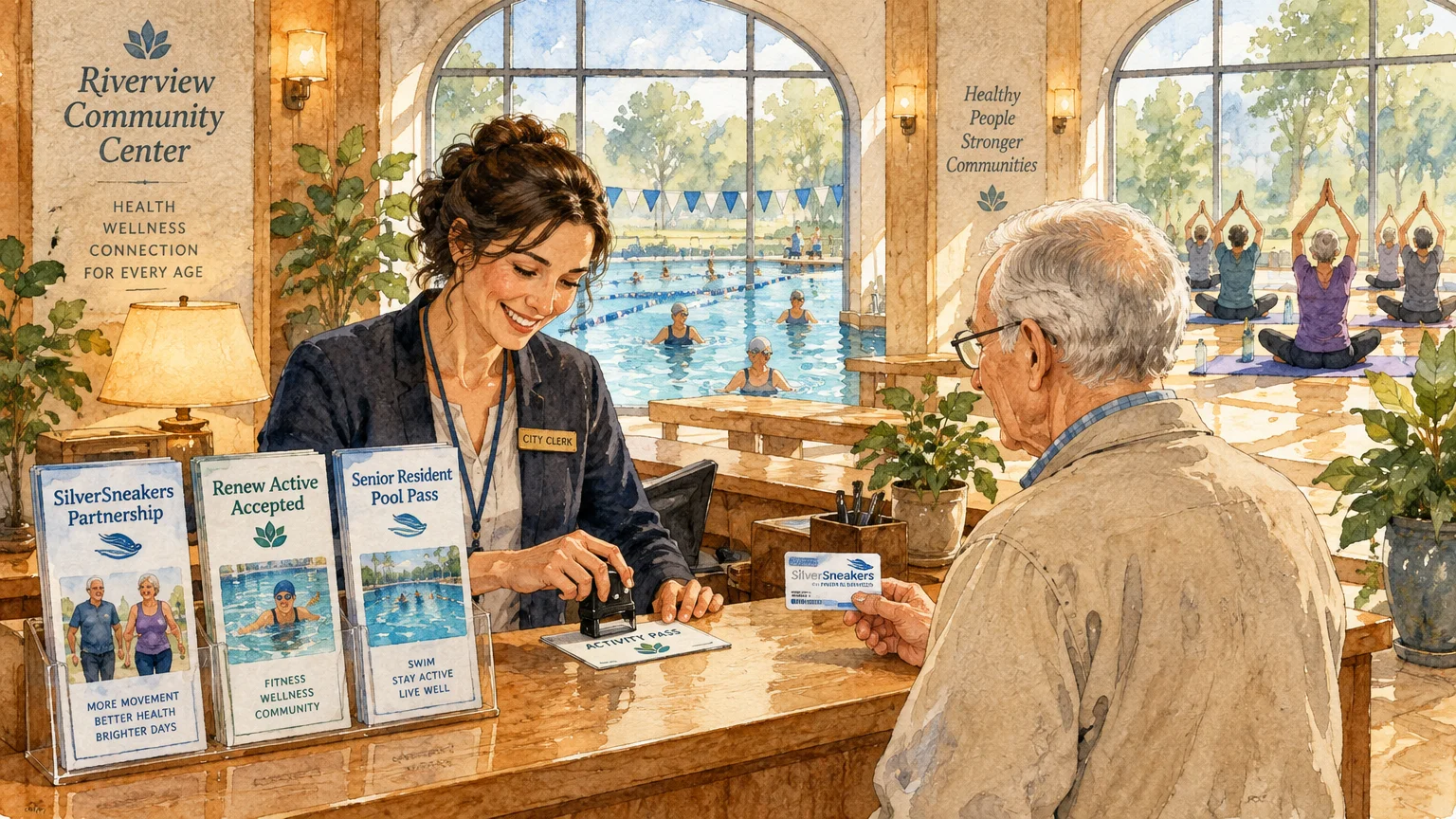
According to Medicare.gov, private Medicare Advantage plans frequently offer extra benefits that Original Medicare does not cover, including fitness club memberships.
Popular subsidized fitness programs include SilverSneakers, Renew Active by UnitedHealthcare, Silver&Fit, and Active&Fit. Municipal facilities across the country partner directly with these networks to welcome older adults at zero out-of-pocket cost.
To verify your coverage, call your insurance provider or bring your health card to the recreation center desk. Staff members can quickly look up your fitness member ID and activate your free recreation pass.
Even if your insurance does not include fitness benefits, ask your local recreation department about need-based fee reductions. Many cities offer confidential scholarship programs funded by municipal tax revenues or community grants.
Budgeting Pitfalls and What to Watch Out For
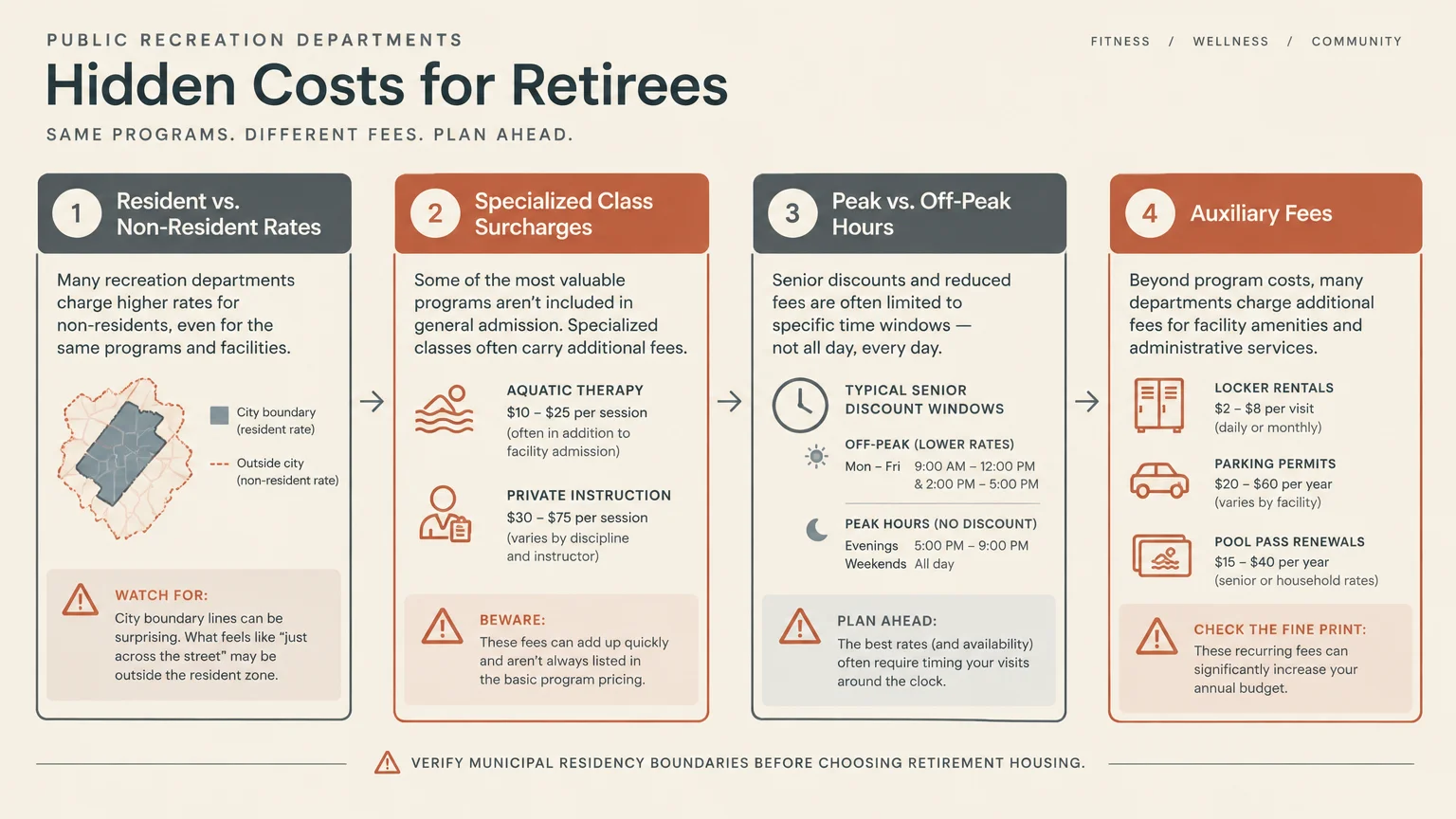
Relocating to a new town requires careful attention to recreational rules and operational schedules. Small unexpected expenses can slowly chip away at your carefully planned retirement budget if you fail to plan ahead.
Non-resident pricing surcharges represent the most common financial surprise for new retirees. If you purchase a home just outside municipal city limits, you could pay up to double for recreation passes.
Check property tax boundaries and recreation district maps before closing on a home or signing an apartment lease. Living a few blocks across an unincorporated boundary line can strip away valuable resident discounts.
Expert analysis from AARP notes that budgeting for daily living costs and community recreation fees helps preserve your long-term retirement savings. Factoring recreation passes into your housing search keeps your retirement secure.
Inquire about annual maintenance closures that temporarily take public swimming pools offline for deep cleaning. Most municipal aquatics facilities shut down lap lanes for one or two weeks each year for mechanical repairs.
Finally, watch for digital booking requirements for popular classes like water aerobics or indoor lap swimming. Centers increasingly use online reservation portals to manage lane capacity and prevent crowded pool decks.
Frequently Asked Questions
What water temperature should I look for if I have arthritis or chronic joint stiffness?
Therapeutic and warm-water instructional pools usually maintain temperatures between 86 and 90 degrees Fahrenheit to soothe stiff joints. Competition lap pools are cooler, typically hovering between 78 and 82 degrees to prevent overheating during intense aerobic swims.
Do municipal recreation centers accommodate swimmers with limited mobility or wheelchairs?
Public recreation centers must comply with federal accessibility standards by providing zero-depth pool entries, gentle ramps, or mechanical ADA pool lifts. Facilities like Ann Arbor’s Meri Lou Murray Center also offer waterproof transfer wheelchairs and accessible family changing stalls.
Can I use SilverSneakers or Renew Active at city-run recreation centers?
Many municipal park departments participate in Medicare fitness networks like SilverSneakers, Renew Active, and Silver&Fit. Contact the facility’s front desk before visiting to confirm which insurance plans they accept for free entry.
What is the difference between a senior center pass and a recreation center membership?
A senior center pass usually covers social events, lectures, card clubs, and drop-in lounge visits for adults aged 50 or older. A full recreation center pass grants entry to lap pools, weight rooms, tracks, and group aquatic classes.
How do I prove local residency to qualify for discounted senior recreation rates?
City recreation departments typically require a valid state driver’s license alongside a current utility bill, lease agreement, or property tax statement showing your local address. Some cities also accept voter registration cards or city water bills as proof.
For additional senior resources, visit
Social Security Administration (SSA), Consumer Financial Protection Bureau (CFPB), Administration for Community Living (ACL) and Eldercare Locator.
Disclaimer: The information in this article is for educational purposes only and is not intended to be a substitute for professional financial, legal, or medical advice. Always consult with a qualified expert for advice tailored to your personal situation.







Leave a Reply