U.S. News & World Report has released its 2027 retirement rankings, placing Southwest Florida once again in the national spotlight. The region remains a premier destination for older adults seeking sunshine, longevity, and active coastal living.
While updated ranking metrics prioritize daily affordability, communities like Naples and Cape Coral continue to attract retirees nationwide. Choosing the right city requires balancing your fixed income against community amenities and living costs.
This guide examines the latest data, tax advantages, and housing realities to help you plan your next chapter. Here is what you must know about moving to Southwest Florida.
In this guide8 sections
- The 2027 Rankings: How Southwest Florida Performed
- Why Retirees Choose Southwest Florida: Longevity and Lifestyle
- Comparing Key Communities: Naples, Fort Myers, Cape Coral, and Beyond
- Florida Tax Advantages and Financial Realities for Seniors
- Hidden Costs and Budget Pitfalls: Insurance and Housing
- Healthcare Access and Aging-in-Place Resources
- Essential Moving Checklist for Southwest Florida Retirees
- Frequently Asked Questions
The 2027 Rankings: How Southwest Florida Performed
U.S. News & World Report published its 2027 Best Places to Retire rankings on October 27, 2026. The study evaluated more than 850 American cities and highlighted the top 250 retirement spots across the nation.
This edition adjusted its weighting system based on a March 2026 survey of 3,500 adults aged 45 and older. Affordability and everyday living expenses carried greater importance than in previous years.
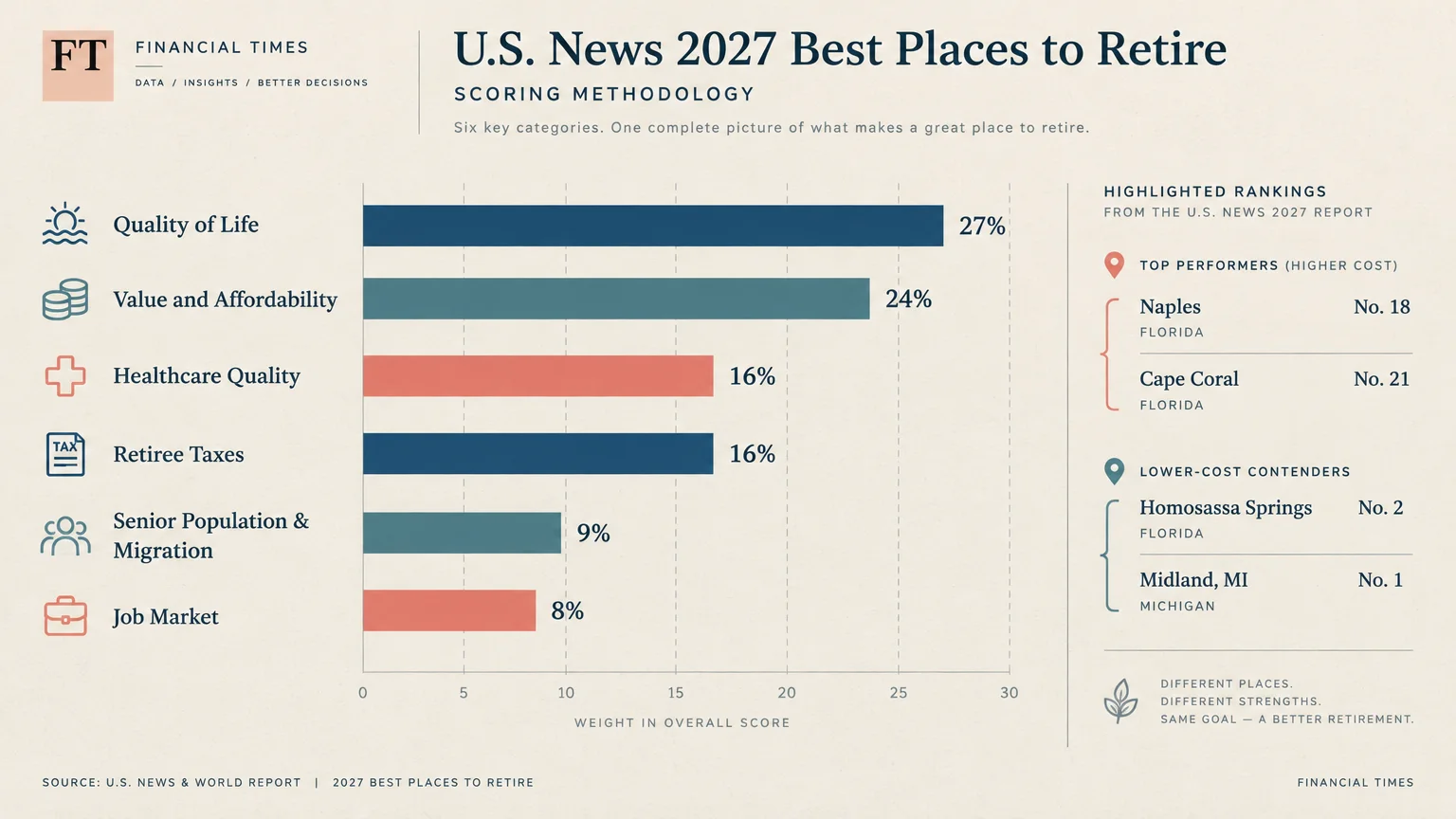
The scoring methodology assigned 27% to Quality of Life and 24% to Value and Affordability. Healthcare Quality and Retiree Taxes each accounted for 16% of the final score.
Senior Population and Migration for residents aged 55 and older made up 9% of the index. The local Job Market accounted for the final 8% of the score.
Florida and Texas dominated the national list. Texas secured 44 spots in the top 250, while Florida claimed 42 positions.
Midland, Michigan earned the No. 1 ranking nationally for the second consecutive year. Meanwhile, Florida’s lower-cost communities surged to the top of the state standings due to the heavy affordability weighting.
Homosassa Springs ranked No. 2 nationally, followed by Palm Coast at No. 10 and Spring Hill at No. 16. Jacksonville secured the No. 28 spot overall while taking the top spot among major big cities.
Southwest Florida markets faced stiffer competition from budget-friendly inland areas. Higher median housing costs pulled down overall affordability scores across Collier and Lee counties.
Even with these methodological shifts, Southwest Florida cities retained prominent national standing. In the expanded 2026 rankings, Naples ranked No. 18 nationally and No. 5 across Florida.
Cape Coral ranked No. 21 nationally and No. 7 in Florida. Bonita Springs followed closely at No. 22 nationally, while Port Charlotte earned the No. 24 position.
In earlier evaluations with smaller sample sizes, Naples secured the No. 1 national ranking in 2025. Naples also ranked No. 15 nationally in U.S. News’ 2026–2027 Best Places to Live report.
The migration index confirmed that thousands of adults over 55 relocate to the Sun Belt each year. Southwest Florida continues to absorb a substantial portion of these incoming residents.
Even though Midland took the overall top spot, Florida remained the most represented southern state. The state’s 42 entries highlight its enduring infrastructure for aging adults.
Why Retirees Choose Southwest Florida: Longevity and Lifestyle
Beyond magazine rankings, demographic data shows why older adults continue to migrate to the Gulf Coast. The region provides an environment designed for active, social, and healthy aging.
A 2026 retirement hub study by StorageCafe ranked Cape Coral–Fort Myers as the No. 1 retirement destination in the country. The same study placed the Naples–Immokalee–Marco Island metro area at No. 3.
Longevity figures in Collier County stand out nationwide. The Naples metropolitan area leads the entire nation in longevity, boasting an average life expectancy of 84 years.
Retirees find strong peer connections throughout the region. Residents aged 65 and older make up over 32% of the total population in the Naples area.
The average annual retirement income for Naples seniors reaches approximately $59,000. This stable financial foundation supports upscale amenities, arts organizations, and premier community programming.
In the Cape Coral–Fort Myers metro area, residents enjoy an average life expectancy of 80.6 years. Older adults aged 65 and up account for nearly 29% of the local population.
The average retirement income in Cape Coral–Fort Myers sits at roughly $42,000 per year. This allows for a comfortable lifestyle centered around boating, golf, and casual coastal dining.
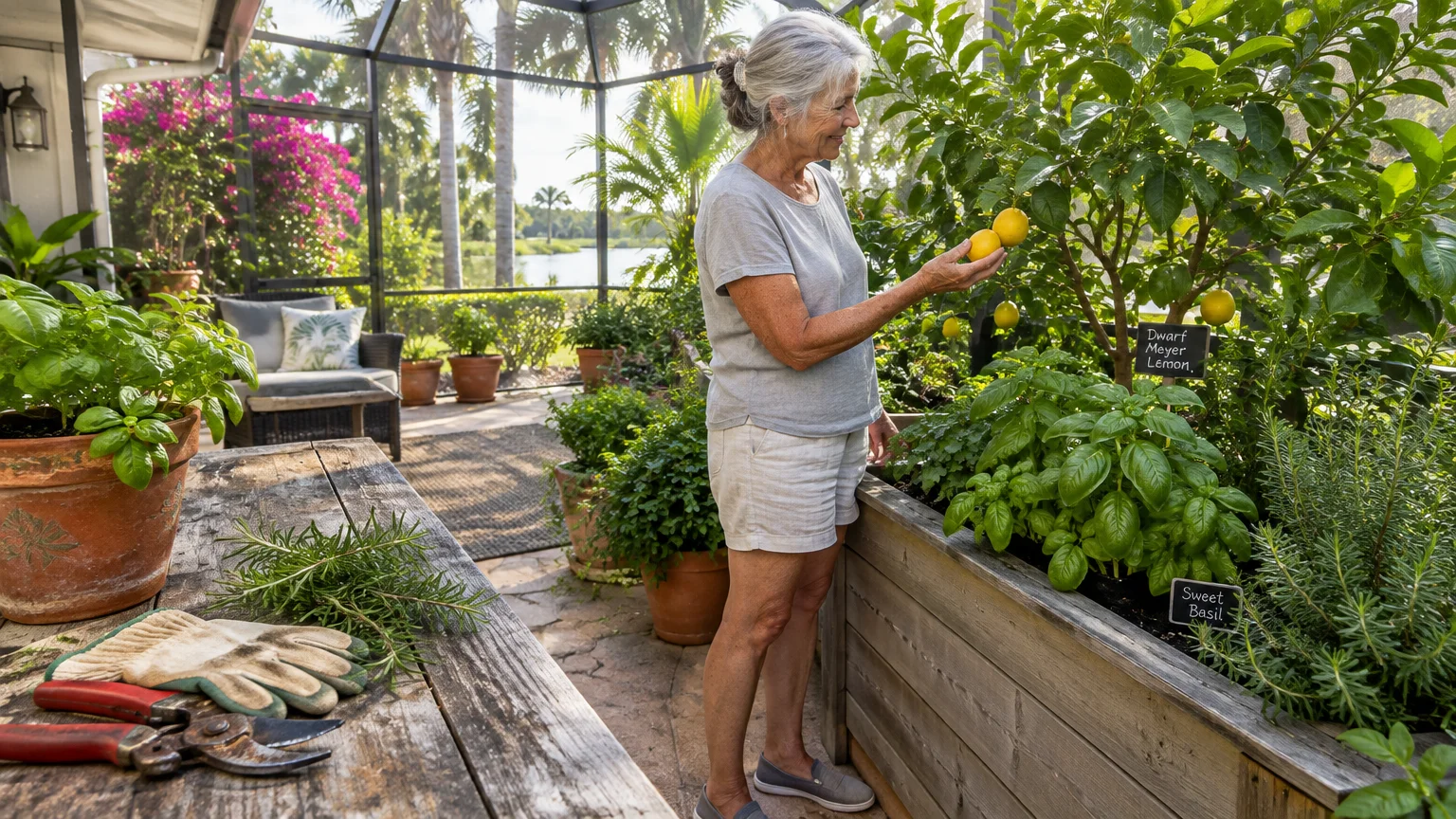
Staying active is remarkably easy along the Gulf Coast. Warm year-round temperatures allow you to walk, swim, garden, and play pickleball in every season.
According to the Centers for Disease Control and Prevention (CDC), regular physical activity and strong social networks help prevent chronic illness and preserve cognitive function in seniors.
Southwest Florida neighborhoods are built around these health-promoting principles. Master-planned communities offer walking paths, fitness centers, and social clubs right outside your front door.
Access to coastal waterways provides more than scenic views. Studies demonstrate that spending time near water reduces stress levels and enhances overall mental wellness for seniors.
Naples and Fort Myers also provide vibrant lifelong learning institutes. Local colleges offer audit programs, lecture series, and creative workshops designed specifically for older adult learners.
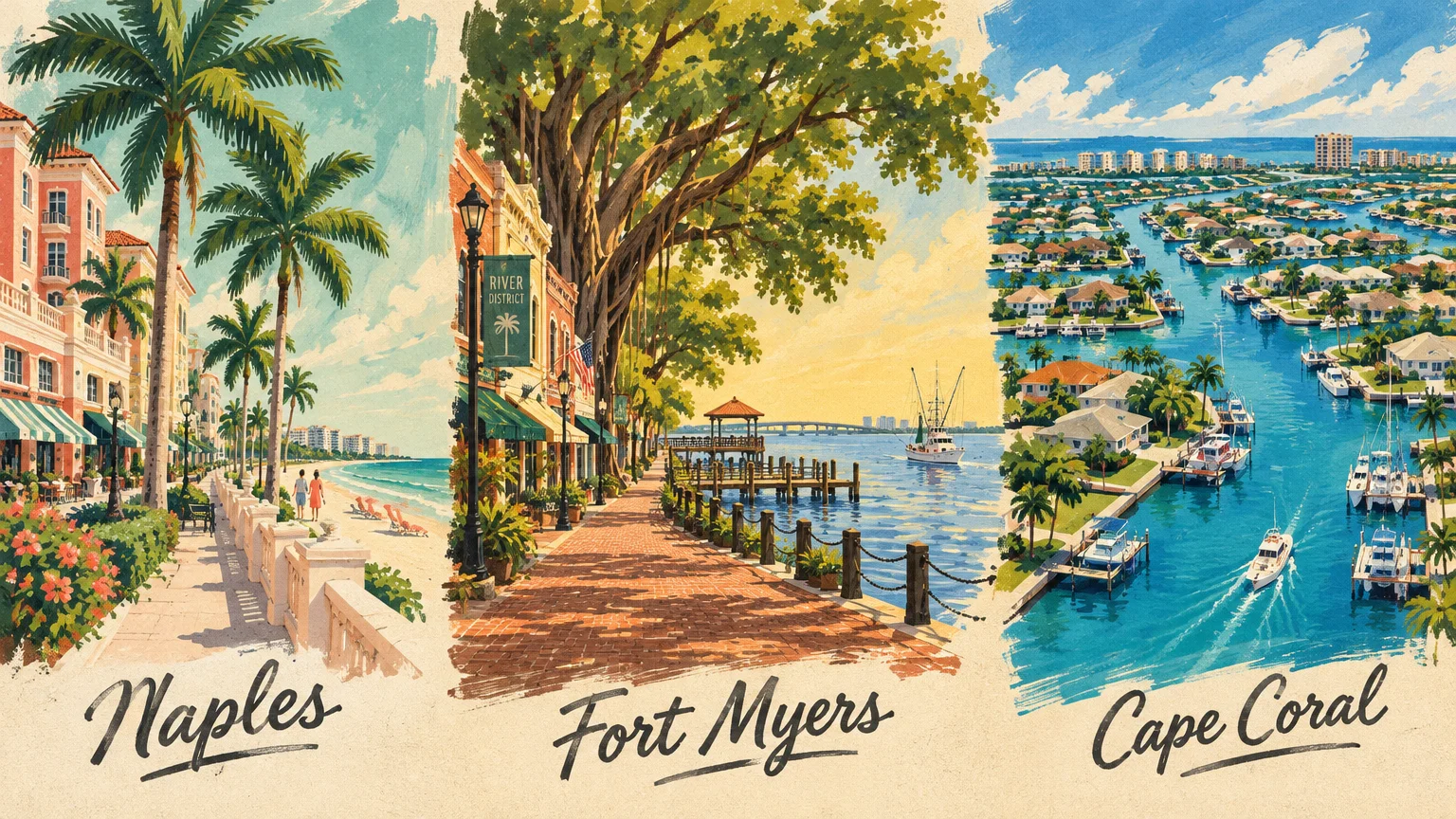
Comparing Key Communities: Naples, Fort Myers, Cape Coral, and Beyond
Southwest Florida is not a uniform region. Each municipality offers a distinct personality, housing market, and cultural atmosphere for retirees.
Naples represents the luxury standard of the Gulf Coast. You will find world-class dining along Fifth Avenue South, immaculate golf courses, and white-sand beaches on the Gulf of Mexico.
Housing in Naples commands a significant premium compared to neighboring areas. It caters primarily to retirees with robust investment portfolios and substantial retirement savings.
Cape Coral offers an entirely different coastal lifestyle. Known for having over 400 miles of navigable canals, it is a haven for boating and fishing enthusiasts.
Cape Coral provides single-family waterfront homes at price points lower than Naples. Many homes feature private docks, giving you direct access to the Gulf.
Fort Myers blends rich history with contemporary commercial development. The historic downtown River District offers art walks, theaters, and waterfront dining along the Caloosahatchee River.
Fort Myers also serves as the healthcare and commercial hub for Lee County. It provides diverse housing options, ranging from historic bungalows to active adult condominium developments.
Bonita Springs sits conveniently between Naples and Fort Myers. It provides pristine beaches, such as Barefoot Beach Preserve, and quiet residential neighborhoods with lush natural preserves.
Port Charlotte lies to the north along Charlotte Harbor. It remains one of the most affordable coastal alternatives in Southwest Florida, offering unhurried living and excellent sailing waters.
Reviewing local community metrics helps you narrow down your search based on your budget and lifestyle preferences.
| Community | Life Expectancy | Share Aged 65+ | Average Retirement Income | Primary Appeal |
|---|---|---|---|---|
| Naples | 84.0 Years | 32% | $59,000 | Luxury amenities, fine dining, championship golf |
| Cape Coral | 80.6 Years | 29% | $42,000 | 400 miles of canals, boating, waterfront living |
| Fort Myers | 80.6 Years | 29% | $42,000 | Historic downtown, cultural arts, medical centers |
| Bonita Springs | 82.5 Years | 31% | $51,000 | Quiet beaches, nature parks, central location |
| Port Charlotte | 79.8 Years | 33% | $38,000 | Budget-friendly housing, calm harbor waters, fishing |
Evaluating these figures allows you to align your personal lifestyle goals with realistic regional living costs.
Florida Tax Advantages and Financial Realities for Seniors
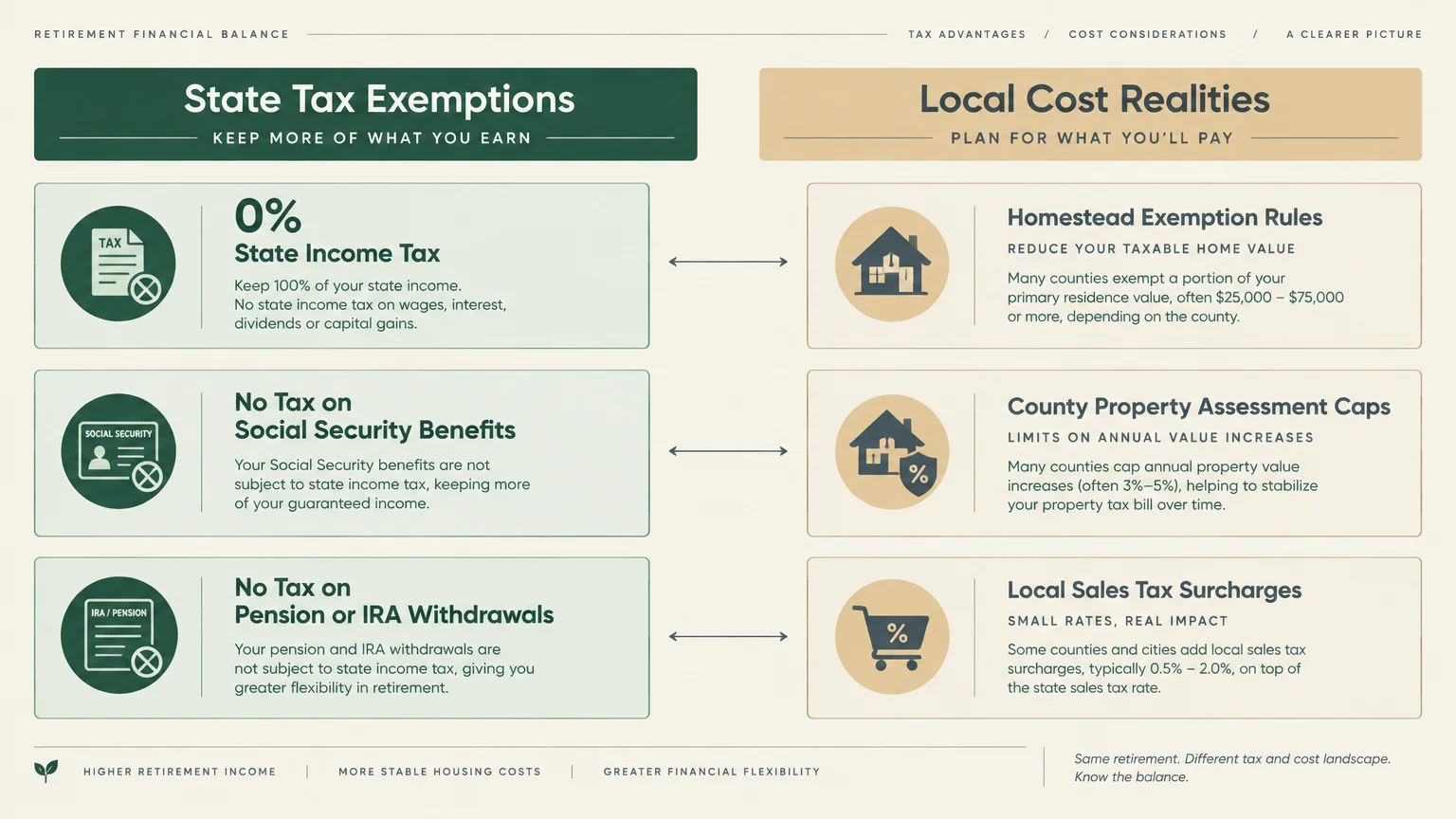
Florida’s tax structure represents one of its greatest draws for retirees on fixed incomes. State tax policies allow you to keep more of your hard-earned retirement savings.
Under Article VII, Section 5 of the Florida Constitution, the state levies no personal income tax. This constitutional protection cannot be easily overturned by state lawmakers.
Florida does not tax traditional pension payments or withdrawals from 401(k) and 403(b) accounts. Traditional IRA distributions and Roth IRA withdrawals are also completely free from state tax.
According to the Social Security Administration (SSA), up to 85% of your benefits may be taxed at the federal level depending on your income. However, Florida never taxes your Social Security benefits.
Florida also levies no state inheritance tax or estate tax. You can pass your accumulated assets to your children and grandchildren without state-level death taxes eroding their inheritance.
Property tax relief is another major benefit for permanent Florida homeowners. You can claim the Florida Homestead Exemption on your primary residence to reduce its assessed taxable value.
The Homestead Exemption deducts up to $50,000 from your home’s assessed value for tax purposes. You must establish legal residency and submit your application by March 1 following your purchase year.
The Save Our Homes amendment protects your property from sudden assessment spikes. It caps annual increases in your home’s assessed taxable value at 3% or the Consumer Price Index rate, whichever is lower.
For 2026, the Save Our Homes assessment cap is set at 2.7%. This cap shields long-term residents from runaway property tax bills during periods of rising home values.
Florida voters are also deciding on Amendment 3 on the November 2026 ballot. If passed, this measure will further expand homestead exemptions for non-school property taxes in 2027 and 2028.
The exemption rules also provide additional tax deductions for low-income seniors aged 65 and older. Many counties in Southwest Florida grant up to $50,000 in additional homestead reductions.
You must provide documentation of your adjusted gross income to your county property appraiser. Check with your local Collier or Lee County tax office for specific local income thresholds.
Hidden Costs and Budget Pitfalls: Insurance and Housing
While Florida offers substantial tax breaks, living in paradise comes with unique financial challenges. Understanding these recurring expenses is essential before signing a purchase contract.
Florida’s statewide median home sale price leveled off at approximately $383,000 as of September 2026. However, purchase prices in coastal Collier and Lee counties often trend higher.
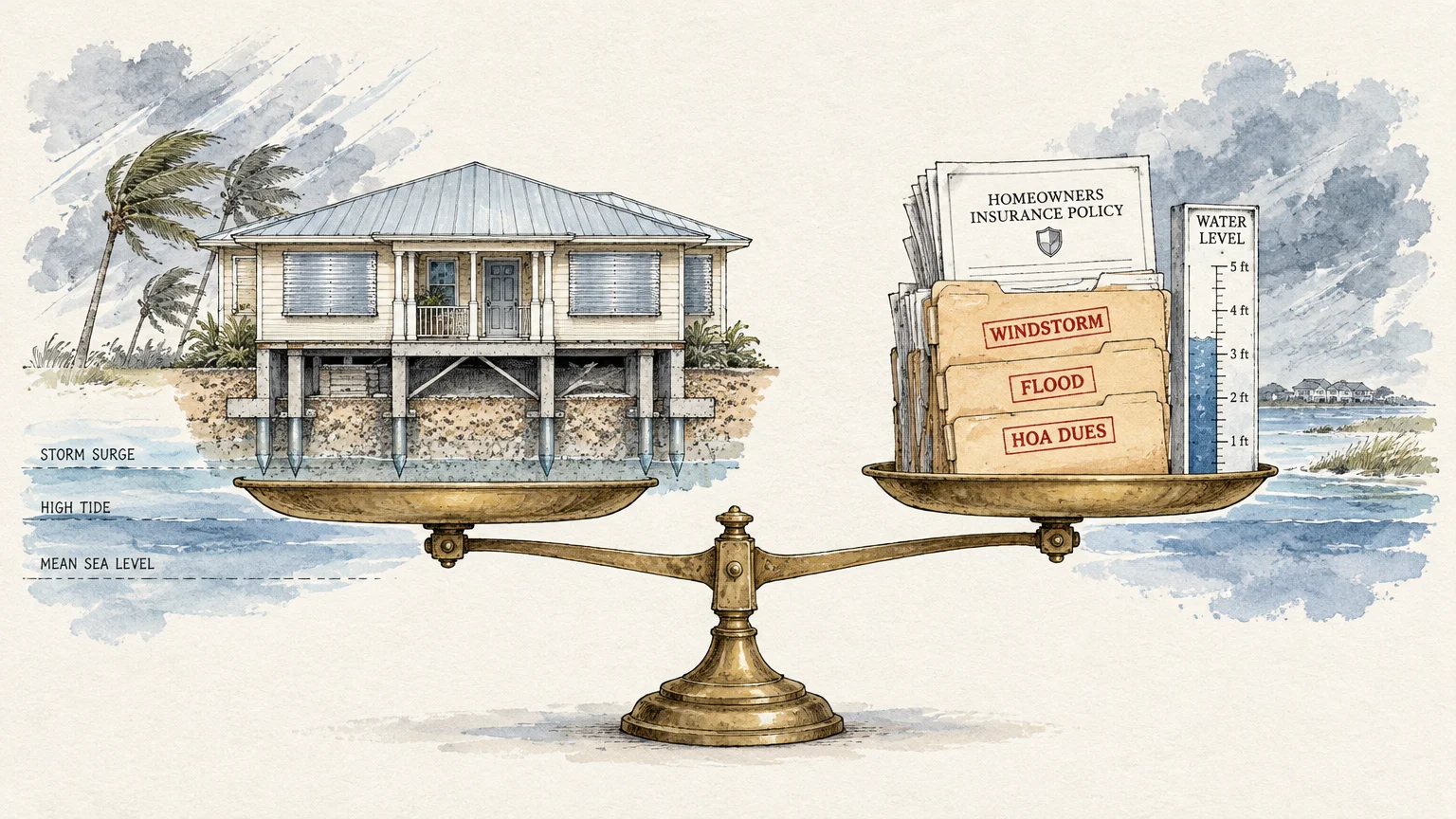
Property insurance represents the largest unexpected expense for newcomers relocating from northern states. Florida carries the highest average homeowners insurance premiums in the United States.
In late 2026, the statewide average premium for homeowners insurance reached $8,471 per year. Coastal properties exposed to high wind risks often encounter even higher insurance quotes.
Standard homeowners insurance policies do not cover damage caused by rising floodwaters or storm surges. You must purchase a separate flood insurance policy through the National Flood Insurance Program or private carriers.
Research from the Consumer Financial Protection Bureau (CFPB) warns retirees to evaluate total housing costs—including insurance, loan obligations, and taxes—before purchasing a home.
Homeowners association (HOA) and condominium fees can also strain your monthly retirement budget. Recent state legislation mandates strict structural inspections and fully funded reserves for multi-story condominium buildings.
These safety regulations have resulted in special assessments and higher monthly maintenance fees across older coastal complexes. You must review an association’s financial reserves and inspection reports before buying.
Seniors should also remain vigilant against common local financial pitfalls. Unscrupulous roofing contractors and unlicensed handymen frequently target older homeowners with high-pressure repair scams after severe storms.
Always verify that any contractor carries active licensure and liability insurance with state regulators. Never pay large cash sums upfront or assign your insurance claim benefits directly to a contractor.
To protect your home budget, request a comprehensive wind mitigation inspection before finalizing any home purchase. This inspection evaluates roof decking, nail spacing, and tie-down anchors for potential discounts.
A clean wind mitigation report can cut your annual insurance premium by thousands of dollars. Local insurers provide significant discounts when your home features third-nail roof straps and modern hurricane shutters.
Healthcare Access and Aging-in-Place Resources
Quality healthcare access becomes increasingly vital as you enter your seventies and eighties. Southwest Florida boasts a robust, expanding medical infrastructure tailored to older adults.
In Collier County, the NCH Healthcare System provides nationally recognized cardiac, stroke, and orthopedic care. The system maintains strategic clinical alliances with major national medical institutions.
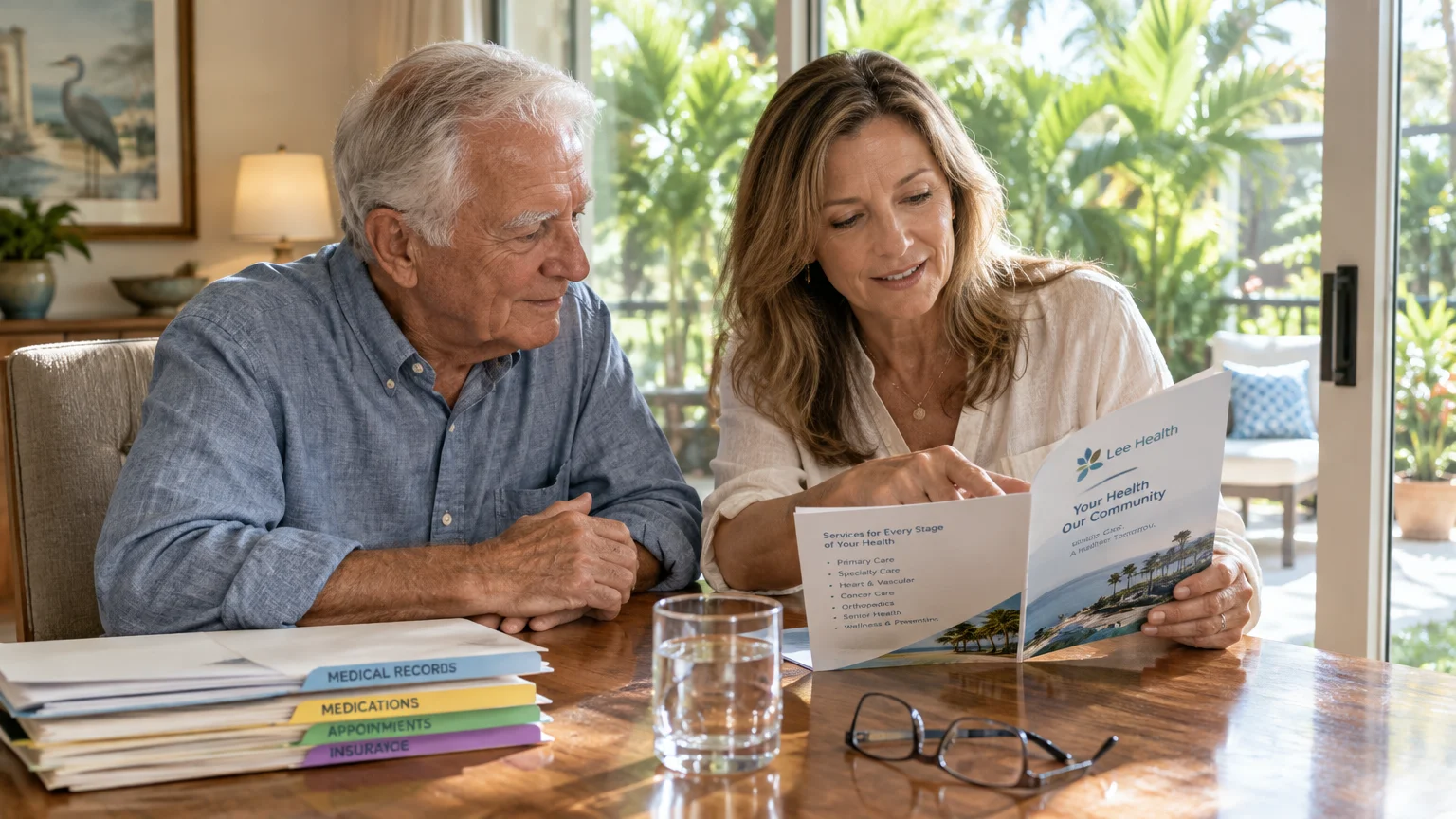
In Lee County, Lee Health operates multiple full-service hospitals, specialized oncology clinics, and outpatient surgical centers. Their flagship facilities offer comprehensive rehabilitation and emergency services.
Navigating your Medicare choices is an essential step when relocating to Florida. You must decide whether Original Medicare with a Medigap plan or a Medicare Advantage plan fits your medical needs.
According to Medicare.gov, checking local provider networks and prescription drug formularies each year guarantees your doctors and medications remain covered.
Many retirees prefer Original Medicare paired with a supplemental Medigap policy. This combination allows you to visit any specialist nationwide who accepts Medicare without requiring network referrals.
Medicare Advantage plans often feature low premiums and add dental or vision perks. However, their restrictive regional networks can limit your access to premier local specialists.
Aging in place is a priority for many Southwest Florida seniors. Local community organizations provide volunteer transport, meal delivery, and in-home caregiver assistance to support independent living.
Designing your living space for safety is equally important. Installing walk-in showers, zero-threshold doorways, and grab bars helps prevent falls and preserves your mobility.
Lee Health and NCH also feature specialized wellness centers equipped for senior rehabilitation. These centers provide warm-water therapy pools, supervised mobility training, and fall-prevention exercise classes.
Having dedicated geriatric specialists in your network ensures tailored care for chronic age-related conditions. Early registration with a primary physician avoids long waitlists when you arrive.
Essential Moving Checklist for Southwest Florida Retirees
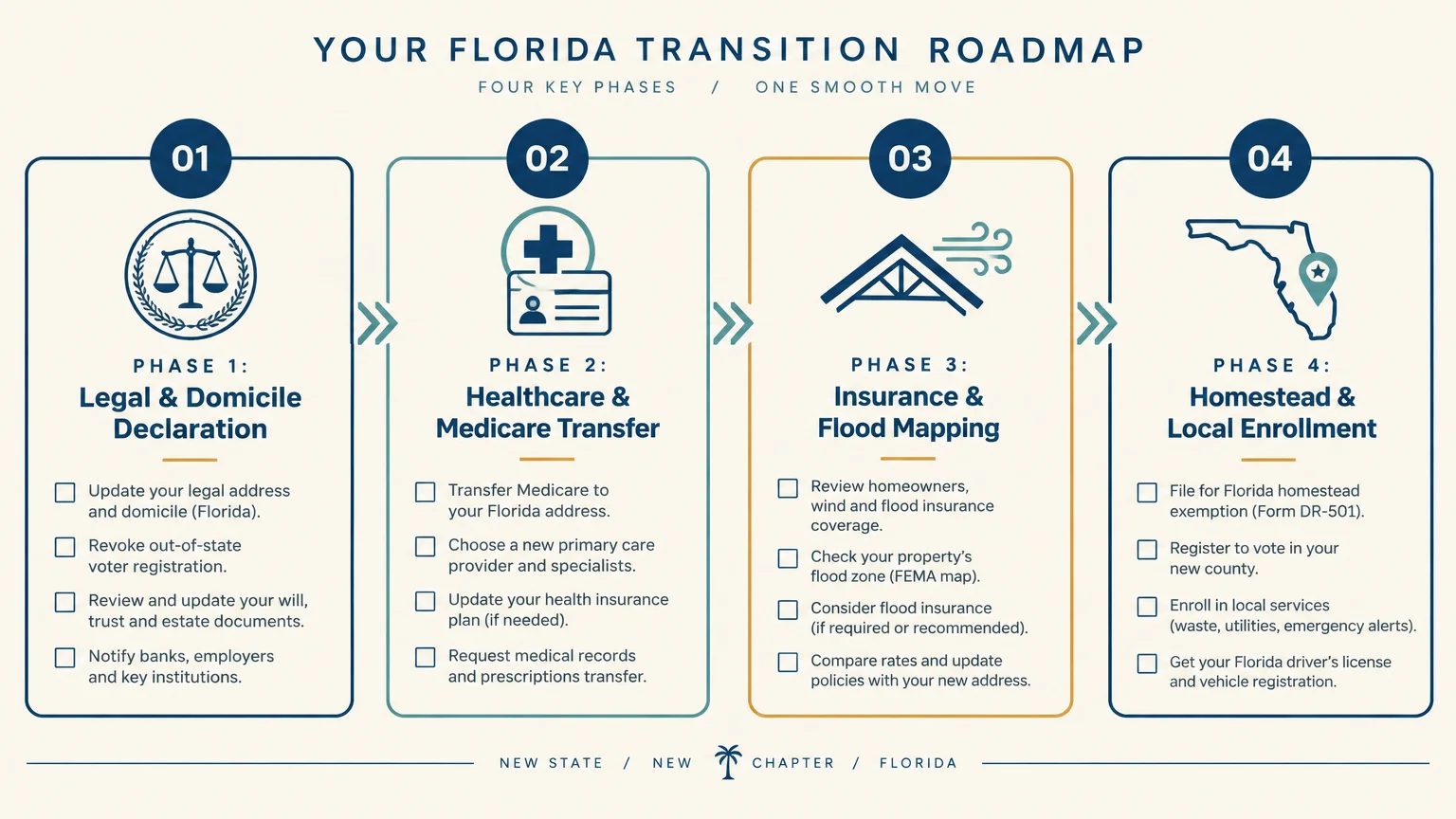
Relocating to a new state involves far more than packing boxes and forwarding your mail. You must follow specific administrative steps to secure your Florida tax and legal benefits.
Establishing legal domicile is your first priority. You should file a Declaration of Domicile with the clerk of the circuit court in your new home county.
Update your identification and vehicle credentials promptly. Florida law requires you to obtain a Florida driver’s license and register your vehicles within 30 days of establishing residency.
Register to vote in your new county and update your official address with the federal government. Inform your financial institutions, pension administrators, and former state tax departments of your move.
File for your Homestead Exemption between January 1 and March 1 following the purchase of your primary residence. Missing this deadline will delay your property tax savings by an entire year.
Review your estate planning documents with a licensed Florida attorney. Florida has distinct probate rules and specific statutory requirements for durable power of attorney and healthcare surrogates.
Take proactive measures to protect your physical residence against hurricane season. Inspect your roof condition, install impact-resistant windows or storm shutters, and secure comprehensive flood insurance coverage.
- File your Declaration of Domicile at the county courthouse.
- Obtain your Florida driver’s license and vehicle tags within 30 days.
- Submit your Homestead Exemption application prior to the March 1 cutoff date.
- Schedule a wind mitigation inspection to qualify for homeowners insurance discounts.
- Update your will, trust, and healthcare directives to comply with Florida statutes.
- Establish relationships with primary care doctors and transfer your medical records.
Be cautious when hiring long-distance interstate moving companies to transfer your household goods. Obtain binding in-home estimates and verify the mover’s federal registration through the Department of Transportation.
Rogue movers frequently demand extortionate cash deposits or hold family possessions hostage until extra fees are paid. Always select licensed, insured carriers with verified customer reviews.
Taking these systematic actions protects your finances and guarantees a smooth transition into your new Gulf Coast community.
Frequently Asked Questions
Why did U.S. News adjust its retirement rankings for 2027?
U.S. News adjusted its ranking model after surveying 3,500 older adults about their primary concerns. The publication increased the weighting for Value and Affordability to 24%, reflecting widespread inflation concerns.
This adjustment caused several lower-cost inland cities to rise in the standings. However, Southwest Florida communities still scored exceptionally high in Quality of Life and Healthcare.
How much income do you need to retire comfortably in Southwest Florida?
Comfortable retirement spending varies significantly across the region. Data shows the average retirement income is $59,000 in Naples and approximately $42,000 in the Cape Coral–Fort Myers metro area.
Retirees who own their homes without a mortgage can live comfortably on less. However, rising property insurance and maintenance costs require maintaining a liquid emergency cash reserve.
How does the Florida Save Our Homes cap protect your property taxes?
The Save Our Homes cap restricts annual assessment increases on homesteaded residential property to 3% or the Consumer Price Index rate, whichever is lower. In 2026, that cap is set at 2.7%.
This protection keeps your local property tax bills predictable even during rapid housing market appreciation. You retain this tax limitation as long as you maintain the home as your permanent residence.
What should retirees know about Florida homeowners insurance costs?
Florida homeowners pay the highest insurance premiums in the country, averaging $8,471 annually in late 2026. Premiums are influenced by roof age, proximity to the coast, and storm mitigation features.
You can lower your premium by ordering an official wind mitigation inspection. Installing hurricane clips, impact glass, and modern roof coverings yields substantial discounts from insurance carriers.
How do Cape Coral and Naples compare for incoming retirees?
Naples offers luxury living, fine dining, upscale shopping, and top-tier medical facilities alongside a higher cost of living. Over 32% of its population is 65 or older, with an 84-year life expectancy.
Cape Coral provides a more relaxed, water-centric lifestyle with 400 miles of canals and lower housing costs. It appeals to retirees seeking direct boating access and single-family suburban neighborhoods.
For additional senior resources, visit Eldercare Locator, AARP and Alzheimer’s Association.
Disclaimer: The information in this article is for educational purposes only and is not intended to be a substitute for professional financial, legal, or medical advice. Always consult with a qualified expert for advice tailored to your personal situation.