Congress has sent major Social Security legislation to President Donald Trump’s desk that changes how retirement ages are labeled. You need to know how these updates impact your monthly checks and claiming timeline.
The Claiming Age Clarity Act clears up common misunderstandings about when your benefits reach their peak. It shifts how the government communicates your options without cutting your earned monthly dollars.
Understanding these new labels helps you protect your hard-earned income and select the best claiming date for your household. Here is what this federal change means for your retirement security.
The Claiming Age Clarity Act Explained
Capitol Hill recently addressed one of the most persistent points of confusion for American retirees. Lawmakers approved a bipartisan reform designed to reshape how you evaluate your retirement timeline.
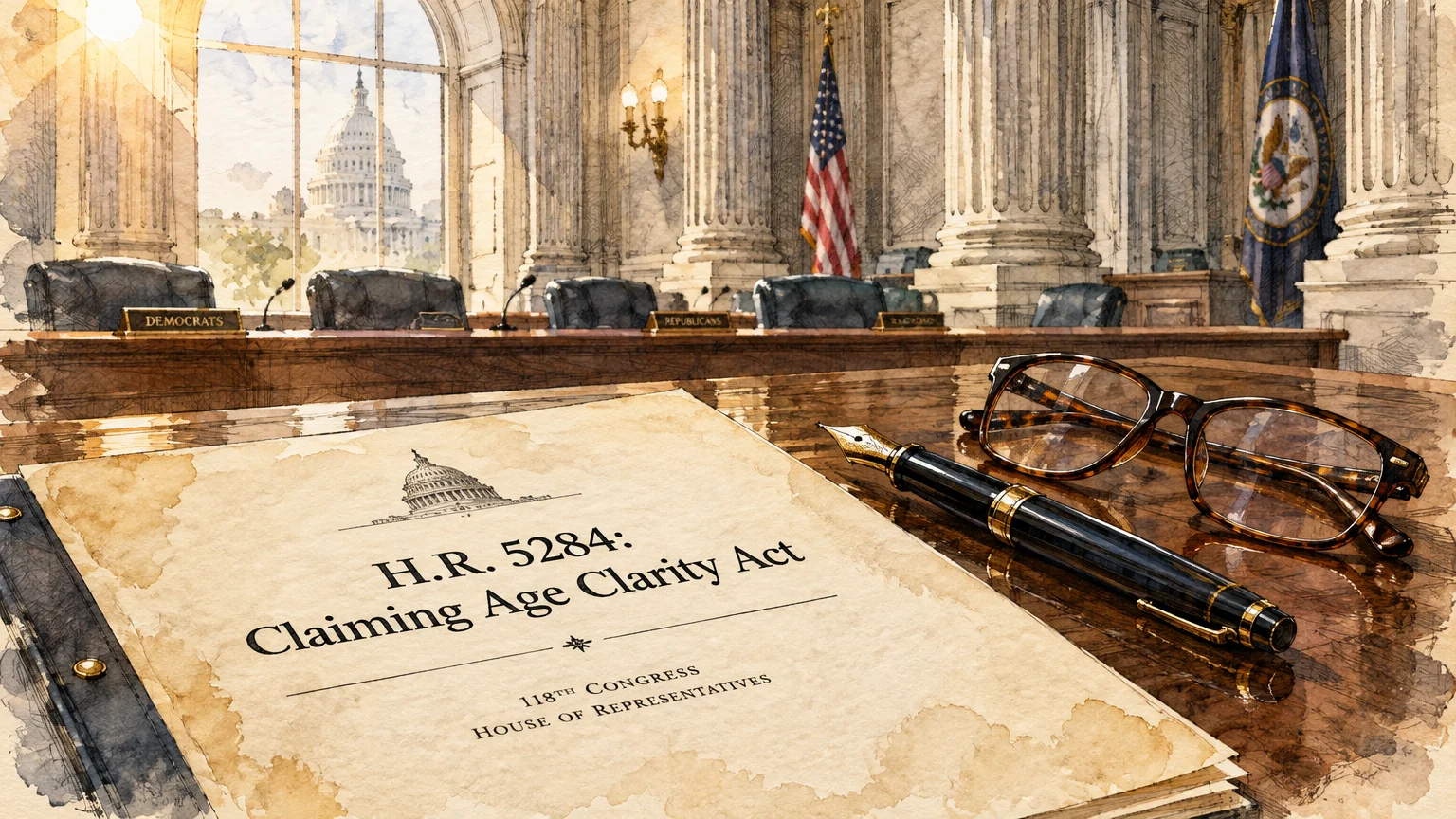
Known formally as the Claiming Age Clarity Act (H.R. 5284), this measure passed the House of Representatives by voice vote on December 1, 2025.
It cleared the Senate with unanimous consent in late September 2026.
As of late October 2026, the legislation awaits President Donald Trump’s signature to officially become federal law. The proposal advanced through Congress with strong bipartisan support from both chambers.
Representative Lloyd Smucker of Pennsylvania and Representative Don Beyer of Virginia championed the bill through the House. Companion legislation in the Senate received backing from Senators Bill Cassidy, Tim Kaine, Susan Collins, and Chris Coons.
Consumer advocacy groups also mobilized behind the initiative. Major organizations, including AARP, AMAC Action, and the Bipartisan Policy Center Action, endorsed the bill to protect senior finances.
You might wonder whether this bill alters your legal eligibility to claim your earned benefits. The short answer is no; the law does not change the actual ages when you can retire.
The statute does not reduce your monthly benefit amounts or push back your earliest filing date. Instead, it alters the formal language used across government websites, notices, and planning calculators.
Lawmakers crafted this legislation after recognizing that millions of seniors misunderstand federal retirement terminology. By replacing outdated jargon, the law helps you make claiming choices that reflect your personal financial needs.