

You can turn decades of professional and personal experience into steady extra income without launching an entirely new career. Flexible skill-based side hustles allow you to earn money on your own schedule while staying actively engaged.
Whether you want to supplement your monthly retirement budget or finance upcoming travel, your existing abilities carry real commercial value. Local families and growing businesses frequently look for reliable, mature professionals with proven integrity.
These eight practical side gigs using your skills offer fulfilling extra income ideas that easily adapt to your personal lifestyle.
In this guide9 sections
- The Power of Senior Experience in the Modern Gig Economy
- 8 High-Value Side Gigs Using Skills You Already Have
- Side Gig Comparison at a Glance
- Social Security Earnings Limits and Rules
- Taxes, Mileage, and Record-Keeping for Freelancers
- Avoiding Common Scams Targeting Senior Freelancers
- Managing Energy, Health, and Client Expectations
- Your Five-Step Launch Action Plan
- Frequently Asked Questions

The Power of Senior Experience in the Modern Gig Economy
You bring distinct advantages to independent work that younger workers often spend years developing. Decades in the workforce cultivate patience, clear communication, dependable punctuality, and creative problem-solving.
According to research from AARP, staying engaged in purposeful work supports both cognitive health and financial security during retirement. Meaningful projects keep your social network active and reduce isolation.
Recent data from the U.S. Bureau of Labor Statistics shows that labor force participation for adults aged 65 and older hovers between 18.4% and 18.9%. More older Americans than ever choose to monetize your skills on flexible terms.
Modern freelance side gigs no longer require forty hours at a noisy desk. You select your preferred clients, establish your hourly rates, and dictate your weekly availability.
Clients actively seek mature independent contractors because you deliver emotional maturity and reliable follow-through. Your background provides instant credibility that eliminates the need for expensive new degrees or certifications.

8 High-Value Side Gigs Using Skills You Already Have
Finding the right venture begins with identifying activities you already perform well. The following options allow you to generate extra income while maintaining full control over your calendar.
1. Academic Tutoring and Career Mentoring
If you spent your career in education, business, nursing, or engineering, students and early-career professionals need your guidance. Tutors assist learners ranging from elementary school children to college students preparing for specialized licensing exams.
You can tutor in person at local community libraries or mentor clients virtually through video calls. Career coaching allows retired executives to review resumes, conduct mock interviews, and assist mid-career workers seeking promotions.
Startup costs remain minimal because you already possess the subject knowledge. An inexpensive headset, a reliable internet connection, and digital camera equipment are all you need to reach clients nationwide.
Experienced academic tutors typically earn between $30 and $75 per hour depending on subject complexity. Specialized career mentors often charge $100 or more for comprehensive strategy sessions.
2. Bookkeeping and Daily Money Management
Small businesses, local nonprofits, and busy households constantly struggle to balance their financial records. If you understand basic accounting principles or managed household budgets for decades, bookkeeping provides dependable ongoing income.
Daily money managers help older seniors organize incoming bills, track medical insurance claims, and avoid late payment penalties. You provide families with vital peace of mind by maintaining orderly filing systems.
You can operate this gig almost entirely from home using standard computer spreadsheets or intuitive bookkeeping software. Local accountants frequently refer clients who need organized records before annual tax preparation.
Independent bookkeepers charge between $35 and $60 per hour for ongoing reconciliation work. Daily money management services command similar hourly rates for personalized home visits.
3. Home Organizing and Downsizing Assistance
Many older adults feel overwhelmed when preparing to move into smaller homes or retirement communities. Families navigating life transitions urgently need compassionate, methodical organizers who understand how to handle years of belongings.
Your life experience equips you to guide emotional decisions about family heirlooms and donations. You coordinate donation pickups, run yard sales, and pack delicate household items safely.
This service also appeals to busy working professionals who need assistance reorganizing pantries, home offices, and cluttered garages. Word-of-mouth marketing across neighborhood associations produces rapid local growth.
Professional home organizers generally charge between $40 and $80 per hour. Helping seniors downsize into manageable living environments creates immense personal satisfaction alongside steady revenue.
4. Freelance Writing, Proofreading, and Editing
Clear, compelling writing remains an essential business asset across every industry. If you drafted reports, composed client correspondence, or edited publications throughout your working life, writing offers boundless flexibility.
Organizations need freelancers to draft monthly email newsletters, write website articles, and proofread technical manuals. Self-publishing authors also hire experienced editors to polish manuscripts and check for grammatical consistency.
You work whenever inspiration strikes—early in the morning, late in the evening, or during quiet weekends. All you require is a reliable word processing program and an eye for typographical accuracy.
Freelance editors typically charge between $30 and $55 per hour or charge flat fees per completed manuscript page. Specialized trade writers often secure consistent monthly retainers from corporate clients.
5. Pet Sitting and Dog Walking Services
If you love animals and enjoy remaining active outdoors, neighborhood pet care is an enjoyable, low-stress venture. Pet owners prefer leaving their companions with calm, dependable adults rather than impersonal commercial boarding kennels.
You can offer daily midday dog walks for working neighbors or provide overnight care in your home. Some clients simply need someone to visit once or twice daily to feed cats and water house plants.
Walking dogs provides gentle daily cardiovascular exercise while establishing dependable weekly routines. You control which animal breeds, sizes, and temperaments you accept into your home.
A thirty-minute dog walk yields $20 to $30, while overnight pet sitting pays $50 to $85 per night. Caring for two or three recurring client pets each week creates meaningful income quickly.
6. Handyman and Home Maintenance Services
Homeowners constantly encounter small repair tasks that large contracting firms refuse to accept. If you possess basic woodworking, plumbing, or painting skills, local property owners will keep you busy year-round.
Common projects include fixing running toilets, patching drywall, assembling flat-pack furniture, and hanging heavy pictures. Seniors in your community will particularly appreciate hiring a peer who respects their living spaces.
You decide which specific jobs you accept and decline any task involving heavy lifting or steep ladders. Carrying basic hand tools and portable power equipment lets you solve problems quickly.
Handyman operators routinely charge between $45 and $90 per hour depending on regional market demand. Always check local licensing and insurance rules before accepting complex electrical or structural jobs.
7. Event Planning and Day-of Coordination
Successful weddings, retirement celebrations, and charity banquets depend on meticulous logistical planning. If you spent years organizing family reunions, business conventions, or church socials, your planning skills are invaluable.
Couples often hire a day-of coordinator simply to keep vendors on schedule and manage unexpected venue hiccups. This role avoids months of stressful planning while focusing entirely on executing the event day smoothly.
You serve as the calm anchor who directs caterers, welcomes musicians, and guides guests during critical moments. Your presence lets families relax and enjoy their milestone occasions without logistical anxiety.
Day-of event coordinators charge between $600 and $1,800 per celebration based on guest count and timeline complexity. Working just two events per month generates substantial supplemental income.
8. Local Tour Guiding and Experience Hosting
If you have lived in your city or region for decades, you possess rich historical insights that newcomers and tourists appreciate. Tour guiding allows you to share fascinating neighborhood architecture, culinary spots, and cultural stories.
You can lead walking tours through historic districts, guide nature lovers along easy park trails, or host culinary tasting excursions. Partnering with local historical societies or neighborhood visitor bureaus gives your tours immediate visibility.
This side gig combines social connection, light physical movement, and public speaking in an engaging outdoor format. You pick the days, times, and group sizes that match your physical stamina.
Independent guides charge $15 to $35 per guest for a ninety-minute walking tour. Hosting two small groups of eight people each week produces dependable weekly profits.
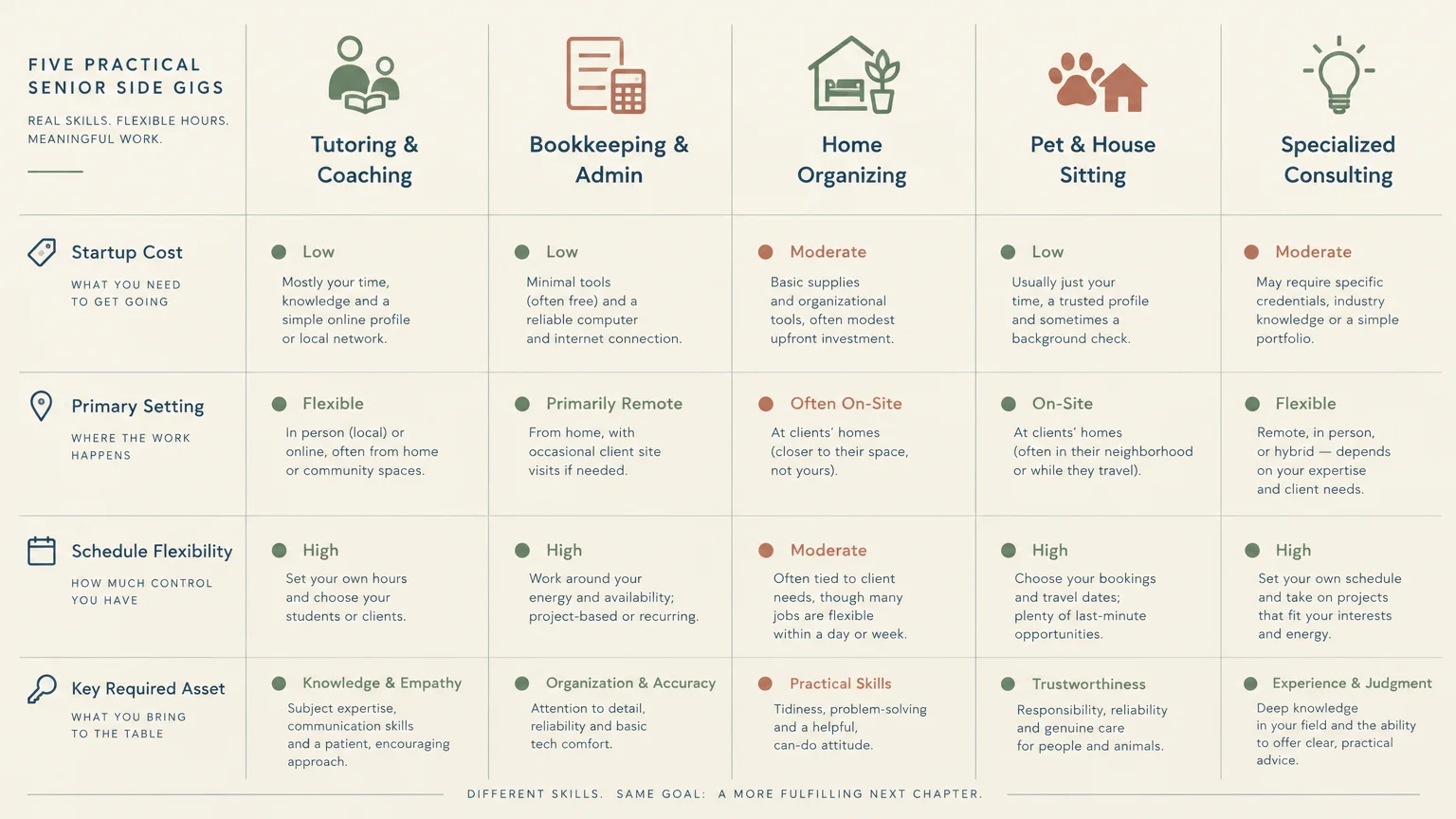
Side Gig Comparison at a Glance
Choosing the right freelance work depends on your physical mobility, personal preferences, and revenue goals. The following table highlights key attributes for each popular option.
| Side Gig | Primary Skill Leveraged | Physical Demand | Average Earning Potential |
|---|---|---|---|
| Academic Tutoring | Subject knowledge, patience | Very low (seated/virtual) | $30 – $75 per hour |
| Bookkeeping | Organization, math literacy | Very low (desk work) | $35 – $60 per hour |
| Home Organizing | System design, empathy | Moderate (bending/lifting) | $40 – $80 per hour |
| Freelance Writing | Written communication | Low (desk work) | $30 – $55 per hour |
| Pet Care Services | Animal handling, reliability | Moderate to high (walking) | $20 – $30 per walk |
| Handyman Tasks | Mechanical troubleshooting | Moderate to high | $45 – $90 per hour |
| Event Coordination | Logistics, time management | Moderate (standing/walking) | $600 – $1,800 per event |
| Local Tour Guiding | Storytelling, local history | Moderate (continuous walking) | $15 – $35 per attendee |
Review this breakdown carefully to select a venture that honors your physical boundaries while maximizing your hourly returns.
Social Security Earnings Limits and Rules
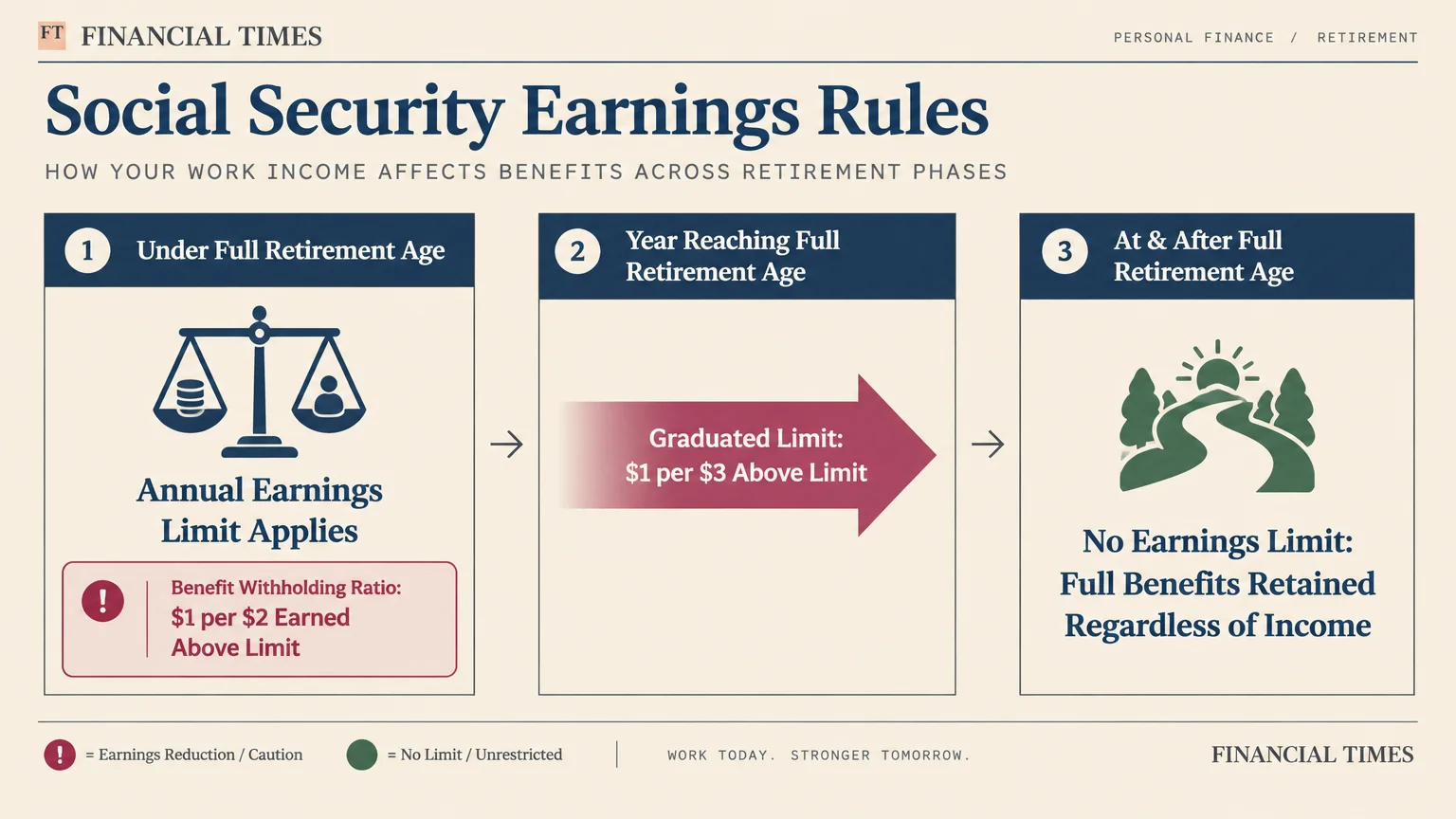
Earning extra money can alter your federal benefits if you collect retirement benefits before reaching Full Retirement Age (FRA). You must understand the exact annual thresholds to prevent unexpected benefit withholding.
As noted by the Social Security Administration (SSA), workers reaching their full retirement age face no earnings cap on freelance wages. Once you reach your statutory age, you keep every dollar you make without reduction.
If you are younger than your full retirement age for the entire calendar year, the annual earnings limit is $24,480. The government withholds $1 in benefits for every $2 you earn above this threshold.
During the specific calendar year you reach full retirement age, the earnings limit rises substantially to $65,160. The agency withholds only $1 for every $3 earned above that limit until your birthday month arrives.
Remember that withheld Social Security benefits are never permanently lost. The administration recalculates your monthly retirement check once you reach full retirement age to credit those earlier deductions back to you.

Taxes, Mileage, and Record-Keeping for Freelancers
Operating an independent side venture means the federal government treats you as a self-employed sole proprietor. Understanding your tax responsibilities early prevents unwelcome surprises when you file your annual return.
You must file an IRS Schedule SE and pay self-employment tax if your net side gig earnings reach $400 or more. The self-employment tax rate is 15.3%, covering 12.4% for Social Security and 2.9% for Medicare.
The 12.4% Social Security portion applies to your first $184,500 of net earnings. You pay the self-employment tax on business profits after deducting allowable operational expenses.
Federal reporting thresholds for business clients changed significantly following the One Big Beautiful Bill Act. Corporate clients must issue Form 1099-NEC only when paying you $2,000 or more in non-employee compensation during the year.
Payment platforms like PayPal, Venmo, and Rover report earnings via Form 1099-K only when transactions exceed $20,000 and 200 transfers. Regardless of whether you receive tax documents, you are legally required to report all earned income.
Deducting business vehicle travel helps reduce your taxable net income considerably. The standard business mileage rate is 72.5 cents per mile from January 1 to June 30, and 76 cents per mile from July 1 to December 31.
Keep a physical logbook or digital mileage tracker in your glove compartment to log dates, destinations, and business purposes. Accurate records ensure you capture every allowable travel deduction safely.

Avoiding Common Scams Targeting Senior Freelancers
Dishonest actors frequently target older workers seeking remote opportunities or consulting contracts. Protecting your hard-earned savings requires constant vigilance and an understanding of predatory schemes.
Guidance from the Consumer Financial Protection Bureau (CFPB) highlights the importance of protecting personal banking information when evaluating new client payment offers. Legitimate clients never demand upfront fees or secret banking credentials.
Beware of counterfeit check overpayment schemes. A fraudulent client sends a check larger than your agreed fee, asking you to wire the excess funds to another party.
The fake bank check eventually bounces after several business days, leaving you legally responsible for the withdrawn funds. Never forward money back to a client under any circumstances.
Avoid any organization that requires you to buy expensive equipment, starter kits, or training programs before working. True clients compensate you for your labor rather than selling you business materials.

Managing Energy, Health, and Client Expectations
Your side gig should enhance your retirement lifestyle rather than creating physical exhaustion or chronic stress. Setting firm boundaries protects your personal schedule, family commitments, and physical health.
Resources from the Administration for Community Living (ACL) emphasize that community engagement through part-time work helps older adults maintain vibrant social connections. However, you must carefully pace your physical exertion.
Establish strict operational hours and communicate them clearly in client welcome letters. Let your customers know that you do not answer phone calls or text messages after five o’clock.
Limit your workload to two or three active clients while adjusting to your new weekly routine. You can always take on additional assignments once you establish a smooth working tempo.
Invest in ergonomic tools, supportive walking shoes, and comfortable office chairs to prevent physical strain. Listening to your body guarantees that your venture remains pleasurable and sustainable for years.
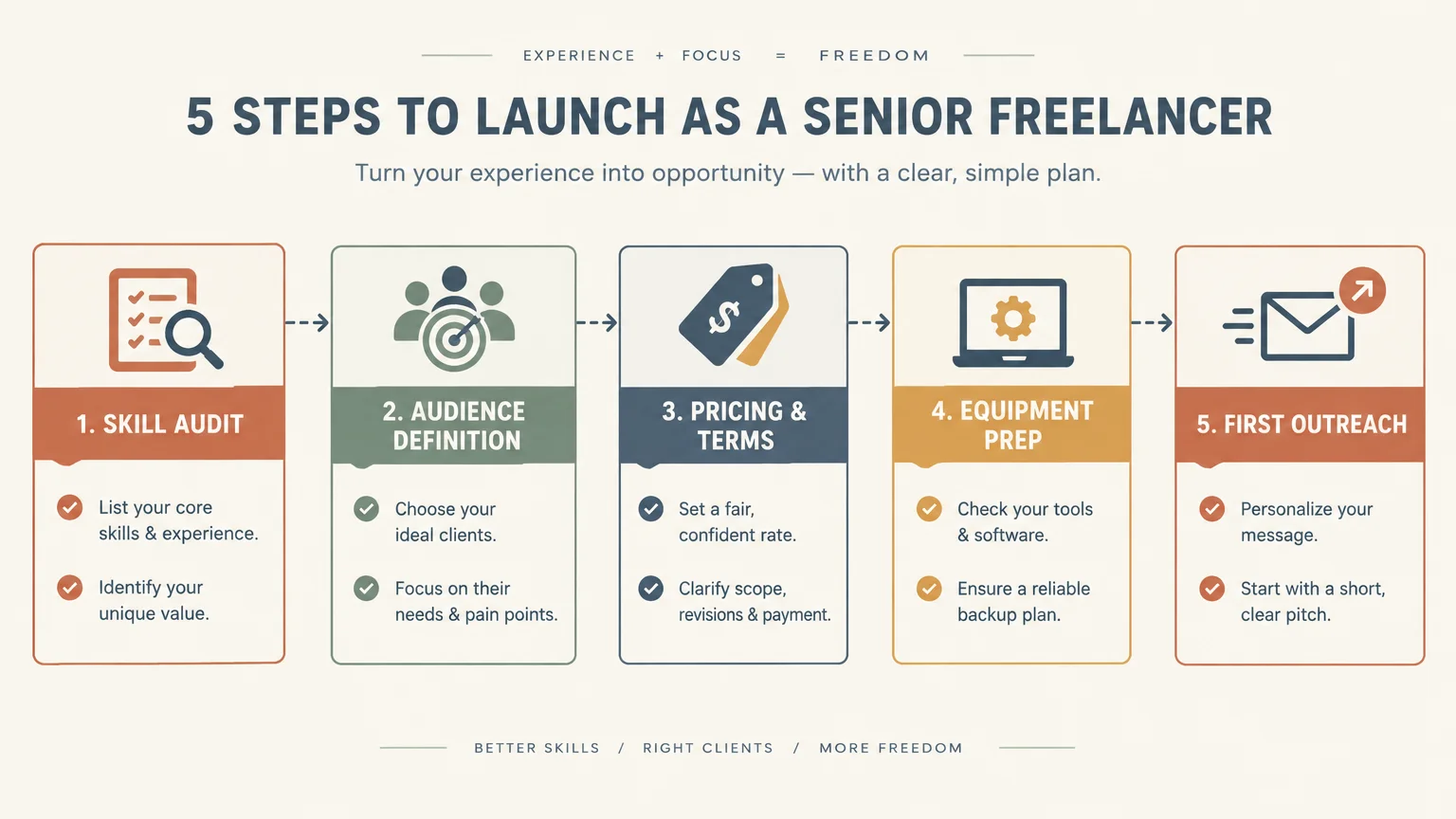
Your Five-Step Launch Action Plan
Transforming your idea into paying work requires a structured, orderly approach. Follow these clear steps to launch your service venture smoothly.
- Audit Your Existing Talents: Write down your career achievements, personal hobbies, and skills friends frequently ask you to share.
- Define Your Target Client: Decide whether you want to serve local residential neighbors, community nonprofits, or corporate businesses.
- Create Simple Marketing Assets: Print basic business cards and set up a free business profile on local community forums.
- Open a Dedicated Bank Account: Separate your business revenue and expenses from your personal household funds to simplify record-keeping.
- Ask Satisfied Clients for Referrals: Request written testimonials and recommendations from your very first customers to attract new business effortlessly.
Taking small, steady actions each day builds professional confidence without overwhelming your daily schedule. Your extensive life experience provides everything you need to start successfully.
Frequently Asked Questions
Can I work a side gig while receiving Medicare?
Yes, earning freelance income has no negative effect on your Medicare eligibility or Part A hospital coverage. However, substantial net earnings could trigger an Income-Related Monthly Adjustment Amount (IRMAA) surcharge on Part B and Part D premiums.
Do I need an LLC to start a small local side gig?
Most seniors start as sole proprietors without forming a formal Limited Liability Company (LLC). You can operate using your personal Social Security number, though an LLC provides personal liability separation if your work involves property repairs.
What happens if I make less than $400 from my side gig?
If your net self-employment earnings remain below $400 for the entire year, you do not owe federal self-employment taxes on that money. You must still include those earnings on your standard Form 1040 income tax return.
Can I write off home office expenses on my taxes?
You can claim the home office deduction if you use a specific area of your home exclusively and regularly for your gig. The IRS simplified option allows you to deduct $5 per square foot of qualified office space up to $1,500 annually.
How do I collect payments safely without sharing my bank account?
Use established payment platforms like PayPal, Venmo, or direct paper checks to avoid distributing personal bank account numbers. Never share online banking passwords or wire funds directly to clients requesting immediate processing.
For additional senior resources, visit
Social Security Administration (SSA), Consumer Financial Protection Bureau (CFPB), Administration for Community Living (ACL), Eldercare Locator and AARP.
Disclaimer: The information in this article is for educational purposes only and is not intended to be a substitute for professional financial, legal, or medical advice. Always consult with a qualified expert for advice tailored to your personal situation.