

You can receive comprehensive long-term care through Medicaid without moving into a nursing home. Most seniors prefer aging in their own residences, and state Medicaid programs now fund everyday support right in your living room.
From paid family caregiving to home safety modifications, community-based benefits help you maintain your independence while protecting your family budget. Exploring these alternatives gives you control over where and how you age.
This guide covers ten essential Medicaid programs designed specifically to keep you safe, healthy, and supported in your own community. You will discover exactly how each program works and how to qualify.
In this guide8 sections
- Understanding Medicaid Beyond the Nursing Home
- 10 Medicaid Programs Seniors Can Use at Home
- Financial Eligibility and Spousal Protections
- Navigating Waiver Waitlists and Delays
- Common Mistakes and Medicaid Traps to Avoid
- Comparing Community Medicaid Programs
- Step-by-Step Guide to Applying
- Frequently Asked Questions
Understanding Medicaid Beyond the Nursing Home
Many families assume Medicaid only pays for skilled nursing facilities. In reality, state Medicaid programs offer extensive alternatives that keep you living safely in your own home.
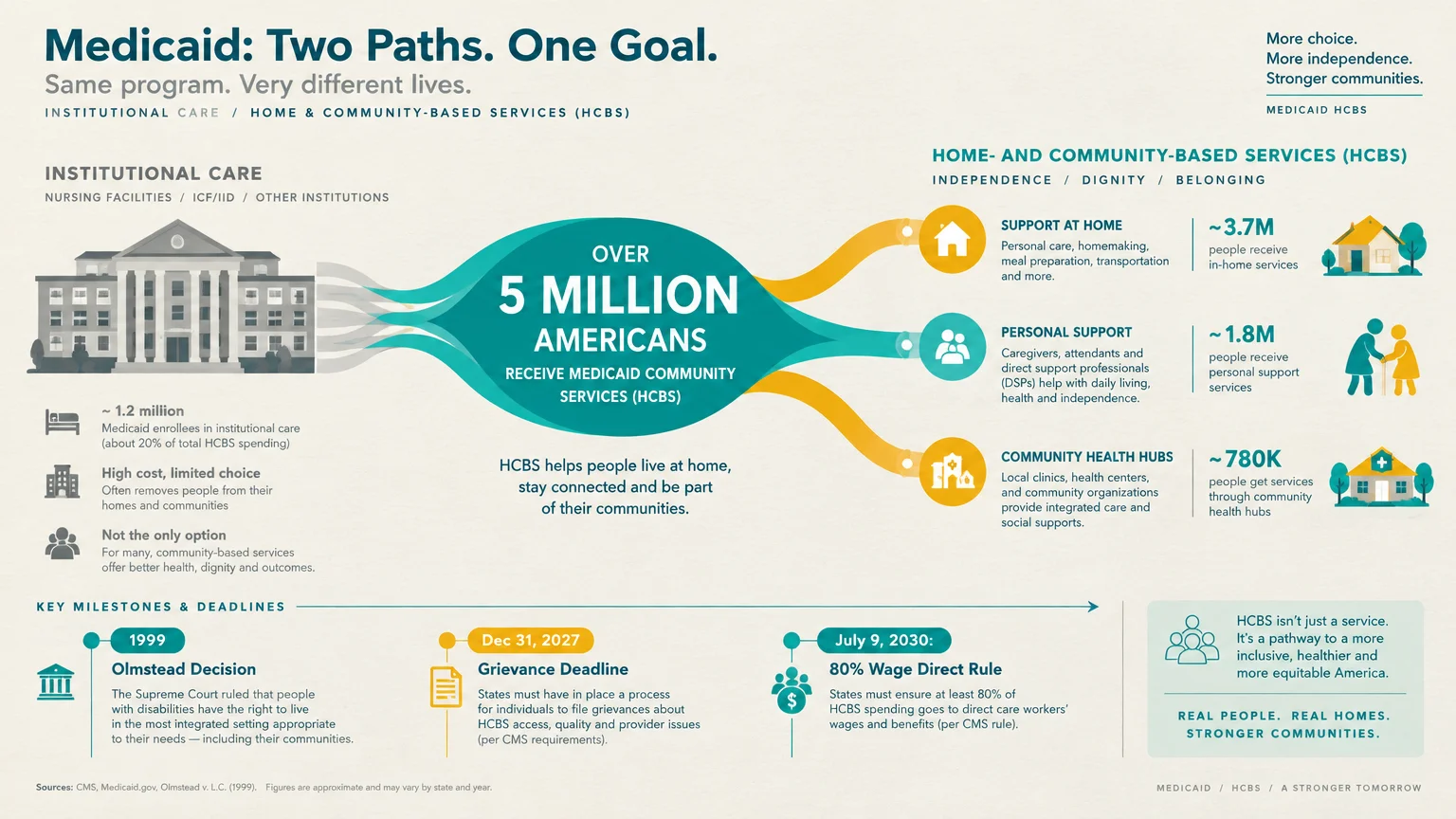
According to the Centers for Medicare & Medicaid Services (CMS), over 5 million Americans receive home- and community-based services through Medicaid.
Medicaid now funds more than two-thirds of all community long-term care across the United States. These vital services allow you to retain your daily independence near family and friends.
The landmark 1999 Supreme Court Olmstead decision affirmed your right to receive community care whenever reasonable. This ruling accelerated state investments in home care infrastructure.
Federal regulations continue expanding quality protections for community care. States must publicly publish fee-for-service caregiver payment rates to improve transparency and attract qualified care workers.
CMS established a December 31, 2027 enforcement deadline for states to create an accessible grievance system for home care participants.
Furthermore, a federal rule requires that by July 9, 2030, at least 80% of personal care payments must go directly toward caregiver wages.

10 Medicaid Programs Seniors Can Use at Home
State Medicaid agencies operate a variety of specialized initiatives to support aging at home. Each program addresses different levels of medical need, personal assistance, and family support.
1. Section 1915(c) Home and Community-Based Services (HCBS) Waivers
Section 1915(c) waivers allow states to waive traditional Medicaid rules and provide long-term care outside of institutions. They represent the primary vehicle for delivering home care to older adults.
These waivers cover hands-on personal care, including bathing, dressing, meal preparation, and light housekeeping. You can also receive physical therapy and home safety modifications.
Waiver services adapt to your specific medical needs through an individualized care plan. A state case manager helps you coordinate these supports to ensure your daily safety.
Because waiver programs are state-administered, specific benefit packages and program titles vary depending on where you live.
2. Program of All-Inclusive Care for the Elderly (PACE)
PACE coordinates your complete medical, preventive, and social care under a single managed healthcare umbrella. You must be at least 55 years old and certified as requiring nursing home care.
PACE programs operate across 33 states and Washington, D.C., with 206 local centers serving more than 98,800 participants.
Participants visit community day centers for physician visits, rehabilitation therapies, hot meals, and social activities. The program even provides accessible door-to-door transportation to all center appointments.
Because PACE covers prescription medications, home care, and specialist visits, you never face separate copayments or surprise medical bills.
3. Money Follows the Person (MFP) Rebalancing Demonstration
If you currently reside in a nursing facility, Money Follows the Person helps you move back into the community. The program covers transition costs that standard Medicaid plans do not fund.
Covered expenses include initial apartment security deposits, essential home furnishings, and moving assistance.
Dedicated transition coordinators work with you to arrange home accessibility ramps, medical equipment, and reliable caregiver schedules before discharge.
This program ensures you have an established support network waiting for you the day you return home.
4. Community First Choice (Section 1915(k))
Community First Choice is a state plan option that delivers statewide attendant services without enrollment waitlists. States receive enhanced federal funding to maintain open enrollment for qualified seniors.
This program assists with activities of daily living, instrumental household tasks, and health-related chores. It also pays for emergency response pendant systems and voluntary skill training.
Because CFC is an entitlement benefit within adopting states, you receive services immediately upon qualifying without waiting behind other applicants.
CFC places a strong emphasis on consumer direction, allowing you to select and train your personal attendants.
5. Self-Directed Personal Assistance Services (Section 1915(j))
Self-directed programs give you direct control over your personal care budget and daily care schedule. Instead of relying on agency staff, you decide who provides your care.
Under these rules, you recruit, hire, train, and manage your personal attendants. Many states allow you to hire adult children, relatives, or trusted friends.
A state-contracted fiscal intermediary manages the payroll, tax withholdings, and worker compensation details on your behalf.
This arrangement provides financial relief for family caregivers while keeping care within your trusted circle.
6. Medicare Savings Programs (MSPs)
Medicare Savings Programs use Medicaid funds to eliminate out-of-pocket healthcare expenses for low-income seniors. According to Medicare.gov, these programs protect your monthly retirement income.
The Qualified Medicare Beneficiary program pays your standard $202.90 monthly Part B premium and your $1,736 Part A hospital deductible. It also waives all Medicare doctor and hospital copayments.
The Specified Low-Income Medicare Beneficiary program also covers your full Part B monthly premium. Both programs automatically enroll you in the Extra Help prescription drug subsidy.
With Extra Help, your copayments for covered prescription drugs will not exceed $12.65 per medication. This protection saves older adults thousands of dollars each year.
7. Medicaid State Plan Home Health Benefit
Every state Medicaid program must offer mandatory home health coverage to eligible beneficiaries who need skilled care. Unlike waiver programs, this state plan benefit does not have enrollment caps.
Services include intermittent skilled nursing, physical therapy, occupational therapy, and home health aide support. Your physician must certify that you require these medical services at home.
This program helps you recover safely after a hospitalization or manage severe chronic health conditions.
It also supplies necessary medical equipment, such as wheelchairs, hospital beds, and oxygen concentrators.
8. Adult Day Health Care (ADHC) Programs
Adult Day Health Care centers offer professional nursing care, physical therapy, and social recreation during daytime hours. They allow seniors to remain living at home while receiving necessary daytime supervision.
Enrollees enjoy nutritious hot meals, structured activities, and medication management overseen by registered nurses.
This arrangement provides essential daytime relief to family caregivers who work or manage personal responsibilities.
Door-to-door transportation is frequently included, making it easy to attend several days each week.
9. Medicaid Respite Care Services
Caring for an aging loved one demands tremendous physical and emotional stamina. Medicaid respite care pays for temporary surrogate caregivers to give your primary unpaid family caregiver a necessary break.
You can schedule respite care for a few hours weekly or for temporary overnight stays in an assisted living community.
Regular respite relief prevents severe caregiver burnout and substantially delays the need for permanent nursing home placement.
In-home respite workers can assist with personal hygiene, meal preparation, and companionship while family members rest.
10. Section 1915(i) State Plan Home and Community-Based Services
Section 1915(i) allows states to provide community supports without requiring an institutional nursing home level of care. This program helps seniors who need moderate assistance before conditions deteriorate.
Services include adult day programs, respite support, specialized medical transportation, and light personal assistance.
Because Section 1915(i) operates as a state plan amendment, states cannot place eligible applicants on waiting lists.
It functions as an early intervention system, keeping older adults healthy and independent longer.
Financial Eligibility and Spousal Protections
Qualifying for Medicaid community care requires meeting strict financial limits set by federal and state regulations. Most long-term care programs use a higher income standard than standard Medicaid.
The Special Income Level for waiver programs allows single applicants to earn up to $2,982 per month. Married couples with both spouses applying can earn up to $5,964 per month.
In comparison, the baseline income cap for regular Aged, Blind, and Disabled Medicaid is $994 per month for individuals and $1,491 for couples.
According to the Social Security Administration (SSA), these income thresholds derive from Supplemental Security Income benefit rates.
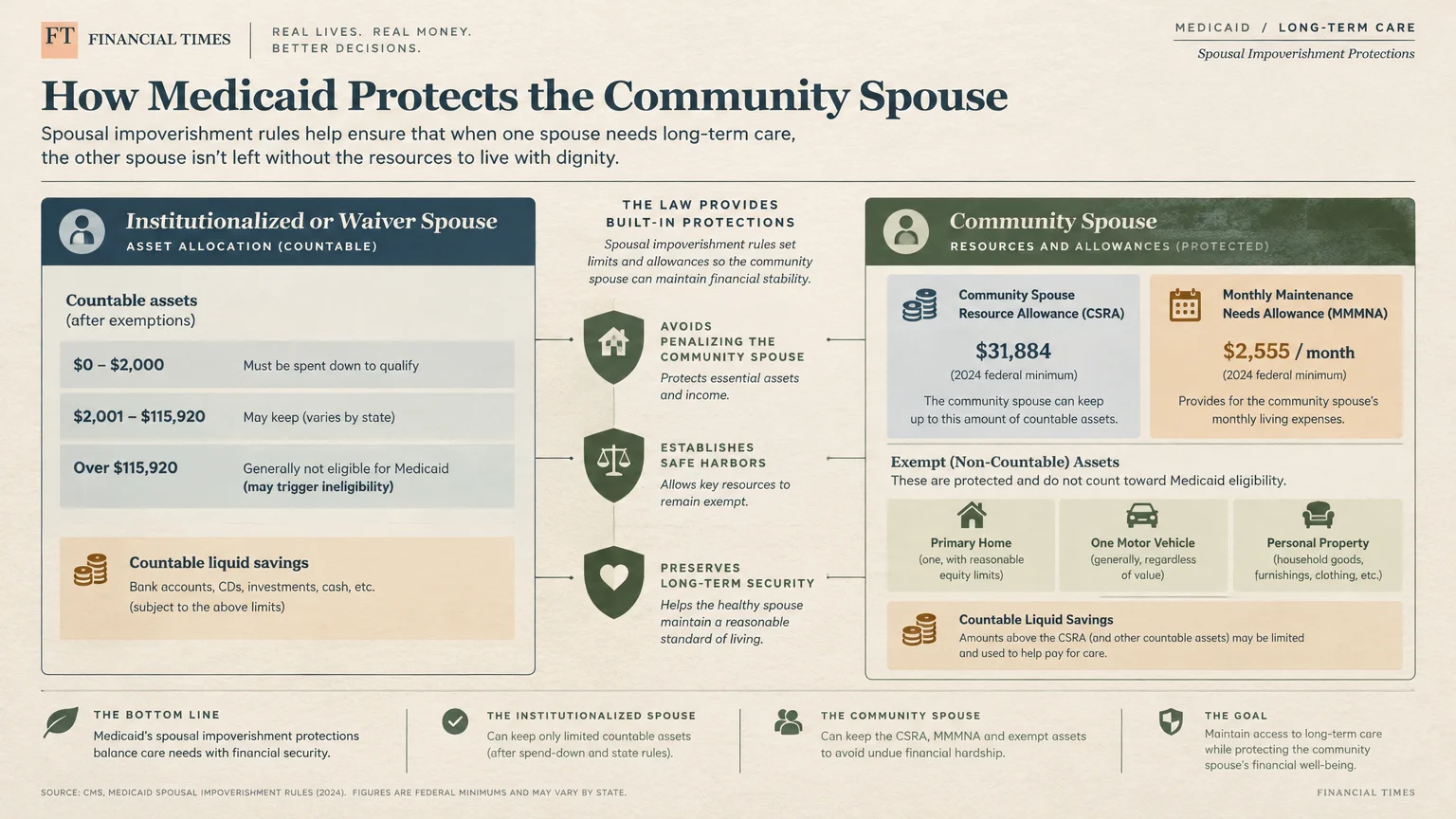
Countable asset limits generally remain at $2,000 for an individual applicant and $3,000 for a couple. However, California has reinstated a more generous resource limit of $130,000 for individuals and $195,000 for couples.
Your primary home is usually exempt from asset calculations if you plan to continue living there. Federal rules exempt home equity between $752,000 and $1,130,000, depending on your state.
Non-countable assets also include one personal vehicle, term life insurance policies, burial plots, and everyday household furnishings.
Spousal impoverishment rules protect the healthy spouse living at home when the other spouse applies for community waivers. The non-applicant spouse can keep a Community Spouse Resource Allowance between $32,532 and $162,660.
In addition, the Monthly Maintenance Needs Allowance protects the healthy spouse’s monthly cash flow. Your non-applicant spouse may retain between $2,643.75 and $4,066.50 per month of joint household income.

Navigating Waiver Waitlists and Delays
While Medicaid nursing home care is a guaranteed federal entitlement, home- and community-based waivers are not. States can cap total enrollments, which often creates significant waiting lists for older adults.
Approximately 650,000 people nationwide across 40 states currently wait on interest lists for Section 1915(c) and 1115 waivers. This represents a 7% increase over the previous year.
Recent legislative funding adjustments under the 2025 reconciliation law may reduce Medicaid home care enrollment by 311,879 people by 2034.
Despite these waiting lists, you can take practical steps to obtain support sooner. First, ask your state caseworker if your health situation qualifies you for priority crisis status.
States frequently bump individuals to the top of waiting lists if they face immediate caregiver loss or abuse risks.
Second, enroll in mandatory state plan home health benefits while you wait for waiver openings. Mandatory benefits cannot have waiting lists.
You can also reach out to the Eldercare Locator to find community bridge services funded by the Older Americans Act.
Local programs can deliver meals, provide safety modifications, and offer volunteer companionship while your application processes.

Common Mistakes and Medicaid Traps to Avoid
Navigating Medicaid rules requires careful attention, as minor mistakes can delay your benefits for months. Knowing common pitfalls helps you protect your assets and maintain continuous care.
Giving away money or property to qualify for benefits violates federal look-back rules. Medicaid scrutinizes all financial transactions made during the 60 months prior to your application date.
If you transfer assets below fair market value, Medicaid will assess a penalty period that delays your coverage. Never transfer bank accounts or real estate titles without guidance from an elder law attorney.
Another frequent misstep is failing to use a Qualified Income Trust, or Miller Trust, in income-cap states. If your income exceeds $2,982 monthly, this legal trust can preserve your eligibility.
Money placed into a Miller Trust flows directly toward approved medical bills and caregiver costs each month.
Many families also wrongly assume they cannot pay relatives for caregiving services. Enrolling in self-directed Medicaid options allows you to compensate family members legally through official channels.
Without an official contract and program enrollment, retroactive payments to relatives can be classified as unauthorized gifts.
Finally, never disregard annual redetermination packets sent by your state Medicaid agency. Failing to return requested paperwork on time can abruptly terminate your home care services.
Comparing Community Medicaid Programs
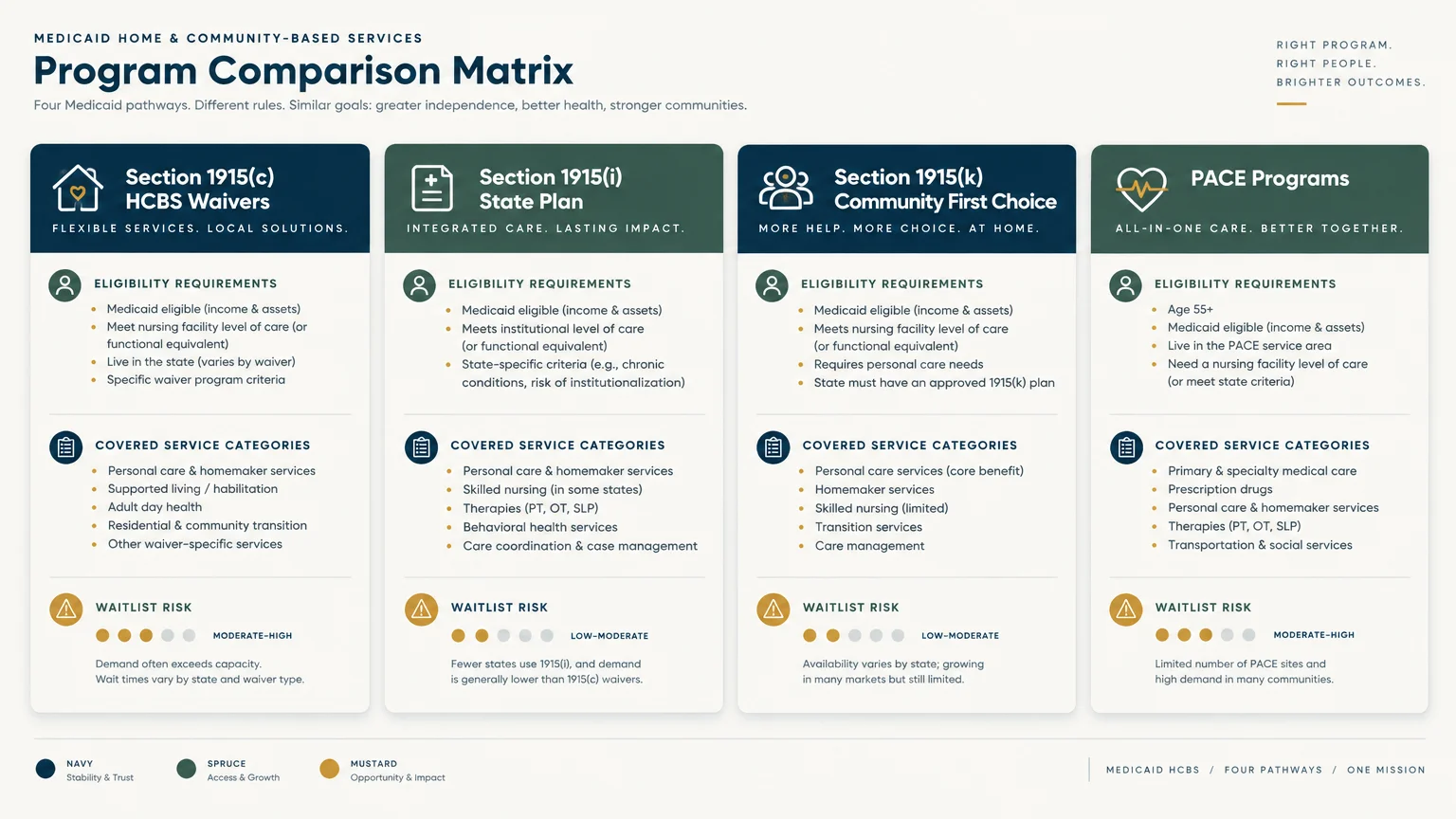
Selecting the right program depends on your medical condition, household income, and caregiving preferences. Reviewing program features side by side clarifies which path best serves your household.
| Program Name | Primary Services | Level of Care Required | Caregiver Choice |
|---|---|---|---|
| Section 1915(c) HCBS Waivers | Personal care, chore services, respite, modifications | Nursing Facility Level | Agency or self-directed |
| PACE | Complete medical care, therapy, day health, meals | Nursing Facility Level | PACE clinic care team |
| Money Follows the Person | Moving expenses, rent deposits, community setup | Current Nursing Facility Resident | Case manager coordinated |
| Community First Choice | Personal attendant care, emergency backup tools | Institutional Care Level | Agency or consumer-directed |
| Medicare Savings Programs | Pays Part B premium ($202.90) and Part A deductible | Financial Need Only | Standard Medicare doctors |
| Adult Day Health Care | Daytime nursing, meals, therapy, social events | Skilled or Intermediate Need | Adult day center staff |
Section 1915(c) waivers offer the greatest flexibility for home modifications and daily personal care. In contrast, PACE provides a fully coordinated clinical and social model through specialized day clinics.
If you need immediate assistance without waiting lists, explore Community First Choice or state plan home health services.
Dual-eligible seniors can pair Medicare coverage with Medicare Savings Programs to minimize doctor visits and prescription drug expenses.

Step-by-Step Guide to Applying
Applying for community Medicaid takes preparation, persistence, and thorough documentation. Following an organized roadmap ensures a smoother application process with fewer administrative delays.
You can begin your research through Benefits.gov to determine which specific programs operate in your zip code.
Step 1: Gather Complete Financial Records
Gather five years of bank statements, tax records, pension statements, and Social Security award letters. Having these documents ready prevents look-back delays during review.
Step 2: Schedule a Comprehensive Functional Assessment
Medicaid requires clinical proof that you need help with activities of daily living like bathing, dressing, and walking. A registered nurse evaluates your functional status inside your living space.
Step 3: Partner with Local Aging Specialists
Contact your local Area Agency on Aging or Aging and Disability Resource Center for guidance. Certified counselors provide free navigation assistance and help submit error-free paperwork.
Step 4: Select Your Care Delivery Model
Decide whether you prefer an agency-managed schedule or a self-directed plan that lets you hire your own caregivers. If you self-direct, choose a trusted relative or friend beforehand.
Step 5: Prepare for Annual Renewals
Medicaid requires annual redetermination reviews to ensure you continue meeting medical and financial criteria. Keep ongoing files of medical receipts and bank records to simplify renewals.
Frequently Asked Questions
Can Medicaid pay my family member to care for me at home?
Yes, self-directed Medicaid programs allow you to hire relatives as paid personal care attendants. In most participating states, adult children and siblings can receive hourly Medicaid wages through an approved fiscal manager.
Will the state take my home if I use Medicaid home care?
Your home remains protected while you live in it, up to equity caps between $752,000 and $1,130,000. However, state Medicaid Estate Recovery programs may seek repayment from your estate after death unless exemptions apply.
What should I do if my monthly income exceeds the $2,982 limit?
You can establish a Qualified Income Trust in income-cap states to deposit surplus earnings and maintain eligibility. In spend-down states, you can qualify by deducting regular out-of-pocket medical expenses from your countable income.
Can I receive Medicare and Medicaid community services simultaneously?
Yes, millions of older adults are dually eligible for both programs. Medicare pays for doctor visits, hospital stays, and short-term therapy, while Medicaid covers daily personal care and community support services.
How long does it take for a Medicaid home care waiver to be approved?
State agencies generally process eligibility paperwork within 45 to 90 days. However, if your state maintains a waiver waiting list, receiving actual home services may take longer depending on enrollment capacity.
For additional senior resources, visit
Alzheimer’s Association, American Heart Association, Benefits.gov and National Institute on Aging (NIA).
Disclaimer: The information in this article is for educational purposes only and is not intended to be a substitute for professional financial, legal, or medical advice. Always consult with a qualified expert for advice tailored to your personal situation.