

Opening your doors to an adult child provides comfort, but it should never derail your hard-earned retirement nest egg. You can protect your lifetime savings while still offering meaningful family support.
A recent surge in multigenerational living means millions of older Americans now face unexpected household expenses. Proactive planning ensures your hospitality does not jeopardize your future financial security.
Establishing clear financial expectations right away safeguards your investments and keeps your retirement timeline intact. Here is how you can manage family finances wisely and protect your future.
In this guide9 sections
- The Financial Reality of Boomerang Kids
- Calculating the True Cost of an Extra Adult
- Having the Money Conversation Early
- Drafting a Clear Co-Living Agreement
- Protecting Your 2026 Retirement Accounts and Savings
- Navigating Taxes, Health Insurance, and Benefits
- Avoiding Common Financial Pitfalls and Scams
- Creating a Pathway to Independence
- Frequently Asked Questions
The Financial Reality of Boomerang Kids
Welcoming a grown child back home is becoming standard practice across the United States. Economic pressures—such as elevated housing prices, student debt, and living costs—drive this trend.
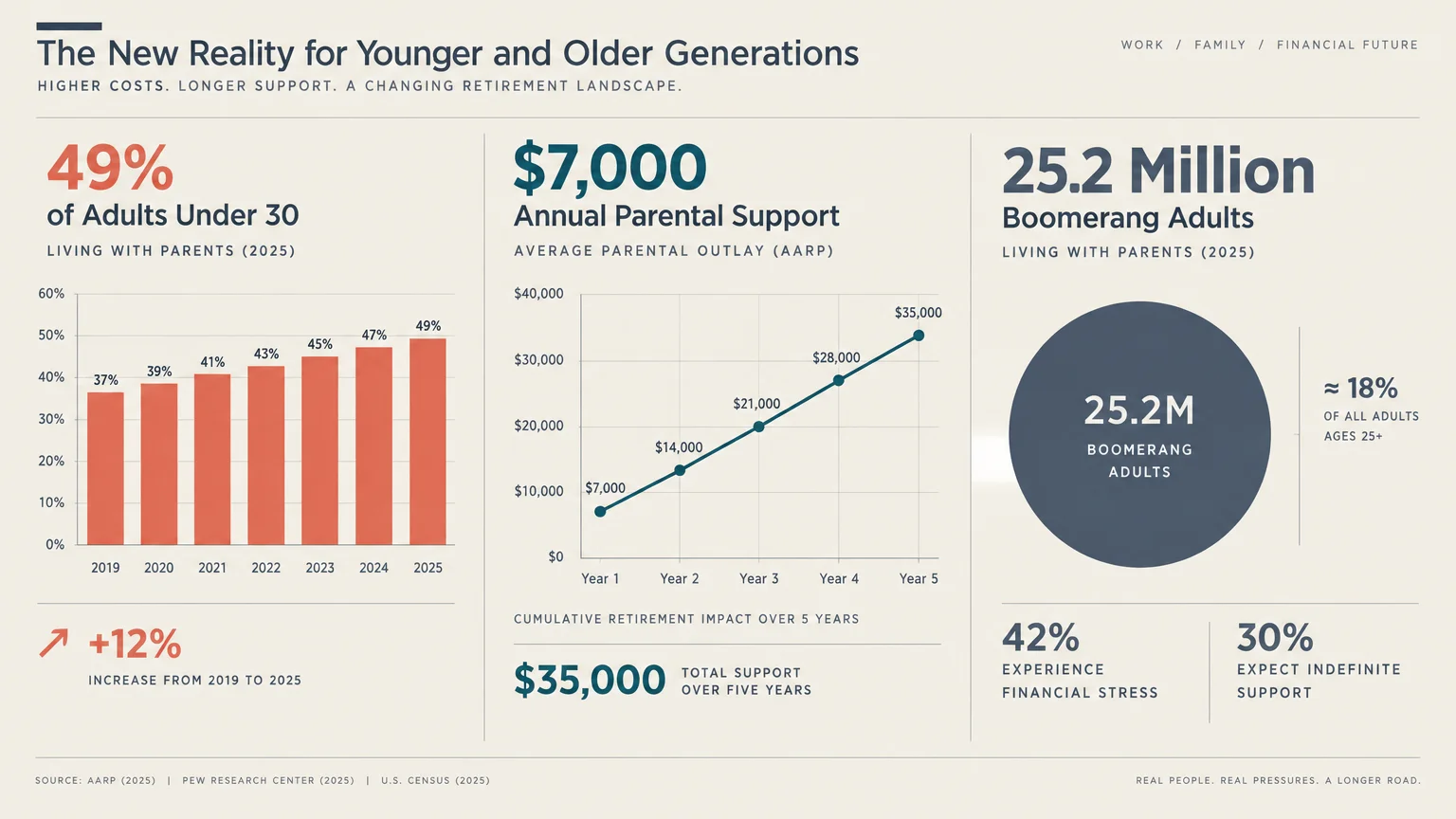
According to a 2026 Realtor.com report, a record 25.2 million U.S. adults under age 35 lived with their parents in 2025. That represents roughly one in three young adults nationwide.
Federal data shows that this pattern is growing rapidly. The Federal Reserve’s 2026 survey on economic well-being revealed that 49% of adults under 30 lived with a parent in 2025.
That metric marks a 12-percentage-point increase since 2019. More mature young adults are also turning to their parents for housing stability.
A September 2026 report from the Center for Retirement Research at Boston College revealed that nearly 20% of adults aged 25 to 34 live with parents. That share has increased by roughly one-third over the past two decades.
While multigenerational living provides emotional comfort, it can create heavy financial friction. Parents often cover extra daily expenses without realizing the long-term damage to their savings.
According to research from AARP, 75% of parents aged 45 and older financially support at least one adult child. That support averages $7,000 annually, and 42% of those parents report experiencing financial stress.
An August 2026 LendingTree survey confirmed that 71% of parents have financially assisted an adult child. Furthermore, 44% provided financial help within the past two years.
Alarmingly, 30% of those supporters expect to provide financial help indefinitely. Open-ended support threatens your retirement readiness, especially if you live on a fixed income.
Recognizing the widespread nature of this shift helps remove any family stigma. You can now address these shared living costs objectively and protect your financial independence.

Calculating the True Cost of an Extra Adult
An extra adult living in your home consumes resources beyond basic room and board. Many seniors drastically underestimate how much their utility bills and daily grocery tabs will jump.
A 2025 Savings.com report revealed that 50% of parents with adult children provide regular financial assistance, spending an average of $1,474 per month. This spending directly impacts retirement wealth.
Working parents who support adult children contribute more than twice as much money each month to their kids as to their own retirement accounts. Nearly 50% admit they have sacrificed their financial security.
The expenses parents absorb most frequently include groceries and routine communication bills. In fact, 83% of supporting parents pay for groceries, while 65% cover cell phone plans.
LendingTree data mirrors this pattern, showing parents most frequently cover groceries and meals (53%), cell phones and subscriptions (35%), and general bills (35%).
Meanwhile, Pew Research Center data shows that while 72% of young adults at home contribute financially in some way, only 46% contribute toward the rent or mortgage. The rest help only with groceries or basic utilities.
Before your child unpacks, itemize every recurring household cost to see where spending will rise. The table below outlines how an extra adult influences typical monthly expenses.
| Expense Category | Typical Monthly Impact | Recommended Action |
|---|---|---|
| Groceries & Food | Increases by $250 to $450 | Split grocery bills or assign specific shopping trips. |
| Electric, Water & Gas | Increases by $75 to $150 | Calculate average utility increases and split the difference. |
| Cell Phone & Streaming | Costs $50 to $120 | Have your adult child pay their own mobile and entertainment lines. |
| Transportation & Auto Insurance | Costs $100 to $250 | Remove non-driving children from auto policies or require reimbursement. |
| Household Wear & Tear | Variable long-term costs | Require a nominal maintenance fee or routine home upkeep labor. |
Seeing these figures in black and white changes the conversation from emotion to practical arithmetic. It allows you to protect your monthly cash flow without feeling guilty.
Your fixed expenses like property taxes remain the same, but variable costs climb immediately. Capturing these numbers gives you a concrete foundation for negotiations.

Having the Money Conversation Early
Discussions about money with family members often trigger feelings of anxiety, guilt, or defensiveness. You must hold this conversation before your adult child moves in, not months later.
Frame the discussion around mutual respect and shared accountability rather than parental authority. You are two adults managing a shared living arrangement.
Start by sharing your current financial reality clearly and honestly. If you live on a fixed income from Social Security and pensions, explain that your budget cannot absorb extra costs.
Ask your child to outline their current financial situation, debts, and short-term earnings. Understanding their debt obligations helps you determine realistic contribution levels.
According to the Consumer Financial Protection Bureau (CFPB), transparent household budgeting prevents unmanageable consumer debt. Reviewing monthly cash flow together establishes realistic targets for both parties.
Follow a structured agenda during your initial sit-down meeting:
- Review household utility averages and monthly grocery receipts from the past six months.
- Discuss your child’s employment status, monthly net earnings, and active loan payments.
- Establish an exact monthly dollar contribution for room, board, and shared utilities.
- Agree on who pays for individual personal expenses like auto insurance and medical bills.
- Identify a target move-out date to keep both sides focused on long-term independence.
Never apologize for protecting your retirement assets during this conversation. You have worked decades to build financial stability, and preserving it benefits the entire family.
Listen attentively to their personal challenges, but hold firm on financial boundaries. Compassion does not require financial self-sacrifice.

Drafting a Clear Co-Living Agreement
Verbal agreements frequently crumble under stress or selective memory. Putting your shared terms into a written co-living agreement eliminates future confusion and resentment.
A written agreement is not an act of distrust; it is a tool for clarity. It formalizes expectations and treats your adult child like an independent adult.
Specify the exact payment amounts and the due date for each monthly contribution. State whether payments should occur on the first of the month or align with their paychecks.
Outline non-financial responsibilities and chores across the home. Your adult child should handle meal preparation, cleaning, yard care, or home maintenance.
Address household lifestyle rules to preserve your daily peace and comfort. Outline expectations regarding overnight guests, quiet hours, noise, and shared common spaces.
Your written agreement should clearly include the following core sections:
- Financial Contributions: Explicit dollar amounts for rent, utility shares, and grocery allocations.
- Payment Methods: How and when money is transferred (such as bank transfers or personal checks).
- Household Labor: Assigned chores like laundry, deep cleaning, cooking, and lawn care.
- House Rules: Expectations regarding visitors, substance use, parking, and quiet hours.
- Duration & Review: A definitive move-out date alongside scheduled 90-day progress check-ins.
Both you and your adult child should sign and date the document. Post a copy in a common area or keep it filed for easy reference during periodic check-ins.
Having a signed document transforms potential emotional arguments into objective discussions. You can simply point to the agreement if agreements slip.

Protecting Your 2026 Retirement Accounts and Savings
The cardinal rule of family finance is simple: you cannot borrow for retirement. Your child has decades to earn income and pay off debt, but your earning years are limited.
Never reduce or pause contributions to your tax-advantaged retirement accounts to cover an adult child’s living costs. Doing so forfeits valuable compound growth and employer matching funds.
Take full advantage of current retirement contribution limits if you are still working. For 2026, the IRS base contribution limit for 401(k), 403(b), and most 457 plans is $24,500.
If you are age 50 or older, you can utilize catch-up contributions. The standard 2026 catch-up limit for workers aged 50 and older is $8,000, bringing your total allowable limit to $32,500.
Workers aged 60 to 63 benefit from the SECURE 2.0 “super” catch-up provision. In 2026, eligible employees in this age bracket can contribute a catch-up amount of $11,250, allowing a total contribution of up to $35,750.
Be aware of the new 2026 Roth catch-up requirement under SECURE 2.0 rules. If you earned more than $150,000 in the previous year, your catch-up contributions must go into an after-tax Roth account.
Traditional and Roth IRAs also provide opportunities to shelter your money. In 2026, the IRA contribution limit is $7,500, plus an additional $1,100 catch-up for individuals aged 50 and older (totaling $8,600).
If you have already retired, strictly protect your nest egg and withdrawal rate. Avoid taking unscheduled distributions from your 401(k) or IRA to bail out a family member.
Unplanned withdrawals can bump you into higher tax brackets and trigger steep income taxes. Furthermore, higher taxable income can increase your Medicare Part B and Part D premiums through Income-Related Monthly Adjustment Amount (IRMAA) surcharges.
Resist the urge to file for Social Security benefits ahead of schedule to cover added household costs. According to the Social Security Administration (SSA), claiming benefits early permanently slashes your monthly checks for life.
Maintaining your retirement contributions preserves your independence and dignity. It guarantees that you will not become a financial burden on your children later in life.
Navigating Taxes, Health Insurance, and Benefits
Having another adult in the house impacts your annual tax return and healthcare options. Understanding IRS rules prevents filing errors and uncovers potential tax relief.
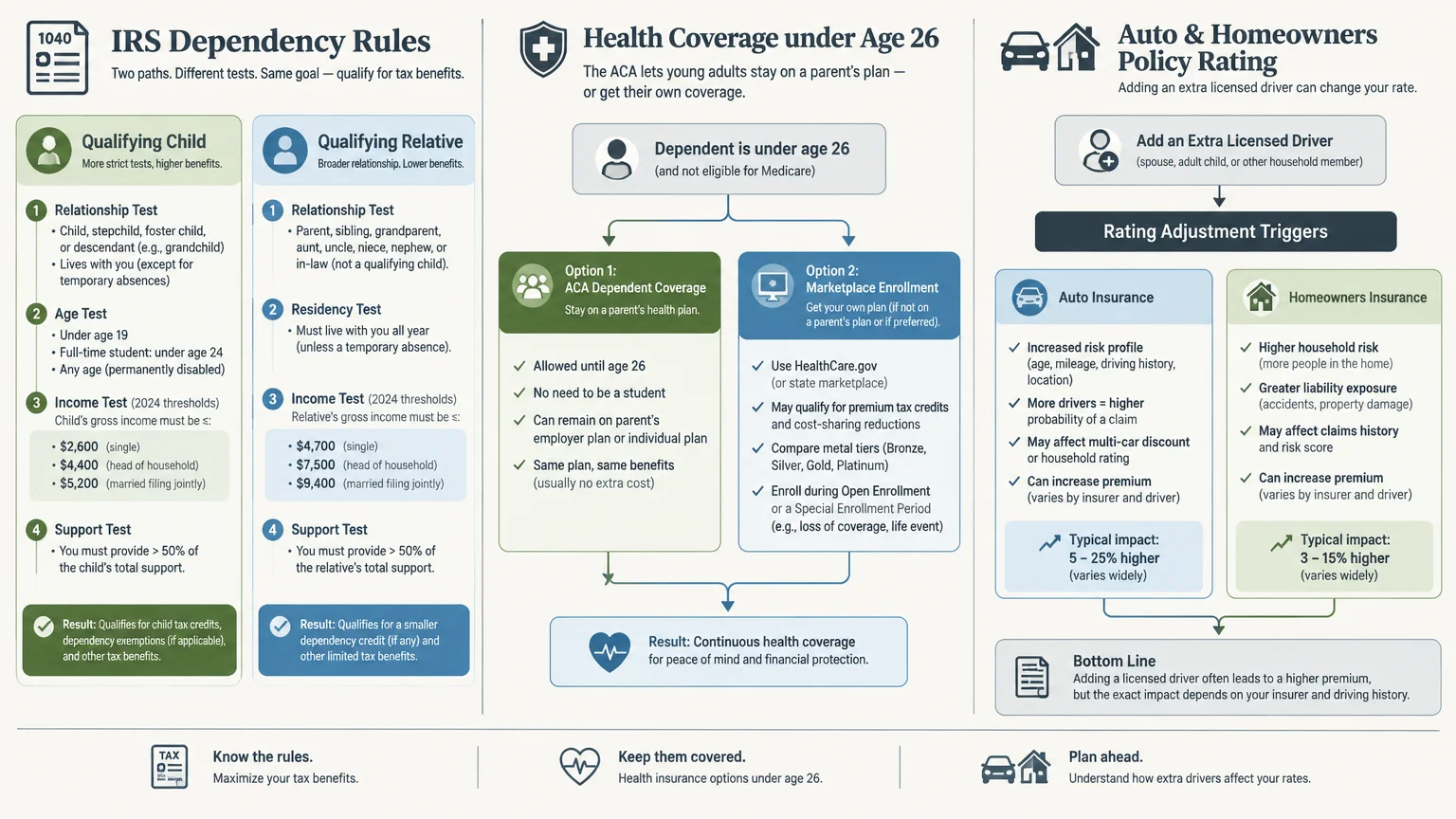
You might wonder if you can claim your adult child as a dependent on your federal tax return. In 2026, strict tests govern claiming an adult child as a “Qualifying Relative.”
To claim your child as a qualifying relative in 2026, their gross income must be less than $5,300 for the tax year. This income cap does not apply if they are under age 24 and a full-time student, or permanently disabled.
Additionally, you must provide more than half of their total financial support during the calendar year. If they qualify, you may claim the nonrefundable Credit for Other Dependents, worth up to $500.
Do not jeopardize your tax standing by claiming an adult child who earned more than $5,300. The modest $500 credit is never worth an IRS audit or penalties.
Health insurance requires careful attention when grown children move home. Under the Affordable Care Act (ACA), parents can keep adult children on their family health insurance plan until age 26.
Your child can stay on your policy even if they are married, living independently, or financially self-sufficient. Once they turn 26, however, they must secure their own health coverage.
If your adult child faces unemployment or low wages, point them toward government assistance programs rather than draining your savings. They may qualify for Medicaid, Supplemental Nutrition Assistance Program (SNAP), or housing subsidies.
You can use Benefits.gov to help your child explore state and federal assistance programs based on their individual income. Utilizing these public resources protects your private retirement funds.
Separating their financial identity from yours ensures that your assets do not disqualify them from needed benefits. Encourage them to utilize public lifelines while getting back on their feet.
Avoiding Common Financial Pitfalls and Scams
Supporting a grown child exposes seniors to serious financial pitfalls. Emotional attachments often blind parents to risky moves that jeopardize their retirement security.
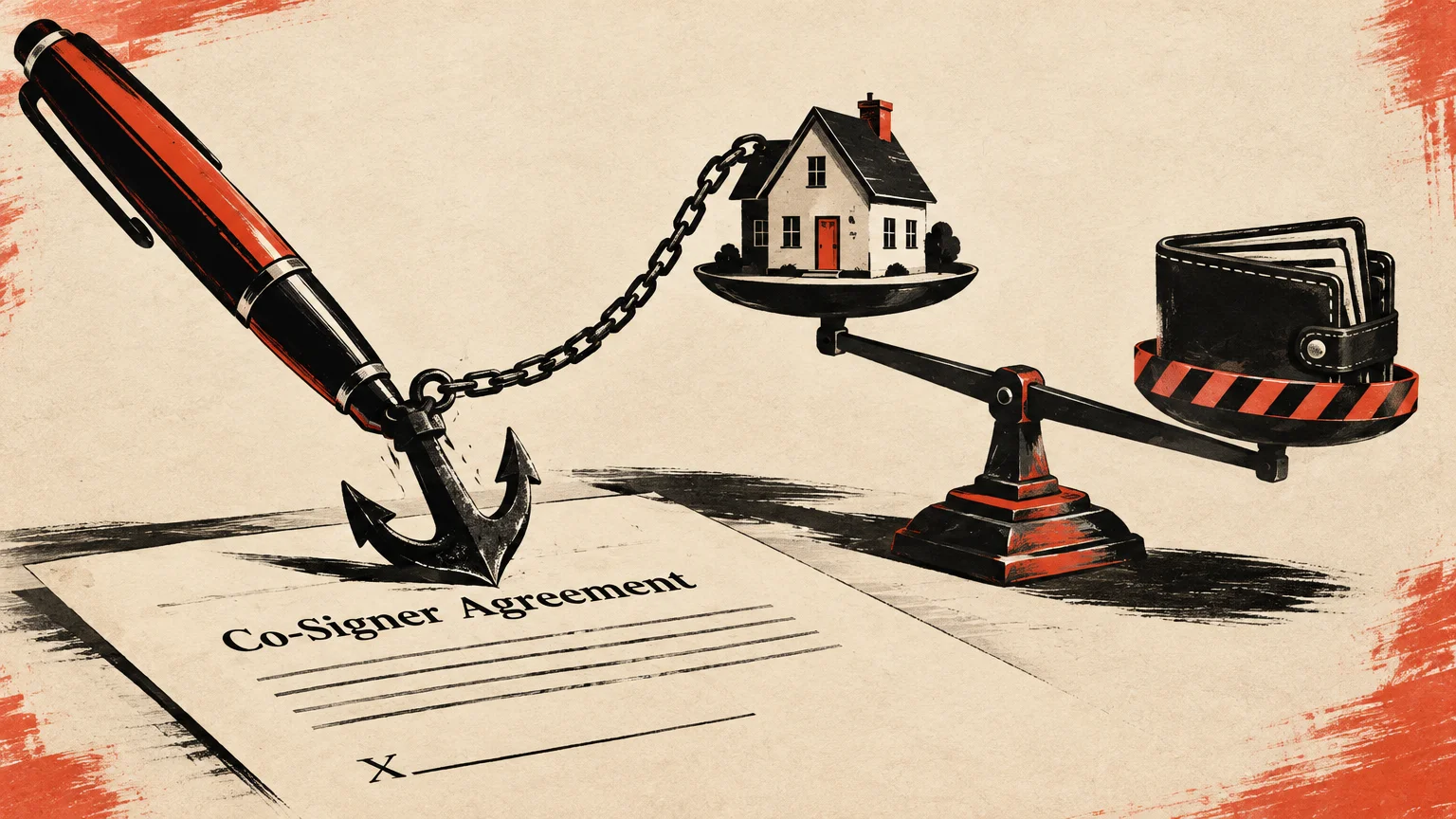
The most dangerous move you can make is co-signing a loan for your adult child. Whether for an auto loan, private student loan, or apartment lease, co-signing makes you 100% legally liable for the debt.
If your child misses payments, creditors will pursue your assets and damage your credit score. Lenders demand co-signers precisely because the primary borrower represents a high default risk.
Never tap your home equity to resolve your child’s financial troubles. Taking out a Home Equity Line of Credit (HELOC) or reverse mortgage puts your shelter at immediate risk.
If financial problems persist, you could face foreclosure and lose your primary residence in retirement. Your home equity should remain a safety cushion for future healthcare or long-term care needs.
Beware of enabling financial dependency under the guise of parental love. Paying for non-essential luxuries, dining out, and designer items delays your child’s maturity and drains your cash.
Seniors supporting adult children must also stay alert to financial exploitation and scams. Fraudsters frequently target multigenerational homes using high-pressure family emergency scams or fraudulent investment pitches.
Watch for signs of financial coercion, missing checks, or unauthorized credit card charges. If an adult child pressures you to alter your will, power of attorney, or deed, seek immediate independent legal counsel.
Establish strict boundaries around your financial paperwork and online banking credentials. Keep bank statements, checkbooks, and investment passwords securely locked away.
Protecting your assets is not an insult to your child; it is basic prudence. Maintaining control of your finances ensures you remain capable of assisting them in real emergencies.

Creating a Pathway to Independence
Moving back home should serve as a temporary launching pad, not a permanent retirement destination. Establishing a clear timeline from day one prevents an indefinite stay.
Set a realistic target move-out date based on your child’s career and financial circumstances. A timeframe of 6 to 12 months provides ample time to stabilize finances without creating long-term dependency.
One powerful strategy to accelerate independence is the “forced savings” technique. You collect a reasonable monthly rent from your child, but quietly set that money aside in a separate high-yield savings account.
When your child prepares to sign a new lease, return those accumulated funds to cover their security deposit and moving costs. This practice instills budgeting discipline while providing practical moving capital.
Schedule recurring monthly meetings to review progress toward independent living. Use these check-ins to celebrate debt reduction, monitor savings accounts, and review job applications.
Help your child build their credit profile during their stay. Responsible management of a secured credit card or on-time utility payments will help them qualify for future housing.
Encourage them to network, upgrade their professional skills, or seek career counseling. Expanding their earning potential represents the fastest path out of your spare bedroom.
When the agreed move-out date approaches, resist the temptation to extend the stay without compelling reasons. Enforcing the timeline demonstrates confidence in their ability to succeed independently.
Celebrate their eventual departure as a major family triumph. You provided a secure safety net without sacrificing your retirement comfort.
Frequently Asked Questions
Should I charge my adult child rent if they are currently unemployed?
Yes, you should require a contribution, even if it is non-monetary while they seek work. If they lack income, assign daily household labor, maintenance tasks, or volunteer hours to establish accountability.
Does having an adult child live in my home affect my Medicare coverage?
No, an adult child living in your home does not affect your Medicare Part A or Part B eligibility. However, unexpected withdrawals from your retirement accounts to support them could raise your income and trigger higher Part B and Part D premiums.
Can I withdraw money from my 401(k) to pay off my child’s credit card debt?
You should never drain your retirement accounts to eliminate an adult child’s consumer debt. Taking withdrawals triggers taxable income, reduces your long-term growth, and fails to address the underlying spending habits that caused the debt.
What should I do if my adult child refuses to follow our co-living agreement?
Hold an immediate family meeting to address the breach calmly and reference the signed document. If your child consistently refuses to honor financial contributions or household rules, establish a firm 30-day deadline for them to find alternative housing.
Can having an adult child living at home impact my eligibility for Medicaid long-term care?
Your child’s presence does not directly impact your Medicaid eligibility, but financial transfers to them can cause severe penalties. Gifting money, paying their debts, or letting them live rent-free in a home you transfer could violate Medicaid’s five-year look-back rule.
For additional senior resources, visit
Administration for Community Living (ACL), Eldercare Locator and AARP.
Disclaimer: The information in this article is for educational purposes only and is not intended to be a substitute for professional financial, legal, or medical advice. Always consult with a qualified expert for advice tailored to your personal situation.