
A Step-by-Step Decision Guide for Your Claiming Strategy
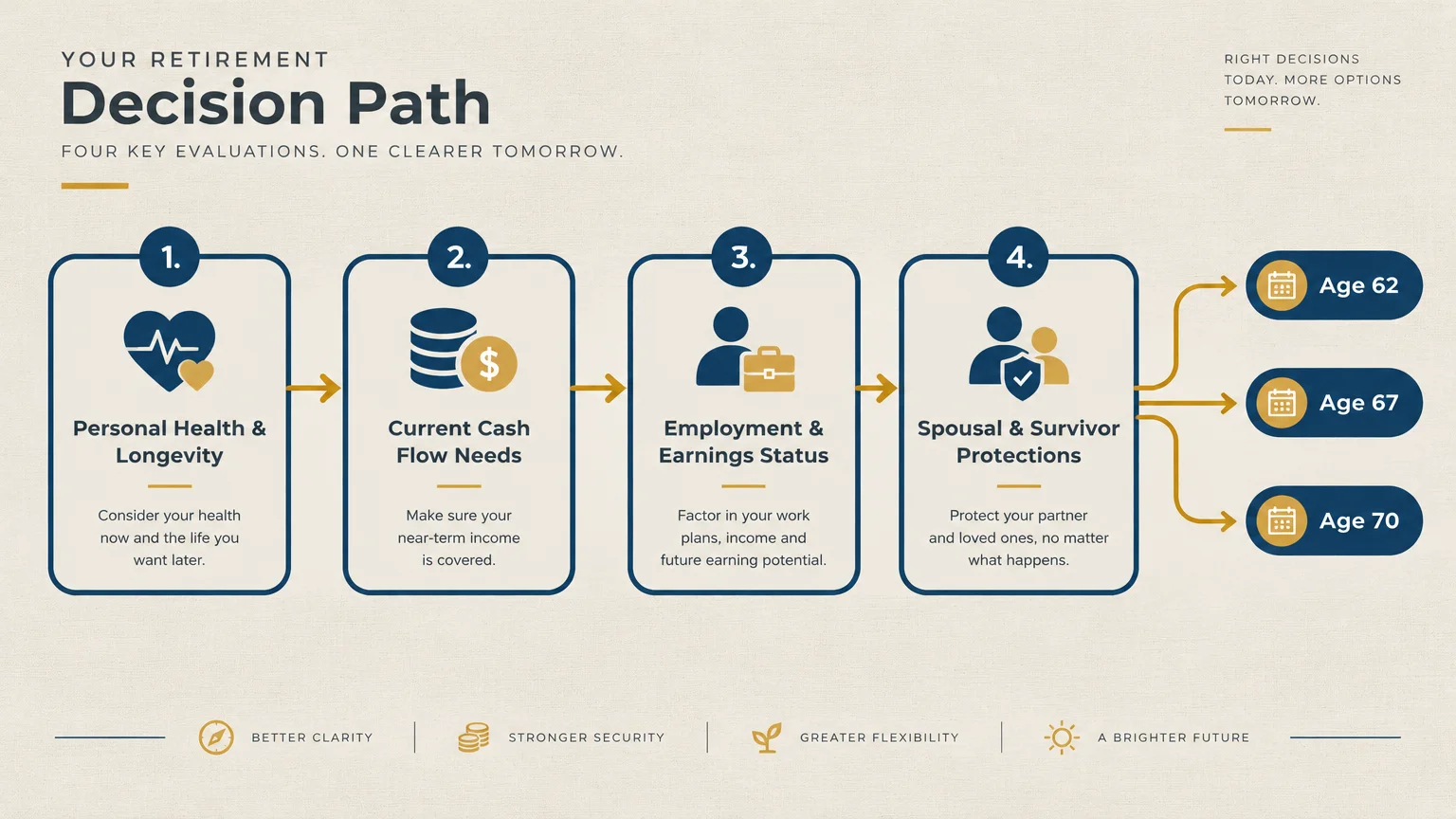
Selecting the optimal claiming age requires balancing personal health, family responsibilities, and financial realities. You can navigate this vital choice by completing four practical assessment steps.
First, evaluate your health status and your family history of longevity. If you face chronic medical challenges, claiming at your minimum benefit age may offer vital financial relief.
Conversely, if you enjoy robust vitality and have relatives who lived into their nineties, delaying benefits makes sense. Maximizing your monthly check protects you against the risk of outliving your personal retirement savings.
Second, audit your recurring household expenses and essential fixed costs. Determine whether your pensions, annuities, or personal savings can cover basic necessities without drawing on Social Security.
If you encounter budget gaps before standard retirement, research safety net programs. Resources cataloged through Benefits.gov can help identify state and federal support systems for low-income households.
Third, examine your spousal and survivor benefit dynamics. Your claiming decision directly dictates the survivor benefit your spouse might depend on if you pass away first.
A higher-earning spouse who delays benefits until age 70 locks in the highest possible survivor payout. This simple strategy can shield a surviving partner from sudden poverty later in life.
Fourth, analyze the tax implications of your overall retirement portfolio. Withdrawing funds from traditional retirement accounts before taking Social Security can sometimes reduce your lifetime tax liability.
Reviewing these factors systematically gives you control over your financial destiny. You replace emotional guesswork with a structured plan tailored to your household needs.