How Your Retirement Milestones Are Being Renamed
For decades, the government used terms that inadvertently led retirees to leave substantial money on the table. The Claiming Age Clarity Act replaces these confusing designations with direct, transparent descriptions.
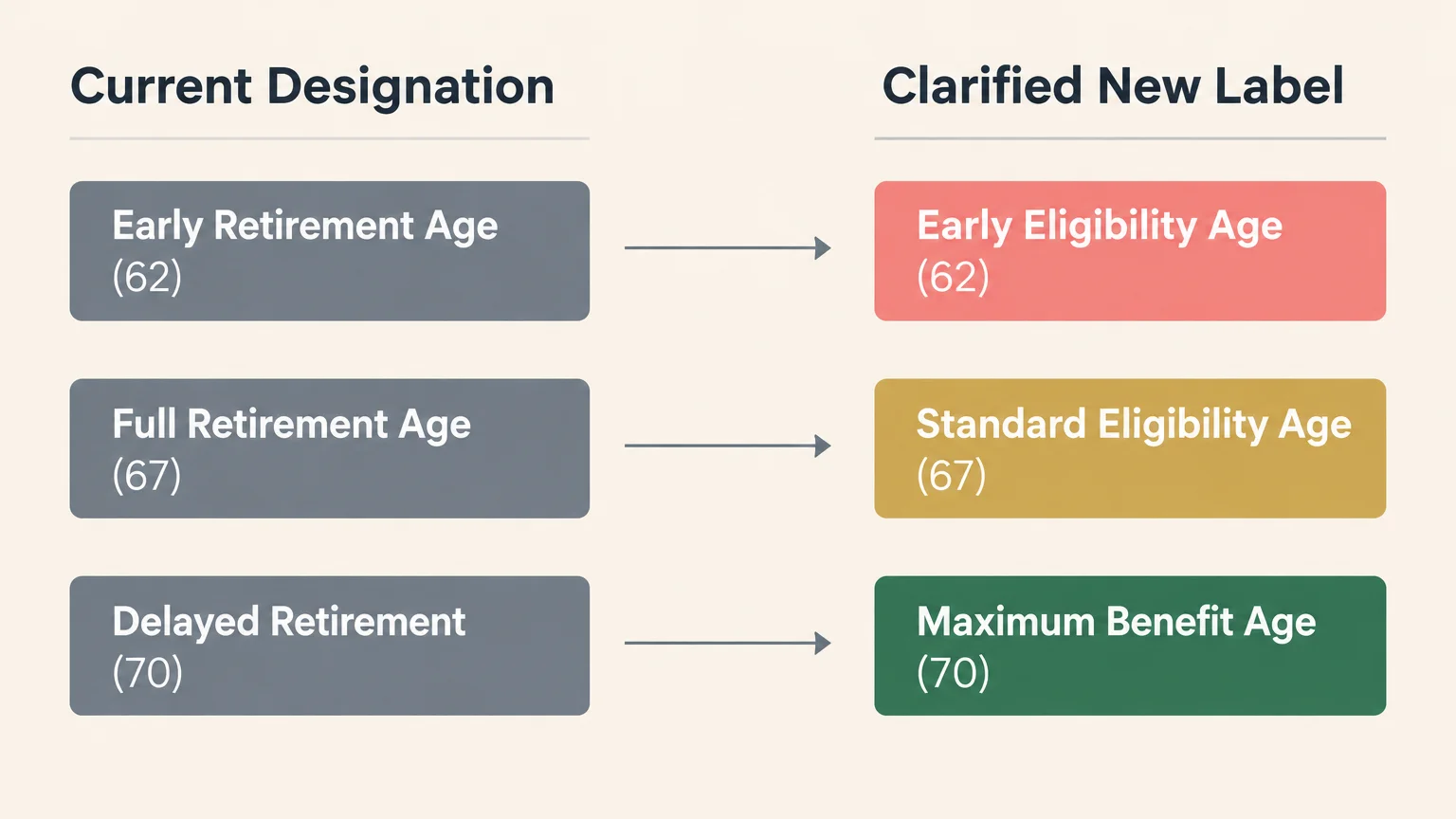
Under the existing framework, the government labels your standard claiming milestone as your Full Retirement Age. Many workers mistakenly assume this milestone yields the largest possible monthly check available to them.
Research indicates that this single phrase encourages premature claims. When you believe your check is already full, you may overlook the substantial financial gains achieved by waiting longer.
The new legislation mandates three distinct name changes across all federal platforms. Once enacted, the Social Security Administration must implement these revised terms within twelve months or by January 1, 2027.
The first change renames age 62 from Early Eligibility Age to Minimum Benefit Age. In formal legal texts, federal agencies will refer to this milestone as your Minimum Monthly Benefit Age.
This phrasing reminds you that claiming immediately upon turning 62 results in the smallest monthly check allowed by law. It reframes early claiming as an accepted baseline rather than a default retirement date.
The second revision alters age 66 to 67, depending on your birth year. The historic labels of Full Retirement Age and Normal Retirement Age disappear in favor of Standard Benefit Age.
Calling this date your Standard Benefit Age clarifies that you receive your baseline benefit here, not your maximum. It indicates that you have satisfied the standard statutory work requirement without exhausting your growth options.
The third adjustment establishes age 70 as your Maximum Benefit Age. Government agencies previously buried this milestone under complex terms like Delayed Retirement Credits.
Renaming age 70 as Maximum Benefit Age makes it obvious that delaying claims yields the largest monthly payout possible. It gives you an intuitive road map for your long-term retirement calculations.
| Claiming Milestone | Former Government Label | New Statutory Label | Percentage of Standard Benefit |
|---|---|---|---|
| Age 62 | Early Eligibility Age | Minimum Benefit Age | 70% of standard payout |
| Age 66–67 | Full Retirement Age (FRA) | Standard Benefit Age | 100% of standard payout |
| Age 70 | Delayed Retirement Age | Maximum Benefit Age | Up to 124% of standard payout |
These new labels give you an immediate, realistic perspective on your monthly cash flow. You can balance your current lifestyle needs against the tangible advantages of delayed filing.