

Protecting your retirement savings requires knowing exactly where your money goes every month, especially concerning state and local taxes. In 2026, relocating to a state with the lowest combined income and property taxes is a highly effective way to stretch your fixed income. Many retirees make the mistake of only looking at income tax rates, completely missing the heavy toll that high property taxes take on their daily budgets. By analyzing your total tax burden, you can choose a location that preserves your wealth and reduces financial stress. This guide details the states offering the most tax-friendly environments for seniors right now, giving you practical insights to make an informed decision about where to live.

Why Tax-Friendly States Matter for Your Retirement
Entering retirement usually means transitioning from a growing paycheck to a fixed income. When your monthly cash flow comes from pensions, Social Security, and savings withdrawals, your budget becomes much more sensitive to external costs. State and local taxes act as a silent drain on your resources. If you live in a high-tax state, you might find yourself withdrawing larger amounts from your retirement accounts just to cover property tax bills or state income taxes, which depletes your nest egg faster than anticipated.
According to the Consumer Financial Protection Bureau (CFPB), managing housing and tax expenses is a critical component of maintaining financial stability on a fixed income. As property values rise, so do property taxes—even if your home is completely paid off. This means your housing costs can escalate at a time when your income remains relatively flat. Moving to a state that actively protects retirees from heavy tax burdens allows you to keep more of your own money, offering a vital buffer against inflation and rising daily living costs.
Furthermore, tax laws change frequently. States are constantly adjusting their brackets, property tax assessments, and senior exemption rules. Understanding where the most favorable combinations exist in 2026 ensures you base your relocation decisions on current, reliable data rather than outdated assumptions.
Understanding the Combined Tax Burden
A common trap for retirees is focusing entirely on state income tax. While living in a state with no income tax sounds appealing, local governments still need revenue to fund schools, roads, and emergency services. If they do not collect it from your income, they will collect it through property taxes, sales taxes, or vehicle registration fees. To truly protect your wealth, you must look at the combined tax burden.
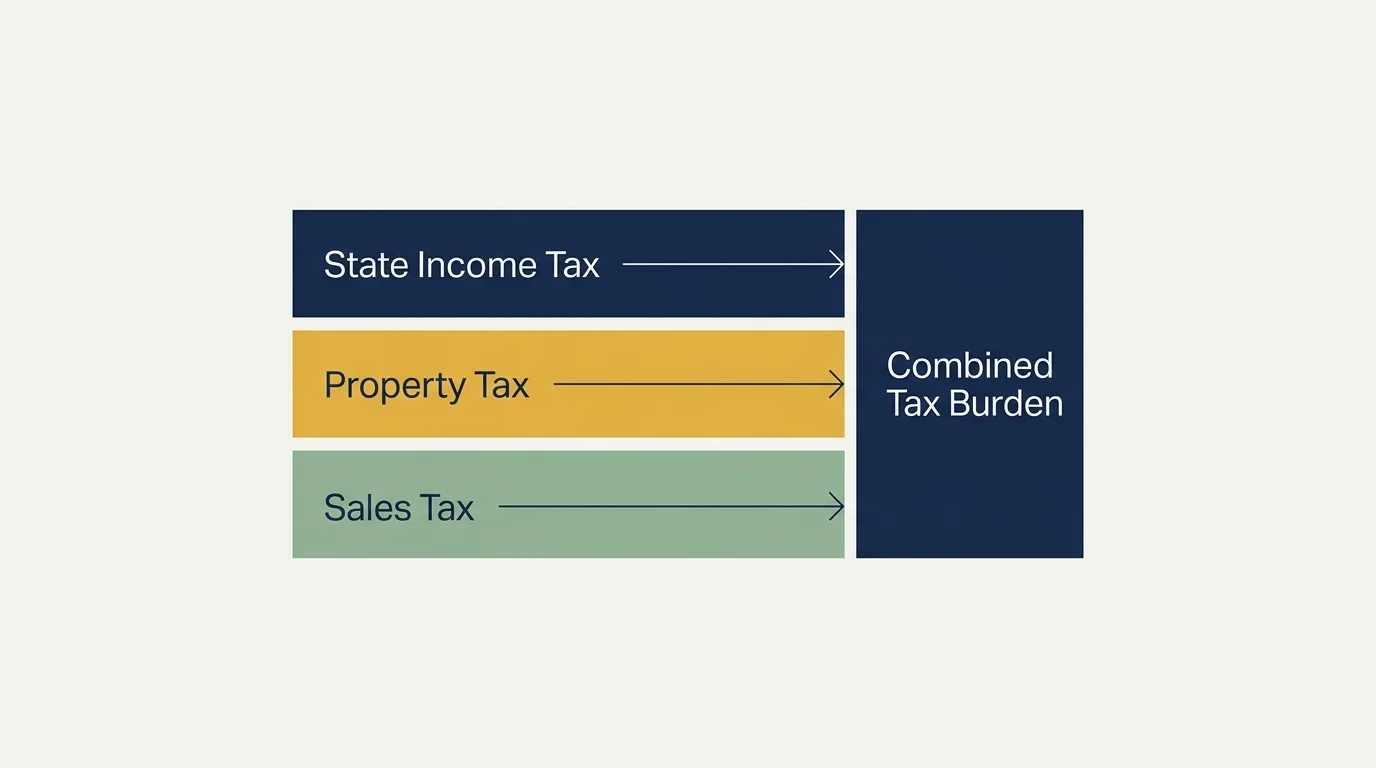
The combined tax burden is the total percentage of your income that goes toward three main categories:
- State Income Tax: This is a tax on the money you bring in. For retirees, this includes pensions, 401(k) and IRA withdrawals, and sometimes Social Security. As noted by the Social Security Administration (SSA), while your federal benefits may be taxable depending on your overall earnings, many states choose to exempt Social Security benefits entirely from state income taxes.
- Property Tax: This is the annual tax levied on the assessed value of your home. High property taxes can cost you thousands of dollars a year, essentially forcing you to “rent” your home from the government long after your mortgage is paid off.
- Sales and Excise Taxes: These are the taxes you pay on everyday purchases—groceries, clothing, gasoline, and dining out. A state with low income and property taxes might offset this by charging 8% or 9% at the cash register.
By evaluating all three of these pillars together, you get a realistic picture of how far your dollar will stretch in a new state. Some states strike an excellent balance, keeping both income and property taxes remarkably low for older adults.
Top 5 States With the Lowest Combined Taxes in 2026
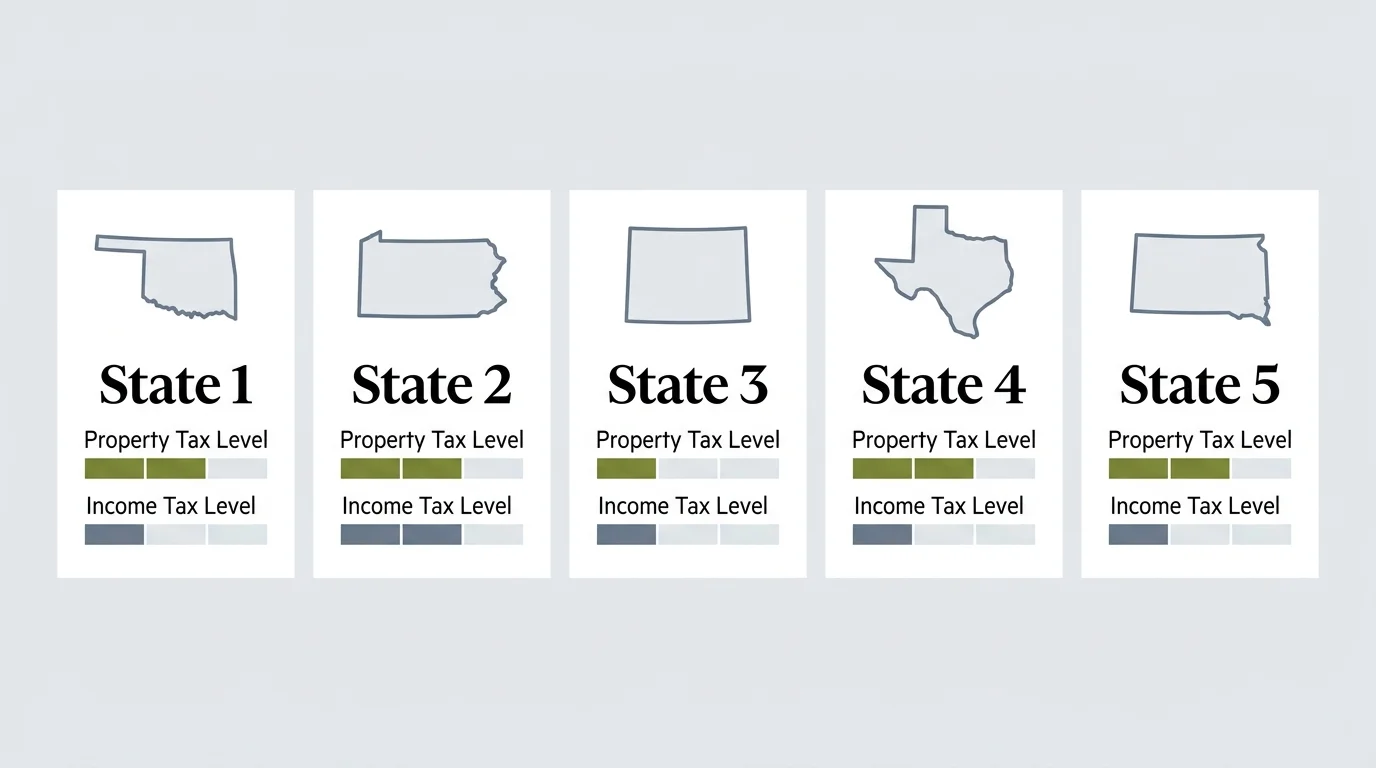
Based on current tax codes, property tax assessments, and specific senior exemptions, the following five states offer the most financially advantageous environments for retirees looking to minimize their combined state and local tax bills.
1. Wyoming
Wyoming consistently ranks at the top of the list for retirees seeking tax relief. The state levies no personal income tax, meaning your Social Security, pension payouts, and withdrawals from retirement accounts like IRAs and 401(k)s are entirely yours to keep. Beyond income tax, Wyoming boasts some of the lowest property taxes in the country. The state’s revenue is heavily subsidized by the energy and mining sectors, passing the savings directly to residents. Furthermore, Wyoming’s state sales tax is relatively low, making everyday living highly affordable.
2. Delaware
Delaware is an east coast haven for retirees. First and foremost, the state has zero sales tax—the price you see on the shelf is exactly what you pay at the register. While Delaware does have a state income tax, it is incredibly generous to older adults. The state exempts Social Security benefits entirely and offers a substantial exclusion on pension and retirement income for residents over the age of 60. Additionally, Delaware’s property taxes are notably low, and the state offers school property tax credits specifically for homeowners age 65 and older.
3. Nevada
Similar to Wyoming, Nevada has no state income tax, allowing retirees to draw down their retirement portfolios without penalty from the state. Property taxes in Nevada are also kept in check by a unique state law that limits how much a property’s assessed value can increase each year, protecting seniors on fixed incomes from sudden spikes in their housing costs. You should note, however, that Nevada relies heavily on sales tax to fund its government, so the tax at the cash register is higher than average.
4. Alabama
Alabama takes a different approach. The state does have an income tax, but it completely exempts Social Security benefits and all defined-benefit pension income. Where Alabama truly shines is its property taxes—they are among the absolute lowest in the entire United States. For retirees, the state also offers generous homestead exemptions that can eliminate state property taxes entirely for residents over 65, depending on their income level. This makes homeownership incredibly affordable for seniors.
5. Tennessee
Tennessee offers a very retiree-friendly tax environment by imposing no state income tax on any form of retirement income. Like Nevada and Wyoming, your pensions and Social Security are completely safe from state taxation. Tennessee also features property taxes that fall well below the national average. To balance the budget, Tennessee does enforce a high sales tax, but groceries are taxed at a significantly reduced rate, helping to ease the burden on everyday essential spending.
| State | Income Tax on Social Security | Average Property Tax Rate | State Sales Tax Strategy |
|---|---|---|---|
| Wyoming | None | Very Low (~0.61%) | Low state rate, moderate local rates |
| Delaware | None | Low (~0.58%) | No sales tax |
| Nevada | None | Low (~0.55%) | Higher sales tax |
| Alabama | None | Extremely Low (~0.42%) | Moderate sales tax |
| Tennessee | None | Low (~0.66%) | High overall, but reduced for groceries |
How to Evaluate a State for Your Unique Finances
A state that is perfect for your neighbor might not be perfect for you. Your specific combination of savings, pension income, and lifestyle habits determines which tax structure works best. Follow these steps to evaluate how a potential move will impact your personal bottom line.
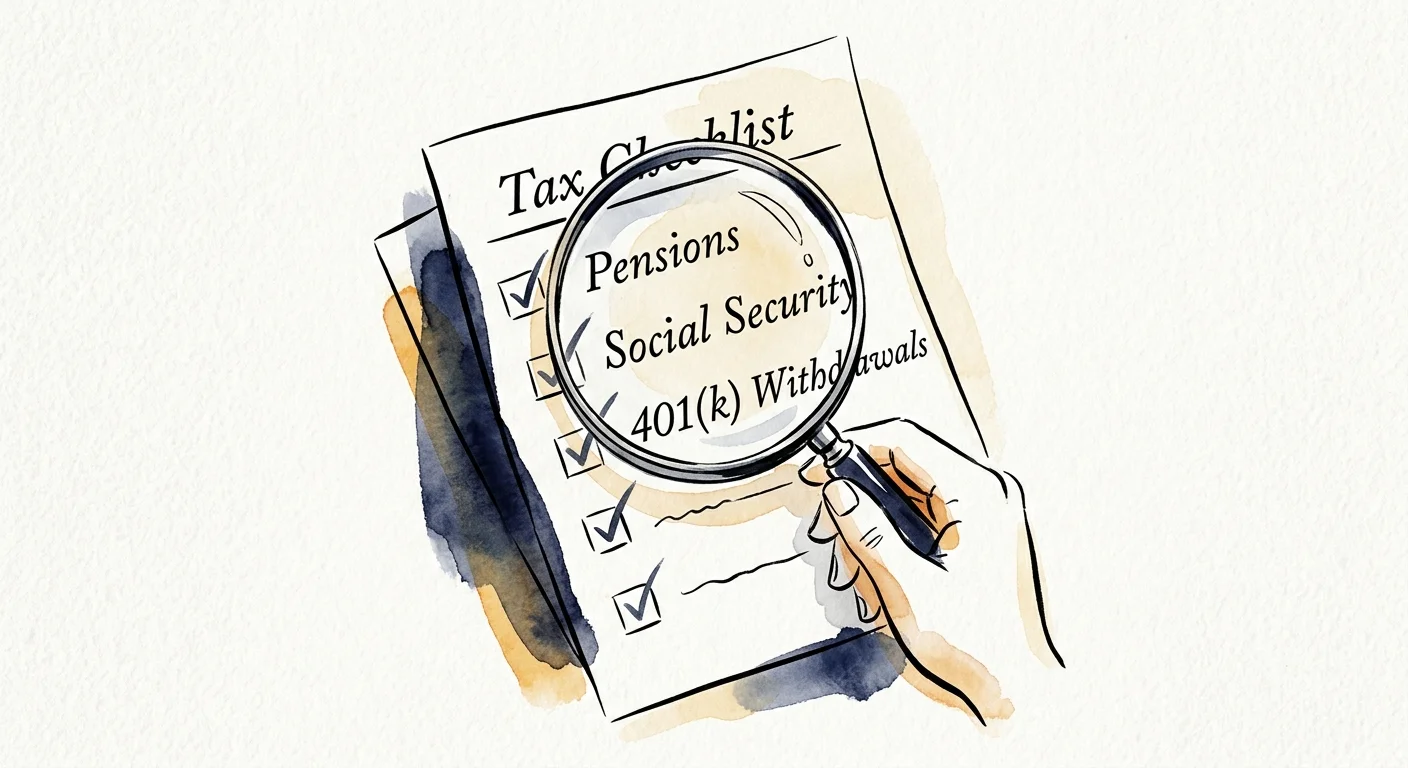
- Audit Your Income Sources: Break down exactly where your money comes from. Is it mostly Social Security? If so, look for states that do not tax these benefits. Do you have a massive traditional 401(k) that will trigger large Required Minimum Distributions (RMDs)? You will want a state with zero or very low income tax to protect those mandatory withdrawals.
- Estimate Your Property Taxes: Do not just look at a state’s “average” rate. Property taxes are local. Once you identify a town or county you like, research the exact millage rate for that specific municipality. Check the local county assessor’s website to see what the actual tax bill was for the previous year on homes you might want to buy.
- Research Senior Specific Exemptions: Many states offer “homestead exemptions” or property tax freezes for residents over 65. However, these often have strict income limits. Verify whether your retirement income qualifies you for these breaks before you commit to moving.
- Consider Estate and Inheritance Taxes: If leaving a legacy to your children is a top priority, check the state’s death taxes. While the federal estate tax exemption is quite high, some individual states impose their own estate or inheritance taxes on much smaller amounts, which could unexpectedly burden your heirs.
Hidden Costs and Common Relocation Mistakes
Relocating for tax benefits is a sound strategy, but tunnel vision can lead to costly mistakes. Retirees often move to a low-tax state only to find their savings devoured by hidden costs they failed to anticipate.
Homeowners insurance is currently one of the biggest blind spots for retirees. Several low-tax states are located in regions prone to extreme weather. You might save three thousand dollars a year in property taxes, but if your coastal or wildfire-adjacent home requires specialized insurance policies that cost five thousand dollars a year, you have actually lost money. Always get an insurance quote on a prospective home before making an offer.
Resources from AARP frequently highlight that moving to a “no income tax” state can backfire if you fail to account for aggressive vehicle registration fees or inflated Homeowners Association (HOA) dues. Many popular retirement communities require high monthly maintenance fees that outpace inflation, acting as an unregulated “tax” on your lifestyle.
Finally, be wary of relocation scams. Moving to a new state is a major transition, and unscrupulous moving companies often target seniors with low-ball estimates, only to hold their belongings hostage for more money upon arrival. Always use thoroughly vetted, licensed, and insured movers, and avoid companies that demand large cash deposits upfront.

Balancing Taxes With Healthcare and Lifestyle
Financial metrics are incredibly important, but your quality of life and physical well-being must remain your top priorities. A rural area in a low-tax state might save you money, but it could severely limit your access to specialist medical care. As you age, proximity to high-quality hospitals and specialists becomes paramount.
Before you move, verify that your health insurance will travel with you seamlessly. If you are on Original Medicare, you have national coverage. However, if you rely on a Medicare Advantage plan, moving to a new county or state will likely require you to switch plans entirely, which could alter your network of preferred doctors. You can use tools like Medicare.gov to compare health plans and provider networks in your new zip code to ensure you do not face a drop in care quality.
Community support is equally vital. Leaving behind family and long-time friends can lead to isolation. Ensure your new destination has active senior centers, volunteer opportunities, and safe, walkable neighborhoods. Additionally, the Eldercare Locator is a wonderful tool to find local aging services, transportation, and community support in your prospective new town. Balancing tax savings with a robust support system is the true key to a happy, sustainable retirement.
Frequently Asked Questions
Do all states tax Social Security benefits?
No, the vast majority of states do not tax Social Security benefits. As of 2026, fewer than ten states impose any sort of state income tax on Social Security, and even those states usually have income thresholds that protect lower-income and middle-income retirees. Always verify the current tax laws of your specific state, as legislation surrounding Social Security taxation changes frequently.
Are there property tax breaks specifically for seniors?
Yes, many local governments offer property tax relief for older adults. These usually come in the form of homestead exemptions, which reduce the assessed value of your home, or property tax “freezes,” which lock your tax rate in place so it cannot rise as you get older. However, these programs are rarely automatic. You typically must apply for them through your local county assessor’s office, and they often come with specific age and income requirements.
What is a domicile, and why does it matter for taxes?
Your domicile is your true, permanent, and primary legal home. If you plan to split your time between two states—for example, spending winters in a low-tax state and summers in your home state—you must establish a legal domicile in the low-tax state to claim its tax benefits. This requires spending more than half the year (usually 183 days) in the new state, updating your driver’s license, registering your vehicles, and registering to vote there. States are aggressive about auditing “snowbirds” to ensure they are paying their fair share.
Should I rent first before buying in a low-tax state?
Renting for six months to a year before purchasing a home is a highly recommended strategy. It allows you to experience the local culture, climate, and traffic patterns without committing a large portion of your savings. It also gives you time to monitor the true cost of living—including grocery prices, utility bills, and local sales taxes—ensuring the move genuinely benefits your financial situation before you lock yourself into a mortgage or home purchase.
Will my pensions be taxed if I move out of the state where I earned them?
Federal law prohibits states from taxing the retirement income of former residents. This means if you earned a pension in a high-tax state like New York or California, but establish a new legal residence in a tax-free state like Florida or Wyoming, your former state cannot tax your pension payouts. Your retirement income is taxed according to the laws of the state where you currently live, not where you worked.
For additional senior resources, visit
American Heart Association, Benefits.gov and National Institute on Aging (NIA).
Disclaimer: The information in this article is for educational purposes only and is not intended to be a substitute for professional financial, legal, or medical advice. Always consult with a qualified expert for advice tailored to your personal situation.









Leave a Reply