A desert retirement offers abundant sunshine and low baseline taxes, but unexpected monthly living expenses can quickly strain a fixed budget. Learning how utility structures, association charges, and local tax rules work helps you protect your hard-earned nest egg.
Many retirees arrive expecting low desert expenses, only to face surprising summer cooling bills and steep community fees. A clear plan keeps your sunny retirement comfortable and affordable.
Before packing your bags, review these key expenses for cooling, municipal water, active-adult communities, and state property taxes.
In this guide7 sections
Cooling Costs and Summer Electric Bills
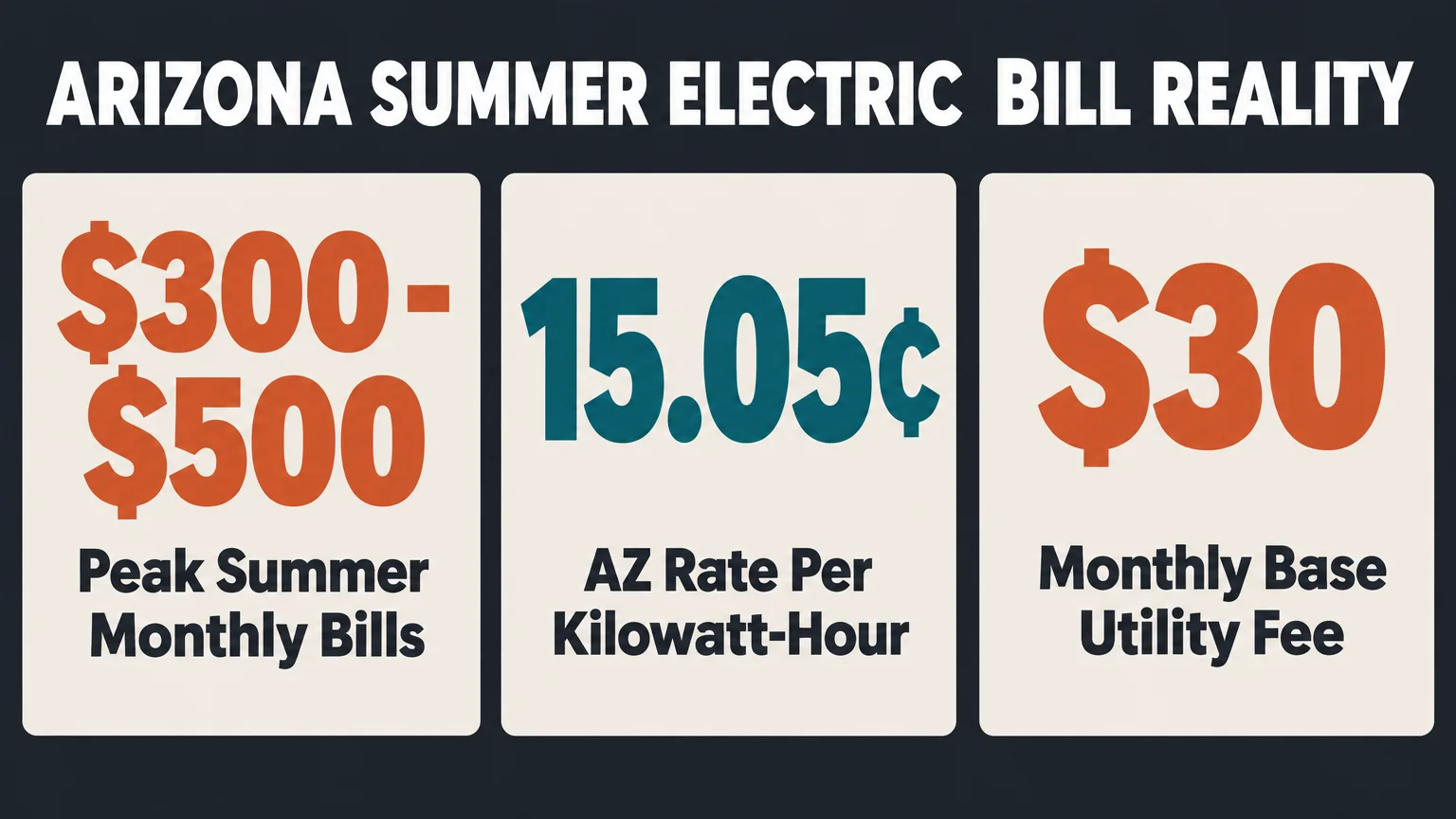
Arizona residential electricity rates average 15.05 cents per kilowatt-hour, which sits well below the national average of 18.16 cents. However, prolonged summer heat forces home air conditioning units to run continuously for months.
High air conditioner demand in July and August pushes typical monthly consumption past 2,000 to 2,500 kilowatt-hours. Consequently, summer electricity bills often climb between $300 and $500 per month for typical single-family homes.
Utility providers have also increased their base charges. Salt River Project assesses a $30 monthly fixed fee on standard single-family homes, while Tucson Electric Power implemented a 9.4% rate hike in late 2026.
Water Rate Hikes and Drought Surcharges
Federal cutbacks have reduced Arizona’s Colorado River supply allocation by 760,000 acre-feet per year. To fund infrastructure and secure replacement supplies, municipalities across the region have implemented noticeable rate increases.
Gilbert raised municipal water rates by 25% in 2026, which substantially increased utility costs for properties with natural lawns. Chandler also enacted a 15% rate increase covering both water and wastewater services.
The City of Phoenix adopted a Stage 2 drought surcharge of $2.10 per unit above 20 units monthly. This pricing structure targets heavy water users, specifically homes with lush landscape irrigation or private swimming pools.
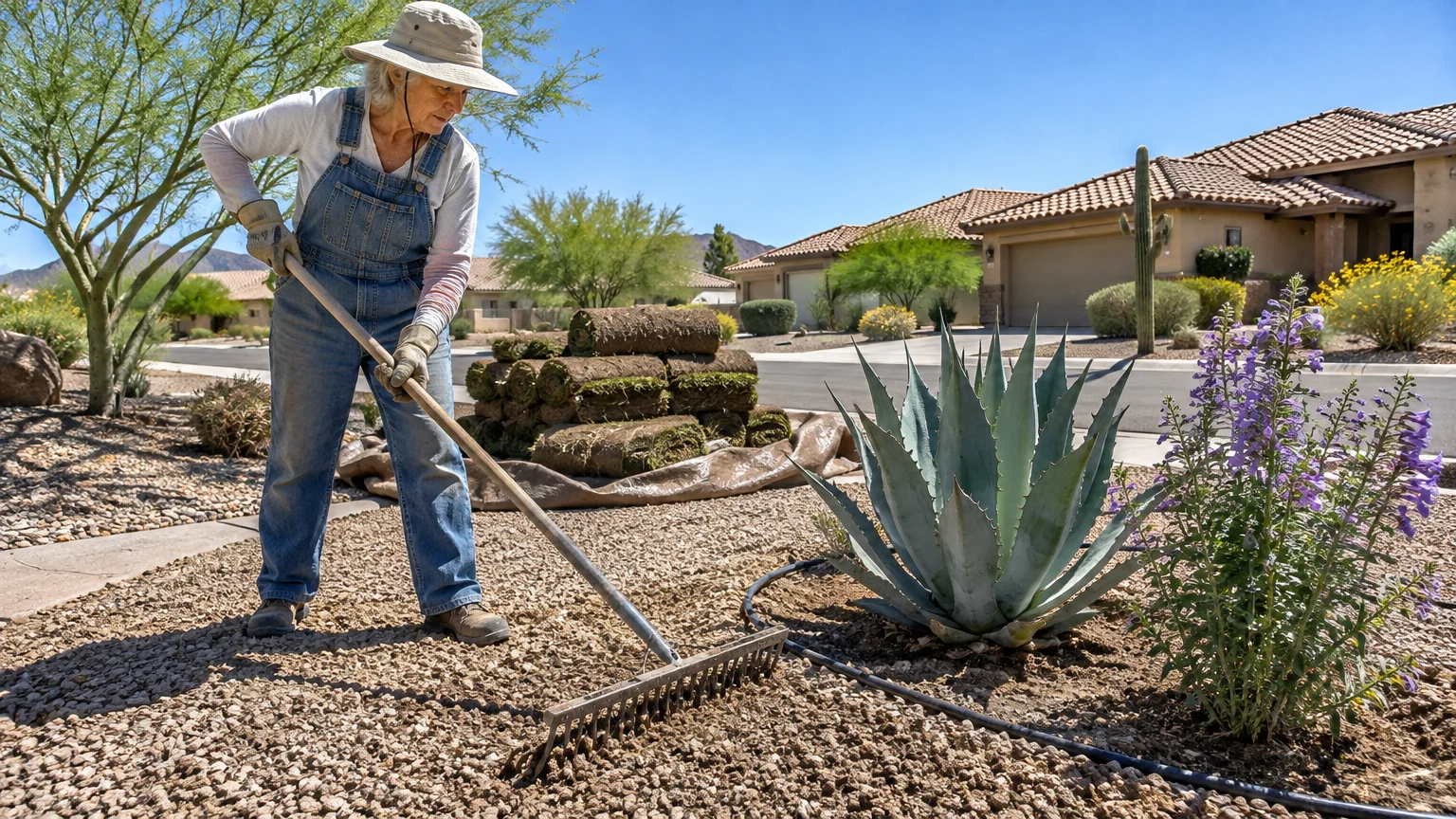
Several Valley cities offer cash incentives to help homeowners remove natural grass. For instance, Chandler pays $1.50 per square foot for turf conversion, while Gilbert offers conservation rebates up to $3,000.

HOA Dues and Hefty Buyer Transfer Fees
Roughly 31% of Arizona homes belong to a homeowners association, with statewide dues averaging $448 per month. However, popular active-adult retirement corridors operate under unique community funding systems.
In Sun City and Sun City West, single-family homes rarely carry standard monthly dues. Instead, property owners pay mandatory annual recreation assessments to support shared facilities and clubhouses.
Many homebuyers overlook substantial upfront capital fees due at settlement. These non-refundable charges fund community reserves and cannot be rolled into a standard mortgage balance.
| Retirement Community | Annual or Monthly Assessment | Upfront Buyer Capital Fee |
|---|---|---|
| Sun City | $680 per year (RCSC assessment) | $4,000 Preservation and Improvement Fee |
| Sun City West | ~$497 per year (RCSCW dues) | $5,000 to $5,400 Asset Preservation Fee |
| The Grand (Surprise) | $1,976 per year | $5,000 CARE Fee |
| Arizona Traditions | $205 per month | $2,460 CARE Fee |
| CantaMia | $348 per month | $4,676 Capital Fee |
According to the Consumer Financial Protection Bureau (CFPB), examining all closing disclosures and community fees prevents costly settlement surprises.
New Arizona HOA Laws Protecting Homeowners
Recent state legislation provides stronger protections for Arizona homeowners against arbitrary association enforcement. These consumer statutes safeguard your home equity and allow sensible climate adaptations.
Under Senate Bill 1246, associations cannot pursue foreclosure until assessment delinquencies reach 18 months or exceed $10,000. This statutory threshold prevents homeowners from losing property over minor disputed fees.
House Bill 2342 prevents associations from banning backyard shade structures like awnings, pergolas, and shade sails. In addition, state statute bars communities from prohibiting artificial turf where natural grass is already allowed.
Arizona Retirement Taxes and the Senior Freeze
Arizona features an attractive flat 2.5% state income tax rate and assesses no estate or inheritance taxes. The state exempts 100% of Social Security retirement benefits and military pensions from income taxation.
According to the Social Security Administration (SSA), preserving your complete monthly benefit protects your baseline standard of living during retirement.
Distributions from traditional 401(k) plans, traditional IRAs, and private pensions remain subject to the flat 2.5% tax rate. Out-of-state public pensions are also fully taxed beyond a modest $2,500 exclusion.
Arizona’s Senior Valuation Protection Option freezes your home’s taxable valuation for three renewable years. Eligible homeowners must be at least 65 years old and maintain primary residency for two consecutive years.
For 2026, qualifying household income cannot exceed $47,712 for single owners or $59,640 for two owners. Qualified seniors must submit their application to the county assessor by September 1.
Disabled military veterans with a 100% service-connected rating receive a complete property tax exemption on their primary home. Furthermore, voter-approved Proposition 316 established a 2% cap on local municipal grocery taxes.
Actionable Steps to Protect Your Retirement Budget
Applying smart financial safeguards protects your desert relocation budget from common pitfalls. Review these practical action items before signing a purchase contract:
- Enroll in budget billing: Level your electric payments evenly across 12 months to prevent painful bill spikes during extreme summer temperatures.
- Confirm capital fees before bidding: Request full association resale disclosures to calculate upfront transfer costs alongside standard down payment requirements.
- Utilize municipal conservation rebates: Replace turf lawns with desert landscaping to qualify for city rebates and permanently lower your monthly water bill.
- File for tax relief early: Contact your county assessor when turning 65 to verify current income caps for property value freezing programs.
Checking public benefit eligibility can also help offset utility bills and local levies. The federal portal Benefits.gov helps seniors explore community aid programs based on household income.
Frequently Asked Questions
Does Arizona tax out-of-state public pensions?
Yes, Arizona taxes out-of-state government pensions at the flat 2.5% rate. Only federal civil service and Arizona state pensions qualify for the modest $2,500 exclusion.
Can snowbirds qualify for the Arizona senior property tax freeze?
No, seasonal residents cannot qualify for the Senior Valuation Protection Option. You must occupy the property as your primary residence for at least nine months each year.
Are active-adult community recreation fees tax-deductible?
Mandatory recreation fees and community assessments are non-deductible personal housing expenses. Consult a certified public accountant to discuss your specific federal and state tax filings.
How do solar panels affect summer electric bills in Arizona?
Rooftop solar systems offset peak daytime air conditioning demand during extreme heat. However, monthly grid connection fees and utility solar rates still apply.
What happens if I use more water than drought thresholds allow?
Cities like Phoenix assess surcharges on monthly consumption exceeding set limits. Eliminating leaks and moderating landscape irrigation prevents these penalty tiers.
For additional senior resources, visit
Administration for Community Living (ACL), Eldercare Locator and AARP.
Disclaimer: The information in this article is for educational purposes only and is not intended to be a substitute for professional financial, legal, or medical advice. Always consult with a qualified expert for advice tailored to your personal situation.