

Securing a fulfilling part-time role during retirement provides extra income, sharpens cognitive health, and keeps you meaningfully connected to your local community. Museums and libraries offer some of the most low stress jobs seniors can find, providing welcoming environments where your lifetime of wisdom and experience are genuine assets. Whether you want to guide eager visitors through art exhibits, organize historical archives, or manage community library programs, cultural institutions frequently seek reliable older adults for flexible roles. Understanding pay rates, physical demands, and Social Security earnings rules helps you select the perfect position. Exploring these ten rewarding job opportunities allows you to turn your passion for history, art, and learning into steady part-time earnings.
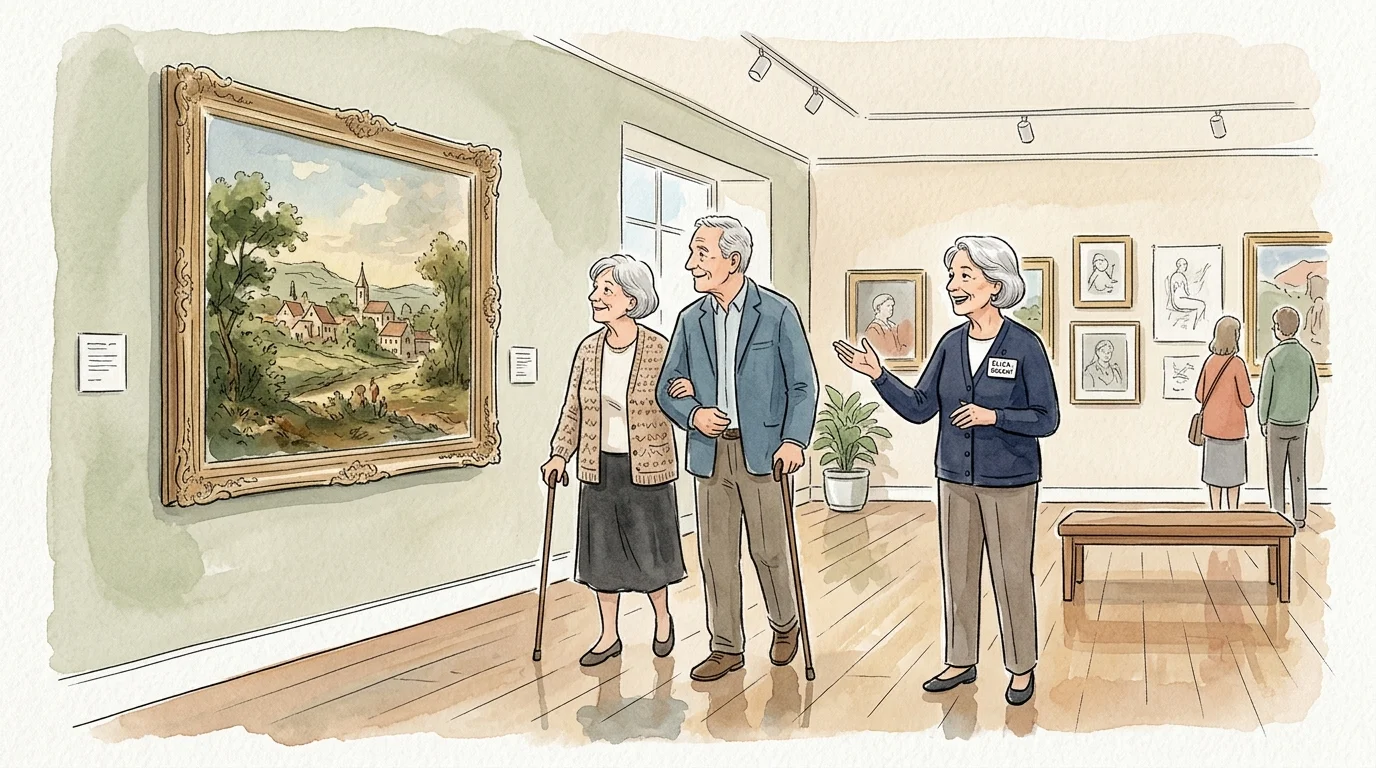
Why Cultural Institutions Offer Ideal Part-Time Work for Seniors
Transitioning from a full-time career into retirement does not mean you have to stop working altogether. Many retirees seek part-time cultural jobs that offer mental stimulation and social engagement without the high pressure of corporate environments. Museums, historical societies, public libraries, and academic archives offer predictable schedules, serene surroundings, and respectful patrons. These institutions value dependability, clear communication, and life experience—qualities that mature workers bring to the workforce naturally.
Working in cultural settings yields distinct health and financial benefits. According to research highlighted by the Centers for Disease Control and Prevention (CDC), maintaining active social connection and routine cognitive engagement significantly reduces the risk of isolation and cognitive decline in older adults. Furthermore, these positions allow you to supplement your retirement income without sacrificing your personal lifestyle or travel plans.
The cultural sector relies heavily on part-time personnel to support full-time curators and librarians. Data from the Bureau of Labor Statistics indicates that across the United States, public and academic libraries employ over 289,400 library workers, including approximately 65,500 library assistants and 37,400 library technicians. Meanwhile, thousands of local historical sites, science centers, and art museums depend on part-time docents, gift shop clerks, and guest services staff to keep their doors open to the public. If you are searching for library jobs for seniors or museum roles tailored to your schedule, these organizations present ideal working environments.
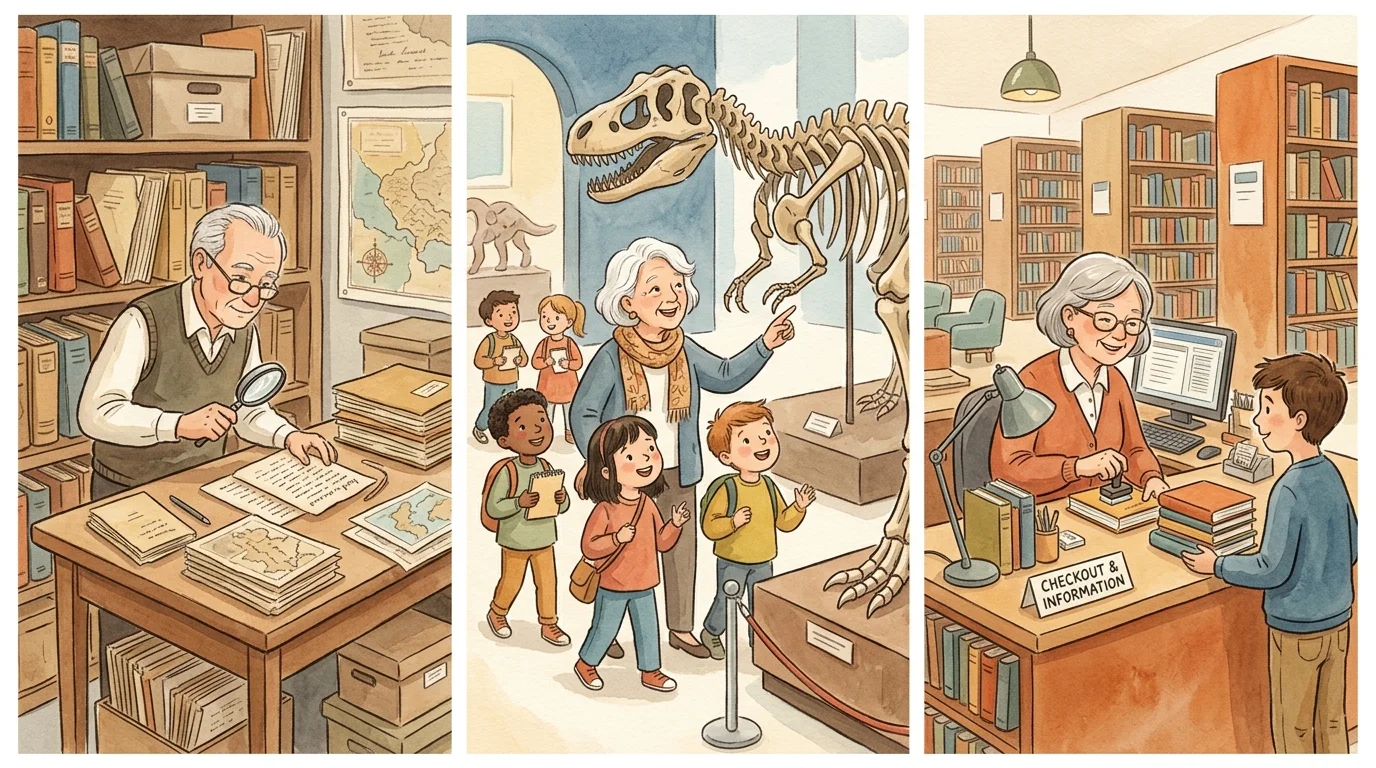
10 Rewarding Part-Time Jobs at Museums and Libraries
Below are ten outstanding part-time positions available in museums and libraries across the nation. Each position highlights specific responsibilities, expected compensation based on national wage data, physical requirements, and reasons why the role suits retirees.
1. Museum Docent or Paid Tour Guide
Museum docents and paid tour guides serve as the primary storytellers of cultural organizations. In this role, you lead groups of school children, tourists, and local enthusiasts through gallery spaces, historic homes, or specialized exhibits. You explain historical context, describe artistic techniques, answer visitor questions, and encourage audience participation during scheduled tours.
Expected Compensation: Entry-level and support positions in museum education typically pay between $16.00 and $21.00 per hour, depending on your geographic location and specialized knowledge.
Physical Demands: Moderate. You will stand and walk for periods of 60 to 90 minutes at a time while speaking clearly to groups. Many venues permit portable stool seating or offer accessible walking routes.
Why It Suits Retirees: This position exercises your memory and public speaking capabilities. If you love history, fine art, or science, docent work allows you to share your enthusiasm with appreciative audiences while continuously learning new information from incoming curators.
2. Library Page or Shelver
Library pages maintain order across public and university library collections. Your core duties include collecting returned books, videos, and periodicals from book drops, sorting materials numerically or alphabetically, and returning them to their correct positions on shelves. You also perform shelf-reading, which involves scanning book spines to verify that items reside in exact sequence according to the Dewey Decimal or Library of Congress systems.
Expected Compensation: Library pages generally earn between $15.00 and $17.50 per hour.
Physical Demands: Active light-to-moderate labor. You will bend, reach, lift books weighing up to 5 pounds individually, and push rolling book carts weighing up to 50 pounds.
Why It Suits Retirees: Library page positions rank among the best low stress jobs seniors can secure. The work is quiet, task-focused, and free from high-pressure sales quotas or complicated technology. You can work independently while enjoying a calm, peaceful atmosphere.
3. Visitor Services Associate
As a visitor services associate, you operate as the welcoming face of a museum or historical center. You greet guests at the admissions counter, sell or scan admission tickets, hand out event maps, explain daily show schedules, and answer general directional questions. You may also handle basic retail transactions or manage group check-ins.
Expected Compensation: Visitor services staff earn between $16.00 and $20.00 per hour.
Physical Demands: Light. You spend most of your shift seated behind an admissions counter or standing near entry lobby doors.
Why It Suits Retirees: If you enjoy pleasant, short conversations with diverse groups of people, this job provides excellent social connection. It requires simple customer service skills and basic computer operation without heavy manual labor.
4. Library Assistant
Library assistants support professional librarians by managing front circulation desks. You check out books and media items for patrons, process new library card applications, collect small fees, hold reserved books, and assist visitors with operating self-checkout kiosks or basic print terminals.
Expected Compensation: According to the U.S. Bureau of Labor Statistics, library assistants earn a median wage of approximately $17.30 per hour, which equates to an annual full-time equivalent of $36,005.
Physical Demands: Mostly light desk work, with intermittent standing and movement around circulation areas.
Why It Suits Retirees: Among retiree jobs at libraries, this role delivers an ideal balance of social interaction and structured administrative tasks. You build friendly relationships with regular local library patrons and remain actively involved in community events.
5. Museum Gift Shop Assistant
Museum gift shops provide vital revenue for cultural institutions, and they rely heavily on part-time retail staff. You operate point-of-sale cash registers, accept cash and credit payments, wrap fragile gift items, stock shelves with new merchandise, and assist visitors with selecting souvenirs, books, and jewelry.
Expected Compensation: Hourly wages range from $16.00 to $19.50 per hour.
Physical Demands: Light to moderate, involving periods of standing behind a checkout counter and unpacking light merchandise inventory boxes.
Why It Suits Retirees: Unlike fast-paced big-box retail stores, museum gift shops experience a relaxed, pleasant customer pace. Retirees with prior experience in retail, cash handling, or customer service will find this work comfortable and straightforward.
6. Archival Assistant or Digitization Technician
Archival assistants help keep rare documents, original photographs, historic maps, and regional records preserved and organized. You assist archivists by cataloging donated collections, placing fragile paper records into acid-free folders and preservation boxes, and scanning historical documents into high-resolution digital databases.
Expected Compensation: Similar to library technicians who earn median hourly rates between $18.90 and $20.46 per hour, archival support specialists earn between $18.00 and $22.00 per hour depending on technical requirements.
Physical Demands: Low. Work is primarily seated at desk computers, document scanners, and archival worktables.
Why It Suits Retirees: This role offers deep intellectual satisfaction for detail-oriented individuals who enjoy local history. You work directly with unique primary source materials in quiet, controlled environments.
7. Children’s Program Coordinator or Storyteller
Public libraries and children’s museums conduct weekly literacy programs, craft sessions, and toddler story hours. In this role, you read books aloud to young audiences, lead group sing-alongs, hand out craft supplies, and help maintain an encouraging, educational atmosphere for young families.
Expected Compensation: Program coordinators and assistants earn between $17.00 and $21.00 per hour.
Physical Demands: Moderate mobility required, including sitting on carpet circles, standing to show illustrations, and setting up small tables and chairs.
Why It Suits Retirees: Former teachers, school staff, grandparents, and creative retirees thrive in this environment. It brings joy, energetic interaction, and fulfilling creative opportunities without the burden of grading or full-time lesson planning.
8. Event and Facility Support Assistant
Museums and libraries host evening author lectures, exhibit openings, donor galas, and community workshops. Event support assistants help set up check-in tables, manage coat rooms, check guest lists, direct traffic toward lecture halls, and manage light beverage or catering counters during specialized events.
Expected Compensation: Event staff usually earn between $17.50 and $22.00 per hour.
Physical Demands: Moderate. Shifts often take place during late afternoons, evenings, or weekends and require standing or walking during event hours.
Why It Suits Retirees: This role offers ultimate schedule flexibility. You can choose specific event shifts rather than committing to fixed weekly hours, allowing you to build your work schedule around retirement travel and family commitments.
9. Library Information Desk Specialist
Information desk specialists assist library visitors who need help locating specific sections, navigating computer databases, or finding local community services. You direct patrons to local civic resources, assist with interlibrary loan requests, and manage community bulletin boards.
Expected Compensation: Hourly wages typically range from $18.00 to $20.50 per hour.
Physical Demands: Low. The job is conducted entirely from a seated reference or information desk.
Why It Suits Retirees: This role rewards excellent problem-solving ability, patience, and clear communication. If you enjoy helping people locate information and feel comfortable performing internet searches, this desk position proves deeply rewarding.
10. Membership and Donor Relations Assistant
Museums depend on memberships and private donations to support their operations. Membership assistants process member renewals, assemble welcome packets, update constituent databases, print membership cards, and answer phone or email inquiries regarding donor benefit levels.
Expected Compensation: Administrative membership roles earn between $18.50 and $23.00 per hour.
Physical Demands: Low. Standard desk-based administrative office work.
Why It Suits Retirees: If you retired from an administrative, sales, or corporate office career, this job allows you to apply your organizational and phone skills directly toward supporting cultural institutions in your area.
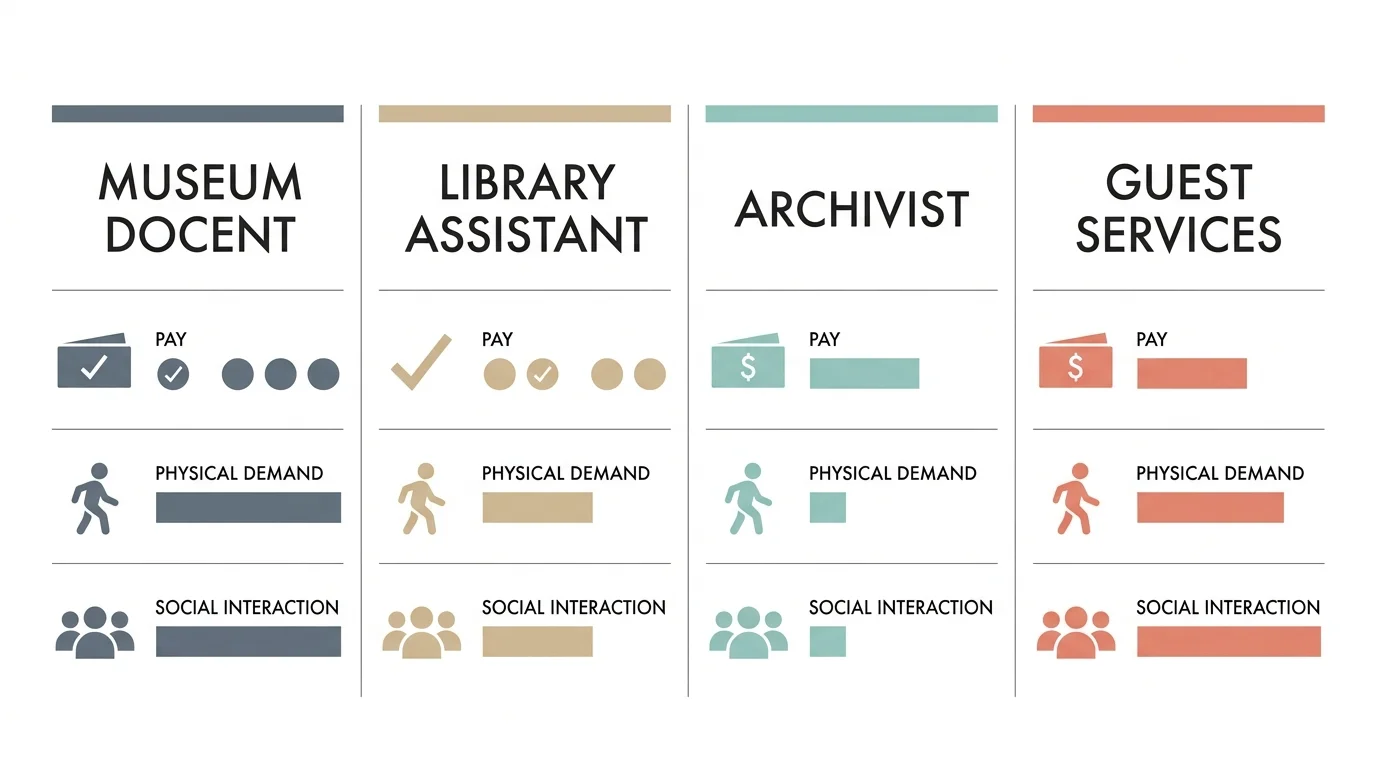
Comparing the Top 10 Part-Time Positions for Retirees
Choosing the right part-time job depends on your physical preferences, income goals, and desired level of social interaction. The following table compares all ten positions to help you determine which role aligns best with your retirement lifestyle.
| Job Title | Typical Hourly Wage | Physical Demand | Primary Skill Needed | Work Environment |
|---|---|---|---|---|
| Museum Docent | $16.00 – $21.00 | Moderate (Walking/Standing) | Public Speaking | Galleries & Historic Sites |
| Library Page | $15.00 – $17.50 | Moderate (Bending/Lifting) | Organization & Attention | Quiet Library Stacks |
| Visitor Services Associate | $16.00 – $20.00 | Light (Seated/Standing) | Customer Service | Museum Lobby Desk |
| Library Assistant | $17.30 (Median) | Light (Desk/Walking) | Computer & Communication | Circulation Desk |
| Gift Shop Assistant | $16.00 – $19.50 | Light to Moderate | Cash Handling & Retail | Museum Gift Shop |
| Archival Assistant | $18.00 – $22.00 | Low (Seated) | Detail & Record Keeping | Archive Room/Office |
| Children’s Program Specialist | $17.00 – $21.00 | Moderate (Active) | Enthusiasm & Creativity | Children’s Section |
| Event Support Assistant | $17.50 – $22.00 | Moderate (Evening Shifts) | Hospitality & Setup | Event Spaces |
| Information Desk Specialist | $18.00 – $20.50 | Low (Seated) | Research & Guidance | Information Counter |
| Membership Assistant | $18.50 – $23.00 | Low (Seated) | Data Entry & Office Tech | Administrative Office |
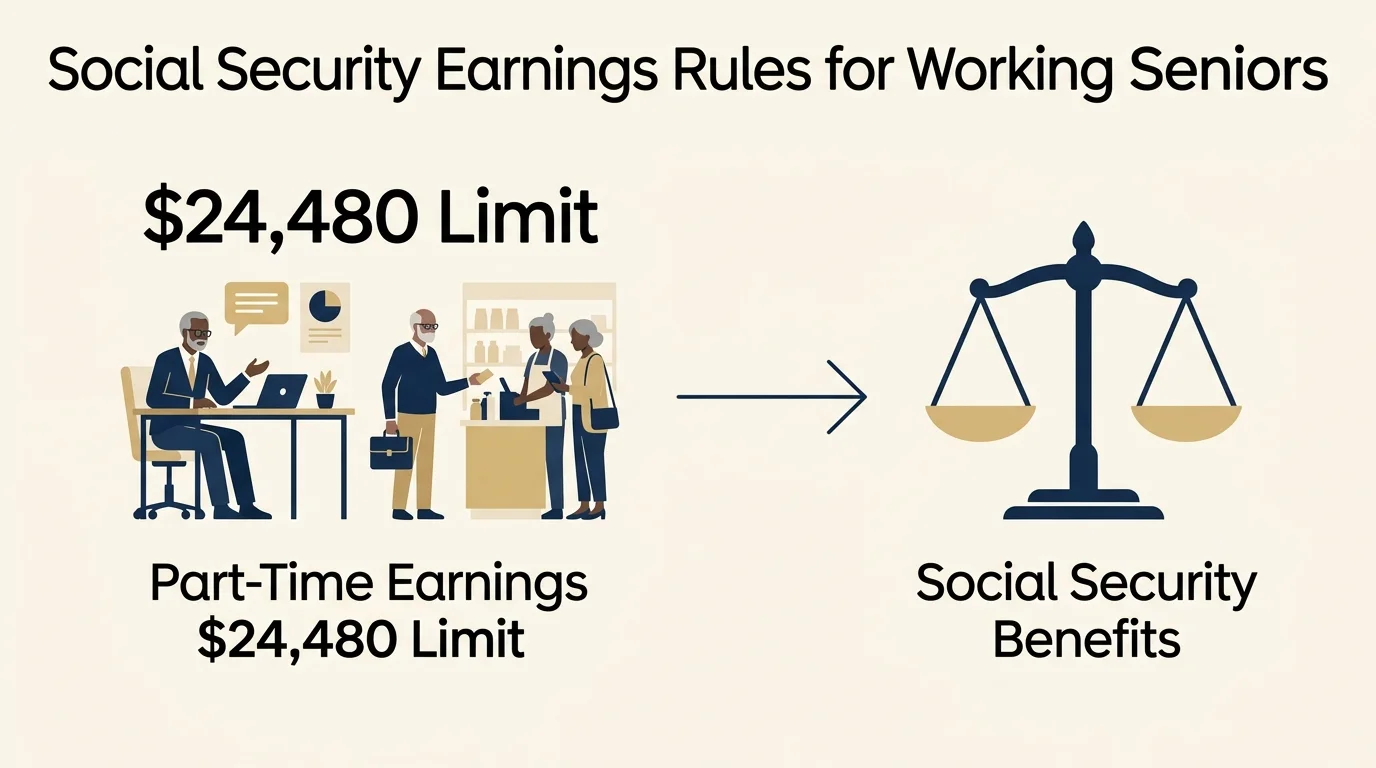
Navigating Social Security Earnings Limits and Taxes
Before taking a part-time position, you must understand how employment earnings interact with your Social Security benefits and income tax brackets. Working while collecting Social Security is entirely permitted, but specific earnings limits apply if you have not yet reached your Full Retirement Age (FRA).
Under current rules set by the federal government, Full Retirement Age is 67 for individuals born in 1960 or later. If you choose to work part-time before reaching your FRA, you must monitor your gross income to avoid temporary benefit reductions:
- Under Full Retirement Age All Year (2026 Limit): You can earn up to $24,480 per year ($2,040 per month) without affecting your benefits. If your gross wages exceed $24,480, the Social Security Administration withholds $1 in benefits for every $2 you earn above the threshold.
- Reaching Full Retirement Age During 2026: In the calendar year you reach your FRA, the earnings limit rises substantially to $65,160. During the months leading up to your birthday, $1 is withheld for every $3 you earn above $65,160.
- At or Above Full Retirement Age: Starting the exact month you reach Full Retirement Age, earnings limits disappear entirely. You can earn unlimited income from museum jobs for retirees or library jobs for seniors without any benefit withholding.
According to official guidance from the Social Security Administration (SSA), money withheld under the earnings limit test is not lost permanently. Once you reach your Full Retirement Age, the SSA recalculates your monthly benefit upward to account for the amounts withheld earlier, increasing your baseline check for the rest of your life.
You must also account for income taxes. Part-time wages are subject to standard federal and state withholding, as well as Social Security and Medicare taxes (FICA). Adding wages to your retirement income may cause a portion of your Social Security benefits to become taxable if your combined adjusted gross income exceeds $25,000 for single tax filers or $32,000 for married couples filing jointly. Consulting a qualified tax professional helps you structure your part-time work hours effectively.

How to Find and Apply for Cultural Sector Jobs
Finding openings at local museums and libraries requires targeted job search strategies. Because many cultural and civic institutions do not market heavily on general commercial job boards, you should look directly at institutional and government job listings.
- Check Government Employment Portals: Public libraries and municipal art centers are typically funded by county or municipal governments. Visit city, county, and state civil service employment portals to locate opening announcements for library assistants and pages. Federal museums, such as those operated by the Smithsonian Institution or National Park Service, post listings directly on USAJOBS.gov.
- Search Professional Association Job Boards: Look at job boards hosted by regional and national associations. The American Alliance of Museums (AAM) Job Center and the American Library Association (ALA) JobLIST feature thousands of part-time, entry-level, and support roles across every region of the United States.
- Modernize Your Resume Format: As noted in workforce guidance from AARP, older job seekers should structure resumes to highlight functional skills rather than decades-long career histories. Focus your resume on the past 10 to 15 years of professional work. Emphasize transferable skills like customer service, organizational abilities, attendance reliability, and software familiarity. Remove college graduation dates from decades past to keep your application fresh and focused on your current capabilities.
- Leverage Strategic Volunteering: Volunteering 2 to 4 hours per week at a target museum or library serves as an effective stepping stone into paid employment. Volunteering lets you demonstrate your work ethic, learn internal database systems, and build connections with hiring managers. When a paid part-time role opens up, internal volunteers frequently stand at the top of the applicant pool.

Overcoming Common Challenges in Senior Employment
Re-entering the workforce or transitioning into a new industry presents occasional hurdles. Knowing how to address physical comfort, technology usage, and schedule boundaries ensures your job remains a positive addition to your life.
Managing Physical Stamina: If standing for extended periods causes back or joint discomfort, ask for simple ergonomic accommodations during the interview or onboarding process. Most visitor centers and museums readily provide comfortable tall stools for docents and admissions staff or floor matting for gift shop cashiers. For library positions, request a lightweight rolling cart to transfer materials rather than carrying book stacks manually.
Overcoming Technology Hurdles: Modern libraries use Integrated Library Systems (ILS) for circulation, while museum gift shops use digital point-of-sale software. Do not let technology intimidate you. Institutions expect to train new hires on their specific software systems. Focus on demonstrating a positive attitude and a willingness to follow step-by-step written procedures.
Protecting Your Retirement Work-Life Balance: Clarify your weekly availability during the interview process. State the exact maximum number of hours you wish to work each week (such as 12 to 15 hours). Establishing clear schedule boundaries upfront prevents employers from scheduling you for extra shifts that could interfere with your personal interests, family commitments, or travel arrangements.
If you need specialized local guidance or vocational retraining assistance, resources like the nationwide Eldercare Locator network can connect you with regional employment counseling programs tailored specifically for older adults.
Frequently Asked Questions
Do I need a degree in history or library science to work at a museum or library?
No, you do not need specialized degrees for entry-level and support positions. While professional archivists and head librarians hold master’s degrees (such as an MLS or MLIS), part-time positions like library assistants, pages, docents, gift shop clerks, and visitor services associates require only a high school diploma or equivalent, basic computer literacy, and strong interpersonal skills.
Will earning extra income from a part-time job affect my Medicare eligibility?
No, part-time earnings will not affect your eligibility for Medicare Part A or Part B. Medicare eligibility is based on age (65 and older) or qualifying disability, not your earned income level. However, if your total adjusted gross income increases significantly, it could potentially trigger an Income-Related Monthly Adjustment Amount (IRMAA) surcharge on your Medicare Part B and Part D premiums. Keep your gross earnings within planned limits to avoid high premium tiers.
Can I transition from a volunteer role into a paid part-time job at the same institution?
Yes, transitioning from a volunteer to a paid staff member is common in cultural institutions. Volunteering allows you to demonstrate your punctuality, team orientation, and passion for the organization’s mission. When a paid position opens, express your interest to your supervisor promptly and submit a formal application detailing your experience with their operations.
What accommodations can I request if I have physical mobility limitations?
Under federal guidelines, employers can provide reasonable workplace accommodations. In museum and library settings, accommodations may include tall seating stools at tour stations or information desks, anti-fatigue floor mats behind counters, flexible shift lengths (such as 3-hour or 4-hour shifts instead of 8-hour shifts), and screen magnification software on desk computers.
How many hours per week do part-time cultural positions typically require?
Most part-time library and museum jobs require between 10 and 20 hours per week. Shifts are frequently split into 4-hour or 6-hour blocks, making them easy to manage. Many institutions offer flexible shift schedules that allow you to work weekdays only, weekends only, or a predictable combination of both.
For additional senior resources, visit
National Institute on Aging (NIA),
Centers for Disease Control and Prevention (CDC),
Medicare.gov and
National Institute of Mental Health (NIMH).
Disclaimer: The information in this article is for educational purposes only and is not intended to be a substitute for professional financial, legal, or medical advice. Always consult with a qualified expert for advice tailored to your personal situation.








Leave a Reply