
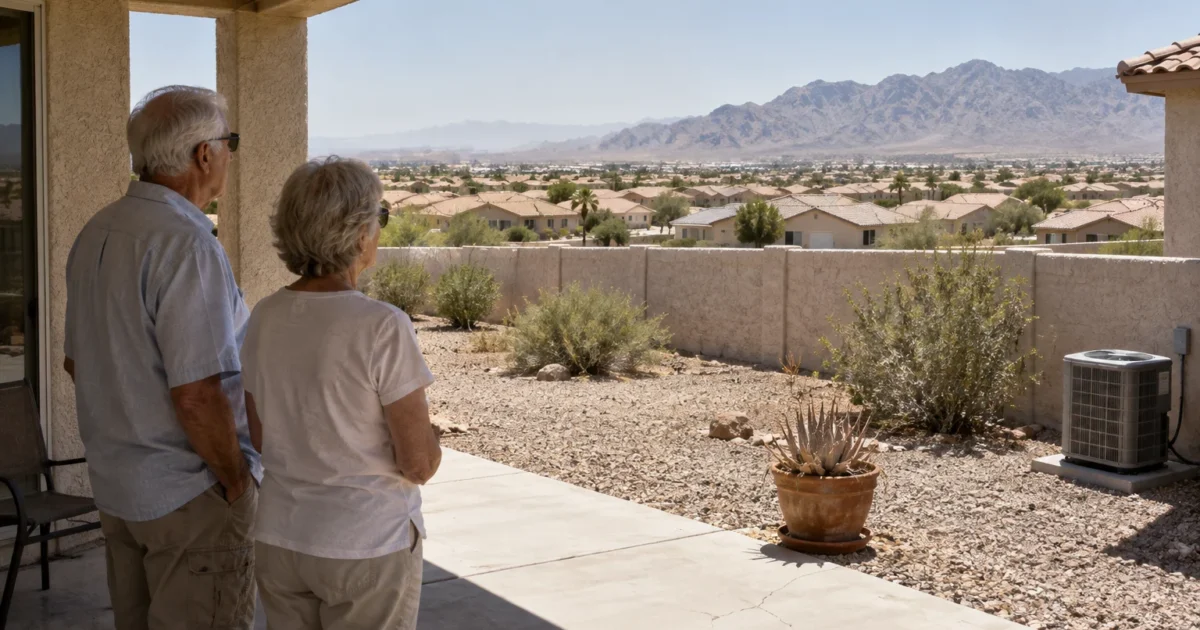
Sunny skies and warm winters make the American Southwest look like a retirement paradise. However, brutal summer heat, acute doctor shortages, and high crime rates create serious Southwest retirement regrets for unprepared seniors.
Relocating to the wrong desert community can quickly deplete your fixed income and jeopardize your personal well-being. You must evaluate the daily reality of these locations before packing your moving boxes.
Identifying the worst Southwest cities for retirees helps you safeguard your health and long-term financial security. Here are twelve Southwest cities retirees should avoid at all costs.
Evaluating Southwest Retirement Realities
Retirement brochures often showcase palm trees, golf courses, and vibrant sunsets. Unfortunately, promotional marketing rarely reveals the intense physical and economic strains that define daily life in struggling desert communities.
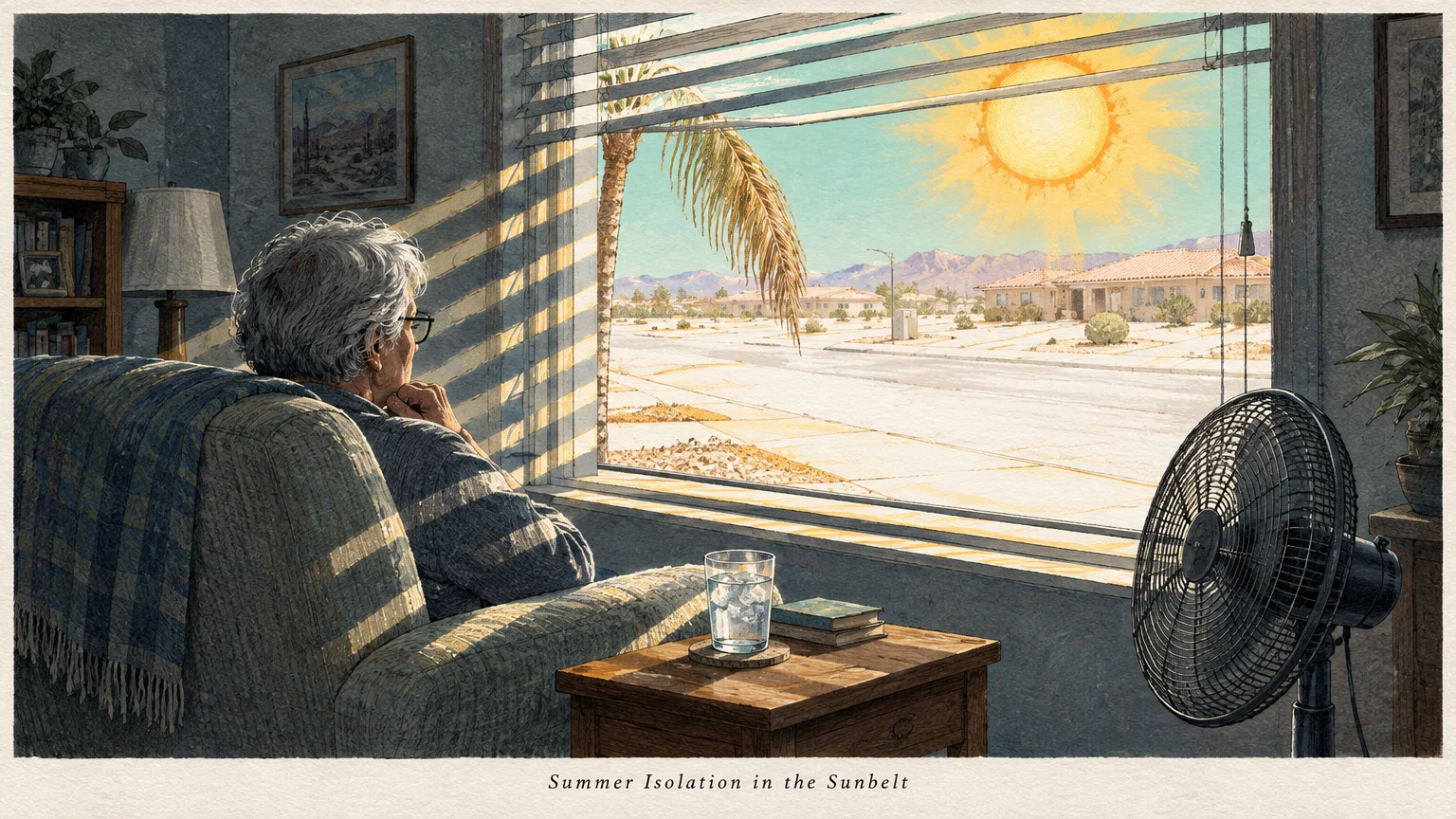
Triple-digit summer heat forces older residents indoors for months at a time. This seasonal confinement creates social isolation similar to harsh northern winters; it also drives air conditioning bills to punishing heights.
According to the Centers for Disease Control and Prevention (CDC), older adults have a harder time regulating body temperature during extreme weather events. Chronic health conditions make managing intense heat even more perilous.
Healthcare accessibility presents another urgent challenge across the region. Several Southwestern states face critical shortages of primary care doctors, geriatric specialists, and emergency facilities.
Before committing your life savings to a relocation, you must look past scenic mountain vistas. Examining the local medical systems, utility costs, and safety records will prevent devastating Southwest retirement mistakes.
12 Southwest Cities Retirees Should Avoid
1. Phoenix, Arizona
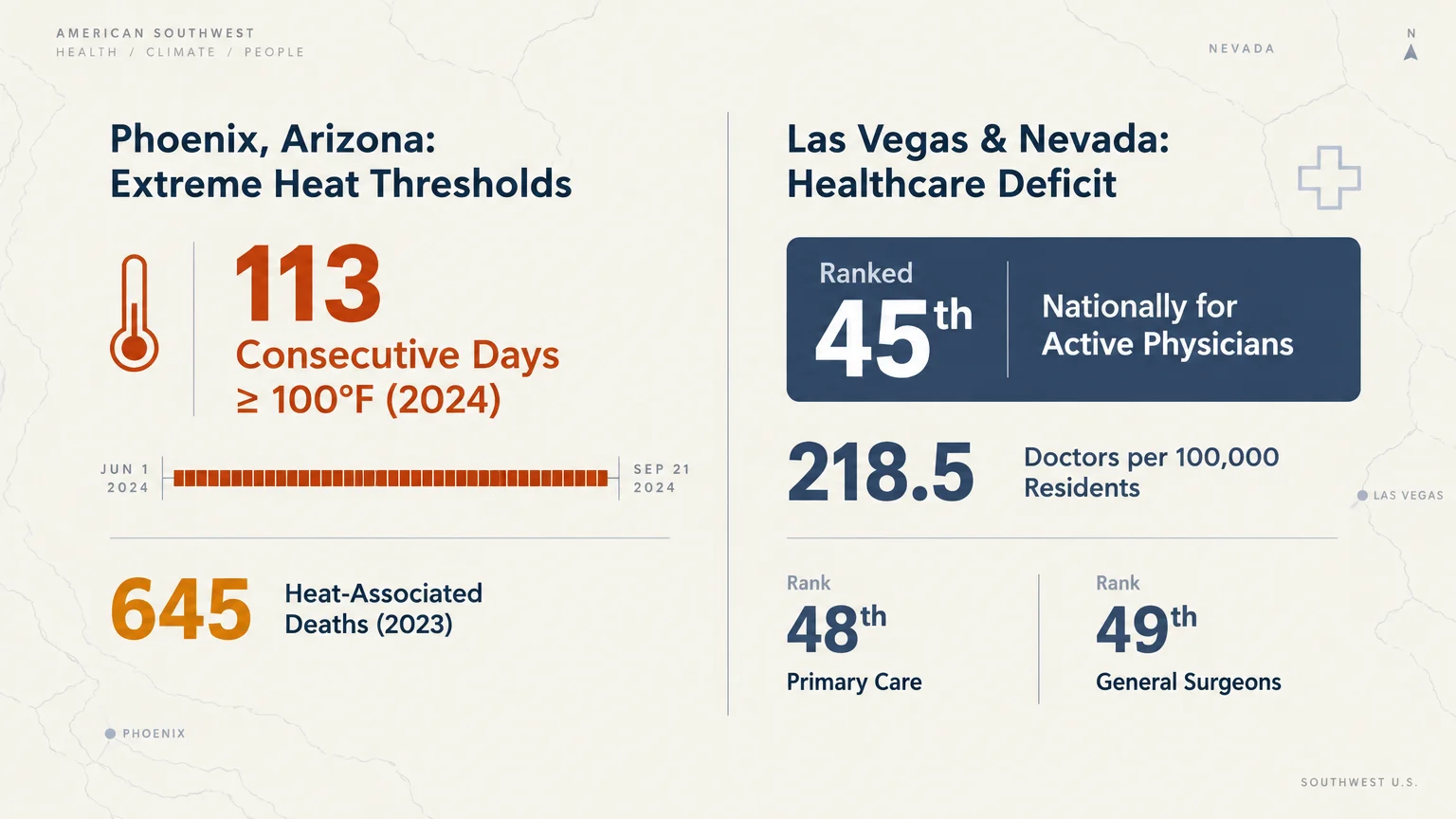
Phoenix consistently attracts older adults seeking warm weather, but its blistering summer climate has turned lethal. In 2024, the metro area endured an unprecedented 113 consecutive days at or above 100°F.
Maricopa County confirmed 645 heat-associated deaths in 2023 and another 602 in 2024. Public health surveillance shows that adults aged 50 and older account for roughly 90% of indoor heat deaths.
Running your air conditioning unit continuously during five brutal summer months creates staggering utility expenses. If your system breaks down during a heatwave, replacement units can cost upwards of $12,000.
2. Las Vegas, Nevada
While Nevada levies no state income tax, Las Vegas harbors an alarming healthcare crisis. The state ranks 45th nationally for active physicians, with only 218.5 doctors per 100,000 residents.
Nevada also ranks 48th for primary care doctors and 49th for general surgeons per capita. Consequently, retirees encounter prolonged wait times for basic medical appointments and specialty care consultations.
Local emergency rooms face constant overutilization from the massive tourism sector and growing population. Managing complex chronic illnesses in this strained healthcare market can compromise your quality of care.
3. Albuquerque, New Mexico
Albuquerque combines an overburdened medical system with high property and violent crime rates. The city records a violent crime rate of 1,181.8 per 100,000 residents—more than double the national average.
Property crime exceeds 4,600 incidents per 100,000 residents, creating severe safety concerns for seniors living alone. Home break-ins and vehicle thefts represent persistent hazards across suburban neighborhoods.
Furthermore, New Mexico operates under pervasive healthcare shortage designations that affect over one million residents. A legislative study revealed that 65% of practicing doctors have considered leaving the state due to liability costs.
4. Sedona, Arizona
Famous for striking red sandstone formations, Sedona appears ideal for an active, nature-focused retirement. In reality, extreme real estate prices make it one of the bad retirement cities Southwest transplants regret choosing.
Median home prices hover between $910,000 and $1,020,000, while average single-family properties exceed $1.2 million. Geographic barriers restrict new housing construction, driving prices higher every year.
The city also suffers from an acute lack of assisted living facilities and skilled-nursing beds. If your health declines, you will likely need to relocate away from your established social circle.
5. Pueblo, Colorado
Retirees on tight budgets often consider Pueblo because of its lower housing costs compared to Denver. However, the city struggles with deep-seated economic challenges and elevated violent crime rates.
Pueblo records a violent crime rate of roughly 1,424 incidents per 100,000 residents. The community consistently ranks in the lowest tiers for overall municipal safety in Colorado.
Depressed public infrastructure and limited municipal services add extra friction to daily living. Stretching your dollars does not compensate for living in an unsafe, underfunded community.
6. Bullhead City, Arizona
Bullhead City sits directly on the Colorado River, drawing budget-minded retirees with affordable waterfront living. Unfortunately, summer temperatures regularly exceed 115°F, creating dangerous conditions for older adults.
The city functions as a specialized medical desert. It lacks a Level 1 trauma center, comprehensive neurology programs, and advanced geriatric cardiology clinics.
When serious medical emergencies arise, patients must travel two to four hours to Las Vegas or Phoenix. In life-threatening emergencies, ambulance or helicopter transport generates staggering out-of-pocket costs.
7. North Las Vegas, Nevada
North Las Vegas attracts retirees looking for newer tract homes at lower prices than surrounding suburbs. Unfortunately, it shares Clark County’s acute physician and surgical specialist shortages.
Rapid suburban sprawl makes the city difficult to navigate without driving everywhere. Car insurance premiums in the area rank among the highest in the entire nation.
Elevated property crime rates also affect residential subdivisions throughout the municipality. Fixed-income retirees face rising auto insurance bills, climbing property taxes, and ongoing safety concerns.
8. Yuma, Arizona
Yuma offers affordable desert real estate and immediate access to the Mexican border for low-cost dental services. Yet its punishing climate routinely brings summer temperatures exceeding 115°F for weeks on end.
During the winter, tens of thousands of seasonal visitors flood the area and overwhelm local services. Getting a routine doctor appointment or navigating local traffic becomes extremely difficult during peak months.
Specialized healthcare remains severely limited within city limits. You must drive roughly three hours to Phoenix or San Diego for complex oncological or cardiovascular treatment.
9. Gallup, New Mexico
Situated along historic Route 66, Gallup features unique cultural heritage but suffers from severe economic headwinds. The city regularly reports property and violent crime rates substantially higher than national averages.
Gallup also experiences the full weight of New Mexico’s doctor shortage. Specialized senior services, advanced diagnostic imaging, and memory care programs are almost nonexistent locally.
Perched at an elevation of 6,500 feet, Gallup experiences freezing winter temperatures alongside arid winds. The combination of high altitude and poor air quality can exacerbate underlying respiratory or cardiac conditions.
10. Pahrump, Nevada
Located in rural Nye County, Pahrump draws retirees wanting cheap land, low taxes, and wide-open spaces. However, the town sits over an hour away from major metropolitan services in Las Vegas.
Pahrump provides very limited medical infrastructure; it has no large general hospital or comprehensive specialist network. Local clinics can manage basic care, but emergencies require extended ambulance transport.
The area completely lacks reliable public transit. If age-related vision changes or mobility issues prevent you from driving, you risk becoming completely isolated in your home.
11. Roswell, New Mexico
Roswell offers low median home prices, but the town is geographically isolated from modern urban amenities. It sits hours away from major medical centers in Albuquerque or Lubbock, Texas.
Statewide physician departures have struck rural communities like Roswell the hardest. You will find very few board-certified cardiologists, rheumatologists, or orthopedic surgeons serving the local area.
The city also registers above-average crime rates and presents limited cultural opportunities for seniors. The modest housing savings rarely justify the isolation and poor healthcare access.
12. Apache Junction and Unincorporated Pinal County, Arizona
Apache Junction and nearby unincorporated communities offer dramatic Superstition Mountain views and affordable mobile home living. However, these communities face intense infrastructure risks tied to regional water scarcity.
Under updated federal frameworks, Arizona absorbs annual Colorado River cuts of 760,000 acre-feet. This has triggered strict building moratoria in areas without assured hundred-year groundwater supplies.
Some unincorporated residents must haul water or pay private haulers exorbitant fees during drought conditions. Rising private utility surcharges place severe stress on older residents living on fixed incomes.
Common Southwest Retirement Mistakes and Hidden Costs
Moving across the country involves complex financial choices that can alter your retirement timeline. Many seniors make the mistake of calculating their budget based solely on base housing prices.
According to the Consumer Financial Protection Bureau (CFPB), sudden spikes in utility and housing expenses can severely disrupt fixed retirement budgets. Unanticipated regional costs frequently catch relocated seniors off guard.
According to the Social Security Administration (SSA), monthly retirement benefits must be carefully managed against volatile living expenses. Relying entirely on fixed benefits while facing double-digit utility increases leads to severe financial distress.
Here are the most frequent financial and practical pitfalls to watch out for in the Southwest:
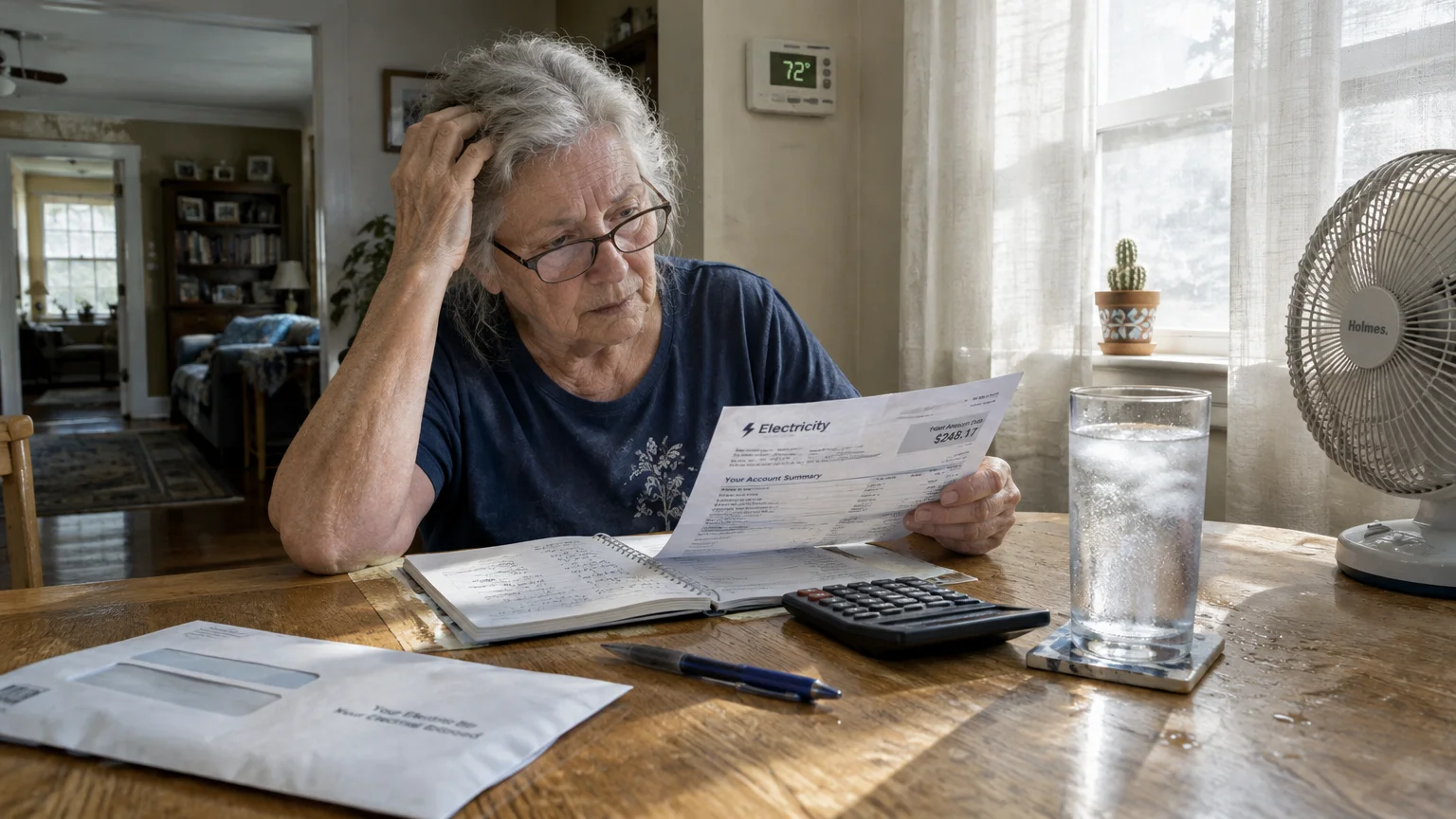
- Underestimating Electric Bills: Powering your air conditioning during 110°F summer days can easily cost $400 to $700 each month.
- Water Delivery Surcharges: Living outside assured municipal water districts exposes you to private water-hauling costs and volatile utility surcharges.
- Medical Travel Expenses: Driving hundreds of miles for specialist appointments adds significant costs for fuel, lodging, and vehicle wear.
- HOA Fee Spikes: Gated communities and desert master-planned neighborhoods frequently raise HOA dues to pay for communal water and landscape maintenance.
- Extreme Weather Home Wear: Intense ultraviolet radiation degrades roofs, paint, window seals, and exterior piping far faster than moderate climates.
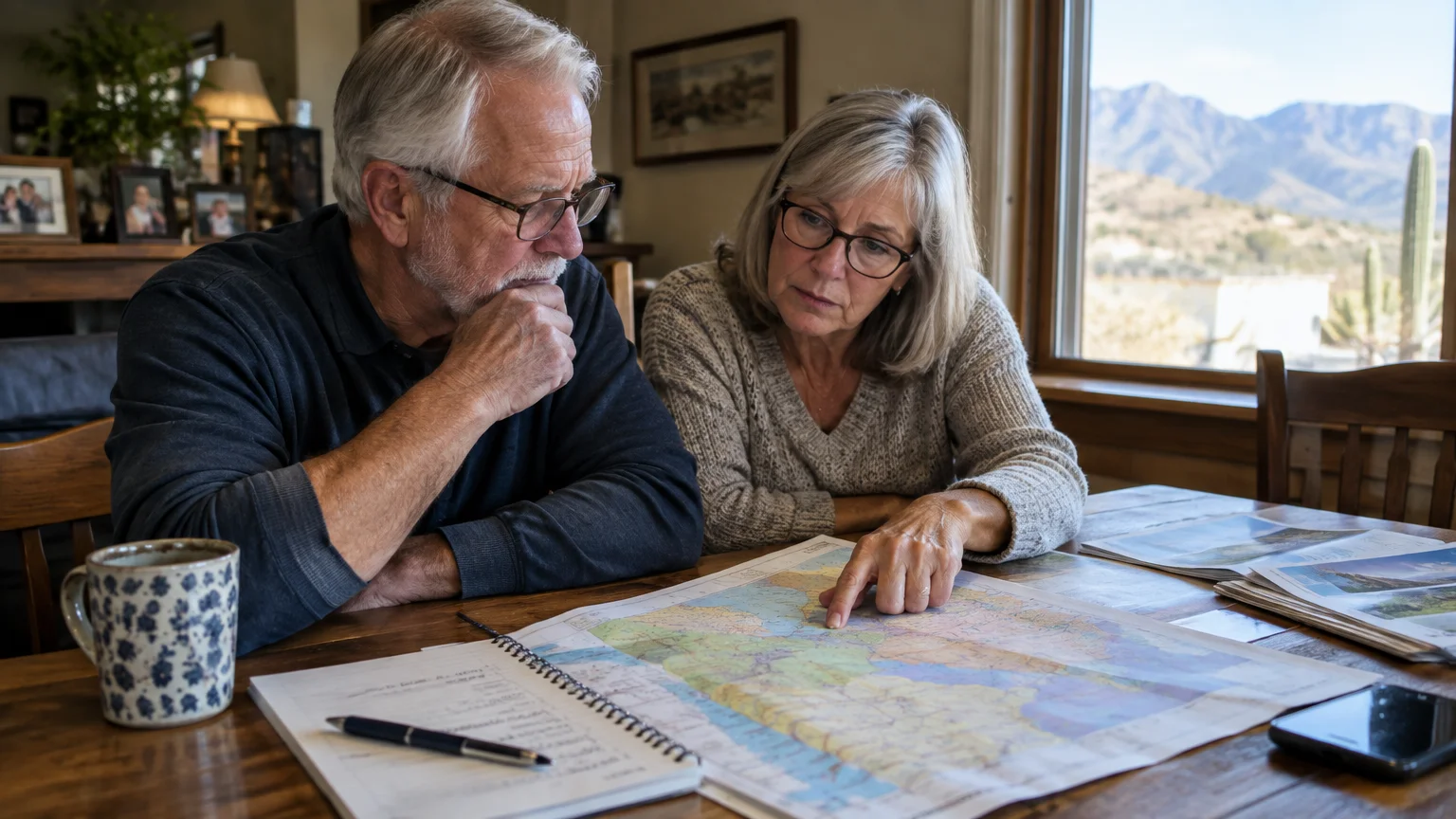
Southwest Cities Comparison: Key Risks at a Glance
Reviewing comparative safety, healthcare, and cost metrics helps you evaluate cities objectively. The table below details the primary risk factors across these twelve Southwest locations.
| City and State | Primary Senior Risk Factor | Healthcare Access Rating | Housing Cost vs. National Average |
|---|---|---|---|
| Phoenix, AZ | Extreme summer heat & mortality | Moderate to High | 10% to 20% Higher |
| Las Vegas, NV | Severe physician & specialist shortage | Critically Low | 5% to 15% Higher |
| Albuquerque, NM | High violent & property crime | Low | 5% to 10% Lower |
| Sedona, AZ | Severe housing unaffordability | Low (No senior care beds) | 100% to 150% Higher |
| Pueblo, CO | Elevated violent crime rates | Moderate | 15% to 25% Lower |
| Bullhead City, AZ | Extreme heat & medical desert | Critically Low | 10% to 20% Lower |
| North Las Vegas, NV | Primary care deficits & sprawl | Critically Low | 5% to 10% Higher |
| Yuma, AZ | Summer heat & seasonal strain | Low | 10% to 15% Lower |
| Gallup, NM | High crime & altitude issues | Critically Low | 15% to 20% Lower |
| Pahrump, NV | Severe rural medical isolation | Critically Low | About Equal |
| Roswell, NM | Lack of specialist physicians | Critically Low | 20% to 30% Lower |
| Apache Junction, AZ | Water shortages & utility hikes | Moderate | About Equal |
Low housing costs should never serve as your sole relocation metric. Cities offering cheap homes often compensate by cutting healthcare infrastructure, municipal services, and public safety.
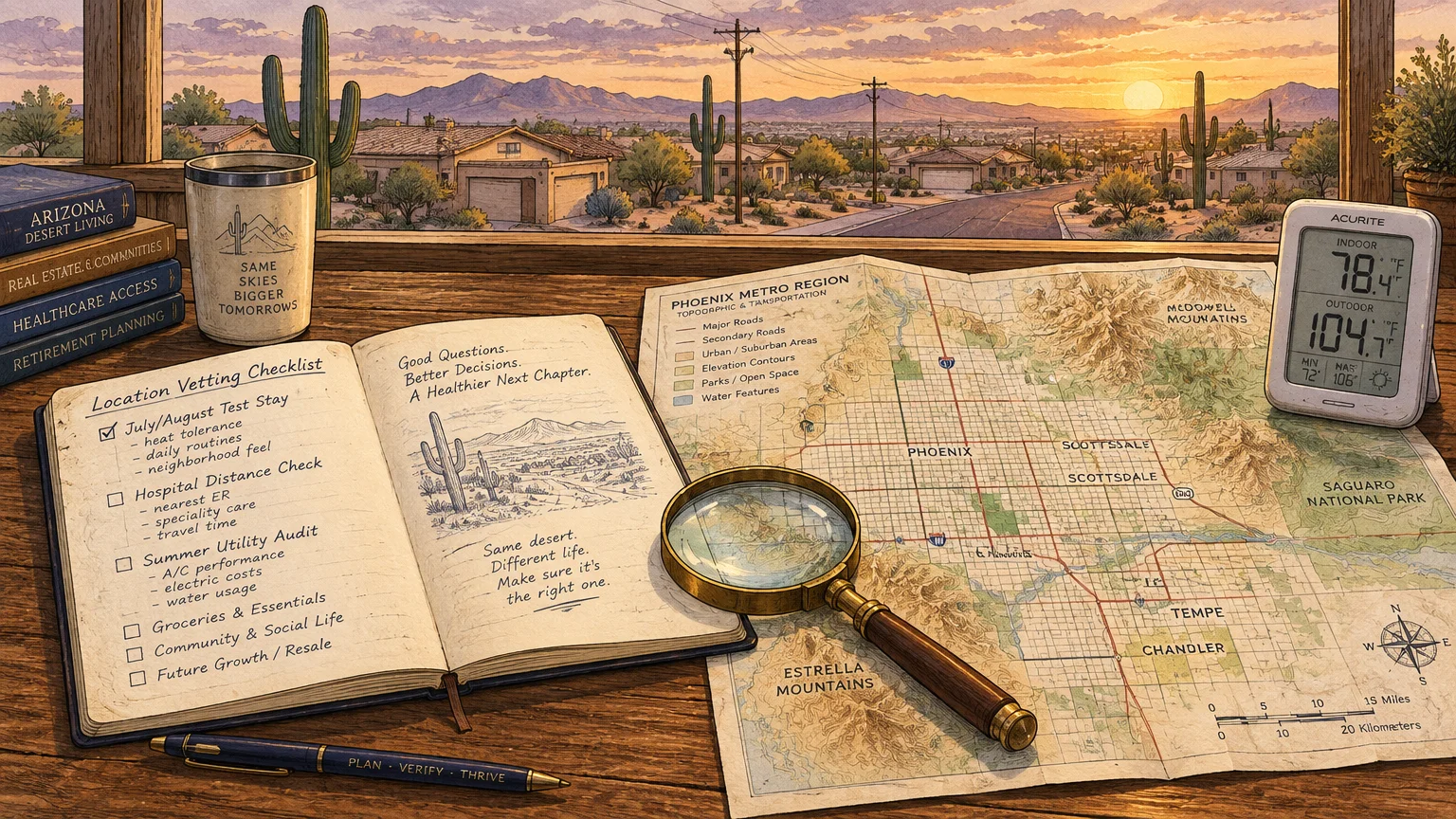
Actionable Steps to Vet Any Desert Retirement Destination
You can protect yourself from costly mistakes by conducting disciplined research before buying a home. Follow these practical steps to verify whether a desert city truly fits your lifestyle.
- Visit During July or August: Never purchase a home after visiting only during pleasant winter months. Experience the oppressive triple-digit summer heat firsthand before making any commitments.
- Audit the Local Medical Infrastructure: Check specialist availability in the immediate area. Use Medicare.gov to verify which local physicians accept your specific coverage.
- Request Peak Electric Bills: Ask prospective home sellers or landlords to provide copies of utility statements from June, July, and August. Build those figures into your budget.
- Examine Police Incident Maps: Research local property crime and burglary data through neighborhood-level crime tracking websites rather than relying on real estate marketing claims.
- Confirm Water Service Rights: Verify that your target home connects directly to a regulated, municipal water supply with verified long-term groundwater rights.
- Rent for One Full Year: Test the local community by renting an apartment or home across four full seasons before selling your current residence.
Frequently Asked Questions
What makes extreme desert heat particularly dangerous for older adults?
As you age, your body produces less sweat, making it harder to cool down efficiently. Many common senior medications, including blood pressure prescriptions and diuretics, further compromise natural thermoregulation.
Chronic conditions like cardiovascular disease and kidney impairment make extreme heat exposure even more dangerous. High temperatures place heavy cardiovascular stress on seniors, drastically increasing dehydration and heat stroke risks.
Why are so many Southwest cities facing physician shortages?
Rapid population growth across Arizona and Nevada has outpaced medical school training capacity and hospital construction. These states simply lack enough residency programs to retain new physicians.
In New Mexico, uncapped medical malpractice liability costs and heavy administrative burdens push practicing doctors into neighboring states. Rural desert towns struggle even more to recruit and retain qualified geriatric specialists.
Can you find affordable water and utilities in the desert Southwest?
Utility affordability depends heavily on your municipal district and home construction quality. Modern, energy-efficient homes with solar panels and regulated municipal water access offer predictable monthly utility expenses.
Conversely, older manufactured homes in unincorporated areas face soaring summer power bills and unpredictable private water surcharges. Always review local utility structures before choosing a property.
How does property crime specifically affect retired homeowners in the Southwest?
Property crime in high-risk areas exposes older homeowners to vehicle break-ins, catalytic converter thefts, and home invasions. Seniors living alone often feel vulnerable, which leads to heightened anxiety and reduced independence.
Property losses create serious financial strain for retirees living on fixed budgets. Replacing stolen belongings, repairing damaged doors, or installing expensive alarm systems quickly drains your emergency savings.
Which Southwestern states offer the friendliest tax environments for retirees?
Nevada attracts many seniors because it levies zero state income tax on pensions, Social Security, or retirement accounts. Arizona exempts Social Security benefits from state taxation and taxes other retirement income at a modest flat rate.
However, tax benefits alone should not dictate your move. High sales taxes, elevated auto insurance rates, and expensive healthcare can easily erase your state income tax savings.
For additional senior resources, visit
Eldercare Locator, AARP, Alzheimer’s Association and American Heart Association.
Disclaimer: The information in this article is for educational purposes only and is not intended to be a substitute for professional financial, legal, or medical advice. Always consult with a qualified expert for advice tailored to your personal situation.








Leave a Reply