

Your vote carries immense power in shaping policies that directly affect Medicare, Social Security, and local community services. According to U.S. Census Bureau data, adults aged 65 and older maintain the highest voter turnout rate of any age group, reaching a remarkable 74.7% participation rate in major federal elections. However, missing your state voter registration deadlines can unexpectedly prevent you from casting a ballot. Because voter registration deadlines by state vary dramatically—ranging from thirty days before an election to same-day registration at the polls—knowing your local cutoffs protects your rights. This practical guide covers state voter registration rules, deadlines, and key requirements so you can register with confidence.

1. The Federal 30-Day Limit Protects Your Right to Vote
Navigating voter registration deadlines by state can feel overwhelming when every jurisdiction seems to set its own timetable. Fortunately, federal law establishes a firm legal ceiling to prevent local election boards from closing voter rolls too early. Under the landmark National Voter Registration Act of 1993 (NVRA), state governments cannot require eligible citizens to register for federal elections earlier than 30 days prior to Election Day.
This federal mandate guarantees that you always have a reasonable opportunity to review candidates, inspect ballot measures, and complete your registration form. Prior to this law, some states imposed restrictive registration windows that shut out millions of working families and older adults. Today, the 30-day rule acts as a critical safety net for your democratic rights, ensuring that no state can force you to make voting decisions months in advance.
When researching public programs and civic administrative deadlines, official online resources offer valuable guidance. When evaluating state administrative assistance and voter information, official resources on Benefits.gov emphasize that staying informed about state-level policies helps protect your legal and civic entitlements. Understanding this 30-day ceiling gives you a clear baseline as you plan your election schedule.
2. Understanding the Three Primary Registration Deadline Categories
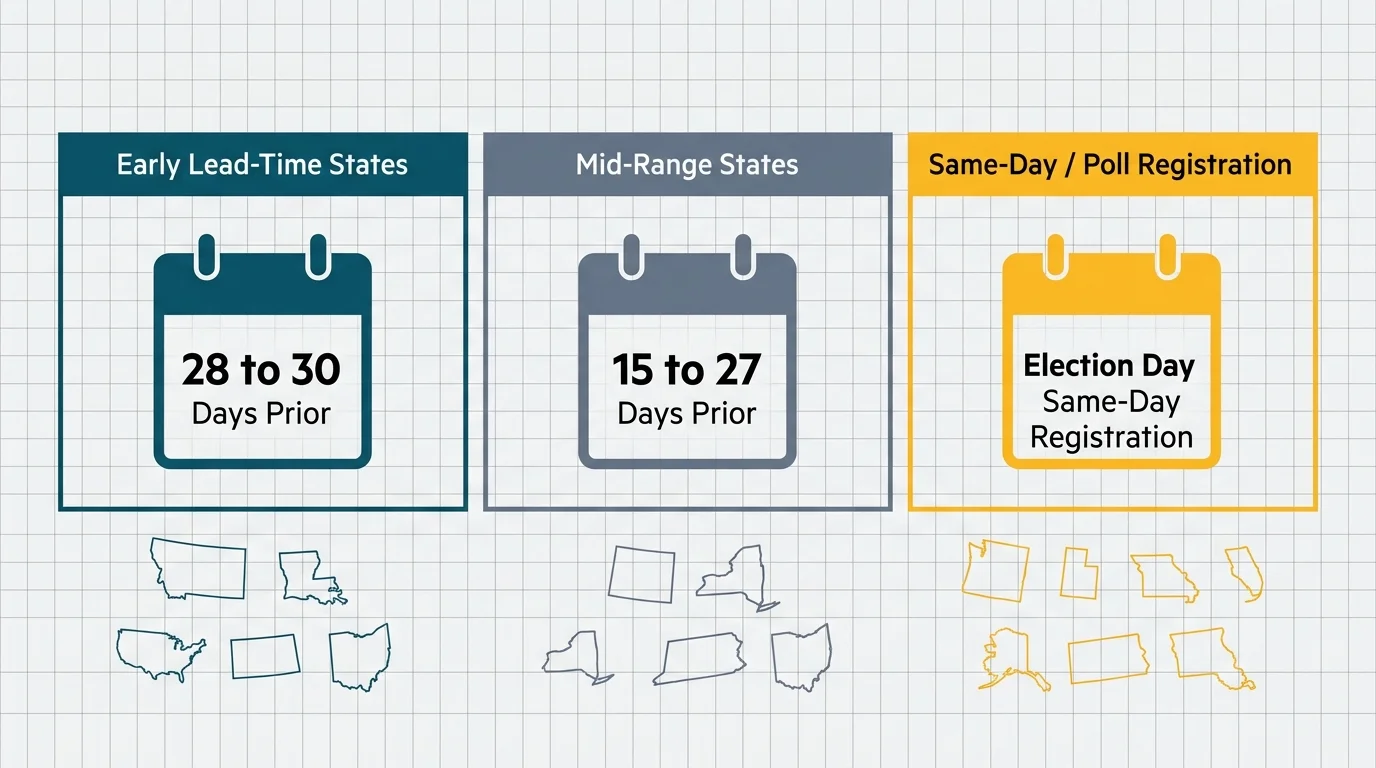
Although federal legislation sets a maximum deadline window, individual state voter registration rules vary widely across the nation. Every state designs its election schedule based on local administration capacity, historical precedents, and legislative policies. To simplify these state-by-state variations, election rules generally fall into three distinct categories across the country.
First, 15 states enforce early lead-time deadlines, requiring residents to complete their registration 28 to 30 days before Election Day. States in this group include Florida, Texas, Georgia, Arizona, Ohio, and Pennsylvania. If you live in one of these states, you must act early because election administrators strictly enforce these administrative windows to compile official voter rolls.
Second, 16 states utilize a mid-range deadline window that falls between 1 and 27 days before an election. For instance, states like Oregon and North Carolina require voter registration applications 20 to 27 days prior to Election Day, while Massachusetts and Alabama operate on tighter 1 to 19-day windows. These mid-range timelines give voters slightly more flexibility during active campaign periods.
Third, 23 states plus Washington, D.C., offer same-day voter registration. In these jurisdictions, you can register to vote and cast your ballot simultaneously during early voting periods or directly at your polling place on Election Day. Finally, North Dakota stands entirely apart from the rest of the country as the sole zero-registration state; eligible citizens simply present a valid form of identification at their local polling place without completing a pre-election application.
| Deadline Category | Number of States | Typical Cutoff Window | Key State Examples |
|---|---|---|---|
| Long Lead-Time | 15 States | 28 to 30 days before Election Day | Florida, Texas, Georgia, Arizona, Ohio, Pennsylvania |
| Mid-Range Window | 16 States | 1 to 27 days before Election Day | Oregon, North Carolina, Massachusetts, Alabama |
| Same-Day Registration | 23 States + D.C. | On Election Day or during Early Voting | California, Wisconsin, Colorado, Michigan, Maine |
| Zero Registration Required | 1 State | No pre-registration needed | North Dakota (Valid ID required at polls) |
3. How Your Submission Method Changes Your Exact Cutoff Date
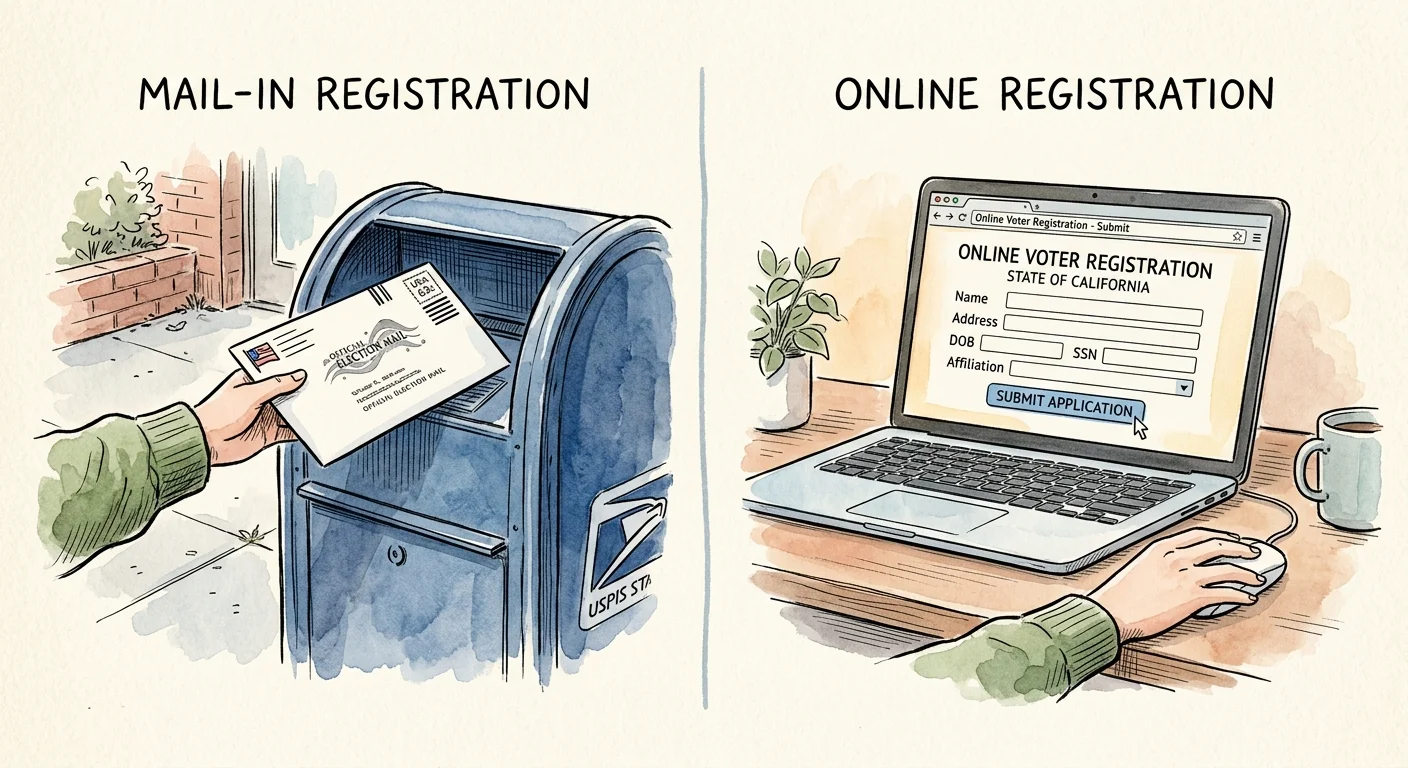
Knowing your state’s general deadline calendar is only half the battle; the specific method you use to submit your application directly impacts your exact cutoff time. Most state election offices accept voter applications through three distinct channels: postal mail, state online portals, and in-person registration offices. Each method carries unique procedural rules that can mean the difference between a validated application and a rejected form.
If you choose to submit your registration form through postal mail, you must pay close attention to postmark requirements versus physical receipt deadlines. Many states consider a mail-in application valid as long as the envelope bears an official USPS postmark on or before the registration cutoff date. However, several states demand that your application physically arrive at the county registrar office by the deadline, regardless of when you dropped it into a mailbox. Relying on mail delivery during peak election seasons can cause unexpected delays; dropping your envelope off several days early prevents unnecessary risk.
Online registration offers speed and immediate digital verification, but portal closing hours vary. While many digital voter portals remain open until 11:59 PM local time on the deadline date, some state systems lock automatically at the close of normal government business hours (5:00 PM). Similarly, in-person registration at local municipal offices or county election centers requires strict adherence to physical office hours. Checking your local registrar’s exact operational schedule prevents last-minute disappointments.
4. Core Voter Registration Requirements You Must Satisfy
Before you fill out a voter registration form, you must confirm that you meet all foundational election registration deadlines and eligibility criteria. While state voter registration rules differ on administrative details, basic constitutional qualifications remain consistent across the United States. Meeting these criteria ensures your registration process moves forward without administrative delays or legal challenges.
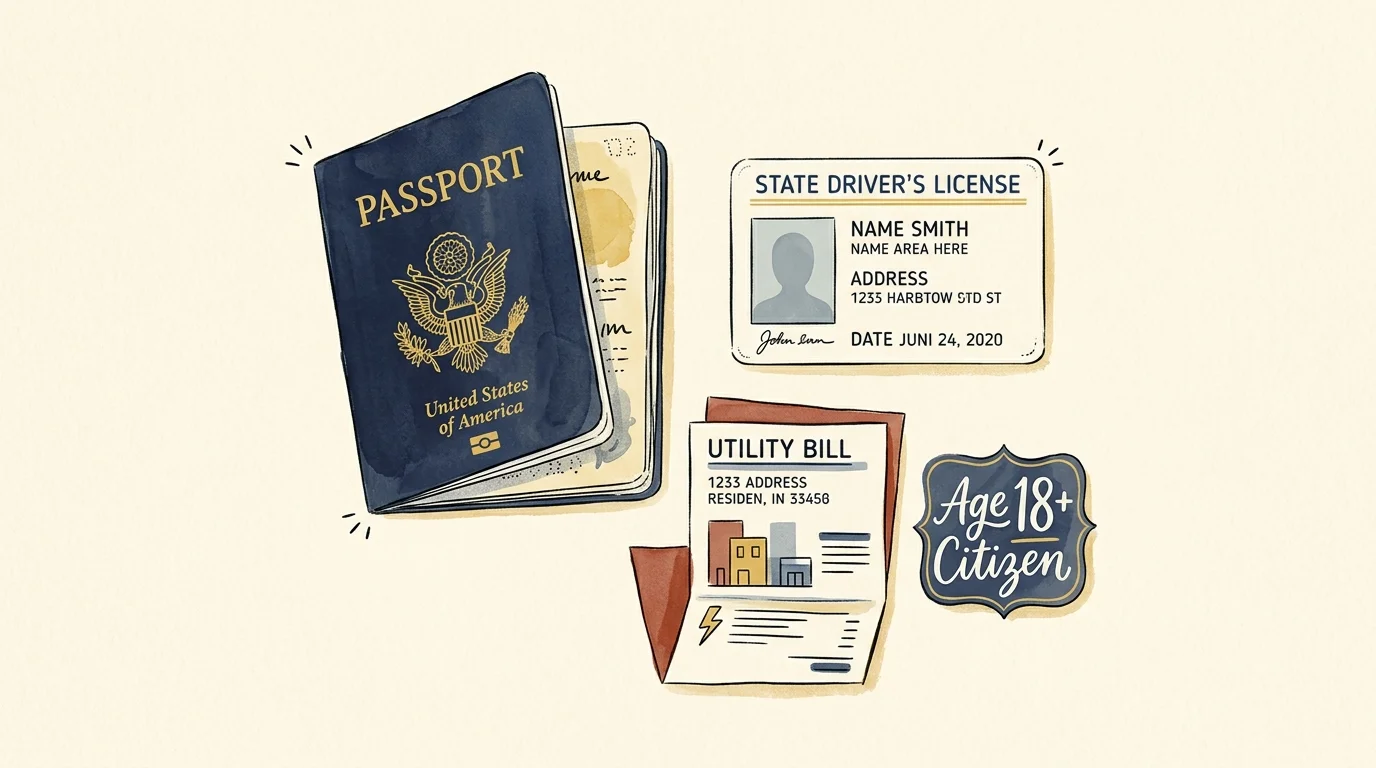
To register and cast a ballot in American elections, you must meet four core national requirements:
- U.S. Citizenship: You must be a legal citizen of the United States by birth or naturalization.
- Age Minimum: You must reach at least 18 years of age on or before Election Day.
- State Residency: You must satisfy your state’s specific residency duration requirements, which typically require living in your county or precinct for 20 to 30 days before registering.
- Active Legal Status: You must meet your state’s specific guidelines regarding felony convictions and legal mental competency determinations.
For older adults living in independent retirement communities, assisted living facilities, or senior housing developments, maintaining updated residency records is critical. If you move into a new care community—even within the same city or precinct—you must formally update your voter registration address to reflect your new residence. Failing to update your residential address can force you to cast a provisional ballot, which takes additional time to verify and count.
If you recently relocated to a supportive housing environment or need assistance identifying your local county election board, the Eldercare Locator connects older adults and families directly to essential community services and administrative guidance.
5. Accessibility Protections and Special Rights for Senior Voters
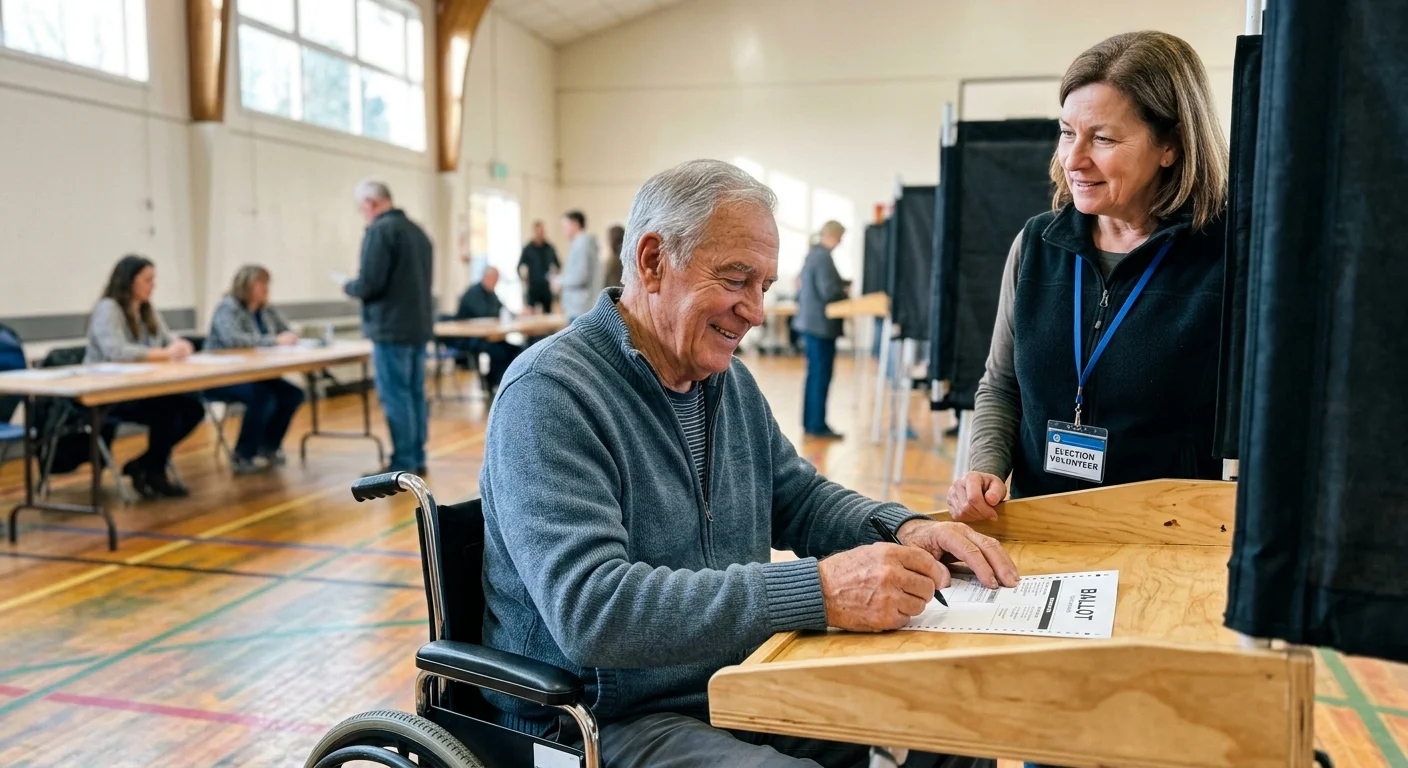
Physical mobility challenges, vision changes, and chronic health conditions should never stop you from exercising your constitutional rights. Federal legislation provides powerful legal safeguards designed to make voter registration and voting fully accessible to older citizens. Understanding these protections empowers you to request accommodations whenever you need them.
The Voting Accessibility for the Elderly and Handicapped Act of 1984 mandates that all states ensure voter registration facilities and polling places are fully accessible to older adults and individuals with physical disabilities. Under this federal law, local election offices must provide structural accessibility—such as wheelchair ramps, accessible parking, and ground-level entrances—alongside specialized registration aids. Election officials must offer large-print application forms, telecommunications devices for the hearing impaired, and trained assistance staff to help voters complete paperwork.
In addition to physical accessibility at polling places, many states offer specialized registration options tailored for older voters. Several jurisdictions grant permanent mail-in voter status to seniors aged 60 or 65 and older, automatically sending absentee ballots directly to their homes for every election without requiring re-application. Other states allow curbside voter registration and voting, allowing election clerks to bring paperwork directly to your vehicle if walking inside a county facility presents a health risk.
As emphasized by specialists at the Administration for Community Living (ACL), accessible community services and inclusive public infrastructure ensure that older adults retain full independence and authority over their civic choices.
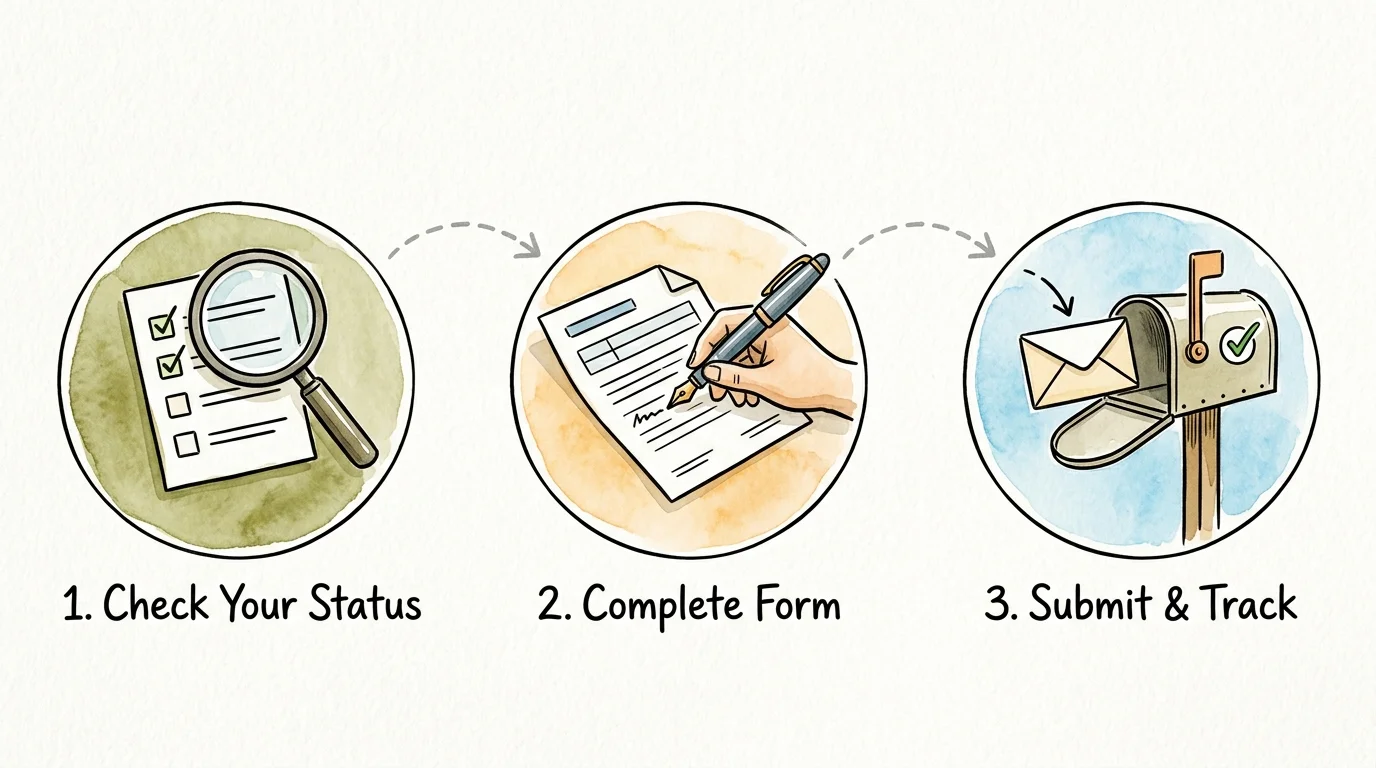
6. Step-by-Step Guide: How to Register to Vote Correctly
Registering to vote is a straightforward process when you approach it with a clear plan. Following a systematic approach prevents minor clerical errors that could delay your registration or invalidate your ballot. Follow these five simple steps to secure your voter registration well before your state’s official cutoff date.
- Verify Your Current Registration Status: Visit your state secretary of state website or contact your county elections clerk to confirm whether your current voter status is active and listed under your correct physical address.
- Select Your Preferred Registration Method: Choose the submission channel that best fits your technical comfort level and physical mobility, whether that means using an online portal, requesting a paper form by mail, or visiting a municipal office.
- Gather Proper Identification Documents: Collect necessary identifying items, such as your state driver’s license number, state identification card, or the last four digits of your Social Security number, along with proof of current residency if required.
- Complete the Application Thoroughly: Fill out every required line clearly, ensuring your legal signature matches the style on your driver’s license or government identity documents.
- Confirm Receipt and Save Verification: Submit your paperwork well ahead of your state deadline and request a registration confirmation card or digital receipt for your personal files.
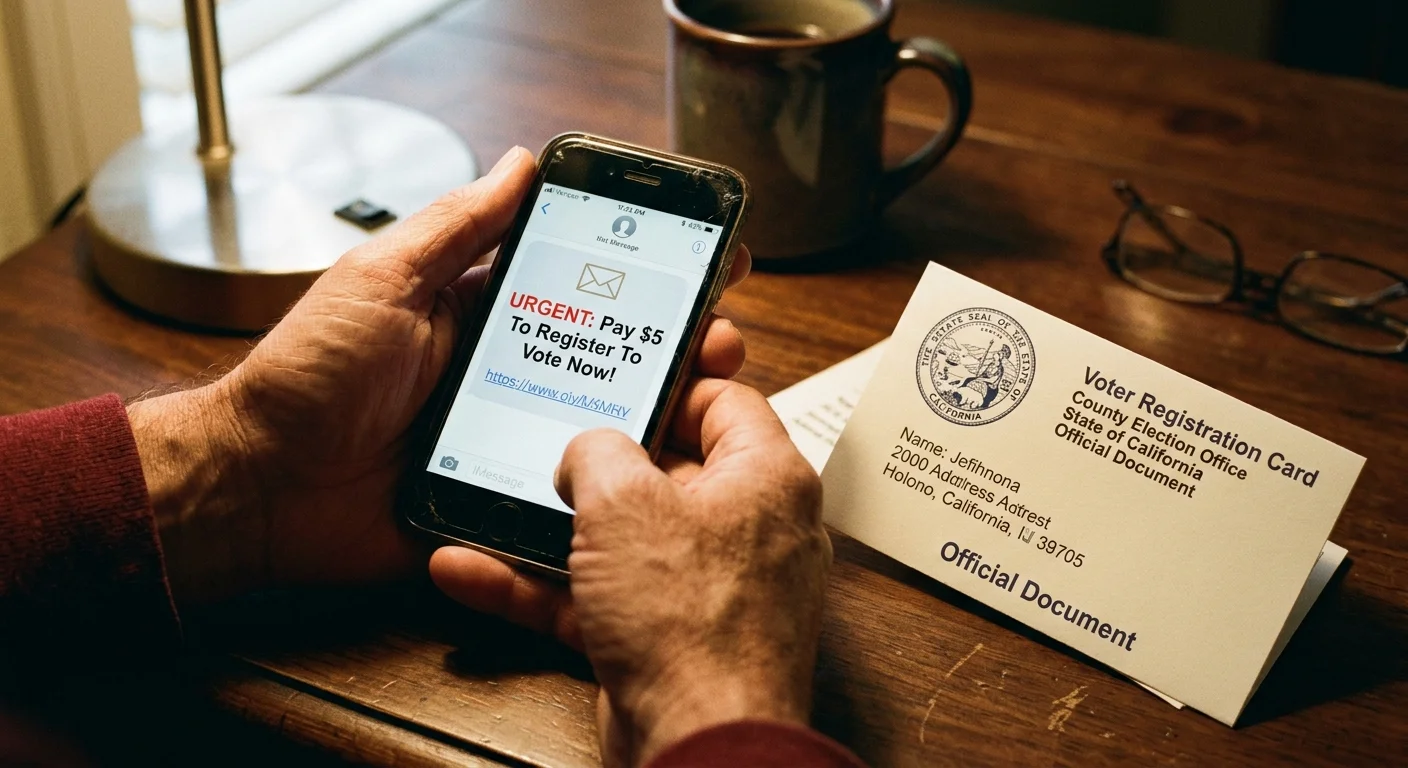
7. Common Registration Pitfalls and How to Avoid Election Scams
Even seasoned voters can run into unexpected registration obstacles if they assume their voter records automatically update over time. Local election boards regularly perform routine administrative voter roll maintenance, often called “voter purges,” to remove deceased residents or individuals who have moved away. If you have not voted in several consecutive election cycles, your status might shift from active to inactive, requiring you to re-confirm your voter registration requirements before your state’s official deadline.
Another major pitfall involves deceptive political scams targeting older adults during national election seasons. Fraudulent organizations frequently contact seniors via phone calls, postal mail, or text messages, offering to “register you to vote over the phone” in exchange for a processing fee or sensitive financial information. Government election offices never charge a fee to register voters, nor do they conduct official voter registration completely over standard telephone calls.
According to consumer warnings from the Consumer Financial Protection Bureau (CFPB), older adults are frequent targets for impostor scams, so you should never reveal bank account details or Social Security numbers to unverified callers offering election services. If you receive an unsolicited call claiming your voter registration has expired, hang up immediately and call your official county clerk directly to check your record status safely.
Frequently Asked Questions
What happens if I move to a senior living facility in another county right before an election?
If you move to a new county shortly before an election, you must update your voter registration to reflect your new address according to your new county’s deadline rules. If you move after your new state or county’s registration window has closed, federal law allows you to vote at your previous polling location or cast a provisional ballot while your residential record update processes.
Do I need to re-register to vote before every major federal election?
No, voter registration does not expire annually. As long as you maintain your physical residence, vote periodically, and respond to official election mailings, your registration remains active. However, you must update your file whenever you legally change your name, change your political party affiliation, or move to a new residential address.
Can a family member or caregiver submit my voter registration form for me?
Yes, a trusted family member, designated caregiver, or friend can physically deliver your completed and signed voter registration paperwork to your local elections office or drop it in the mail on your behalf. However, you must personally sign or legally mark the registration form yourself unless state law specifically authorizes a legal power of attorney under strict medical disability exceptions.
How can I confirm that my voter registration application was approved before the cutoff date?
Most state election departments provide online voter lookup tools on their official government websites where you can type in your name, birth date, and zip code to check your active status. You can also call your municipal or county board of elections directly; clerks can instantly verify your record status over the phone.
Is there any cost associated with registering to vote or updating my address?
No, registering to vote or updating your official registration information is always 100% free. Any website, caller, or organization demanding a payment or processing fee to register you to vote is fraudulent. Always use official state government portals ending in .gov to complete your registration safely without financial risk.
For additional senior resources, visit
AARP, Alzheimer’s Association, American Heart Association and Benefits.gov.
Disclaimer: The information in this article is for educational purposes only and is not intended to be a substitute for professional financial, legal, or medical advice. Always consult with a qualified expert for advice tailored to your personal situation.









Leave a Reply