

Relocating from California can instantly boost your retirement budget and protect your nest egg. High housing costs and steep state taxes prompt thousands of older adults to search for more affordable ground every year.
Recent census figures reveal that over 56,000 adults aged 60 and older leave California annually. By choosing the right destination, you can stretch your savings and enjoy a vibrant lifestyle.
Discover the top ten retirement destinations better than California offering substantial tax relief, lower living costs, and rich community amenities.
Why Retirees Are Leaving California in Record Numbers
California boasts stunning coastal views and mild weather, but everyday living expenses squeeze household budgets. Skyrocketing utilities, groceries, and state gas taxes make life on a fixed income challenging.
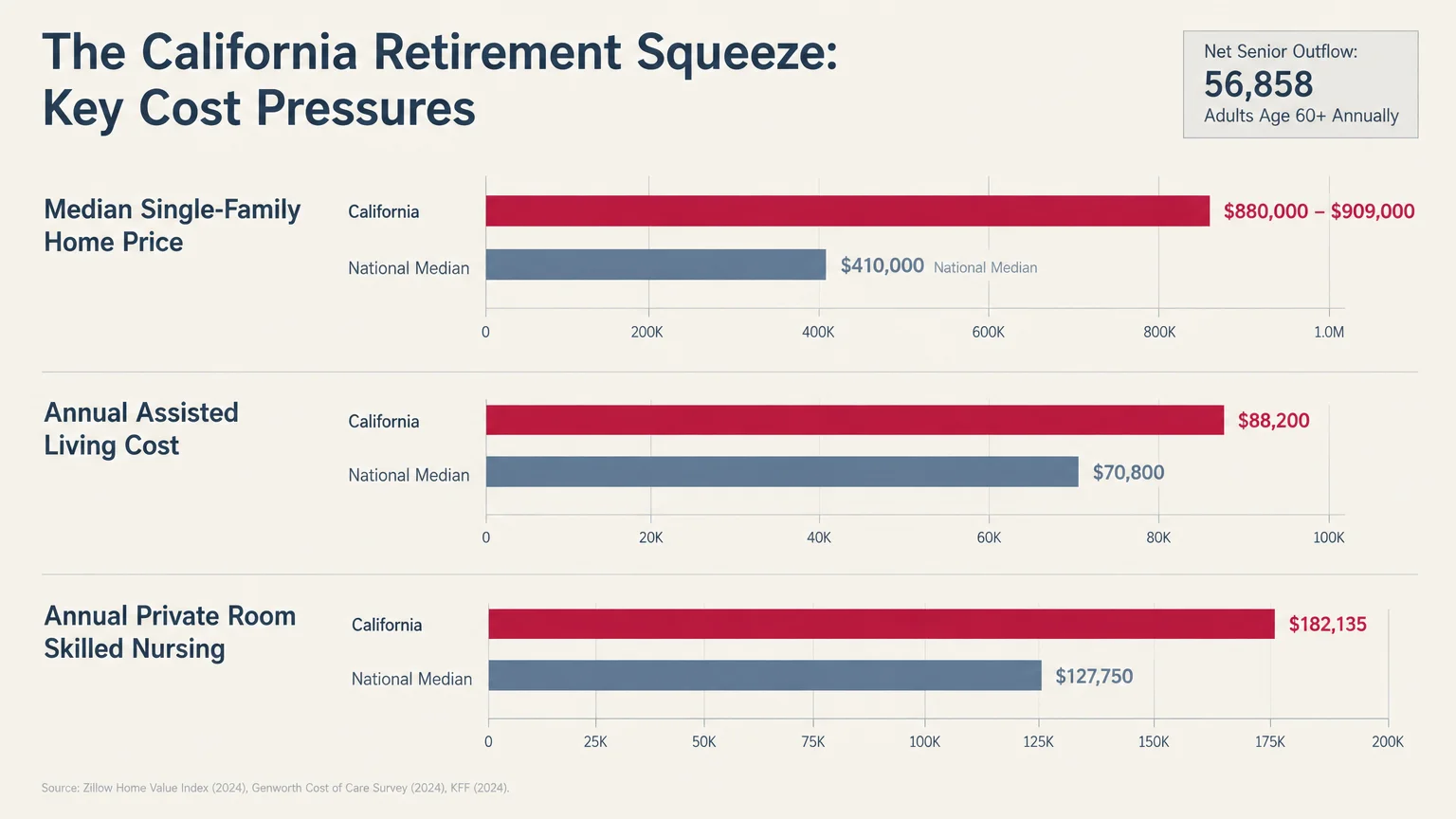
According to U.S. Census Bureau migration data, California loses a net total of 56,858 residents aged 60 and older each year. Major metropolitan centers like Los Angeles and San Diego lead these outbound departures.
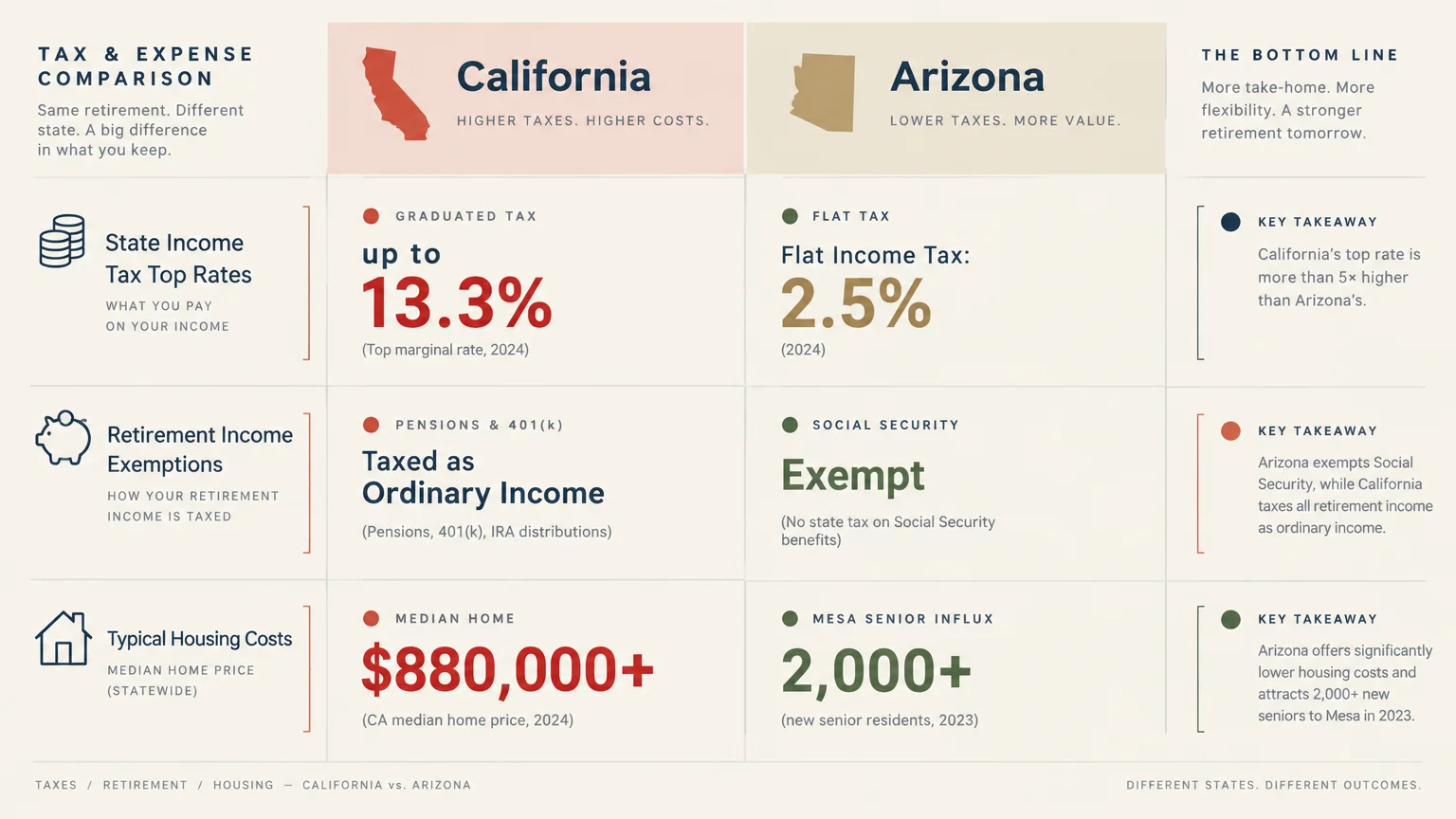
Housing prices create the largest financial hurdle for aging residents. California median single-family home prices hover between $880,000 and $909,000—more than double the national median of roughly $410,000.
In addition, California imposes a graduated personal income tax reaching up to 13.3%. While the state exempts Social Security benefits, it taxes traditional pensions and retirement distributions at ordinary income rates.
Long-term care services present another serious budgeting obstacle. Assisted living in California averages $88,200 annually, ranking as the eleventh most expensive state and exceeding the national median of $70,800.
Skilled nursing facilities show an even wider gap. A private room in a California nursing home averages $182,135 per year, compared to the national median of $127,750.
These combined expenses force many older adults to drain their hard-earned assets prematurely. Relocating allows you to convert home equity into liquid savings while lowering monthly overhead.

The 10 Best States Retirees Pick Over California
When exploring where retirees are leaving California for, specific states emerge as consistent favorites. These affordable alternatives to retiring in California offer substantial financial relief without sacrificing lifestyle quality.
1. Arizona: Desert Sunshine and Flat Tax Predictability
Arizona remains a premier landing spot for former Californians seeking warm weather and lower expenses. The desert climate eliminates freezing winters while supporting year-round outdoor recreation.
Cities like Mesa attracted over 2,000 net migrating seniors in a single year alone. The greater Phoenix metropolitan area also hosts world-renowned healthcare networks, including the Mayo Clinic.
Financially, Arizona provides exceptional peace of mind. The state enforces a flat personal income tax of 2.5% and exempts Social Security retirement income.
Median home prices hover near $445,000, allowing you to downsize or purchase a property with substantial cash reserves left over.
2. Nevada: Zero Income Tax Right Across the Border
Nevada delivers immediate tax relief without forcing you to move far away from West Coast family. The Silver State imposes zero personal state income tax on any retirement distributions.
Henderson and North Las Vegas rank among the fastest-growing destinations for older adults. These master-planned communities offer quiet residential neighborhoods, dedicated senior recreation centers, and scenic golf courses.
Median home prices average approximately $470,000 across Nevada. Modern single-story construction makes finding accessible, aging-in-place housing straightforward.
Living in Nevada keeps you within a half-day drive or a short regional flight of California friends and relatives.
3. Texas: Expansive Space and World-Class Healthcare
Texas attracts thousands of California seniors seeking abundant space and vibrant retirement communities. With no personal state income tax, your retirement savings stay in your pocket.
According to the Social Security Administration (SSA), strategic claiming helps maximize lifetime monthly income. Combining solid benefits with zero state income tax creates dependable financial stability.
Existing home prices in Texas average between $308,000 and $340,000. Communities across the Texas Hill Country and San Antonio feature scenic rolling terrain and outstanding medical complexes.
Assisted living care in Texas averages $55,200 annually, saving families roughly $33,000 every year compared to California facilities.
4. Idaho: Mountain Scenery and Safe Neighborhoods
Idaho appeals to retirees who value picturesque mountain backdrops, peaceful streets, and low crime rates. The Treasure Valley surrounding Boise provides clean public parks and vibrant regional cultural festivals.
Median existing home prices in Idaho sit near $465,000. Many downsizing seniors purchase low-maintenance homes while banking substantial proceeds from their California home equity.
Idaho enforces a flat income tax rate of 5.695% and exempts all Social Security payments. Well-funded public infrastructure ensures easy access to state parks, lakes, and walking trails.
If you prefer four distinct seasons and friendly neighborhood culture, Idaho offers a welcoming, community-oriented retreat.
5. Florida: Warm Winters and Tailored Senior Living
Florida remains a classic choice for retirees trading high taxes for warm coastal breezes. The Sunshine State levies zero state personal income tax and exempts retirement account withdrawals.
Central Florida features world-famous master-planned communities like The Villages, where the median resident age is 68.1. These towns feature dedicated golf cart paths, recreation centers, and endless social clubs.
Median home prices hover near $390,000, presenting affordable entry points for older buyers. Assisted living in Florida averages $54,000 annually, well below California rates.
Comprehensive hospital systems and specialized geriatric practices make managing chronic health conditions manageable and convenient throughout the state.
6. North Carolina: Four Mild Seasons and Low Taxes
North Carolina offers an appealing balance of mild four-season weather, historic coastal towns, and picturesque mountain ranges. It provides genuine southern charm paired with diverse geographical variety.
The state utilizes a flat income tax rate phasing down toward 3.99% and completely exempts Social Security benefits. This predictable tax system helps you budget accurately year after year.
Median home prices range between $339,000 and $370,000. The Raleigh-Durham region offers world-class medical facilities connected to premier research universities like Duke and UNC.
Mountain hubs like Asheville attract older adults who appreciate vibrant arts, live music, and outdoor recreation without extreme northern winter temperatures.
7. Tennessee: Musical Heritage and Mountain Views
Tennessee is rapidly becoming one of the most popular affordable alternatives to retiring in California. The state levies 0% personal income tax, safeguarding your pensions, dividends, and retirement distributions.
Moderate winters and vibrant autumn foliage make outdoor recreation comfortable year-round. Cities like Knoxville and Chattanooga boast breathtaking mountain backdrops alongside welcoming downtown districts.
Median home prices average around $375,000, making downsizing financially rewarding. In addition, assisted living care averages $51,600 annually, significantly below California care expenses.
Nashville provides world-famous entertainment and nationally acclaimed medical centers like Vanderbilt Health, delivering exceptional cultural and clinical resources.
8. Washington: Evergreen Landscapes and No Income Tax
Washington attracts retirees who love lush evergreen scenery and crisp coastal air. Because Washington charges no personal state income tax, it remains a prime destination for West Coast movers.
Southern Washington communities like Vancouver offer a unique financial setup due to their location across the Columbia River from Oregon. You can live income-tax-free in Washington while shopping across state lines without sales tax.
Washington median home prices average around $600,000, remaining far more affordable than coastal California markets. You can find quiet, wooded properties near the Olympic Peninsula or Puget Sound.
High-grade medical networks in Seattle and Vancouver deliver comprehensive senior care and specialized memory clinics.
9. Oregon: Zero Sales Tax and Familiar West Coast Culture
Oregon provides a seamless cultural transition for Californians who value coastal beauty and environmental conservation. The Beaver State charges 0% general sales tax, reducing your everyday retail and dining expenses.
Central Oregon hubs like Bend and Redmond attract active older adults who enjoy hiking, fishing, and golf. The high desert region provides dry, sunny weather compared to the rainy coast.
Median home prices average roughly $515,000, keeping housing accessible while preserving your investment equity. Relocating here keeps you within an easy day’s drive of family in California.
Oregon exempts Social Security benefits from state income taxes, and regional medical centers deliver excellent community care across the state.
10. Utah: Red Rock Vistas and Active Aging
Utah attracts seniors who prioritize outdoor adventures, clean neighborhoods, and community-oriented living. The southern city of St. George features mild winters, sunny skies, and dozens of golf courses.
Median home prices across Utah sit near $525,000. Master-planned developments often include private clubhouses, pickleball courts, and easy access to spectacular national parks.
Utah charges a flat income tax rate of 4.65% but provides an income-based retirement tax credit to offset state obligations. The state also fully exempts military retirement pay.
Utah consistently ranks among the healthiest states for seniors due to active outdoor lifestyles and exceptional hospital networks based in Salt Lake City.
Comparing Living Costs Across California and Alternative States
Reviewing key financial metrics side by side clarifies why retirees choosing other states gain immediate breathing room. Housing costs and state tax policies vary dramatically outside California.
The table below summarizes median home prices, state income taxes, and median assisted living costs across all eleven states.
| State | Median Home Price | State Income Tax | Assisted Living (Annual) |
|---|---|---|---|
| California | $880,000–$909,000 | Up to 13.3% | $88,200 |
| Arizona | $440,000–$452,000 | 2.5% (Flat) | $54,000 |
| Nevada | $468,000–$472,000 | 0.0% | $57,000 |
| Texas | $308,000–$340,000 | 0.0% | $55,200 |
| Idaho | $465,000 | 5.695% (Flat) | $53,100 |
| Florida | $390,000–$410,000 | 0.0% | $54,000 |
| North Carolina | $339,000–$370,000 | 4.5% (Phasing to 3.99%) | $52,800 |
| Tennessee | $370,000–$385,000 | 0.0% | $51,600 |
| Washington | $590,000–$615,000 | 0.0% | $72,000 |
| Oregon | $505,000–$525,000 | Up to 9.9% (No Sales Tax) | $66,000 |
| Utah | $515,000–$535,000 | 4.65% (Retirement Credit) | $54,000 |
Liquidating your California real estate often generates enough capital to purchase an alternative home outright. Eliminating a monthly mortgage payment provides powerful protection against inflation.
Lower senior care expenses also protect your estate. Choosing an alternative state can preserve hundreds of thousands of dollars if long-term care becomes necessary.

Managing Your Healthcare and Medicare When Relocating
Reliable healthcare access forms the foundation of a comfortable retirement move. Before selecting a new city, research local clinic availability and hospital network rankings.
Relocating across county or state borders directly impacts your medical coverage. According to Medicare.gov, moving outside your plan’s service area grants you a Special Enrollment Period to switch Medicare Advantage or Part D prescription plans.
Original Medicare provides nationwide portability, allowing you to see any physician who accepts Medicare assignment. However, Medicare Advantage plans rely on localized networks that rarely cover routine care in another state.
Check the availability of specialists who manage your specific conditions. Growing retirement areas can have doctor shortages, meaning you may encounter waiting periods for new patient appointments.
Contact regional medical groups months before moving day arrives. Scheduling introductory appointments early ensures continuous prescription coverage and seamless medical care.

Hidden Tax Traps and Financial Mistakes to Avoid
Moving out of California yields significant financial perks, but unexpected costs can surprise unprepared retirees. You must evaluate the complete tax and insurance picture rather than focusing solely on income taxes.
California homeowners enjoy Proposition 13, which restricts annual property tax assessment increases to 2%. Moving to states like Texas or Florida might expose you to much higher property tax rates without comparable caps.
Guidance from the Consumer Financial Protection Bureau (CFPB) emphasizes evaluating total housing costs—including local property taxes, utility deposits, and moving fees—before finalizing any relocation.
Homeowners insurance presents another critical consideration. Relocating to hurricane zones in Florida, hailstorm regions in Texas, or wildfire zones across the mountain west can lead to steep annual insurance premiums.
State and local sales taxes also require scrutiny. States without income taxes frequently offset lost revenue by imposing higher sales taxes on everyday retail goods.
Research municipal vehicle registration charges and local HOA assessments before purchasing property. Accounting for these miscellaneous line items keeps your retirement budget accurate and predictable.
A Step-by-Step Relocation Blueprint for Older Adults
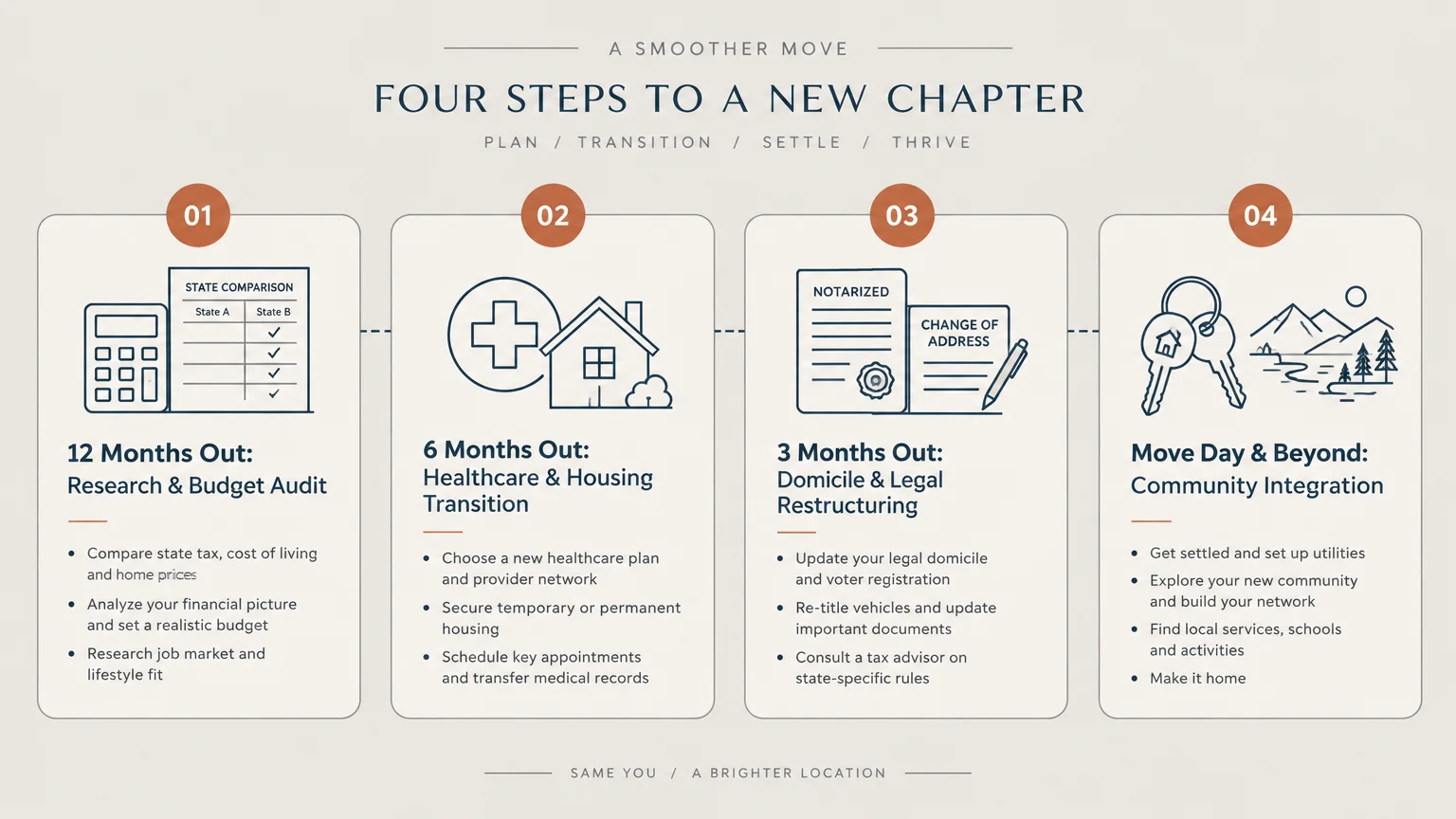
A successful interstate transition requires methodical planning and clear timelines. Breaking the move into organized phases lowers emotional stress and prevents costly oversights.
Use this practical checklist to guide your relocation process:
- Spend at least four weeks renting in your target town to evaluate summer heat, winter cold, and local traffic patterns.
- Update your estate planning documents—including wills, healthcare directives, and powers of attorney—to ensure compliance with your new state’s legal requirements.
- Downsize household belongings months ahead of time to lower professional moving costs and eliminate storage fees.
- Establish accounts with local banks and arrange utility connection dates several weeks before your closing date.
- Request copies of all physical medical records and transfer your active prescription files to a nearby pharmacy.
Community connection is just as vital as financial planning. Studies highlighted by the Centers for Disease Control and Prevention (CDC) indicate that staying socially engaged supports cognitive vitality and emotional health in older adults.
Join local volunteer programs, fitness centers, or hobby groups as soon as you settle in. Establishing a supportive neighborhood circle helps your new house feel like home quickly.
Frequently Asked Questions
Why are so many retirees leaving California?
High home prices, steep state income taxes, and elevated healthcare expenses motivate seniors to move. Relocating allows older adults to preserve their retirement savings and lower everyday overhead.
Does California tax your retirement income after you move away?
Federal law prohibits California from taxing your 401(k), IRA, or pension income once you establish legal residency elsewhere. However, California still taxes income earned from in-state real estate or businesses.
Which retirement destinations better than California have no state income tax?
Nevada, Texas, Florida, Washington, and Tennessee levy zero state personal income tax. Selecting these states allows you to keep the full amount of your pension checks and retirement distributions.
How does moving out of state affect my Medicare coverage?
Original Medicare travels anywhere nationwide with providers that accept Medicare assignment. If you have Medicare Advantage, you must enroll in a plan within your new local service area.
Is it better to rent or buy when moving to a new state?
Renting for six to twelve months is generally safer because it lets you explore different neighborhoods firsthand. You can test local healthcare access, traffic, and seasonal weather before committing to purchase.
For additional senior resources, visit
Eldercare Locator, AARP and Alzheimer’s Association.
Disclaimer: The information in this article is for educational purposes only and is not intended to be a substitute for professional financial, legal, or medical advice. Always consult with a qualified expert for advice tailored to your personal situation.









Leave a Reply