
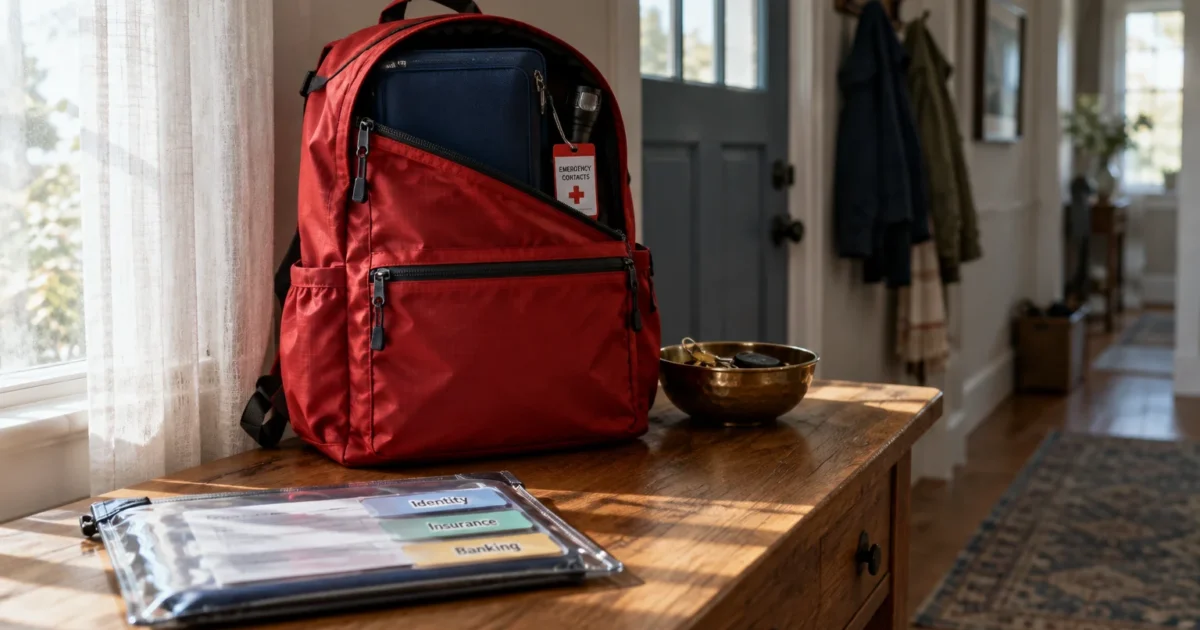
A sudden evacuation leaves you only minutes to grab what matters most. Packing the right financial documents protects your life savings, speeds up insurance claims, and secures vital emergency aid.
Without immediate proof of identity, property ownership, and income, rebuilding after a storm or wildfire becomes exhausting. A prepared grab-and-go binder ensures you never leave your financial security behind.
This checklist walks you through the nine critical records every senior must protect before a disaster strikes. You will learn how to organize, waterproof, and access your essential papers quickly.
Why an Emergency Go-Bag Is Vital for Retirees
Disasters arrive without warning, giving you mere minutes to escape danger. Seniors face distinct hurdles during sudden evacuations, including limited mobility and reliance on recurring monthly benefit payments.
Rebuilding your life after an evacuation requires immediate proof of who you are and what you own. Without proper paperwork, accessing emergency bank funds or filing property claims can take months.
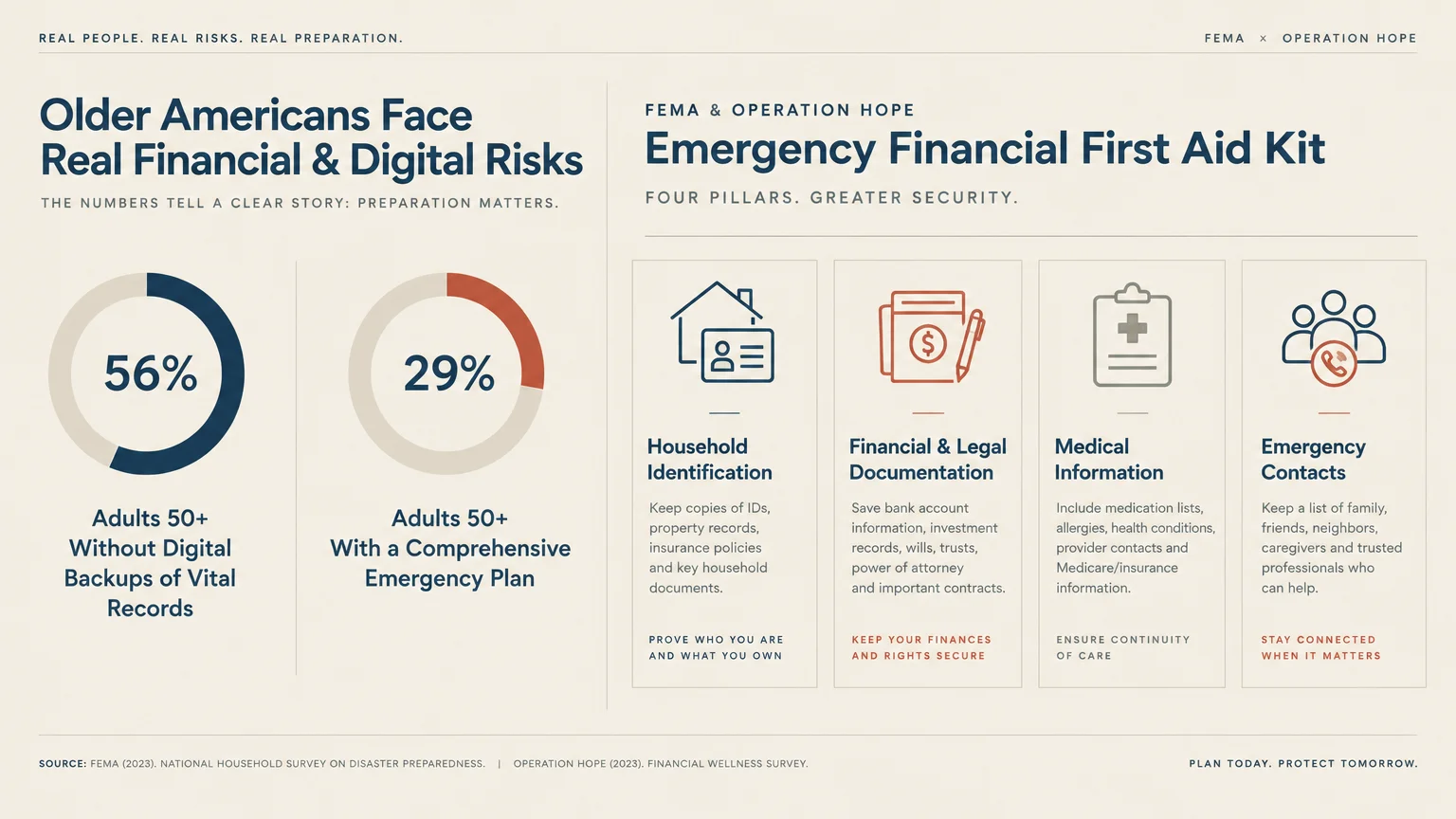
According to research from AARP, 56% of adults aged 50 and older have not backed up their vital records digitally. Furthermore, only 29% have created a comprehensive emergency disaster plan.
The Federal Emergency Management Agency promotes the Emergency Financial First Aid Kit framework to solve this vulnerability. Created alongside Operation HOPE, this model groups essential records into four structured recovery pillars.
These pillars include household identification, financial and legal documentation, medical information, and emergency contacts. Preparing these documents ahead of time transforms panic into focused, confident action.
A well-maintained grab-and-go binder preserves your dignity during chaos. It ensures you receive medical treatments, shelter access, and government grants without needless delays.
The 9 Financial Documents to Keep in Your Go-Bag
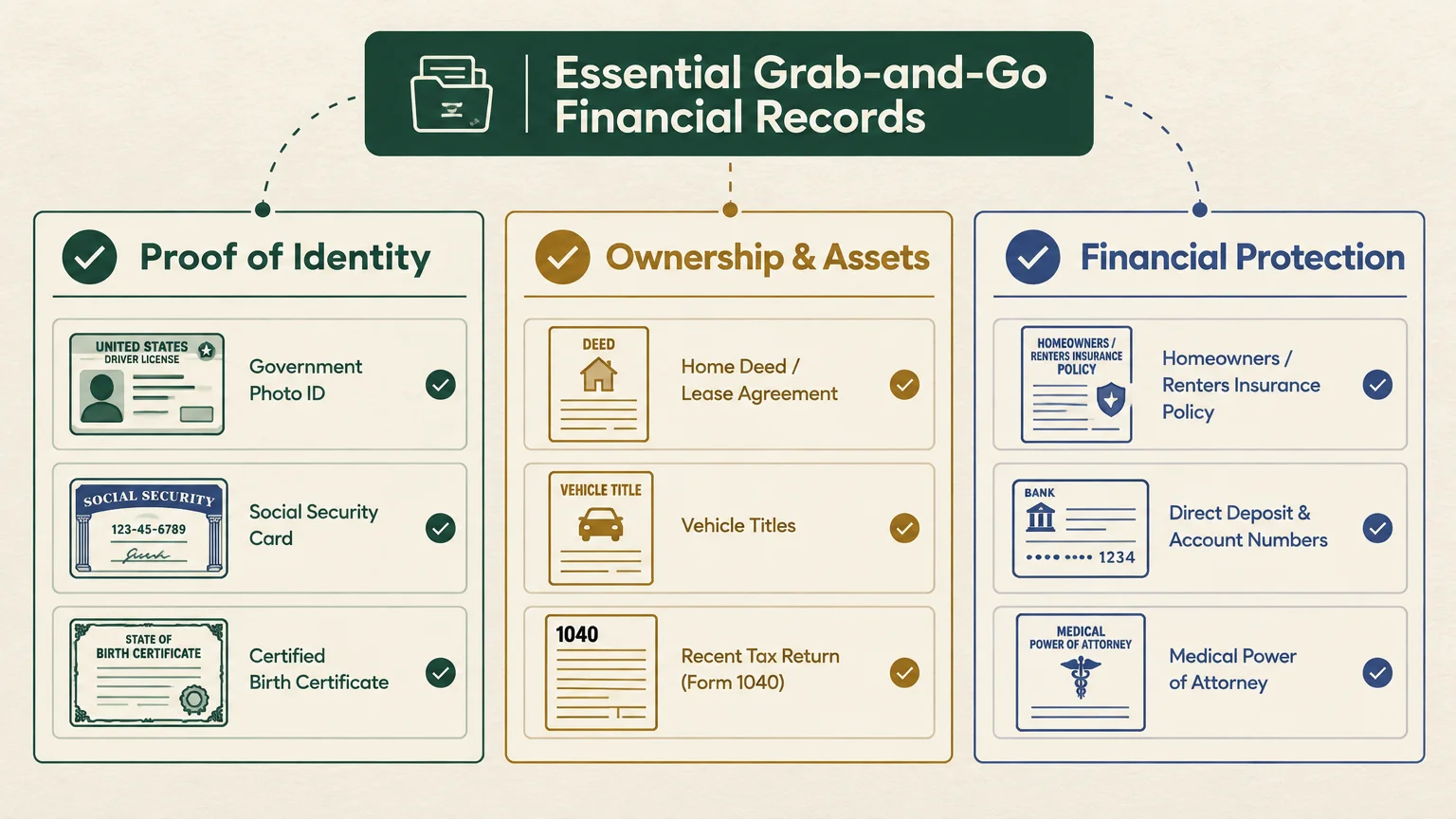
Your emergency go-bag requires a curated collection of paper records that verify your identity, assets, and obligations. Keep certified copies or original documents safely organized in durable plastic sleeves.
1. Government Identification and Social Security Cards
Store high-quality color photocopies of your driver’s license, state identification card, and U.S. passport. If you live alone, consider packing an original certified birth certificate and your Social Security card.
Disaster recovery workers require verified government identification before issuing lodging vouchers or emergency debit cards. Having secondary proof of citizenship prevents costly bureaucratic delays at regional aid centers.
Make sure all identification cards remain unexpired. Update these photocopies immediately whenever your state issues you a renewed credential.
2. Proof of Property Ownership, Leases, and Utility Records
Include a copy of your real estate deed, mortgage statement, or current residential lease agreement. Keep a recent electric or water bill alongside these papers to confirm your physical address.
Local authorities frequently set up road checkpoints after severe weather events. Showing a utility bill matching your photo identification lets you re-enter your neighborhood to assess damage.
Recent federal policy updates have simplified this verification process for displaced homeowners. As of March 22, 2024, revised disaster relief regulations accept broader records like vehicle registrations or self-declarations to establish property occupancy.
If you reside in a manufactured home or family heir property, include your title or bill of sale. Clear documentation speeds up municipal building permits and utility reconnections.
3. Homeowners, Flood, and Auto Insurance Policies
You do not need to print hundred-page policy handbooks for your binder. Pack the single-page policy declarations sheet for your homeowners, flood, earthquake, and automobile insurance policies.
This declaration page lists your policy number, exact coverage limits, deductible totals, and claims department phone numbers. Having this data at your fingertips lets you initiate claims before regional adjusters become overwhelmed.
Keep a business card from your local insurance agent inside the same binder pocket. Direct personal relationships with your agent can expedite claims when regional corporate call centers face backlogs.
4. Bank, Brokerage, and Retirement Account Statements
Print the first page of your most recent checking, savings, money market, and retirement accounts. Make sure these statements clearly display your institution’s name, your account number, and the routing number.
Routine banking records help you verify assets when applying for temporary disaster relief. Standard federal deposit insurance protects your funds up to $250,000 per depositor, per insured institution, across separate account categories.
Keep a physical list of your institution’s telephone banking numbers in case internet services fail. Having your specific branch details allows you to wire emergency funds or request replacement debit cards.
5. Health Insurance Cards, Medicare Cards, and Medical Directives
Pack photocopies of your front and back Medicare, Medicaid, or private supplemental insurance cards. Include your prescription drug plan details, physician contact numbers, and a complete list of current daily medications.
In a medical emergency, first responders must know your health history immediately. Clear directives prevent dangerous pharmaceutical interactions when you must refill vital prescriptions at unfamiliar pharmacies.
Official guidelines from Medicare.gov recommend carrying proof of supplemental coverage to avoid out-of-pocket billing disputes during disaster evacuations.
Do not forget to note the dosages and prescribing doctor for each medication. This simple step ensures pharmacists can reissue emergency 30-day supplies without waiting for medical chart transfers.
6. Estate Planning Records and Durable Power of Attorney
Evacuations carry real physical risks, making legal decision-making authority essential. Place copies of your durable financial power of attorney and healthcare proxy inside your document pouch.
These legal forms empower a designated adult child or trusted fiduciary to act on your behalf if you suffer an injury. Without them, banks and hospitals cannot release critical records to your family.
You should also include a copy of your living will and the contact information for your estate attorney. Keeping these records accessible prevents stressful court interventions during already turbulent times.
7. Recent Federal and State Tax Returns
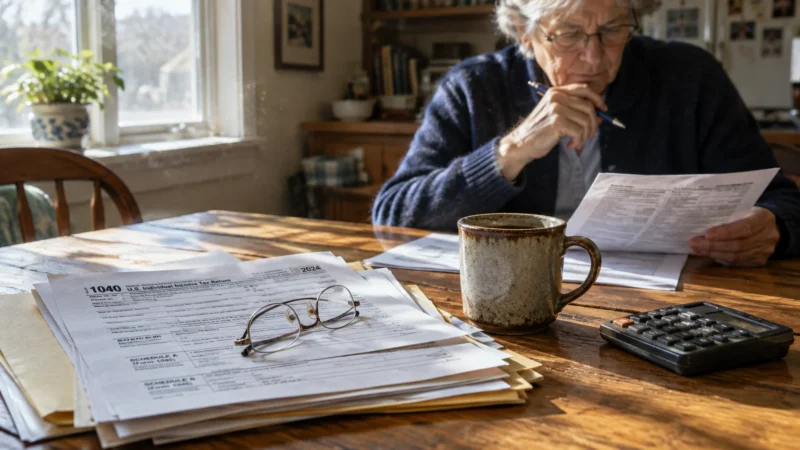
Pack the first two pages of your federal Form 1040 and state tax returns from the previous two tax years. You do not need to pack every supporting receipt or detailed schedule.
Disaster recovery agencies use your prior tax filings to confirm your pre-disaster household income. Showing this income documentation qualifies your household for grants and emergency recovery subsidies.
Furthermore, these tax records establish baseline figures if you choose to claim disaster-related casualty loss deductions on future returns. They serve as objective evidence of your historical financial status.
8. Social Security, Pension, and Fixed-Income Award Letters
Millions of seniors rely on monthly checks to pay for groceries, rent, and medication. Pack your annual benefit statement from your public pension, annuity provider, or the Department of Veterans Affairs.
As noted by the Social Security Administration (SSA), keeping paper proof of regular monthly income guarantees swift rerouting of payments if local mail service halts.
If an evacuation lasts several weeks, you cannot afford payment interruptions. Having your claim numbers ready allows federal caseworkers to redirect electronic deposits to secondary temporary accounts immediately.
9. Master Account Inventory and Secure Contact List
Create a single-page inventory listing all regular monthly creditors, recurring bills, and utility accounts. Write down customer service phone numbers and your primary account numbers for each creditor.
Cell towers and internet networks frequently collapse during widespread natural catastrophes. Having a physical paper directory of family members, insurance brokers, and financial advisors ensures you stay connected.
Never write unencrypted master passwords or banking personal identification numbers directly on this sheet. Instead, use discreet memory hints only you understand, or store sensitive passwords on an encrypted portable device.
Emergency Cash and Direct Deposit Details
Power grid collapses disable electronic point-of-sale machines, grocery scanners, and neighborhood automated teller machines. When digital payment networks freeze, merchants accept cash transactions only.
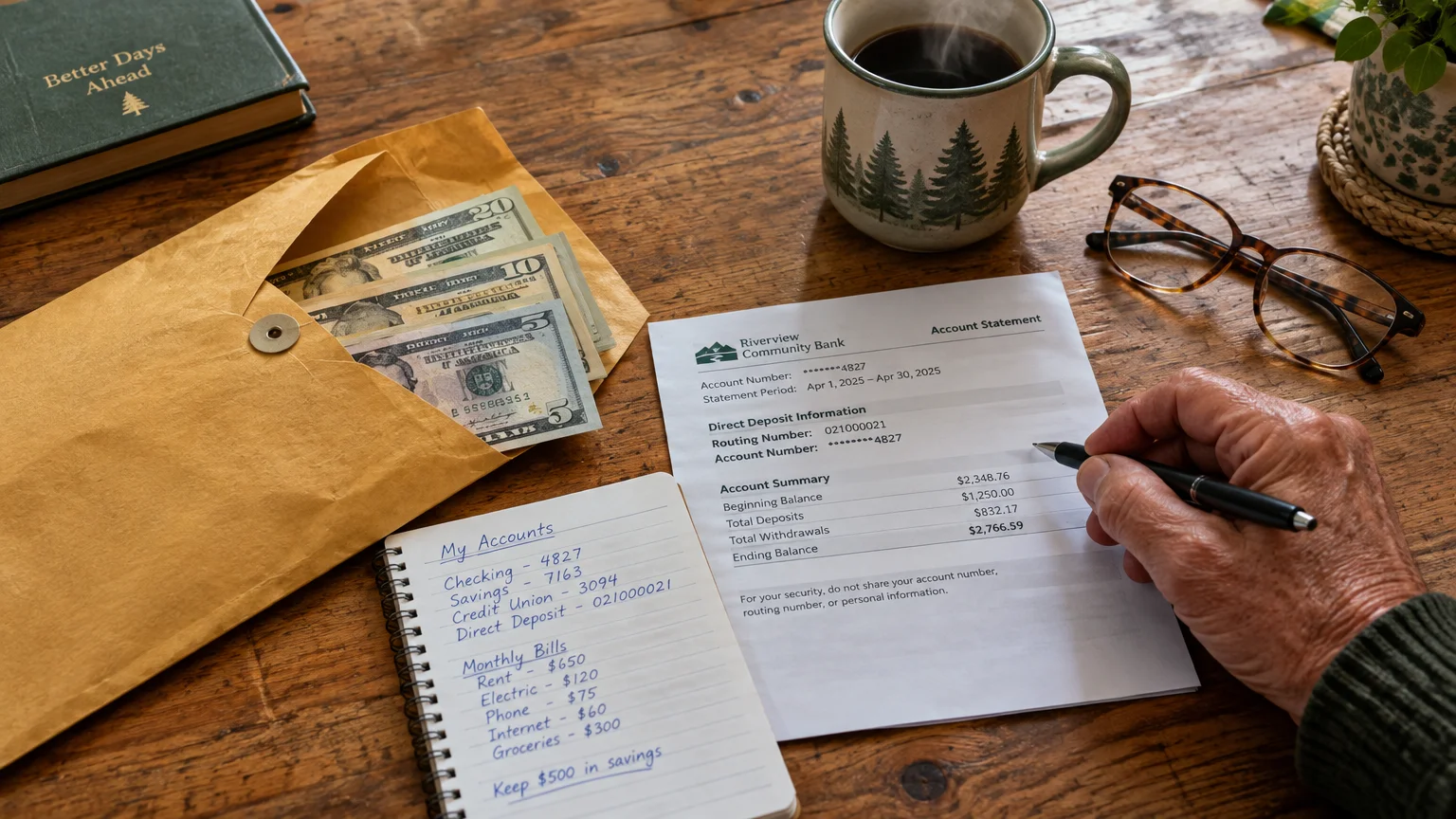
Emergency management experts recommend storing between $200 and $500 in physical cash inside your go-bag. Focus exclusively on small bills like $1, $5, $10, and $20 notes.
Cashiers cannot make change for large fifty-dollar or hundred-dollar bills when registers lose electricity. Carrying smaller currency ensures you can buy bottled water, hot meals, fuel, and basic toiletries.
In addition to physical cash, keep a formal deposit slip with your routing and account numbers handy. Federal recovery disbursements move fastest through direct electronic transfers into existing checking accounts.
As highlighted by the Consumer Financial Protection Bureau (CFPB), storing emergency cash in water-resistant envelopes prevents physical damage from humidity, flooding, or rain.
Hide your emergency cash envelope between non-descript paper dividers within your binder. Never display currency openly when accessing documents in crowded public evacuation shelters.
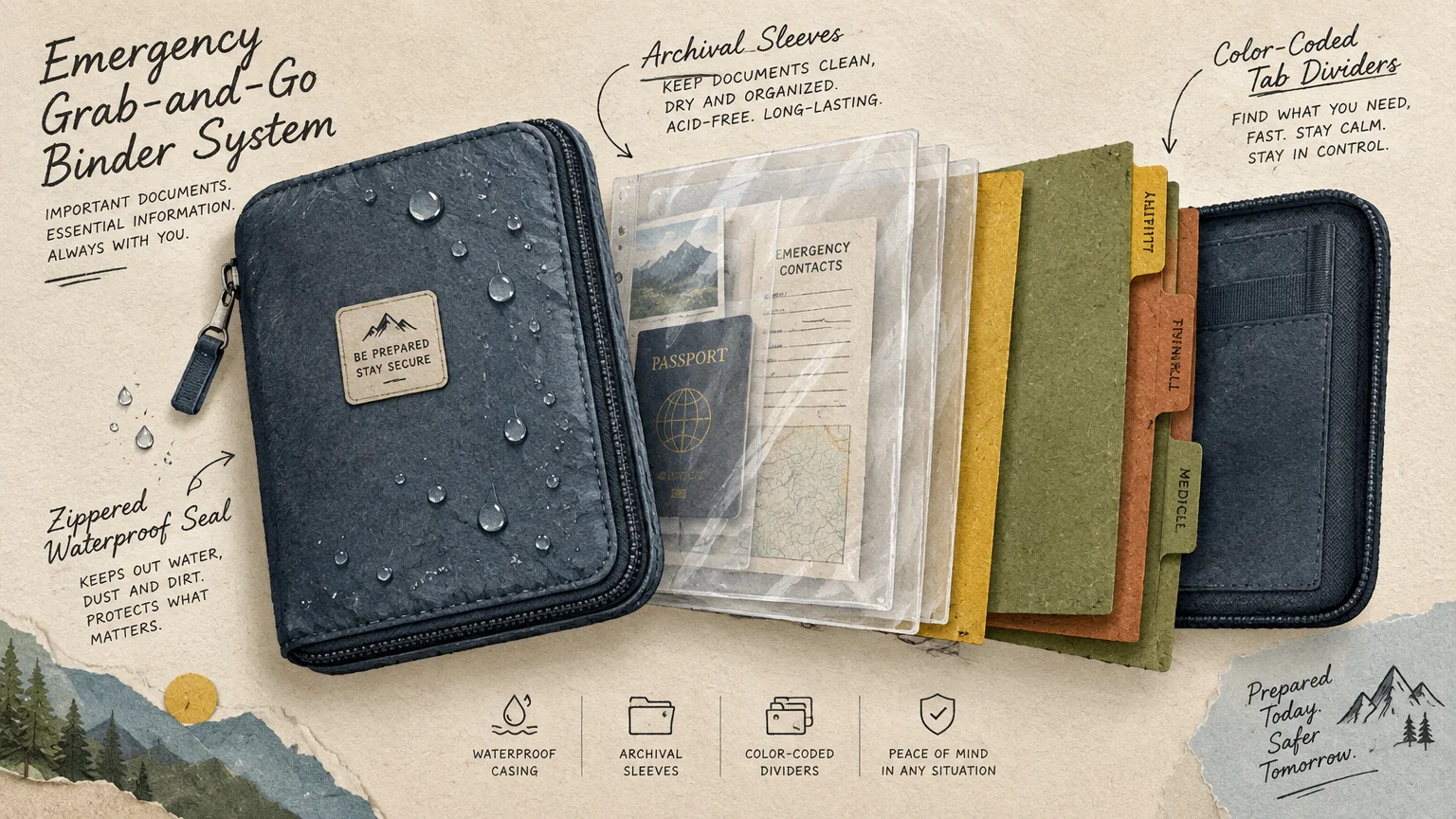
How to Assemble a Weatherproof Grab-and-Go Binder
Physical organization dictates how fast you can grab your documents when sirens sound. Use a durable, zippered binder constructed from water-resistant and fire-retardant materials.
Place each financial document inside heavy-duty, archival-safe plastic sheet protectors. Plastic sleeves prevent water infiltration, paper degradation, and ink smudging caused by handling or damp evacuation conditions.
Use color-coded tab dividers to organize paperwork into distinct categories:
- Blue Tabs: Personal identification, passports, and Social Security records
- Green Tabs: Banking, investment statements, and cash envelopes
- Red Tabs: Health insurance cards, prescription lists, and medical directives
- Yellow Tabs: Property deeds, lease agreements, and home utility invoices
- Orange Tabs: Insurance policies, estate documents, and emergency contact lists
Supplement your paper records with an encrypted, password-protected USB flash drive. Scan every paper document at high resolution and load the digital PDF files onto the encrypted drive.
Test this encrypted drive twice each year to confirm that files remain uncorrupted and accessible. Store the USB drive in a zippered interior compartment of your emergency binder.
Keep the total weight of your binder under five pounds so you can carry it effortlessly. Place the binder inside an easy-to-reach cabinet or closet near your primary home exit.
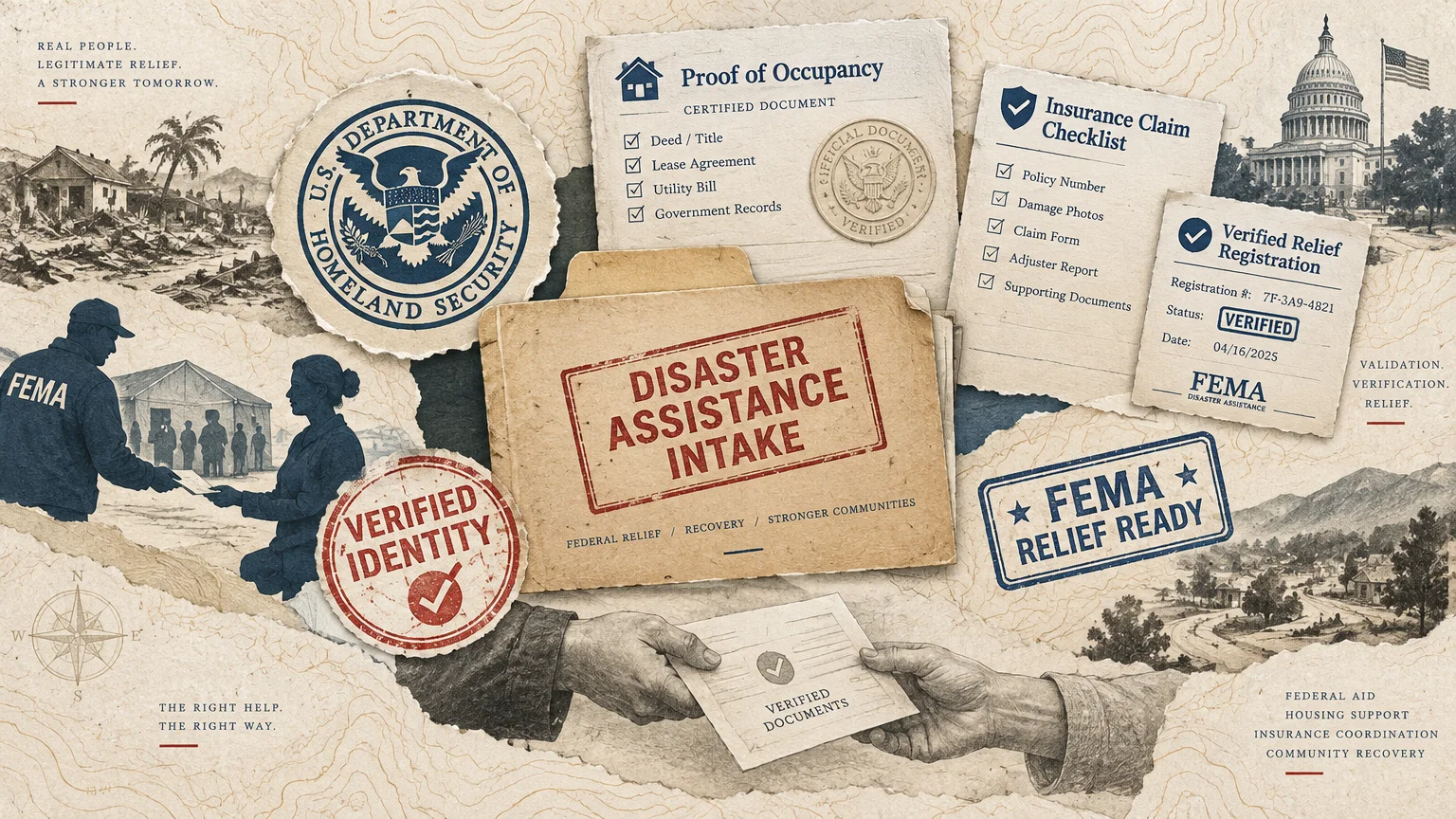
Claiming Disaster Aid and Navigating FEMA Rules
Navigating federal disaster bureaucracy can feel overwhelming when dealing with trauma and displacement. Understanding modern aid policies helps retirees cut through red tape and collect urgent relief funding.
For disasters declared on or after March 22, 2024, FEMA introduced Serious Needs Assistance. This program provides an upfront payment of $750 per household for urgent items like food, water, and prescriptions.
To qualify for this direct payment, applicants must present valid identity documents and bank deposit details. Keeping your paperwork organized in your go-bag allows caseworkers to process these payments on the spot.
Under prior rules, survivors had to apply for an SBA loan before receiving specific FEMA disaster grants. Fortunately, federal reforms eliminated this frustrating prerequisite, allowing seniors on fixed incomes to access grants directly.
According to guidance from Benefits.gov, displaced older adults should register with federal assistance portals immediately following an official presidential disaster declaration.
Keep a small notepad and pen inside your binder to log every interaction with relief caseworkers. Record the date, the representative’s badge number, and the specific guidance they provided during each meeting.
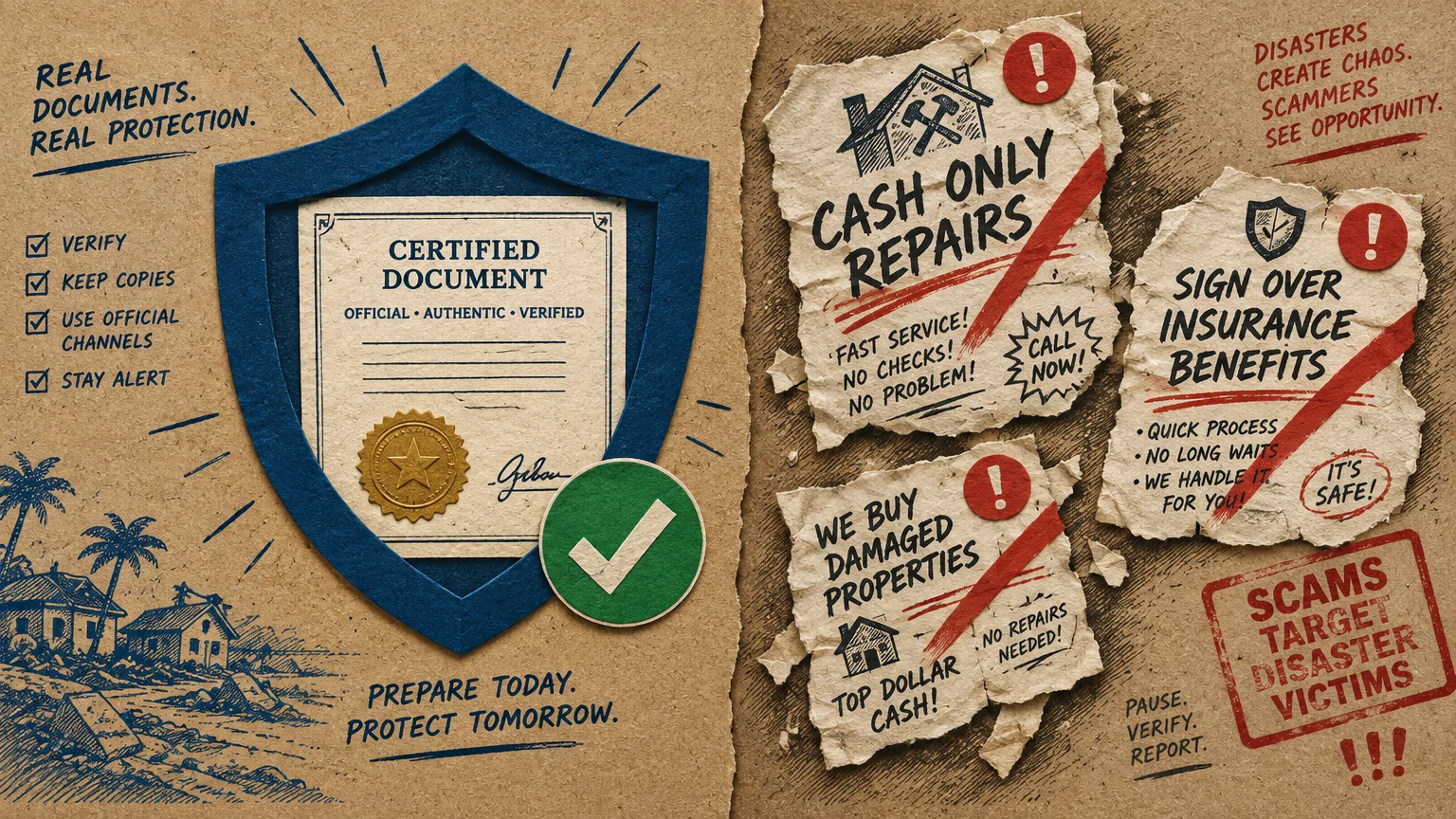
Common Document Pitfalls and Post-Disaster Scams
Preparing an emergency binder requires caution, as packing the wrong materials creates severe security vulnerabilities. Avoid carrying original Social Security cards or property deeds unless local authorities mandate certified hard copies.
Identity thieves target chaotic evacuation shelters and crowded relief staging areas. Never leave your go-bag unattended in vehicles, community shelters, or hotel lobbies during an evacuation.
Dishonest contractors and fraudulent adjusters also swarm disaster zones looking for vulnerable seniors. Beware of anyone demanding upfront cash payments or offering expedited insurance claim settlements for a fee.
Legitimate FEMA inspectors and federal disaster workers never charge fees for inspections or relief applications. They will always show official government identification badges and will never ask for your banking passwords.
Always verify contractor licensing with state boards before signing repair agreements or assigning insurance benefits. Keep your financial papers secure and reveal private account details only to verified financial institutions.
Never sign any document that contains blank fields or vague promises of total reimbursement. If a contractor pressures you to sign immediately, step back and consult your trusted family members first.
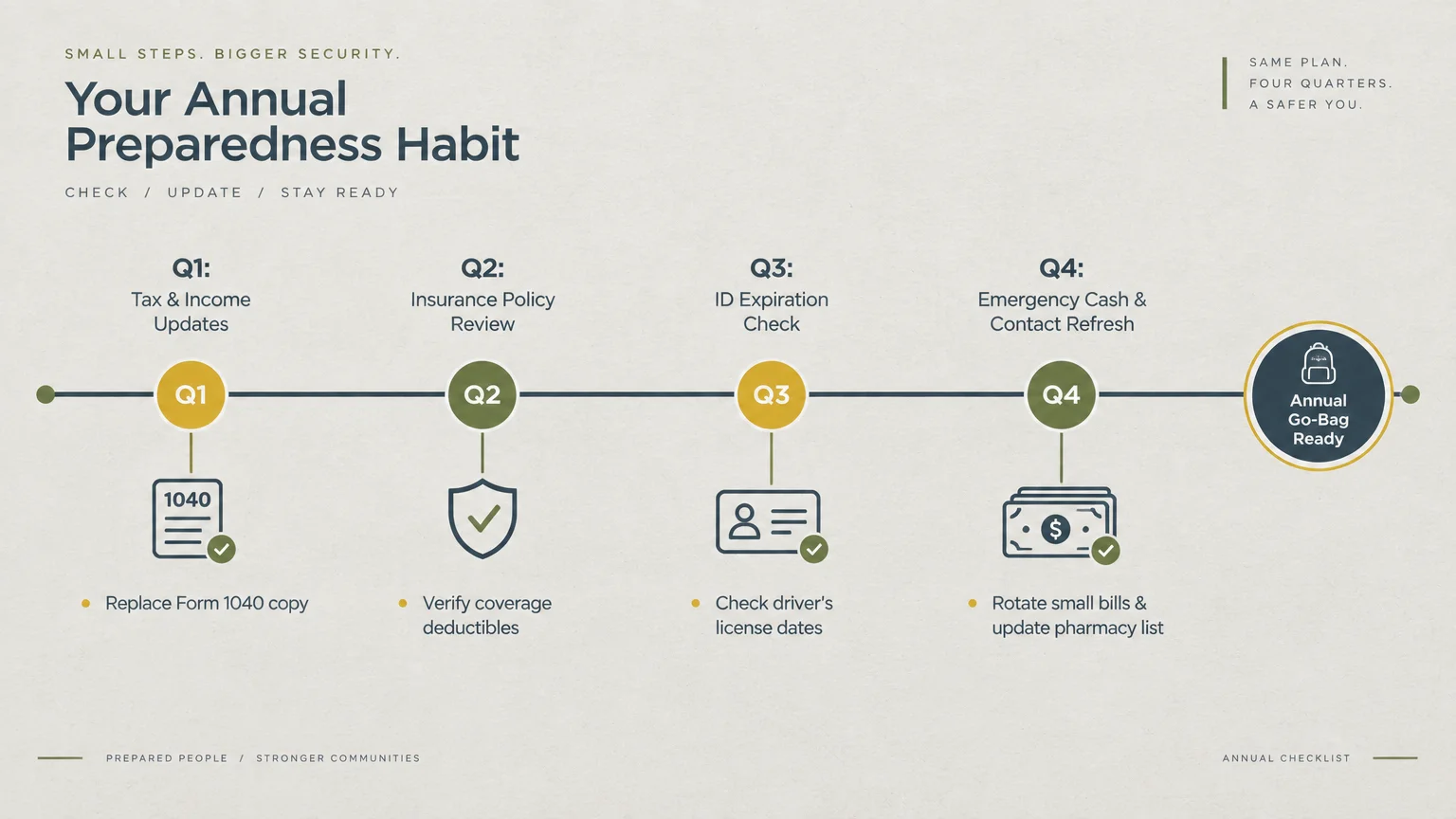
Annual Maintenance Checklist for Emergency Records
Financial documents become outdated quickly as account balances change, policies renew, and medications adjust. Review your emergency grab-and-go binder at least once every twelve months to maintain accuracy.
Many retirees schedule this document audit alongside daylight saving time changes or their annual birthday. Replace expired insurance policy sheets and outdated tax forms with current documentation.
The checklist table below details how to manage your vital records and keep your binder ready for emergencies:
| Document Category | Recommended Format | Review Frequency | Primary Recovery Purpose |
|---|---|---|---|
| Personal Identification | Certified Copies / Color Scans | Every 4 to 8 Years | Shelter registration and disaster aid intake |
| Property & Utility Proof | Recent Invoice Copies | Every 6 Months | Re-entering evacuation zones and FEMA verification |
| Insurance Policies | Declaration Pages | Annually at Renewal | Initiating property damage and loss claims |
| Banking Records | First Page Statements | Annually | Direct deposit for emergency federal grants |
| Medical & Prescriptions | Laminated Cards & Written Lists | Every 6 Months | Emergency room admissions and pharmacy refills |
| Estate Directives & POA | Original Signed Copies | Every 3 to 5 Years | Empowering family fiduciaries during incapacity |
| Tax Filings | Form 1040 (Pages 1 & 2) | Annually After Filing | Demonstrating pre-disaster income eligibility |
Store a printed copy of this audit schedule in the front sleeve of your binder. Tracking your updates ensures nothing slips through the cracks as your financial life evolves.
If you transition between financial institutions or update your healthcare proxy, modify your binder records immediately. Staying proactive prevents confusion when emergency services require rapid documentation.
Frequently Asked Questions
Should I keep original documents or copies in my emergency go-bag?
Store high-quality color photocopies of most financial and identification records in your portable go-bag. Keep original titles, deeds, and birth certificates in a home fireproof safe or bank deposit box.
However, carry original executed copies of durable powers of attorney and healthcare directives. Hospitals and financial institutions frequently require original signatures before honoring legal representation.
How much emergency cash should a senior carry in a grab-and-go binder?
Aim to keep between $200 and $500 in physical cash stored in your document binder. Always prioritize small denominations like one-dollar, five-dollar, and ten-dollar bills for daily emergency transactions.
Avoid carrying large sums exceeding $1,000, as physical cash remains vulnerable to loss or theft during chaotic evacuations. Balance immediate liquidity against personal safety risks.
What happens if my financial documents are destroyed before I can evacuate?
If disaster destroys your records, contact your financial institutions and government agencies immediately to request replacements. Banks and insurance carriers maintain secure electronic databases and can reissue paperwork rapidly.
Federal agencies also cross-reference electronic tax records and Social Security rolls to verify your identity. Having digital backups on encrypted cloud storage significantly expedites this replacement timeline.
Can I rely solely on cloud storage on my smartphone instead of paper records?
Never rely exclusively on smartphones or cloud storage during a major natural disaster. Severe storms frequently destroy cell towers, knock out internet connections, and deplete device batteries without charging options.
A physical paper binder guarantees instant access to essential data even when local telecommunications networks fail completely. Maintain both paper binders and encrypted digital files for maximum protection.
How does FEMA verify home occupancy if I cannot find my property deed?
Under reformed 2024 FEMA guidelines, survivors can prove occupancy using alternative everyday documentation. Acceptable records include utility bills, mobile home park agreements, motor vehicle registrations, and local court filings.
In communities where formal deeds do not exist due to heir-property traditions, FEMA now accepts signed self-declarations. These flexible rules prevent seniors on fixed incomes from being denied assistance.
For additional senior resources, visit
Consumer Financial Protection Bureau (CFPB), Administration for Community Living (ACL), Eldercare Locator, AARP and Alzheimer’s Association.
Disclaimer: The information in this article is for educational purposes only and is not intended to be a substitute for professional financial, legal, or medical advice. Always consult with a qualified expert for advice tailored to your personal situation.








Leave a Reply