

Navigating your finances during retirement can feel like a full-time job. On a fixed income, every dollar counts, and rising costs for essentials like groceries, utilities, and healthcare can put a strain on your budget. The good news is that you are not alone, and there are powerful resources designed to help. Government assistance programs are not handouts; they are benefits you have earned through a lifetime of contributions, created to ensure your security and well-being.
This guide is designed to demystify some of the most helpful programs available to you, starting with the Supplemental Nutrition Assistance Program (SNAP). We will walk you through what these programs are, who is eligible, and provide clear, step-by-step instructions on how to apply. Taking control of your financial health is an act of empowerment, and accessing these benefits is a smart strategy to stretch your income and maintain your independence.
This article is for informational purposes only and is not intended to be financial advice. Please consult with a qualified financial professional or a benefits counselor for advice tailored to your individual situation.

Why Assistance Programs Are a Vital Financial Tool for Seniors
For many older adults, the thought of applying for government aid can feel uncomfortable. It’s important to shift this perspective. Think of these programs as an extension of the benefits you are already entitled to, like Social Security or Medicare. They exist to fill financial gaps and improve your quality of life.
The ‘Why’: Accessing benefits like food assistance can have a ripple effect on your entire budget. When you spend less on groceries, you free up funds for other critical expenses, such as utility bills, home repairs, or medical co-pays. This financial relief reduces stress and helps you stay healthy and independent in your own home. Unfortunately, billions of dollars in benefits go unclaimed each year simply because eligible seniors don’t know they qualify or find the application process intimidating. You’ve worked hard your entire life; now is the time to use the support systems designed for you.

Understanding SNAP: Your Guide to Food Assistance
The largest and most well-known food assistance program is the Supplemental Nutrition Assistance Program, commonly known as SNAP. For many seniors, SNAP is a lifeline that makes healthy, nutritious food more affordable.
What is SNAP?
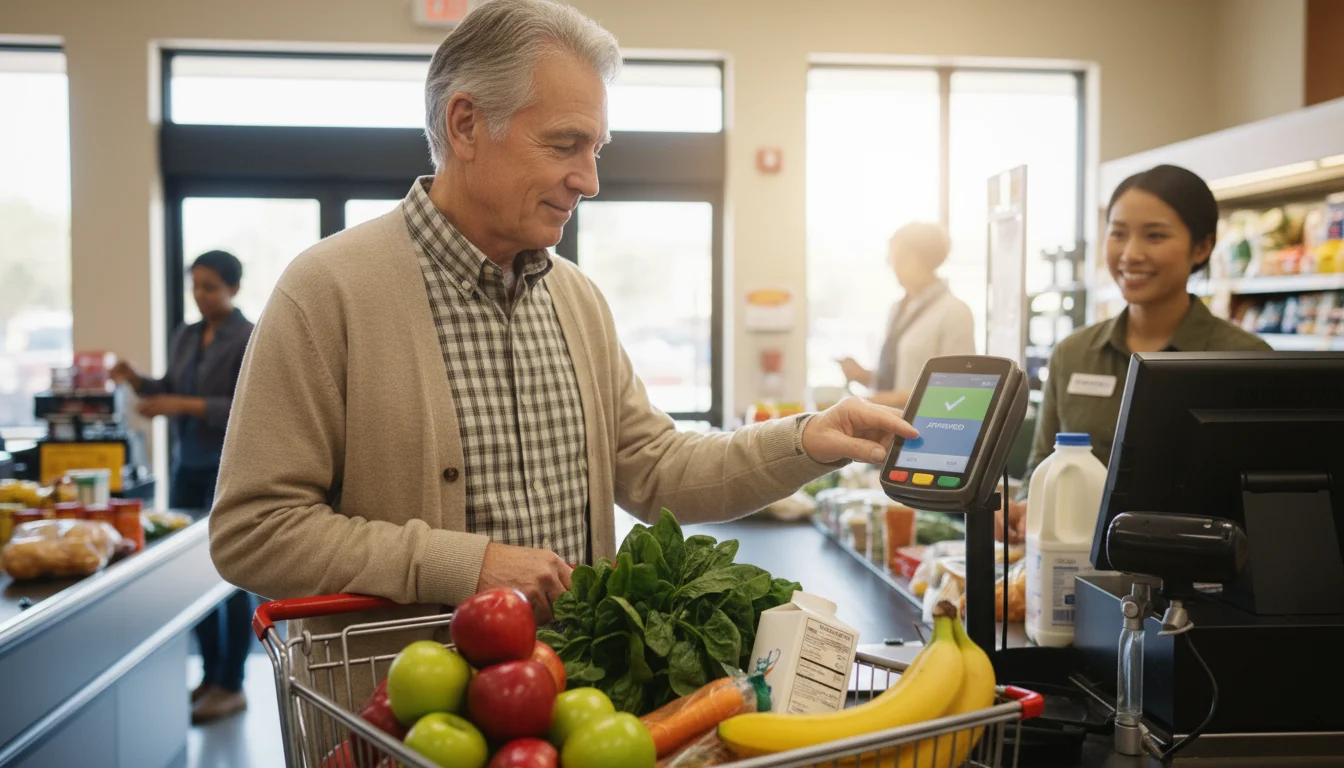
SNAP provides you with a monthly stipend to buy groceries. These funds are loaded onto an Electronic Benefits Transfer (EBT) card, which works just like a debit card at most supermarkets, grocery stores, and even some farmers’ markets. You can use your EBT card to buy foods like fruits, vegetables, meat, fish, dairy products, and bread. You cannot use it for non-food items, alcohol, or hot, prepared foods.

Who is Eligible for SNAP Benefits?
Eligibility rules can seem confusing, but they are often more flexible for seniors. The rules are generally based on your household income and assets. Many older adults assume they won’t qualify because they own a home or a car, but this is a common myth.
The ‘How’ of Eligibility:

How to Apply for SNAP: A Step-by-Step Guide
Applying for government aid for the elderly doesn’t have to be overwhelming. Here is a simple, step-by-step process to follow.
The ‘How’ of Applying:
- Find Your Local SNAP Office: Every state manages its own SNAP program. Your first step is to find your state’s agency. You can do this by searching online for “[Your State] SNAP application” or by calling your state’s information hotline. The USDA also provides a directory of state offices on its website.
- Gather Your Documents: Being prepared will make the process much smoother. While every state is slightly different, you will generally need to provide copies of:
- Proof of Identity: Driver’s license, state ID card, or passport.
- Proof of Address: A recent utility bill or lease agreement.
- Proof of Income: Social Security award letter, pension statements, or recent pay stubs.
- Proof of Assets: Recent bank statements for checking and savings accounts.
- Proof of Expenses: This is critical for maximizing your benefits. Gather receipts and statements for housing costs (rent/mortgage), utility bills, and out-of-pocket medical expenses.
- Complete and Submit the Application: Most states offer several ways to apply. You can often apply online, which is usually the fastest method. You can also print an application to mail in or visit a local office to apply in person. Don’t hesitate to ask a trusted family member, friend, or a case worker at a local senior center for help.
- Complete the Interview: After you submit your application, you will have a brief interview, which is usually conducted over the phone. This is a standard part of the process where a caseworker will review your information and ask clarifying questions. Be honest and have your documents handy.

Maximizing Your Benefits: Getting the Most From the Program
Simply qualifying for SNAP is the first step. The next is ensuring you are receiving the maximum amount you are entitled to. This often comes down to correctly reporting your expenses.

The Power of Medical Deductions
The ‘Why’: For seniors over 60, the medical expense deduction is the single most important tool for maximizing SNAP benefits. If your out-of-pocket medical expenses are more than $35 per month, you can deduct them from your income. This lowers your net income on paper, which can help you qualify for a higher monthly benefit amount. Many eligible seniors miss out on hundreds of dollars a year because they don’t report these costs.
The ‘How’: Keep track of all medical costs not covered by insurance. Common deductible expenses include:
- Health insurance premiums (including Medicare Part B and D)
- Co-pays for doctor visits and hospital stays
- Prescription and over-the-counter medications
- Dental and vision care costs
- The cost of transportation to and from medical appointments
- Medical equipment like hearing aids, dentures, or walkers
When you apply or recertify for SNAP, be sure to provide proof of these expenses.

Double Up Food Bucks and Other Incentives
Many states and local farmers’ markets offer programs that double the value of your SNAP dollars. For example, a “Double Up Food Bucks” program might give you an extra $10 in tokens to spend on fresh fruits and vegetables when you spend $10 of your SNAP benefits at a participating market. This is a fantastic way to stretch your food assistance dollars even further while supporting local farmers.

Exploring Other Key Assistance Programs for Seniors
While SNAP is a cornerstone of support, several other programs offer crucial government aid for the elderly. Often, if you qualify for one, you may qualify for others.

Low-Income Home Energy Assistance Program (LIHEAP)
What it is: LIHEAP helps low-income households with their energy bills. It can provide a one-time payment to your utility company to help with heating and cooling costs or provide assistance in an energy crisis, like a utility shutoff notice.
How to apply: Like SNAP, LIHEAP is run by the states. Contact your local social services office or search online for “[Your State] LIHEAP” to find out how to apply.

Medicare Savings Programs (MSPs)
What they are: If you are enrolled in Medicare, MSPs can be one of the most valuable assistance programs for seniors. These programs help pay for your Medicare premiums, deductibles, coinsurance, and co-payments. For example, the Qualified Medicare Beneficiary (QMB) program can pay your Part A and Part B premiums, saving you over $170 per month.
How to apply: You apply for MSPs through your state’s Medicaid agency. Applying for these can significantly reduce your healthcare costs.

The Extra Help Program
What it is: Officially called the Part D Low-Income Subsidy (LIS), Extra Help is a federal program that helps pay for the costs associated with a Medicare Prescription Drug Plan (Part D). This includes the plan’s monthly premium, annual deductible, and prescription co-pays.
How to apply: You can apply online through the Social Security Administration’s website. In many cases, if you are approved for a Medicare Savings Program, you will automatically be enrolled in Extra Help.

Where to Find Trusted Help and Resources
You do not have to navigate this process by yourself. There are excellent, free resources available to guide you.
- BenefitsCheckUp® by the National Council on Aging (NCOA): This is a free, confidential online tool. You can answer some simple questions, and it will generate a personalized report of all the federal, state, and local benefits you may be eligible for.
- Your Local Area Agency on Aging (AAA): AAAs are a nationwide network of organizations that provide local services and support for older adults. They can offer one-on-one counseling to help you understand and apply for benefits. You can find your local AAA through the Eldercare Locator website or by calling 1-800-677-1116.
- Call 2-1-1: In most areas, you can dial 2-1-1 to be connected with a trained specialist who can direct you to local health and human services, including benefits application assistance.

A Final Word of Encouragement
Managing your finances in retirement requires diligence and smart planning. Using assistance programs like SNAP, LIHEAP, and Medicare Savings Programs is not a sign of failure—it is a sign of resourcefulness. These programs were created to provide you with stability and security.
By taking the time to understand your eligibility and gather your documents, you are making a powerful investment in your own well-being. Start with one program, ask for help when you need it, and remember that you deserve to live your retirement years with dignity and peace of mind.
For expert guidance on senior health and finance, visit AARP, Alzheimer’s Association, American Heart Association and Benefits.gov.
|
Fact-Checked Content
Our editorial team reviews all content for accuracy and updates it regularly. Learn about our editorial process →
|









Leave a Reply