

Raising your grandchildren brings profound purpose, yet funding extra food, clothing, and education often strains a fixed retirement budget. Fortunately, you can claim dedicated monthly cash payments through Social Security to support the kids in your care.
Federal kinship care benefits can ease your household stress and protect your hard-earned retirement savings. However, qualifying requires you to navigate specific legal criteria, strict dependency timelines, and family benefit limits.
Understanding these official standards helps you claim every dollar your family deserves. Here are the eight essential Social Security rules you must know to secure benefits for your grandchildren today.
The Growing Reality of Kinship Care and Grandparent Caregivers
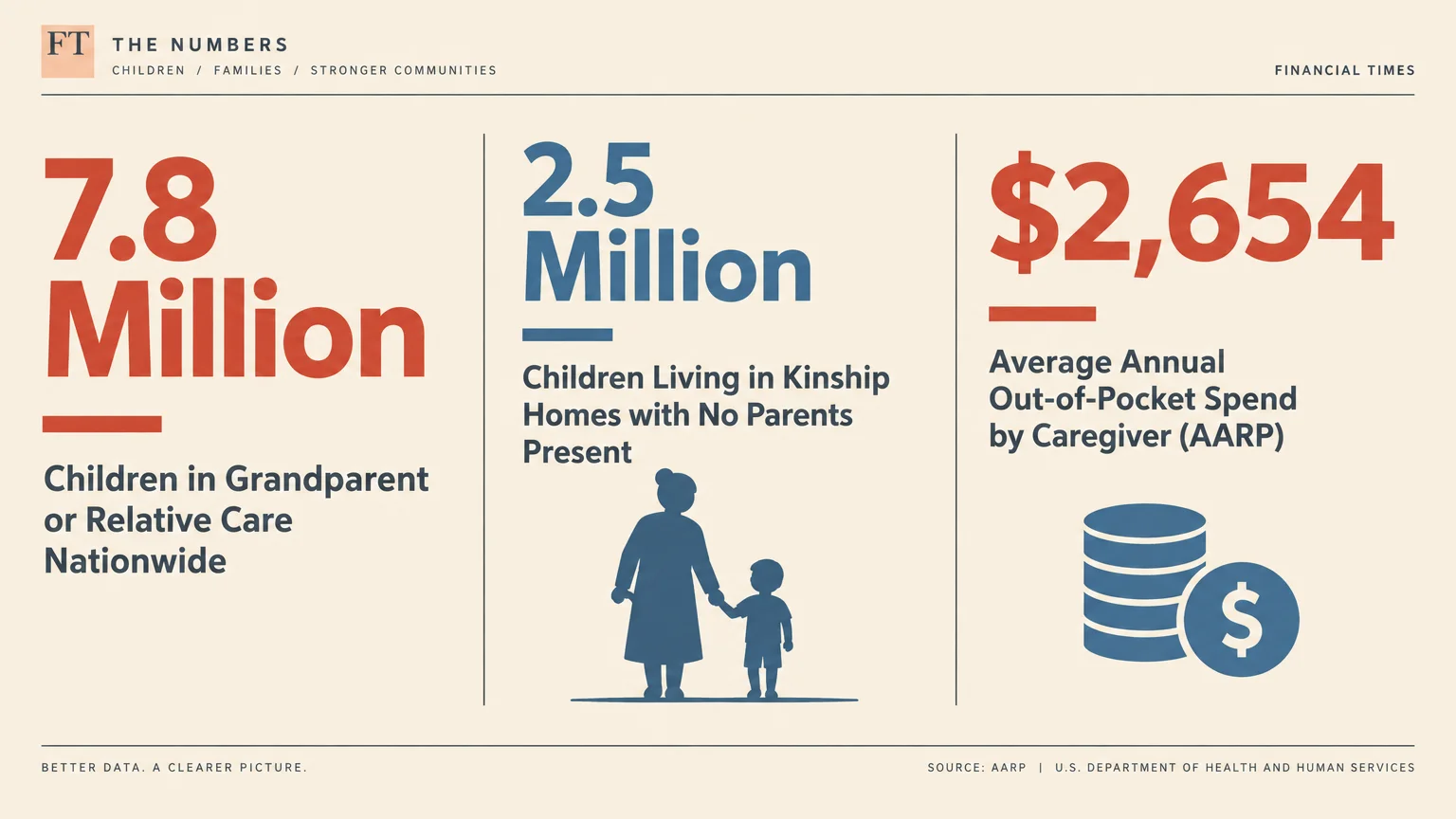
Millions of seniors across the country have stepped up to raise their children’s children. According to U.S. Census data, approximately 2.5 million children live in kinship households where grandparents provide primary care with no biological parents present.
Stepping into this role reshapes your retirement plans unexpectedly. In total, around 7.8 million American children live in households headed by a grandparent or other relative caregiver.
Meeting everyday household expenses while living on a fixed income presents severe challenges. You must balance grocery bills, school clothes, and medical copays alongside your personal retirement expenses.
According to research from AARP, 90% of grandparents provide direct financial contributions to their grandchildren. These caregivers spend an average of $2,654 per year out of pocket, generating billions in unpaid family support nationwide.
Fortunately, federal child benefits provide crucial financial relief. Learning how to unlock Social Security for grandchildren ensures you can maintain financial security while giving your loved ones a stable foundation.
Kinship care benefits provide continuous monthly checks directly tied to your lifetime work record. Securing these funds can mean the difference between falling behind on bills and thriving as a kinship family.

Rule 1: Biological Parents Must Be Deceased or Permanently Disabled
Under standard federal law, Social Security does not automatically classify grandchildren as direct dependents. Under Code of Federal Regulations § 404.358, specific parental criteria must be met before auxiliary benefits can begin.
To qualify for monthly benefits on your work record without legal adoption, the child’s biological parents must be deceased or permanently disabled. This condition must exist at the time you become entitled to retirement or disability benefits.
If the biological parents are alive, capable of working, and not legally disabled, your grandchild cannot collect auxiliary payments on your record. The government expects capable biological parents to remain financially responsible for their offspring.
This rule often catches well-intentioned grandparents off guard. Even if you hold legal custody, living and healthy biological parents block your grandchild from accessing benefits on your earnings history.
If one parent is deceased and the other is permanently disabled, the requirement is satisfied. Both biological parents must meet one of these two criteria for benefits to proceed under non-adoptive kinship rules.
When parental status prevents eligibility on your record, you must explore alternative options. You can evaluate whether legal adoption makes sense or check if the biological parents qualify for disability coverage.
Rule 2: Adoption Timing Determines Benefit Eligibility
Legal adoption permanently establishes a grandchild as your legal child under Social Security regulations. However, the exact date of the adoption decree compared to your claiming date creates a major hurdle.
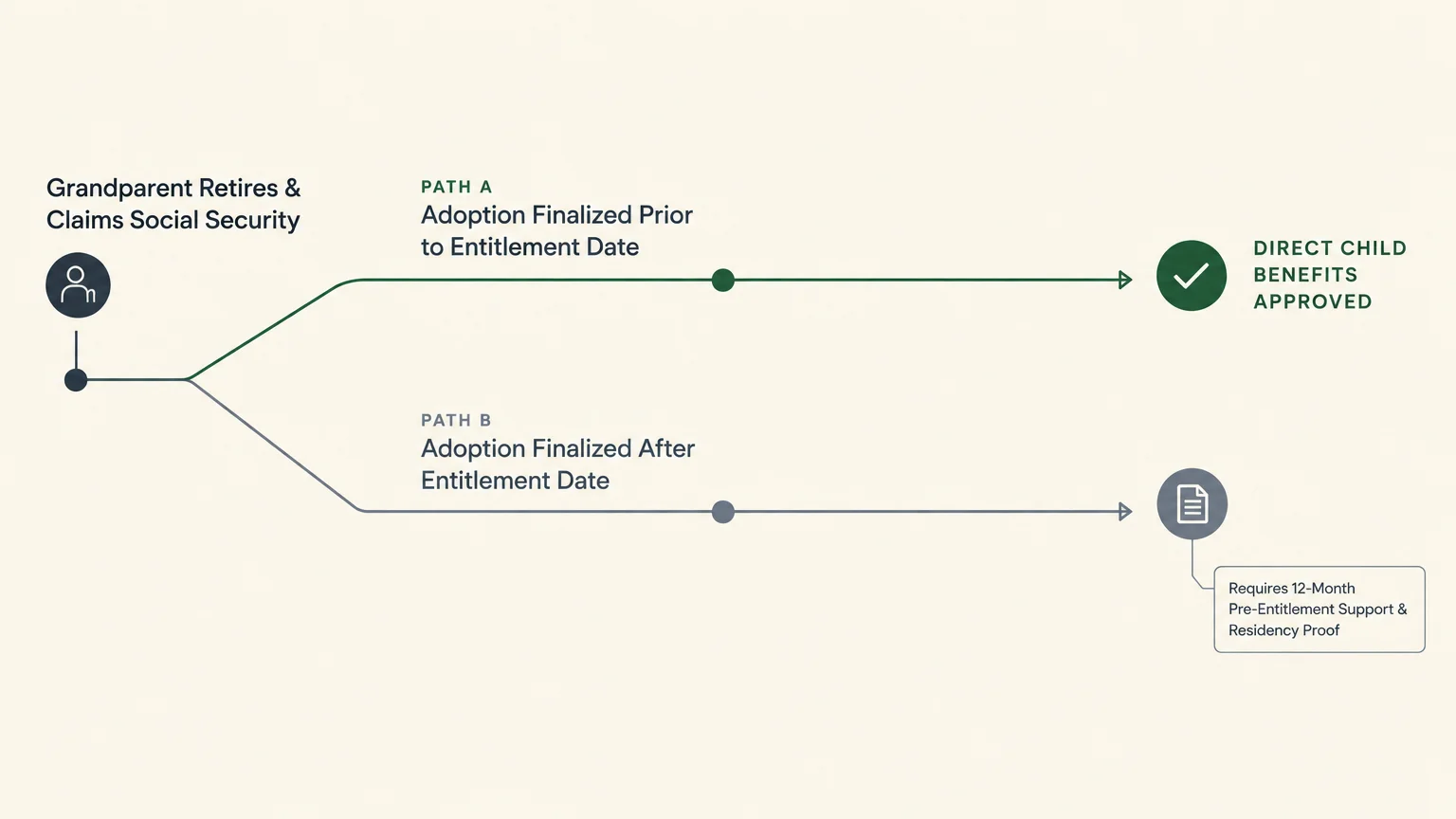
According to policy guidelines from the Social Security Administration (SSA), adopting a grandchild before you claim retirement benefits simplifies your application. In that case, the agency treats your grandchild like a natural child.
Complications emerge if you already collect retirement or disability checks before taking custody. If you are already entitled to benefits, you must legally adopt your grandchild before they can draw on your record.
Simple legal guardianship, informal custody, or temporary foster placement will not suffice once your benefit stream has started. The federal government enforces this rule strictly to prevent families from transferring dependency benefits after retirement.
The adoption process requires time, court appearances, and legal expenses. You should consult an experienced family law attorney to weigh the total legal costs against long-term auxiliary benefit payments.
Finalizing an adoption permanently terminates the biological parents’ rights. Make sure your household is emotionally and legally prepared for that permanent step before filing adoption paperwork.

Rule 3: You Must Provide at Least Half of the Child’s Support
Even when biological parents are deceased or disabled, you must prove substantial financial support. The government enforces a strict 50 percent financial dependency test on every non-adoptive grandchild claim.
The grandchild must have moved into your household before turning 18 years old. Additionally, they must have lived with you continuously for at least 12 months before you applied for benefits.
During that entire 12-month period, you must have supplied at least one-half of the child’s total living costs. Covered expenses include food, housing, clothing, medical care, education, and recreation.
If the child is an infant under 12 months old, a modified timeline applies. You must prove you provided at least half of their financial support continuously since birth.
Financial contributions from living biological parents can jeopardize this requirement. If an estranged parent sends sporadic child support that exceeds half of the child’s basic expenses, the claim will fail.
Keep clear financial logs showing household expenditures and child-specific costs. Detailed bank statements, grocery receipts, and utility bills provide the written evidence federal claims examiners demand.
Rule 4: Grandchildren Can Receive Up to 50 Percent of Your Benefit
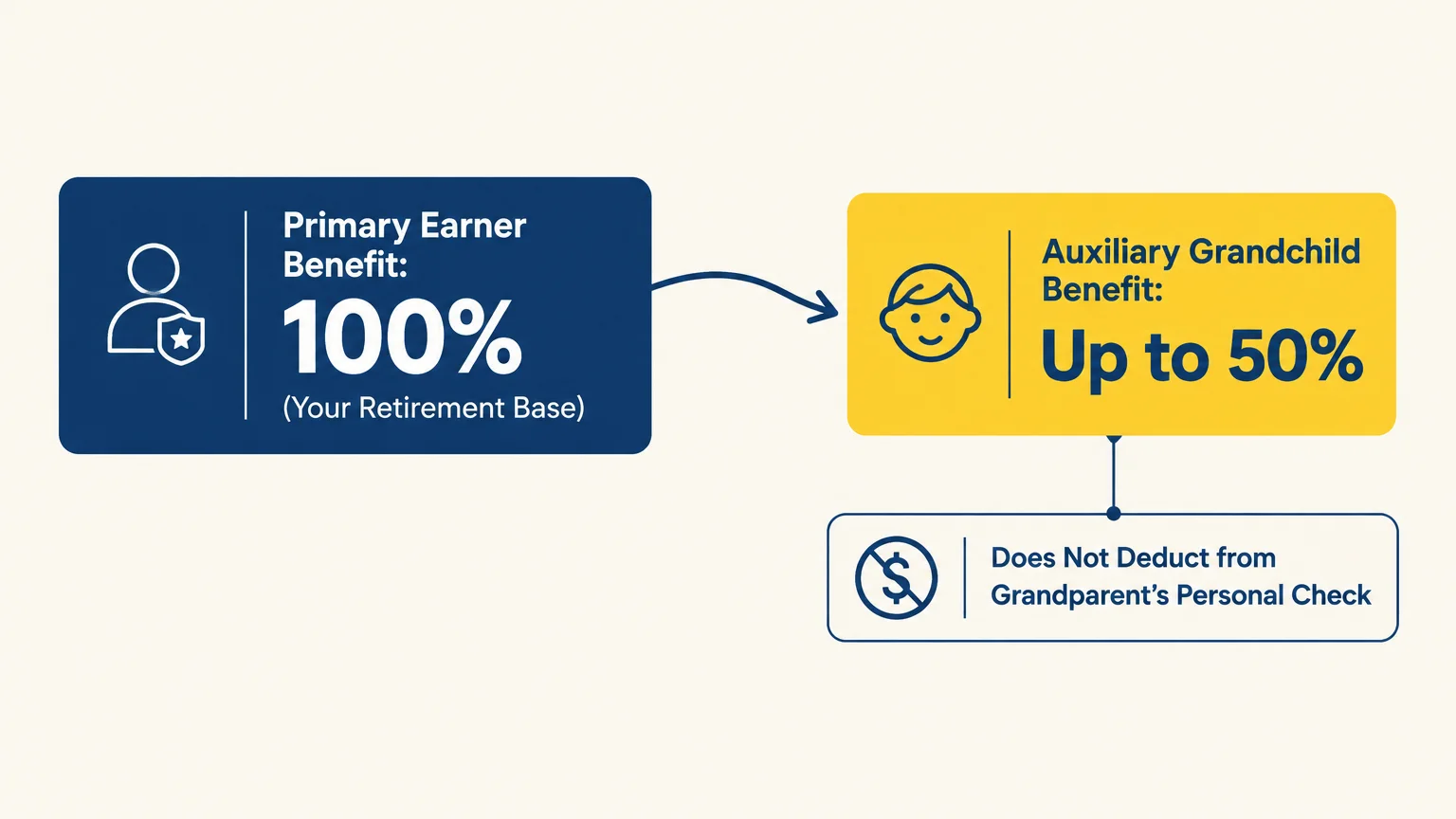
Many seniors worry that claiming Social Security for grandchildren will reduce their personal retirement payments. Fortunately, auxiliary child benefits never decrease your primary monthly check.
An eligible grandchild can receive up to 50 percent of your Primary Insurance Amount while you are living. Your Primary Insurance Amount represents the full monthly benefit you earned at your full retirement age.
If you pass away while raising your grandchild, their support increases significantly. Surviving eligible grandchildren can receive up to 75 percent of your basic monthly benefit amount as survivor benefits.
Cost-of-living adjustments expand these auxiliary payments over time. In January 2026, Social Security benefits received a 2.8 percent cost-of-living adjustment to help offset rising living expenses.
The agency announced that the 2027 cost-of-living adjustment will increase payments by 3.6 percent, adding roughly $75 per month to average retirement benefits. That automatic boost expands auxiliary checks proportionally, delivering higher support for children under your care.
The child receives their payment each month via direct deposit into a dedicated account. You manage these auxiliary funds on the child’s behalf as their designated representative payee.
Rule 5: The Family Maximum Caps Total Household Payments
Federal law caps the total amount of money a single family can collect on one worker’s earnings record. This statutory limit is called the Family Maximum Benefit.
For retirement and survivor claims, the family maximum generally ranges between 150 percent and 180 percent of your Primary Insurance Amount. The exact percentage depends on a complex formula linked to your wage history.
Your full monthly retirement check is always protected and paid first. The agency calculates the remaining dollars between your personal check and the family cap to distribute among qualifying dependents.
If you raise one grandchild, the family maximum rarely affects their payment. However, if you support multiple grandchildren or a qualifying spouse simultaneously, payments are reduced proportionally.
The table below demonstrates how the family maximum formula splits available benefits when raising multiple grandchildren on an assumed $2,000 monthly Primary Insurance Amount.
| Household Structure | Your Benefit Check | Total Dependent Pool Available | Payment Per Grandchild |
|---|---|---|---|
| 1 Grandchild (No Cap Hit) | $2,000 | $1,000 | $1,000 (Full 50%) |
| 2 Grandchildren ($3,500 Cap) | $2,000 | $1,500 | $750 each |
| 3 Grandchildren ($3,500 Cap) | $2,000 | $1,500 | $500 each |
| 4 Grandchildren ($3,500 Cap) | $2,000 | $1,500 | $375 each |
As the table demonstrates, each child’s check decreases as more dependents share the limited pool. Nevertheless, total household cash flow increases substantially to help support the growing family.
When an older grandchild reaches the age limit, the remaining children receive an automatic payment increase. The agency redivides the available dependent pool among the fewer remaining eligible dependents.

Rule 6: Child Benefits Stop at Age 18 With Key Exceptions
Auxiliary Social Security payments do not continue indefinitely throughout a young person’s life. Standard monthly benefits end automatically when your grandchild reaches age 18.
A vital exception exists if the child remains enrolled in secondary school full-time. In that scenario, benefits continue until high school graduation or two months after turning age 19, whichever occurs first.
To preserve benefits past age 18, you must submit formal paperwork to the agency before the child’s birthday. You and a school administrator must complete Form SSA-1372 to verify continuous full-time attendance.
Failure to complete this verification on time halts payments immediately. Submit school certification documents several months before your grandchild turns 18 to avoid disruption in your household cash flow.
A second major exception applies to grandchildren who live with permanent physical or cognitive disabilities. If a child developed a qualifying disability before turning 22, benefits can continue for life under the Disabled Adult Child program.
Disabled Adult Child payments provide lifelong income that shields vulnerable young adults from deep poverty. This ongoing protection gives grandparents peace of mind regarding their grandchild’s long-term care.
Rule 7: The Retirement Earnings Test Affects Working Grandparents
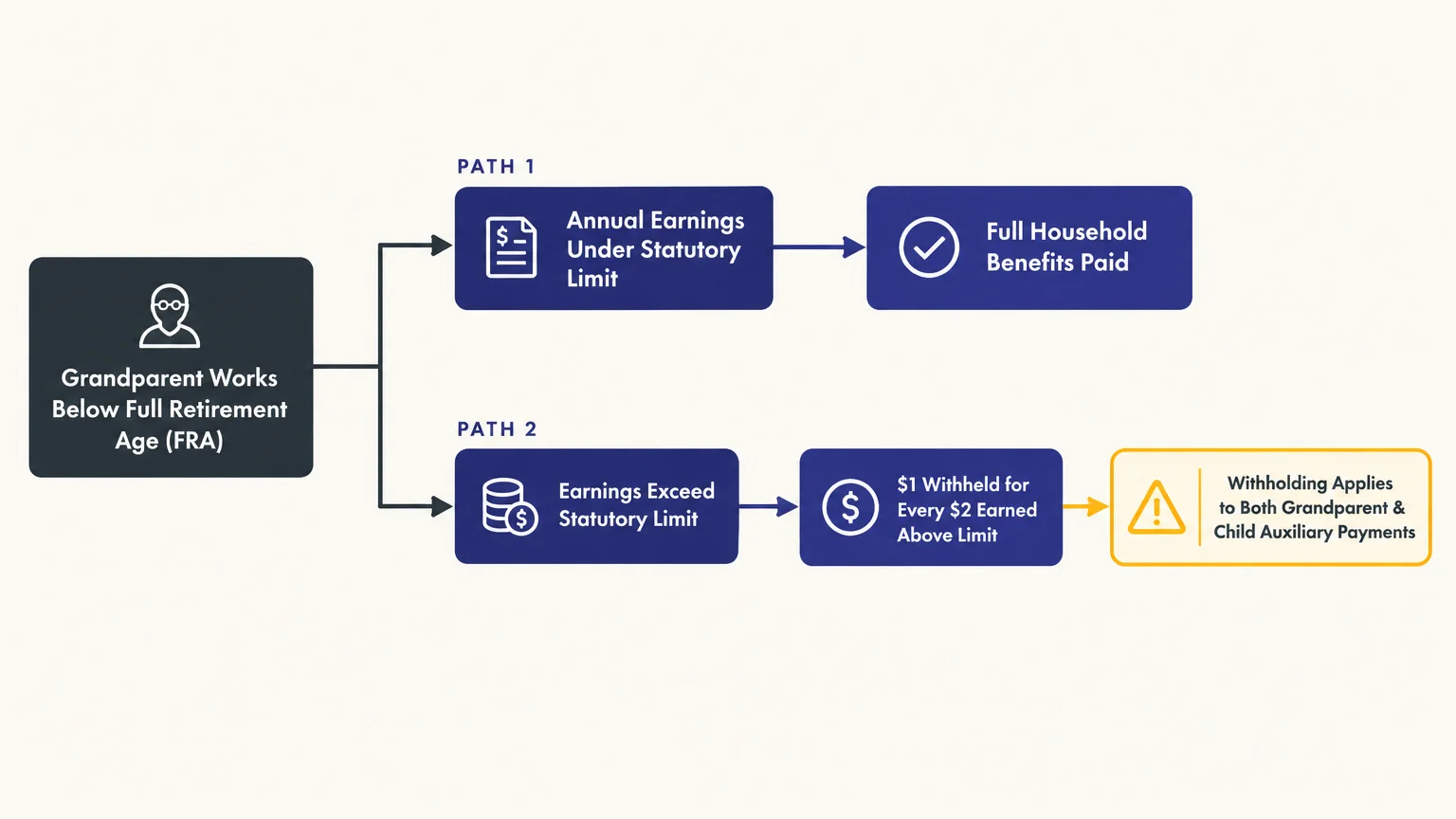
Many grandparents caregivers continue working part-time or full-time jobs to help make ends meet. However, working while claiming Social Security before your Full Retirement Age triggers the Retirement Earnings Test.
If you claim retirement benefits early and earn wages above federal thresholds, the agency temporarily withholds benefits. In 2026, the annual earnings limit is $24,480, which equals $2,040 per month.
For every $2 you earn above that threshold, the government withholds $1 in benefits. In 2027, this threshold increases to $25,560 per year, providing slightly more breathing room for working seniors.
A higher threshold applies during the calendar year you reach your Full Retirement Age. In 2026, the limit is $65,160 ($5,430 per month), rising to $67,920 per year in 2027, with $1 withheld for every $3 earned above the limit.
Crucially, benefit withholdings affect both your check and any auxiliary checks paid to your grandchildren. If your job earnings eliminate your retirement payment for several months, your grandchildren lose their auxiliary checks for those months too.
If your teenage grandchild works a part-time job, their individual earnings only affect their own payment. A working grandchild must exceed the annual earnings limit before the agency withholds their specific auxiliary check.

Rule 8: Disabled Grandchildren Can Qualify for SSI Without Asset Penalties
If your grandchild has a severe medical condition, Supplemental Security Income provides another vital financial safety net. Unlike standard Social Security auxiliary benefits, Supplemental Security Income depends on strict financial need.
When biological or adoptive parents care for a disabled child, parental income and assets are counted against the child’s eligibility. This administrative process is known as income deeming.
Crucially, federal regulations exempt non-adoptive grandparents from the income deeming rule. Your personal savings, retirement accounts, and home equity do not disqualify a disabled grandchild from Supplemental Security Income.
For 2026, the maximum federal Supplemental Security Income payment is $994 per month for an eligible individual. This payment rate increases by 3.6 percent on December 31, 2026, for the 2027 calendar year.
Program guidelines outlined by Benefits.gov confirm that receiving Supplemental Security Income also unlocks automatic Medicaid coverage in most states. Medicaid provides comprehensive healthcare, therapy services, and medical equipment for special needs children.
Weigh your options carefully before legally adopting a grandchild who relies on Supplemental Security Income. Formal adoption triggers parental deeming rules, which could inadvertently wipe out the child’s monthly Supplemental Security Income and Medicaid access.
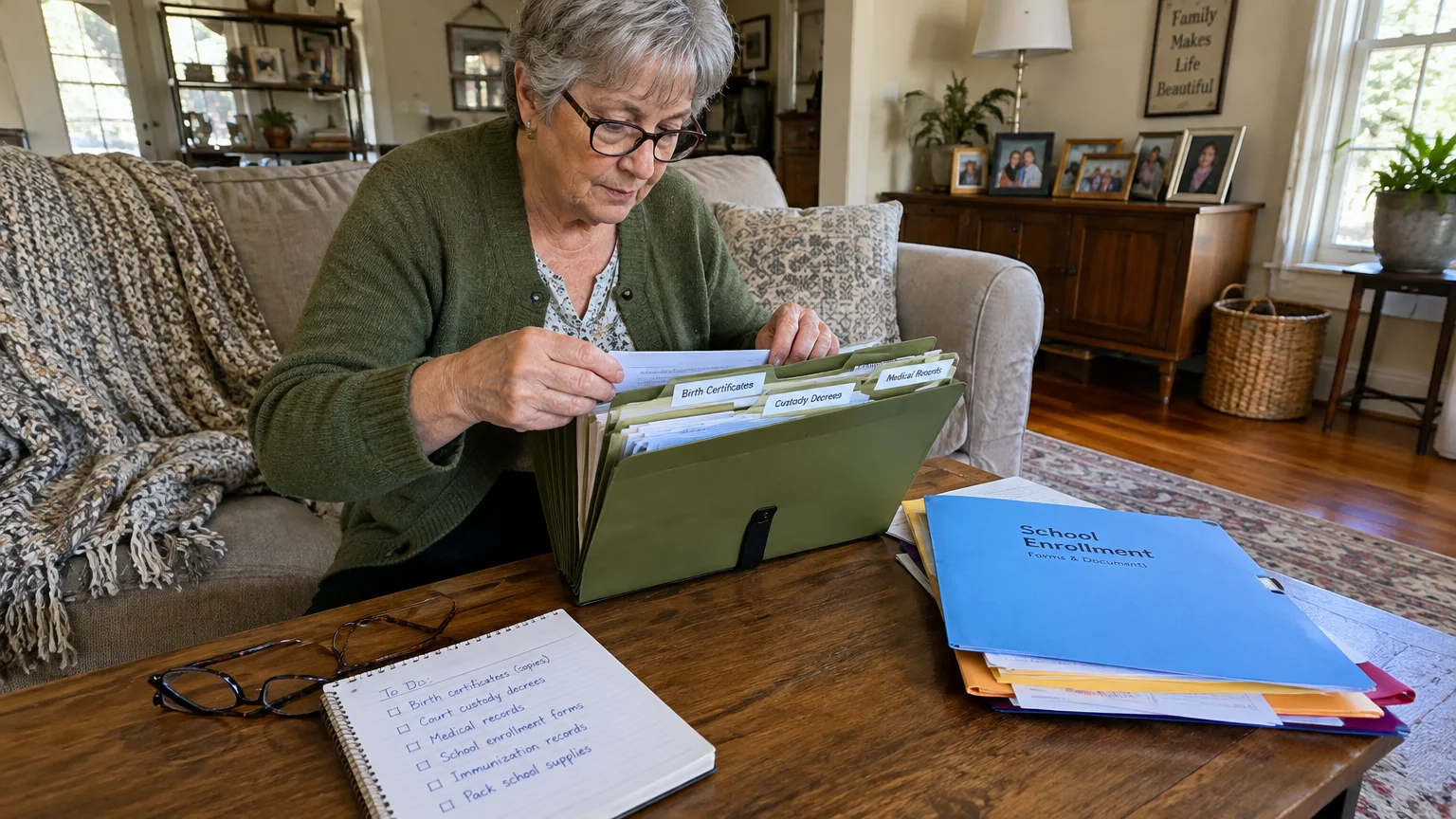
Costly Mistakes Grandparents Raising Grandchildren Must Avoid
Navigating the federal benefits bureaucracy requires diligence and attention to detail. Avoiding common administrative missteps ensures your household receives every dollar allowed by law.
- Waiting Too Long to Apply: Auxiliary child benefits rarely offer extensive retroactive payouts. Delaying your initial application forfeits monthly cash support that your household can never recover.
- Confusing Guardianship With Adoption: Holding legal custody does not qualify a grandchild for retirement-based auxiliary benefits if you were already retired when custody began.
- Commingling Caregiver Funds: Representative payees must keep child benefit funds in a dedicated account. Mixing these funds with your personal everyday checking balance violates federal program rules.
- Failing to Track Expenses: Keep organized receipts for school supplies, groceries, clothing, and medical care. The agency can audit your representative payee accounting records at any time.
- Hiding Parental Contact: If an estranged biological parent moves into your home or starts paying regular support, you must report it immediately. Hiding changes causes severe overpayment clawbacks.
Overpayments represent a major financial hazard for seniors living on modest budgets. If the government determines benefits were paid improperly, they will withhold your future retirement checks until the debt is cleared.
You can discover local support networks through the Administration for Community Living (ACL), which funds Kinship Navigator programs across the country. These local programs help you navigate paperwork, avoid costly errors, and find local community resources.

Step-by-Step Guide to Applying for Grandchild Benefits
Securing auxiliary benefits requires careful preparation and organized documentation. Follow this step-by-step checklist to streamline your application and prevent processing delays.
- Gather Primary Identification: Collect original birth certificates and official Social Security cards for yourself and every grandchild in your care.
- Secure Proof of Parental Status: Obtain certified death certificates if parents are deceased. If parents are disabled, collect their formal disability determinations and Social Security numbers.
- Compile Support Documentation: Gather 12 consecutive months of household bills, lease agreements, and child-related expense receipts to prove you supply at least half of their financial support.
- Schedule an SSA Appointment: Grandchild auxiliary claims cannot be completed entirely online. Call 1-800-772-1213 to schedule an interview at your local Social Security field office.
- Establish a Dedicated Bank Account: Open a separate checking or savings account titled with you as representative payee for the grandchild. Never combine benefit money with personal investments.
- Track Your Claim Status: Keep copies of all submitted documents and record the name of every claims representative you speak with during the process.
Preparing these records before your interview shortens the review window significantly. Claims examiners process files much faster when paperwork is organized and complete.
If an initial claim faces rejection, review the formal denial letter carefully with an advocate. You hold the legal right to file an administrative appeal within 60 days of receiving the determination.
Frequently Asked Questions
Can I collect Social Security for my grandchild if the parents are still living?
You can collect auxiliary benefits on your record only if the living parents are officially declared permanently disabled by the government. Otherwise, you must legally adopt the grandchild to establish eligibility for auxiliary benefits.
Does receiving benefits for my grandchild lower my own retirement check?
No, auxiliary child benefits never reduce your personal monthly retirement payment. Your Primary Insurance Amount is fully protected, and auxiliary payments are paid out of a separate family allowance pool.
How does the cost-of-living adjustment affect my grandchild’s check?
Auxiliary benefits increase automatically whenever a federal cost-of-living adjustment occurs. Beneficiaries received a 2.8 percent raise in 2026, followed by an announced 3.6 percent boost for 2027.
What happens if a biological parent moves into my home?
A biological parent returning to your household can disrupt the 50 percent financial dependency requirement. You must report this living arrangement change to the agency immediately to prevent improper payments and clawbacks.
Can a grandchild collect benefits if I receive Social Security Disability instead of retirement?
Yes, auxiliary child benefits apply to Social Security Disability Insurance records under the exact same qualifying rules. Your grandchild can receive up to 50 percent of your disability benefit amount subject to family caps.
For additional senior resources, visit
National Institutes of Health (NIH), Centers for Medicare & Medicaid Services (CMS), Social Security Administration (SSA), Consumer Financial Protection Bureau (CFPB) and Administration for Community Living (ACL).
Disclaimer: The information in this article is for educational purposes only and is not intended to be a substitute for professional financial, legal, or medical advice. Always consult with a qualified expert for advice tailored to your personal situation.









Leave a Reply