

Caring for an aging parent or spouse requires immense physical energy, emotional strength, and dedication. Fortunately, you do not have to shoulder the financial strain completely alone.
Over 63 million Americans support aging relatives, often sacrificing their personal careers. Multiple state and federal initiatives now offer direct financial compensation for your dedicated caregiving hours.
This comprehensive guide explores seven proven programs that pay family caregivers. Review eligibility rules, discover payout amounts, and learn how to get paid to care for your parent.
In this guide10 sections
- Understanding Caregiver Compensation
- 1. Medicaid Self-Directed and Structured Care Programs
- 2. VA Program of Comprehensive Assistance for Family Caregivers
- 3. VA Aid and Attendance Pension Benefit
- 4. State Paid Family and Medical Leave Programs
- 5. The Medicare GUIDE Model for Respite Support
- 6. Federal Child and Dependent Care Tax Credit
- 7. National Family Caregiver Support Program
- Common Caregiver Mistakes and Scams to Avoid
- Frequently Asked Questions
Understanding Caregiver Compensation
Family caregiving forms the backbone of long-term care in the United States. Unpaid family helpers provide an estimated $600 billion in annual care, often depleting their own savings.
Leaving a career or cutting work hours can jeopardize your personal retirement security. Formal compensation programs help stabilize your household finances while keeping your loved one safely at home.
Caregiver funding comes from several distinct public sources. These include federal veterans programs, state Medicaid waivers, public leave insurance, and special tax incentives.
Each program enforces specific eligibility criteria for both the caregiver and the care recipient. Most initiatives require formal medical assessments demonstrating that the senior requires daily physical assistance.
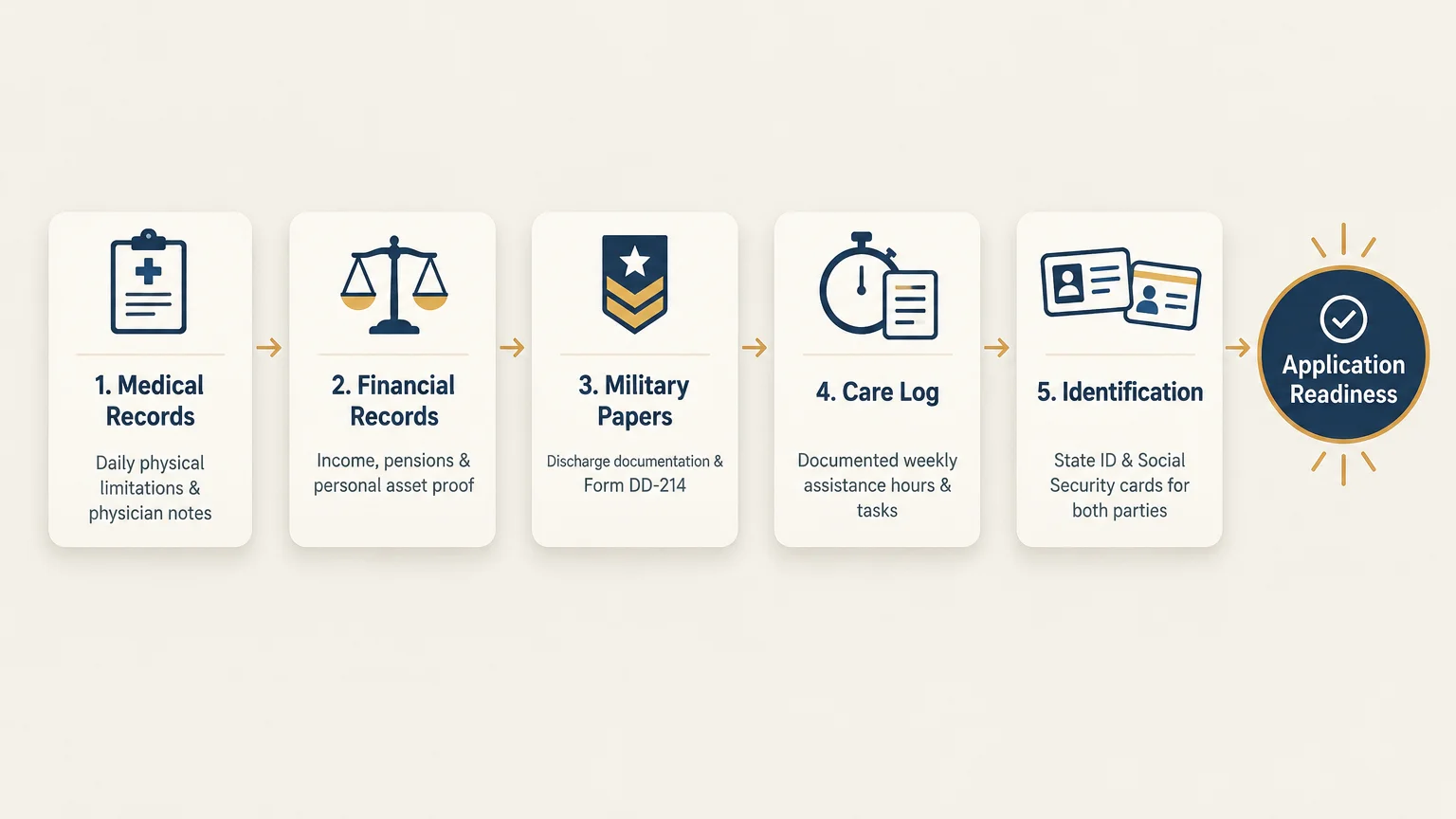
Before applying, you should determine the primary funding channels available to your family. The following checklist highlights the essential documentation you should gather immediately:
- The care recipient’s medical records detailing daily physical limitations
- Proof of household income, pensions, and personal assets
- Military service discharge papers, such as Form DD-214
- A documented log of regular weekly caregiving tasks and hours
- Current state identification and Social Security cards for both parties
Securing compensation requires patience, organized paperwork, and clear communication. Navigating these bureaucratic systems becomes much easier once you understand the seven primary compensation avenues.

01 Medicaid Self-Directed and Structured Care Programs
Medicaid represents the single largest source of direct caregiver compensation across the country. Through Home and Community-Based Services (HCBS) waivers, states allow seniors to direct their own personal care.
According to the Centers for Medicare & Medicaid Services (CMS), self-directed personal assistance services give individuals the authority to hire, train, and manage their daily support workers.
In a self-directed program, the state assesses the senior’s functional needs and assigns a monthly care budget. The senior then officially employs you as their personal care attendant.
A third-party fiscal intermediary handles payroll taxes, background checks, and direct deposit paychecks. This structure ensures transparent accounting and protects your eligibility for future Social Security credits.
Medicaid reimbursement rates vary widely by state. The national median Medicaid reimbursement rate to home care agencies for personal care is $30.52 per hour.
However, your actual take-home wage reflects regional entry-level care rates. The national median aide wage was $17.21 per hour as of May 2025.
State minimum wage standards also influence hourly compensation for participant-directed attendants. For instance, Colorado mandates a minimum base wage of $17.00 per hour statewide and $19.29 per hour in Denver.
Several states also offer Structured Family Caregiving (SFC) models. This option pays a steady, tax-free daily stipend to caregivers who share a primary residence with the senior.
Under SFC rules, state Medicaid programs pay an approved agency a daily rate to support the home. In Georgia, this daily agency rate is $110.39; in Indiana, daily rates range from $77.54 to $133.44.
Participating agencies must pass at least 60% of that daily rate directly to the live-in family caregiver. SFC programs also assign a professional health coach to guide you through caregiving challenges.
To qualify for either model, your parent must meet state-specific Medicaid financial asset thresholds. They must also require an institutional level of care, such as assistance with bathing, dressing, or eating.
02 VA Program of Comprehensive Assistance for Family Caregivers
The Department of Veterans Affairs offers exceptional support for those assisting disabled military veterans. The premier initiative is the Program of Comprehensive Assistance for Family Caregivers (PCAFC).
PCAFC provides a generous, tax-free monthly stipend deposited directly into your personal bank account. The program covers eligible veterans from all service eras, including World War II, Korea, Vietnam, and modern conflicts.
To qualify, the veteran must have a single or combined service-connected disability rating of 70% or higher. They must also require at least six continuous months of personal in-person care assistance.
The monthly stipend uses the federal General Schedule (GS) Grade 4, Step 1 pay scale. Calculations reflect the local cost of living where the veteran resides.
Payments fall into two distinct tiers based on clinical severity. Level 1 pays 62.5% of the local GS-4 rate, while Level 2 pays 100% of the rate for individuals requiring intensive assistance.
In standard base-pay regions across the country, Level 1 pays $1,896.30 per month. Level 2 pays $3,034.08 per month in those same standard localities.
In metropolitan areas with high living costs, payments increase noticeably. For example, monthly rates in San Francisco reach $2,371 for Level 1 and $3,793 for Level 2.
PCAFC delivers valuable supplemental benefits alongside direct cash stipends. Designated primary caregivers receive the following administrative supports:
- Comprehensive health insurance coverage through the Civilian Health and Medical Program of the Department of Veterans Affairs (CHAMPVA)
- At least 30 days of annual respite care to prevent caregiver burnout
- Professional mental health counseling and specialized caregiver skills training
- Reimbursement for approved travel expenses when accompanying the veteran to medical appointments
Federal regulations protect legacy participants through September 30, 2028, ensuring stability while evaluations continue. Applying requires submitting VA Form 10-10CG online or through your local VA medical center.
03 VA Aid and Attendance Pension Benefit
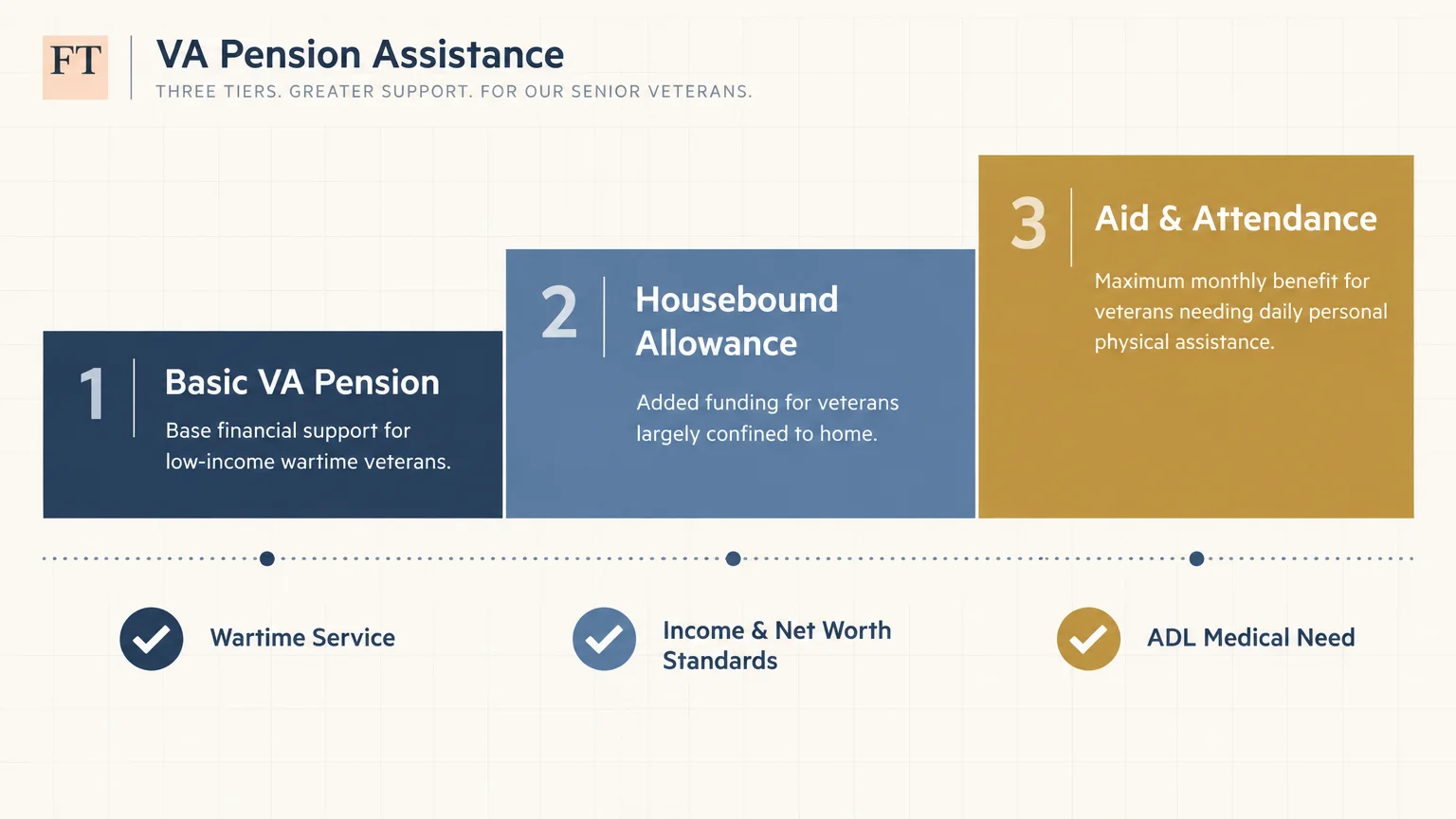
Another powerful resource for military families is the VA Aid and Attendance benefit. This monthly cash allowance supplements the standard wartime veterans pension or survivors pension.
Unlike PCAFC, the senior does not need a service-connected disability to receive this financial supplement. However, the veteran must have served at least 90 days of active duty with at least one day during an active wartime period.
The senior must also require daily physical assistance with activities of daily living. These qualifying tasks include bathing, personal hygiene, dressing, eating, or managing prosthetic devices.
The VA adds this benefit directly to the veteran or surviving spouse’s monthly pension check. The recipient can then use that tax-free cash to hire you as their personal care provider.
Aid and Attendance rules enforce strict limitations regarding caregiver identity. The senior can pay adult children, grandchildren, nieces, nephews, or friends, but they cannot pay their legal spouse.
The maximum monthly pension rates provide substantial purchasing power for in-home caregiving support. Current benefit limits establish the following maximum monthly payouts:
- Single veteran with no dependents: up to $2,424 per month
- Married veteran with one dependent: up to $2,874 per month
- Surviving spouse with no dependents: up to $1,558 per month
- Two married veterans who both qualify: up to $3,845 per month
The applicant must meet financial net worth limits established by federal regulations. For the period running from December 1, 2025, through November 30, 2026, the household net worth cap is $163,699.
This net worth calculation includes annual household income combined with financial assets like stocks and savings. However, the VA excludes the senior’s primary residence, personal vehicle, and everyday household goods.
You can evaluate potential eligibility through Benefits.gov, which connects families to official federal application channels. Processing times can take several months, but approved benefits are paid retroactively to the initial filing date.

04 State Paid Family and Medical Leave Programs
Taking extended time off work to manage a family care crisis frequently leads to lost wages. Fortunately, state-mandated Paid Family and Medical Leave (PFML) programs now provide temporary wage replacement.
Currently, 13 states plus Washington, D.C., operate active, mandatory paid family leave programs. These systems allow workers to take job-protected leave while caring for an aging relative with a serious health condition.
State coverage continues to expand nationwide. Delaware launched cash benefit payments on January 1, 2026, while Minnesota introduced payments in early 2026, and Maine begins disbursements between May and August 2026.
These newer rollouts join established programs in California, Colorado, Connecticut, Massachusetts, New Jersey, New York, Oregon, Rhode Island, and Washington, D.C. Hawaii provides temporary disability protections, while Maryland and Virginia plan implementations for 2027 and 2028.
Weekly benefit caps vary significantly depending on state wage replacement formulas. The maximum weekly payouts across several representative states include:
- Delaware: capped at $900 per week
- New Jersey: capped at $1,119 per week
- New York: capped at $1,228.53 per week
- Colorado: capped at $1,448.02 per week as of July 2026
- California: capped at $1,765 per week
State programs usually provide between 6 and 12 weeks of paid leave per year. You can often take this leave intermittently, allowing you to assist with weekly medical appointments.
To claim benefits, your employer must participate in the state insurance fund through small payroll deductions. The senior’s licensed physician must also complete medical documentation certifying their critical need for care.

05 The Medicare GUIDE Model for Respite Support
Many seniors incorrectly assume that traditional Medicare pays family members directly for providing routine home care. Traditional Medicare does not offer a direct paycheck to family caregivers.
However, Medicare recently introduced an innovative alternative to relieve exhausted caregivers. The Guiding an Improved Dementia Experience (GUIDE) model launched nationwide and operates through 2032.
This initiative specifically assists community-dwelling Medicare beneficiaries diagnosed with moderate to severe dementia. It aims to reduce nursing home placements by heavily supporting the primary unpaid caregiver.
The centerpiece of the GUIDE model is an annual funded respite care benefit. For Performance Year 2026, spanning July 1, 2026, to June 30, 2027, the respite care cap is $2,625 per patient.
This benefit does not send cash payments directly to your family bank account. Instead, it pays credentialed professional providers to take over your care duties temporarily at zero cost to you.
This coverage provides up to 76 hours of professional in-home respite, calculated at a base rate of $34.50 per hour. In-home services are delivered in flexible four-hour blocks to give you essential personal time.
Alternatively, the senior can attend an approved adult day health center, funded at a national base rate of $104 per day. This relief prevents physical exhaustion while allowing you to maintain personal medical care or employment.
To access the GUIDE model, the senior must enroll in traditional Original Medicare Parts A and B. You must then connect with an approved participating healthcare system offering GUIDE dementia care coordination.
06 Federal Child and Dependent Care Tax Credit
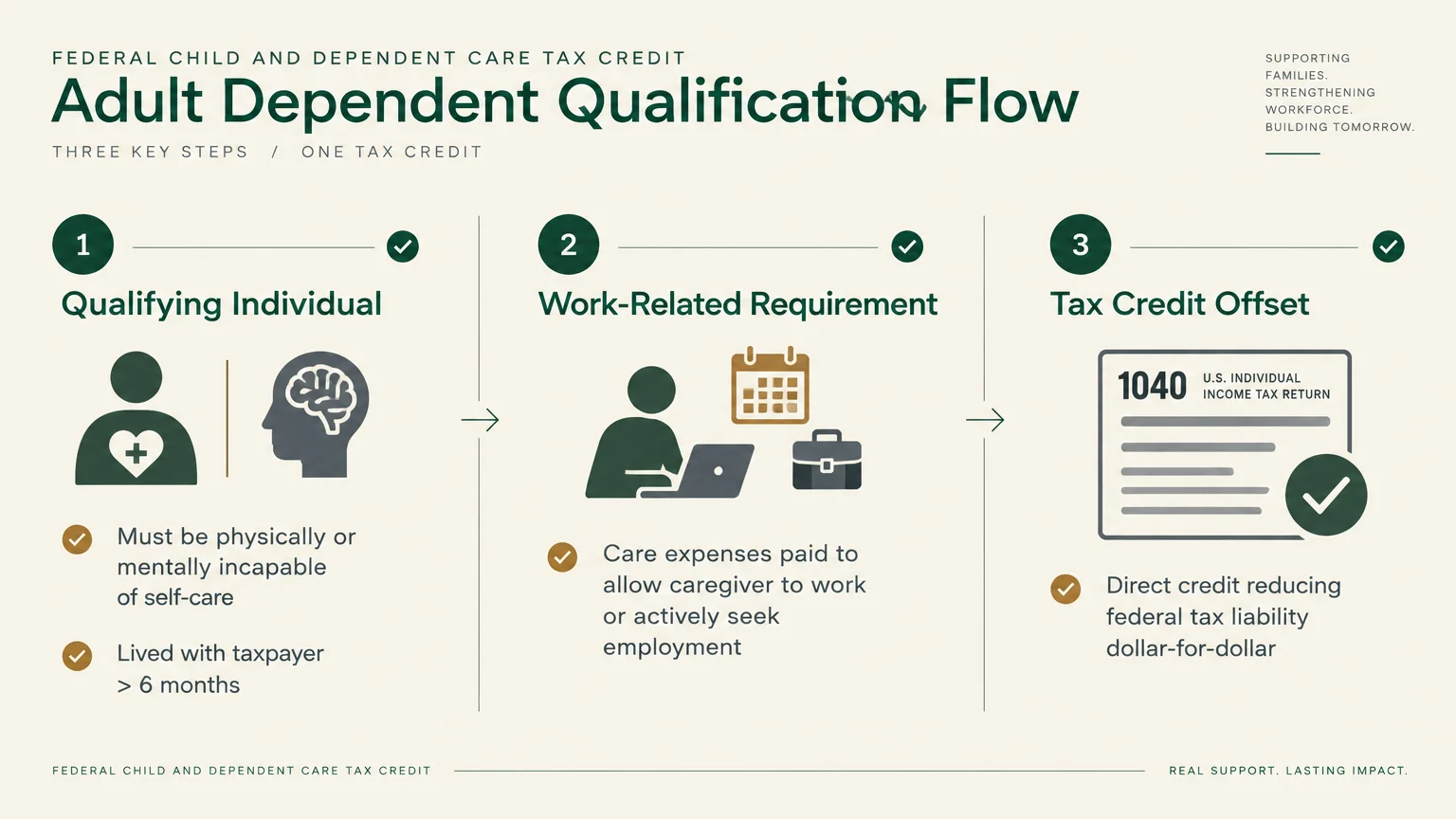
If you pay out of pocket for supplemental care while working, federal tax credits can restore significant capital. The Child and Dependent Care Tax Credit (CDCTC) applies directly to qualifying adult relatives.
Under legislative expansions enacted by federal reconciliation laws, the maximum credit rate increased from 35% to 50% of qualifying expenses. This adjustment provides substantial relief to low- and moderate-income working households.
To qualify, the care recipient must be physically or mentally incapable of self-care. They must have lived with you for more than half the tax year and qualify as your legal tax dependent.
Qualifying expenses include adult day care centers, in-home companion fees, and specialized supervision. You must incur these expenses specifically so you and your spouse can work or actively seek employment.
Federal law caps annual qualifying expenses at $3,000 for one dependent and $6,000 for two or more dependents. The credit percentage scales down gradually as household income exceeds federal phase-out levels.
Because the CDCTC remains a nonrefundable credit, it cannot exceed your total income tax liability. For eligible middle- and lower-income families, the practical maximum tax reduction is roughly $1,050 for one senior and $2,100 for two.
Keep detailed receipts, bank statements, and provider tax identification numbers throughout the year. You will file IRS Form 2441 alongside your standard federal Form 1040 during tax season.

07 National Family Caregiver Support Program
The Older Americans Act funds comprehensive community-based aid through the National Family Caregiver Support Program (NFCSP). Administered through regional Area Agencies on Aging (AAAs), the program commands over $200 million in federal funding.
According to the Administration for Community Living (ACL), these community-based programs empower older adults to remain independent in their homes and communities.
The program supports informal caregivers assisting individuals aged 60 and older. It also assists caregivers of any age caring for individuals diagnosed with Alzheimer’s disease or related neurological disorders.
While the NFCSP rarely provides ongoing weekly payroll, many regional agencies offer direct financial vouchers. Families can use these consumer-directed vouchers to purchase respite services or hire trusted neighbors for care relief.
Agencies also use these funds to purchase critical supplemental items that alleviate out-of-pocket financial strain. Common supplemental benefits provided through regional Area Agencies on Aging include:
- Medical supplies, including incontinence products, nutritional supplements, and personal care kits
- Durable home modifications, such as grab bars, wheelchair ramps, and transfer benches
- Emergency response systems and wearable medical alert units
- Caregiver support group sessions and evidence-based stress-reduction training
You can locate your regional Area Agency on Aging by using the Eldercare Locator directory. Local staff will evaluate your needs and match you with available municipal grants and respite stipends.
The table below summarizes the key financial parameters, compensation types, and eligibility criteria across these leading caregiving options:
| Program Name | Compensation Structure | Estimated Payment Range | Key Eligibility Hurdle |
|---|---|---|---|
| Medicaid Self-Directed Care | Hourly Attendant Wage | $17.00 – $30.52 / hour | Strict Medicaid asset limits |
| VA PCAFC | Tax-Free Monthly Stipend | $1,896.30 – $3,793.00 / month | 70%+ service-connected disability |
| VA Aid and Attendance | Monthly Pension Addition | $1,558.00 – $3,845.00 / month | Wartime service; net worth under $163,699 |
| State Paid Leave (PFML) | Temporary Wage Replacement | $900.00 – $1,765.00 / week | Participating state; temporary duration |
| Medicare GUIDE Model | Subsidized Respite Services | Up to $2,625 / year cap | Original Medicare with dementia diagnosis |
| Federal Tax Credit (CDCTC) | Nonrefundable Tax Reduction | $1,050 – $2,100 / year | Caregiver must work; senior is dependent |
| NFCSP Community Grants | Service Vouchers and Relief | Varies by regional agency | Care recipient aged 60+ or has dementia |

Common Caregiver Mistakes and Scams to Avoid
Securing caregiving pay requires careful legal and financial coordination. Simple filing errors can accidentally disqualify your parent from vital safety-net benefits.
The most common mistake involves paying a family member without a formal Personal Care Agreement. If your parent pays you informally from their savings, Medicaid can interpret those checks as uncompensated gifts.
Medicaid examines all financial transfers during a strict five-year look-back window. Informal cash payments can trigger substantial penalty periods, leaving your parent ineligible for nursing home coverage.
To avoid this penalty, execute a signed personal care contract before exchanging any money. The agreement should clearly detail specific duties, scheduled hours, and a reasonable, market-rate hourly wage.
Tax classification errors represent another frequent hazard for informal caregivers. Unless payments qualify for IRS Notice 2014-7 foster care difficulty-of-care exclusions, caregiver pay constitutes taxable earned income.
Failing to report caregiving earnings can trigger harsh penalties from the Internal Revenue Service. Always consult a certified public accountant or elder law attorney to establish appropriate tax withholdings.
You must also stay alert to predatory pension poaching operations targeting veterans. Unscrupulous financial advisers frequently promise instant approvals for VA Aid and Attendance in exchange for hefty upfront fees.
These dishonest planners frequently move the senior’s assets into aggressive annuities or irrevocable trusts, damaging their Medicaid eligibility. Accredited Veterans Service Officers (VSOs) file VA paperwork completely free of charge.
Never transfer family home deeds or investment portfolios without independent legal counsel. Legitimate government programs will never demand upfront processing fees or immediate cryptocurrency deposits to unlock benefits.
Frequently Asked Questions
Can I get paid to care for my parent if I work full-time?
Yes, you can receive pay through several programs while working, provided caregiving hours do not conflict with your job. However, programs like State Paid Family Leave require you to take formal leave from active employment.
Does traditional Medicare pay family members directly for caregiving?
No, traditional Medicare does not pay salaries or stipends directly to family caregivers. It only covers medical interventions, physical therapy, short-term skilled nursing care, and respite services through programs like the GUIDE model.
Is money received as a family caregiver considered taxable income?
In most instances, caregiver pay represents taxable wages subject to federal and state income taxes. However, Medicaid Home and Community-Based Services payments for live-in caregivers are often tax-exempt under IRS Notice 2014-7.
Can a spouse get paid to provide care through Medicaid?
Spousal rules vary substantially by state and specific waiver guidelines. Many states prohibit spouses from receiving Medicaid hourly wages, while other states permit spousal pay under special self-directed emergency declarations or structured caregiving programs.
How long does the application process usually take for these programs?
Approval timelines range from several weeks to many months depending on the program. State paid leave applications process relatively quickly, while Medicaid waivers and VA pension adjustments frequently take four to six months.
For additional senior resources, visit
AARP, Alzheimer’s Association, American Heart Association, Benefits.gov and National Institute on Aging (NIA).
Disclaimer: The information in this article is for educational purposes only and is not intended to be a substitute for professional financial, legal, or medical advice. Always consult with a qualified expert for advice tailored to your personal situation.