

Your retirement savings strategy depends heavily on laws established in Washington. The upcoming 120th Congress will tackle pressing challenges affecting your 401(k), individual retirement accounts, and monthly income.
Lawmakers are actively preparing a bipartisan legislative package known across Capitol Hill as SECURE 3.0. These proposals aim to protect your wealth against inflation while fixing long-standing gaps for family caregivers and working seniors.
Knowing which policies lawmakers are considering allows you to adjust your financial plans early. Discover nine major retirement reforms that could reshape your nest egg starting in 2027.
The Shifting Landscape of Retirement Policy
The 120th U.S. Congress convenes in January 2027 with retirement security at the top of its domestic agenda. Any unpassed bills from the 119th Congress expire at the end of 2026 and require reintroduction.
Capitol Hill policy analysts anticipate these reintroduced measures will merge into a major bipartisan package called SECURE 3.0. This bill will build directly upon earlier reforms enacted in 2019 and 2022.
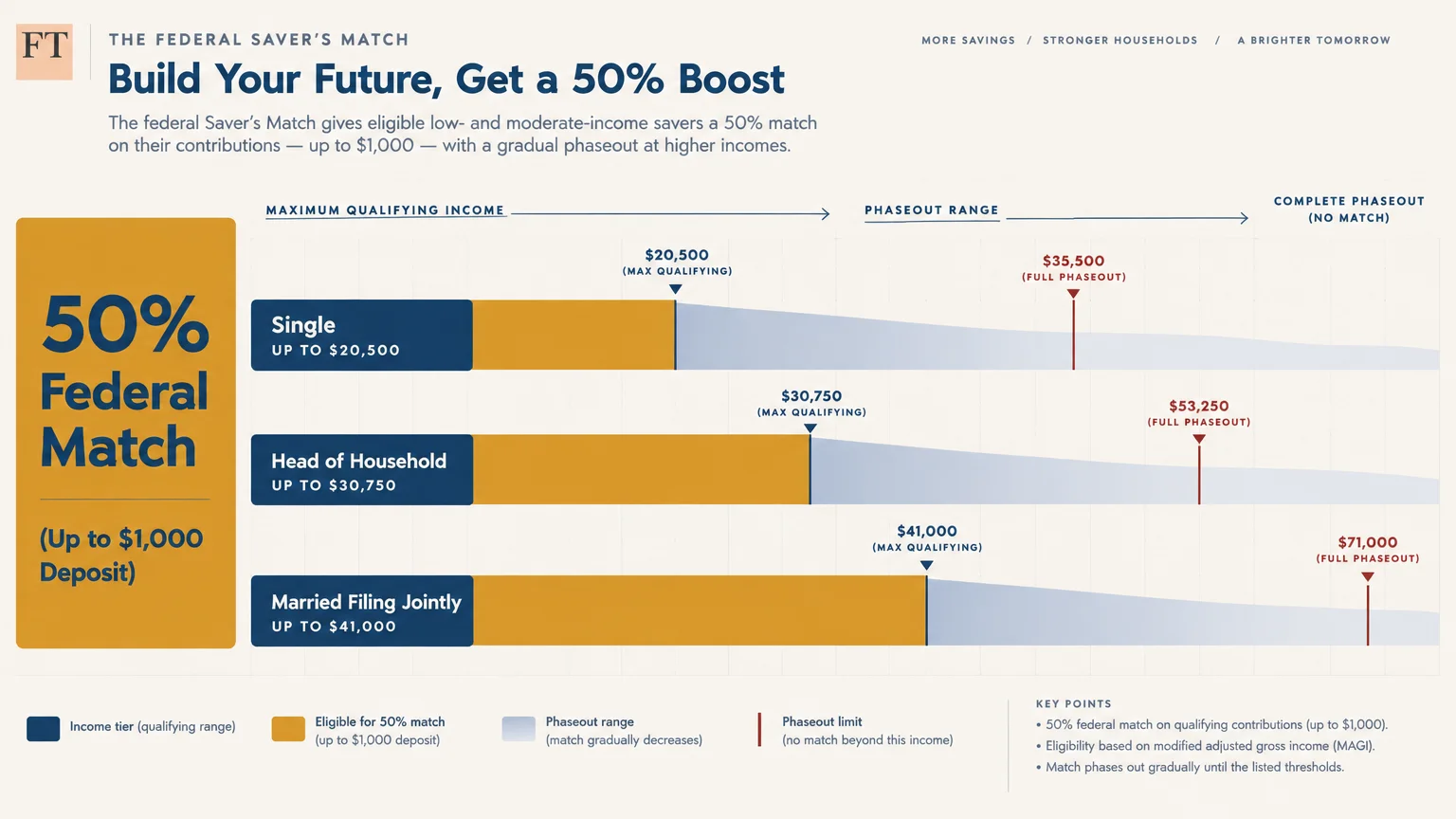
A central milestone arriving in 2027 is the federal Saver’s Match rollout established under SECURE 2.0. This program replaces the older, non-refundable Saver’s Credit with a direct federal matching deposit into retirement accounts.
Eligible workers will receive a 50% federal match up to $1,000 deposited straight into their 401(k) or IRA. Full matches apply to joint filers earning up to $41,000, heads of household making up to $30,750, and single taxpayers earning up to $20,500.
These benefits phase out completely at $71,000 for married couples, $53,250 for heads of household, and $35,500 for single filers. Expanding this match to include more middle-income households forms the foundation for upcoming retirement policy 2027 debates.
Meanwhile, the Internal Revenue Service gave employers and account holders breathing room to adopt prior legislative changes. Private single-employer retirement plans must formally adopt discretionary SECURE 2.0 amendments by December 31, 2026.
However, the IRS extended the deadline to amend IRA governing documents until December 31, 2027. Mandatory 401(k) plan amendments—such as required Roth catch-up contributions for high earners earning over $145,000—now have until December 31, 2029.

1. Allowing Caregivers to Fund Roth IRAs
Traditional retirement rules require you to earn taxable compensation to contribute to an IRA. This earned-income requirement leaves millions of unpaid family caregivers completely unable to build tax-free personal retirement savings.
To eliminate this barrier, lawmakers introduced the Improving Retirement Security for Family Caregivers Act (S. 4292 / H.R. 8274). The bipartisan proposal was championed by Senators Susan Collins and Mark Warner.
This bill creates a critical exception to standard IRA rule changes by waiving the earned-income rule for qualified caregivers. It allows you to fund a Roth IRA up to annual contribution limits even with zero wages.
To qualify under the proposed guidelines, you must provide at least 500 hours of unpaid care during the calendar year. Additionally, your paid employment must not exceed 500 hours over that same twelve-month timeframe.
According to advocacy research from AARP, unpaid caregivers frequently compromise their own long-term financial security to care for aging parents or disabled spouses. This legislation ensures your dedicated caregiving work no longer prevents you from securing tax-free growth.
If enacted by the next Congress, you could use household savings, spousal support, or family contributions to build an independent nest egg. This reform provides much-needed parity for individuals sacrificing professional careers for family needs.

2. Expanding Catch-Up Contributions for Caregivers
Leaving the workforce to provide full-time family care often leaves deep gaps in your retirement savings. Returning to work later in life makes catching up mathematically difficult under current standard annual limits.
Lawmakers introduced the Catching Up Family Caregivers Act (S. 4291 / H.R. 8273) to address this savings deficit. The bill offers powerful relief for caregivers re-entering the paid labor market.
Under current law, the enhanced “super catch-up” contribution rate is strictly limited to workers aged 60 to 63. That super catch-up limit stood at $11,250 in 2025 for workplace plans.
The proposed legislation opens this higher catch-up tier to returning family caregivers of any age. You could utilize these elevated contribution thresholds for up to five additional years after returning to work.
This provision allows you to shelter significantly more salary inside a 401(k), 403(b), or IRA. By accelerating contributions, you can rapidly replace the compound growth missed during your years outside the workforce.
For older workers planning a retirement timeline, this change could shave years off necessary employment. It offers a realistic path to rebuilding financial independence before you officially retire.
3. Awarding Social Security Credits for Unpaid Care
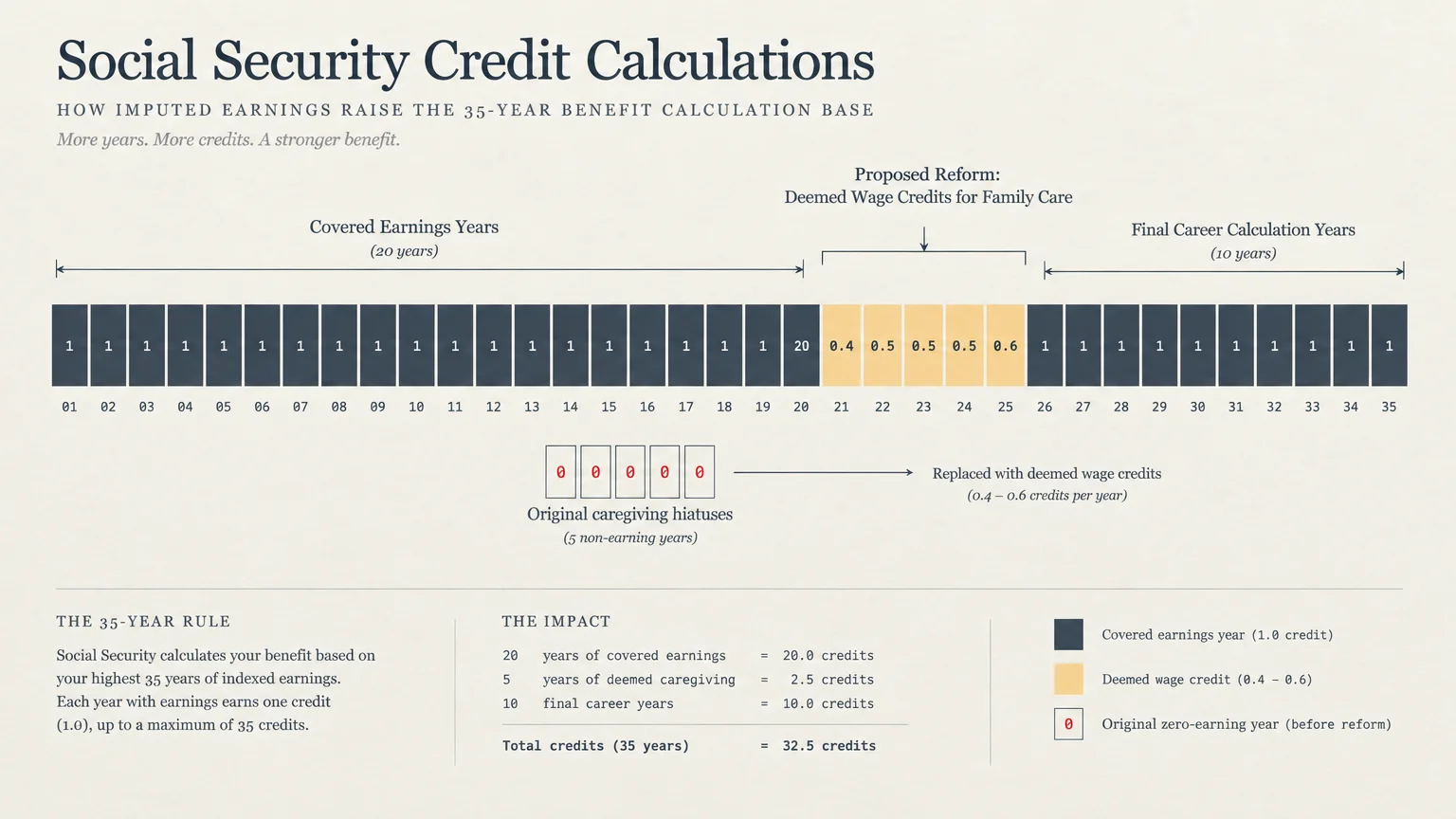
Social Security calculates your monthly retirement benefit based on your highest 35 years of wage earnings. Years spent providing unpaid care register as absolute zeros, permanently dragging down your eventual benefit check.
The Social Security Caregiver Credit Act (including companion bill H.R. 8490) seeks to eliminate this structural penalty. The legislation establishes deemed wage credits inside your official earnings record.
To qualify, you must provide at least 80 hours of uncompensated care per month to a dependent relative. The system then credits your Social Security record with imputed earnings reflecting average national wages.
This modification protects vulnerable caregivers from entering retirement with drastically reduced monthly checks. It treats long-term domestic caregiving as valuable labor that strengthens the social fabric of the country.
According to the Alzheimer’s Association, nearly 12 million Americans provide unpaid dementia care alone, delivering services valued at $413 billion in 2025. These caregivers bear an enormous financial burden that often lasts for decades.
Passing caregiver credit legislation ensures that supporting an ailing loved one does not force you into poverty during your own golden years. The next Congress faces strong public pressure to include this measure in upcoming retirement savings legislation.

4. Mandating Automatic Workplace Retirement Accounts
Millions of American workers still lack access to an employer-sponsored retirement savings plan. Small businesses frequently avoid offering plans due to administrative complexity and burdensome overhead costs.
To bridge this coverage gap, Representative Richard Neal reintroduced the Automatic IRA Act. This bill targets nationwide implementation for plan years beginning after 2027.
The proposal mandates that employers with more than 10 employees establish an automatic payroll deduction IRA. Companies must be in business for at least two years to fall under this requirement.
Eligible employees would automatically enroll at a default contribution rate of 6% of their pay. The plan then escalates contributions by 1% each year until reaching a steady 10% rate.
Employees retain complete freedom to adjust their contribution amounts or opt out entirely at any time. Small business owners with up to 100 workers would receive a $500 annual tax credit for three years.
This initiative leverages behavioral economics to help millions build consistent savings habits without demanding complex administrative work from small business employers. It ensures seamless workplace retirement access regardless of company size.

5. Creating a National Retirement Plan for All
Roughly 50 to 60 million American workers currently have no access to any workplace retirement vehicle. Gig economy workers, independent contractors, and part-time laborers face the steepest hurdles to building wealth.
The Retirement Savings for Americans Act (S. 1526) offers an ambitious solution modeled after the federal Thrift Savings Plan (TSP). Senators John Hickenlooper and Thom Tillis introduced this sweeping proposal to establish a portable national retirement system.
Because Senator Tillis announced his retirement at the end of 2026, the 120th Congress will feature a new Republican co-lead. Despite leadership transitions, the bill retains strong bipartisan momentum heading into 2027.
The proposed framework automatically enrolls non-covered full-time, part-time, and gig workers into a low-cost, government-administered retirement account at a 3% contribution rate. Savers can change their contributions or choose to opt out.
To incentivize lower- and middle-income workers, the government provides an automatic 1% federal contribution directly into the account. Furthermore, qualifying savers receive up to a 4% federal match through a refundable tax credit.
Because the account remains tied to you rather than an employer, you keep the plan across different jobs and career changes. This universal portability prevents forgotten accounts and eliminates costly rollover hurdles.
6. Lowering 403(b) Investment Fees for Charities and Schools
Public school teachers, hospital workers, and non-profit employees rely heavily on 403(b) retirement plans. Historically, however, these savers have faced higher administrative expenses and more limited investment choices than private-sector corporate workers.
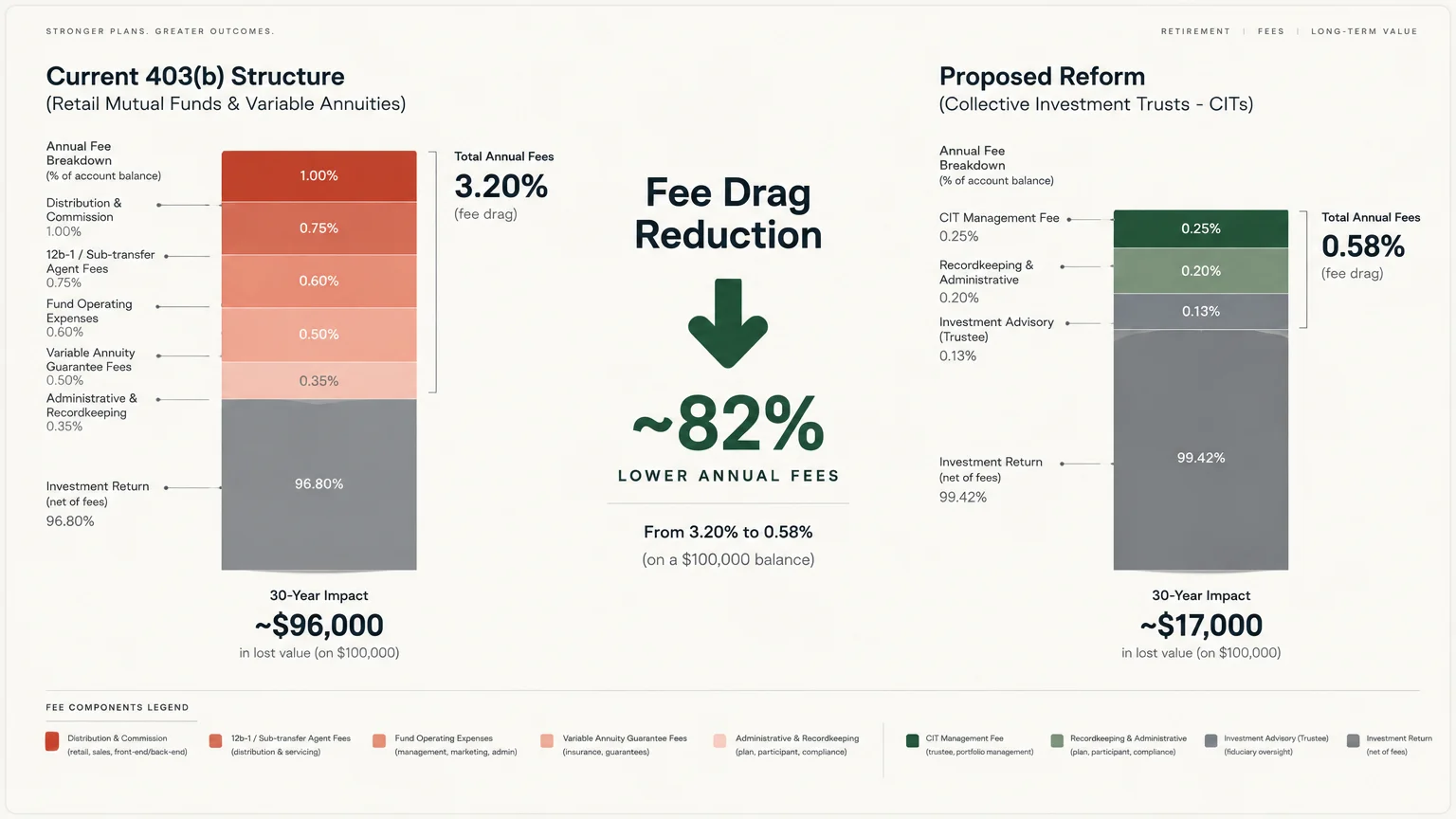
Corporate 401(k) plans frequently offer Collective Investment Trusts (CITs), which operate with significantly lower expense ratios than standard retail mutual funds. Lower fees allow more of your investment returns to compound over decades.
Although SECURE 2.0 updated the tax code to permit CITs within 403(b) plans, it inadvertently omitted companion updates to federal securities law. As a result, financial institutions cannot legally offer these cost-effective trusts to non-profit retirement savers.
Lawmakers introduced the Retirement Fairness for Charities and Educational Institutions Act (H.R. 1013 / S. 424) to resolve this technical statutory glitch. The measure passed the House as part of the broader INVEST Act (H.R. 3383).
The next Congress is expected to finalize this bipartisan fix once and for all. Enacting the legislation will immediately benefit approximately 14.5 million teachers, nurses, and charity workers across the country.
Allowing 403(b) plans to access low-cost CITs could save educators and non-profit professionals thousands of dollars in cumulative lifetime fees. That savings directly expands your monthly purchasing power throughout retirement.

7. Expanding Lifetime Income and Annuities in 401(k)s
Outliving personal savings represents one of the greatest fears facing modern retirees. While traditional defined-benefit pensions guaranteed monthly checks for life, modern 401(k) accounts place all longevity risks directly onto your shoulders.
As of recent industry surveys, fewer than 10% of plan sponsors provide in-plan guaranteed lifetime income or annuity options. Employers cite fiduciary liability concerns and complex portability rules as major deterrents.
Lawmakers and industry organizations are aggressively pushing the Lifetime Income for Employees (LIFE) Act to solve this dilemma. This legislation forms a cornerstone of anticipated SECURE 3.0 discussions.
The bill would allow employers to include annuity products as Qualified Default Investment Alternatives (QDIAs) inside 401(k) investment menus. A portion of your default retirement contributions could automatically purchase future guaranteed income.
Proponents also seek mandates requiring workplace retirement plans to offer at least one lifetime income distribution option alongside lump-sum withdrawals. This gives you a clear mechanism to convert account balances into predictable monthly checks.
Guaranteed lifetime income products help retirees construct a personal pension floor alongside Social Security. Congress retirement savings debates will focus heavily on balancing these guarantees against contract fees and surrender penalties.

8. Overhauling IRA Advisory and Fiduciary Rules
Managing rollovers and distributions requires high-stakes financial decisions that affect your tax liability and nest egg longevity. The standards governing professional financial advice remain a fiercely contested regulatory battleground.
On July 30, 2026, Senator John Barrasso and Representative Claudia Tenney introduced the SMART Savings Act. This bill seeks to modernize IRA administration while blocking restrictive Department of Labor fiduciary mandates.
Supporters argue that overly strict fiduciary rules raise compliance costs and prevent lower-balance savers from accessing professional guidance. The SMART Savings Act emphasizes expanded disclosure over rigid administrative prohibitions.
Conversely, House lawmakers led by Representative Bobby Scott introduced the Workers Retirement Savings Protection Act of 2026 on October 1, 2026. This legislation aims to cement strict ERISA fiduciary duties into statutory law for SECURE 3.0.
Under this protective model, anyone giving rollover or investment advice must act solely in your best financial interest. Advisers would be legally barred from prioritizing commissions, hidden revenue sharing, or proprietary high-fee investment products.
As highlighted by the Consumer Financial Protection Bureau (CFPB), confusing fee structures and conflicted advice cost retirement savers billions annually. The 120th Congress will determine whether your IRA advisory relationships face heightened federal oversight or market-based disclosure rules.
9. Addressing the 2032 Social Security Solvency Cliff
Social Security forms the bedrock of retirement income for the vast majority of American seniors. However, long-term funding imbalances require immediate legislative intervention from Capitol Hill.
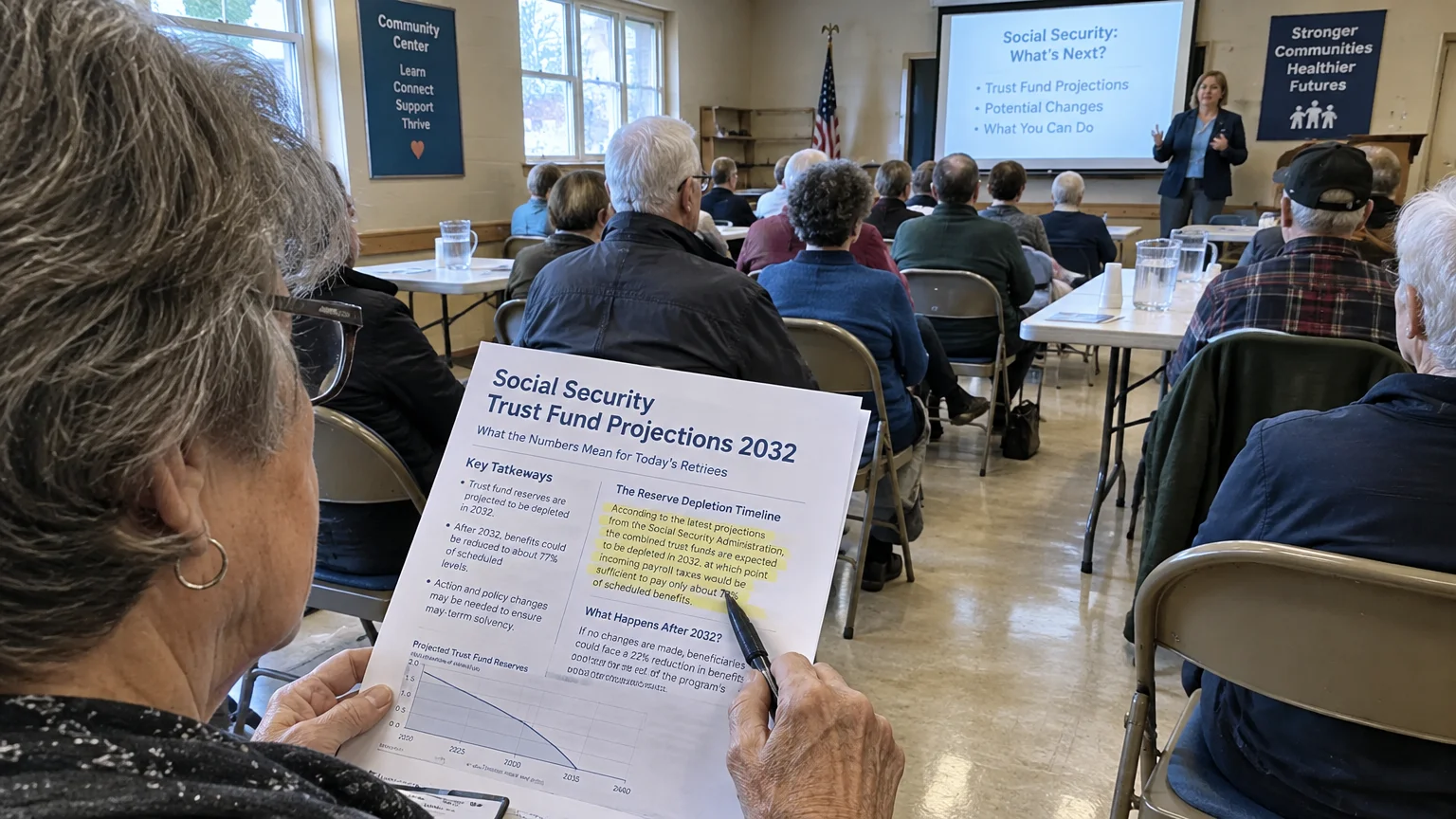
According to the 2026 Social Security Trustees Report, the Old-Age and Survivors Insurance (OASI) Trust Fund faces reserve depletion by 2032. Depletion does not mean bankruptcy, but it poses an immediate financial threat.
If Congress fails to act before 2032, incoming payroll taxes will cover only about 78% of scheduled benefits. This shortfall would trigger an automatic, across-the-board 22% benefit cut for all current and future retirees.
Data published by the Social Security Administration (SSA) demonstrates that an automatic 22% reduction would cost an average dual-earner married couple roughly $10,560 per year. For seniors on tight fixed incomes, such a reduction would prove catastrophic.
Congress began taking preliminary steps in October 2026 by passing the bipartisan Claiming Age Clarity Act. This law replaced confusing claiming jargon with descriptive terms: “Minimum Benefit Age” (62), “Standard Benefit Age” (67), and “Maximum Monthly Benefit Age” (70).
To preserve long-term solvency, the 120th Congress will debate substantive restructuring proposals. Lawmakers introduced H.R. 9187 to establish a 13-member bipartisan fiscal commission charged with crafting fast-track solvency solutions.
Simultaneously, Representative John Larson introduced the Social Security 2100 Act (H.R. 9519) on July 29, 2026. This bill proposes applying payroll taxes to earnings above $400,000 while enhancing monthly benefits and improving annual cost-of-living adjustments.
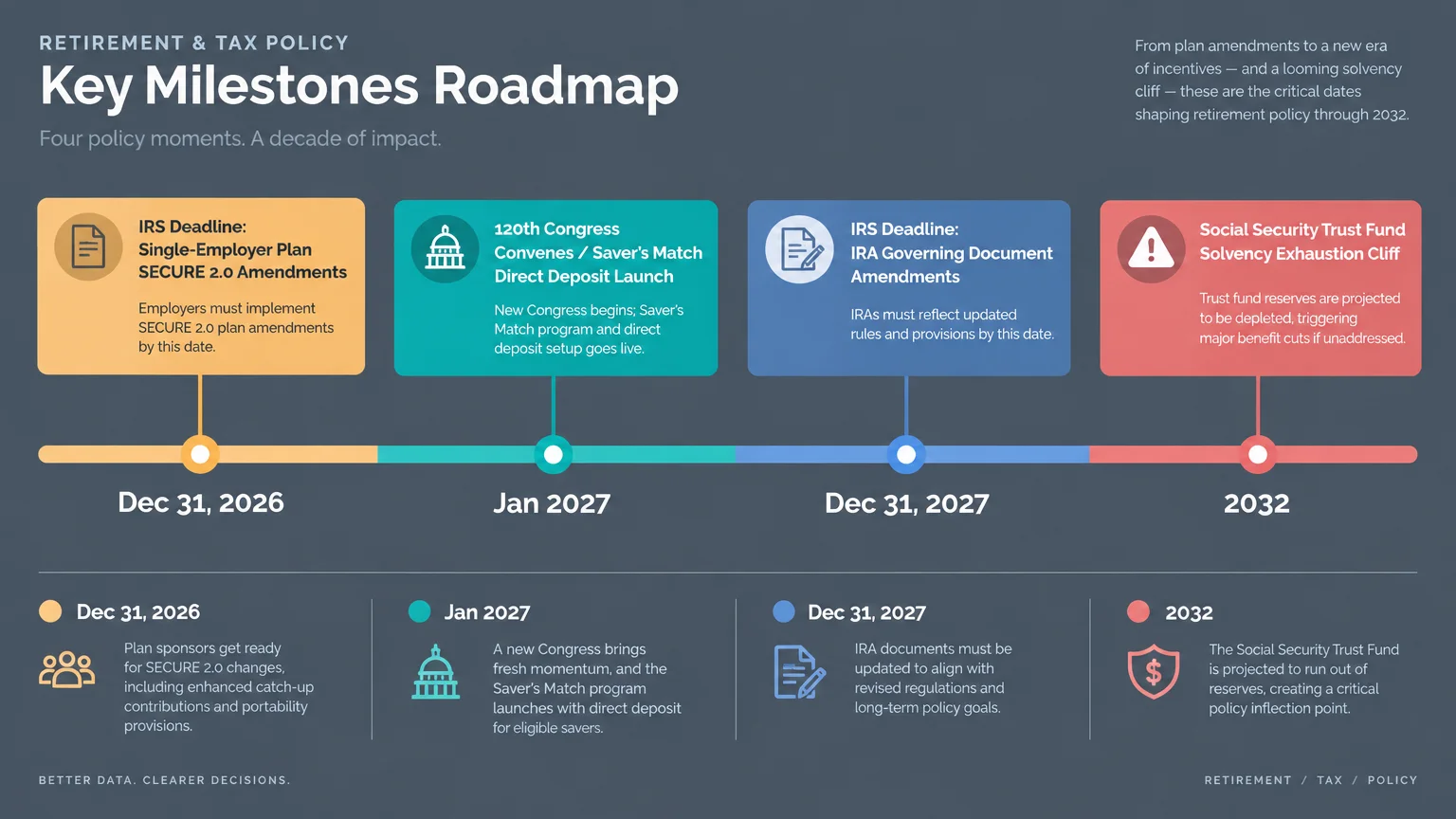
Retirement Policy Timeline and Key Dates
Keeping track of shifting administrative deadlines and proposed legislative changes is essential for effective tax planning. The following comparison table outlines critical deadlines, existing provisions, and proposed reforms for the upcoming legislative cycle.
| Policy Topic | Current Regulatory Status | Proposed Legislative Reform | Target Implementation |
|---|---|---|---|
| Saver’s Match | Saver’s Credit non-refundable tax credit | 50% direct federal match up to $1,000 | Tax years starting 2027 |
| Caregiver Roth IRAs | Earned income strictly required | Eliminates wage requirement (500+ care hours) | SECURE 3.0 (2027–2028) |
| Caregiver Catch-Ups | Super catch-up limited to ages 60–63 | Grants super catch-up rate for 5 extra years | SECURE 3.0 (2027–2028) |
| Social Security Care Credits | Zero earnings recorded for unpaid care | Imputed wage credits for 80+ monthly care hours | 120th Congress reintroduction |
| Workplace Plan Mandate | Voluntary employer plan adoption | Mandatory 6% auto-IRA for employers over 10 staff | Plan years after 2027 |
| National Portable Plan | No federal baseline plan available | Federal TSP-style plan with up to 4% matching | 120th Congress reintroduction |
| 403(b) Investment Fees | Collective Investment Trusts prohibited | Securities law update to authorize low-cost CITs | INVEST Act / SECURE 3.0 |
| 401(k) Lifetime Income | In-plan annuities under 10% adoption | Annuities permitted as default QDIAs | LIFE Act / SECURE 3.0 |
| OASI Trust Solvency | Projected reserve depletion by 2032 | Bipartisan Commission / Payroll tax cap adjustments | Action required before 2032 |
| IRS IRA Amendments | Discretionary plan amendments due 2026 | IRA governing document amendments deadline | December 31, 2027 |
| IRS 401(k) Amendments | Roth catch-up operational since Jan 1, 2026 | Mandatory plan document amendment deadline | December 31, 2029 |

Common Pitfalls and How to Protect Your Nest Egg
Anticipating legislative reform requires careful planning so you do not make premature or costly financial moves. One major mistake is delaying necessary savings while waiting for Congress to enact new proposals.
Legislative proposals can take years to pass, and some bills fail entirely. You should always optimize your savings under current tax statutes rather than postponing contributions in hope of future legislation.
Another common pitfall involves hasty retirement account rollovers. If you switch jobs or retire, moving your workplace savings into an individual account without reviewing fee schedules can erode returns.
Pay close attention to catch-up contribution guidelines as rules evolve. High-wage earners must ensure their plans properly designate catch-up contributions as after-tax Roth dollars to prevent tax penalties.
Be vigilant against financial scams targeting seniors. Unscrupulous sales agents often exploit headlines about Social Security shortfalls to push high-fee, illiquid financial products that do not match your liquidity needs.
Always review your annual Social Security statement online to verify your reported earnings history. Correcting wage errors early ensures your future monthly benefits are calculated accurately under existing statutory formulas.
Frequently Asked Questions
What is SECURE 3.0, and when could it pass?
SECURE 3.0 is the working title for the next major bipartisan retirement savings package expected in Washington. The 120th Congress will likely debate and negotiate the package across 2027 and 2028.
How will the 2027 Saver’s Match work?
Beginning in 2027, the government replaces the Saver’s Credit with a direct matching deposit into your 401(k) or IRA. Eligible low- and middle-income savers can receive a 50% match worth up to $1,000.
Can unpaid family caregivers currently contribute to an IRA?
Under current law, you must have taxable earned income or a working spouse filing jointly to fund an IRA. Proposed legislation seeks to eliminate this restriction for qualified caregivers who provide at least 500 hours of care.
Will my Social Security benefits really be cut by 22% in 2032?
An automatic 22% cut will occur only if Congress fails to pass solvency legislation before the trust fund reserves deplete in 2032. Lawmakers historically negotiate bipartisan revenue and benefit adjustments to prevent automatic cuts from occurring.
How do proposed 403(b) changes affect teachers and nonprofit workers?
Proposed reforms allow 403(b) plans to offer Collective Investment Trusts alongside mutual funds. These institutional trusts carry lower administrative expenses, allowing educational and non-profit personnel to keep more of their investment returns.
For additional senior resources, visit
Alzheimer’s Association, American Heart Association, Benefits.gov, National Institute on Aging (NIA) and Centers for Disease Control and Prevention (CDC).
Disclaimer: The information in this article is for educational purposes only and is not intended to be a substitute for professional financial, legal, or medical advice. Always consult with a qualified expert for advice tailored to your personal situation.









Leave a Reply