

You can slash your household expenses without cutting back on the activities you love. Prepaying recurring bills secures instant cash discounts while wiping out costly monthly processing fees.
When you live on a fixed income, predictable spending creates financial security. Paying select annual or semi-annual obligations upfront delivers an immediate return on your cash that often surpasses standard bank yields.
Discover the five regular expenses you can prepay today to lower your monthly overhead and protect your retirement nest egg.

The Financial Logic of Prepaying Bills in Retirement
Managing money during retirement requires a shift from wealth accumulation to cash flow preservation. When you transition from a regular paycheck to Social Security, pensions, or required minimum distributions (RMDs), every dollar leaking through administrative surcharges damages your long-term plan. Prepaying bills for discounts represents an effective retirement bill payment strategy because it targets guaranteed, risk-free returns.
Service providers, municipal governments, and utility companies incur substantial administrative costs when they invoice customers twelve times a year. They process debit transactions, send paper statements, follow up on delinquent accounts, and absorb credit card merchant processing fees. To reduce these overhead expenses and secure guaranteed revenue, many organizations pass significant savings back to customers who settle their accounts upfront.
For retirees, saving money prepaying expenses offers three distinct structural benefits:
- Elimination of Hidden Financing Fees: Many companies disguise installment charges as harmless processing fees; paying upfront eliminates these recurring surcharges entirely.
- Guaranteed, Tax-Free Yield: A 5% discount on an annual bill is equivalent to a guaranteed, tax-free return on your liquid cash, outpacing ordinary taxable bank interest.
- Mental Freedom and Simplicity: Consolidating twelve monthly payments into a single annual transaction frees you from tracking due dates, avoiding unintentional late fees or billing disputes.

1. Auto and Homeowners Insurance Premiums
Property and casualty insurance represents one of the largest ongoing expenses in retirement. Whether you insure a primary residence, a seasonal condominium, or two personal vehicles, insurance carriers heavily reward policyholders who pay their full premium in one single transaction.
Most major auto and homeowners insurance carriers offer a standard paid-in-full discount ranging between 5% and 10%. Beyond the headline percentage discount, prepaying eliminates the monthly installment fee. According to data tracked by the Consumer Financial Protection Bureau (CFPB), recurring installment processing fees typically add $2 to $7 per billing cycle, which quietly amounts to an effective annual financing rate (APR) of 15% to 29% across several national carriers.
Consider a practical example for a retired couple:
- Annual Homeowners Insurance: $1,400 per year
- Annual Auto Insurance (Two Vehicles): $1,600 per year
- Total Annual Premiums: $3,000
If your carrier provides an 8% paid-in-full discount, you immediately save $240. When you add the elimination of a $5 monthly installment fee on each policy ($120 annually), your combined annual savings reaches $360. That represents cash that remains in your pocket without altering your deductible or lowering your liability limits.
2. Property Taxes and County Assessments
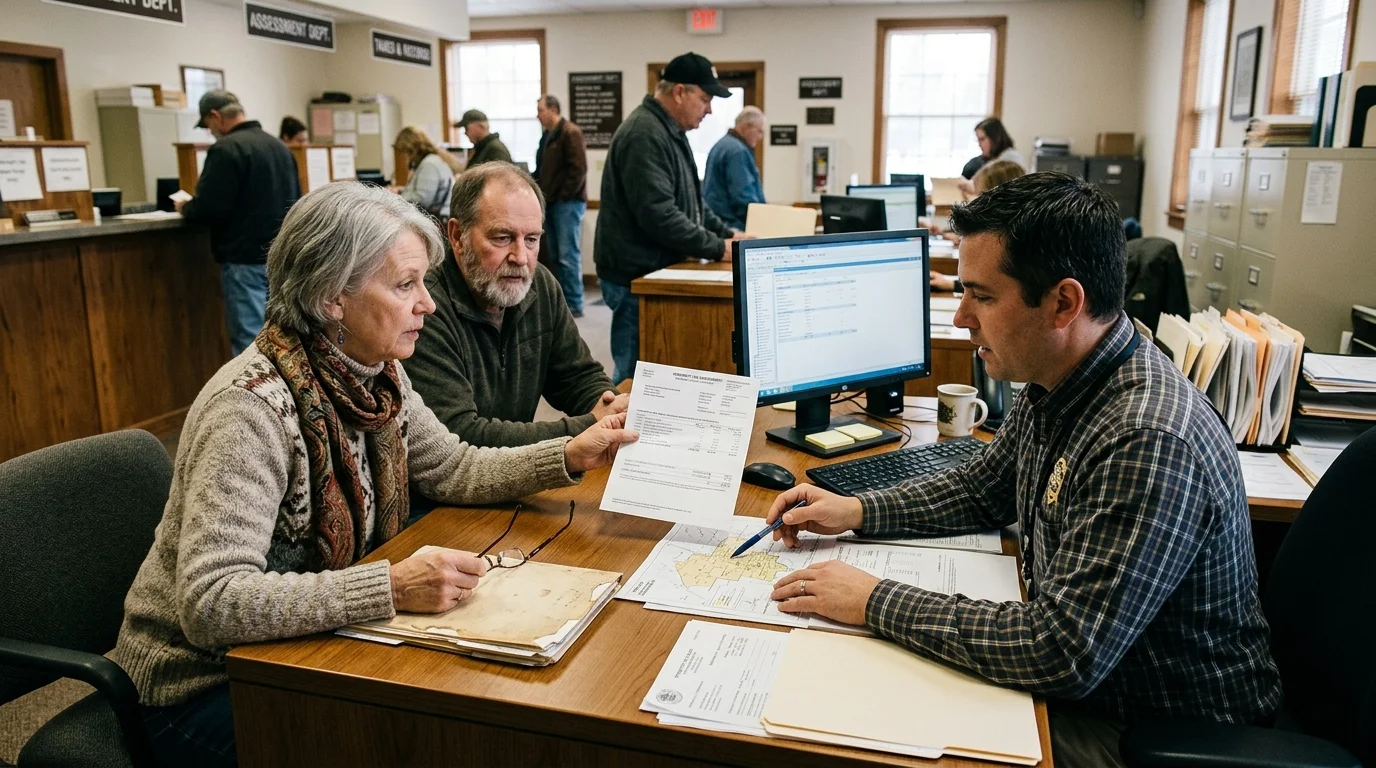
If you own your home free and clear of a mortgage, you are directly responsible for paying local property taxes. Many county and municipal taxing authorities face tight operational budgets and incentivize early settlement of real estate tax rolls by offering statutory early payment discounts.
Several states have formal discount structures embedded into their state legal codes:
- Florida (Fla. Stat. § 197.162): Homeowners who settle their property tax bill early receive tiered discounts: 4% in November, 3% in December, 2% in January, and 1% in February, before taxes become delinquent after March 31.
- Oregon (ORS 311.505): Homeowners receive an instant 3% discount when paying their full property tax balance on or before November 15, or a 2% discount if two-thirds of the tax is paid by that date.
- Kentucky and Idaho: Select county jurisdictions provide 1% to 2% early settlement deductions for payments received within thirty days of assessment notices.
On an average Florida property tax bill of $4,500, paying the balance during the November window produces an immediate $180 cash deduction. If you still have a mortgage escrow account handling your taxes, contact your loan servicer to confirm whether they take advantage of these early payment discounts on your behalf.

3. Heating Fuel, Propane, and Seasonal Utilities
Retirees living in cold climates face volatile heating costs during the winter months. Home heating oil and propane prices fluctuate widely based on crude oil benchmarks, refinery output, and sudden winter storms. Pre-purchasing fuel in the late summer or early fall provides substantial retiree bill savings while shielding your monthly budget from unexpected price surges.
Independent heating fuel distributors routinely offer “pre-buy” contracts between July and September. Locking in your heating gallons ahead of the peak winter heating cycle typically saves homeowners $0.10 to $0.30 per gallon compared to on-demand “will-call” spot pricing during severe winter cold snaps.
| Heating Fuel Strategy | Estimated Cost Per Gallon | Cost for 800 Gallons | Winter Price Spike Protection |
|---|---|---|---|
| Late-Summer Pre-Buy Contract | $3.45 | $2,760 | 100% Fixed and Guaranteed |
| Winter Spot Market (Will-Call) | $3.75 | $3,000 | None (Subject to Surges) |
| Extreme Freeze Demand Spike | $4.15 | $3,320 | Severe Risk to Fixed Incomes |
Additionally, many regional electric and municipal water utilities offer minor prepay utility bills incentives or cash-settlement discounts for maintaining a positive account balance. Contact your municipal utility provider to ask if maintaining a credit balance waives monthly infrastructure service charges.

4. Mobile Phone and Wireless Service Plans
Traditional mobile carriers often lock retirees into expensive post-paid unlimited plans costing $65 to $90 per month per line. However, older adults generally spend significant time connected to home Wi-Fi networks, using far less cellular data than working professionals.
Transitioning to an annual prepaid mobile virtual network operator (MVNO) can dramatically reduce this monthly drain. Prepaying your wireless plan for a full twelve-month term unlocks wholesale network pricing on the exact same cellular towers used by major national carriers.
Consumer advocacy organizations like AARP highlight that switching from a monthly post-paid model to an annual prepaid plan frequently cuts cellular bills by more than half. For example, prepaid wireless providers offer 12-month service allotments at $15 per month ($180 upfront), compared to month-to-month alternatives charging $30 to $45 per month for identical calling, texting, and data features. For a two-person household, prepaying wireless service annually can preserve $360 to $600 in retirement cash each year.

5. Out-of-Pocket Dental and Medical Procedures
Healthcare expenses represent one of the most substantial out-of-pocket costs for older Americans. While Medicare covers extensive hospital and outpatient care, seniors frequently incur substantial expenses for dental restorations, hearing aids, cataract surgical upgrades, and specialized imaging.
Most dental practices, outpatient surgical centers, and diagnostic clinics experience high administrative friction when billing insurance companies. To encourage immediate cash flow, healthcare billing offices routinely offer prompt-pay discounts of 10% to 30% when patients settle their estimated balance in full prior to or on the day of treatment.
To verify what services standard insurance handles before negotiating cash discounts, consult official coverage guidelines on Medicare.gov. When facing non-covered care, use this straightforward approach with your provider’s billing office:
- Request the Cash-Pay Price: Ask the billing administrator: “What is your direct cash-settlement rate for this procedure if I pay in full today?”
- Inquire About Prompt-Pay Deductions: If you are using supplemental insurance for part of the bill, ask: “Do you offer a prompt-pay percentage discount for settling my remaining coinsurance balance today?”
- Obtain Written Confirmation: Ensure your itemized receipt clearly states “Paid in Full — Prompt Settlement” to prevent automated billing software from generating secondary invoices.
On a $2,200 dental crown and bridge procedure, securing a 15% prompt-pay discount delivers $330 in direct financial relief.

Prepayment Discounts vs. High-Yield Savings: The Real Math
A common question retirees ask is whether prepaying expenses makes mathematical sense compared to leaving their funds in a high-yield savings account (HYSA) or a Certificate of Deposit (CD). To make an accurate comparison, you must account for compounding periods and ordinary income taxation.
Interest earned on bank savings accounts and CDs is taxed as ordinary income at your federal and state tax rates. Conversely, a discount achieved through prepaying bills is a non-taxable expense reduction. A 5% discount on an annual insurance premium is equivalent to a guaranteed, tax-free return on capital.
| Expense Category | Typical Prepay Discount | Annual Prepayment Total | Immediate Cash Saved | Equivalent Taxable Yield Needed |
|---|---|---|---|---|
| Auto & Home Insurance | 8% | $3,000 | $240 | 10.2% |
| County Property Tax | 4% | $4,500 | $180 | 5.1% |
| Annual Mobile Service (2 lines) | 35% | $360 | $190 | 44.8% |
| Pre-Season Heating Fuel | 6% | $2,760 | $165 | 7.7% |
| Major Out-of-Pocket Dental | 15% | $2,000 | $300 | 19.2% |
As demonstrated above, the effective annualized returns generated by prepaying bills consistently surpass the after-tax yields of traditional conservative fixed-income vehicles.

Common Pitfalls and Scams to Avoid When Prepaying
While prepaying recurring bills offers undeniable savings, adopting this strategy carelessly can jeopardize your financial stability. Maintain strict boundaries to protect your liquid reserves and avoid fraudulent operations.
- Depleting Your Emergency Reserve: Never utilize your core liquid emergency fund to prepay bills. You should maintain a baseline of three to six months’ worth of essential living expenses in an accessible savings account for unexpected medical or household repairs.
- Overlooking Prorated Refund Policies: Before prepaying an annual insurance policy, confirm the carrier provides a pro-rata refund without penalty if you sell your vehicle, downsize your home, or relocate during the policy term.
- Contractor and Vendor Insolvency: Avoid prepaying long-term service contracts with small, unvetted home maintenance companies or landscaping contractors who might cease operations before fulfilling their obligations.
- Utility Imposter Phone Scams: Fraudsters frequently call older adults claiming their power will be disconnected unless they prepay six months of utility bills using prepaid debit cards or wire transfers. Legitimate utility companies never demand payment through gift cards or cryptocurrency.

Building Your Retirement Prepayment Sinking Fund
Executing a successful prepayment strategy without disrupting your monthly cash flow requires a structured “sinking fund” method. Rather than absorbing a sudden multi-thousand-dollar expense in a single month, you accumulate the necessary capital systematically over twelve months.
- Audit Your Recurring Annual Expenses: Review your bank and credit card statements from the past twelve months. Identify all recurring expenses that offer paid-in-full discounts, noting their exact renewal months.
- Establish a Dedicated Prepayment Savings Account: Open a secondary high-yield savings account separate from your everyday checking account. Label this account your “Annual Bill Sinking Fund.”
- Coordinate with Fixed Income Streams: Calculate your total annual prepayment target and divide it by twelve. Set up an automated monthly transfer from your checking account into your sinking fund right after your monthly benefit deposit from the Social Security Administration (SSA) arrives.
- Disburse Payments on Discount Windows: As each major bill arrives, pay the full annual balance from your sinking fund to claim your discount, then continue replenishing the fund for the following year.
Frequently Asked Questions
Does prepaying auto insurance lock me in if I decide to switch carriers mid-year?
No. In the United States, insurance laws require carriers to refund the unused, prorated portion of your prepaid premium if you cancel your policy before its expiration date. While a few non-standard carriers may charge a nominal cancellation fee, major national insurers return your unearned balance promptly.
Can I prepay property taxes if my home has a mortgage with an escrow account?
If your mortgage lender manages your property taxes via an escrow account, they typically disburse funds based on county deadlines. You can contact your mortgage servicer to request an early disbursement to capture statutory discounts, but homeowners who hold their properties free and clear enjoy the most straightforward control over early tax payments.
What happens to my prepaid heating fuel balance if winter is unusually mild?
When you sign a pre-buy fuel contract and consume fewer gallons than estimated due to mild winter temperatures, reputable fuel suppliers roll your remaining credit balance forward into the subsequent season or provide a direct account refund upon request at the end of the contract cycle.
Are prompt-pay medical discounts permitted if I have Medicare Advantage?
Prompt-pay discounts are standard for services not covered by Medicare (such as routine cosmetic dentistry or specific vision upgrades) and for your legal copayment or coinsurance obligations. However, medical providers cannot offer discounts that alter statutory Medicare fee schedules for covered clinical treatments.
Is it safe to prepay subscriptions or memberships for multiple years?
Multi-year prepayments are safe when dealing with established national organizations, such as roadside assistance or senior advocacy organizations. Avoid multi-year prepayments for fitness clubs or local subscription clubs that carry a higher statistical risk of business closure.
For additional senior resources, visit
Benefits.gov, National Institute on Aging (NIA), Centers for Disease Control and Prevention (CDC) and Medicare.gov.
Disclaimer: The information in this article is for educational purposes only and is not intended to be a substitute for professional financial, legal, or medical advice. Always consult with a qualified expert for advice tailored to your personal situation.









Leave a Reply