

A single mistake on your Social Security statement can quietly reduce your monthly retirement checks for life. Reviewing your earnings record today protects the benefits you worked hard to build.
The government calculates your retirement benefit using your highest thirty-five earning years. Even one missing or underreported year drags down your average and permanently cuts your monthly payouts.
Spotting discrepancies early lets you fix them before strict federal deadlines lock those errors in permanently. Learn the warning signs to look for and how to correct them quickly.

Why Your Social Security Statement Demands Your Attention
Your Social Security statement serves as the ledger for your financial security in retirement. It records every dollar of covered wages you earned throughout your career.
According to the Social Security Administration (SSA), retirement benefits reflect your average indexed monthly earnings across your highest thirty-five working years.
When an employer fails to report your wages correctly, the government enters a zero for that year. That zero drags down your thirty-five-year average.
As a result, your monthly retirement check permanently shrinks. Over a twenty-year or thirty-year retirement, that single error can cost you tens of thousands of dollars.
Older adults must monitor these statements vigilantly. The agency automatically mails paper statements annually only to workers age sixty and older who do not have an online account and have not started benefits.
These annual statements arrive roughly three months before your birthday. If you do not meet those criteria, you must log in to your my Social Security account to check your numbers.
Taking time to check Social Security earnings record files annually ensures you receive every cent you earned.
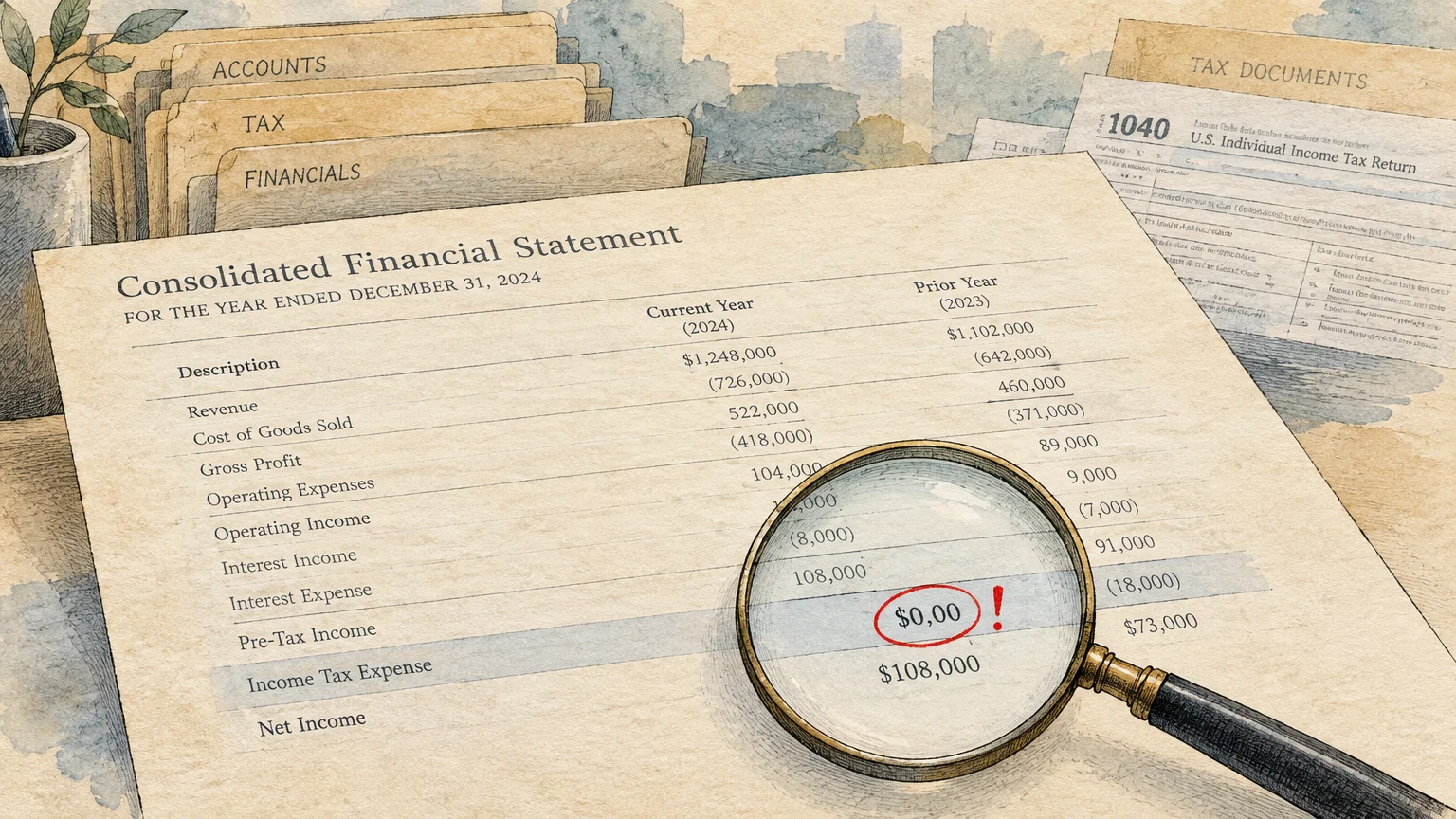
9 Critical Signs of a Social Security Statement Error
Spotting a Social Security statement error requires careful examination of your annual earnings chart. Review these nine warning signs to detect costly reporting mistakes early.
1. Unexplained Zero-Dollar Earnings Years
A zero listed next to a year you actively worked is the clearest sign of a major error. Employers sometimes fail to submit wage reports or accidentally transpose Social Security numbers.
When this happens, the government places your wages into an unassigned suspense file instead of your personal record. You must claim those wages to fix your record.
2. Substantially Lower Wages Than Your Tax Forms
Compare the earnings listed on your statement against your old Form W-2 forms. If your statement shows twenty thousand dollars and your tax form shows fifty thousand, an error occurred.
Clerical typos at payroll processing centers happen frequently. Any underreported wage directly lowers your future benefit formula.
3. Missing Work Credits in Recent Years
To qualify for retirement benefits, you need at least forty lifetime work credits. You can earn up to four credits each calendar year.
In 2024, you earn one credit for every $1,730 of earnings, reaching the maximum four credits at $6,920. For 2025, each credit requires $1,810, or $7,240 for four credits.
In 2026, the threshold rises to $1,890 per credit, requiring $7,560 for the maximum four credits. If you earned well over these amounts but show fewer credits, your wage record has a defect.
4. Earnings Recorded for Years You Did Not Work
Seeing income listed during a year you took off for caregiving or health reasons indicates a serious problem. Another worker may be using your Social Security number mistakenly or fraudulently.
While extra income might seem harmless, phantom wages create tax liabilities and complicate your eligibility for other public benefits.
5. Discrepancies Between Social Security and Medicare Wages
Your statement displays both Social Security earnings and Medicare earnings side by side. For most workers earning below the annual wage cap, these two numbers should match identically.
If your Social Security earnings show a lower amount than your Medicare earnings below the wage cap, your payroll office miscategorized your wages.
6. Missing Income After a Legal Name Change
Getting married, divorced, or changing your legal name can disrupt your earnings reporting. If your employer reports wages under a new name before you update your Social Security card, earnings vanish.
The government’s computer systems reject wage reports when the employee’s name does not match the registered number.
7. Missing Self-Employment or Tip Income
Freelancers, consultants, and contractors must pay self-employment taxes using Schedule SE on their federal return. If you filed late or made a schedule error, those earnings might not appear on your statement.
Service workers who rely on cash tips often encounter similar issues. If your employer failed to record declared tips, your earnings statement will reflect lower numbers.
8. Sudden Drop in Your Estimated Monthly Benefit
Your statement provides estimated monthly payments for claiming at age sixty-two, full retirement age, and age seventy. If your estimate suddenly drops between years without an income reduction, investigate immediately.
As noted by experts at AARP, sudden drops in projected benefits almost always point to missing wage data or administrative glitches.
9. Phantom Employers or Unfamiliar Wage Entries
Your detailed earnings record lists the names of reporting employers. If you see income credited from a business you never worked for, someone else has used your credentials.
Identity thieves frequently use stolen numbers to gain employment. This creates incorrect records and potential tax disputes with the Internal Revenue Service.
Taxable Maximums: Normal Caps Versus Genuine Mistakes
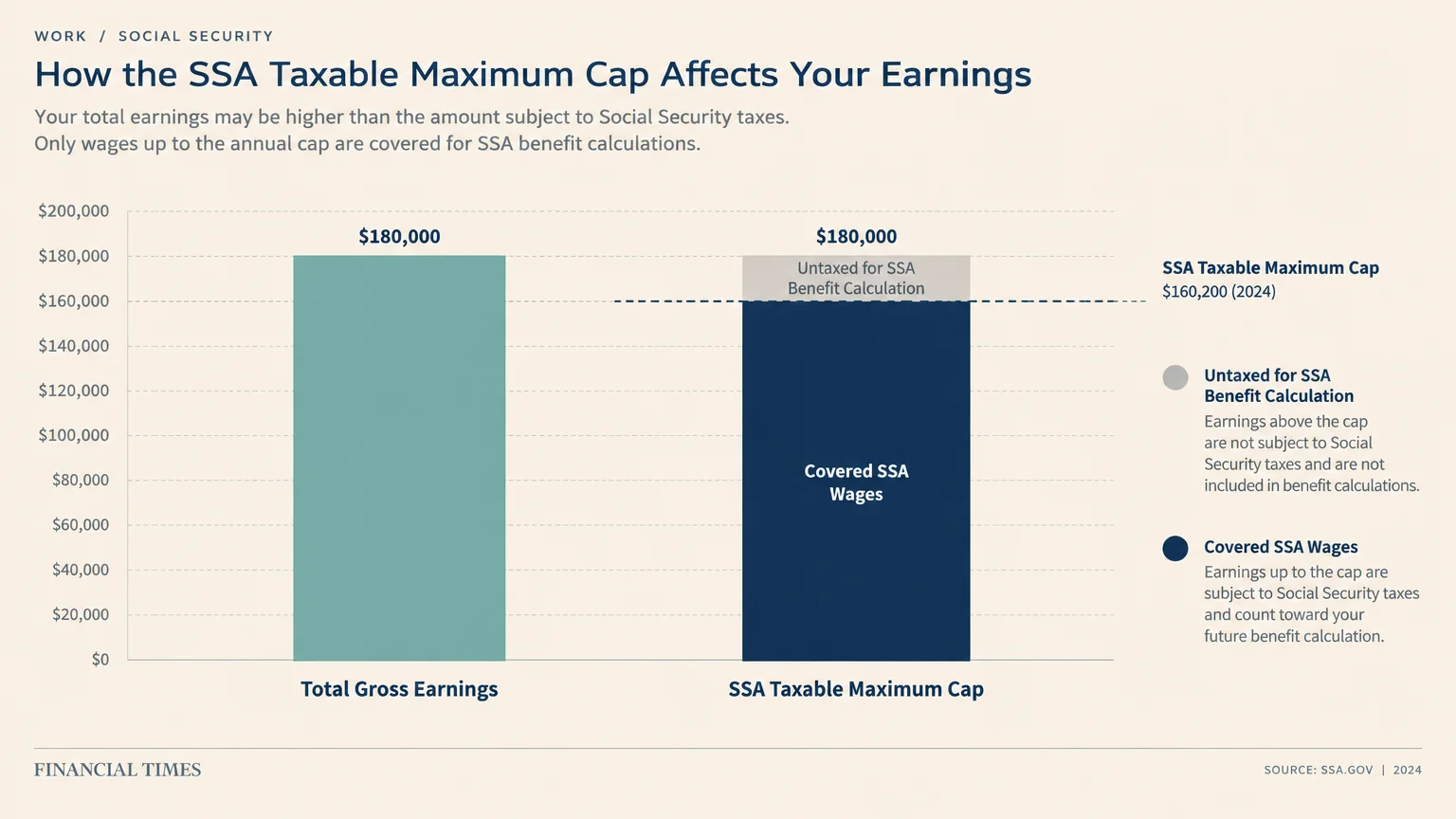
Not all discrepancies on your statement represent genuine benefit statement mistakes. The federal government sets an annual limit on the amount of income subject to Social Security payroll taxes.
Any earnings above this legal cap do not count toward your benefit calculation. Consequently, earnings above the limit will not appear in the Social Security earnings column.
Your Medicare earnings column will reflect your total uncapped income, because Medicare taxes apply to all earned wages without an upper limit.
Review the table below to understand the recent thresholds and avoid confusing statutory caps with real errors.
| Tax Year | Taxable Wage Cap | Earnings Required Per Credit | Earnings for Maximum 4 Credits |
|---|---|---|---|
| 2024 | $168,600 | $1,730 | $6,920 |
| 2025 | $176,100 | $1,810 | $7,240 |
| 2026 | $184,500 | $1,890 | $7,560 |
If you earned more than the taxable cap in any year, your statement shows only the capped figure. That reflects normal statutory procedure, not an error.
However, if your statement shows less than your W-2 wages and your income sat below the cap, you must request an SSA earnings correction.
The Legal Deadline for Correcting Your Earnings Record
Many seniors assume they can fix earnings discrepancies whenever they prepare to claim retirement. In reality, strict federal laws govern how long you have to make changes.
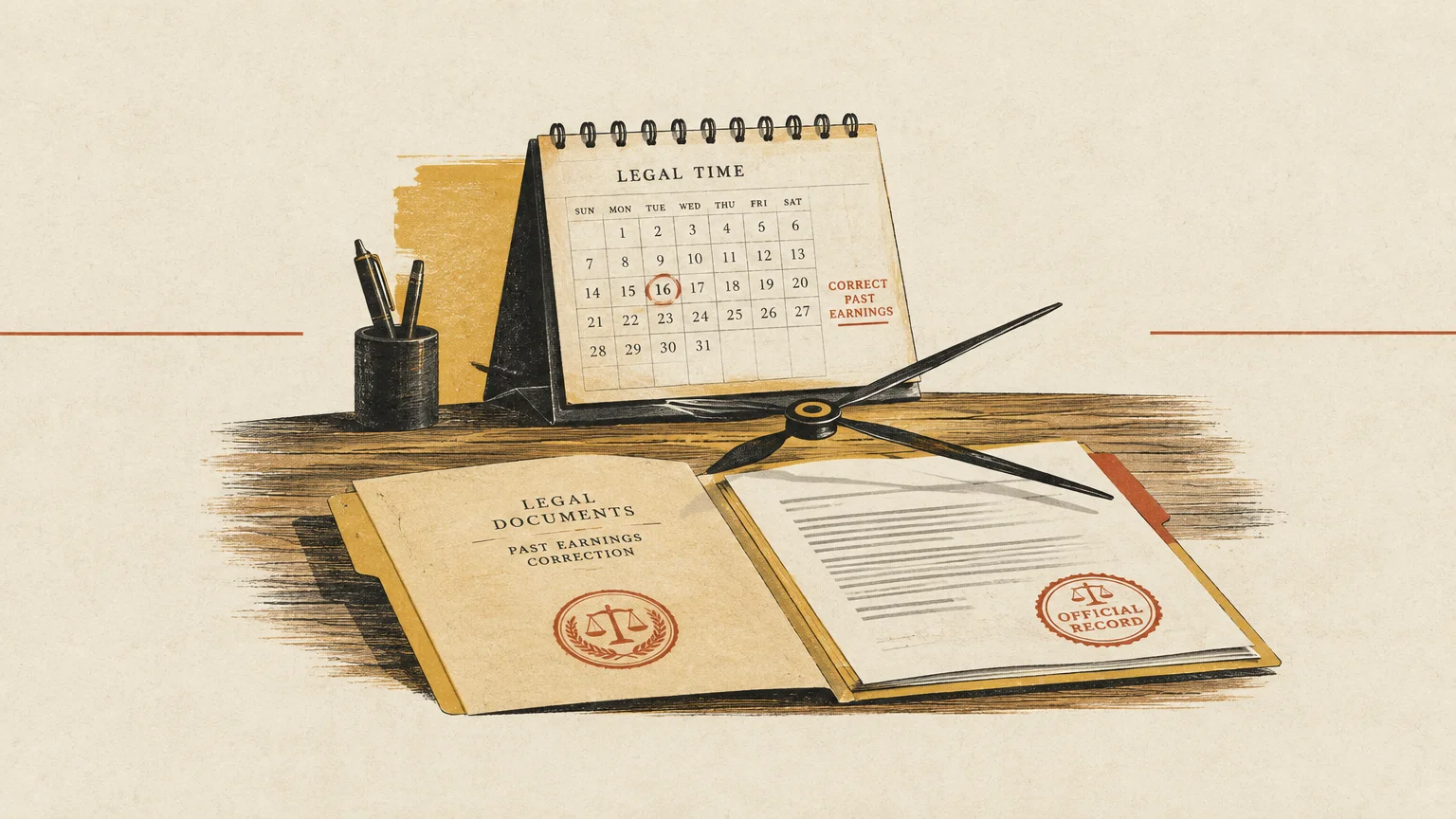
Under federal regulation 20 CFR § 404.802 and Section 205(c) of the Social Security Act, a specific time limit applies to earnings records.
You generally have three years, three months, and fifteen days following the end of the tax year to correct your statement.
Once this statutory deadline passes, the government considers your earnings record final and legally binding.
Fortunately, the law provides vital exceptions for diligent workers. You can correct an error after the deadline if you possess conclusive documentation, such as an official W-2 or tax return.
Corrections are also allowed if an employer failed to report any wages at all for a period when you actively worked.
Even with exceptions, correcting older errors requires significantly more paperwork and patience. Reviewing your record annually ensures you fix mistakes while records remain easily accessible.
Step-by-Step Guide to Filing an SSA Earnings Correction
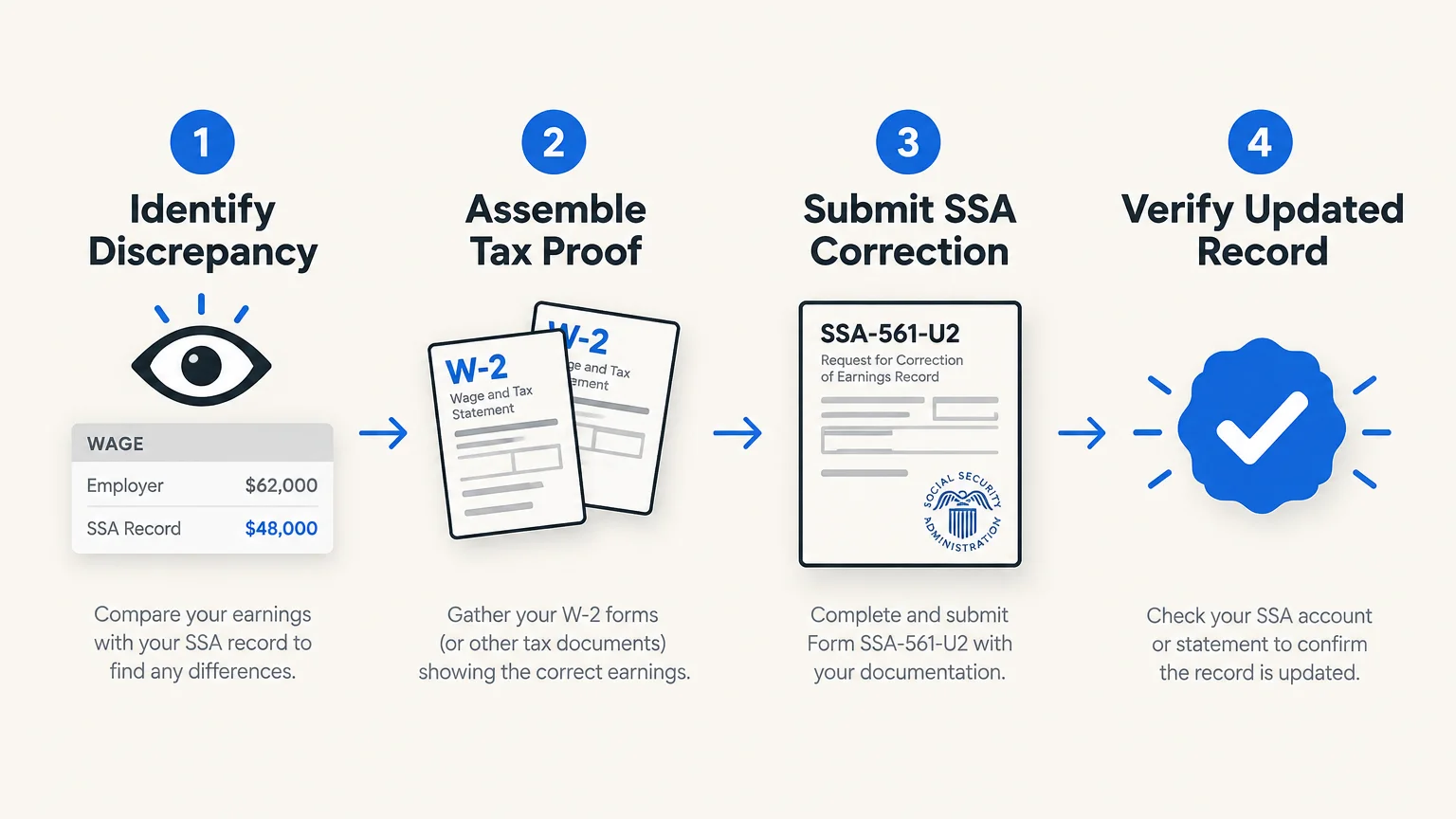
Correcting your official record requires an organized approach and verifiable documentation. Following the proper administrative steps helps resolve your case without unnecessary delays.
- Review your full earnings record by logging into your my Social Security account or inspecting your mailed paper statement.
- Compare each reported year against your historical tax documents, including Forms W-2, W-2c, and filed tax returns.
- Identify the exact years, missing wage amounts, and employers responsible for the discrepancies.
- Download and complete Form SSA-7008, known officially as the Request for Correction of Earnings Record.
- Attach clear photocopies of your supporting evidence, keeping all original documents safely at home.
- Submit your completed paperwork to your local Social Security field office by mail or in person.
- Follow up periodically by calling the agency to verify the status of your wage adjustment.
You can find additional government benefit assistance and programs through Benefits.gov if you need wider financial support.
If you prefer phone assistance, call the agency toll-free at 1-800-772-1213. Individuals who are deaf or hard of hearing can call TTY 1-800-325-0778.
Representatives can answer questions about your earnings record and guide you through the submission process.

Gathering the Necessary Paperwork and Evidence
The government will not alter your official record based on memory alone. You must provide solid evidence proving your wages and the taxes withheld.
The best proof is Form W-2 or Form W-2c, which displays your wages and Social Security taxes paid.
For self-employed workers, you must provide your federal tax return along with Schedule SE and proof of tax payment.
Year-end pay stubs showing cumulative annual earnings can serve as secondary evidence if your tax forms are missing.
If your former employer went out of business, tracking down paperwork becomes more challenging. You can request historical tax transcripts directly from the Internal Revenue Service.
Sworn statements from co-workers, union dues records, or bank deposit slips may also support your claim in rare circumstances.
Never mail original documents unless the agency explicitly requests them. Always submit clear photocopies to prevent the loss of irreplaceable records.
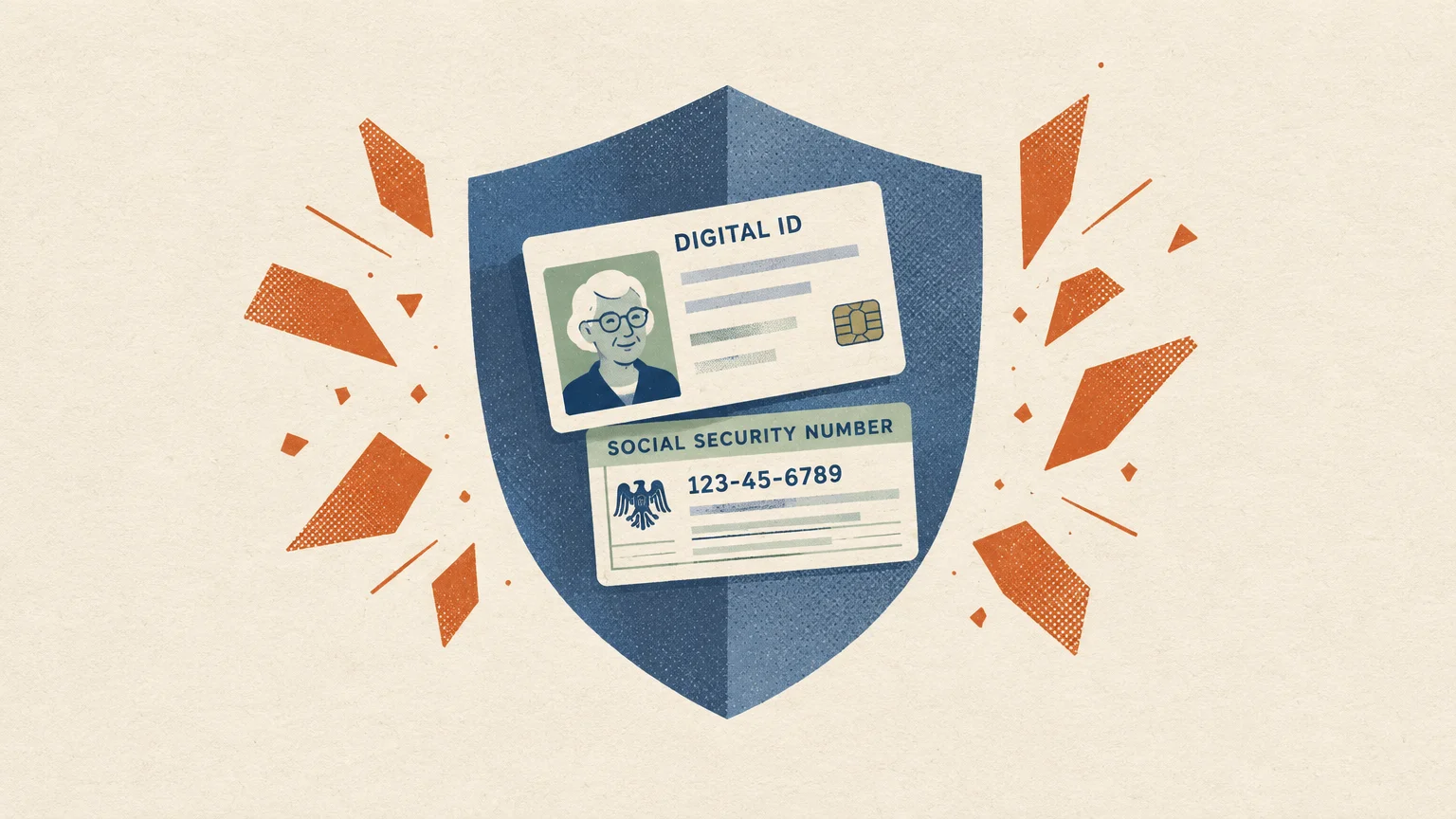
Safeguarding Your Benefits Against Fraud and Identity Theft
Discrepancies on your statement do not always stem from honest accounting errors. Stolen personal data often leads to unauthorized employment or fraudulent benefit claims.
Identity thieves frequently target older adults because their credit files and work histories are well established.
According to guidance from the Consumer Financial Protection Bureau (CFPB), monitoring your financial accounts and credit reports regularly helps catch identity theft early.
Create your personal online account on SSA.gov before scammers create one in your name. Setting up your account secures your profile behind strong multi-factor authentication.
If you spot unauthorized work records, notify the SSA fraud hotline immediately. You should also file an identity theft report with the Federal Trade Commission.
Consider placing a security freeze on your credit files with the major credit bureaus. A freeze prevents criminals from opening accounts or altering your financial identity.
Staying proactive protects both your retirement nest egg and your peace of mind.
Frequently Asked Questions
How often should I check my Social Security earnings record?
You should review your statement at least once every calendar year. Checking annually ensures you catch payroll errors well before federal correction deadlines expire.
Can I correct an earnings mistake if my former employer closed down?
Yes, you can still correct the error if you have copies of your old W-2 forms or federal tax returns. The SSA accepts IRS tax transcripts as valid proof of your earned income.
How long does an SSA earnings correction take to process?
Processing times typically range from three to six months depending on case complexity. You can monitor the progress through your online account or by calling your local field office.
Will fixing an error on my statement immediately increase my benefit check?
If you already receive benefits, correcting an underreported year triggers an automatic benefit recalculation. If the corrected year ranks among your highest thirty-five earning years, your monthly payment increases retroactively.
What should I do if I cannot find my old W-2 forms?
You can request prior-year tax transcripts from the IRS or contact previous payroll administrators. You may also ask the SSA to search its microfilmed records for missing wage reports.
For additional senior resources, visit
Social Security Administration (SSA), Consumer Financial Protection Bureau (CFPB) and Administration for Community Living (ACL).
Disclaimer: The information in this article is for educational purposes only and is not intended to be a substitute for professional financial, legal, or medical advice. Always consult with a qualified expert for advice tailored to your personal situation.









Leave a Reply