
Navigating your retirement budget requires staying ahead of shifting federal policies that directly impact your healthcare costs, tax obligations, and monthly benefits. The year 2026 introduces major updates across Social Security, Medicare, and retirement savings rules that can significantly alter your financial picture. From historic lower prescription drug costs under Medicare negotiation to major updates in savings contribution limits and full retirement age rules, understanding these policy shifts ensures you protect your hard-earned income. Staying informed allows you to adapt your financial strategy early, claim every benefit you deserve, and avoid costly surprises throughout the coming year.
1. Medicare’s Historic First Drug Price Negotiation Lowering Prescription Costs
On January 1, 2026, a landmark provision of the Inflation Reduction Act takes full effect, bringing lower negotiated prices to ten of the most widely used and expensive brand-name medications covered under Medicare Part D. For the first time in federal program history, Medicare has directly negotiated prices with pharmaceutical manufacturers to reduce out-of-pocket burdens for millions of older Americans.
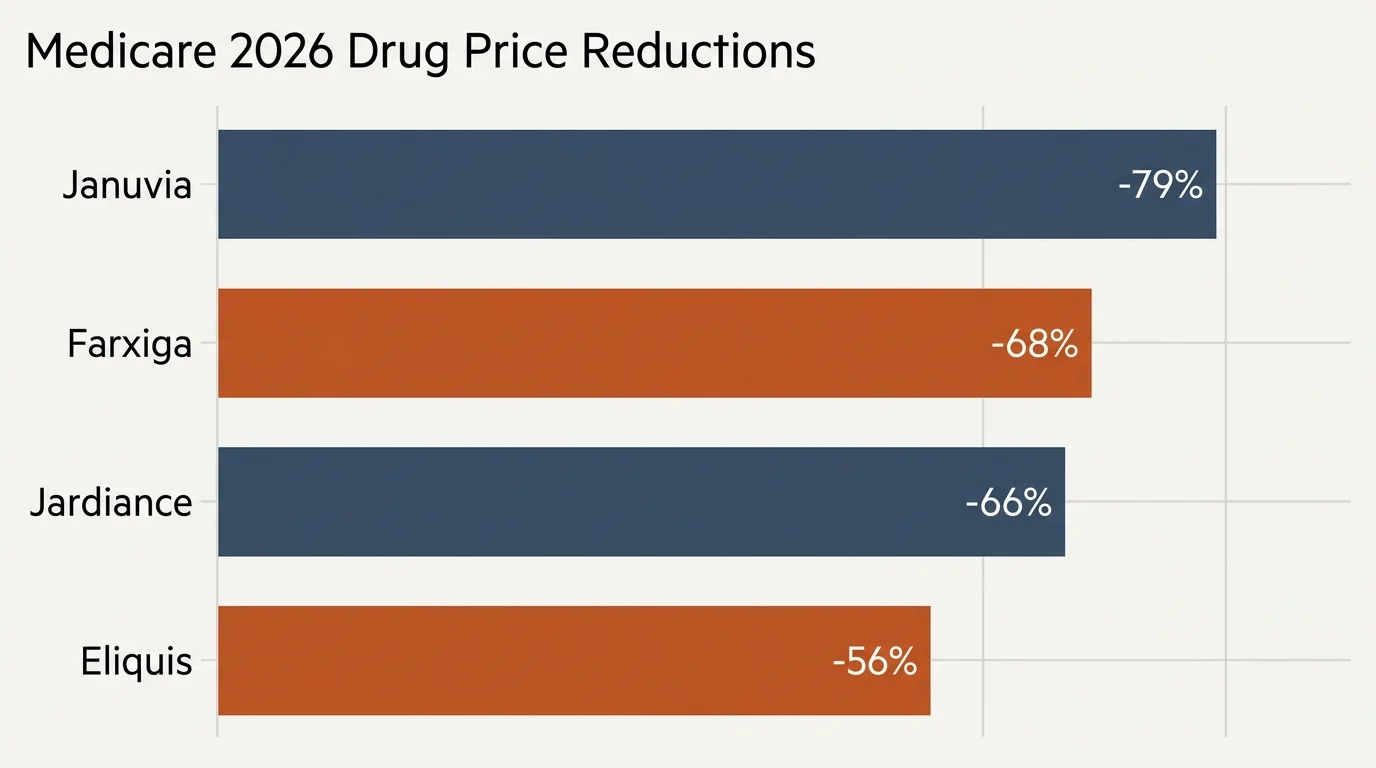
According to Centers for Medicare & Medicaid Services (CMS), these negotiated Maximum Fair Prices deliver substantial savings across essential maintenance medications. Price reductions on selected drugs range from 38% to 79% off previous list prices, which directly lowers coinsurance expenses when you pick up prescriptions at your local pharmacy.
The ten medications included in the initial 2026 wave treat widespread chronic conditions among seniors, including heart failure, type 2 diabetes, blood clots, and autoimmune disorders:
- Eliquis: Used to prevent blood clots and strokes; discounted by 56%.
- Jardiance: Used for type 2 diabetes and heart failure; discounted by 66%.
- Xarelto: Used for blood clot prevention and reduction of stroke risk; discounted by 62%.
- Januvia: Used to lower blood sugar in type 2 diabetes; discounted by 79%.
- Farxiga: Used for kidney disease, heart failure, and type 2 diabetes; discounted by 68%.
- Entresto: Used to treat chronic heart failure; discounted by 53%.
- Enbrel: Used to treat rheumatoid arthritis and psoriatic arthritis; discounted by 67%.
- Imbruvica: Used to treat blood cancers; discounted by 38%.
- Stelara: Used to treat psoriasis and Crohn’s disease; discounted by 66%.
- Fiasp and Novolog: Insulin products used for diabetes management; discounted by 76%.
If you take any of these medications, you will experience lower out-of-pocket costs at pharmacy counters starting in January 2026. Reviewing your Medicare Advantage or standalone Part D plan formulary during the annual enrollment season ensures your plan continues to offer favorable coverage tiers for these treatments.

2. The Updated Medicare Part D Prescription Out-of-Pocket Cap
Following the landmark $2,000 spending cap introduced in 2025, the annual out-of-pocket cap for covered Medicare Part D prescription drugs increases slightly to $2,100 in 2026. Federal law indexes this cap to annual inflation and national drug spending trends, ensuring long-term program stability while maintaining strong financial protection for seniors.
Data from Medicare.gov outlines how prescription spending works under the modernized Part D framework. Once your cumulative out-of-pocket payments for covered Part D prescription drugs reach $2,100 during calendar year 2026, you pay $0 for covered prescription medications for the rest of that year. This eliminates the catastrophic coverage tier where beneficiaries previously paid 5% uncapped coinsurance.
To help you manage prescription expenses throughout the year, Medicare continues to offer the Medicare Prescription Payment Plan. This voluntary payment option spreads your out-of-pocket drug costs into capped monthly payments over the calendar year rather than requiring a large payment all at once at the pharmacy counter. This option provides predictable monthly budgeting, especially if you fill high-cost specialty drugs early in the year.
3. Revised Medicare Part A and Part B Premiums and Deductibles
Medicare adjustment amounts for Part A and Part B rise in 2026 to reflect general medical inflation and increased healthcare utilization across the senior population. Factoring these updated out-of-pocket costs into your annual household budget prevents unexpected shortfalls in monthly spending money.
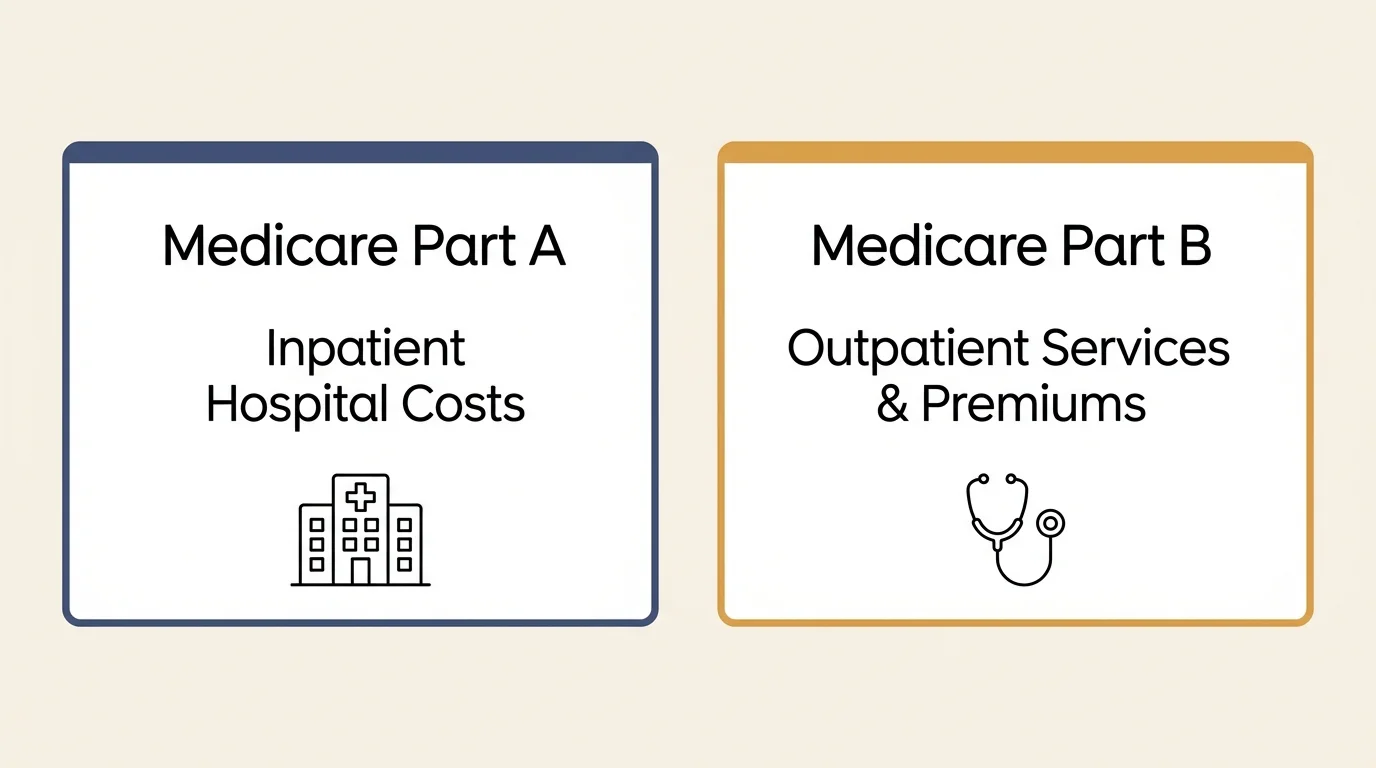
For Medicare Part B—which covers doctor visits, outpatient therapy, medical equipment, and preventive care—the standard monthly premium rises to $202.90 in 2026 (up from $185.00 in 2025). The annual Part B deductible increases to $283 (up from $257 in 2025). Higher-income retirees will continue to pay Income-Related Monthly Adjustment Amounts (IRMAA) added to their base Part B and Part D premiums, based on modified adjusted gross income reported on tax returns from two years prior.
For Medicare Part A—which covers inpatient hospital stays, skilled nursing facility care, and hospice—the deductible increases to $1,736 per benefit period in 2026 (an increase of $60 from $1,676 in 2025). This deductible applies to each benefit period, which begins the day you enter a hospital or skilled nursing facility and ends after you have been out of inpatient care for 60 consecutive days.
| Medicare Cost Category | 2025 Standard Amount | 2026 Standard Amount | Year-over-Year Change |
|---|---|---|---|
| Part B Monthly Premium | $185.00 | $202.90 | +$17.90 per month |
| Part B Annual Deductible | $257.00 | $283.00 | +$26.00 per year |
| Part A Inpatient Hospital Deductible | $1,676.00 | $1,736.00 | +$60.00 per benefit period |
| Part D Out-of-Pocket Cap | $2,000.00 | $2,100.00 | +$100.00 per year |
Because the Social Security Administration automatically deducts Medicare Part B premiums from monthly benefit checks for most retirees, your net monthly Social Security payment reflects this updated premium subtraction starting with your January 2026 distribution.

4. Social Security Full Retirement Age Reaches 67
The year 2026 marks the final milestone of a 42-year gradual policy shift set in motion by the Social Security Amendments of 1983. For individuals turning 66 and 10 months or reaching age 67 in 2026—specifically those born in 1960 or later—the official Full Retirement Age (FRA) is now strictly 67.
As noted by experts at the Social Security Administration (SSA), claiming benefits prior to reaching your full retirement age results in a permanent reduction in monthly payments. Understanding exact reduction percentages helps you choose the right claiming timeline for your lifestyle and financial goals:
- Claiming at Age 62: Claiming at the earliest eligible age results in a permanent 30% reduction compared to your full retirement benefit rate.
- Claiming at Age 65: Claiming two years before your FRA results in a permanent 13.3% reduction in monthly benefit payouts.
- Claiming at Full Retirement Age (67): You receive 100% of your earned primary insurance amount without lifetime penalties.
- Delaying to Age 70: Earning delayed retirement credits adds 8% per year beyond age 67, maximizing your benefit payout at 124% of your base benefit amount.
If you plan to work while receiving Social Security benefits before reaching age 67, monitor the Social Security Retirement Earnings Test exempt amounts. Earning wages above the annual limit causes Social Security to withhold a portion of benefits temporarily until you reach your full retirement age, at which point benefits recalculate to compensate for withheld funds.

5. SECURE 2.0 “Super Catch-Up” Contributions for Ages 60 to 63
If you are still working and preparing to transition into retirement within the next few years, federal tax changes under the SECURE 2.0 Act offer a valuable savings incentive. Beginning in 2026, employees aged 60, 61, 62, or 63 gain access to an expanded catch-up contribution limit for workplace retirement plans.
Under this “super catch-up” provision, eligible plan participants can contribute up to $11,250 in catch-up contributions to employer-sponsored 401(k), 403(b), and governmental 457(b) plans. This represents a significant boost over the standard $8,000 catch-up limit applicable to workers aged 50 to 59 or 64 and older.
To take advantage of this increased contribution limit, follow these practical steps:
- Contact your employer’s human resources or payroll department to confirm their plan system supports the upgraded SECURE 2.0 catch-up election structure.
- Calculate your total savings potential by adding the standard contribution elective deferral limit to the $11,250 super catch-up amount.
- Adjust your automatic payroll deduction elections before the first pay period of 2026 to spread contributions evenly across all paychecks.
Maximizing these higher limits during your final working years reduces tax obligations while bolstering your investment base right before you enter retirement.
6. New Mandatory Roth Catch-Up Rules for Higher Earners
Another key rule change under the SECURE 2.0 Act takes effect on January 1, 2026, altering how high-earning older workers make catch-up contributions to workplace retirement plans. This rule change was originally slated for an earlier release, but federal regulators instituted an administrative transition period that officially ends in 2026.
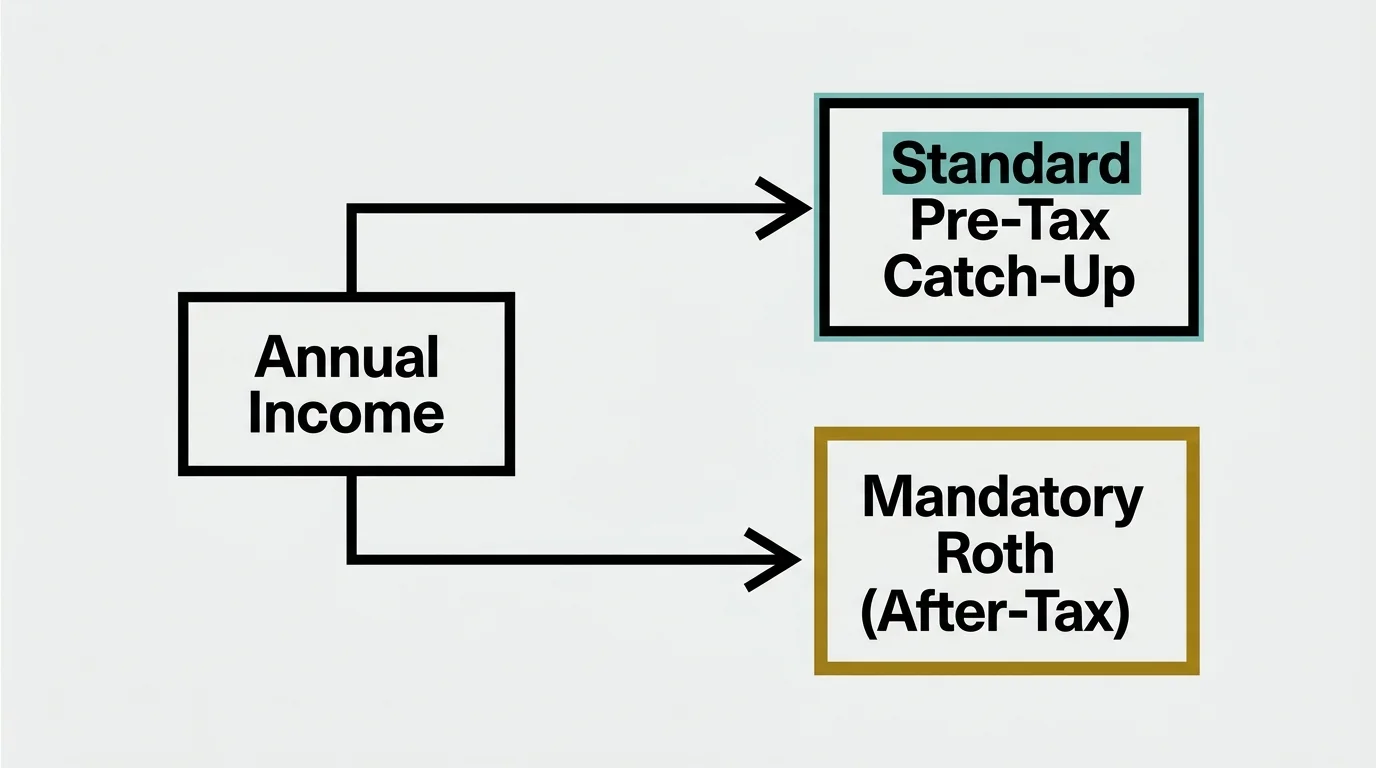
Under the updated standard, if your prior-year wages subject to Federal Insurance Contributions Act (FICA) tax exceeded $150,000 from the employer sponsoring the plan, all catch-up contributions you make must be made on a **Roth (after-tax)** basis. You can no longer make pre-tax catch-up contributions to traditional 401(k), 403(b), or 457(b) accounts if your wages exceed this statutory limit.
Guidance from the Consumer Financial Protection Bureau (CFPB) emphasizes reviewing your payroll tax setup early to avoid unexpected tax hits. Paying taxes upfront on Roth catch-up contributions increases your current taxable income for the year, but those funds grow tax-free and allow completely tax-free withdrawals during retirement.
If your plan sponsor does not currently offer a Roth account feature within your workplace savings plan, federal rules mandate that no plan participants across the company can make catch-up contributions until a Roth option is formally added to the plan structure.

7. Updated Federal Tax Brackets and Senior Tax Deductions
The Internal Revenue Service (IRS) revised federal income tax brackets, standard deduction thresholds, and income thresholds upward for tax year 2026 to keep pace with cost-of-living adjustments and statutory tax guidelines. These adjustments preserve your purchasing power by preventing inflation from pushing you into higher tax brackets when income levels remain static.
For retirees aged 65 and older, federal tax provisions continue to offer targeted relief through an additional standard deduction allowance. Single filers and heads of household aged 65 or older (or legally blind) receive an extra standard deduction amount added directly to the baseline standard deduction. Married couples filing jointly receive an additional bonus deduction amount for each spouse who meets the age requirement.
Utilizing these expanded standard deductions allows fixed-income seniors to reduce taxable income generated from taxable Social Security distributions, individual retirement account (IRA) distributions, or Required Minimum Distributions (RMDs). Check your total tax liabilities mid-year to determine whether updating your voluntary federal tax withholding settings on Social Security Form SSA-1099 or retirement account withdrawal forms is appropriate.

How to Protect Your Benefits and Avoid Common 2026 Policy Pitfalls
Policy updates across Medicare, Social Security, and taxes often create confusion—and online scammers frequently exploit public headline news to trick older adults into surrendering confidential personal information or funds. Protect your account information by remaining alert to widespread communication schemes.
Be vigilant against common fraud scenarios tied to federal policy shifts:
- Fake Medicare Card Scams: Fraudulent callers pretend to represent Medicare, claiming you need a new prescription card or must pay a fee to unlock the new $2,100 Part D out-of-pocket savings limit. Medicare never calls unsolicited to request personal financial credentials or payment.
- Social Security Suspension Threats: Impostors claiming to work for Social Security contact seniors stating their benefits will be frozen due to updated 2026 age rules unless they verify their Social Security number or pay a fine. SSA never threatens immediate benefit suspension over the phone.
- Misleading Advantage Plan Advertisements: Third-party marketing organizations run deceptive television or digital ads promising “free federal grocery cards” or “complete refund checks” attached to 2026 Medicare updates. Always verify benefit modifications directly through official government tools.
To verify authentic government outreach, seniors can contact local agencies through the Eldercare Locator before sharing any personal financial information.
Beyond staying safe from fraud, avoid administrative pitfalls like missing critical enrollment periods. Ensure you complete Medicare Part D plan evaluations during the fall Open Enrollment period (October 15 to December 7) so your preferred pharmacy networks and prescription formularies align with 2026 cost caps.

Action Plan: How to Prepare Your Retirement Strategy Now
Adapting your retirement financial plan to match 2026 policy changes takes only a few deliberate preparation steps. Following a systematic task list keeps your healthcare coverage robust and your savings strategy on target throughout the year.
- Audit Your Current Medication List: Compare your daily medications against the ten drugs covered under the 2026 Medicare Maximum Fair Price negotiations to calculate potential savings on monthly co-pays.
- Recalculate Healthcare Expenses: Adjust your monthly liquid budget to accommodate the updated Part B monthly premium ($202.90) and annual deductible ($283).
- Evaluate Workplace Contribution Elective Choices: If you are aged 60 to 63 and still working, adjust your payroll direct contributions to take advantage of the $11,250 super catch-up limit.
- Confirm Your Wage Base for Roth Contributions: Check your previous year’s W-2 earnings. If FICA wages exceeded $150,000, direct catch-up contributions into a designated Roth 401(k) account.
- Review Social Security Claiming Timelines: If you turn 66 or 67 in 2026, verify your full retirement age and calculate how claiming now versus waiting until age 70 impacts your long-term income profile.
Frequently Asked Questions
How do I know if my prescription drug is included in the 2026 Medicare price negotiations?
The first ten negotiated drugs taking effect in 2026 are Eliquis, Jardiance, Xarelto, Januvia, Farxiga, Entresto, Enbrel, Imbruvica, Stelara, and Fiasp/Novolog. If you take any of these, check your Medicare Part D or Medicare Advantage plan formulary details during open enrollment to see your specific co-pay reduction.
Will my Social Security benefit check automatically decrease because of higher Medicare Part B premiums?
Because the standard Medicare Part B monthly premium rises to $202.90 in 2026, the amount deducted directly from your Social Security check increases accordingly. However, overall monthly checks generally rise due to annual Social Security Cost-of-Living Adjustments (COLA), which help offset higher Part B premium costs.
What happens if I turn 60 in 2026—how do I sign up for the super catch-up contribution?
If you reach age 60, 61, 62, or 63 at any point during calendar year 2026, you automatically qualify for the expanded $11,250 catch-up contribution limit. You can update your salary deferral percentage directly through your employer’s online payroll or retirement portal.
Does the $2,100 Part D out-of-pocket cap apply to Medicare Advantage plans?
Yes. The $2,100 annual out-of-pocket cap applies to all Medicare Part D prescription drug coverage, including standalone Part D plans and Medicare Advantage plans with integrated prescription drug coverage (MAPD plans).
What should I do if my income exceeded $150,000 and I want to make 401(k) catch-up contributions in 2026?
If your FICA wages from your employer exceeded $150,000 in the previous calendar year, elect to direct all catch-up contributions to your plan’s Roth option. Coordinate with your employer’s HR department to ensure contributions are properly classified on an after-tax basis.
For additional senior resources, visit
Benefits.gov, National Institute on Aging (NIA) and Centers for Disease Control and Prevention (CDC).
Disclaimer: The information in this article is for educational purposes only and is not intended to be a substitute for professional financial, legal, or medical advice. Always consult with a qualified expert for advice tailored to your personal situation.









Leave a Reply