

Turning 65 unlocks a new phase of life, but it also triggers a wave of highly valuable financial benefits that can protect your retirement savings. If you are hitting this milestone right now, you are stepping into a landscape that looks vastly different than it did just a year ago. Recent legislative updates for 2026 have completely overhauled Medicare out-of-pocket limits, introduced massive new tax deductions, and expanded access to crucial assistance programs. Missing out on these adjustments means leaving thousands of dollars on the table. By understanding exactly how these rules have shifted, you can strategically lower your tax burden, cut your healthcare costs, and maximize your monthly cash flow right from your 65th birthday.

Perk 1: The New $2,100 Medicare Part D Out-of-Pocket Cap
For years, older adults faced extreme anxiety over the cost of prescription medications. A single diagnosis requiring specialty drugs could easily wipe out a fixed monthly budget. Fortunately, the landscape for prescription drug pricing has experienced a massive shift over the last two years, culminating in a powerful new benefit for those turning 65 right now.
According to Medicare.gov, the maximum out-of-pocket spending limit for Part D prescription drugs is now capped at $2,100 for 2026. This inflation-adjusted figure builds upon the $2,000 cap introduced in 2025. Once your out-of-pocket spending on covered medications hits this threshold, you pay absolutely nothing for your covered Part D prescriptions for the rest of the calendar year.
This cap eliminates the confusing and expensive “donut hole” coverage gap that plagued retirees for over a decade. Whether you take generic blood pressure medication or expensive name-brand insulin, your financial exposure is strictly limited.
Additionally, 2026 expands upon the Medicare Prescription Payment Plan. If you rely on an expensive medication early in the year, you no longer have to pay a massive lump sum at the pharmacy counter in January or February. You can opt into a payment program directly through your Part D provider to spread that $2,100 across manageable, zero-interest monthly installments. This smoothed-out payment system protects your monthly cash flow and prevents dangerous gaps in medication adherence due to sudden sticker shock.
Perk 2: The Triple-Layered Tax Deductions for 2026
When you file your federal income taxes, you must choose between taking the standard deduction or itemizing your deductions. Because recent tax reforms have made the standard deduction so generous, the vast majority of retirees choose the standard route. By doing so, you skip the headache of saving thousands of individual receipts for medical expenses and charitable donations.
When you turn 65, the IRS grants you a significant boost to your standard deduction. However, for the 2026 tax year, you actually gain access to a powerful triple-layered tax shield.
The first layer is the base standard deduction, which adjusts annually for inflation. The second layer is the “Additional Standard Deduction for Seniors,” a long-standing perk that activates the year you turn 65. The third layer is a brand-new provision resulting from recent legislation impacting the 2025–2028 tax years, which introduces a “Senior Bonus Deduction” designed to offset the impacts of inflation on fixed-income retirees.
This three-tier system dramatically reduces your taxable income. Here is a breakdown of how these numbers stack up for the 2026 tax year:
| Deduction Type | Single Filer (Age 65+) | Married Filing Jointly (Both 65+) |
|---|---|---|
| Base Standard Deduction | $16,100 | $32,200 |
| Over-65 Additional Deduction | $2,050 | $3,300 ($1,650 per spouse) |
| Senior Bonus Deduction (If Income Eligible) | $6,000 | $12,000 ($6,000 per spouse) |
| Potential Total Deduction | $24,150 | $47,500 |
If you are a single filer who turns 65 this year, you can potentially shield up to $24,150 of your income from federal income taxes without needing to itemize a single expense. Married couples where both spouses are 65 or older can shield an impressive $47,500. Keep in mind that the new Senior Bonus Deduction begins to phase out for single filers with a Modified Adjusted Gross Income over $75,000 and joint filers over $150,000, so strategic income planning is crucial.

Perk 3: Expanded Eligibility for Medicare’s Extra Help Program
The Medicare Extra Help program—also known as the Part D Low-Income Subsidy—is a federal program designed to help older adults pay for their monthly premiums, annual deductibles, and prescription copayments. In the past, this program featured a frustrating “partial” subsidy tier. If your income was just a few dollars over the strict limit, your benefits were severely slashed, leaving you struggling to cover the remaining costs.
Recent overhauls have completely eliminated this partial tier. Now, full Extra Help benefits are available to seniors earning up to 150% of the federal poverty level. This shift instantly brought full coverage to hundreds of thousands of older adults who previously fell into the gray area.
If you qualify for Extra Help in 2026, your Part D monthly premium drops to zero, your annual deductible drops to zero, and your prescription copays are capped at just a few dollars per medication. You also bypass any late enrollment penalties if you missed your initial window to sign up for a drug plan.
Beyond the direct financial savings, qualifying for Extra Help grants you a continuous Special Enrollment Period (SEP). Normally, Medicare beneficiaries must wait for the Annual Enrollment Period in the fall to change their health or drug plans. With Extra Help, you can change your Medicare Advantage or Part D plan once per calendar quarter. This flexibility is incredibly valuable if your doctor leaves your network or if your health needs suddenly change in the middle of the year.

Perk 4: Penalty-Free HSA Withdrawals for Any Expense
If you participated in a high-deductible health plan during your working years, you likely built up a Health Savings Account (HSA). These accounts are famous for their triple tax advantage: your contributions go in tax-free, the balance grows tax-free, and your withdrawals remain entirely tax-free when used for qualified medical expenses.
However, prior to age 65, an HSA comes with a strict set of handcuffs. If you withdraw funds for anything other than approved healthcare costs, the IRS hits you with a steep 20% penalty on top of standard income tax. This makes an HSA highly restrictive for younger adults.
The day you celebrate your 65th birthday, those handcuffs fall off. The 20% penalty completely vanishes. You can now withdraw your HSA funds for any reason—a dream vacation, a kitchen renovation, or just buying daily groceries. While you will owe regular income tax on non-medical withdrawals, your HSA essentially transforms into a traditional IRA with no early withdrawal fees.
You must be incredibly careful about one major rule regarding Medicare and HSAs. Once you enroll in any part of Medicare—including the premium-free Part A—you are legally barred from making new contributions to your HSA. If you continue working past 65 and wish to keep funding your HSA, you must proactively delay your Medicare enrollment. Be warned: if you apply for Medicare after you turn 65, your Part A coverage can be retroactively applied for up to six months. This retroactive start date can trigger an overlap, resulting in serious tax penalties for any HSA contributions made during those six months.

Perk 5: Surging State-Level Property Tax Breaks and Freezes
Rising inflation and skyrocketing housing markets have placed immense pressure on retirees living on fixed incomes. Over the past few years, property values have surged, taking local property tax bills along with them. In response, municipal and state governments have dramatically expanded their property tax relief programs for older adults in 2026.
When you turn 65, you become eligible for a variety of local tax breaks. One of the most common is the Homestead Exemption, which shields a specific dollar amount or percentage of your home’s assessed value from local taxes. Another powerful tool is the “Senior Circuit Breaker,” which kicks in when your property tax bill exceeds a certain percentage of your total income, providing you with a direct credit or rebate.
Perhaps the most valuable perk is the Senior Property Tax Freeze. Available in many counties, this program locks your home’s assessed value at the exact amount it was when you turned 65. Even if the housing market explodes and your home’s market value doubles over the next ten years, your property tax bill remains anchored to your age-65 valuation. This can save you tens of thousands of dollars over the course of your retirement.
Finding these hyper-local programs can be difficult because the rules change from county to county. The Eldercare Locator is an excellent government tool that connects you with your local Area Agency on Aging. By entering your zip code, you can find local experts who will guide you directly to the property tax relief applications specific to your exact municipality.
Common Mistakes to Avoid When Claiming Senior Perks
Stepping into your 65th year brings a wealth of benefits, but navigating the rules requires careful attention. A single missed deadline can cost you a lifetime of penalties. Here are the most critical mistakes to avoid.
Missing Your Medicare Initial Enrollment Period
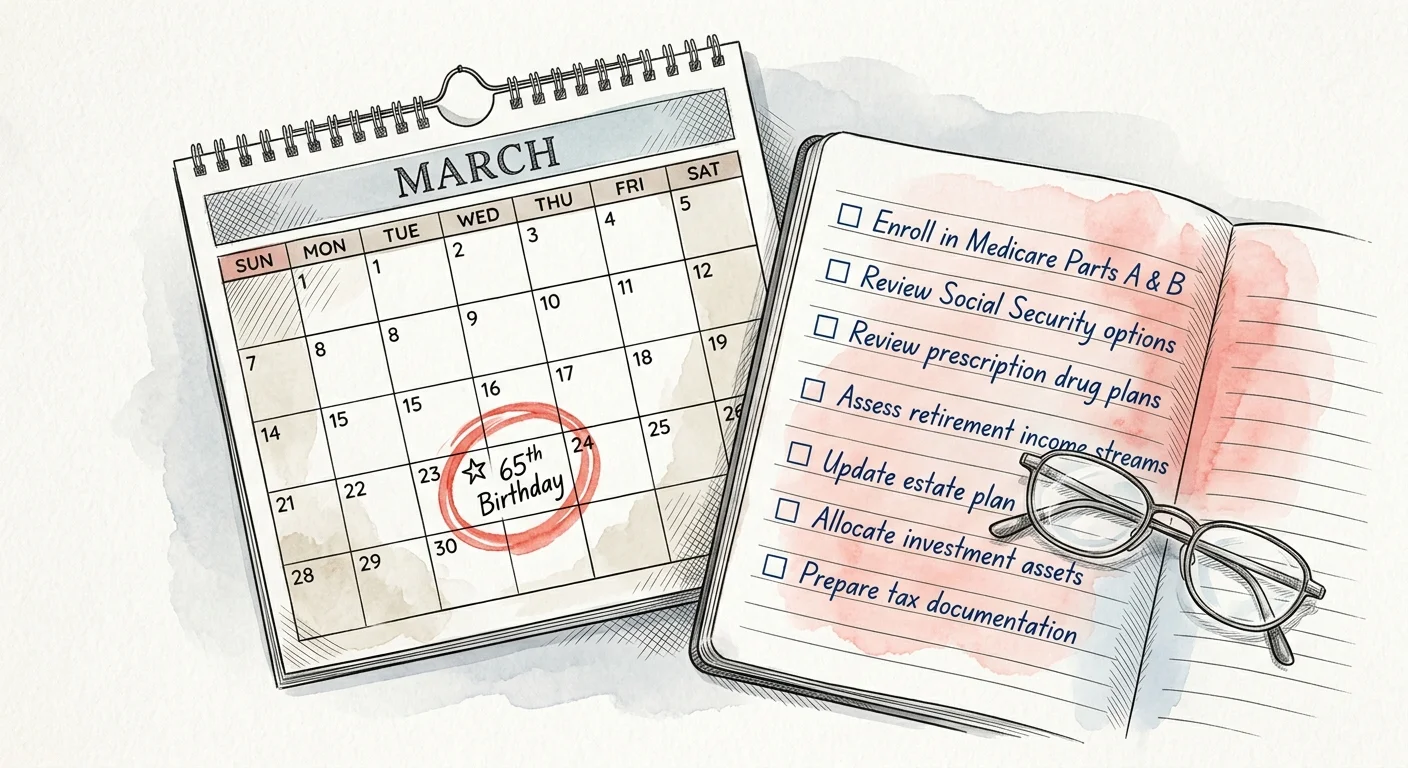
According to the Social Security Administration (SSA), you have a strict seven-month window to sign up for Medicare. This window begins three months before the month you turn 65, includes your birthday month, and extends for three months after. If you fail to enroll during this period—and you do not have qualifying creditable health coverage from an active employer—you will face lifetime late enrollment penalties on your Part B and Part D premiums.
Assuming Tax Breaks Are Automatic
While the IRS automatically calculates standard deduction increases based on your birthdate, local governments do not operate the same way. Municipal property tax freezes, circuit breaker rebates, and utility discounts require proactive applications. You must gather your proof of age, residency documents, and income statements, and submit them directly to your county tax assessor. Never assume your local government will automatically lower your tax bill.
Failing to Audit Your Financial Products
Many seniors stick with the same bank accounts, credit cards, and insurance plans they have used for decades. Research from the Consumer Financial Protection Bureau (CFPB) emphasizes that older adults should regularly review their financial products. Turning 65 often qualifies you for free checking accounts, waived maintenance fees, and significant senior discounts on auto and home insurance. Take the time to call your providers and ask for a complete review of your age-based discounts.
Frequently Asked Questions
Do I automatically get Medicare when I turn 65?
If you are already receiving Social Security retirement benefits, you will automatically be enrolled in Medicare Parts A and B starting the first day of the month you turn 65. Your Medicare card will arrive in the mail about three months prior to your birthday. If you are not yet drawing Social Security, you must actively apply for Medicare through the SSA website during your Initial Enrollment Period.
Does my standard deduction increase the exact year I turn 65?
Yes. The IRS allows you to claim the additional standard deduction for seniors for the entire tax year in which you turn 65, regardless of your actual birth month. Furthermore, if your 65th birthday falls on January 1, the IRS legally considers you to have turned 65 on December 31 of the previous year. This quirk allows you to claim the higher senior deduction a full year earlier than you might expect.
Can I still contribute to a 401(k) or IRA after age 65?
Absolutely. As long as you have earned income from working, you can continue to contribute to a traditional 401(k), a traditional IRA, or a Roth IRA. In fact, being over 50 already qualifies you for generous catch-up contributions, allowing you to deposit thousands of dollars above the standard annual limits to help accelerate your late-stage retirement savings.
How does the new Medicare Part D payment plan work?
The Medicare Prescription Payment Plan allows you to spread your out-of-pocket medication costs across the entire calendar year. Instead of paying large lump sums at the pharmacy counter in the early months of the year, you opt into the program through your Part D provider. Your pharmacy will charge you zero dollars at the counter, and your insurance provider will bill you in smaller, zero-interest monthly installments until you reach your $2,100 annual limit.
Will my property taxes automatically decrease at age 65?
No. Almost all municipal and state property tax relief programs require you to file an application. You must usually provide proof of age, proof of primary residency, and sometimes your income level to your local tax assessor’s office. Because application deadlines vary wildly by county, you should contact your local assessor’s office several months before your 65th birthday to ensure you don’t miss the filing window.
For additional senior resources, visit
National Institute of Mental Health (NIMH), National Institutes of Health (NIH) and Centers for Medicare & Medicaid Services (CMS).
Disclaimer: The information in this article is for educational purposes only and is not intended to be a substitute for professional financial, legal, or medical advice. Always consult with a qualified expert for advice tailored to your personal situation.









Leave a Reply