
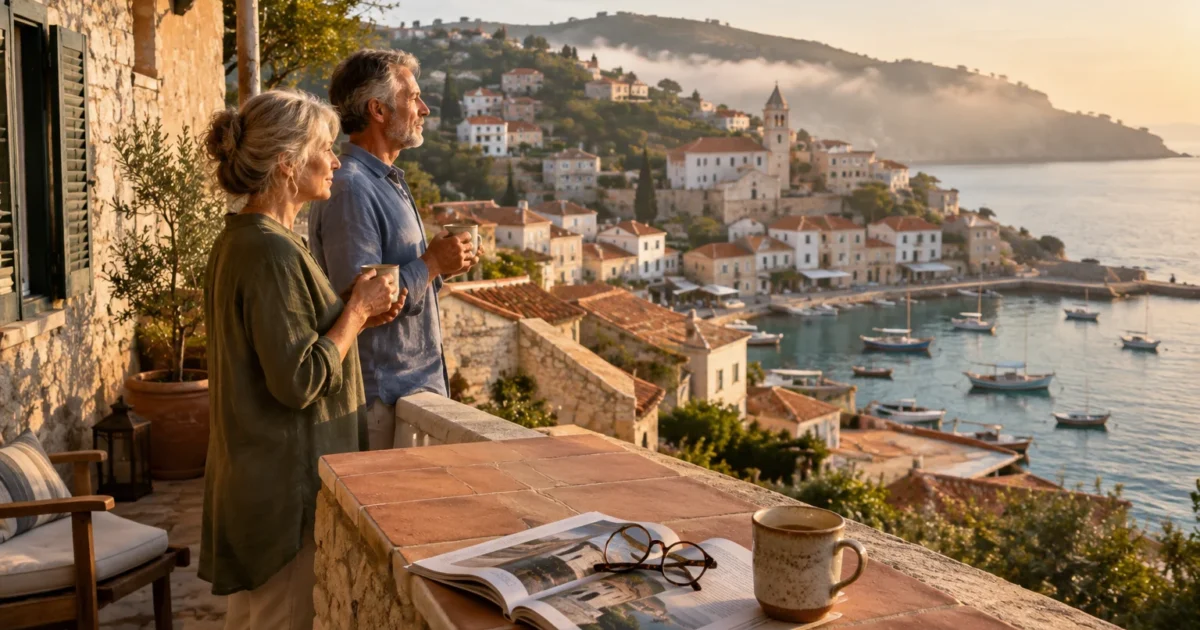
You can trade high living expenses and skyrocketing property taxes for a peaceful, affordable retirement abroad. Many retirees are quietly buying homes in smaller countries that offer generous residency perks and lower everyday costs.
These compact nations give you exceptional real estate value alongside top-notch healthcare and safe communities. Exploring international real estate for Americans lets you protect your nest egg without sacrificing modern comfort.
Here is your comprehensive guide to the twelve best small countries for retirement real estate today.

Why Retirees Are Choosing Smaller Nations for Real Estate
Massive retirement hotspots often suffer from crowded infrastructure, surging prices, and dense tourist traffic. Smaller nations frequently provide a more relaxed pace of life and welcoming, tight-knit communities.
You also benefit from simpler government systems and more responsive public services. Navigating municipal offices and obtaining residency permits is often faster in compact nations than in larger bureaucracies.
Recent research from AARP highlights that modern retirees prioritize lower overhead costs and walkable neighborhoods. Smaller countries deliver these exact benefits alongside favorable climates and scenic environments.
Moreover, several smaller nations provide distinct legal protections for foreign buyers. You can often secure full freehold property titles with the exact same rights as local citizens.
By focusing on less crowded destinations, your retirement savings stretch much further. You can secure ocean views or mountain retreats for a fraction of U.S. home prices.
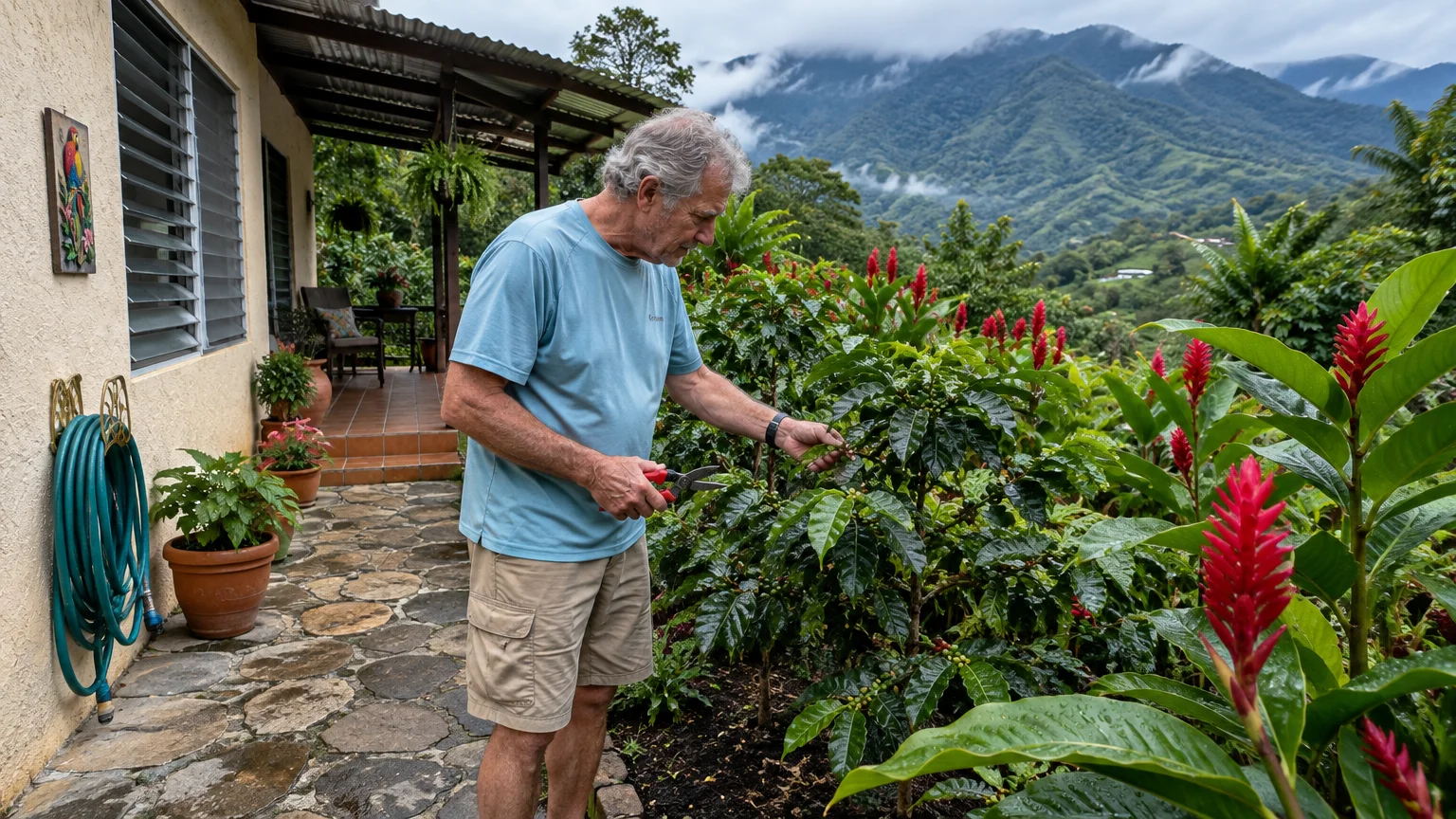
The Americas and Caribbean: Accessible Havens
The Western Hemisphere offers several remarkable options for retirees buying property abroad. These destinations keep you in nearby time zones, simplifying visits with family back home.
1. Panama
Panama remains an exceptional destination for buying a home overseas retirement. Its renowned Pensionado program offers steep discounts on utilities, entertainment, and medical services.
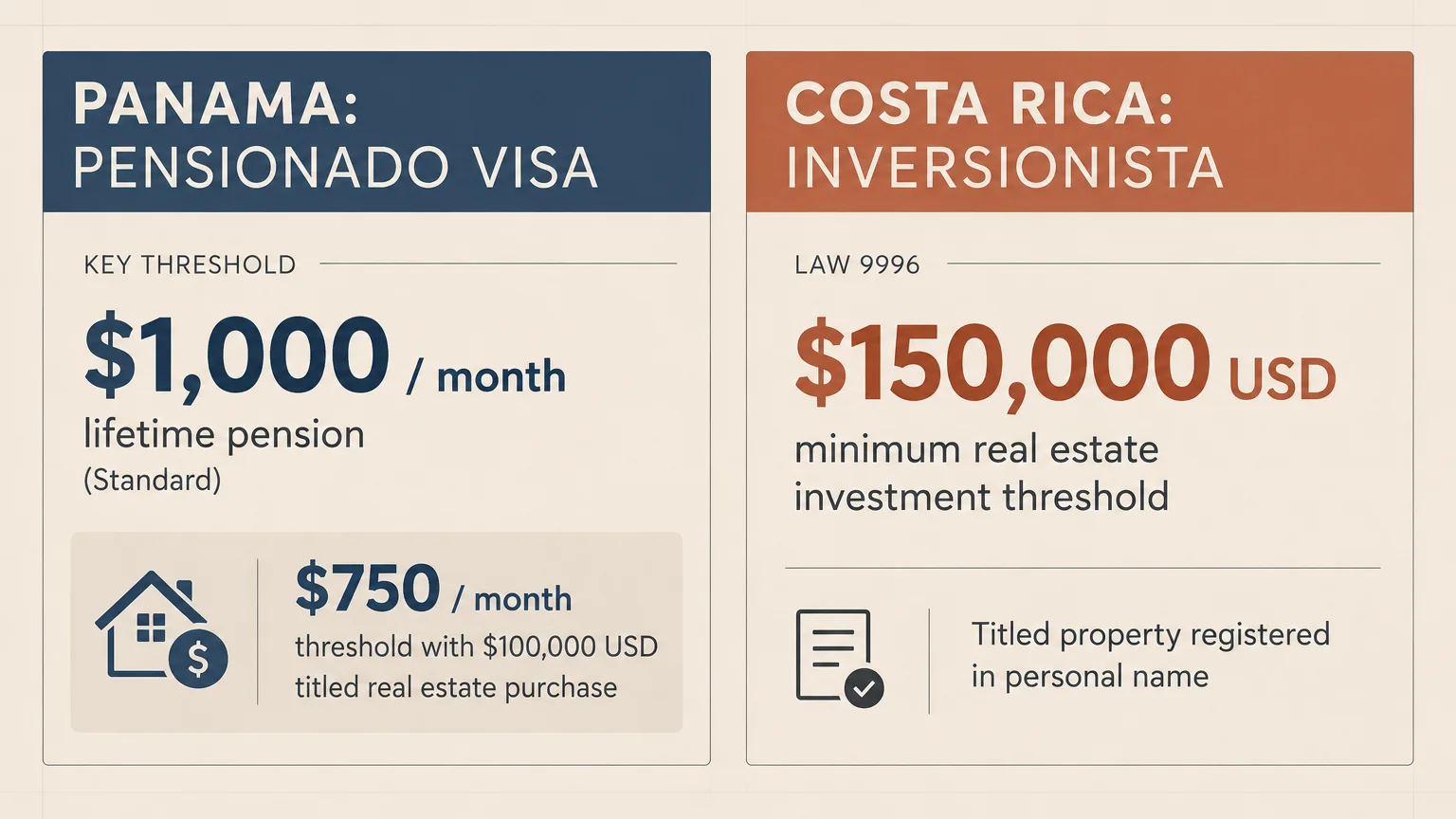
The standard Pensionado visa requires a lifetime pension of $1,000 USD per month. However, purchasing titled Panamanian real estate valued at $100,000 USD or more lowers your required pension threshold to $750 USD per month.
Retirees flock to the temperate highland valley of Boquete and beach communities like Coronado. Panama uses the U.S. dollar, eliminating currency exchange risks for your monthly budget.
2. Costa Rica
Costa Rica offers world-class biodiversity, stable democratic governance, and top-tier private healthcare. Under Law 9996, the government lowered the real estate investment threshold for the Inversionista temporary residency program to $150,000 USD.
The titled property must be registered in your personal name to qualify. Alternatively, you can secure residency through the Pensionado route by demonstrating a guaranteed lifetime pension of at least $1,000 USD per month.
Foreign buyers enjoy identical freehold property ownership rights as Costa Rican citizens outside restricted maritime zones. Popular expat communities include the Central Valley and the sunny beaches of Guanacaste.
3. Belize
Belize is the only English-speaking nation in Central America, removing language barriers for legal contracts and medical appointments. The country operates under British Common Law, providing strong property rights for foreign homeowners.
The Qualified Retired Persons (QRP) program welcomes applicants aged 40 and older who demonstrate at least $2,000 USD per month in foreign-sourced income. You must also spend at least 30 consecutive days each year inside the country.
Foreigners enjoy unrestricted freehold land ownership across Belize. Keep in mind that non-residents must pay an 8% stamp duty transfer tax on real estate purchases exceeding $10,000 BZD.
4. Dominican Republic
The Dominican Republic features miles of white sand coastline and modern hospital networks. Under Law 171-07, foreign retirees can receive expedited residency in roughly 45 business days.
You can qualify for this expedited route by showing a verifiable pension of at least $1,500 USD per month. Alternatively, investing at least $200,000 USD in Dominican real estate qualifies you for the Residencia por Inversión program.
This investment track provides valuable exemptions from property transfer taxes and import duties on personal household goods. Expats frequently purchase villas in Las Terrenas, Cabarete, and Punta Cana.
5. Uruguay
Uruguay offers South America’s most stable political climate, lowest corruption rates, and highest standard of living. Foreigners enjoy unrestricted freehold property rights, buying land under identical legal terms as locals.
While property ownership does not grant automatic residency, the independent retirement residency process remains straightforward. Uruguay provides calm, European-style architecture and pleasant coastal living in towns like Punta del Este.
Be aware of recent tax changes if you plan high-wealth investments. Effective January 2026, Law 20.446 raised the real estate threshold for Uruguay’s 11-year foreign-source income tax holiday to 12.5 million Indexed Units, or roughly $2,000,000 USD.
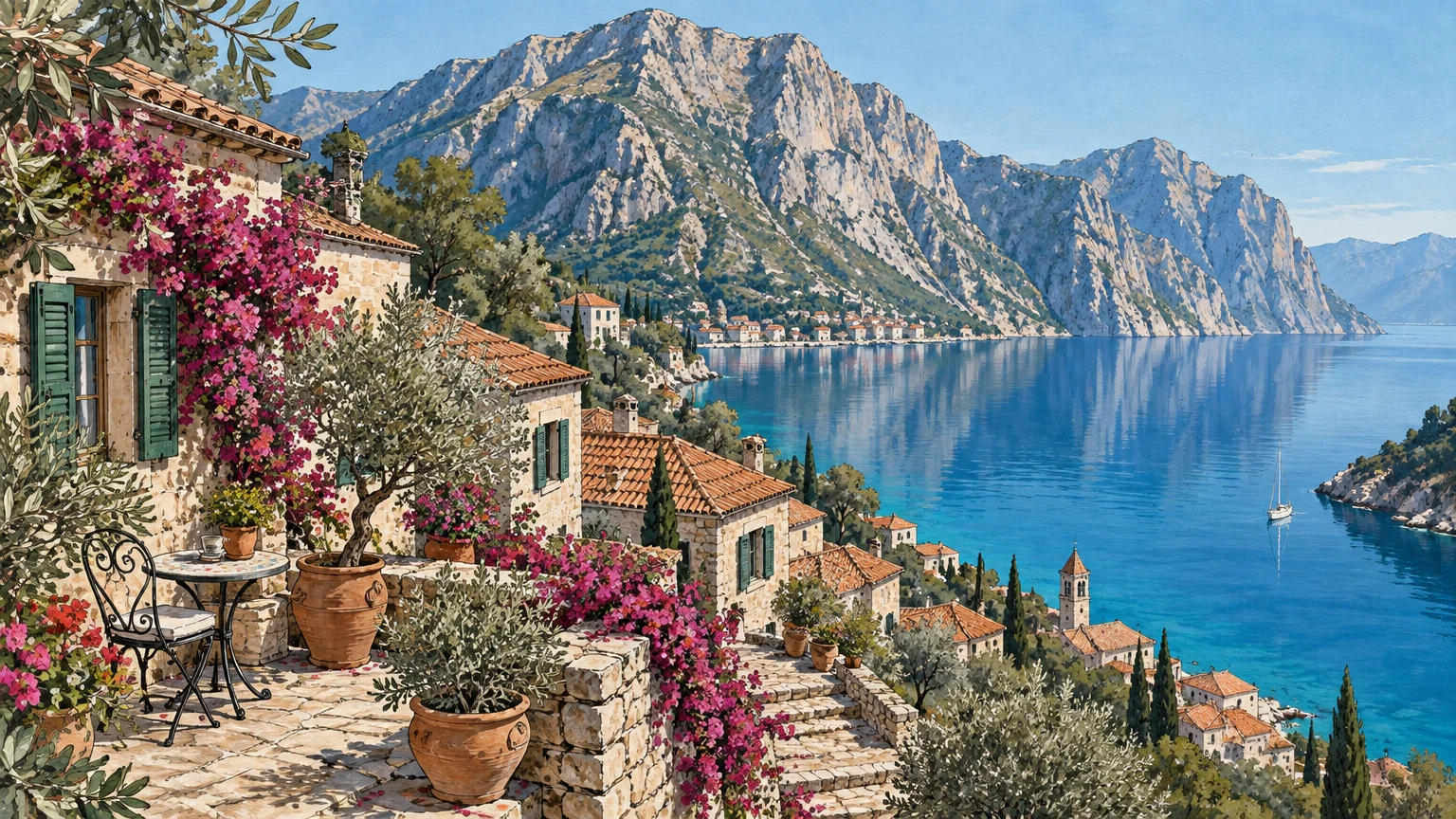
European Gems: Coastal Living and Mountain Retreats
Southern and Southeastern Europe feature historic charm, Mediterranean diets, and affordable coastal real estate. Many small nations provide stable legal frameworks and accessible residency programs.
6. Montenegro
Montenegro offers dramatic fjord landscapes and historic stone towns along the Adriatic Sea. Its real estate market provides exceptional value compared to neighboring Italy or Croatia.
Amendments to the Montenegrin Law on Foreigners, effective January 2026, established a minimum taxable property value of €150,000 for foreign buyers seeking a one-year renewable residence permit. Prior to this update, any purchase value qualified.
This change has formalized the market while keeping entry prices relatively affordable for U.S. seniors. The Bay of Kotor and Budva Riviera are the most popular coastal hubs for foreign homeowners.
7. Albania
Albania has quickly become one of the best countries to buy property for retirees seeking Mediterranean sunshine on a budget. Coastal cities like Saranda and Vlorë offer sea-view apartments at prices unheard of in Western Europe.
Under Article 85 of Albania’s Law on Foreigners, retirees can obtain a one-year renewable Pensioner Residence Permit. You only need to demonstrate an annual foreign pension of at least 1,200,000 ALL, which equals roughly $1,260 USD per month.
You must transfer these funds into an Albanian bank account and provide proof of accommodation of at least 20 square meters per person. Albania provides affordable private clinics and a rapidly growing expat network.
8. Cyprus
Cyprus combines year-round Mediterranean sunshine with a large English-speaking population and strong legal infrastructure based on English Common Law. It offers an attractive tax environment, including low tax rates on foreign pension income.
Under Regulation 6(2), third-country retirees can obtain fast-track permanent residency by purchasing a brand-new residential property valued at €300,000 or more, plus VAT. The home must be purchased directly from a primary developer.
Under tightened migration rules, the main applicant must prove a secure annual foreign income of at least €50,000, plus €15,000 for a spouse. Paphos and Limassol offer premier coastal properties with close proximity to private healthcare centers.
9. Malta
Malta is an English-speaking archipelago nestled between Sicily and North Africa. It offers safe streets, historic walled towns, and excellent public and private healthcare facilities.
Effective January 1, 2025, the Malta Permanent Residence Programme (MPRP) eliminated regional price discounts between Malta and Gozo. The program standardized the minimum property purchase price to €375,000 nationwide, or a qualifying lease of at least €14,000 per year for five years.
Applicants must demonstrate capital assets of at least €500,000 (with €150,000 liquid) or €650,000 (€75,000 liquid). You must also pay government administrative fees and make a mandatory €2,000 donation to a registered local charity.
10. Portugal
Portugal remains a beloved retirement destination thanks to its gentle climate, safety, and friendly local culture. However, you must navigate significant recent legislative changes regarding property and visas.
Under Law 56/2023, Portugal eliminated all real estate purchase options from its Golden Visa program. Foreign retirees can still buy property freely, but that purchase grants no immigration rights.
Retirees instead secure residency through the popular D7 Passive Income Visa. This visa requires proof of recurring foreign passive income equal to 100% of the minimum wage (€885 per month in 2025; €920 per month in 2026), plus 50% for a spouse.
11. Slovenia
Slovenia is a peaceful Central European nation bordered by the Julian Alps and a picturesque strip of Adriatic coastline. It ranks among the safest nations on earth and boasts immaculate alpine lakes and modern medical infrastructure.
Non-EU citizens face specific regulations when purchasing real estate directly, often requiring the establishment of a local business entity. However, many retirees rent first before acquiring property through established legal partnerships.
Towns like Bled, Radovljica, and coastal Piran offer stunning surroundings and clean air. The country’s central location allows you to explore Italy, Austria, and Croatia by car in just a few hours.

Island Escapes: The Indian Ocean Appeal
If you prefer tropical tranquility with modern banking and tax advantages, island nations provide compelling options. One compact country stands out on the global stage for senior property buyers.
12. Mauritius
Mauritius is an English- and French-speaking island nation off the coast of East Africa. It is widely recognized for its political stability, strong rule of law, and sophisticated financial sector.
Foreign buyers cannot purchase open-market residential land, but they can buy freehold property within approved government programs. These include the Property Development Scheme (PDS), Integrated Resort Scheme (IRS), and Smart Cities.
Purchasing a home valued at $375,000 USD or more in an approved project grants automatic permanent residence permits to you and your qualifying dependents. You retain this residency status for as long as you maintain ownership of the real estate.
Comparing Costs, Residency Thresholds, and Ownership Rules
Reviewing legal rules side by side helps you narrow down the best choices for your budget. The table below outlines real estate ownership and residency paths across these twelve nations.
| Country | Residency Route | Financial or Property Threshold | Foreign Ownership Rights |
|---|---|---|---|
| Panama | Pensionado Visa | $1,000/mo pension ($750/mo if buying $100k+ real estate) | Full freehold rights (titled) |
| Costa Rica | Inversionista or Pensionado | $150k real estate (Law 9996) or $1,000/mo pension | Full freehold outside maritime zone |
| Belize | QRP Program | $2,000/mo income; 8% non-resident stamp duty | Full freehold ownership |
| Dominican Republic | Law 171-07 or Investment | $1,500/mo pension or $200k real estate investment | Full freehold ownership |
| Uruguay | Independent Retirement | Proof of income; $2M investment for 11-yr tax holiday | Full freehold ownership |
| Montenegro | Property Residency | €150,000 taxable property minimum (eff. 2026) | Full freehold ownership |
| Albania | Article 85 Pensioner | 1,200,000 ALL/yr pension (~$1,260/mo) | Full freehold for buildings |
| Cyprus | Regulation 6(2) Fast-Track | €300,000 new build (+ VAT) + €50,000 foreign income | Freehold (subject to permit) |
| Malta | MPRP Residency | €375,000 purchase nationwide + capital requirements | Freehold (AIP permit rules apply) |
| Portugal | D7 Passive Income Visa | €885/mo income (2025) or €920/mo (2026); no property visa | Full freehold ownership |
| Slovenia | Independent Means | Sufficient foreign income; purchase rules apply | Entity purchase for non-EU |
| Mauritius | PDS / Approved Schemes | $375,000 USD purchase in approved developments | Freehold in approved developments |

Managing Healthcare, Taxes, and Social Security Overseas
Moving abroad requires careful coordination of your healthcare and federal retirement benefits. You must understand how U.S. programs interact with foreign legal systems before wiring funds.
According to Medicare.gov, original Medicare generally does not pay for healthcare services or prescription medications outside the United States. You must maintain comprehensive international private health insurance or enroll in your destination’s local health program.
Many retirees retain Medicare Part B while living abroad so they have coverage if they return to the U.S. for complex care. Dropping Part B can trigger permanent late-enrollment penalties if you ever re-establish domestic residency.
Fortunately, collecting your retirement income overseas is straightforward. The Social Security Administration (SSA) provides direct deposit to bank accounts in most foreign countries, eliminating currency hassles.
You also remain subject to U.S. federal tax filing obligations regardless of where you reside globally. Consulting a certified expat tax professional ensures you properly file Foreign Bank and Financial Accounts (FBAR) disclosures.
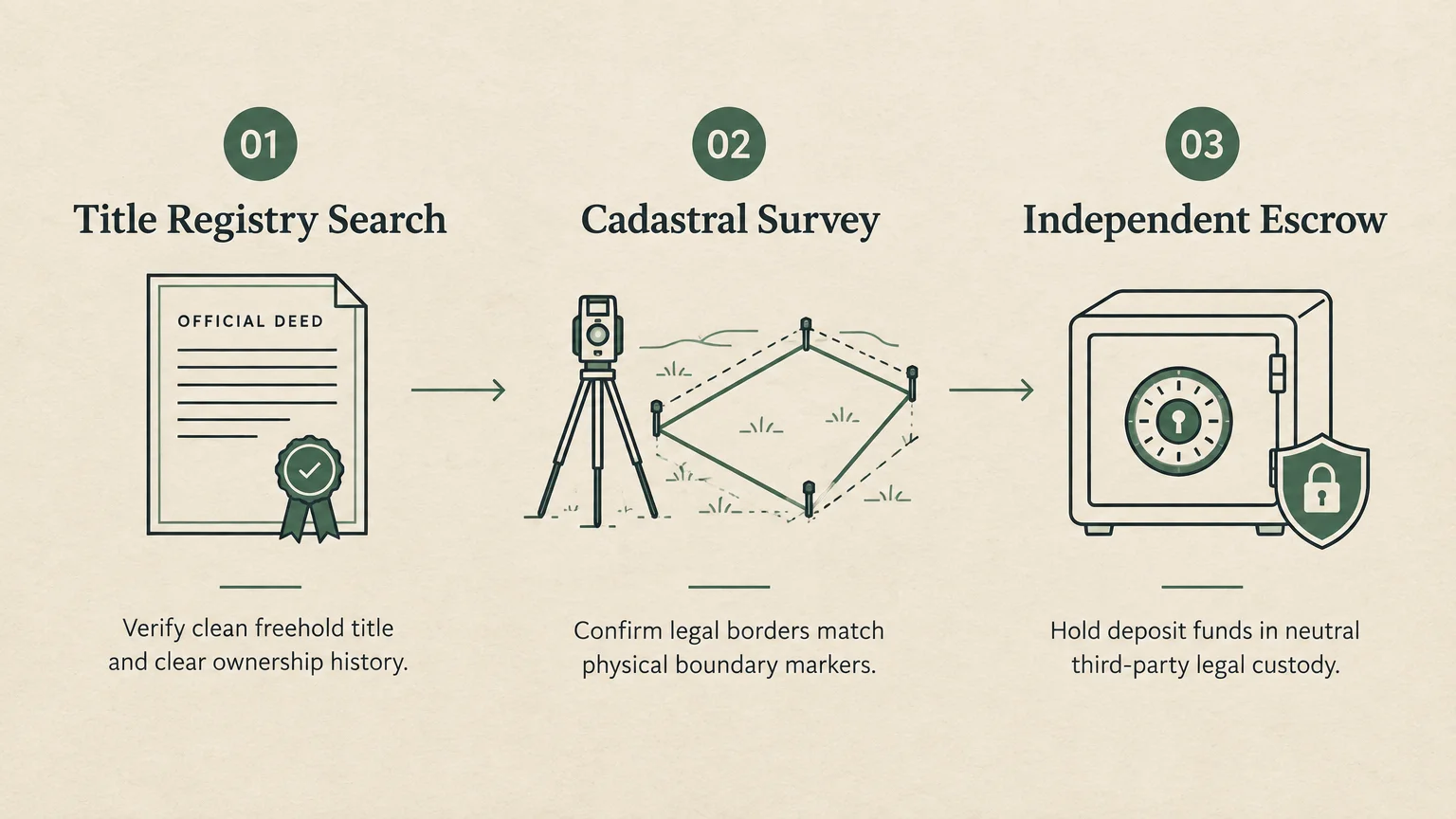
Costly Mistakes and Real Estate Scams to Avoid
Purchasing international real estate carries distinct legal risks that can endanger your hard-earned retirement nest egg. Being aware of common pitfalls protects you from devastating financial mistakes.
Never rely on a real estate developer’s in-house legal counsel. Always hire an independent, bilingual real estate attorney whose sole fiduciary duty is protecting your financial interests.
Verify clear property titles through public land registries before transferring any earnest money deposits. In coastal regions, ensure the parcel is titled land rather than a leasehold concession or protected ecological zone.
The Consumer Financial Protection Bureau (CFPB) warns consumers to exercise extreme caution with international wire transfers and unverified foreign financial intermediaries. Once a wire transfer clears overseas, recovering lost funds from fraudulent accounts is virtually impossible.
You should also rent for at least six to twelve months in your target neighborhood before buying. Renting helps you evaluate rainy seasons, neighborhood noise, and medical proximity before committing your savings.
Frequently Asked Questions
Can I still receive my U.S. Social Security benefits if I move overseas?
Yes, U.S. citizens can legally receive Social Security payments in almost every country worldwide. You can have payments deposited directly into an American bank account or an approved foreign financial institution.
Does Medicare cover medical emergencies or hospital stays in other countries?
No, Medicare does not provide medical coverage outside the United States and its territories. You must secure dedicated international health insurance or rely on local public and private care networks.
Does buying a home abroad grant me immediate permanent residency?
Property ownership does not automatically grant residency in every country. While nations like Mauritius and Cyprus link purchases directly to permanent residency, countries like Portugal and Uruguay require separate income-based visas.
What happens to my foreign real estate when I pass away?
Your overseas property will be subject to local inheritance laws unless you set up appropriate cross-border estate structures. Work with an international estate attorney to draft a will recognized by local probate courts.
How do property taxes abroad compare to standard U.S. rates?
Property taxes in most small retirement destinations are significantly lower than average U.S. rates. Many countries charge less than 0.5% of assessed value annually, with several offering complete property tax holidays for seniors.
For additional senior resources, visit
Centers for Medicare & Medicaid Services (CMS), Social Security Administration (SSA), Consumer Financial Protection Bureau (CFPB) and Administration for Community Living (ACL).
Disclaimer: The information in this article is for educational purposes only and is not intended to be a substitute for professional financial, legal, or medical advice. Always consult with a qualified expert for advice tailored to your personal situation.









Leave a Reply