

You do not need a windfall or aggressive stock market gambles to transform your retirement savings. Small, calculated financial moves can quietly double your wealth over time without disrupting your daily routine.
Many older adults mistakenly believe substantial growth stops once retirement nears. In reality, simple investing habits and compound interest retirement principles can accelerate your portfolio well past age sixty.
These eleven practical adjustments show you reliable ways to grow a nest egg safely, ensuring your money lasts throughout your golden years.
The Mathematics of Doubling: How Small Moves Compound
Growing your wealth does not require extreme speculative risks. Instead, compounding does the heavy lifting when you allow math and time to work together.
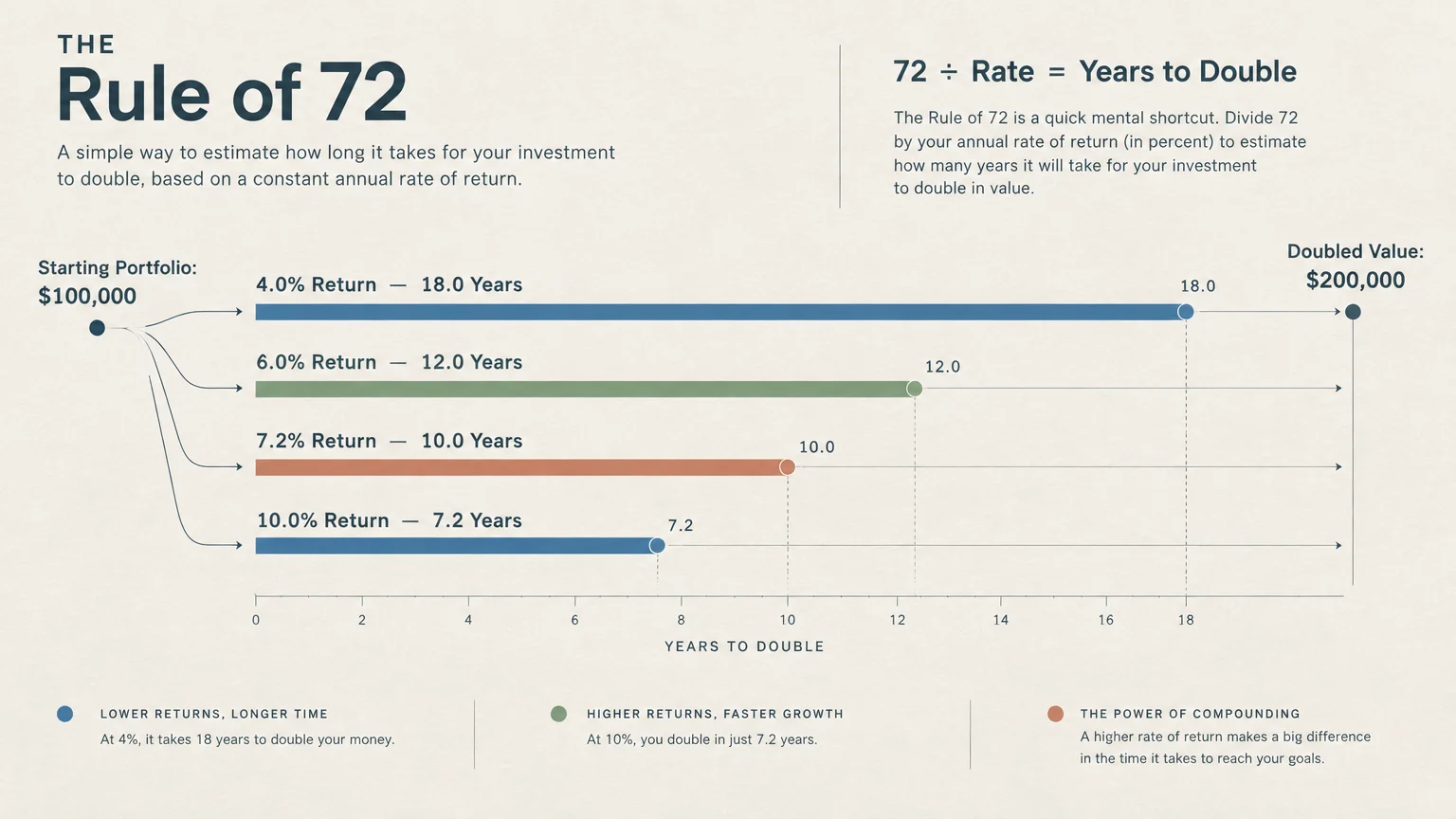
Financial planners frequently rely on the Rule of 72 to estimate portfolio growth. Dividing seventy-two by your expected annual rate of return reveals how many years your funds take to double.
For example, a portfolio generating a 7.2% annual return doubles in roughly ten years without adding another dime. At a 10% average nominal stock return, that doubling window drops to just 7.2 years.
Modest adjustments in your everyday habits significantly accelerate this timeline. Small changes in fees, asset allocation, and tax planning generate dramatic results over a single decade.
| Annual Rate of Return | Years Needed to Double | Value of a $100,000 Portfolio |
|---|---|---|
| 4.0% | 18.0 Years | $200,000 |
| 6.0% | 12.0 Years | $200,000 |
| 7.2% | 10.0 Years | $200,000 |
| 10.0% | 7.2 Years | $200,000 |
Harnessing this mathematical principle requires patience and consistency. Even if you are already in your sixties, compounding continues to multiply your assets throughout retirement.
Supercharging Accounts: Matches and Catch-Up Contributions
Capturing tax advantages through employer plans remains one of the fastest ways to expand savings. Targeted retirement savings tips create substantial momentum late in your career.
Move 1: Claiming the Entire Workplace 401(k) Match
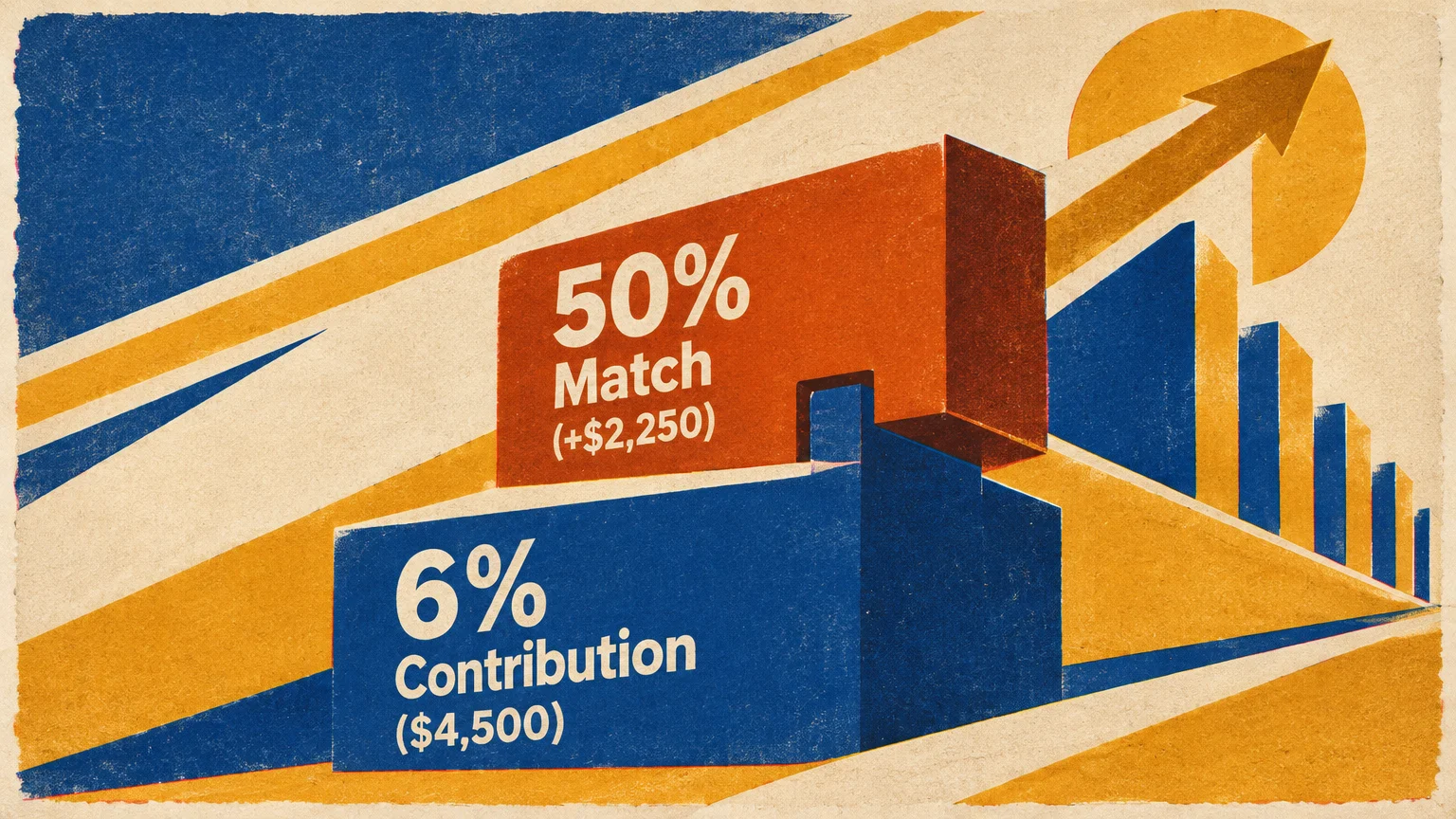
Skipping an employer 401(k) match leaves guaranteed retirement money on the table. Most workplace plans match fifty cents on the dollar up to 6% of your total salary.
This match delivers an immediate 50% to 100% return on your invested principal. No retail investment on Wall Street provides that guaranteed instant boost.
If you earn $75,000 and contribute 6%, your employer contributes an extra $2,250 every year. Over ten years, that matching money alone can grow into tens of thousands of dollars.
Move 2: Utilizing the SECURE 2.0 Super Catch-Up
Congress introduced a powerful tool for workers nearing the end of their careers. Under Section 109 of the SECURE 2.0 Act, retirement savers aged 60 through 63 receive an expanded savings limit.
Eligible savers can contribute a super catch-up amount of $11,250 to employer retirement plans like 401(k)s and 403(b)s. This provides a major increase over the standard age-50 catch-up limit.
Combining this super catch-up with standard limits allows workers to shelter substantial cash each year. Funneling this fresh capital into your account rapidly compounds your principal balance.
Move 3: Funding the Annual IRA Catch-Up Allowance
Individual Retirement Accounts offer another convenient avenue to expand your nest egg. For 2025, the standard IRA contribution limit is $7,000, rising to $7,500 in 2026.
Savers aged 50 and older can contribute an additional $1,000 catch-up in 2025, rising to $1,100 in 2026. Automating monthly transfers ensures you hit the maximum cap without feeling a sudden pinch.
Directing these contributions into broad market funds lets your extra savings compound without annual tax drag. Over a decade, consistent IRA deposits create a formidable secondary nest egg.
Trimming Leaks: Lowering Investment Fees and Reinvesting Dividends
Hidden investment expenses and idle cash distributions quietly drain thousands from retirement portfolios. Plugging these leaks allows your capital to compound at full strength.
Move 4: Purging High Investment Expense Ratios
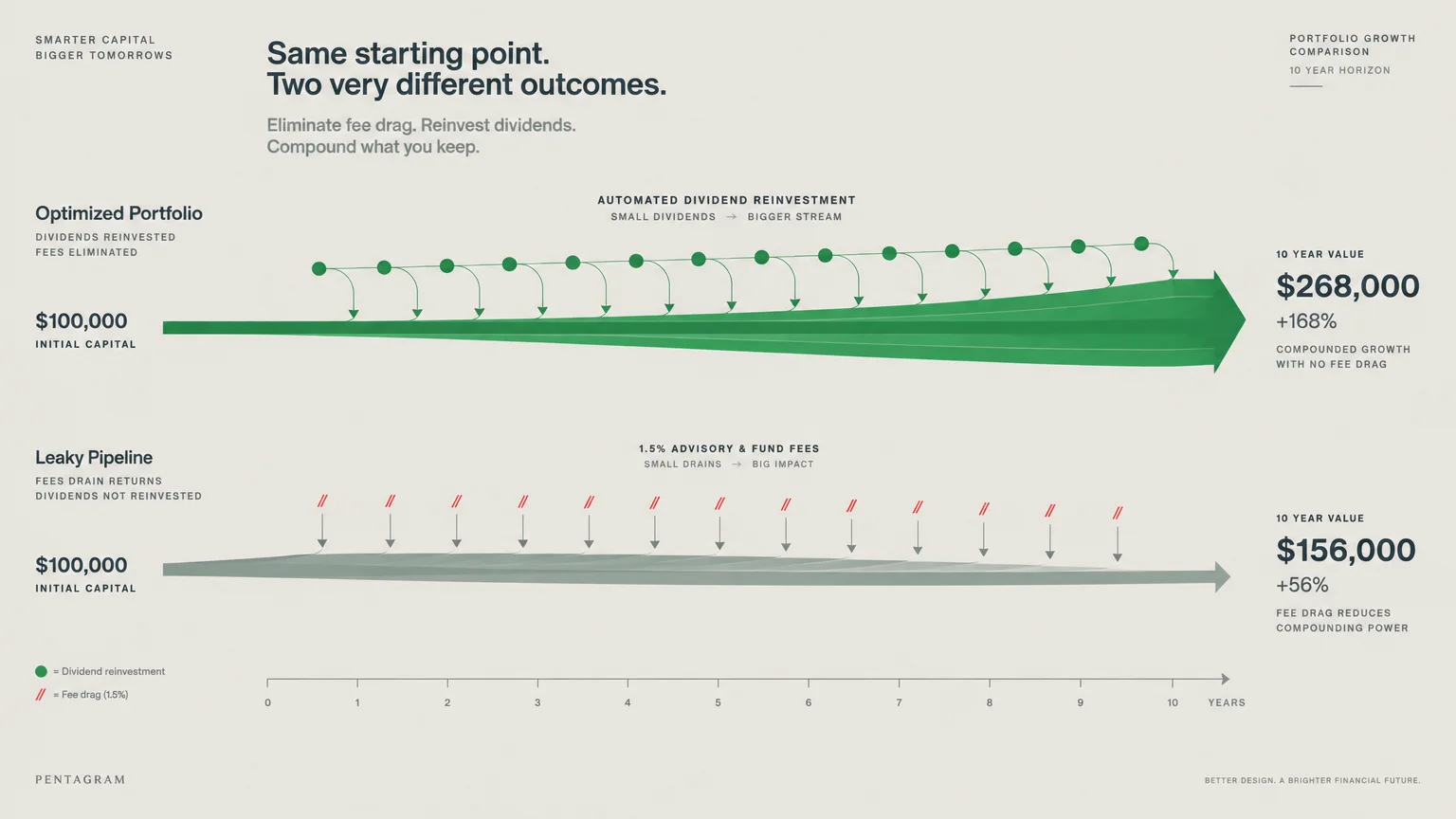
High management fees silently erode your wealth over time. Many actively managed mutual funds carry expense ratios above 1%, whereas broad-market index funds charge under 0.05%.
Benchmark research from the U.S. Department of Labor shows that a 1% fee difference reduces an account balance by roughly 28% over 35 years.
On a $25,000 balance growing at 7%, a 0.5% fee yields $227,000, while a 1.5% fee leaves only $163,000. Switching to low-cost index funds directly preserves that sixty-four-thousand-dollar difference.
Review the expense ratios inside your retirement accounts today. Replacing high-cost funds with low-cost alternatives keeps your investment gains working strictly for you.
Move 5: Automating Dividend Reinvestment Plans
Leaving cash dividends uninvested stunts your portfolio’s long-term trajectory. Enrolling in an automated Dividend Reinvestment Plan (DRIP) immediately uses every payout to buy more shares.
Historical market data analyzing the S&P 500 from 1960 through 2024 reveals that reinvested dividends generated roughly 85% of the index’s total return.
Automating this process harnesses compounding continuously; your new dividend-purchased shares generate their own payouts every single quarter.
This automated reinvestment strategy quietly doubles your share count over time. You accumulate additional assets during market dips without spending extra cash from your pocket.

Tax-Advantaged Growth: Health Savings and Roth Conversions
Taxes can consume a significant share of your retirement withdrawals if you do not plan ahead. Leveraging tax-sheltered accounts keeps more hard-earned money in your portfolio.
Move 6: Leveraging the HSA as an Auxiliary Retirement Account
Health Savings Accounts provide triple tax advantages: tax-deductible contributions, tax-free growth, and tax-free withdrawals for medical costs. In 2025, contribution limits reach $4,300 for individuals and $8,550 for families.
Savers age 55 and older can contribute an additional $1,000 annual catch-up. Once you reach age 65, the rules become even more generous.
You can withdraw HSA funds penalty-free for non-medical expenses after 65, paying standard income taxes just like a traditional IRA. This converts unused healthcare reserves into an auxiliary retirement account.
However, enrolling in Medicare Part A stops your ability to contribute to an HSA. Check your enrollment window through Medicare.gov before making final contribution decisions.
Move 7: Executing Tactical Roth Conversions in Tax Valleys
The window between retirement and starting Required Minimum Distributions offers a prime opportunity for strategic tax planning. Your taxable income often drops significantly during these gap years.
Converting portions of a traditional 401(k) or IRA into a Roth IRA locks in those lower tax rates. The converted funds then grow tax-free, eliminating future distribution mandates on that capital.
Gradual conversions prevent large tax spikes in any single year. Over time, shifting assets into a Roth protects your nest egg from future tax hikes.

Strategic Timing: Maximizing Social Security and Preserving Principal
The timing of your benefit claims and distribution choices directly dictates portfolio longevity. Strategic patience shields your core assets from catastrophic market drops.
Move 8: Delaying Social Security for an 8% Annual Bump
Claiming Social Security at age 62 permanently locks in a reduced benefit. According to the Social Security Administration (SSA), delaying claims past your Full Retirement Age yields delayed retirement credits.
Your monthly benefit grows by 8% per year for every year you delay up to age 70. This creates a permanent 24% to 32% guaranteed income increase, easing withdrawal pressure on your investments.
A larger guaranteed monthly check reduces the amount you must pull from your investments each year. Leaving your principal intact allows your investments to double over time.
Move 9: Establishing a Multi-Year Cash Buffer
Selling stocks during a market downturn locks in painful paper losses. This phenomenon, known as sequence of returns risk, can cripple a nest egg during early retirement.
Maintaining two to three years of living expenses in cash or short-term bonds creates a protective buffer. You can spend cash during market dips, allowing your stock investments time to rebound.
This simple buffer prevents panic selling during economic contractions. By avoiding forced sales at market bottoms, your core equity portfolio continues compounding uninterrupted.

Everyday Cash Flow: Sweeping Yield and Auditing Expenses
Daily banking choices often seem insignificant, yet they influence your total net worth over time. Capturing lost income at the bank level strengthens your overall foundation.
Move 10: Sweeping Cash from Checking into High-Yield Accounts
Traditional brick-and-mortar checking accounts frequently pay a meager 0.01% annual interest rate. Leaving substantial cash reserves in low-yield accounts allows inflation to eat away your purchasing power.
Sweeping idle cash into high-yield savings accounts or short-term Treasury bills generates meaningful risk-free returns. On a $30,000 cash reserve, a 4% yield produces $1,200 each year in effortless income.
Automate transfers so any checking balance exceeding monthly operational needs moves into high-yield storage. This simple investing habits routine ensures every dollar works continuously.
Move 11: Conducting Annual Recurring Expense Audits
Forgotten subscriptions, unnecessary memberships, and outdated insurance policies quietly siphon cash each month. Research from AARP emphasizes that regular spending reviews uncover hundreds of dollars in hidden savings.
Cutting $150 in redundant monthly expenses frees up $1,800 annually. Reinvesting that recovered money into a diversified index fund can compound into tens of thousands of extra dollars.
Set a calendar reminder every autumn to review auto insurance, homeowners insurance, and cable bills. Shopping around for competitive rates frees up immediate cash without downgrading your lifestyle.

Protecting Your Gains: Scams and Common Portfolio Pitfalls
Doubling your nest egg requires careful defense against unexpected losses. Guarding your wealth from deceptive schemes and emotional mistakes preserves your progress.
Financial scams targeting older adults have reached unprecedented levels. According to the Consumer Financial Protection Bureau (CFPB), seniors lose billions annually to aggressive imposter frauds and deceptive investment pitches.
Never transfer money or disclose account passwords to unverified callers offering guaranteed double-digit returns. Legitimate financial professionals never demand urgent wire transfers or secret transactions.
Avoid panic selling whenever the stock market experiences normal volatility. Cashing out during market dips turns temporary paper losses into permanent financial damage.
Finally, ensure you calculate and withdraw Required Minimum Distributions on schedule once you reach age 73. Missing an RMD triggers severe IRS excise penalties that quickly eat away at your hard-earned balance.
- Check financial credentials through regulatory databases before hiring an advisor.
- Maintain two-factor authentication on all banking and brokerage accounts.
- Review credit reports annually to identify unauthorized accounts or identity theft.
- Designate a trusted contact person on your investment accounts for emergency verification.
Frequently Asked Questions
Can you really double a retirement nest egg after age 60?
Yes, you can double your nest egg after age 60 through disciplined investing and smart tax strategies. Utilizing the Rule of 72, a 7.2% annual return doubles your money in roughly ten years.
Combining catch-up contributions with dividend reinvestment accelerates this timeline without requiring high-risk market speculation.
How do low fees make such a large difference over time?
Investment fees directly reduce the amount of principal left in your account to compound. Over decades, even a 1% fee difference compounds into tens of thousands of lost growth.
Switching to broad-market index funds keeps that capital inside your portfolio, multiplying your total returns.
What is the SECURE 2.0 super catch-up contribution?
The SECURE 2.0 Act established an enhanced catch-up contribution limit for workers aged 60, 61, 62, and 63. Eligible savers can contribute up to $11,250 to employer retirement plans like 401(k)s.
This provides an extra boost over standard catch-up limits, allowing older workers to aggressively maximize their final working years.
Why should I consider delaying Social Security if I need income now?
Delaying Social Security increases your monthly payout by 8% per year between your Full Retirement Age and age 70. This guaranteed return beats most low-risk financial products available today.
If feasible, spending from a cash buffer while delaying claims permanently raises your lifetime guaranteed income.
Is money in a Health Savings Account safe to use for general retirement?
Yes, once you reach age 65, an HSA functions similarly to a traditional IRA. You can withdraw funds for non-medical expenses penalty-free, paying only regular income tax.
Any withdrawals used for qualified healthcare expenses remain 100% tax-free at any age.
For additional senior resources, visit
Alzheimer’s Association, American Heart Association, Benefits.gov and National Institute on Aging (NIA).
Disclaimer: The information in this article is for educational purposes only and is not intended to be a substitute for professional financial, legal, or medical advice. Always consult with a qualified expert for advice tailored to your personal situation.









Leave a Reply