
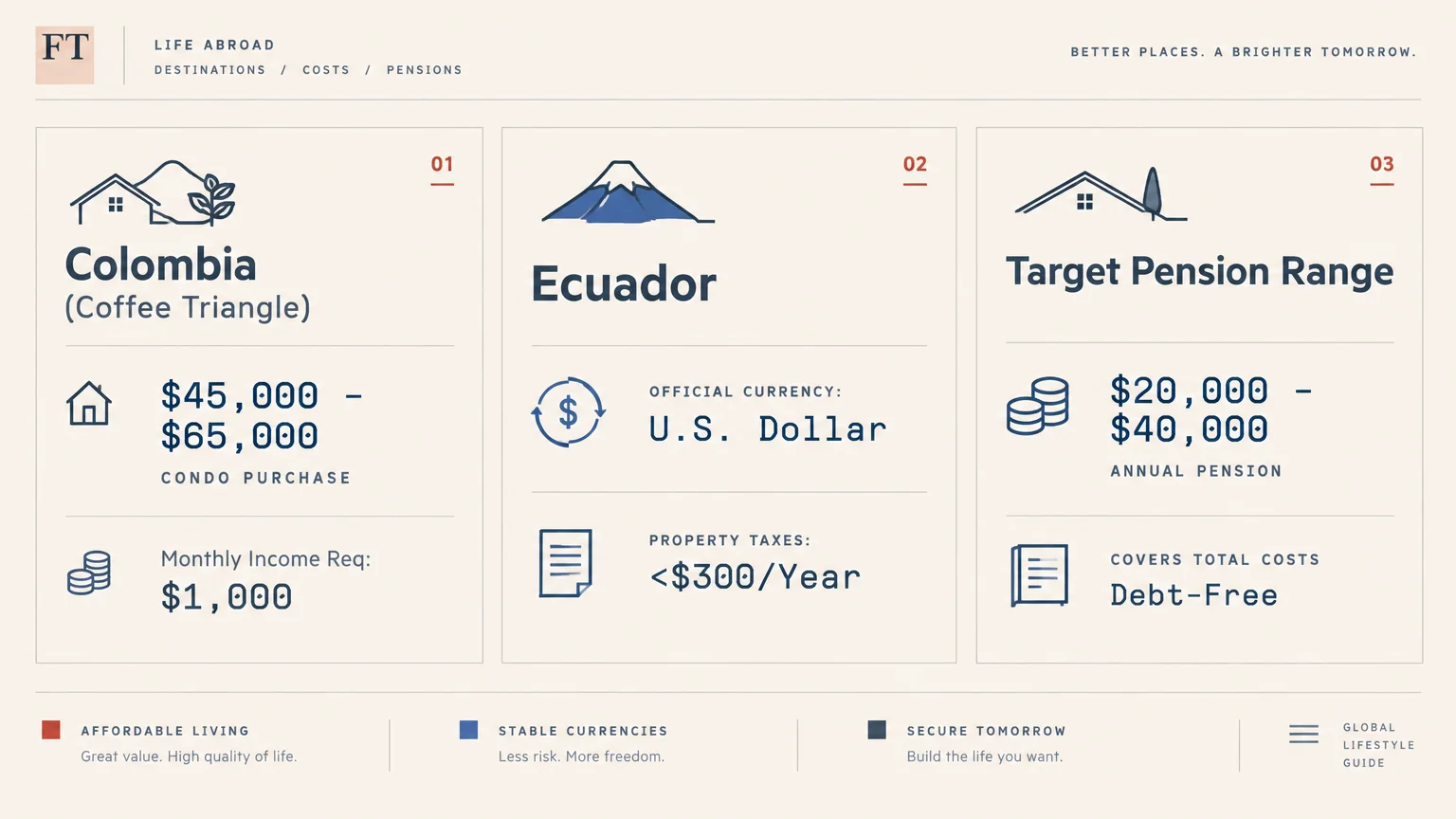
A typical private or public U.S. pension generates between $20,000 and $40,000 annually. In many vibrant regions across the globe, that single year of pension income or a modest lump sum buys a comfortable home outright.
Eliminating a monthly mortgage or rent payment transforms your golden years. You can exchange escalating living costs in the United States for debt-free homeownership, scenic surroundings, and financial peace of mind.
Exploring cheap homes overseas lets your hard-earned retirement dollars stretch further than ever before. Here is where you can buy real estate debt-free and thrive on your pension.
In this guide9 sections
- How Your Pension Secures Outright Homeownership Overseas
- Four Affordable Latin American Havens
- Four Low-Cost European Gems
- Four Low-Cost Southeast Asian Destinations
- Country Comparison: Real Estate Costs and Living Expenses
- Critical Legal Pitfalls and Financial Risks to Avoid
- Managing Healthcare and Benefits as an Expat Senior
- A Practical Roadmap to Buying Property Abroad
- Frequently Asked Questions
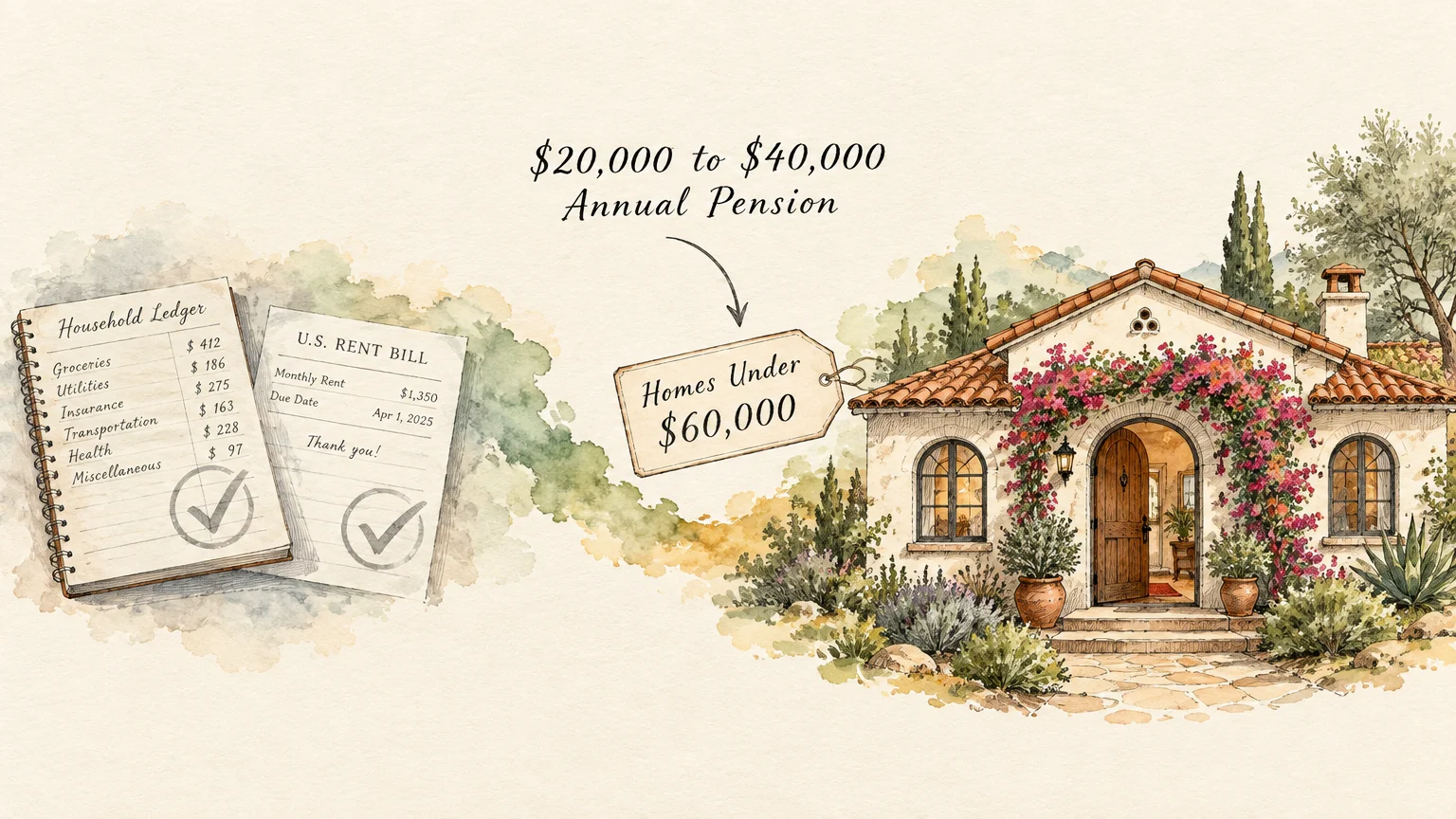
How Your Pension Secures Outright Homeownership Overseas
Rising domestic housing expenses force many American retirees to spend over half their fixed income on shelter. In contrast, several stable foreign markets offer move-in ready residences for less than $60,000.
Favorable exchange rates amplify the purchasing power of your U.S. dollar. When you buy a house abroad with pension funds, your money commands far greater real estate value.
A modest lump sum or a couple of years of disciplined pension savings can purchase real estate with cash. Owning your residence free and clear shields you from future rent spikes and economic shocks.
Property taxes in these international destinations rarely exceed a few hundred dollars per year. As a result, you preserve your ongoing pension checks for travel, healthcare, and leisure.
Retire abroad affordable housing strategies allow you to stop worrying about market swings. You gain complete financial independence while enjoying an exceptional quality of life.
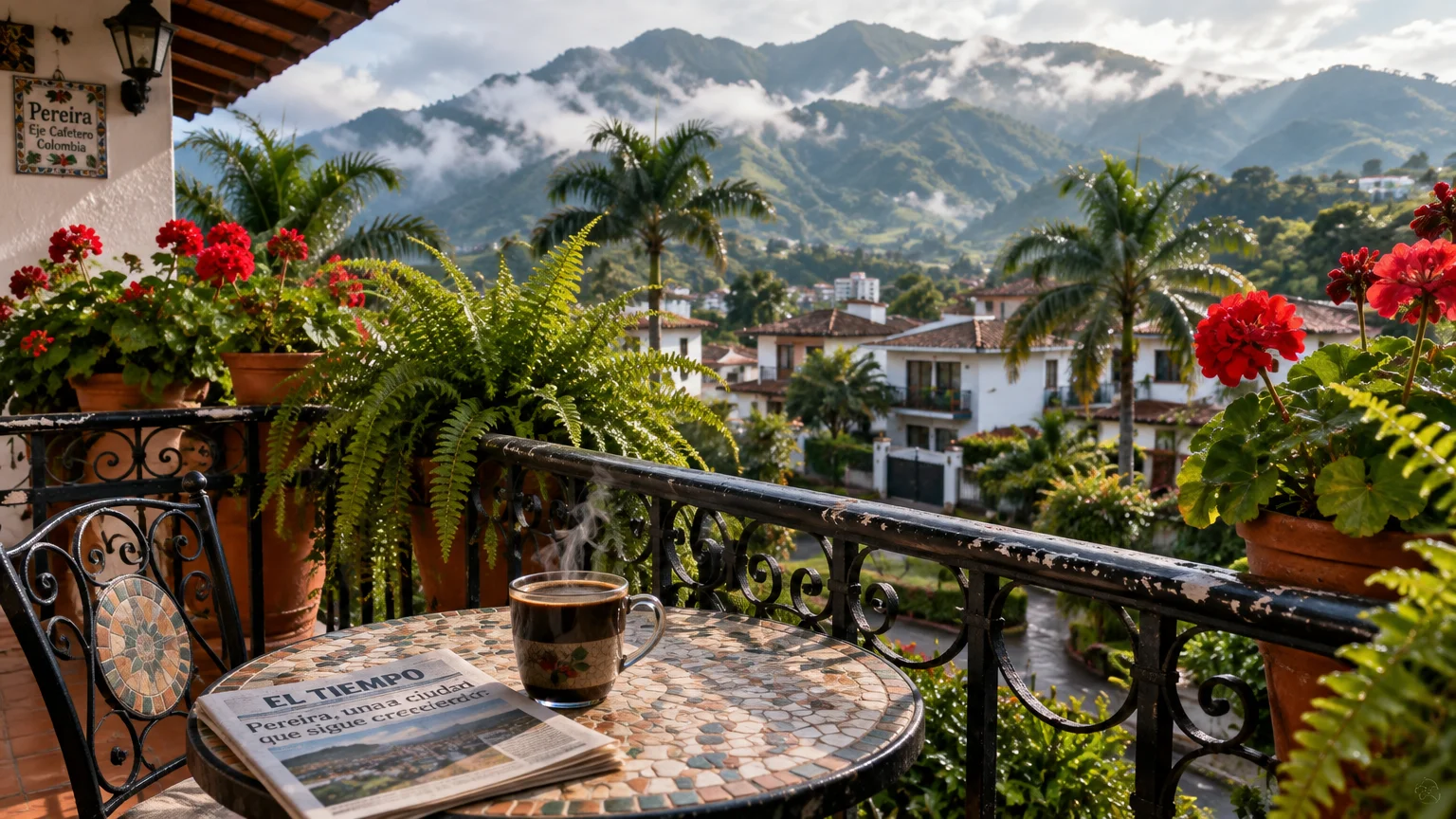
Four Affordable Latin American Havens
Latin America remains a perennial favorite for retirees due to its proximity to the United States. You can easily find countries with cheap real estate that boast warm climates and rich cultural heritage.
Many communities in this region feature established expat networks and English-speaking medical professionals. Here are four standout destinations where outright purchase prices fit a standard pension budget.
1. Colombia
Colombia offers modern living amenities at a fraction of North American costs. The Coffee Triangle region—including cities like Pereira and Manizales—features eternal spring weather and lush mountain views.
You can purchase a high-quality, two-bedroom condominium in a secure residential complex for $45,000 to $65,000. Your monthly utility bills and building administration fees rarely top $120.
The Colombian pensioner visa requires proof of recurring monthly retirement income of roughly $1,000. This low threshold makes residency straightforward for nearly any pension recipient.
2. Ecuador
Ecuador uses the U.S. dollar as its official legal currency. This monetary system eliminates currency conversion fees and volatile exchange rate swings for American retirees.
Cities like Loja and Cotacachi offer quiet, safe neighborhoods surrounded by picturesque Andean peaks. In these areas, comfortable single-family houses and spacious townhomes frequently sell for $40,000 to $60,000.
Ecuador also grants substantial senior discounts on utility bills, cultural events, and domestic flights. These structural benefits keep ongoing overhead exceptionally low after you purchase your property.
3. Mexico
Mexico provides unmatched geographic convenience, allowing you to drive or fly home quickly to visit grandchildren. While popular beach resorts carry steep price tags, the colonial interior remains remarkably affordable.
Towns in the states of Puebla, Guanajuato, and Veracruz feature charming historic architecture and temperate mountain air. You can buy a traditional brick home or condo for $50,000 to $75,000 outright.
Foreigners enjoy secure ownership rights throughout Mexico’s interior through direct fee-simple deed titles. Property taxes on a $60,000 home rarely surpass $150 annually.
4. Panama
Panama maintains a modern infrastructure, top-tier private hospitals, and the renowned Pensionado residency program. This program delivers 20% to 50% discounts on medical services, hotel stays, and dining.
While Panama City commands luxury prices, charming countryside towns like Las Tablas and David present incredible bargains. You can acquire a sturdy, single-story detached home for $55,000 to $70,000.
Panama also uses the U.S. dollar alongside its local Balboa, ensuring price stability. Straightforward titled deeds give foreign property buyers identical ownership rights to native Panamanian citizens.
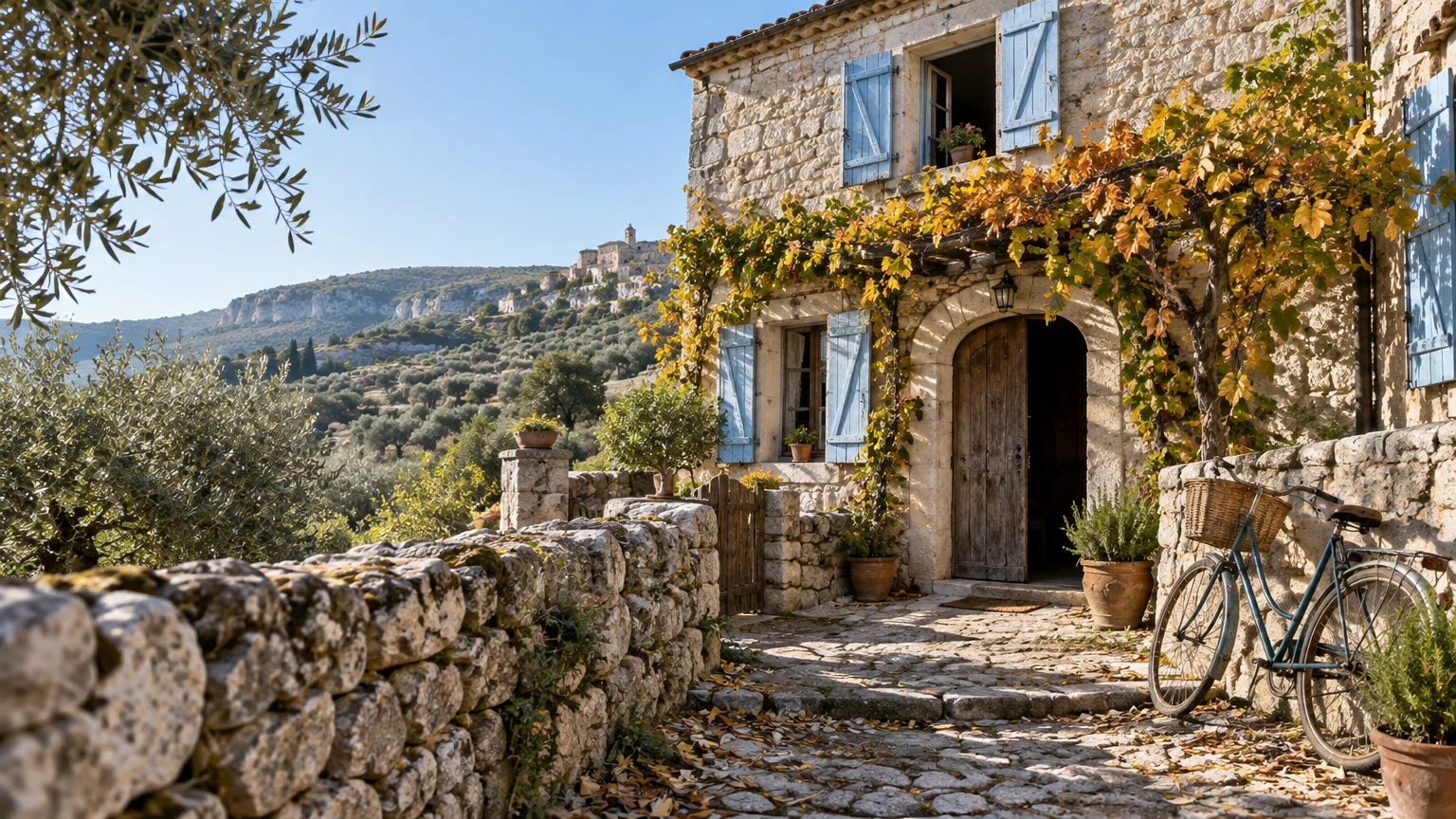
Four Low-Cost European Gems
Many Americans assume that European property ownership requires millions of dollars in net worth. However, southern and eastern European nations offer cheap homes overseas with rich history and world-class culinary cultures.
Living in these regions connects you directly to affordable European rail networks and modern medical systems. The following four countries deliver accessible real estate deals to budget-conscious retirees.
5. Italy
Widespread news stories celebrate Italy’s abandoned one-euro houses, but those projects demand expensive, complex renovations. Instead, realistic bargains exist in move-in ready village homes across regions like Abruzzo, Molise, and Sicily.
You can acquire a renovated, two-story stone townhouse in a peaceful medieval village for $35,000 to $55,000. These properties feature public water, electricity, and fiber-optic internet connectivity.
Local village markets supply fresh vegetables, artisan cheeses, and regional wines for pennies on the dollar. Living debt-free in the Italian countryside provides a relaxed, community-focused daily lifestyle.
6. Bulgaria
Bulgaria ranks as the most affordable member state within the entire European Union. Its low cost of living pairs with a flat 10% personal income tax rate.
In rural provinces around Veliko Tarnovo, solid brick homes with large fruit orchards sell for $25,000 to $45,000. Many of these properties need only minor cosmetic updates before you move inside.
Bulgaria maintains a stable currency pegged directly to the euro. Retirees enjoy four distinct seasons, scenic mountains, and close proximity to Black Sea beaches.
7. Albania
Albania sits directly on the Ionian and Adriatic seas, boasting the same turquoise waters as neighboring Greece. Yet its property prices remain a fraction of broader Mediterranean real estate averages.
Cities such as Korçë, Gjirokastër, and secondary coastal sectors near Vlorë feature modern apartments priced between $35,000 and $60,000. Your pension covers dining out at seafood tavernas several nights a week.
Albanian immigration policy warmly welcomes American retirees with simple one-year residency authorizations. The country grants clear title ownership rights to international real estate buyers.
8. Portugal
While coastal Lisbon and the Algarve have experienced significant price inflation, Portugal’s central interior remains an incredible value. The districts of Castelo Branco and Guarda showcase ancient castles and olive groves.
You can find restored granite village cottages and traditional townhouses listed between $45,000 and $70,000. The country ranks consistently among the safest nations on earth.
Portugal features clean highways, high-speed rail, and an outstanding public and private medical infrastructure. An outright home purchase eliminates your single largest living cost in this sunny European haven.
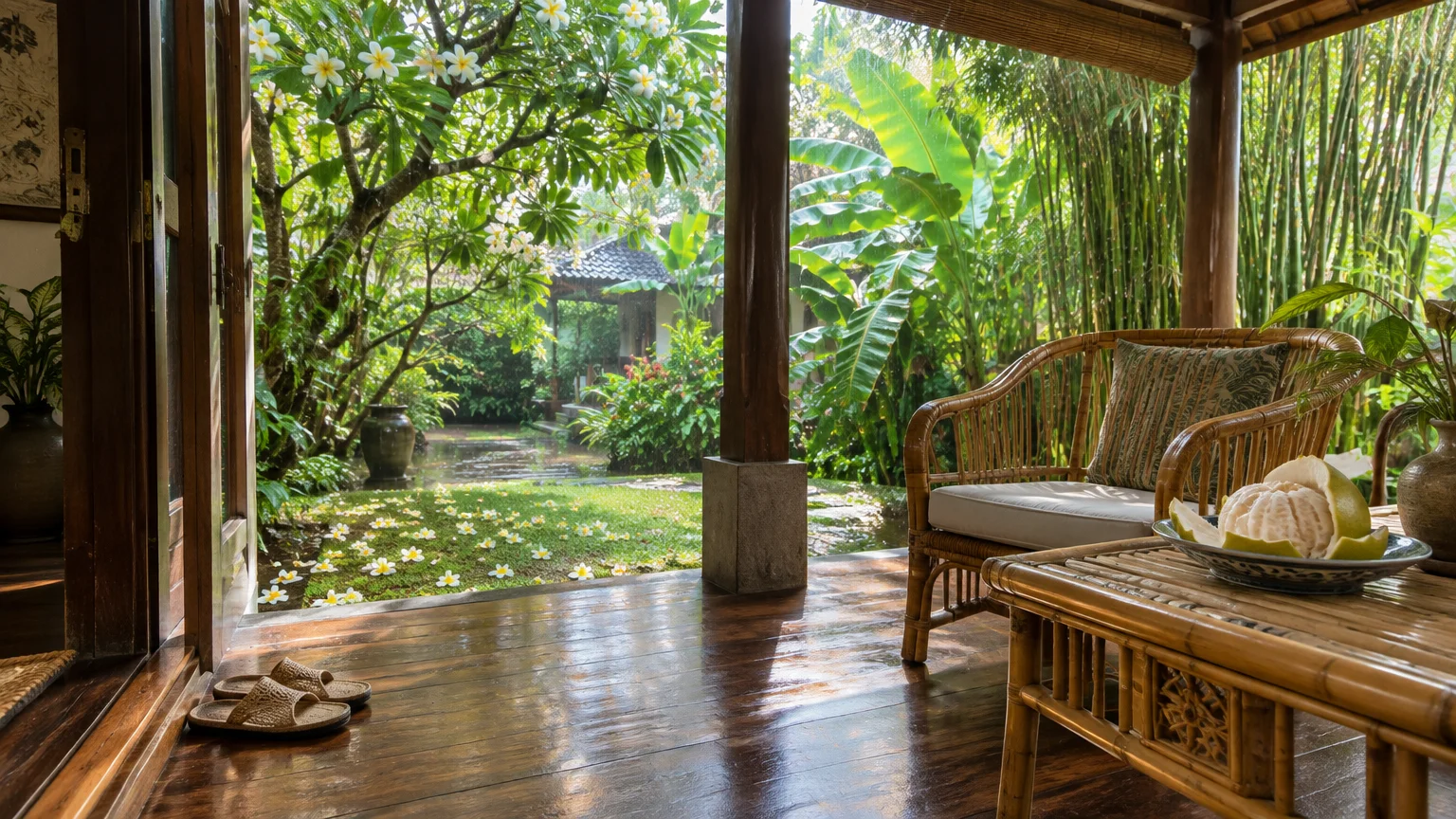
Four Low-Cost Southeast Asian Destinations
Southeast Asia provides exotic landscapes, tropical temperatures, and warm, hospitable cultures. Your retirement dollars go extraordinarily far in this corner of the globe.
While foreign land ownership faces legal restrictions across parts of Asia, legal condominium purchase frameworks are straightforward. These four nations let you buy affordable homes outright while retaining full legal security.
9. The Philippines
The Philippines offers an easy cultural transition because English serves as an official national language. The country’s Special Resident Retiree’s Visa (SRRV) is one of the most accessible retirement visas worldwide.
While foreigners cannot own land directly, the Philippine Condominium Act allows foreigners to hold 100% freehold titles to condo units. In coastal cities like Dumaguete and Iloilo, contemporary condos cost between $35,000 and $55,000.
You can walk to supermarkets, beachside promenades, and medical clinics within minutes. Warm weather and low service costs let you hire affordable household help whenever needed.
10. Thailand
Thailand combines world-class culinary traditions with advanced, internationally accredited hospitals. The cost of living allows pension recipients to enjoy comfortable lifestyles on modest checks.
Under Thai law, foreign nationals can purchase freehold condominium units outright under a building’s 49% foreign ownership quota. In northern cultural centers like Chiang Mai, modern units sell for $35,000 to $60,000.
These residential buildings usually include on-site swimming pools, fitness centers, and 24-hour security teams. Thailand’s retirement visa requires simple proof of pension income or a maintained bank deposit.
11. Malaysia
Malaysia stands out for its well-maintained highway networks, modern airports, and widespread English proficiency. The federal government welcomes foreign retirees through tiered residency options.
Historic heritage cities like Ipoh and secondary zones in Penang provide exceptional dining and charming colonial streetscapes. Move-in ready apartments in serene neighborhoods frequently trade between $45,000 and $70,000.
Malaysia enforces transparent English-common-law legal procedures for real estate transactions. This legal clarity gives foreign buyers strong consumer protections during title transfers.
12. Cambodia
Cambodia has emerged as a compelling retirement alternative with rapid economic growth and dollarized commerce. The U.S. dollar circulates freely alongside the Cambodian Riel throughout daily trade.
Foreigners can own property outright through “strata titles,” which grant direct ownership of apartment units above the ground floor. In pleasant riverside towns like Kampot and Battambang, modern apartments cost $30,000 to $50,000.
Cambodia grants straightforward, renewable retirement visas without burdensome financial deposits. The warm climate and relaxed community rhythms appeal to active seniors seeking simplicity.
Country Comparison: Real Estate Costs and Living Expenses
Comparing international options helps you narrow down destinations that match your financial comfort zone. Each market balances property prices against regular monthly living overhead.
The table below highlights typical purchase prices for move-in ready residences and average living expenses for a couple. Use these figures as baseline estimates for your overseas retirement planning.
| Country | Typical Home Price (USD) | Estimated Monthly Living Cost | Foreign Ownership Type |
|---|---|---|---|
| Colombia | $45,000 – $65,000 | $1,000 – $1,400 | Fee-Simple Title |
| Ecuador | $40,000 – $60,000 | $1,100 – $1,500 | Fee-Simple Title |
| Mexico (Interior) | $50,000 – $75,000 | $1,200 – $1,700 | Direct Deed |
| Panama (Rural/Secondary) | $55,000 – $70,000 | $1,300 – $1,800 | Titled Ownership |
| Italy (Rural) | $35,000 – $55,000 | $1,300 – $1,700 | Freehold Title |
| Bulgaria | $25,000 – $45,000 | $900 – $1,200 | Freehold (Building) / LLC (Land) |
| Albania | $35,000 – $60,000 | $1,000 – $1,300 | Freehold Title |
| Portugal (Central) | $45,000 – $70,000 | $1,400 – $1,800 | Freehold Title |
| Philippines | $35,000 – $55,000 | $950 – $1,300 | Condominium Freehold |
| Thailand | $35,000 – $60,000 | $1,000 – $1,400 | Foreign Quota Condominium |
| Malaysia | $45,000 – $70,000 | $1,100 – $1,500 | Strata Freehold |
| Cambodia | $30,000 – $50,000 | $900 – $1,200 | Strata Title (Floor 1+) |
Critical Legal Pitfalls and Financial Risks to Avoid
Buying property in an unfamiliar country involves real risks that require prudent oversight. You must safeguard your retirement nest egg against fraud, title defects, and regulatory barriers.
Research from the Consumer Financial Protection Bureau (CFPB) highlights the importance of vetting international money transfer services to prevent costly wire fraud. Never wire purchase deposits directly to private individual seller accounts.
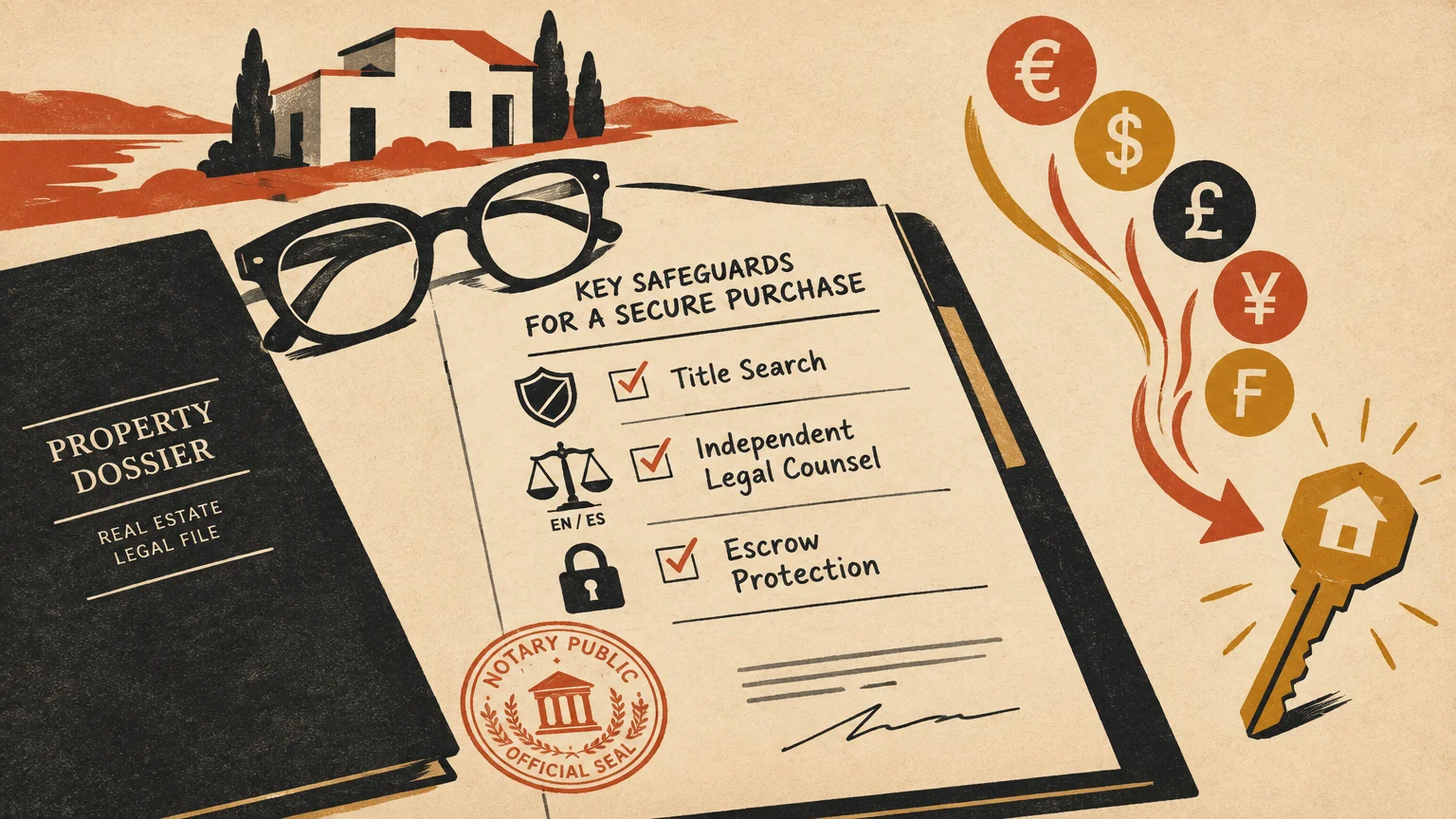
Always hire an independent, bilingual real estate attorney who represents your interests alone. Never rely on the real estate agent’s in-house lawyer or the seller’s personal notary.
Title searches must confirm that properties have no lingering utility debts, unpaid municipal taxes, or inheritance liens. In multigenerational families abroad, distant relatives can claim ownership if a title transfer is sloppy.
Avoid buying unbuilt properties based solely on colorful developer brochures. Stick to existing, turn-key homes that you can physically inspect alongside a certified local structural engineer.
Watch out for local zoning ordinances and historical conservation covenants. Some older European properties restrict internal remodeling or require costly specialized stone restorations.
Managing Healthcare and Benefits as an Expat Senior
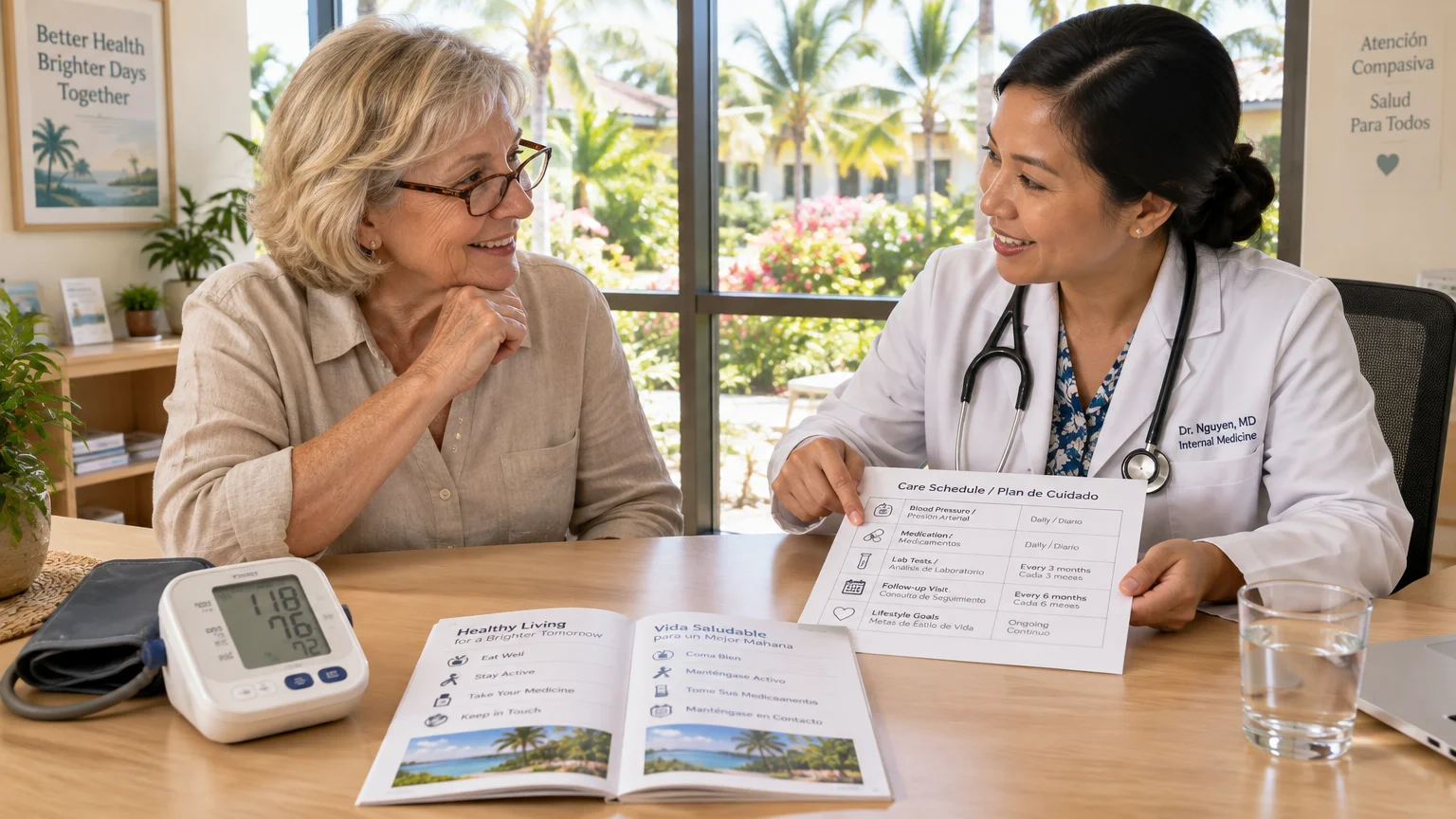
Relocating overseas changes how you manage your monthly income and routine health checkups. Setting up reliable banking and medical safety nets prevents unexpected logistical emergencies.
According to the Social Security Administration (SSA), you can receive your monthly payments directly into foreign bank accounts in most countries. International direct deposit minimizes currency exchange overhead and eliminates missed checks.
Healthcare planning requires realistic budgeting because domestic policies do not follow you abroad. According to guidance on Medicare.gov, standard Medicare generally does not cover healthcare services outside the fifty United States.
Many expat retirees purchase international private medical coverage or pay cash for appointments. Private doctor consultations in countries like Colombia or Thailand often cost less than $35 out of pocket.
Keep your Medicare Part B coverage active if you intend to return to the U.S. for complex treatments. Dropping Part B triggers permanent late-enrollment penalty surcharges upon your eventual return.
Review the local availability of your ongoing prescription drugs before committing to a home purchase. Some medications commonly prescribed in America face distribution limits or carry different trade names overseas.
A Practical Roadmap to Buying Property Abroad
Rushing into an international real estate purchase is the easiest way to make an expensive mistake. Following an orderly, stepwise strategy protects your savings and confirms your lifestyle choice.
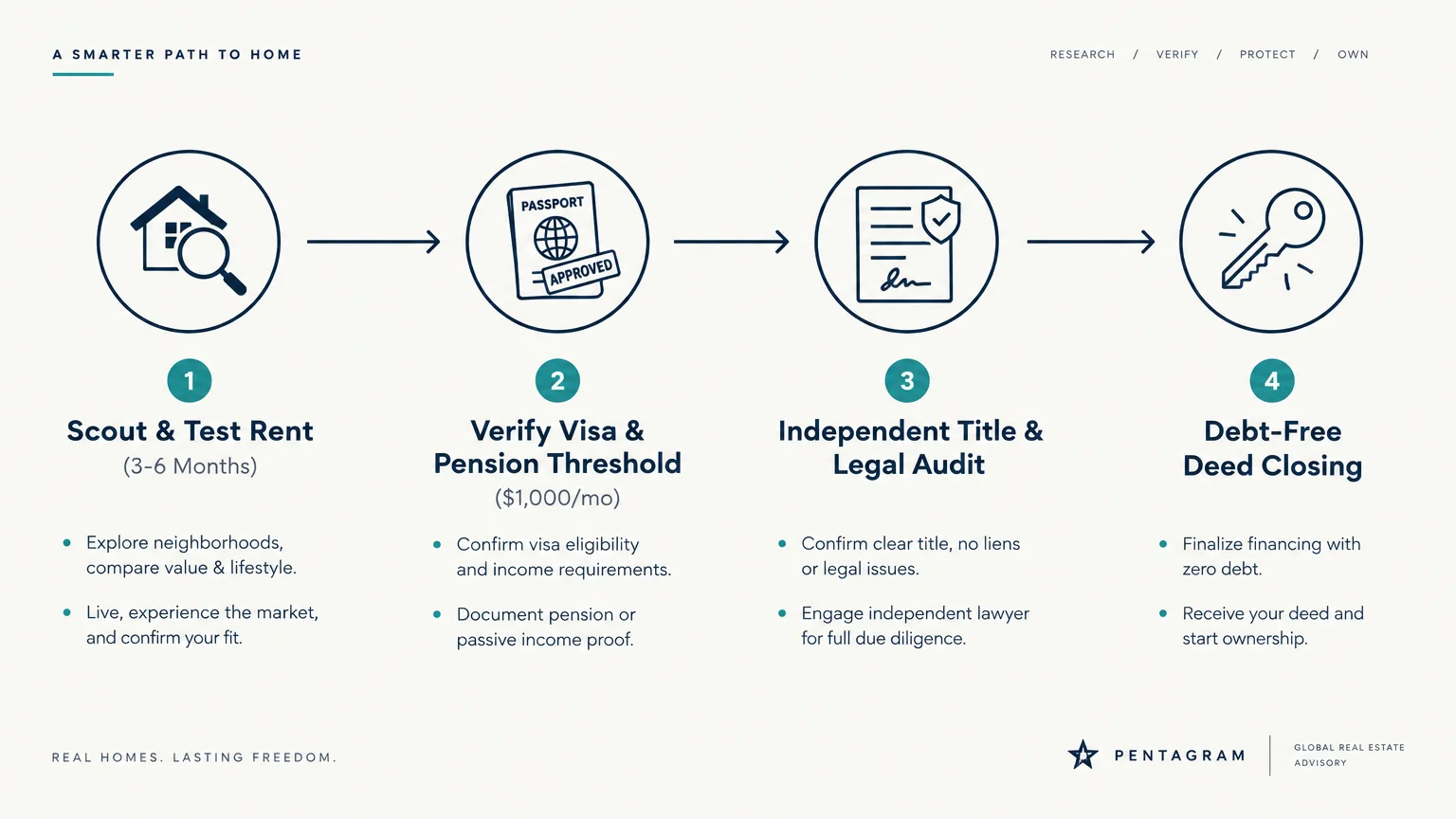
As noted by experts at AARP, test-driving a prospective retirement town for at least six months shields seniors from expensive relocation regrets. Renting first allows you to experience distinct weather patterns, neighborhood noise levels, and local social dynamics.
Use your trial rental period to build relationships with local residents and other expatriates. They can steer you toward reliable builders, honest mechanics, and reputable notaries.
Open a local bank account early to understand transaction fees and daily transfer caps. Ensure your domestic U.S. banks support two-factor authentication that works smoothly via international cell networks.
Once you locate a prospective home, commission a thorough boundary survey and an independent structural inspection. Verify water pressure, electrical wiring standards, and roof drainage during heavy seasonal rains.
Complete your purchase through a bonded escrow account or a verified notary public escrow process. Retain authenticated, apostilled copies of all deed transfers in both English and the host country’s official language.
Frequently Asked Questions
Can an American citizen legally buy real estate in any foreign country?
No, property ownership laws vary widely across international borders. Some countries permit unrestricted fee-simple ownership, while others restrict foreign buyers to condominium units or long-term land leases.
Do I have to pay U.S. income taxes if I live overseas full-time?
Yes, the United States taxes its citizens on worldwide income regardless of where they live. However, bilateral tax treaties and exclusions often prevent double taxation on your pension income.
Can I finance an international home purchase with an American mortgage?
U.S. mortgage lenders generally will not issue home loans for residential properties located on foreign soil. Most overseas senior buyers purchase properties with accumulated savings, retirement lump sums, or personal pension funds.
What happens to my foreign real estate when I pass away?
Inheritance laws depend on the host nation’s civil legal system. You should draft a localized will in your chosen country to ensure your property transfers smoothly to your designated heirs.
Is learning the local language mandatory before buying a home overseas?
While you can complete business transactions with bilingual legal representation, learning basic conversational language skills improves daily life. Speaking the local language helps you negotiate prices, handle repairs, and integrate comfortably into your new community.
For additional senior resources, visit Benefits.gov, National Institute on Aging (NIA) and Centers for Disease Control and Prevention (CDC).
Disclaimer: The information in this article is for educational purposes only and is not intended to be a substitute for professional financial, legal, or medical advice. Always consult with a qualified expert for advice tailored to your personal situation.