

Understanding your prescription drug coverage medicare options can feel overwhelming when policies shift each year. Taking a careful look at key rules will protect your health and save you thousands of dollars at the pharmacy counter.
Major legislative reforms have modernized how Medicare Part D handles deductibles, out-of-pocket maximums, and medication pricing. Knowing how these legal changes function keeps your retirement budget secure against unexpected medical bills.
Here are the ten essential Part D details you should review twice before your next enrollment deadline arrives. Small adjustments in your coverage can make an enormous difference in your monthly living expenses.
Hard Caps and the Eliminated Donut Hole
Detail 1: The Annual Out-of-Pocket Cap
The Inflation Reduction Act fundamentally changed the financial landscape for prescription medications. You now benefit from a mandatory ceiling on what you spend each year on covered drugs.
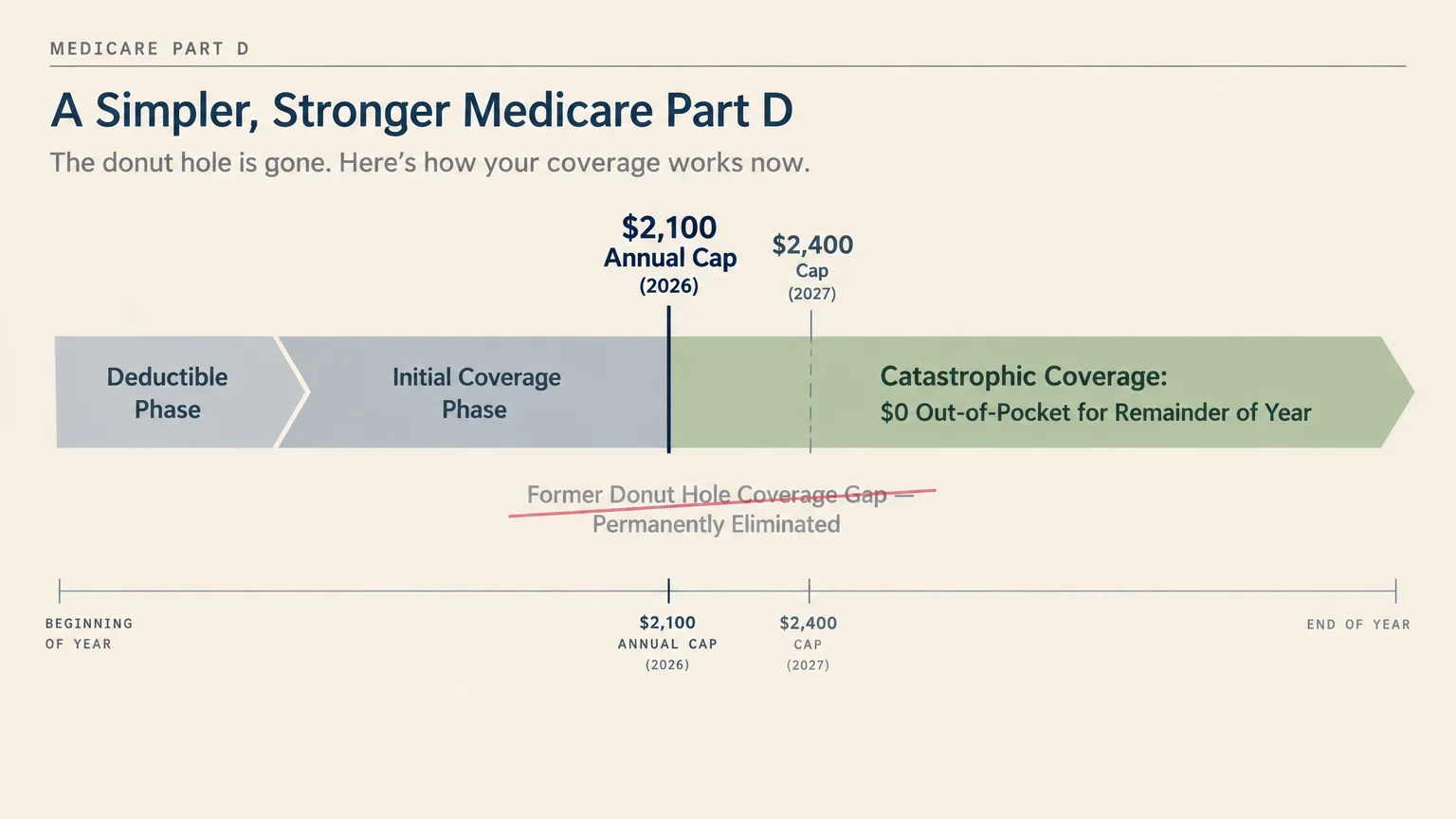
For 2026, your annual out-of-pocket spending is capped at $2,100. In medicare part d 2027, the part d out of pocket cap adjusts slightly upward to $2,400.
According to the Centers for Medicare & Medicaid Services (CMS), you pay $0 for covered Part D medications once you reach this spending ceiling. This catastrophic phase continues for the remainder of the calendar year.
This cap shields seniors taking expensive brand-name therapies or cancer treatments from financial devastation. You no longer face unlimited cost-sharing, regardless of how costly your therapies are.
Keep in mind that only covered Part D drugs count toward this ceiling. Any payments you make for excluded medications or off-formulary prescriptions do not count toward satisfying your out-of-pocket limit.
Detail 2: The Permanent Elimination of the Coverage Gap
For decades, older adults dreaded falling into the notorious Medicare coverage gap known as the donut hole. In that phase, your copayments spiked dramatically once you surpassed initial spending thresholds.
Federal law has permanently eliminated the donut hole from the Medicare drug benefit. Today, your coverage transitions directly from the initial coverage phase into catastrophic protection once you hit the annual cap.
You no longer have to track complex manufacturer discount calculations at the pharmacy counter. This structural overhaul removes confusing math and provides steady, predictable costs throughout the entire year.
Beneficiaries on fixed incomes can now budget their medical expenses with genuine peace of mind. You will never open a mid-summer pharmacy bill and discover your drug costs have suddenly doubled.
Deductible Limits and Monthly Payment Smoothing
Detail 3: Maximum Standard Deductible Limits
CMS establishes an annual upper limit on what insurance plans can charge for standard Part D deductibles. Insurance companies cannot legally exceed this benchmark under federal guidelines.
For 2026, the maximum standard deductible is $615. For the 2027 plan year, CMS has set this maximum limit at $700.
Not every insurance company charges the full deductible amount. Many private plans offer lower deductibles or eliminate the deductible entirely for generic medications on Tier 1 and Tier 2.
Always verify whether your routine maintenance prescriptions bypass the plan deductible. Selecting a plan that exempts your everyday blood pressure or cholesterol pills saves you significant money every January.
If you take only low-cost generic drugs, a plan with a $0 deductible on generic tiers often beats a plan with a lower premium but a high upfront deductible.
Detail 4: The Medicare Prescription Payment Plan
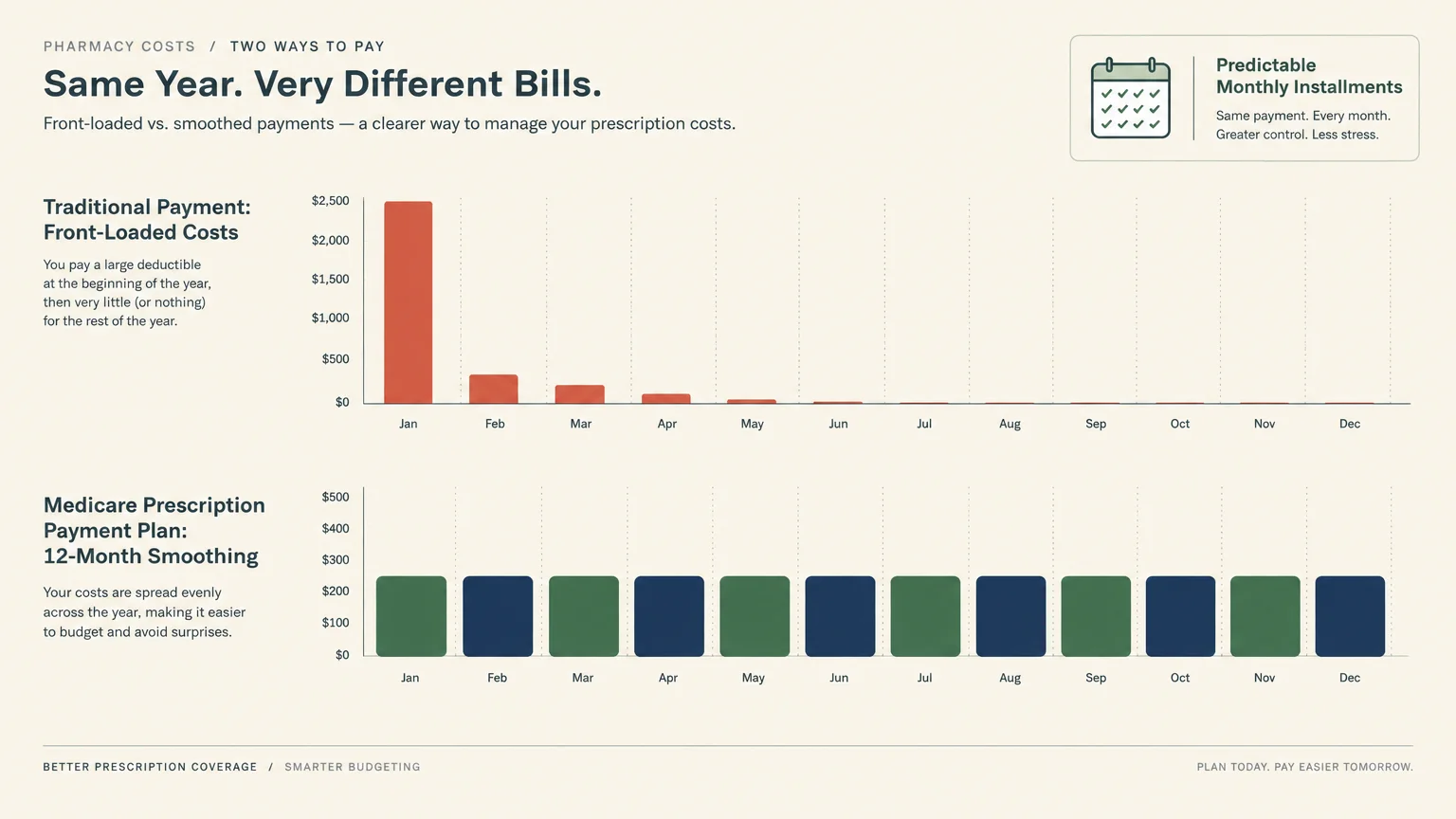
High pharmacy bills often hit retirees hardest during January and February when deductibles reset. The Medicare Prescription Payment Plan solves this timing challenge through an innovative monthly smoothing mechanism.
All Part D and Medicare Advantage prescription drug plans are legally required to offer this voluntary payment option. You can spread your out-of-pocket pharmacy expenses across capped, interest-free monthly installments billed by your plan.
According to resources available on Medicare.gov, this program does not reduce your total yearly costs. Instead, it prevents massive, sudden bills at the pharmacy cash register.
You can opt into this payment system during annual enrollment or at any time during the plan year. It delivers crucial financial breathing room for seniors managing multiple expensive chronic health conditions.
Your plan calculates your monthly payment using a specific federal formula based on remaining months in the year. If you incur large drug costs early, your payments remain manageable throughout the year.
Price Caps on Essential Medications and Vaccines
Detail 5: The $35 Monthly Insulin Ceiling
Managing diabetes on a fixed income has caused immense financial stress for millions of American seniors. Fortunately, strong federal protections now safeguard affordable access to all covered insulin formulations.
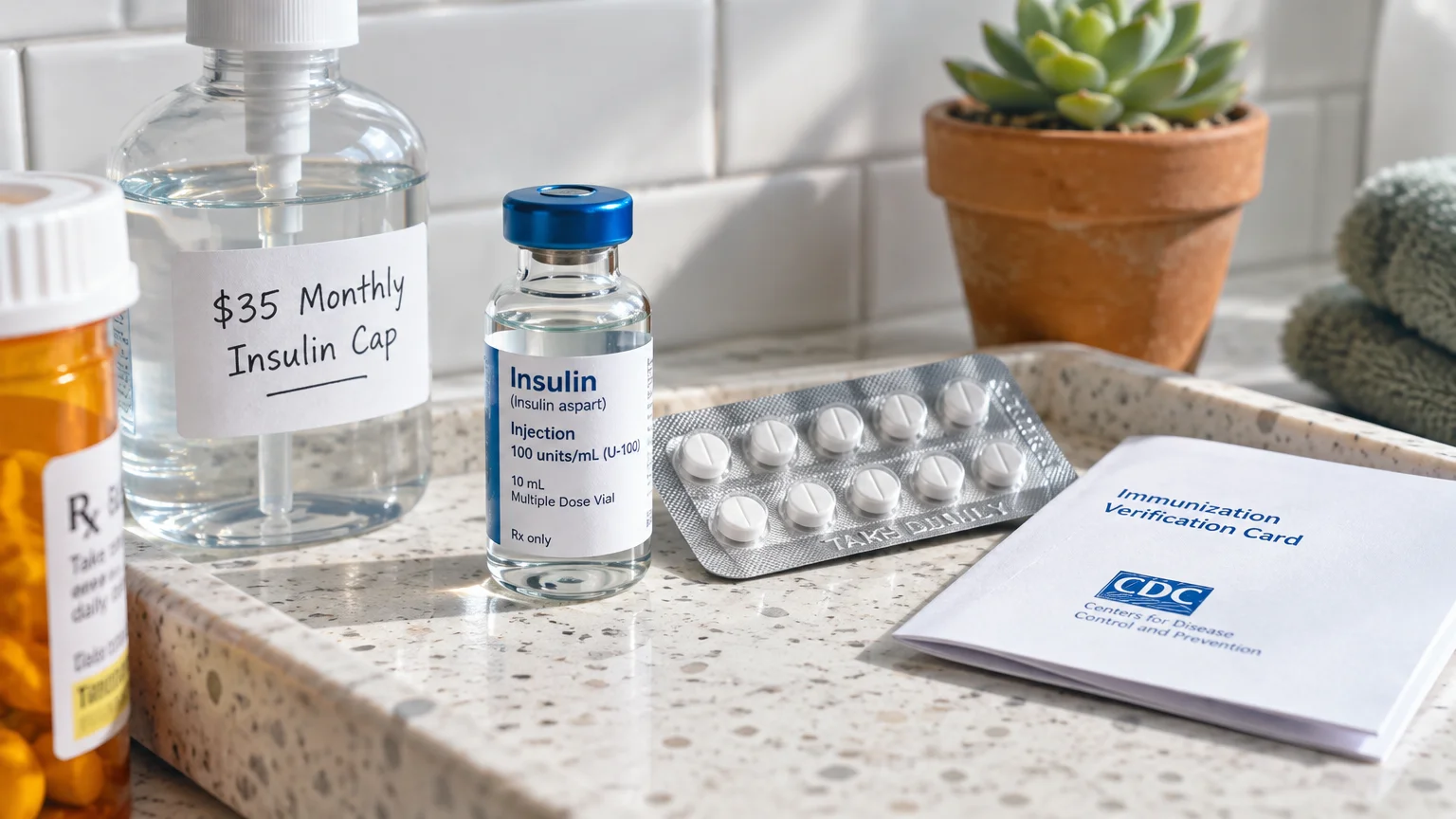
Your cost-sharing for every covered insulin product cannot exceed $35 for a 30-day supply. This statutory ceiling applies even if you have not met your plan deductible for the year.
The $35 limit remains steady across all coverage phases, including the deductible and initial benefit periods. It guarantees that life-sustaining insulin remains accessible every month without sudden price fluctuations.
Confirm that your specific insulin brand and delivery device appear on your plan formulary. When your brand is covered, the plan cannot charge more than the statutory $35 copay.
If you use an insulin pump covered under Medicare Part B, similar cost caps also apply. Always verify whether Part B or Part D covers your specific insulin administration equipment.
Detail 6: Free ACIP-Recommended Adult Vaccines
Staying healthy in your retirement years requires keeping preventive immunizations up to date. In previous years, vaccines like shingles carried steep copayments that discouraged older adults from protecting their health.
Federal rules mandate $0 cost-sharing for all adult vaccines recommended by the Advisory Committee on Immunization Practices. Your plan cannot apply a deductible, copayment, or coinsurance to these preventive shots.
This full coverage applies to vital immunizations, including Shingrix for shingles, RSV shots, pneumonia vaccines, and Tdap boosters. You can receive these vaccines at in-network retail pharmacies without paying a dime.
Always confirm that the pharmacy processes the vaccine claim through Part D rather than medical billing. Verifying the billing code upfront ensures you walk out without receiving an unexpected bill.
Annual flu shots and COVID-19 boosters remain covered at $0 through Medicare Part B. Consequently, virtually all your essential preventive vaccinations are completely free of charge.
Federal Drug Price Negotiations and Formulary Shifts
Detail 7: Historic Federal Drug Price Negotiations
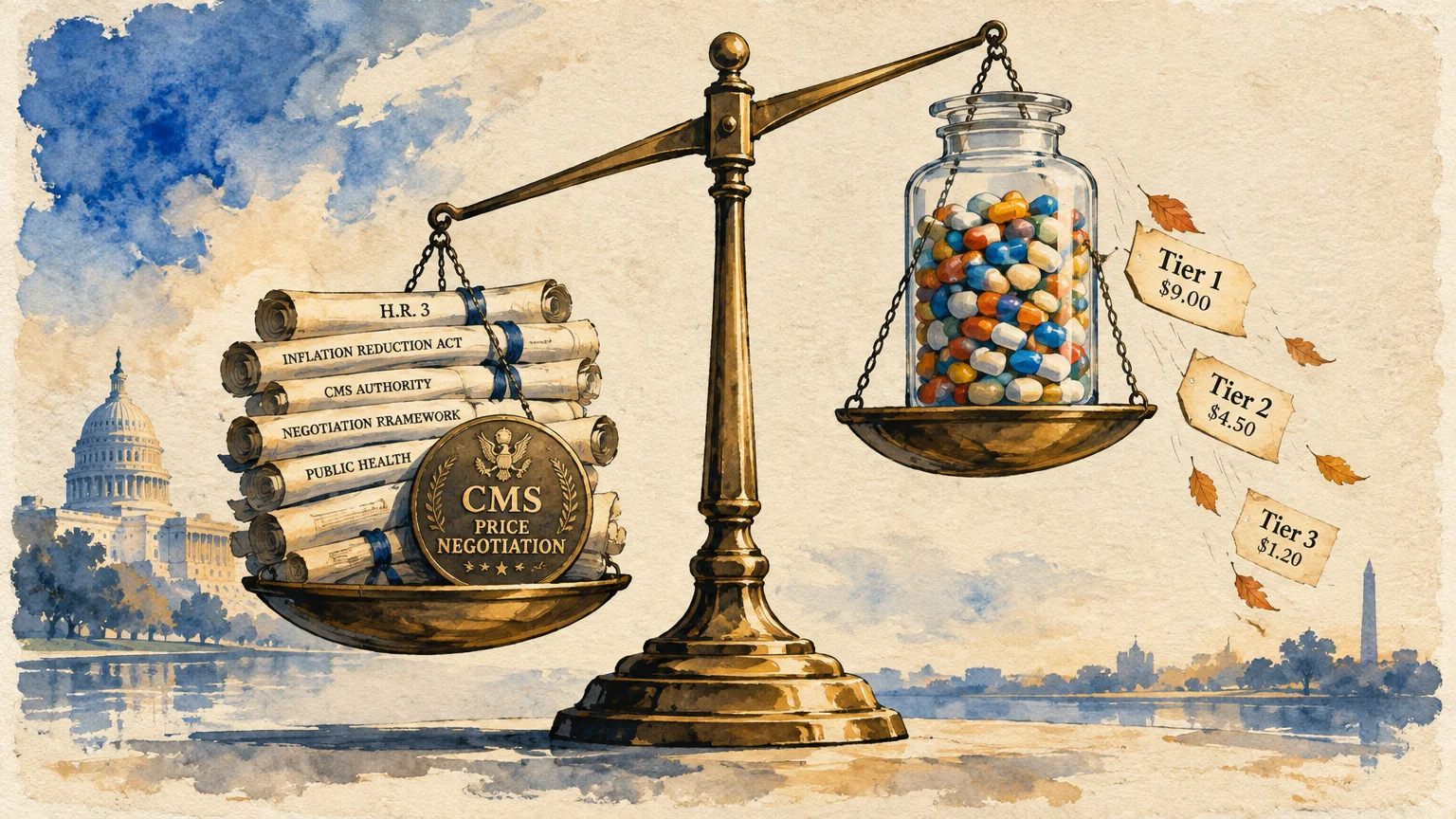
The federal government now negotiates prices directly with pharmaceutical manufacturers for select high-cost brand medications. These negotiated Maximum Fair Prices deliver substantial savings directly to Medicare beneficiaries.
The first wave of 10 negotiated drugs took effect on January 1, 2026. For medicare part d 2027, Medicare negotiated prices for 15 additional critical medications.
This new group includes widely prescribed treatments such as Ozempic, Rybelsus, Wegovy, and Trelegy Ellipta. It also features costly cancer therapies like Ibrance and Xtandi.
If you take any of these high-cost maintenance drugs, your out-of-pocket costs will drop significantly. Lower negotiated base prices translate directly into lower coinsurance charges for seniors enrolled in Part D plans.
Be sure to examine how your plan positions these negotiated drugs on its drug tiers. Even with lower prices, tier placement affects your exact out-of-pocket copayment at the pharmacy counter.
Detail 8: Strict Mid-Year Formulary Change Rules
Insurance carriers frequently update their covered drug lists, creating unexpected part d formulary changes during the year. However, federal regulations strictly limit how and when insurers can modify your coverage.
If an insurer removes your medication or moves it to a higher cost tier, they must provide at least 30 days of advance written notice. Alternatively, they must provide a 30-day emergency refill alongside written notice.
Insurers cannot abruptly terminate coverage for drugs you actively take without this formal notification window. If your plan alters your coverage mid-year, you have the legal right to request a formal formulary exception.
Your prescribing doctor can submit clinical documentation showing why the designated alternative medication would be less effective or cause harmful side effects. Insurers must review these medical appeals quickly under federal guidelines.
If the insurer approves your exception, they must provide the medication at a favorable copay tier. Never accept an unexpected pharmacy rejection without exploring your right to file an exception.
Premium Spikes, Penalties, and Financial Assistance
Detail 9: Base Premiums and Late Enrollment Penalties
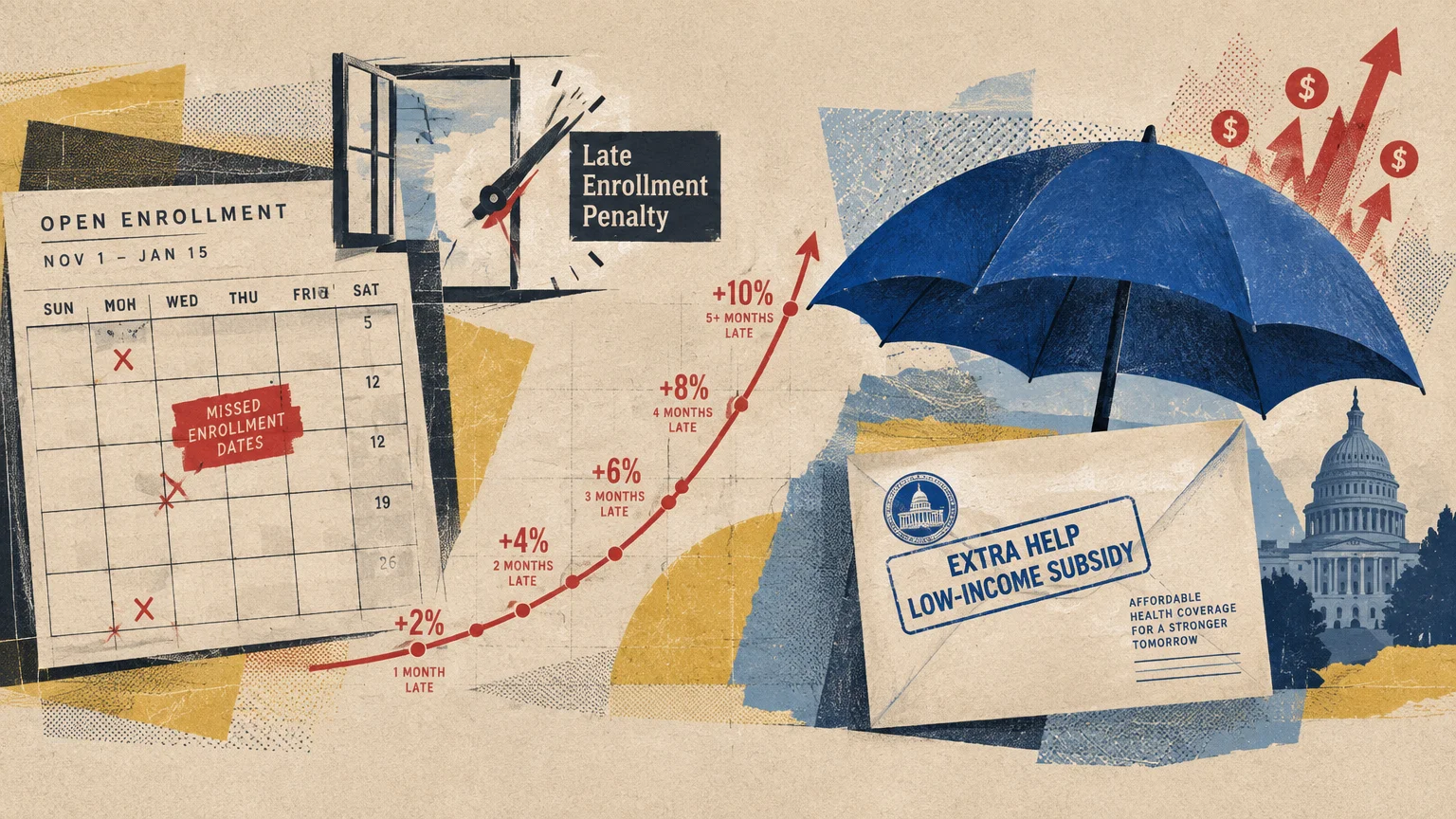
Delaying Part D enrollment without creditable drug coverage triggers a lifelong financial penalty that never goes away. The federal government calculates this penalty using the national base beneficiary premium.
CMS set the national base premium at $38.99 for 2026 and $41.33 for 2027. Your permanent penalty equals 1% of this base premium multiplied by each full month you lacked coverage.
According to the Social Security Administration (SSA), this monthly penalty adds directly to your plan premium for as long as you maintain Medicare drug coverage.
Furthermore, the CMS demonstration project that stabilized standalone Prescription Drug Plan premiums in 2025 and 2026 expires after 2026. As a result, private standalone drug plans may exhibit wider premium variability for 2027.
You should carefully check your monthly premium notice every autumn. With premium stabilization phasing out, some standalone drug plans may adjust premiums or reconfigure their copayment tiers significantly.
Detail 10: Expanded Extra Help for Low-Income Beneficiaries
Many seniors living on fixed incomes struggle to balance prescription expenses with daily groceries and utility bills. The federal Extra Help program, also called the Low-Income Subsidy, provides crucial financial relief.
Under current law, full Extra Help benefits extend to qualifying individuals with incomes up to 150% of the federal poverty level. If you qualify, you pay $0 for plan premiums and $0 for deductibles.
Your drug copayments drop to minimal, nominal charges for both generic and brand-name medications. In addition, qualifying for Extra Help completely eliminates any late enrollment penalties you might have accrued.
You can verify your eligibility through Benefits.gov or your local state Medicaid agency. This single benefit can save qualifying seniors thousands of dollars in medical costs each year.
Applying is straightforward and requires no fee. If your income or resource levels change during retirement, you can apply for Extra Help at any point during the year.

How to Conduct an Annual Medicare Part D Plan Review
Prescription plans alter their formularies, pharmacy networks, and monthly premiums every single autumn. Conducting a thorough medicare part d plan review ensures you do not overpay for your prescriptions next year.
Follow these essential steps during the annual Open Enrollment period to safeguard your healthcare budget.
-
Read your Annual Notice of Change: Your insurance provider must mail this critical document by late September. Look for changes in monthly premiums, drug tier placement, and pharmacy network classifications.
-
Gather your exact medication list: Collect your current prescription bottles to record exact dosages, delivery methods, and quantities. Having precise details ready prevents errors when comparing plan options online.
-
Use the online plan finder: Enter your medications into the official Medicare tool during Open Enrollment between October 15 and December 7. The tool calculates your total projected annual spending across different plans.
-
Examine preferred pharmacy networks: Many plans offer lower copayments when you fill prescriptions at designated preferred pharmacies. Using a standard out-of-network pharmacy can dramatically raise your out-of-pocket costs.
-
Check utilization management rules: Determine whether your vital medications require prior authorization, step therapy, or quantity limits. These administrative hurdles can delay refills if not addressed ahead of time.
To help you compare key structural changes, review the benchmark figures across recent plan years below.
| Feature or Regulation | 2026 Plan Year | 2027 Plan Year |
|---|---|---|
| Annual Out-of-Pocket Spending Cap | $2,100 maximum limit | $2,400 maximum limit |
| Maximum Standard Plan Deductible | $615 cap | $700 cap |
| National Base Beneficiary Premium | $38.99 monthly base | $41.33 monthly base |
| Medicare Coverage Gap (“Donut Hole”) | Permanently Eliminated | Permanently Eliminated |
| Monthly Insulin Copayment Limit | $35 for a 30-day supply | $35 for a 30-day supply |
| ACIP-Recommended Adult Vaccines | $0 copayment (exempt from deductible) | $0 copayment (exempt from deductible) |
| Negotiated Maximum Fair Price Drugs | 10 initial Part D medications | 15 additional Part D medications |
| Standalone PDP Premium Stabilization | Active CMS demonstration | Demonstration expired (wider premium variability) |
Taking time to review these parameters protects you from unexpected pharmacy bills. Comparing options annually remains the single most effective way to keep your prescription expenses under control.

Common Part D Pitfalls and How to Avoid Them
Even seasoned Medicare beneficiaries can make costly errors when selecting or managing prescription drug coverage medicare options. Being aware of these traps helps you protect your retirement savings.
-
Assuming last year’s plan is still best: Drug plans frequently alter their formularies, raising copays or dropping specific medications altogether. Staying on auto-pilot often leads to costly sticker shock at the pharmacy counter.
-
Overlooking the pharmacy network tier: Filling prescriptions at a standard retail pharmacy instead of a preferred pharmacy can double your copays. Always confirm which local pharmacy offers preferred pricing under your specific policy.
-
Ignoring mail-order savings and limitations: While mail-order pharmacies often offer 90-day supplies at discounted rates, temperature-sensitive medications may require special handling. Compare local preferred pharmacy prices against mail-order delivery before deciding.
-
Delaying enrollment when turning sixty-five: Going without creditable coverage for even a few months starts accumulating the permanent late enrollment penalty. Secure creditable coverage as soon as you become eligible.
-
Failing to file formulary exception requests: When a plan drops your necessary drug, do not immediately pay full cash price out of pocket. Ask your doctor to request a formal coverage exception based on clinical necessity.
Avoiding these common oversights gives you greater command over your healthcare spending. A few hours of preparation each autumn can save you hundreds of dollars throughout the following year.
Frequently Asked Questions
What counts toward the Part D out-of-pocket cap?
Your deductible payments, copayments, and coinsurance for covered Part D medications count directly toward the part d out of pocket cap. Monthly plan premiums and non-covered drugs do not count toward this threshold.
Can my Medicare drug plan drop a medication in the middle of the year?
Yes, plans can make mid-year part d formulary changes under specific CMS regulations. However, the insurer must provide you with at least 30 days of advance written notice or a 30-day refill.
How does the Medicare Prescription Payment Plan work?
The program splits your out-of-pocket drug costs into predictable, interest-free monthly payments billed directly by your plan. It prevents large upfront pharmacy bills early in the year without increasing your overall annual drug costs.
What happens if I miss the annual Medicare Open Enrollment deadline?
If you miss the December 7 deadline, you generally must keep your current plan for the entire calendar year. You cannot switch plans unless you qualify for a Special Enrollment Period due to moving or losing other coverage.
Do generic drugs always cost less than brand-name drugs on Part D?
Generic drugs generally occupy lower cost tiers like Tier 1 or Tier 2 with minimal copayments. However, plan tier assignments vary, making it essential to verify the copayment for each medication during your review.
For additional senior resources, visit
Medicare.gov, National Institute of Mental Health (NIMH) and National Institutes of Health (NIH).
Disclaimer: The information in this article is for educational purposes only and is not intended to be a substitute for professional financial, legal, or medical advice. Always consult with a qualified expert for advice tailored to your personal situation.









Leave a Reply