
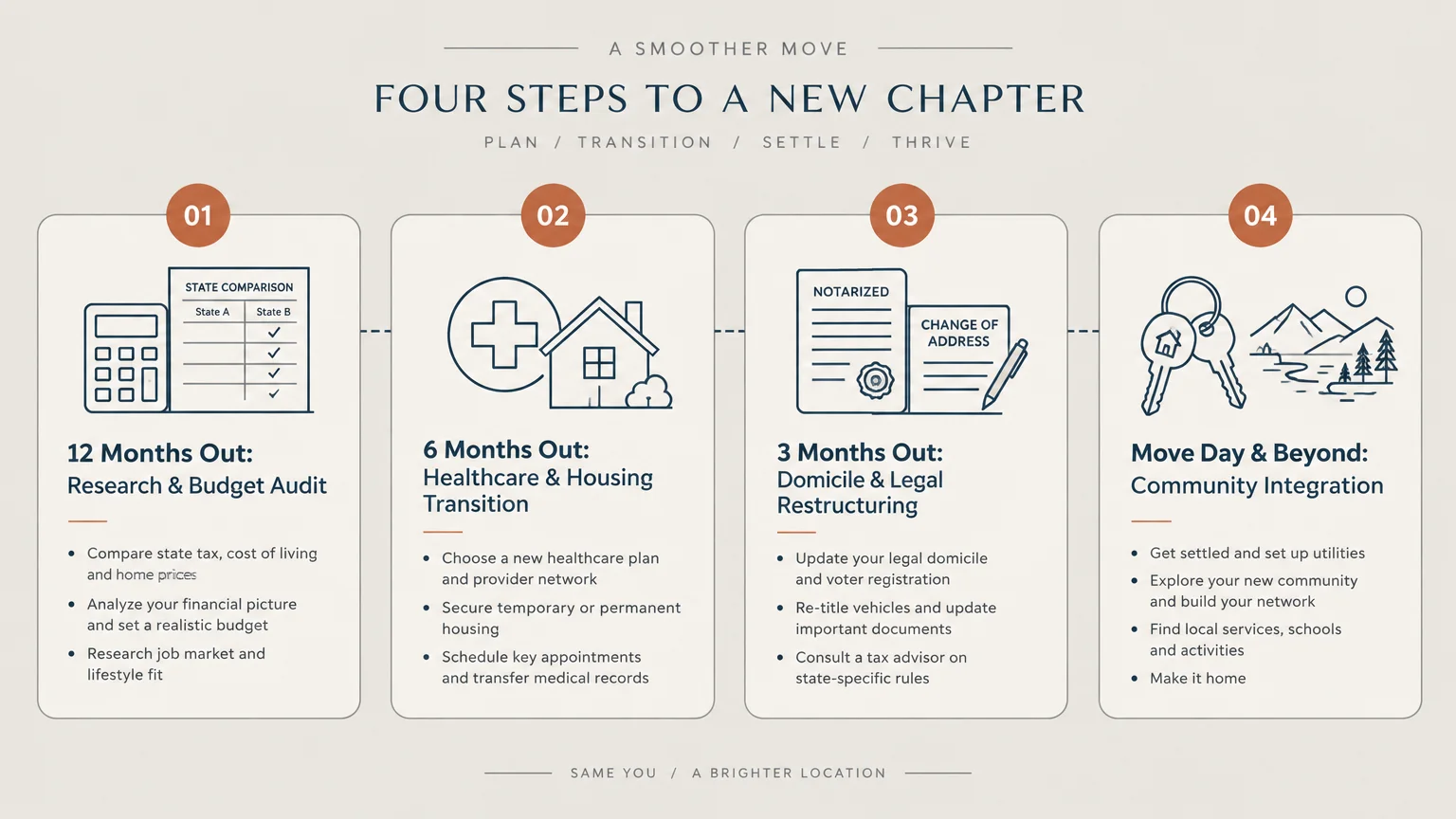
A Step-by-Step Relocation Blueprint for Older Adults
A successful interstate transition requires methodical planning and clear timelines. Breaking the move into organized phases lowers emotional stress and prevents costly oversights.
Use this practical checklist to guide your relocation process:
- Spend at least four weeks renting in your target town to evaluate summer heat, winter cold, and local traffic patterns.
- Update your estate planning documents—including wills, healthcare directives, and powers of attorney—to ensure compliance with your new state’s legal requirements.
- Downsize household belongings months ahead of time to lower professional moving costs and eliminate storage fees.
- Establish accounts with local banks and arrange utility connection dates several weeks before your closing date.
- Request copies of all physical medical records and transfer your active prescription files to a nearby pharmacy.
Community connection is just as vital as financial planning. Studies highlighted by the Centers for Disease Control and Prevention (CDC) indicate that staying socially engaged supports cognitive vitality and emotional health in older adults.
Join local volunteer programs, fitness centers, or hobby groups as soon as you settle in. Establishing a supportive neighborhood circle helps your new house feel like home quickly.
Frequently Asked Questions
Why are so many retirees leaving California?
High home prices, steep state income taxes, and elevated healthcare expenses motivate seniors to move. Relocating allows older adults to preserve their retirement savings and lower everyday overhead.
Does California tax your retirement income after you move away?
Federal law prohibits California from taxing your 401(k), IRA, or pension income once you establish legal residency elsewhere. However, California still taxes income earned from in-state real estate or businesses.
Which retirement destinations better than California have no state income tax?
Nevada, Texas, Florida, Washington, and Tennessee levy zero state personal income tax. Selecting these states allows you to keep the full amount of your pension checks and retirement distributions.
How does moving out of state affect my Medicare coverage?
Original Medicare travels anywhere nationwide with providers that accept Medicare assignment. If you have Medicare Advantage, you must enroll in a plan within your new local service area.
Is it better to rent or buy when moving to a new state?
Renting for six to twelve months is generally safer because it lets you explore different neighborhoods firsthand. You can test local healthcare access, traffic, and seasonal weather before committing to purchase.
For additional senior resources, visit
Eldercare Locator, AARP and Alzheimer’s Association.
Disclaimer: The information in this article is for educational purposes only and is not intended to be a substitute for professional financial, legal, or medical advice. Always consult with a qualified expert for advice tailored to your personal situation.