


Hello and welcome. As we journey through our senior years, we become wiser about so many things, but it’s easy to overlook one of the simplest yet most powerful pillars of our health: hydration. It might surprise you to learn that a majority of older adults don’t get the fluids they need each day, and this can have a significant impact on everything from our energy levels to our mental clarity.
Why does this happen? With age, our sense of thirst can diminish, our bodies hold less water, and certain health conditions or medications can affect our fluid balance. The good news is that staying properly hydrated is entirely within your control. It’s not about forcing yourself to drink gallons of water; it’s about building small, consistent, and easy habits.
Think of this as your personal guide to better hydration. These aren’t just tips; they are practical, supportive strategies to help you feel your best, stay safe, and enjoy your life to the fullest. Let’s explore some simple ways to improve your daily water intake for older adults.

1. Make Water Your Constant Companion
The ‘Why’: The old saying, “out of sight, out of mind,” is especially true for hydration. As our natural thirst signals become less reliable, visual cues are one of our best tools. Having water readily available serves as a constant, gentle reminder to take a sip, preventing long periods from passing without any fluid intake. This simple habit helps avoid the serious dehydration risks that can sneak up on us.
The ‘How’:
- Find Your Perfect Bottle: Choose a reusable water bottle that is lightweight, easy to open, and comfortable to hold. Some bottles even have markings on the side to help you track your intake throughout the day.
- Strategic Placement: Don’t just keep a bottle in the kitchen. Place one by your favorite chair, on your bedside table (for a sip first thing in the morning), and next to the telephone.
- “Drink-Down” Goals: If your bottle has time markers, great! If not, you can make your own with a permanent marker or tape. For example, make a goal to drink to a certain line by 10 a.m., another by lunchtime, and so on. This turns hydration into a simple, manageable game.
2. Schedule Your Sips Like a Prescription
The ‘Why’: Because we can’t always rely on thirst to tell us when to drink, creating a routine is essential for consistent hydration for seniors. By scheduling your sips, you turn drinking water into a proactive habit rather than a reaction to thirst, which is often a late sign of dehydration. This approach provides your body with a steady supply of fluid all day long.
The ‘How’:
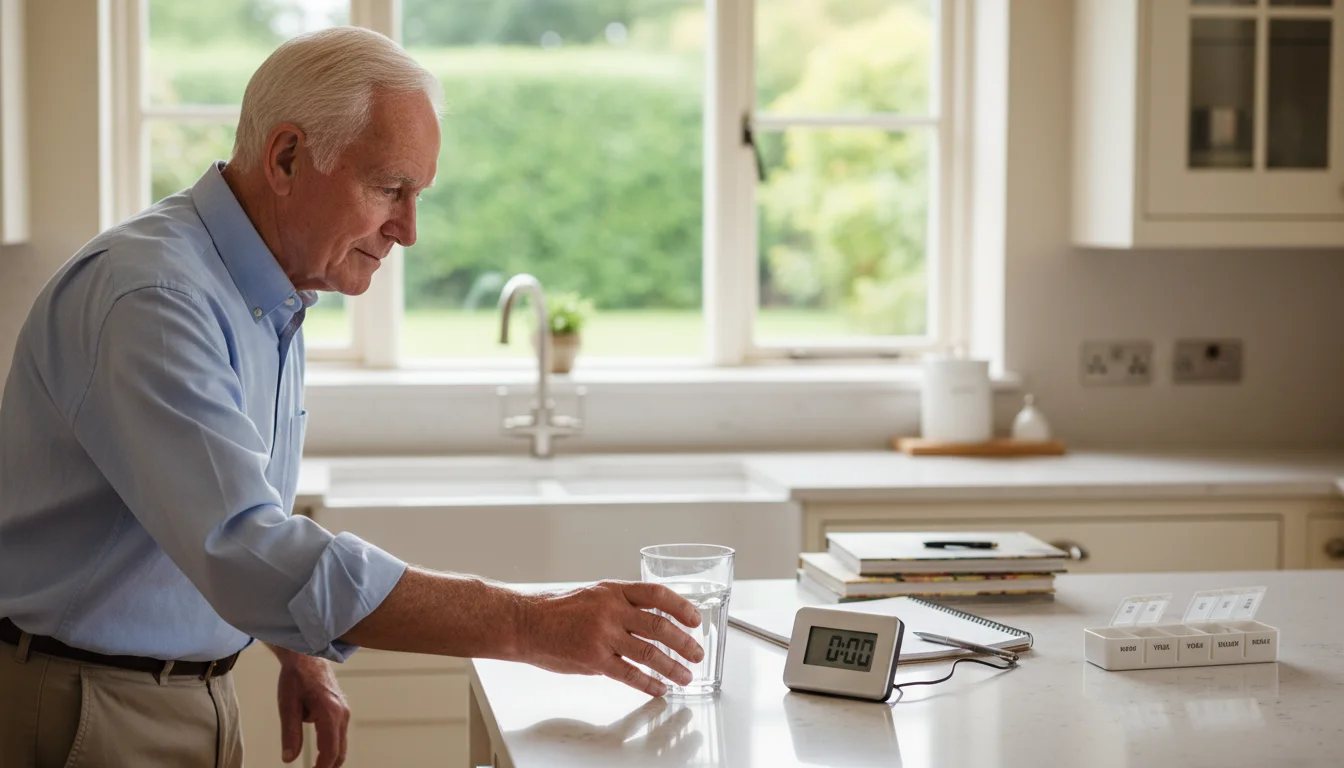
- Link It to Daily Routines: Tie drinking a glass of water to activities you already do every day. For example: drink one glass upon waking, one with your morning medication, one with each meal (breakfast, lunch, and dinner), and one before you settle down for the evening.
- Use Timers: Set a simple alarm on your kitchen timer, your watch, or your phone to go off every hour or 90 minutes. When it rings, it’s your signal to take a few sips of water.
- The “Two-Sip” Rule: Every time you get up to walk to another room, make a rule to stop in the kitchen and take at least two big sips of water. It’s a small action that adds up significantly over the day.
3. “Eat” Your Water with Hydrating Foods
The ‘Why’: Drinking plain water isn’t the only way to stay hydrated! Many fruits and vegetables have very high water content, and they can contribute a surprising amount to your daily fluid needs. For those who find it challenging to drink enough, eating hydrating foods is a delicious and effective strategy that also provides essential vitamins and fiber.
The ‘How’:
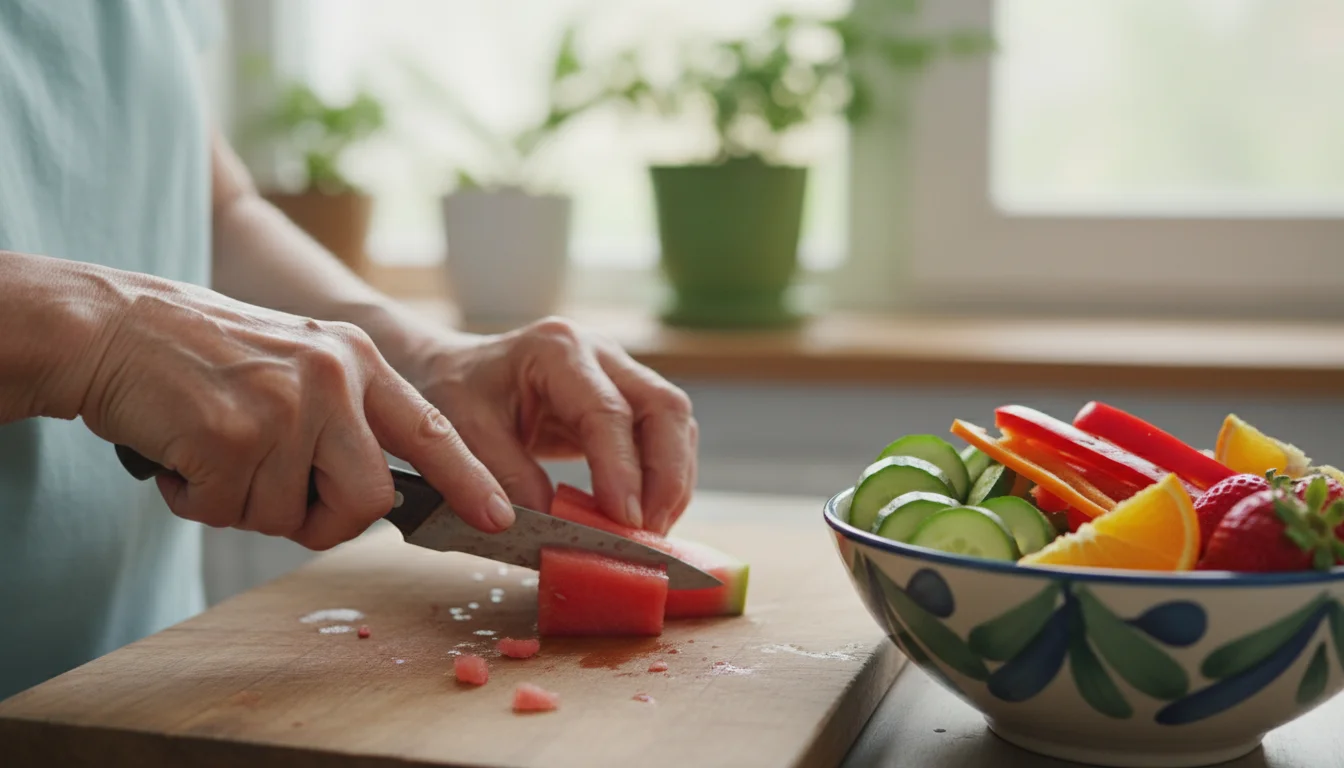
- Choose Water-Rich Produce: Look for foods that are naturally juicy. Excellent choices include watermelon, cucumbers (which are 95% water!), celery, strawberries, cantaloupe, bell peppers, and oranges.
- Incorporate Them into Meals: Add sliced cucumber and bell peppers to your sandwiches or salads. Have a side of melon with your breakfast. Enjoy a bowl of strawberries for a snack.
- Don’t Forget Soups and Broths: A warm bowl of broth-based soup (like chicken noodle or vegetable) is incredibly hydrating, comforting, and nutritious, especially during colder months.

4. Add Flavor to Make It More Appealing
The ‘Why’: Let’s be honest: plain water can be bland. If you don’t enjoy what you’re drinking, it will feel like a chore. Making your water more flavorful is one of the best senior hydration tips because it transforms hydration from a duty into a treat, making you much more likely to drink the amount your body needs.
The ‘How’:
- Infuse It Naturally: Fill a pitcher with water in the morning and add slices of lemon, lime, orange, or even a handful of crushed mint leaves or a few raspberries. Let it sit in the refrigerator for a few hours to let the flavors meld. It’s refreshing and has no added sugar.
- Try Herbal Teas: Caffeine-free herbal teas like chamomile, peppermint, or berry blends are excellent for hydration. You can enjoy them hot for a soothing drink or brew a large batch and chill it for a fantastic iced tea.
- A Splash of Juice: If you need a bit more flavor, add just a small splash of your favorite 100% fruit juice (like cranberry or apple) to a large glass of plain or sparkling water. This gives you a hint of sweetness without the high sugar content of drinking a full glass of juice.

5. Know the Early Warning Signs of Dehydration
The ‘Why’: Recognizing the first signs of dehydration is a critical self-care skill for older adults. When you know what to look for, you can take action immediately by drinking some fluids, preventing the problem from escalating into something more serious like confusion, dizziness, or a urinary tract infection (UTI). Understanding these dehydration risks empowers you to protect your health.
The ‘How’:
- Pay Attention to Your Body: The earliest signs are often subtle. You might feel unusually tired or sluggish for no reason. You might have a headache, feel a bit lightheaded, or have muscle cramps.
- Check for a Dry Mouth: A dry, sticky feeling in your mouth is a classic and reliable indicator that you need to drink something.
- The Urine Check: This is one of the most straightforward methods. When you are well-hydrated, your urine should be a pale, straw-like yellow. If you notice it’s a dark yellow or amber color, your body is telling you it needs more water. (Note: some medications and vitamins can affect urine color, but it’s still a good general guide).

6. Be Mindful of Medications and External Factors
The ‘Why’: Your hydration needs aren’t static; they can change based on your health, medications, and environment. Certain medications, such as diuretics (often called “water pills”) for blood pressure, are designed to remove fluid from your body. Similarly, hot weather or even just being more active than usual can increase your fluid loss, making your typical water intake insufficient.
The ‘How’:
- Talk to Your Doctor or Pharmacist: When you get a new prescription or review your current medications, ask, “Does this medication affect my hydration needs?” They can give you personalized advice. Never increase your fluid intake dramatically without checking with your doctor, especially if you have conditions like heart failure or kidney disease.
- Adjust for the Weather: On hot and humid days, make a conscious effort to drink more than you normally would, even if you are staying indoors. The heat alone can cause you to lose more fluid.
- Hydrate Before, During, and After Activity: If you’re heading out for a walk, gardening, or any form of exercise, drink a glass of water before you go and be sure to sip more when you return.

7. Address Bathroom Concerns Head-On
The ‘Why’: This is a topic many people are hesitant to discuss, but it’s one of the most common reasons seniors intentionally avoid drinking fluids. The fear of having to rush to the bathroom, or dealing with incontinence, leads many to self-restrict their intake. However, this can backfire. Highly concentrated urine from dehydration can actually irritate the bladder and worsen urgency and frequency.
The ‘How’:
- Sip, Don’t Gulp: Instead of drinking a large 12-ounce glass of water all at once, try sipping smaller amounts more consistently throughout the day. This allows your body to absorb the fluid more effectively without overwhelming your bladder.
- Taper Off Before Bed: Continue to drink plenty of fluids during the day, but consider reducing your intake in the 1-2 hours before you go to sleep. This can help minimize nighttime trips to the bathroom without compromising your overall hydration.
- Speak with Your Doctor: Don’t let bladder concerns dictate your health. There are many effective strategies and treatments for managing frequency and incontinence. Being well-hydrated is actually part of good bladder health, so it’s important to find a solution that allows you to drink what you need.
8. Create an Inviting “Hydration Station”
The ‘Why’: Sometimes the biggest barrier to getting a drink is the effort it takes, especially if you have mobility challenges. By creating a dedicated, accessible, and appealing spot for your drinks, you lower that barrier and make hydration an easy and enjoyable choice. This is one of the most practical senior hydration tips for maintaining independence.
The ‘How’:
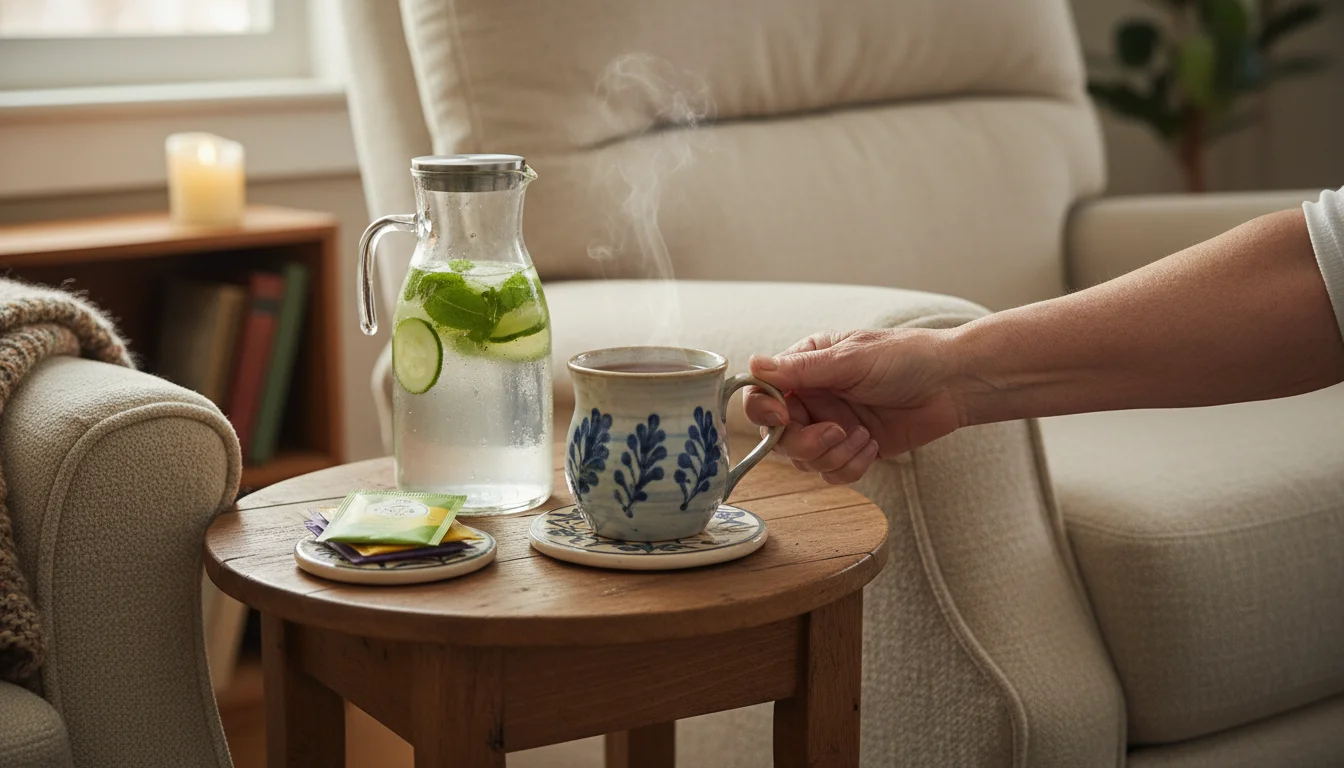
- Pick Your Spot: Choose a small, stable table or a clear section of countertop in a place you frequent, like next to your recliner or in a corner of the kitchen.
- Stock It Up: Place everything you need right there. This could be a lovely glass pitcher of your infused water, your favorite mug or glass, a few herbal tea bags, and a coaster.
- Make it Visually Appealing: Use a pretty pitcher or a colorful glass. Having something that looks nice is a simple psychological trick that makes you want to use it more often. Your hydration station should be a welcoming part of your home.
Staying hydrated is a simple act of self-care that pays enormous dividends for your health, energy, and independence. Remember that small, steady steps are what matter most. Start by choosing just one or two of these tips and incorporating them into your daily life. You have the power to make a positive change for your well-being, one sip at a time.
A Friendly Reminder: Your health is unique. Always consult with your doctor before making any significant changes to your fluid intake, especially if you have a pre-existing condition like heart or kidney disease. They can provide guidance that is tailored specifically for you.
For expert guidance on senior health and finance, visit Administration for Community Living (ACL), Eldercare Locator and AARP.
|
Fact-Checked Content
Our editorial team reviews all content for accuracy and updates it regularly. Learn about our editorial process →
|







Leave a Reply