

Facing the sudden loss of a loved one brings overwhelming emotional pain, and worrying about how to pay for final arrangements only adds to that heavy burden. Funeral expenses have steadily climbed, leaving many seniors on fixed incomes struggling to afford a dignified farewell. You do not have to shoulder these steep costs entirely on your own. Several compassionate organizations and charities exist specifically to help families navigate and fund end-of-life expenses in 2026. Knowing where to look for financial relief can provide you with much-needed peace of mind during a difficult time. This guide outlines nine charitable avenues and practical steps to secure the funding you need to honor your loved one properly.

Understanding the Reality of Funeral Costs
The financial shock of organizing a funeral catches many families off guard. Traditional burial services require families to pay for a wide array of items, including the funeral director’s basic services, embalming, facility use for viewings, transportation, a casket, a burial plot, and a headstone. When you add all these line items together, a standard traditional burial can easily exceed several thousands of dollars.
Living on a fixed income, like Social Security or a modest pension, makes absorbing a sudden expense of this magnitude nearly impossible. Even cremation, widely considered the more affordable route, carries significant costs depending on the funeral home and the type of memorial service you choose. Recognizing the immense financial strain this puts on older adults is the first step toward finding a solution. Seeking financial assistance is a practical and necessary response to an industry that has become increasingly expensive. You have options, and tapping into community resources allows you to focus on grieving and healing rather than stressing over bank statements.
The National Institute on Aging (NIA) provides extensive resources on end-of-life planning, emphasizing that understanding your options ahead of time can significantly reduce the emotional and financial stress placed on surviving family members. Taking the time to understand where your money goes during a funeral helps you identify where you can cut costs and exactly how much charitable assistance you need to request.
Explore Government and Federal Benefits First
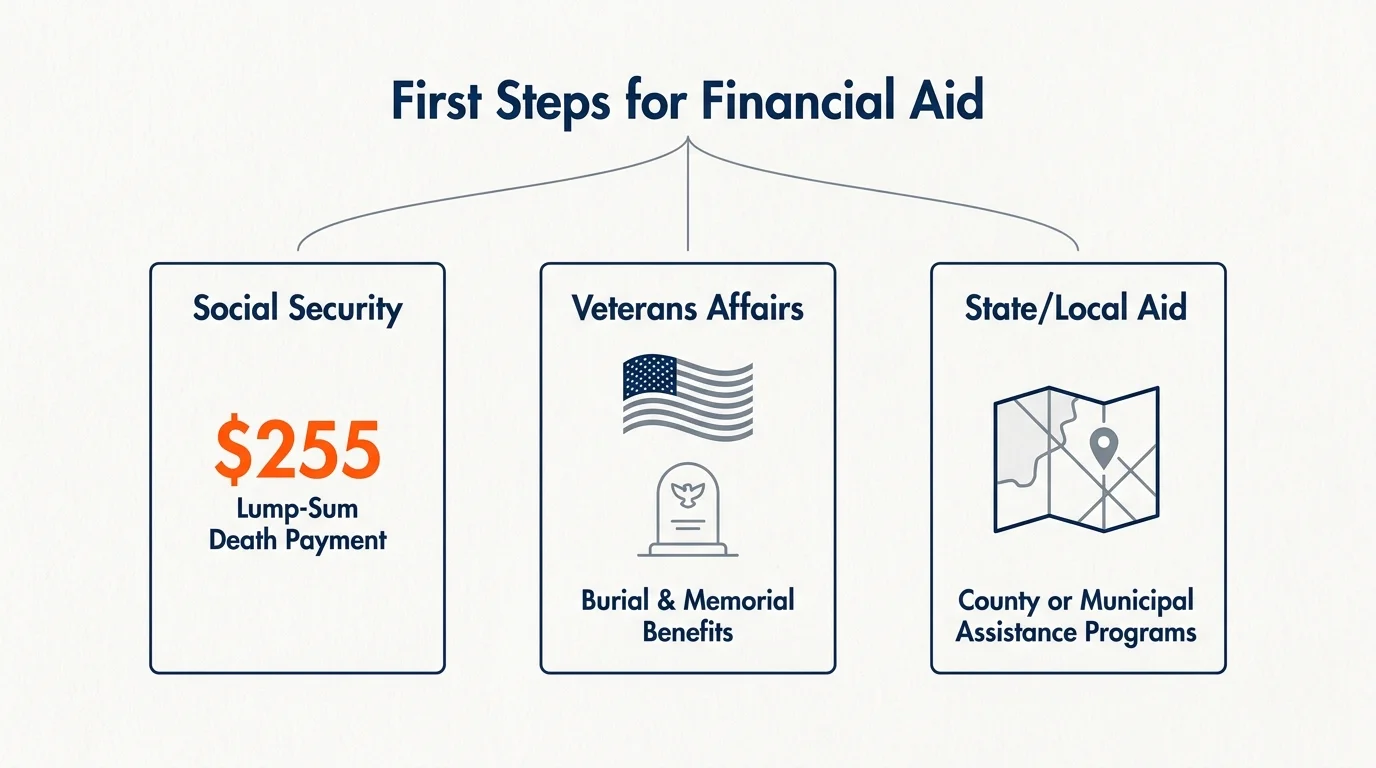
Before you begin applying to private charities, investigate federal and state benefits. Government programs often serve as the first line of defense for families struggling with end-of-life expenses.
According to the Social Security Administration (SSA), a surviving spouse or eligible child may qualify for a one-time lump-sum death payment of $255. While this amount has not increased in decades and will not cover the full cost of a funeral, it provides a helpful starting point. You must apply for this benefit within two years of the date of death.
Veterans and their spouses also have access to specific burial benefits. If your loved one served in the military and received a discharge other than dishonorable, they may be eligible for free burial in a national cemetery, a grave liner, a headstone or marker, and a Presidential Memorial Certificate. In certain cases, the Department of Veterans Affairs provides a burial allowance to help offset funeral and transportation costs. Always check with your local Veterans Affairs office to confirm eligibility before paying out of pocket for a private cemetery plot.
Many states and counties also operate indigent burial programs. If the deceased had no assets and the immediate family cannot afford the costs, the county may step in to cover a direct cremation or a basic burial. These programs vary drastically by location, so contact your county coroner’s office or local department of human services to inquire about county-funded final arrangements.

How to Lower Funeral Costs Directly
Charitable organizations stretch their limited funds to help as many families as possible. Because their resources are finite, charities often require you to choose the most economical funeral options before they agree to provide a grant. Taking proactive steps to reduce the total bill increases your chances of getting the remaining balance covered by an organization.
Familiarize yourself with the Federal Trade Commission’s Funeral Rule. This federal law guarantees your right to buy only the goods and services you want. You do not have to accept a package deal. Funeral homes must provide you with a General Price List (GPL) upfront, allowing you to compare costs between different facilities.
Consider choosing direct cremation. This process bypasses embalming, viewing ceremonies, and expensive caskets. The funeral home transports the body, handles the required paperwork, performs the cremation, and returns the ashes in a simple container. You can then host a memorial service at a later date at your home, a local park, or a place of worship, which costs a fraction of a funeral home service.
If you prefer a burial, you have the right to purchase a casket from a third-party retailer—such as an online store or a local discount casket supplier. The funeral home cannot charge you a handling fee for using an outside casket. Opting for a simple grave liner instead of a decorative burial vault will also shave hundreds of dollars off the final bill.

9 Charities That Help With Funeral Costs
When government benefits fall short and you have minimized the expenses as much as possible, turn to these nine charitable avenues for financial support. Keep in mind that funding availability fluctuates based on local donations and seasonal demand.
- Society of St. Vincent de Paul
Operating through local Catholic parishes, the Society of St. Vincent de Paul provides direct emergency financial assistance to community members in need. You do not have to be Catholic to receive help. Volunteers, known as Vincentians, typically conduct a home visit or a phone interview to understand your situation. They often partner directly with local funeral homes to negotiate lower rates and may contribute funds directly to the funeral director to help cover the balance.
- The Salvation Army
The Salvation Army offers emergency assistance programs that sometimes include help with funeral and burial expenses. Because funding is managed at the local level, the availability of funeral aid depends entirely on your specific chapter’s current budget. Contact your local Salvation Army community center to explain your situation. They may offer direct financial aid, provide vouchers, or connect you with other local agencies that have available funds.
- Catholic Charities
Similar to St. Vincent de Paul, Catholic Charities operates a vast network of local agencies across the United States. They specialize in emergency financial relief for vulnerable populations, including seniors. While they may not have a dedicated “funeral fund,” their emergency assistance grants can often be applied to unexpected burial or cremation costs. Reach out to your regional Catholic Charities office and ask to speak with a case manager about emergency family support.
- United Way (211 Network)
The United Way oversees the 211 network, a free, confidential service that connects individuals to local resources. By dialing 2-1-1 from any phone, you will reach a trained specialist who can search a database of local charities, benevolent societies, and emergency funds in your specific zip code. This is one of the most efficient ways to find hyper-local organizations that do not have a national web presence but have funds set aside for families in crisis.
- Funeral Consumers Alliance (FCA)
The Funeral Consumers Alliance is a nonprofit organization dedicated to protecting consumers’ rights to choose meaningful and affordable funerals. While the national FCA office does not distribute grants, many of their local chapters maintain benevolent funds. Furthermore, local FCA chapters frequently negotiate deeply discounted rates with participating funeral homes for their members. Joining a local FCA chapter often requires a minimal one-time donation and can instantly reduce your funeral costs by a significant percentage.
- Science Care and Whole Body Donation Programs
If your loved one was open to the idea, whole body donation acts as a completely free alternative to traditional funeral expenses. Organizations like Science Care facilitate the donation of the body for medical research and education. They cover the costs of transportation, filing the death certificate, and cremation. Once the educational process is complete, they return the cremated remains to the family at no cost. You must coordinate this quickly, as body donation programs have strict timelines and medical criteria for acceptance.
- Modest Needs Foundation
The Modest Needs Foundation offers self-sufficiency grants to individuals facing unexpected financial emergencies. They specifically target people who are living paycheck to paycheck and might not qualify for conventional low-income assistance programs. You can apply for a grant online. If approved, Modest Needs crowdfunds the amount and pays the vendor—in this case, the funeral home—directly. The application process requires you to submit documentation verifying your income and the funeral expense.
- Local Lions Clubs and Rotary Clubs
Civic organizations such as Lions Clubs, Rotary Clubs, and the Fraternal Order of Eagles exist to serve their immediate communities. While they do not advertise funeral grants on a national level, local chapters frequently step in to help community members facing sudden tragedies. Reach out to the president or secretary of these local clubs. They often take a vote during their monthly meetings to allocate emergency funds to families who need help burying a loved one.
- Community Action Agencies
Community Action Agencies are federally funded local organizations designed to combat poverty. They administer various emergency assistance programs, often including funds for final arrangements. Connecting with these local agencies can be daunting, but the Eldercare Locator can help point you toward community-specific support networks and your local Area Agency on Aging. These offices can direct you to the specific Community Action Agency serving your county.
Steps for Securing Financial Assistance
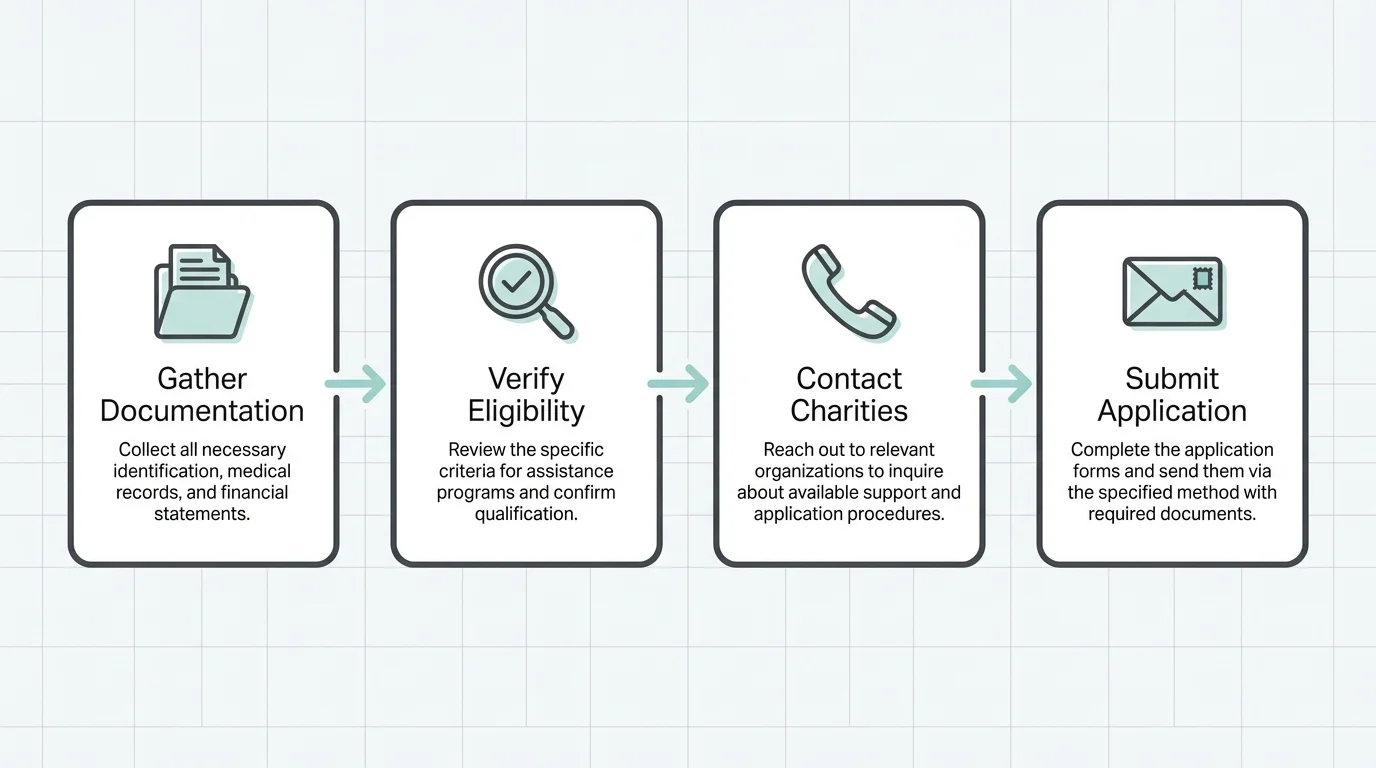
Applying for charitable aid requires organization and patience. Charities need to verify your financial need and the legitimate cost of the funeral before releasing funds. Approaching this process methodically will save you time and prevent unnecessary frustration.
First, pause the funeral arrangements. Do not sign a contract with a funeral home until you know how you will pay for it. Most charities will not reimburse you for a funeral that has already been paid for or one where you have already signed a legally binding payment agreement. Explain to the funeral director that you are seeking charitable assistance; many will hold the body in refrigeration while you secure funding.
Next, gather your financial and personal documentation. Having these files ready allows you to submit applications quickly.
| Document Needed | Why Charities Require It |
|---|---|
| Proof of Income | Bank statements or Social Security benefit letters prove that you are facing a genuine financial hardship and cannot afford the costs out of pocket. |
| Death Certificate (or pending proof) | Verifies the passing of the individual. A statement of death from the funeral home often works if the official certificate is not yet available. |
| Itemized Funeral Estimate | The General Price List or a formal estimate from the funeral director shows the charity exactly how much money is needed and ensures costs are reasonable. |
| Identification | Your driver’s license or state ID proves your relationship to the deceased and your residency in the charity’s service area. |
Call the charities directly rather than relying solely on email. Explain your situation calmly and concisely. Let them know you have chosen the most affordable final arrangements possible but still fall short. Be prepared to hear “no” a few times, as many organizations experience budget shortages. Stay persistent, and ask any charity that cannot help if they can refer you to another local organization.

Protecting Yourself From Funeral and Charity Scams
During times of grief, your defenses are naturally lowered. Unfortunately, bad actors exploit this vulnerability. Seniors are frequently targeted by scams related to debt collection, fraudulent charities, and unethical funeral practices.
According to the Consumer Financial Protection Bureau (CFPB), seniors are frequent targets of financial scams, making it essential to verify any organization before sharing your personal information or bank details. Never pay a fee to apply for a charitable grant. Legitimate charities will never ask you for an application fee, processing fee, or a percentage of the funds they provide.
Be wary of strangers contacting you directly offering to pay for the funeral in exchange for an upfront processing fee. If someone reaches out to you via social media or email claiming to represent a charity you have never contacted, ignore the message. Always initiate contact through official, verified phone numbers or websites.
Additionally, watch out for predatory debt collection. If your loved one died with credit card debt or medical bills, collection agencies may call you demanding payment. They might imply that you must pay these debts before you can pay for the funeral. In most cases, you are not personally responsible for your deceased family member’s individual debts. Do not let aggressive collectors divert the money you need for final arrangements.
Frequently Asked Questions
Can I get help if the funeral has already happened?
Securing help after the funeral is extremely difficult. Most charities and government programs pay the funeral home directly before the services take place. If you have already paid the bill out of pocket or put it on a credit card, charities generally consider the immediate crisis resolved and will not offer reimbursement.
Do I have to be religious to get help from church charities?
No. Major religious charities like the Society of St. Vincent de Paul, Catholic Charities, and The Salvation Army provide emergency assistance based on financial need, not religious affiliation. They are committed to helping the most vulnerable members of their local communities regardless of their personal beliefs.
What is the absolute cheapest way to handle final arrangements?
Whole body donation to a medical facility or program like Science Care is usually entirely free, as the organization covers cremation and transportation. If body donation is not an option, direct cremation is the most affordable commercial choice, often costing a fraction of a traditional burial.
How quickly can charities provide funding?
The timeline varies by organization. Local community groups or church chapters can sometimes approve emergency funds within a few days after a phone interview. Larger grants may take a week or two to process. Always inform the funeral director that you are securing charitable funds so they understand the timeline.
Will Medicare pay for funeral expenses?
Medicare does not cover funeral, burial, or cremation costs. Health insurance policies focus entirely on medical care during a person’s life. You will need to rely on Social Security death benefits, VA benefits, or the charitable organizations listed in this guide for end-of-life expenses.
For additional senior resources, visit
Benefits.gov, National Institute on Aging (NIA), Centers for Disease Control and Prevention (CDC) and Medicare.gov.
Disclaimer: The information in this article is for educational purposes only and is not intended to be a substitute for professional financial, legal, or medical advice. Always consult with a qualified expert for advice tailored to your personal situation.








MedCure out of Portland, OR, does FREE cremations when you donate to science. Contact them for more info.