

In this guide6 sections
As we journey through our golden years, keeping our minds sharp and our memories clear is one of the most important things we can do for our well-being and independence.
You’ve accumulated a lifetime of wisdom, stories, and experiences, and protecting the brilliant mind that holds them is a worthy goal.
While there is no single “magic pill” for brain health, a healthy lifestyle that includes a balanced diet, regular physical activity, social engagement, and good sleep forms the foundation of cognitive vitality.
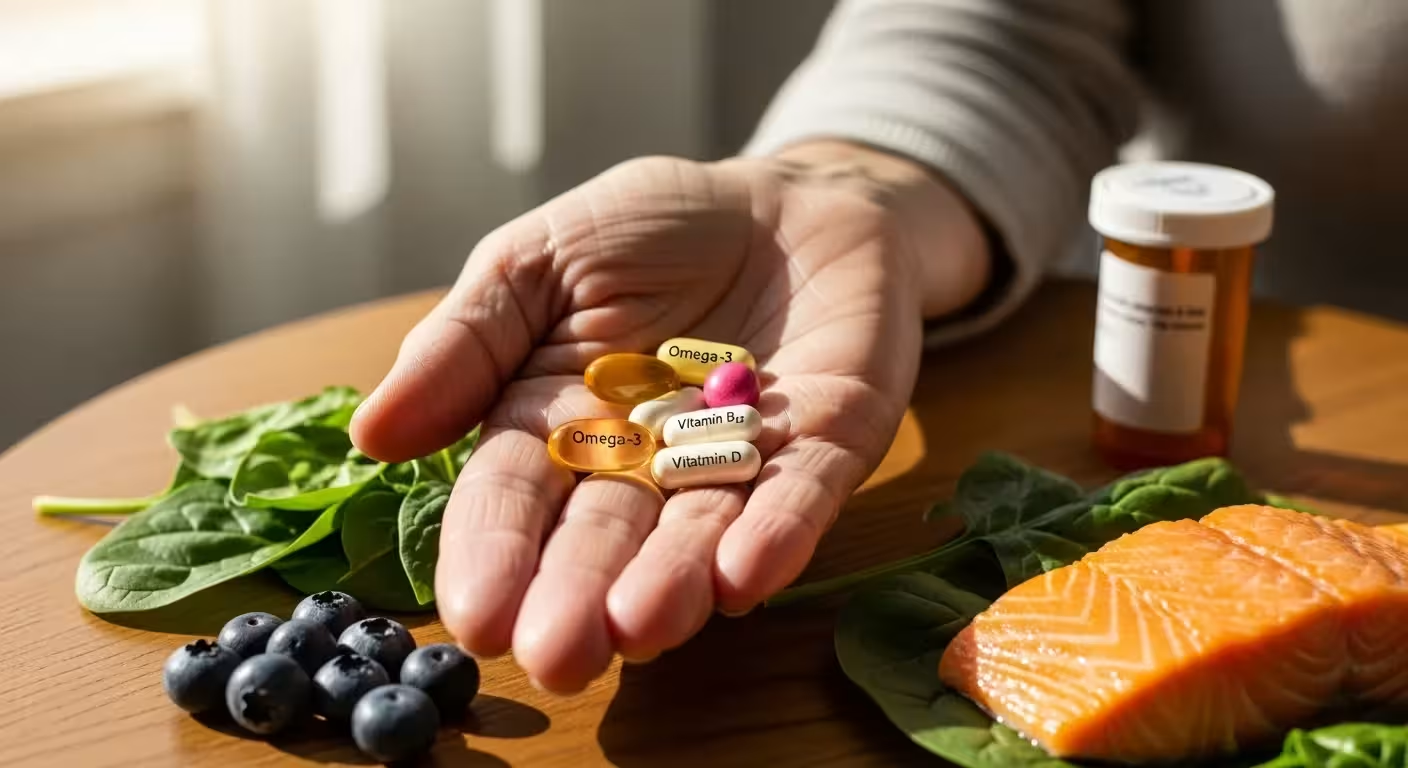
Alongside these cornerstones, certain supplements can play a supportive role, helping to fill nutritional gaps that can become more common after age 65.
This guide is designed to walk you through some of the most well-regarded brain health supplements for seniors. We’ll explore what they are, why they matter, and how you might consider them as part of your overall wellness plan.
Our focus is on providing clear, practical, and safe information to empower you.
A Crucial First Step: Always Talk to Your Doctor
Before you start taking any new supplement, it is absolutely essential to speak with your doctor or a registered dietitian. Supplements can interact with prescription medications (like blood thinners or blood pressure medication), affect medical conditions, and may not be right for everyone.
Your healthcare provider can help you determine the right dosage, check for potential interactions, and even test for specific nutrient deficiencies. This article is for informational purposes only and is not a substitute for professional medical advice.

01 Omega-3 Fatty Acids (The Brain Builders)
The ‘Why’: Your brain is made of about 60% fat, and a large portion of that is an omega-3 fatty acid called docosahexaenoic acid (DHA).
DHA is a primary structural component of your brain cells (neurons) and is crucial for their ability to communicate with each other. Think of it as the high-quality building material for your brain’s communication network.
Adequate levels of omega-3s, which also include eicosapentaenoic acid (EPA), help reduce inflammation throughout the body, including in the brain. Chronic inflammation is linked to cognitive decline, so keeping it in check is vital for long-term brain health.
The ‘How’:
– Food First: The best source of omega-3s is fatty, cold-water fish. Aim for two servings a week of fish like salmon, mackerel, herring, sardines, or anchovies.
Plant-based sources include flaxseeds, chia seeds, and walnuts, but these contain a different type of omega-3 (ALA) that the body must convert to DHA and EPA, a process that is not very efficient.
– Choosing a Supplement: If you don’t regularly eat fatty fish, a supplement may be a good option. Look for a high-quality fish oil, krill oil, or algae-based oil (a great vegan option).
Check the label for the total amount of EPA and DHA, as this is more important than the total “fish oil” amount. A common recommendation is around 1,000 mg of combined EPA and DHA per day, but your doctor will know what’s best for you.
– Safety Note: Omega-3 supplements can have a blood-thinning effect. If you are taking blood thinners like warfarin (Coumadin) or have a bleeding disorder, it is critical to consult your doctor before starting.
To minimize the common side effect of “fishy burps,” take the supplement with a meal or look for enteric-coated capsules.

02 Vitamin B12 (The Nerve & Energy Vitamin)
The ‘Why’: Vitamin B12 is a powerhouse for your nervous system. It’s essential for maintaining the health of your nerve cells and is involved in creating the protective myelin sheath that surrounds nerves, allowing them to send signals quickly and efficiently.
A deficiency in B12 can lead to nerve problems, fatigue, and significant memory issues that can sometimes be mistaken for early-stage dementia. As we age, our ability to absorb B12 from food can decrease due to lower levels of stomach acid.
This makes seniors particularly susceptible to a deficiency.
The ‘How’:
– Food First: Vitamin B12 is found almost exclusively in animal products. Excellent sources include meat, poultry, fish, eggs, and dairy products.
Some foods, like breakfast cereals, are fortified with B12.
– Choosing a Supplement: Because of the absorption issue, your doctor may recommend a B12 supplement. Common forms are cyanocobalamin or methylcobalamin.
For those with significant absorption problems, a sublingual (under-the-tongue) tablet, nasal spray, or even a B12 injection from your doctor may be most effective.
– Safety Note: Vitamin B12 is a water-soluble vitamin, meaning your body typically excretes what it doesn’t need, so it’s considered very safe.
However, getting your levels tested by your doctor is the best way to know if you need to supplement and at what dose. Don’t self-diagnose a deficiency.

03 Vitamin D (The Sunshine Vitamin for Your Brain)
The ‘Why’: We often associate Vitamin D with bone health, but its importance extends deep into the brain. Researchers have found Vitamin D receptors throughout brain tissue, especially in areas linked to memory and cognition.
It acts more like a hormone in the body, helping to regulate immune function and reduce inflammation. Some studies suggest a link between low Vitamin D levels and an increased risk of cognitive decline.
Many older adults are deficient because the skin becomes less efficient at producing Vitamin D from sun exposure, and we may spend more time indoors.
The ‘How’:
– Food First & Sunlight: Very few foods are naturally rich in Vitamin D, but sources include fatty fish (salmon, mackerel), cod liver oil, and fortified milk and cereals.
Safe, moderate sun exposure (e.g., 15-20 minutes on your arms and legs a few times a week, without sunscreen) can help, but this is often impractical or risky for many seniors.
– Choosing a Supplement: The most common and recommended form is Vitamin D3 (cholecalciferol). Dosages vary widely, so it’s essential to have your doctor check your blood levels to determine the right amount for you.
It is a fat-soluble vitamin, so it’s best absorbed when taken with a meal that contains some fat, like avocado, nuts, or olive oil.
– Safety Note: Because Vitamin D is fat-soluble, your body stores it, and taking excessively high doses can lead to toxicity. This is why medical guidance is not just recommended—it’s necessary for safe supplementation.

04 Magnesium (The Calming Mineral for Nerves)
The ‘Why’: Magnesium is a crucial mineral involved in over 300 biochemical reactions in your body, including many that are vital for brain health.
It plays a key role in nerve transmission and brain plasticity—the brain’s ability to form new connections, which is the basis of learning and memory. It also has a calming effect on the nervous system, which can help promote better sleep.
Since a good night’s sleep is when the brain clears out toxins and consolidates memories, getting enough quality rest is a powerful tool for cognitive support.
The ‘How’:
– Food First: You can find magnesium in a variety of delicious foods. Top sources include leafy green vegetables (spinach, kale), nuts (almonds, cashews), seeds (pumpkin seeds), legumes (black beans), and whole grains.
– Choosing a Supplement: There are many forms of magnesium, and some are better absorbed than others. Magnesium citrate and glycinate are often recommended for their high bioavailability and gentleness on the stomach.
Magnesium L-threonate is a newer form that has shown promise in studies for its ability to cross the blood-brain barrier, but more research is needed.
– Safety Note: High doses of magnesium can cause digestive upset, particularly diarrhea. It can also interact with certain medications, including antibiotics and diuretics.
As always, discuss this with your doctor to find the right form and dose for your needs.

05 Curcumin (from Turmeric)
The ‘Why’: Curcumin is the active compound in turmeric, the bright yellow spice that gives curry its color. It’s a potent antioxidant and anti-inflammatory agent.
Scientists believe that chronic, low-grade inflammation and oxidative stress (think of it like “rust” on your cells) are major drivers of age-related cognitive decline. Curcumin can cross the blood-brain barrier and may help by fighting this inflammation directly in the brain.
Some research also suggests it can help clear amyloid plaques, a hallmark of Alzheimer’s disease, though more human studies are needed.
The ‘How’:
– Food First: Adding turmeric to your cooking is a wonderful way to get some curcumin, but the amount is relatively small and not well-absorbed by the body.
– Choosing a Supplement: For a therapeutic effect, a supplement is necessary. Your body has a hard time absorbing curcumin on its own.
Look for a supplement that includes piperine (the active compound in black pepper) or is formulated with a “liposomal” or “phytosome” delivery system, as these dramatically increase absorption.
– Safety Note: Curcumin can have a blood-thinning effect, so it’s important to talk to your doctor if you take anticoagulants. It may also cause stomach upset in some individuals.
Start with a low dose to see how your body tolerates it.

06 Antioxidants & Flavonoids (Ginkgo, Green Tea, & Berries)
The ‘Why’: Flavonoids are a diverse group of plant-based compounds that act as powerful antioxidants. They protect your body’s cells, including your brain cells, from damage caused by free radicals and oxidative stress.
This protective action helps maintain healthy blood flow to the brain, which is essential for delivering the oxygen and nutrients it needs to function optimally. Popular nootropics for older adults often contain these compounds.
The ‘How’:
– Food First: The best way to get a wide array of flavonoids is to “eat the rainbow.” Brightly colored fruits and vegetables are packed with them.
Berries (especially blueberries), dark chocolate (in moderation), green tea, and leafy greens are all fantastic sources.
– Choosing a Supplement:
Ginkgo Biloba: This is one of the most-studied supplements for memory. It’s thought to work by improving blood flow to the brain.
Evidence is mixed, but some people find it helpful for mild memory issues. Crucially, ginkgo has significant blood-thinning properties and should not be taken with anticoagulant medication without strict medical supervision.
Green Tea Extract: This supplement provides a concentrated dose of the flavonoids found in green tea, including EGCG and L-theanine, which can promote a state of calm alertness and protect brain cells.
– Safety Note: Because of the potential for serious interactions, especially with Ginkgo Biloba, you must consult your doctor. They can guide you on whether these supplements are safe and appropriate for your specific health profile.

Your Brain’s Best Friends: Beyond the Bottle
Remember, no supplement can replace the profound benefits of a healthy lifestyle. Think of these supplements as potential helpers, but your daily habits are the true heroes of brain health.
Continue to challenge your mind by learning new things, stay connected with friends and family, move your body in ways that feel good, and nourish yourself with whole, delicious foods.
By taking a proactive, informed, and careful approach, you can give your brain the support it deserves to stay vibrant and healthy for all the years to come.
For expert guidance on senior health and finance, visit Medicare.gov, National Institute of Mental Health (NIMH), National Institutes of Health (NIH), Centers for Medicare & Medicaid Services (CMS) and Social Security Administration (SSA).
|
Fact-Checked Content
Our editorial team reviews all content for accuracy and updates it regularly. Learn about our editorial process →
|