

Simple physical movements reveal far more about your health and longevity than an expensive gym routine. Testing how easily you stand, balance, and walk highlights hidden risks before serious injuries occur.
These practical assessments measure lower-body strength, coordination, and nervous system health from the comfort of your living room. You can take immediate action today to protect your independence and stay active for years to come.
Grab a sturdy chair and a stopwatch to check where you stand. Discovering your mobility baseline takes only a few minutes and provides clear clues about your future well-being.

Why Mobility Matters More Than Traditional Cardio
Aerobic stamina protects your heart, but mobility determines whether you can live independently. Functional movement measures how well your brain, nerves, and muscles collaborate during everyday tasks.
When you lose mobility, routine activities like climbing stairs, getting out of bed, and carrying groceries become hazardous hurdles. Loss of physical autonomy often begins with quiet declines in balance and leg strength.
According to Centers for Disease Control and Prevention (CDC), more than 1 in 4 adults aged 65 and older report falling each year. That equates to more than 14 million older Americans stumbling annually.
Despite these high numbers, fewer than half of older adults who fall inform their healthcare provider. Silence creates missed opportunities for early intervention and targeted physical therapy.
Falling is not an inevitable consequence of aging; rather, it is often a sign of treatable weakness. About 1 in 5 falls causes a serious injury, such as a broken bone or severe head trauma.
These accidents lead to roughly 3 million to 3.85 million emergency department visits each year. They also cause approximately 1 million hospitalizations annually, including over 300,000 admissions for hip fractures.
Federal health tracking shows that unintentional fall death rates among seniors rose by more than 70% over two decades. By 2023, the rate reached 69.9 deaths per 100,000 older adults.
In 2024, preventable falls claimed over 43,000 lives across the United States. Beyond the human cost, non-fatal falls cost the healthcare system between $50 billion and $80 billion every year.
Medicare and Medicaid shoulder roughly 75% of these medical expenses. Testing your physical mobility at home gives you an early warning system to correct imbalances before an emergency occurs.
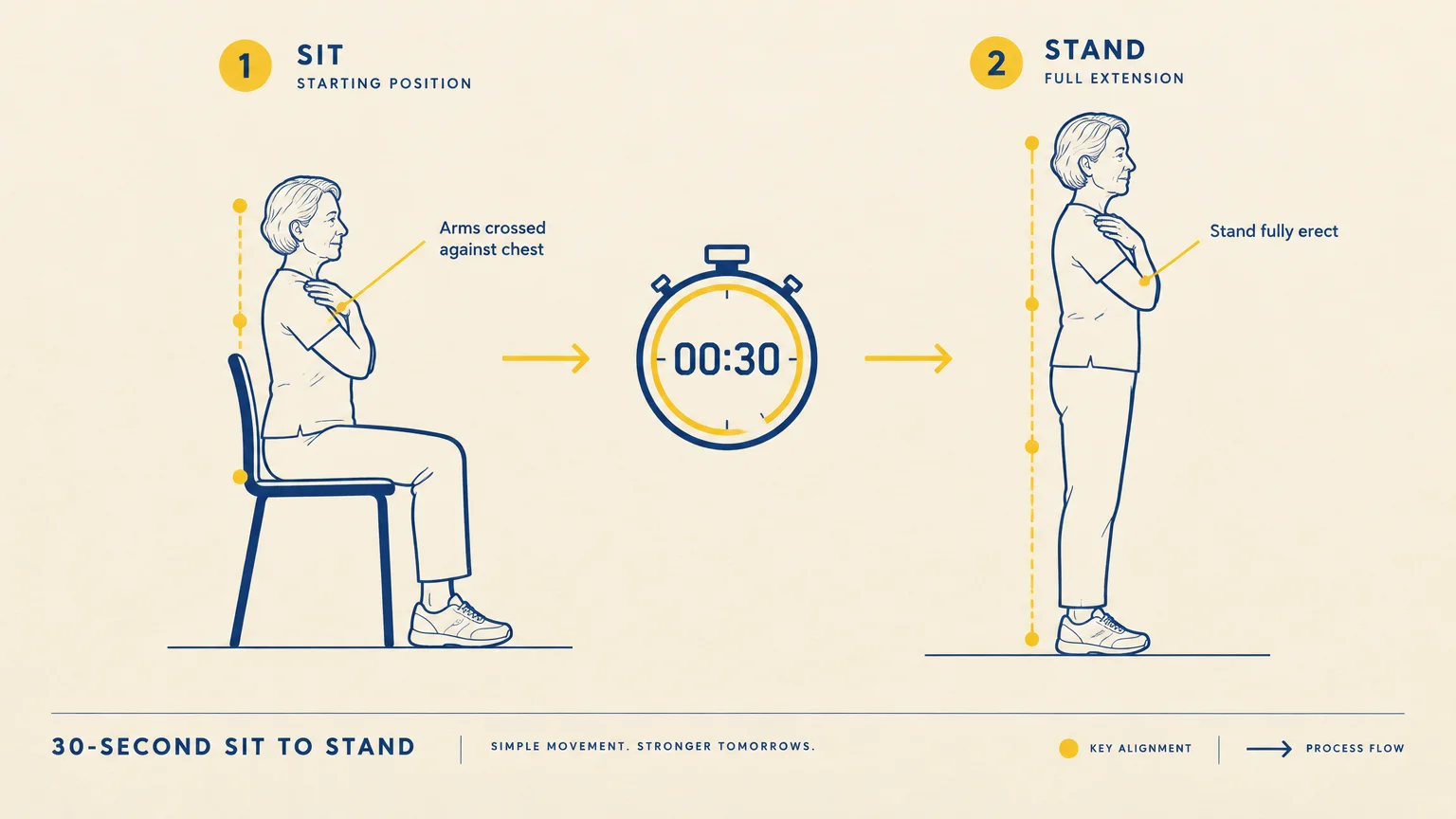
Test 1: The 30-Second Sit-to-Stand Test
The 30-Second Sit-to-Stand test evaluates lower-body muscular endurance, joint stability, and dynamic balance. Geriatric specialists rely on this movement to gauge how easily you can stand from low chairs, cars, and toilets.
Clinical researchers developed this protocol as part of the CDC STEADI (Stopping Elderly Accidents, Deaths & Injuries) fall-prevention toolkit. It replaces bulky gym equipment with a simple living room assessment.
Equipment and Setup
You need a stopwatch or a smartphone timer and a sturdy, armless chair. The seat must measure approximately 17 inches from the floor to the top of the cushion.
Place the chair against an interior wall so it cannot slide backward while you move. Wear flat, supportive athletic shoes rather than slippers or socks.
- Sit upright in the middle of the seat with your spine straight and feet flat on the floor, about shoulder-width apart.
- Cross your arms across your chest, resting each hand on the opposite shoulder.
- Keep your arms pinned to your torso throughout the entire 30 seconds.
- Set your timer for 30 seconds and prepare to start.
- When the clock begins, stand up completely until your hips and knees lock out straight.
- Sit all the way back down until your weight rests on the seat, then immediately stand again.
- Count each full stand completed before the 30-second timer buzzes.
Pay strict attention to proper form throughout the assessment. If your arms unfold to push off your thighs or the chair seat, the clinical protocol records an automatic score of zero.
If you reach a standing position at the exact moment the timer sounds, count that repetition. If you are only halfway up, do not count that final repetition in your tally.
CDC Fall-Risk Cutoffs
The CDC established specific cutoff thresholds based on age and sex. Scoring below the numbers listed below indicates diminished leg strength and an elevated risk for falls.
| Age Bracket | Men (Below Average / Risk) | Women (Below Average / Risk) |
|---|---|---|
| Ages 60–64 | Fewer than 14 stands | Fewer than 12 stands |
| Ages 65–69 | Fewer than 12 stands | Fewer than 11 stands |
| Ages 70–74 | Fewer than 12 stands | Fewer than 10 stands |
| Ages 75–79 | Fewer than 11 stands | Fewer than 10 stands |
| Ages 80–84 | Fewer than 10 stands | Fewer than 9 stands |
| Ages 85–89 | Fewer than 8 stands | Fewer than 8 stands |
| Ages 90–94 | Fewer than 7 stands | Fewer than 4 stands |
Meeting or exceeding these target repetitions shows that your quadriceps, glutes, and core possess adequate functional power. Falling short highlights muscle wasting that requires targeted resistance training.
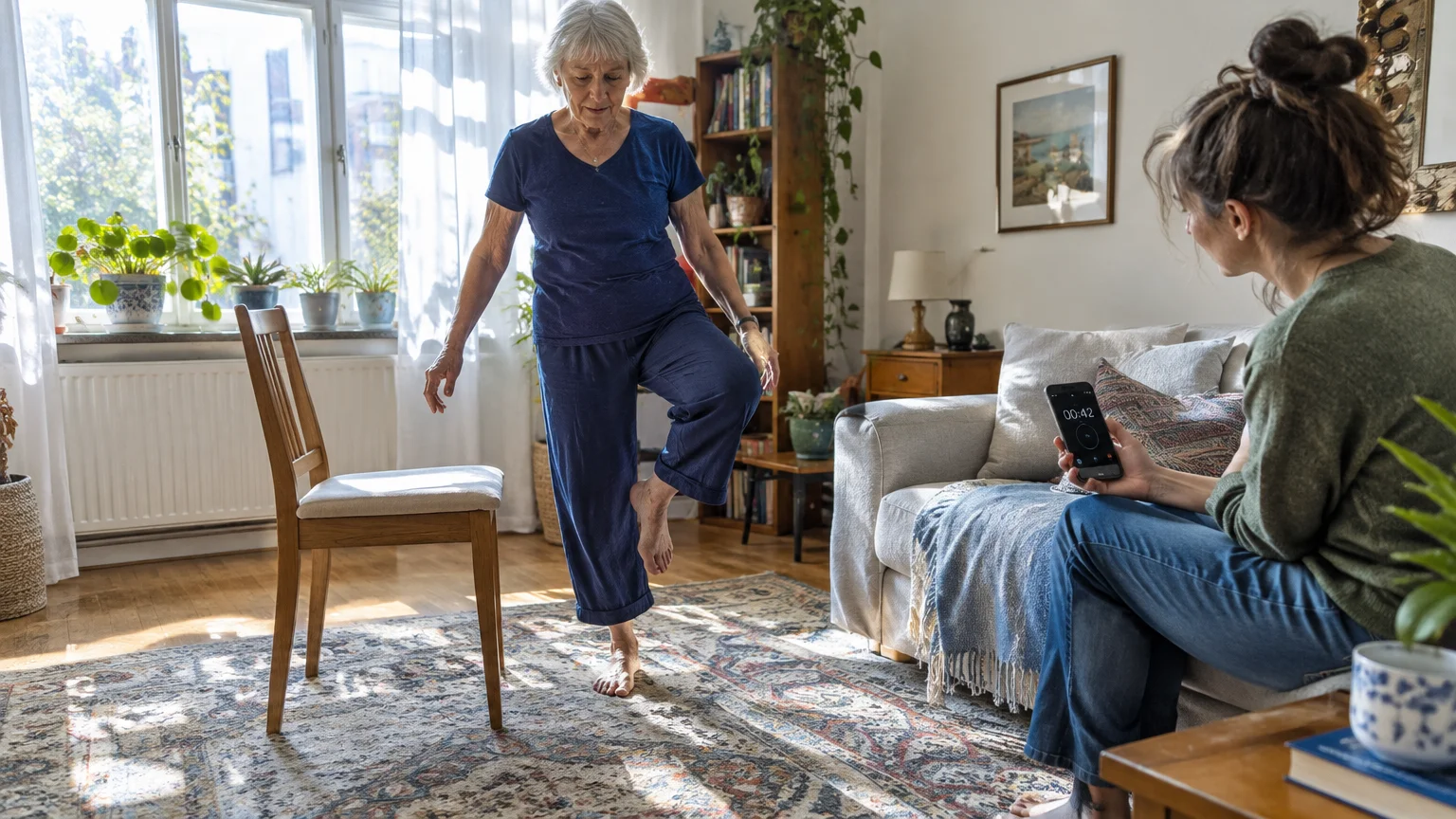
Test 2: The 10-Second One-Legged Stance
Static balance relies on complex coordination between your inner ear, your eyes, and nerve endings in your feet called proprioceptors. As you age, these sensory feedback loops can slow down without regular practice.
According to National Institute on Aging (NIA), balance exercises are essential for preventing falls and maintaining physical independence throughout your retirement years.
The 10-second one-legged stance tests how quickly your central nervous system adjusts to sudden shifts in body weight. Walking is essentially a series of single-leg balance moments linked together.
The Longevity Connection
A landmark study published in the British Journal of Sports Medicine in June 2022 tracked 1,702 adults aged 51 to 75 over a median follow-up of 7 years.
Researchers discovered that roughly 1 in 5 participants (20.4%) could not balance unsupported on one foot for 10 seconds. The failure rate climbed steeply with advancing age.
Participants who failed the test had an 84% higher risk of death from any cause compared to those who passed. This elevated danger remained true after researchers adjusted for age, sex, body mass index, and chronic illnesses.
Over the study period, 17.5% of the individuals who failed the stance died, compared to just 4.6% of those who succeeded. Balance functions as an accurate mirror of underlying biological vitality.
How to Complete the Test
Perform this test barefoot or in thin socks on a hard, level floor. Remove thick rugs or padded mats that create unstable footing.
- Stand upright next to a sturdy kitchen counter or heavy table for safety.
- Hover your hands a few inches above the counter without touching it.
- Fix your eyes on a stationary spot on the wall straight ahead at eye level.
- Lift one foot off the floor, placing the foot behind or beside the standing calf without letting your legs touch.
- Start your timer the moment your foot leaves the floor.
- Hold the position still for 10 full seconds without grabbing the support surface.
- Repeat the test on the opposite leg.
The test ends immediately if your raised foot touches the ground or if your hands grab the counter. It also counts as a stop if your standing foot shifts out of place.
Passing requires holding the posture cleanly on at least one leg for the full 10 seconds. If you cannot manage 10 seconds, your balance control requires immediate rehabilitation.
The CDC Tandem Stand Alternative
If standing on one foot feels too hazardous, use the tandem stand from the CDC STEADI assessment. This setup provides a gentler starting point for testing your baseline balance.
Place your right foot directly in front of your left foot so your right heel touches your left toes. Distribute your weight evenly across both feet while standing tall.
Try to hold this heel-to-toe position for 10 seconds without holding onto a wall or moving your feet. Inability to hold a tandem stance for 10 seconds signals an elevated risk for falls.
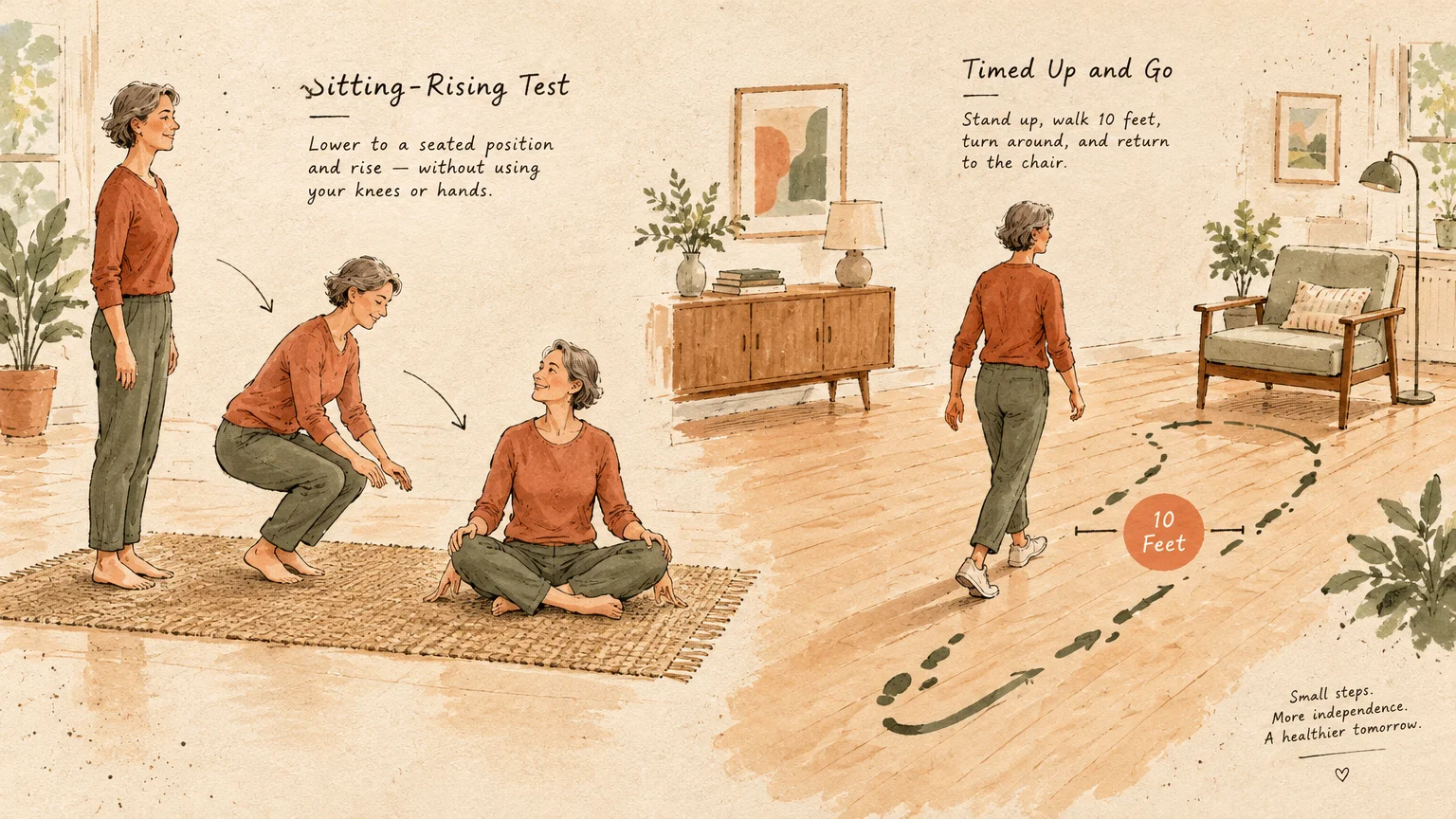
Test 3: The Sitting-Rising Test and Timed Up and Go
The third mobility benchmark assesses agility, floor transfer capability, and dynamic control. Depending on your joint health, you can choose between a floor test or a walking test.
The Sitting-Rising Test (SRT) measures your ability to lower yourself to the floor and stand back up without relying on hands or knees. It assesses core strength, hip flexibility, and joint range of motion.
Sitting-Rising Test Scoring Rules
Wear loose, comfortable clothing and remove your shoes before beginning this assessment. You start with a maximum possible score of 10 points—5 points for sitting down, and 5 points for standing up.
- Subtract 1 full point each time you use a hand, knee, forearm, or the side of your leg for support.
- Subtract 1 full point if you place a hand on your own knee or thigh to brace yourself.
- Subtract 0.5 points whenever you wobble noticeably or lose your balance during the movement.
- Cross your legs at the ankles if needed to assist your descent and ascent.
Dr. Claudio Gil Araújo’s landmark 2012 study in the European Journal of Preventive Cardiology evaluated 2,002 adults aged 51 to 80. Each 1-point increase in the SRT score was linked to a 21% improvement in survival.
An expanded follow-up study published by Araújo and colleagues tracked adults aged 46 to 75 over a median of 12 years. Participants scoring between 0 and 4 points faced a 3.8-fold higher risk of natural death compared to those scoring 10.
Those lowest-scoring individuals also experienced a 6.0-fold higher risk of cardiovascular death. Musculoskeletal fitness provides a profound buffer against chronic disease.
Research from the American Heart Association highlights that regular functional movement supports healthy circulation and lowers overall cardiovascular mortality. Strong muscles help your heart circulate blood more efficiently.
The Senior-Safe Alternative: Timed Up and Go (TUG)
Floor tests present genuine joint risks for adults with severe osteoarthritis, knee replacements, or spinal issues. The CDC STEADI Timed Up and Go (TUG) test offers a safer, gold-standard alternative.
Place a standard chair in an open room and measure a straight walking path of exactly 10 feet (3 meters). Mark the 10-foot point on the floor with a piece of tape.
- Sit comfortably in the chair with your back resting against the chair back.
- Wear your regular walking shoes and use your customary mobility aid, such as a cane or walker, if needed.
- On the word “go,” stand up from the chair at your normal, comfortable walking pace.
- Walk along the line to the 10-foot tape mark on the floor.
- Turn around smoothly, walk back to the chair, and sit down completely.
- Stop the timer the moment your hips touch the chair seat.
Older adults who complete the TUG test in under 12 seconds demonstrate normal, functional mobility. Taking 12 seconds or more indicates an elevated risk for dangerous falls during daily tasks.
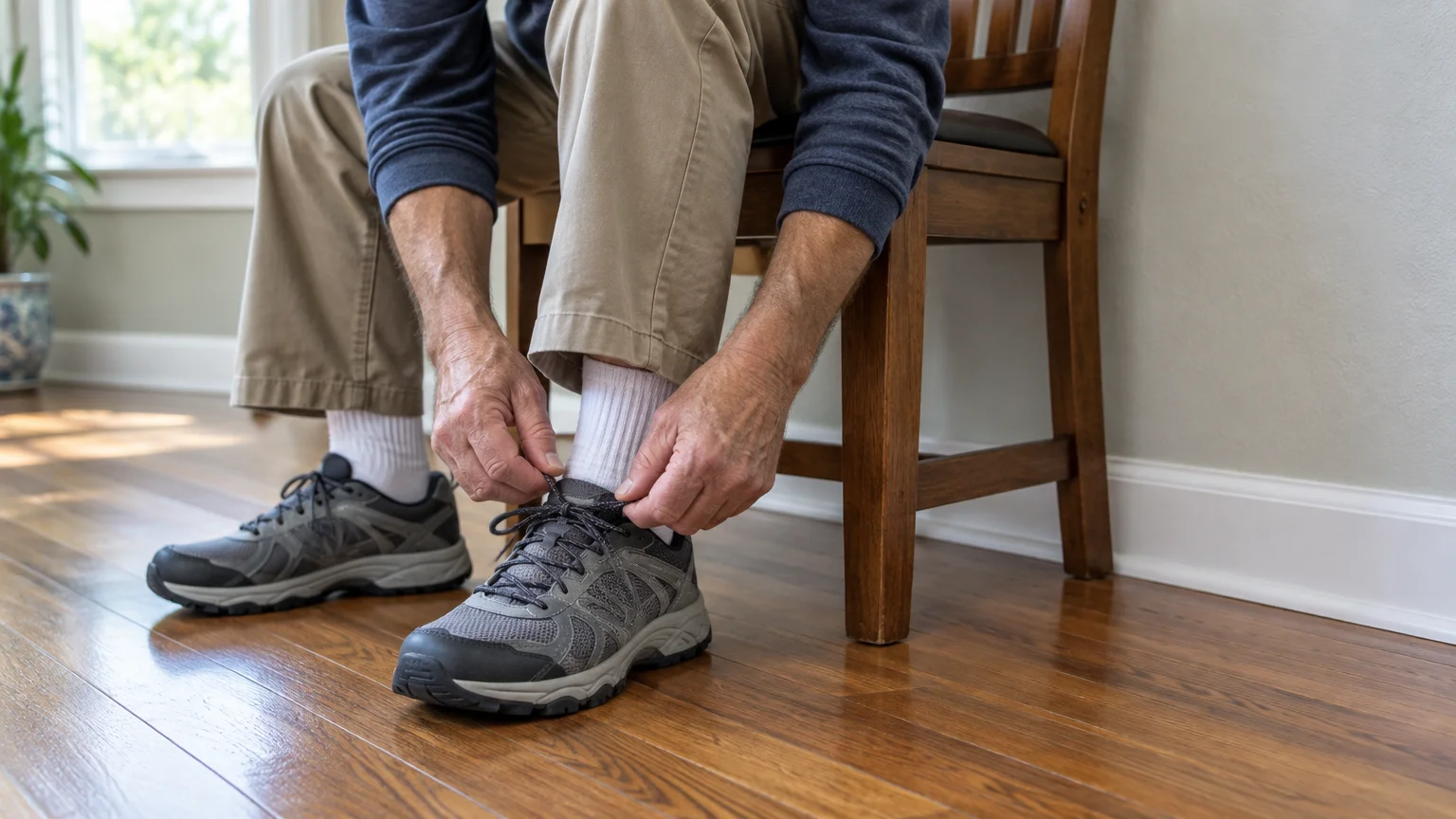
Essential Safety Rules for Testing at Home
Never sacrifice your personal safety simply to record an assessment score. Mobility assessments provide helpful feedback, but an injury during testing defeats the entire purpose.
Always recruit a family member, neighbor, or friend to act as a spotter when you perform balance or floor assessments. Your spotter should stand within arm’s reach without interfering with your natural movement.
Clear the testing area of all trip hazards before you begin. Move throw rugs, electrical cords, low coffee tables, and pet toys completely out of your pathway.
Wear supportive sneakers with rubber grip soles rather than leather-soled dress shoes or smooth socks. Ensure the room provides bright, even lighting with no dark shadows or glare.
Stop any mobility test immediately if you experience dizziness, lightheadedness, chest pressure, or sharp joint pain. Listen to your body and never force your joints through painful friction.
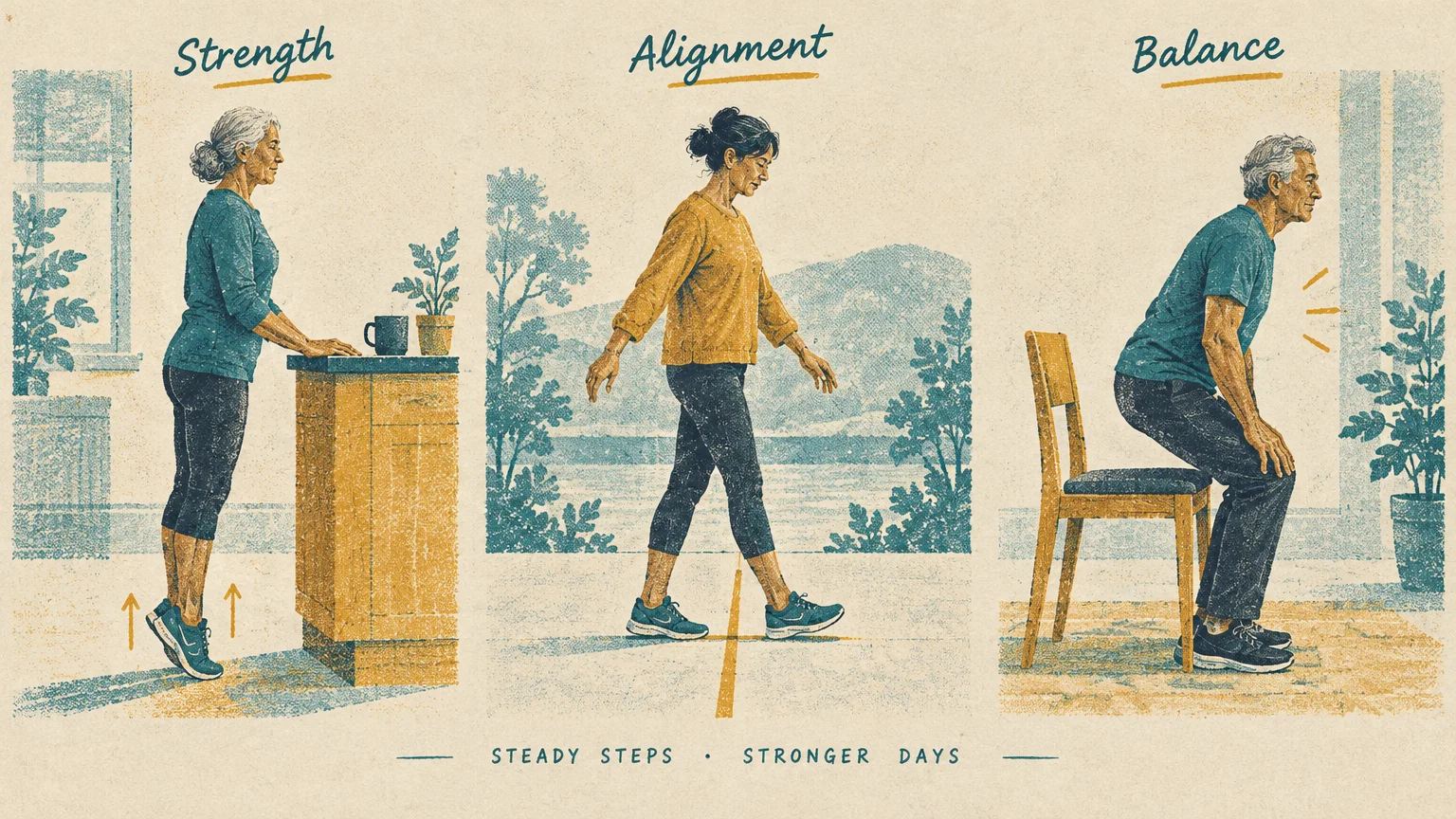
How to Improve Your Mobility and Retake the Tests
Failing one of these assessments provides valuable data, not a permanent diagnosis. Muscular strength and nervous system balance respond quickly to consistent physical conditioning at any age.
Commit to small, structured routines rather than occasional intense workouts. Practicing functional drills for just 10 to 15 minutes each day creates substantial progress over several weeks.
Targeted Chair Squats
Build lower-body power by turning the sit-to-stand movement into a daily training exercise. Use your dining room chair to complete controlled sets throughout the day.
- Perform 3 sets of 8 to 10 repetitions, resting for one minute between sets.
- Lower yourself down slowly over 3 seconds to build eccentric quadriceps strength.
- If you cannot stand without your hands, place a firm cushion on the seat to raise the height by 2 or 3 inches.
- As your legs grow stronger, remove the cushion until you can rise smoothly from the standard 17-inch height.
Single-Leg Counter Holds
Reclaim balance confidence by practicing one-legged stands whenever you prepare meals or wash dishes at your kitchen sink. The counter provides an immediate handhold if you waver.
Rest both hands lightly on the counter rim while standing on your right foot for 15 seconds. Gradually reduce your touch to two fingertips, then one fingertip, and eventually hover your hands entirely.
Switch to your left foot and repeat the progression. Consistent daily practice stimulates nerve pathways and trains small stabilizing muscles around your ankles.
Heel-to-Toe Hallway Walking
Tandem walking strengthens coordination and sharpens dynamic balance during forward movement. Practice this drill along a clear hallway with an unobstructed wall beside you.
Step forward, placing your heel directly against the toes of your opposite foot with each stride. Keep one hand close to the wall for balance while looking forward toward the end of the hall.
Take 10 to 15 tandem steps in one direction, turn around carefully, and walk back. Retest your mobility scores every 4 to 6 weeks to track your measurable progress.
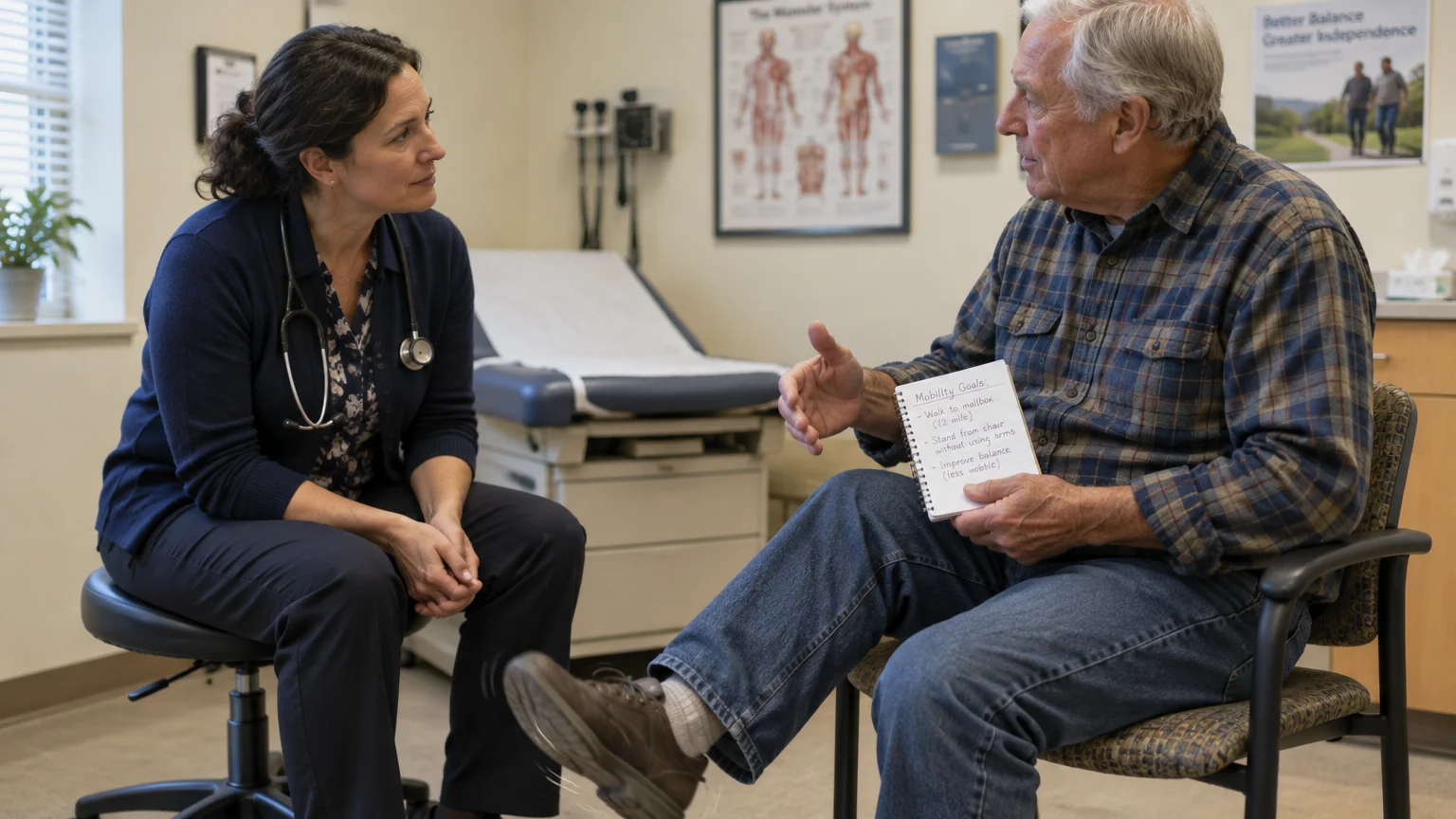
Discussing Mobility and Fall Risk With Your Doctor
Bring your mobility test scores to your next primary care appointment. Physicians appreciate objective performance data because clinic visits often fail to reveal real-world physical limitations.
Many seniors avoid mentioning balance problems because they fear losing their driving privileges or household independence. In reality, discussing mobility challenges allows your medical team to provide preventive resources that keep you independent longer.
As highlighted by AARP, staying proactive about mobility challenges helps older adults preserve their autonomy and remain in their own homes longer.
Ask your doctor for a comprehensive medication review during your consultation. Many common prescriptions for high blood pressure, sleep, anxiety, and allergies cause dizziness, slow reflexes, or low blood pressure upon standing.
Your physician can adjust dosages or swap sedating drugs for medications that do not compromise your balance. They can also screen your feet for neuropathy and check your vision for cataract development.
Request an outpatient physical therapy referral if you scored below average on any of the tests. Physical therapists design personalized programs to correct muscle imbalances and gait abnormalities.
According to Medicare.gov, Part B covers medically necessary physical therapy to help improve or maintain mobility. Your supplemental insurance or Medicare Advantage plan often covers remaining coinsurance costs.
Frequently Asked Questions
What should I do if I fail one of these mobility tests?
Do not panic or feel discouraged, because mobility responds exceptionally well to physical conditioning. Begin practicing simple balance and chair-rise exercises daily, and schedule a conversation with your doctor.
Can I improve my mobility scores if I have severe knee or hip arthritis?
Yes, strengthening the muscles surrounding an arthritic joint reduces bone-on-bone pressure and relieves daily pain. Low-impact movements, water aerobics, and guided physical therapy restore functional strength without irritating inflamed joints.
How often should I retake these mobility tests at home?
Retest yourself once every four to six weeks rather than testing daily. Neurological adaptations and muscle growth take several weeks of consistent training to produce measurable improvements in your scores.
Does Medicare cover professional mobility assessments and fall-prevention therapy?
Medicare Part B covers outpatient physical and occupational therapy when ordered by your physician to treat mobility loss. Your annual Wellness Visit also includes an initial fall-risk screening at no out-of-pocket cost.
Is it safe to try the Sitting-Rising Test if I have had a joint replacement?
You should skip the floor-based Sitting-Rising Test if you have artificial knees or hips unless your orthopedic surgeon explicitly approves it. Focus instead on the 30-Second Chair Stand and Timed Up and Go tests, which protect your prosthetic joints.
For additional senior resources, visit
National Institute of Mental Health (NIMH), National Institutes of Health (NIH), Centers for Medicare & Medicaid Services (CMS) and Social Security Administration (SSA).
Disclaimer: The information in this article is for educational purposes only and is not intended to be a substitute for professional financial, legal, or medical advice. Always consult with a qualified expert for advice tailored to your personal situation.









Leave a Reply