

Helpful Resources for Seniors
Helpful Resources for Seniors Navigate life's next chapter with confidence
  • Home
  • Lifestyle
  • Well-Being
  • Finance

How to Build a Retirement Budget That Actually Works

September 8, 2025 · Finance

A close-up of an older person's hands gently misting the leaves of a green houseplant under the warm glow of a lamp.

Actionable Strategies and Money-Saving Tips

Now, let’s move from understanding the concepts to taking action. Building your retirement budget can be broken down into four clear, manageable steps. Grab a notebook or open a simple spreadsheet, and let’s begin.

An older man with glasses reviews a hand-written ledger, calculator, and financial statements on his kitchen table.
Carefully adding up monthly income to build a solid retirement budget.

Step 1: Calculate Your Total Monthly Income

The first step is to get a precise number for the money you have coming in each month. List every source of income and the amount you receive. Be sure to use the after-tax amount for a realistic picture.

  • Social Security Benefit: $1,800
  • Pension: $950
  • IRA Withdrawal (monthly average from your annual RMD): $750

In this example, your total monthly gross income is $3,500. After accounting for federal and state taxes and Medicare premium deductions, your actual take-home income might be closer to $3,100. This is the number you will use for your budget.

For official information on Social Security and Medicare, visit SSA.gov and Medicare.gov. These official government sites provide the most accurate details about your benefits.

An older woman in her kitchen standing at an island, writing expenses in a small notebook with a pen.
Tracking daily spending with a pen and paper.

Step 2: Track Every Single Expense

This step requires some diligence, but it is the most eye-opening part of the process. For at least one full month, you must track where every dollar goes. You can do this with:

  • A simple pocket-sized notebook and pen.
  • The notes app on your smartphone.
  • A basic spreadsheet on a computer.

Do not judge your spending yet; just record it. At the end of the month, categorize your expenses. A sample list might look like this:

  • Housing (Fixed): Mortgage/Rent ($1,200)
  • Utilities (Fixed/Variable): Electricity, Water, Gas, Internet ($250)
  • Transportation (Fixed/Variable): Car Payment, Insurance, Gas, Maintenance ($400)
  • Food (Variable): Groceries, Dining Out ($500)
  • Healthcare (Fixed/Variable): Premiums, Co-pays, Prescriptions ($350)
  • Personal & Entertainment (Variable): Hobbies, Gifts, Subscriptions ($150)

Your total expenses in this example are $2,850. Do not forget to account for costs that only occur a few times a year, like property taxes or holiday spending. To budget for these, take the total annual cost and divide by 12. For example, if your property tax is $2,400 per year, you should set aside $200 each month for it.

Older woman at a kitchen table, reviewing bank statements and a budgeting app on a tablet with a pen and notebook.
Reviewing finances at home helps find ways to make your budget work better.

Step 3: Analyze and Adjust Your Spending

Now, compare your total monthly income to your total monthly expenses. In our example, the income is $3,100 and the expenses are $2,850. This leaves a surplus of $250, which is great! This extra money can go into an emergency fund, savings for a large purchase, or a travel fund.

What if your expenses are higher than your income? This is where your budget empowers you to make changes. Look at your variable expenses first, as this is where you have the most flexibility. Ask yourself:

  • Can I reduce my grocery bill? Planning meals, using coupons, and buying generic brands can save a significant amount of money each month.
  • Am I paying for subscriptions I don’t use? Review your bank statements for recurring charges for magazines, streaming services, or gym memberships you no longer need.
  • Can I get a better deal on insurance? Call your auto, home, and supplemental health insurance providers annually to ask for a better rate. Mention that you are a senior and ask about available discounts.
  • Am I taking advantage of senior discounts? Many restaurants, grocery stores, movie theaters, and travel companies offer discounts for seniors. It never hurts to ask!
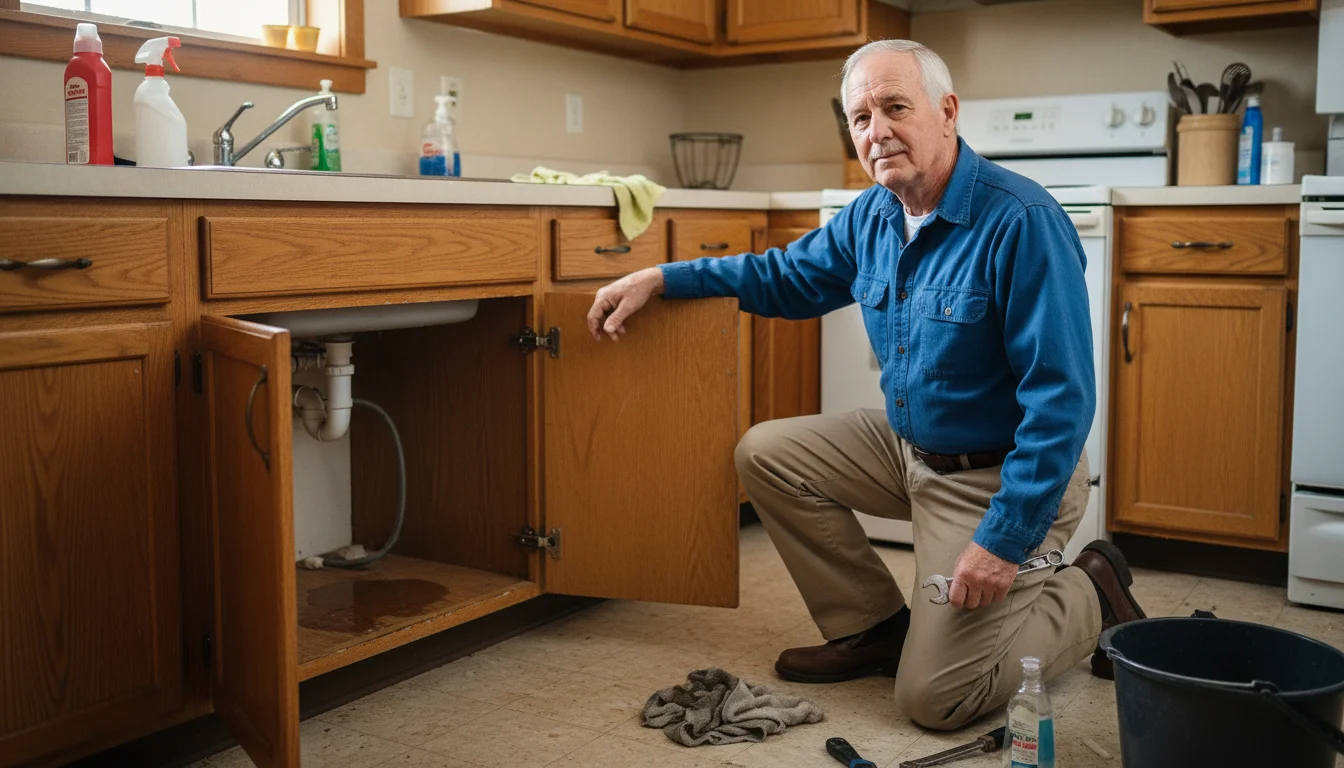
An older man kneels calmly, inspecting a small water leak under a kitchen sink in his home.
He calmly handles an unexpected household fix.

Step 4: Build in a Buffer for the Unexpected

Life is unpredictable. A car repair, a dental emergency, or a broken appliance can derail a tight budget if you are not prepared. Your budget should include a line item for savings, specifically for an emergency fund. Financial experts recommend having 3 to 6 months of essential living expenses saved in an easily accessible savings account. If your essential monthly costs (housing, food, utilities, healthcare) are $2,500, your goal should be an emergency fund of $7,500 to $15,000.

Even if you cannot save that much right away, start small. Budgeting just $50 or $100 per month into your emergency fund builds a crucial safety net over time.


Pages: 1 2 3 4 5 6

Share this article

Facebook Twitter Pinterest LinkedIn Email

Leave a Reply Cancel reply

Your email address will not be published. Required fields are marked *

Search

Latest Posts

  • An ink and watercolor illustration of a retired couple chatting with a local at a coastal European cafe, enjoying a sunny morning. 15 Cheap European Retirement Havens Where You'll Have No Language Barrier
  • FBI’s World Cup Ticket Scam Warning FBI’s World Cup Ticket Scam Warning
  • A retiree in a gray cardigan sits at her sunlit kitchen table working on a laptop with a $1,000 earnings balance visible. 9 Smart Ways Retirees Are Earning Up to $1K Per Month From Home
  • A senior couple walks calmly through a bright, modern airport terminal filled with sunlight and plants. America's Best and Worst Airports for Travelers in 2026
  • A senior couple sits at their kitchen table, calmly reviewing a planning binder together in soft morning light. 8 Ways to Ease Burial Costs
  • A senior woman works on her laptop at a sunny kitchen table, representing a fulfilling second career in retirement. 10 Second Career Ideas for Retirees
  • A woman gently helping her elderly father button his sweater in a sunlit, authentic living room with a documentary photography aesthetic. 10 Programs Designed for Caregiving Support
  • Ink and watercolor illustration of a house key, a grocery basket, a lightbulb, and a stethoscope on a cream paper background. 6 Financial Aid Programs You May Qualify For (Check Here!)
  • A serene mixed-media collage featuring a pressed lily, vintage paper, and soft watercolor textures in sage and cream tones. 9 Charities That Help With Funeral Costs in 2026
  • An older man sitting peacefully in his sunlit living room, representing the comfort and dignity of aging in place independently. 5 Support Programs Designed for Seniors Living Alone

Newsletter

Get the latest posts delivered to your inbox.

Related Articles

6 States That Don’t Tax Your Retirement Income guide

6 States That Don’t Tax Your Retirement Income

Discover the top 6 states that do not tax retirement income and learn how to…

Read More →
A magnifying glass held over a blurred financial document on a desk, symbolizing a close look at hidden bank fees.

How to Avoid Hidden Fees on Senior Bank Accounts

Actionable Strategies and Money-Saving Tips You don’t have to accept bank fees as a fact…

Read More →
A smiling senior man sits relaxed in his bright, organized home office, looking content and financially secure.

Understanding Required Minimum Distributions (RMDs)

Table of Contents Introduction: Taking Control of Your Finances in Retirement Understanding the Financial Basics…

Read More →
tax myths

6 Tax Myths That Could Cost You – Busted!

Navigating tax forms can be tricky. Don’t let myths cost you! Stop believing these tax…

Read More →
A smiling senior woman relaxes in an armchair in her sunlit living room, a picture of peaceful retirement.

Top 5 Investment Strategies for Low-Risk Senior Portfolios

Top 5 Actionable Strategies for Your Senior Portfolio With a solid understanding of the basics,…

Read More →

New Tax Breaks for Retirees, Explained

When we think about retirement, it often brings to mind a lovely picture of relaxation…

Read More →
A senior citizen reviewing financial documents at a desk, with a framed family photo visible in the background.

How to Help Grandkids Financially Without Hurting Your Future

There are few joys in life as profound as watching your grandchildren grow. It is…

Read More →
Three different piggy banks and a stack of blurred legal documents with reading glasses on a desk, representing blended family estate planning.

Estate Planning for Blended Families: Avoiding Legal Pitfalls

Table of Contents Introduction: Taking Control of Your Finances in Retirement Understanding the Financial Basics…

Read More →
A senior smiles while sitting at a kitchen table with a budget planner and calculator, managing their finances in a bright room.

10 Ways Seniors Can Save on Everyday Groceries

Table of Contents Introduction: Taking Control of Your Finances in Retirement Understanding the Financial Basics…

Read More →
Helpful Resources for Seniors Helpful Resources for Seniors

Navigate life's next chapter with confidence

Inedit Agency S.R.L.
Bucharest, Romania

contact@helpfulresourcesforseniors.com

Explore

  • Home
  • About Us
  • Editorial Policy
  • Privacy Policy
  • Terms and Conditions
  • Subscribe
  • Unsubscribe
  • Contact
  • Request to Know
  • Request to Delete
  • CA Private Policy

Categories

  • Finance
  • Lifestyle
  • Well-Being

© 2026 Helpful Resources for Seniors. All rights reserved.