

Finding an affordable flight on a fixed income can feel overwhelming, but you do not have to pay full price for your next trip. While the flashy senior discounts of the past have largely faded, major airlines still offer hidden savings and valuable free perks for travelers over the age of 65. If you know exactly what to ask for—and who to call—you can secure lower fares, free baggage accommodations, and complimentary airport assistance. This guide walks you through the current landscape of senior airline discounts in 2026. You will learn how to uncover unpublished fares, bypass hidden fees, and use your federally protected rights to travel with comfort and dignity.

The Reality of Senior Airfares in 2026
If you have been traveling for decades, you likely remember a time when getting a senior discount on a flight was as simple as checking a box during checkout. Today, the airline industry operates much differently. With the rise of advanced computer algorithms and dynamic pricing, carriers focus on selling standard “Basic Economy” tickets to compete with budget airlines. As a result, transparent, across-the-board percentage discounts for older adults have almost entirely vanished.
However, this does not mean the savings are completely gone; they have simply gone underground. Airlines know that seniors represent a massive portion of the leisure travel market. Many retirees have flexible schedules, allowing them to fly on Tuesdays and Wednesdays when planes are typically empty. To capture this demographic without lowering their advertised public rates, several major carriers have shifted to unpublished senior fares.
An unpublished fare is exactly what it sounds like—a ticket price that you cannot find on standard booking websites or even the airline’s own digital homepage. These discounts are typically reserved for passengers aged 65 and older and are only accessible by speaking directly to a booking agent over the phone. While this extra step can feel frustrating, taking the time to call can unlock lower prices, better seating options, or more flexible cancellation policies that younger travelers cannot access.
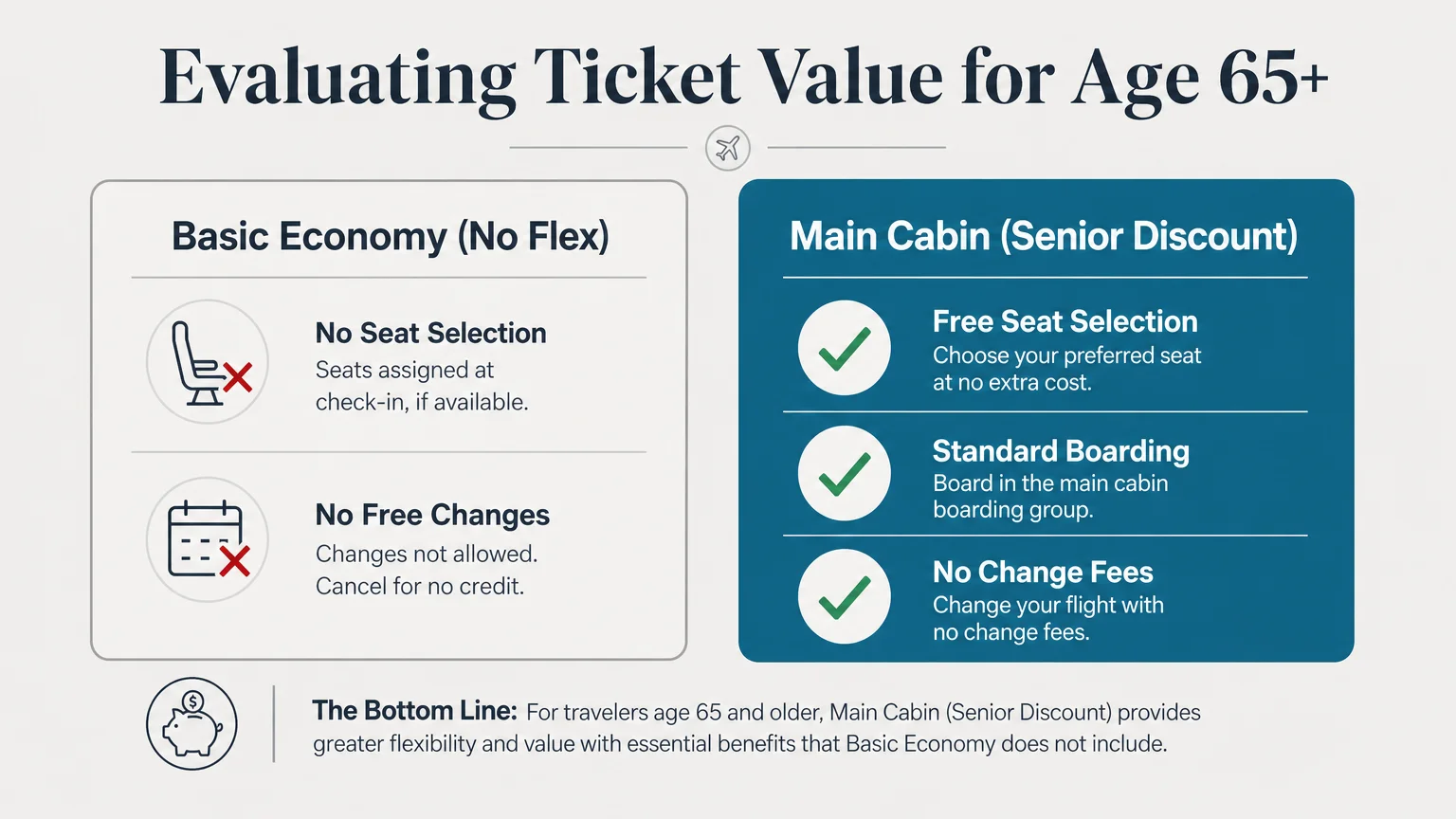
It is also crucial to understand the difference between a discounted standard fare and a budget fare. Sometimes, a senior discount applies exclusively to a “Main Cabin” ticket. This means the discounted senior fare might be slightly more expensive than a restrictive “Basic Economy” ticket, but it comes with free seat selection, standard boarding, and the ability to change your flight without massive penalty fees. For many older adults, retaining flexibility and comfort is well worth the strategic booking process.
Which Major Airlines Still Offer Discounts?
Navigating airline policies requires a bit of patience, as each carrier maintains its own distinct set of rules. While budget airlines like Spirit or Frontier do not offer age-based savings, several legacy carriers still provide financial relief to older adults. The table below outlines the current senior discount landscape for the major carriers operating in the United States.
| Airline | Discount Availability | Age Requirement | How to Book |
|---|---|---|---|
| United Airlines | Select domestic and international routes | 65 and older | Phone reservations or advanced online search |
| Delta Air Lines | Select domestic markets only | 65 and older | Phone reservations only |
| American Airlines | Select domestic markets only | 65 and older | Phone reservations only |
| British Airways | Up to $200 off specific international flights | No age limit (AARP membership required) | Through the dedicated AARP booking portal |
| Southwest Airlines | No senior fares; standard low fares apply | N/A | Online or via the Southwest app |
United Airlines remains one of the most accessible options for senior travelers. They are one of the few carriers that still occasionally surface senior fares through their online platform. To find them, you must bypass the standard search bar on their homepage, click on “Advanced Search,” and explicitly select the “Senior 65+” category from the passenger dropdown menu. If a discount is available for your specific route, it will automatically populate.
Delta Air Lines and American Airlines handle their senior programs quietly. You will not find any mention of them on their booking pages. Both carriers offer discounts exclusively over the phone, and the availability fluctuates daily based on how many seats remain unsold on a given flight. Because these are capacity-controlled fares, your best chance of securing one is by traveling during off-peak seasons or mid-week.
Southwest Airlines officially retired their senior fare category several years ago. However, their standard “Wanna Get Away” fares remain highly competitive. More importantly for seniors, Southwest includes two free checked bags with every ticket and allows you to cancel your flight for travel credit without any penalty fees. For a traveler bringing medical equipment or planning a long stay with family, these built-in perks often save more money than a traditional percentage discount.
Finally, international travel offers a unique avenue for savings through partnerships. According to AARP, joining their travel membership program allows you to access exclusive discounts on British Airways. Depending on the class of service you choose, members can save anywhere from $65 on economy tickets to $200 on business class seats, making trips to Europe significantly more affordable.

How to Book Unpublished Senior Fares
Booking a flight over the phone might feel like a step backward in the digital age, but it is the most reliable strategy for claiming an unpublished senior fare. Phone agents have access to internal booking codes that consumer websites simply do not feature. To ensure you get the best possible deal without falling prey to unnecessary service charges, follow these practical steps.
- Conduct baseline research online. Before you ever pick up the phone, use a standard search engine to check the current online price for your desired route. Write this number down. This gives you a clear baseline to compare against the agent’s offer.
- Call the official reservations number. Locate the airline’s official customer service phone number directly from their website. Avoid simply searching for the number on a search engine, as scam websites often promote fake phone numbers.
- State your age and request the discount immediately. When the agent answers, be direct. You can say, “I am looking to book a flight from Chicago to Orlando. I am over 65 years old. Can you check if there are any senior-discounted fares available for my travel dates?”
- Request a phone fee waiver. Many major airlines charge an extra $25 to $35 fee for booking a ticket over the phone rather than online. However, because their senior fares are often unavailable on their website, agents are usually authorized to waive this fee. Politely ask them to drop the phone charge since you are calling specifically for an online-restricted fare.
- Compare the fare classes. Before giving the agent your credit card, ask them to clarify what type of ticket the senior fare provides. If the senior fare gives you a Main Cabin seat (with free seat selection and standard boarding) for less than the online Main Cabin price, it is a great deal. If it costs more than an online Basic Economy ticket, you will need to decide if the extra flexibility and comfort are worth the slight premium.
Patience is key during this process. Sometimes the agent will inform you that no senior fares are available for your chosen day. If your schedule allows, ask them to check the day before or the day after. Moving your departure by just 24 hours can occasionally unlock substantial hidden savings.
Federally Protected Airport Benefits You Should Claim
When planning a trip, most people focus entirely on the price of the ticket. But for seniors, the true value of air travel often lies in the complimentary services provided at the airport. The Air Carrier Access Act (ACAA) is a federal law designed to protect travelers who need assistance, ensuring you can navigate vast, crowded airports safely and comfortably.
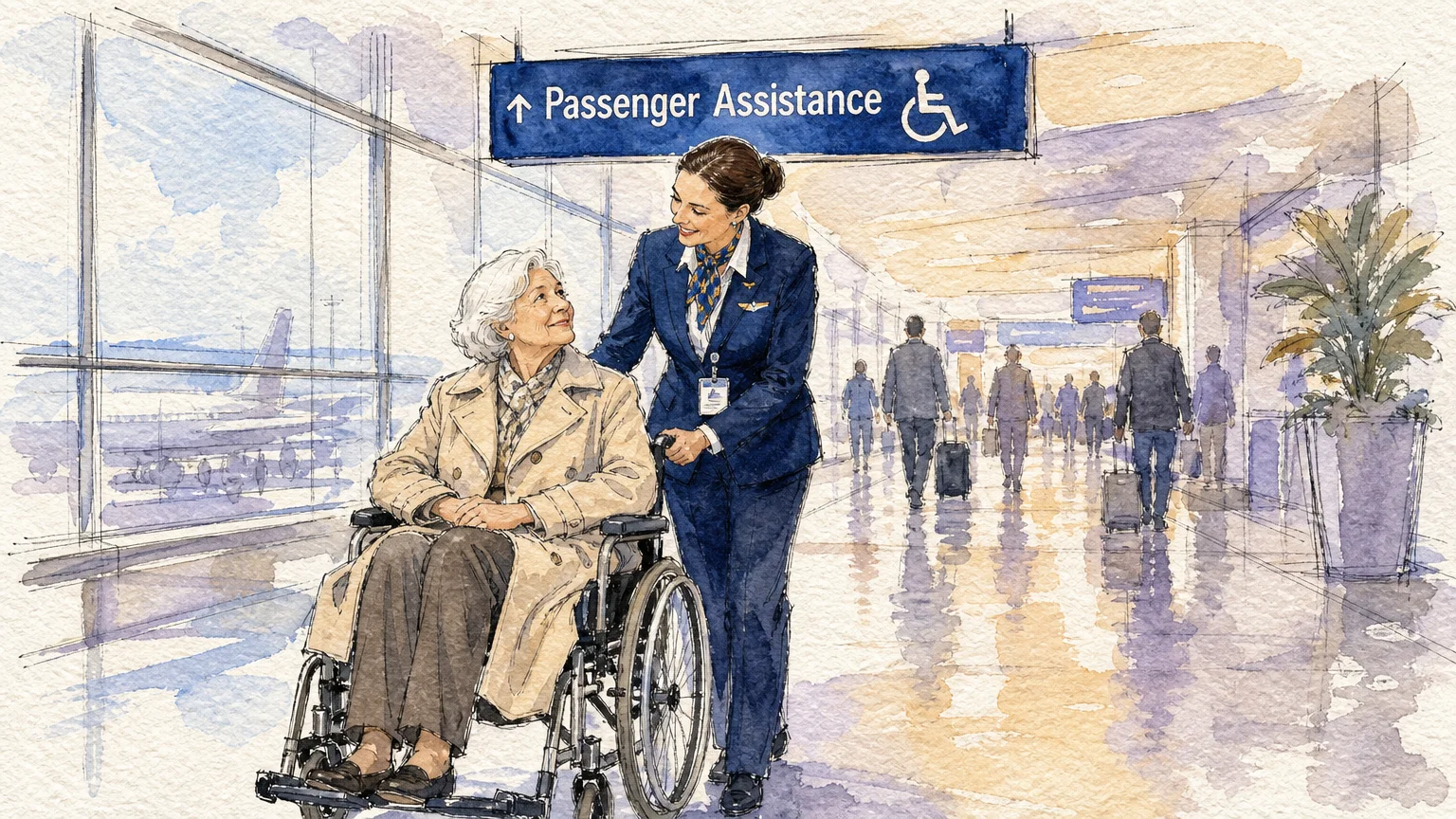
One of the most underutilized benefits is free wheelchair assistance. Many older adults hesitate to request a wheelchair because they are not permanently disabled and do not use a mobility aid at home. However, you do not need a doctor’s note or a permanent disability to claim this right. If walking long concourses, standing in lengthy security lines, or carrying bags triggers joint pain or breathlessness, you are fully entitled to request a wheelchair. Reserving this service in advance through your airline guarantees that an attendant will meet you at the check-in counter, guide you through a specialized security lane, and take you directly to your boarding gate. This preserves your energy for your actual vacation.
Similarly, electric carts are available in most major airport terminals. If you are capable of walking but want to avoid a mile-long trek to a distant gate, you can flag down a cart or ask the gate agent to summon one. These services are entirely free, though offering a small tip to your attendant is a customary and appreciated gesture.
Another powerful, yet rarely discussed, perk is the companion gate pass. If you feel anxious about navigating the airport alone, experiencing cognitive decline, or simply need physical help managing your carry-on luggage, a non-traveling friend or family member can escort you. When you arrive at the check-in counter, your companion simply needs to present their government-issued ID to the airline agent and request a gate pass. This allows them to pass through TSA security with you, wait at the departure gate, and help you board the aircraft before they exit the airport.
TSA Screening Rules for Travelers 75 and Older
Airport security is notoriously stressful, involving taking off shoes, unpacking laptops, and standing in confined spaces. Fortunately, the Transportation Security Administration (TSA) provides modified screening procedures for older adults, designed to reduce physical strain and speed up the process.
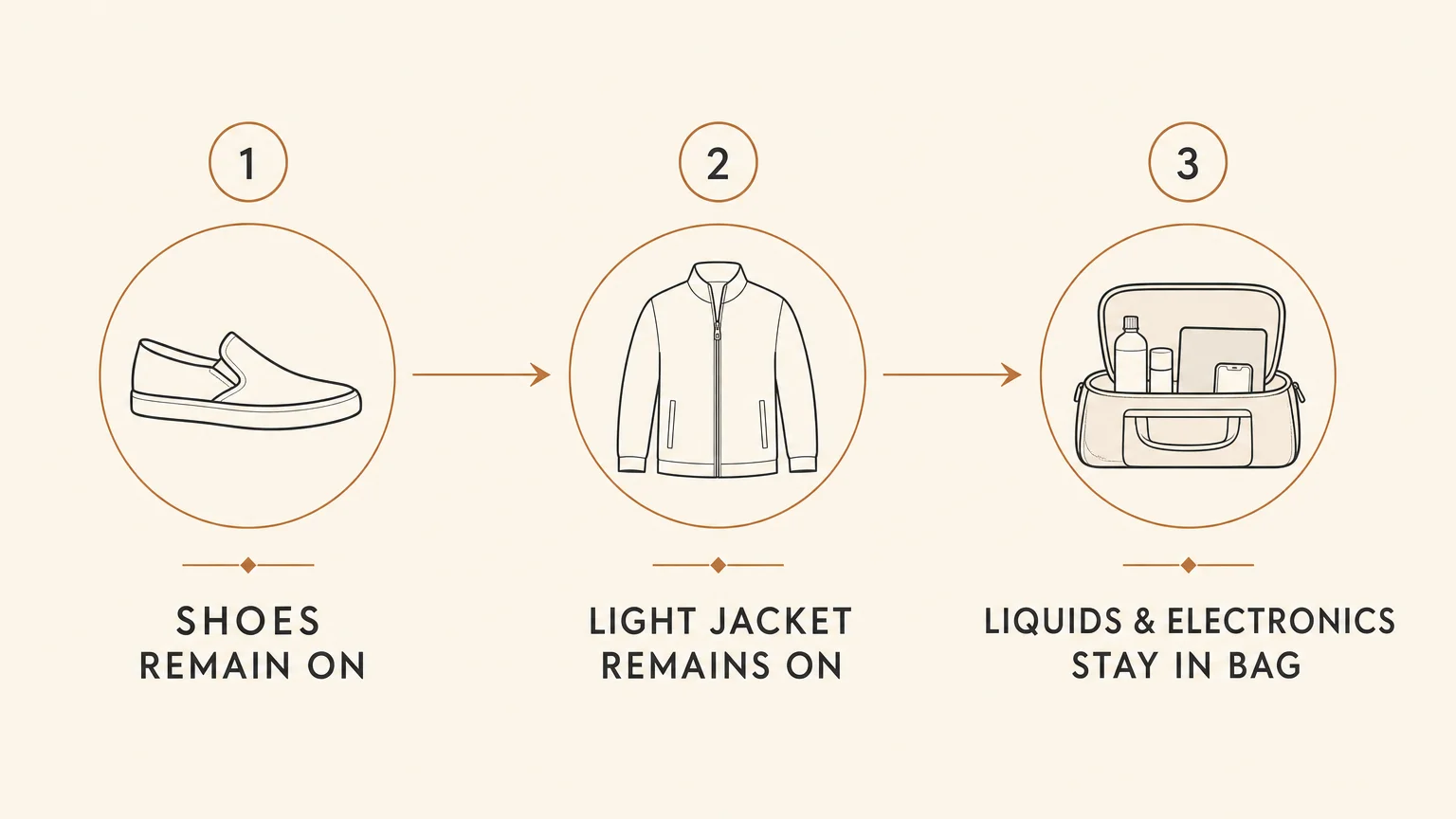
If you are 75 years of age or older, you are automatically eligible for expedited screening rules, even if you do not pay for TSA PreCheck. Under these modified guidelines, you can leave your shoes on while passing through the metal detectors. You are also permitted to leave light jackets on. If you trigger an alarm during the initial walk-through, you will not be forced to endure a rigorous physical pat-down while standing. Instead, TSA officers are trained to offer you a chair, allowing you to undergo secondary screening while comfortably seated.
If you have medical implants, such as a pacemaker, artificial hip, or knee replacement, communication is critical. Before you step into the scanner, simply inform the TSA officer about your device. They will guide you to the advanced imaging technology scanner or provide a specialized manual screening that will not interfere with your medical equipment. You are never required to lift or remove clothing to display a surgical scar or medical device.
While the 75-and-older rule is standard policy, opting for the official TSA PreCheck program is still highly recommended for travelers in their 60s and early 70s. The modest enrollment fee covers you for five years and guarantees access to shorter, less physically demanding security lines every time you fly.

Common Booking Mistakes and Scams to Avoid
The travel industry is unfortunately rife with individuals looking to exploit unsuspecting consumers. Older adults are frequently targeted by elaborate travel scams, particularly during the booking process. Staying vigilant and recognizing red flags can protect your fixed income from devastating losses.
One of the most prevalent threats today is customer service phone number spoofing. Scammers create fake websites that look exactly like an airline’s official page and list a fraudulent toll-free number. When you call to ask about a senior discount or change a flight, the person on the other end claims to be an airline representative. They will quickly tell you that they can process your request, but only if you pay a “security deposit,” an “upgrade fee,” or a “rebooking charge.”
Research from the Consumer Financial Protection Bureau (CFPB) emphasizes the importance of verifying you are speaking directly to the official airline before handing over your credit card information. A legitimate airline will never ask you to pay for a flight using gift cards, cryptocurrency, or peer-to-peer cash transfer apps. To avoid this trap, always type the airline’s web address directly into your browser rather than relying on search engine results for phone numbers.
Another common mistake is booking through third-party discount sites (like Expedia or Orbitz) without reading the fine print. While these websites might show a price that is twenty dollars cheaper than the airline’s website, they often strip away your rights. If a flight is delayed or you need to cancel due to a sudden illness, the airline will often refuse to help you, directing you back to the third-party agency. These agencies are notorious for terrible customer service and massive cancellation fees. As a rule of thumb, use third-party sites to research prices, but always book directly with the airline.

Health and Insurance Considerations Before You Fly
Securing a great fare is wonderful, but prioritizing your physical and financial health ensures you can actually enjoy the trip. Air travel exposes the body to fluctuating cabin pressure, dry recycled air, and prolonged periods of sitting, all of which require proactive management.
As noted by experts at the Centers for Disease Control and Prevention (CDC), managing your health while traveling requires careful planning, especially when it comes to keeping your prescription medications in your carry-on luggage. Never put essential medications in a checked bag. If your luggage is lost or delayed, replacing specific prescriptions in a different state or country can be an administrative nightmare. Additionally, to combat the risk of deep vein thrombosis (blood clots in the legs), consider wearing compression socks, staying well-hydrated, and choosing an aisle seat so you can easily stand up and walk the cabin every few hours.
Your healthcare coverage is another massive consideration, particularly if you are leaving the country. Many seniors assume their standard health insurance will protect them wherever they go, but this is a dangerous misconception. According to Medicare.gov, traditional Medicare generally does not cover healthcare services outside of the United States.
If you suffer a medical emergency abroad, you could be held personally responsible for tens of thousands of dollars in hospital bills. Before booking an international flight, review your Medicare Advantage or Medigap plan to see if it includes foreign travel emergency coverage. If it does not, purchasing a comprehensive travel insurance policy that includes medical evacuation coverage is a critical investment. This ensures that a minor accident or sudden illness does not drain your hard-earned retirement savings.
Frequently Asked Questions
At what age do airline senior discounts typically begin?
In the airline industry, senior discounts almost universally begin at age 65. This differs from hotels, restaurants, and retail stores, which often lower their threshold to age 55 or 60. When calling an airline to request an unpublished fare, be prepared to verify that the passenger traveling is at least 65 years old.
Can my younger spouse use my senior discount?
No. Airline discounts are strictly tied to the individual passenger’s age, not the person purchasing the tickets. If you are 66 and your spouse is 62, the airline will apply the senior fare only to your ticket, while your spouse will be charged the standard adult rate. You can still book your tickets together on the same itinerary; the agent will simply blend the two different prices into one total.
Does Southwest Airlines still offer senior fares in 2026?
Southwest Airlines no longer offers a dedicated senior fare category. However, their standard pricing model remains one of the most senior-friendly in the industry. Every passenger receives two free checked bags and the ability to cancel or change their flight without paying any penalty fees, which often provides more total savings than a traditional percentage discount.
Do airlines require proof of age for senior fares?
Yes. If you book a senior fare over the phone, your date of birth is attached to your ticket profile. When you arrive at the airport and present your government-issued ID or passport to TSA and the gate agent, they will verify your age. If someone attempts to use a senior ticket but is under 65, the airline can deny them boarding or charge them the difference for a full-priced ticket on the spot.
How do I request a companion gate pass?
You must request a companion gate pass in person at the airline’s check-in counter on the day of your flight. Your companion must be present and hand their government-issued ID to the airline agent. Explain that you require assistance getting to the gate. The agent will print a specialized pass that allows your companion to proceed through the TSA security checkpoint with you.
For additional senior resources, visit
Eldercare Locator, AARP, Alzheimer’s Association, American Heart Association and Benefits.gov.
Disclaimer: The information in this article is for educational purposes only and is not intended to be a substitute for professional financial, legal, or medical advice. Always consult with a qualified expert for advice tailored to your personal situation.









Leave a Reply