

Moving to a smaller home during retirement offers a fantastic opportunity to reduce expenses, simplify your daily routine, and free up time for the activities you genuinely enjoy. However, emotional attachments and widespread myths often make the process feel overwhelming or unnecessarily stressful. Many retirees delay this transition because they believe shedding square footage means losing their independence or abandoning cherished family memories. By clearing up these common misunderstandings, you can approach your next chapter with confidence and clarity. Understanding the realities of the modern housing market and senior living options allows you to make informed decisions that protect your health and finances while creating a comfortable, manageable lifestyle tailored entirely to your current needs.
Misconception 1: Downsizing Always Saves You Money
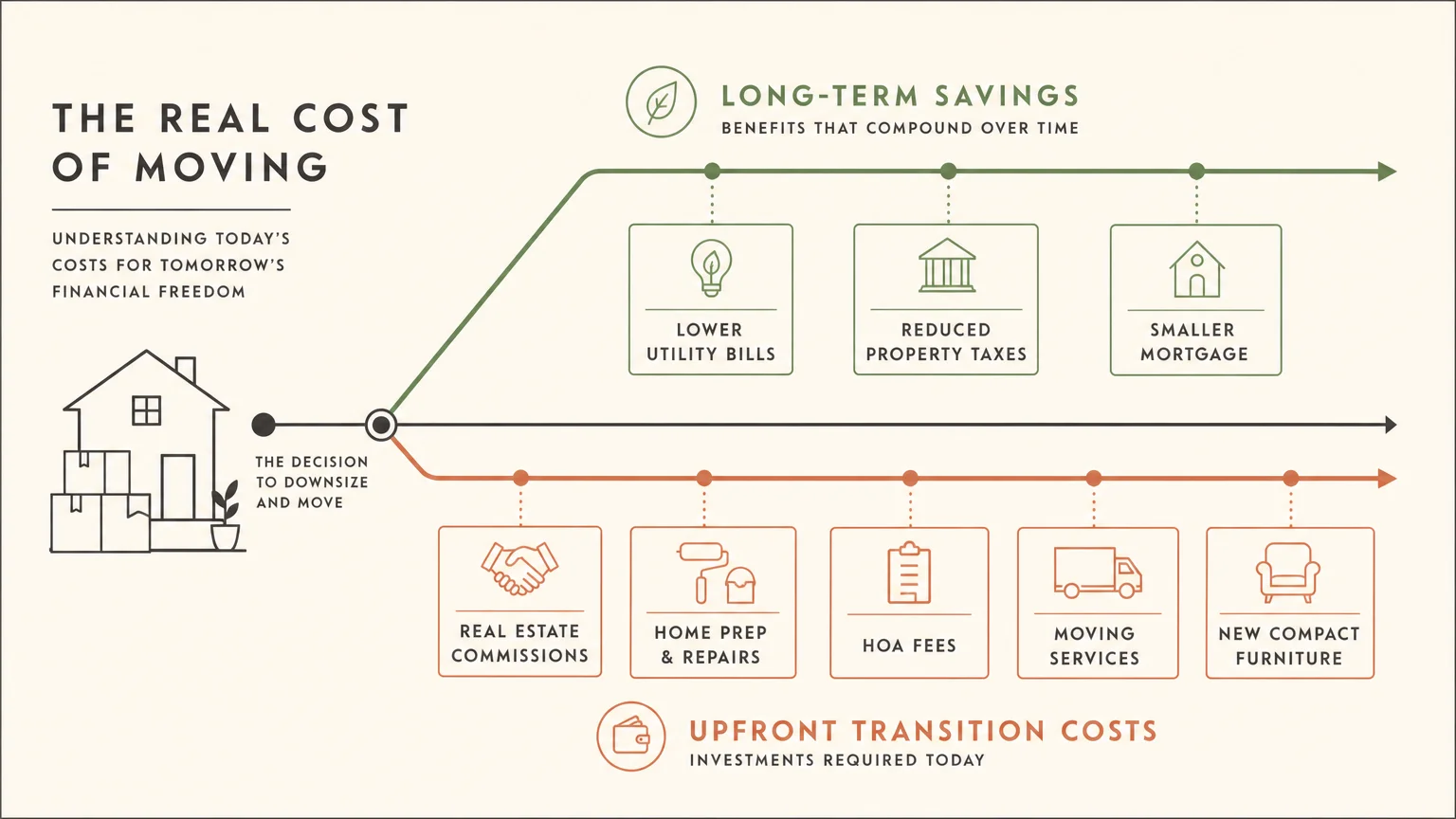
The logic seems foolproof at first glance: a smaller house means a smaller mortgage, lower utility bills, and reduced property taxes. While this is often true in the long run, the immediate reality of moving involves hidden costs that catch many retirees off guard. Assuming that downsizing will instantly flood your bank account with extra cash is a dangerous financial misconception.
Selling your current home comes with significant expenses. You must account for real estate agent commissions, staging costs, home repairs needed to attract buyers, and closing fees. Once you purchase your new, smaller property, you might face unexpected costs like higher homeowner association (HOA) fees—especially if you move into a condominium or a 55+ planned community. Furthermore, you might need to purchase new furniture if your existing, oversized pieces do not physically fit through the doors or into the floor plan of your new residence.
To avoid unpleasant surprises, you must calculate the total cost of the transition. According to the Consumer Financial Protection Bureau (CFPB), thoroughly evaluating housing costs and understanding complex terms like HOA assessments or mortgage fees is a critical step in protecting your retirement security. Create a comprehensive budget that factors in moving companies, storage units, new furnishings, and potential capital gains taxes before you list your current home.

Misconception 2: You Must Throw Away All Your Family Memories
Perhaps the heaviest emotional barrier to downsizing is the fear of losing your history. After raising a family and spending decades in one location, your home becomes a physical container for your most treasured memories. It is entirely normal to feel that letting go of the physical house—or the objects inside it—means letting go of the memories themselves.
Downsizing is not about discarding your life; it is about curating it. You are simply right-sizing your possessions to fit your current lifestyle. Instead of holding onto twenty boxes of children’s artwork or decades of holiday decorations in a dusty attic, you can select the most meaningful items to bring with you. A smaller home forces you to display only the items that bring you genuine joy, transforming your new space into a concentrated gallery of your best memories.
Consider modern solutions for the items you cannot keep physically. Digitizing old photographs, home movies, and even children’s artwork preserves the memory without requiring square footage. You can also experience the profound joy of gifting family heirlooms while you are still alive. Handing down a cherished piece of jewelry or a beloved painting allows you to witness your loved ones enjoying the item, which creates a brand new memory in the process.

Misconception 3: Smaller Homes Mean Losing Your Independence
Many seniors equate a large, sprawling home with success and autonomy. They worry that moving into a smaller house, an apartment, or an independent living community signals a decline in their physical abilities or a surrender of their personal freedom. In reality, the exact opposite is usually true.
Maintaining a large property drains your time, energy, and finances. Cleaning unused bedrooms, repairing aging roofs, mowing expansive lawns, and navigating steep staircases are exhausting chores that can eventually jeopardize your safety. When a home becomes too difficult to manage, it subtly transforms from a sanctuary into a burden. It is this burden—not the size of the home—that threatens your independence.
Moving to a space designed for easy living empowers you to maintain your autonomy for much longer. Single-story floor plans, walk-in showers, and maintenance-free exteriors remove daily physical strain. Research from the National Institute on Aging (NIA) shows that modifying your home environment or proactively choosing a space designed with accessibility in mind significantly reduces the risk of dangerous falls. A right-sized home allows you to spend your energy on travel, hobbies, and socialization rather than endless home maintenance.
Misconception 4: Your Children Want All Your Furniture and Antiques
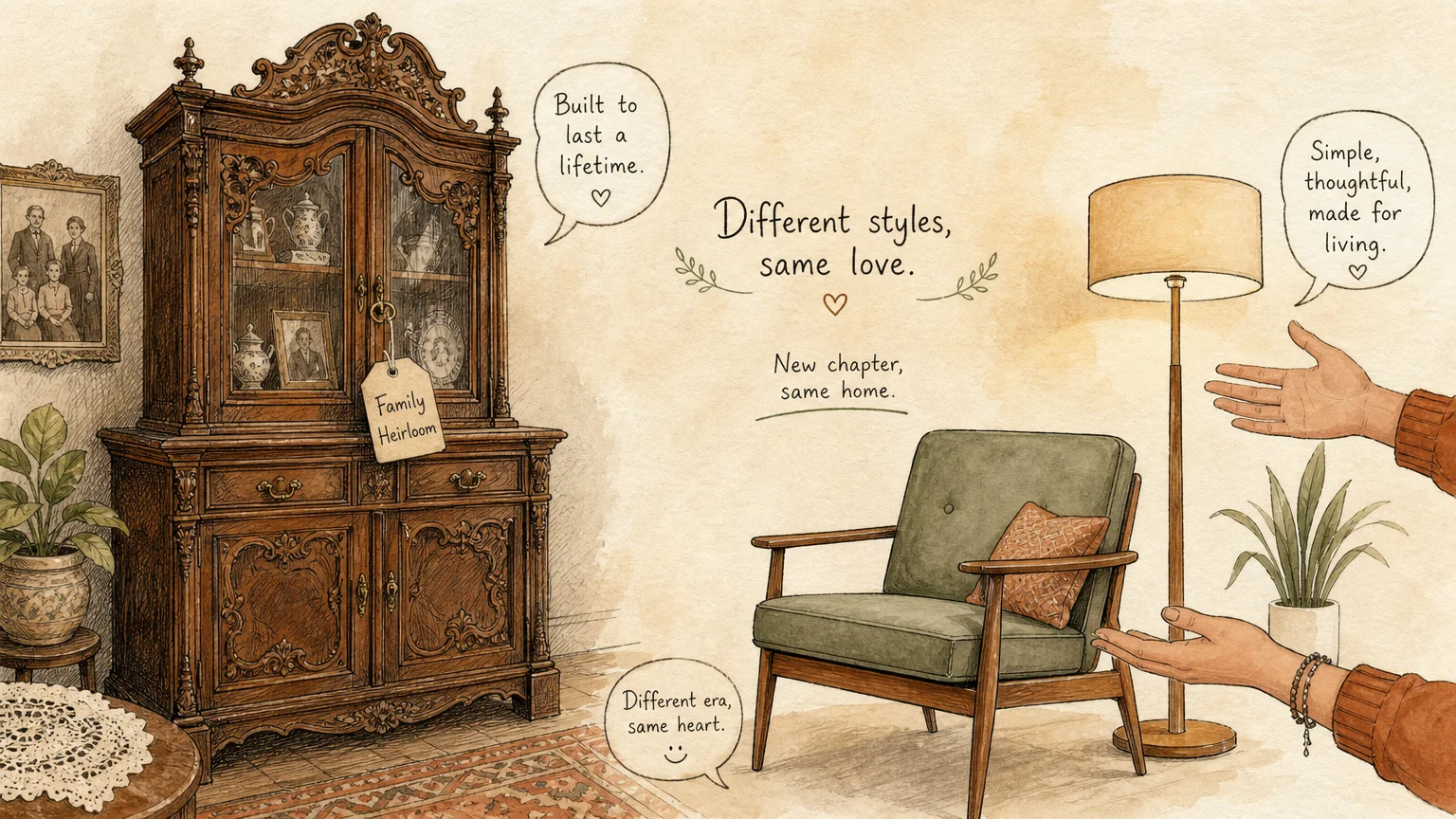
Generations past operated under a reliable tradition: when parents downsized or passed away, the children inherited the formal dining sets, the heavy mahogany dressers, and the delicate fine china. Today, relying on this assumption often leads to profound disappointment and awkward family conversations.
Millennials and Generation Z generally prefer minimalist, modern aesthetics. Furthermore, younger generations often live in smaller urban homes or frequently relocate for their careers, making heavy, traditional furniture impractical. They simply do not have the space for a massive china cabinet or a sprawling sectional sofa, no matter how much financial or sentimental value the piece holds.
Approach the inheritance conversation with your children early and openly. Ask them directly what items they actually want and need, and assure them that it is perfectly acceptable if they decline your offers. If your children do not want your antiques, you have several productive alternatives:
- Hire an estate appraiser: Discover the true market value of your antiques and sell them through reputable auction houses.
- Utilize consignment shops: Sell high-quality furniture pieces locally to offset your moving expenses.
- Donate to local charities: Organizations like Habitat for Humanity ReStore or local shelters will often pick up large furniture for free, providing you with a tax deduction and the knowledge that your items are helping others.

Misconception 5: Moving Is Too Physically Demanding to Attempt
The sheer thought of packing up thirty or forty years of accumulated belongings is enough to make anyone reconsider downsizing. The physical toll of bending, lifting, sorting, and scrubbing deters many retirees from making a move that would otherwise vastly improve their quality of life. You might believe that because your knees cannot handle carrying heavy boxes, downsizing is simply out of the question.
You do not have to tackle this massive project alone. A thriving industry of Senior Move Managers exists specifically to handle the physical and logistical challenges of relocating older adults. These professionals do far more than just carry boxes; they help you sort through your belongings, draw up floor plans to see what furniture will fit in your new home, hire reputable moving companies, pack your items securely, and even unpack and organize your new kitchen before you arrive.
If hiring a full-service manager is outside your budget, you can still delegate the heavy lifting. Enlist family members for sorting weekends, hire local teenagers for hauling boxes to donation centers, and pay for professional packers. You can use the Eldercare Locator, a public service of the U.S. Administration on Aging, to find local community resources, support services, and reliable agency recommendations to ease your transition.

Misconception 6: Senior Living Communities Are Just Like Nursing Homes
When some people hear the phrase “senior living,” their minds immediately conjure images of sterile, hospital-like nursing homes filled with frail patients. This outdated stereotype prevents many active retirees from exploring some of the most vibrant, engaging housing options available today.
The modern landscape of senior housing is incredibly diverse. Independent living communities and 55+ active adult neighborhoods look and feel like luxury resorts. These communities offer private, upscale apartments or detached cottages with access to fitness centers, swimming pools, golf courses, gourmet dining rooms, and packed calendars of social events. They are designed for healthy, independent adults who want to shed the responsibilities of homeownership and maximize their social lives.
According to AARP, modern retirement housing focuses heavily on wellness, lifelong learning, and community connection. Even Continuing Care Retirement Communities (CCRCs)—which offer tiered levels of medical care if your health declines—emphasize active, independent living as their primary lifestyle. Touring a few modern communities in your area will quickly shatter the nursing home myth and might introduce you to an exciting new way to spend your retirement years.
Practical Steps for a Successful Downsizing Journey
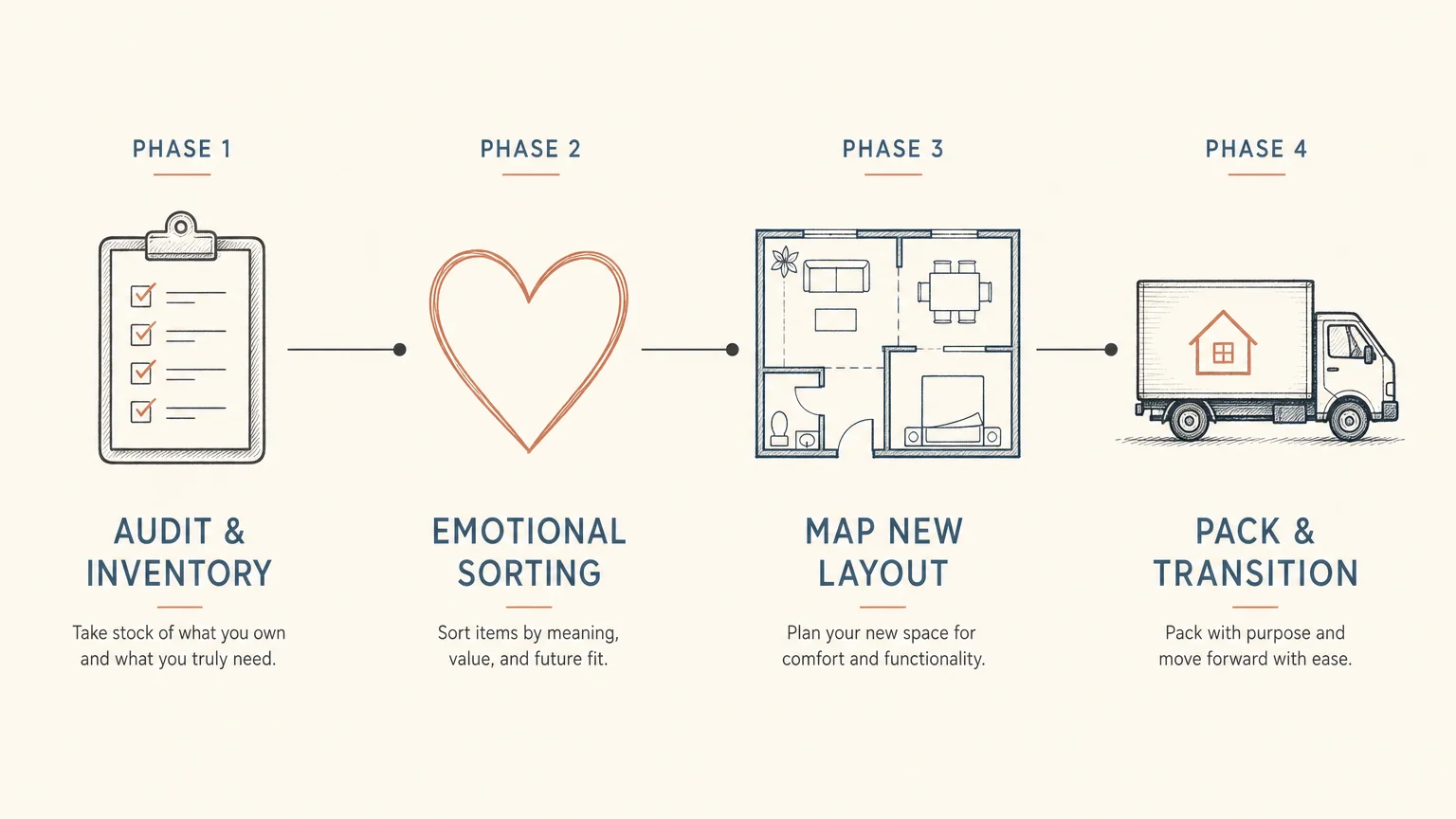
Once you dismantle the myths surrounding downsizing, the actual process becomes much more manageable. The key to a stress-free transition is starting early and establishing a clear, systematic approach. Attempting to sort through your entire home in a single weekend will only lead to burnout and decision fatigue.
Start your process at least six to twelve months before you intend to move. Begin in the least emotional rooms of the house—like the garage, the laundry room, or spare guest rooms—to build momentum. Save highly sentimental areas, such as the master bedroom or photo albums, for last. Use a sorting system to make quick, definitive choices about your belongings.
To help you categorize your items objectively, use the following decision matrix when evaluating your possessions:
| Category | Definition | Action Step |
|---|---|---|
| Keep | Items you use daily, bring you immense joy, and fit the physical dimensions of your new space. | Pack securely. Measure your new home to guarantee large items will fit through the doors. |
| Gift | Family heirlooms or valuable items your loved ones have explicitly requested. | Distribute these items immediately. Do not pack them just to move them to the new house. |
| Sell | Valuable items, modern electronics, or antiques you no longer need. | Contact an appraiser, list on local online marketplaces, or hire an estate sale company. |
| Donate | Items in good condition that hold no high resale value (books, extra clothing, spare dishes). | Schedule a pickup with a local charity. Keep all itemized receipts for tax deduction purposes. |
| Discard | Broken items, expired chemicals, old paperwork, and severely worn clothing. | Shred sensitive documents. Rent a dumpster if you have decades of accumulated debris. |

How Downsizing Impacts Your Long-Term Health and Finances
The benefits of overcoming downsizing misconceptions extend far beyond having a tidier living room. Making this transition at the right time significantly impacts your long-term stability. Financially, unlocking the equity trapped in a large family home provides a crucial safety net. You can invest this freed-up capital to generate reliable retirement income, cover future healthcare costs, or fund experiences like travel and education.
From a health perspective, the benefits are equally profound. Chronic stress from financial strain or property maintenance directly impacts your physical well-being. By moving into a more manageable space, you drastically reduce your daily anxiety. A smaller home also requires less physical exertion to clean and navigate, preserving your joints and reducing the risk of fatigue-induced accidents.
Furthermore, moving to a community with built-in social opportunities combats one of the greatest health risks for seniors: isolation. A right-sized home in a walkable neighborhood or an active adult community encourages frequent social interaction, which is vital for cognitive health and emotional resilience.
Frequently Asked Questions
When is the best time to start the downsizing process?
The ideal time to start downsizing is before you actually need to. Initiating the process while you are still in good health and not under a strict moving deadline allows you to make decisions thoughtfully rather than out of panic. Aim to begin sorting and decluttering at least a year before your anticipated moving date.
How do I handle the guilt of giving away family heirlooms?
Acknowledge that letting go is an emotional process, but remind yourself that objects are not the memories themselves. If an item causes you stress because you cannot store it properly, it is no longer serving you. Take photos of the items to preserve the memory, and find comfort in donating them to someone who will use and appreciate them daily.
Will selling my home affect my Medicare or Social Security benefits?
Selling your primary residence usually does not affect your Social Security benefits or Medicare eligibility. However, if the profit from the sale is substantial and incurs capital gains taxes, it could temporarily increase your modified adjusted gross income (MAGI). A higher MAGI might trigger the Income-Related Monthly Adjustment Amount (IRMAA), temporarily raising your Medicare Part B and Part D premiums. Always consult a financial advisor before selling.
Should I buy or rent my next home in retirement?
Both options have distinct advantages. Buying a smaller home builds equity and provides stability, ensuring your housing costs remain relatively predictable. Renting, however, offers ultimate flexibility and entirely removes the burden of maintenance and property taxes. If you are moving to a new state or city, renting for a year is an excellent way to test the area before committing to a purchase.
What is a senior move manager, and are they worth the cost?
A senior move manager is a professional who specializes in helping older adults relocate. They handle everything from decluttering and floor planning to hiring movers and unpacking. While services can cost anywhere from a few hundred to several thousand dollars depending on the scope of the move, many retirees find the investment incredibly worthwhile as it prevents physical injury and vastly reduces emotional stress.
For additional senior resources, visit
Medicare.gov, National Institute of Mental Health (NIMH) and National Institutes of Health (NIH).
Disclaimer: The information in this article is for educational purposes only and is not intended to be a substitute for professional financial, legal, or medical advice. Always consult with a qualified expert for advice tailored to your personal situation.








Leave a Reply