

Finding a part-time job in retirement gives you an immediate boost in social connection, mental sharpness, and extra income. If you find yourself missing the daily interactions of your career, reentering the workforce on your own terms provides the perfect solution. Many retirees experience isolation once they stop working full-time, but engaging with customers, coworkers, and community members keeps your days vibrant and purposeful. You do not have to commit to long hours or stressful environments to enjoy these benefits. By choosing flexible, socially engaging roles, you easily maintain a strong network while adding a reliable cushion to your retirement budget. Discover the most rewarding opportunities that prioritize conversation, teamwork, and community engagement.

The Hidden Health Benefits of Staying Socially Active
Retirement often sounds like a dream until the quiet reality sets in. Going from a bustling workplace to a quiet home leaves many older adults feeling disconnected from the world around them. Staying social is not just about passing the time; it is a critical component of healthy aging.
Studies by the Centers for Disease Control and Prevention (CDC) indicate that social isolation significantly increases a person’s risk of premature death, rivaling the dangers of smoking, obesity, and physical inactivity. When you lose the built-in network of colleagues and clients, you have to actively seek out new ways to engage with others.
Taking on a part-time job offers a structured, reliable way to interact with a diverse group of people. Research from the National Institute on Aging (NIA) shows that participating in social and productive activities can lower the risk of developing certain health conditions and improve your overall well-being. A job forces you out of the house, gives you a reason to dress up, and requires you to engage your brain in real-time problem-solving and conversation.

Customer Service and Retail Opportunities
If you enjoy fast-paced environments and meeting new people every day, customer-facing roles offer endless opportunities for conversation. These positions keep you moving and allow you to become a familiar, friendly face in your local community.
1. Local Tour Guide
If you have a passion for your city’s history, architecture, or natural landscapes, working as a tour guide allows you to share that enthusiasm with eager audiences. Museums, historical societies, and private tour companies frequently hire retirees because of their deep local knowledge and excellent storytelling skills. You spend your shift answering questions, leading groups, and interacting with travelers from all over the world.
2. Retail Greeter or Floor Associate
Retail environments—especially local boutiques, hardware stores, and garden centers—thrive on good customer service. Older adults often excel in these roles because they bring patience and decades of practical life experience. When a young homeowner needs advice on fixing a leaky faucet, your wisdom becomes invaluable. You get to chat with neighbors, help people solve problems, and build camaraderie with your fellow staff members.
3. Coffee Shop Barista or Cashier
Local cafes and bakeries are social hubs. Working the register or crafting beverages puts you right at the center of your neighborhood’s daily routine. You quickly learn the names and favorite orders of your regular customers. The environment is lively, filled with music, chatter, and the aroma of coffee—making it an energetic place to spend a few hours a day.

Education and Mentoring Roles
Passing down knowledge is one of the most fulfilling ways to stay connected. Education jobs naturally involve high levels of communication and allow you to interact with younger generations, which keeps you culturally engaged and mentally sharp.
4. Substitute Teacher or Classroom Aide
School districts across the country constantly seek reliable substitute teachers and classroom aides. You do not always need a teaching degree; many states only require a high school diploma or a bachelor’s degree in any field. This job offers incredible flexibility—you choose the days you want to work. You interact with students, teachers, and school administrators, ensuring no two days are ever exactly the same.
5. Academic or Skill-Based Tutor
If standing in front of a classroom feels overwhelming, one-on-one tutoring provides a more intimate social experience. You can help high school students with algebra, teach English as a second language to new immigrants, or even offer music lessons. Tutoring fosters deep, meaningful connections as you watch your students grow and succeed over time.
6. Professional Consultant
You do not have to leave your career behind entirely. Many retirees return to their former industries as part-time consultants or mentors. In this role, you advise younger executives, help startups navigate industry hurdles, and stay connected with your professional network. It provides the intellectual stimulation of your old career without the grueling forty-hour workweek.

Community Service and Event Jobs
Some of the best social jobs revolve around community gatherings. These roles usually offer flexible hours and come with exciting perks, making them feel more like paid hobbies than actual work.
7. Event Usher or Ticket Taker
Theaters, sports stadiums, and concert halls rely heavily on part-time event staff. As an usher, your primary job is to greet attendees, scan tickets, and help people find their seats. You get to chat with excited fans, work alongside a team of energetic colleagues, and often watch the events for free once the crowds settle.
8. Front Desk Receptionist
Community centers, local gyms, and hair salons need warm, organized people to manage their front desks. You are the first person clients see when they walk through the door. The role involves answering phones, booking appointments, and making small talk with patrons waiting in the lobby. It is an ideal job for someone who loves organizing and chatting in a comfortable, climate-controlled environment.
9. Library Assistant
Public libraries are much more than quiet book repositories; they are bustling community hubs. As a library assistant, you help patrons locate resources, organize community events, and sign people up for library cards. You engage with everyone from toddlers attending storytime to seniors looking for large-print novels.
10. Pet Sitter or Dog Walker
While spending time with animals is rewarding, dog walking is surprisingly social for the humans involved, too. When you walk dogs in local parks, you naturally strike up conversations with other pet owners. You also build strong relationships with your clients, who trust you deeply with their furry family members and the keys to their homes.
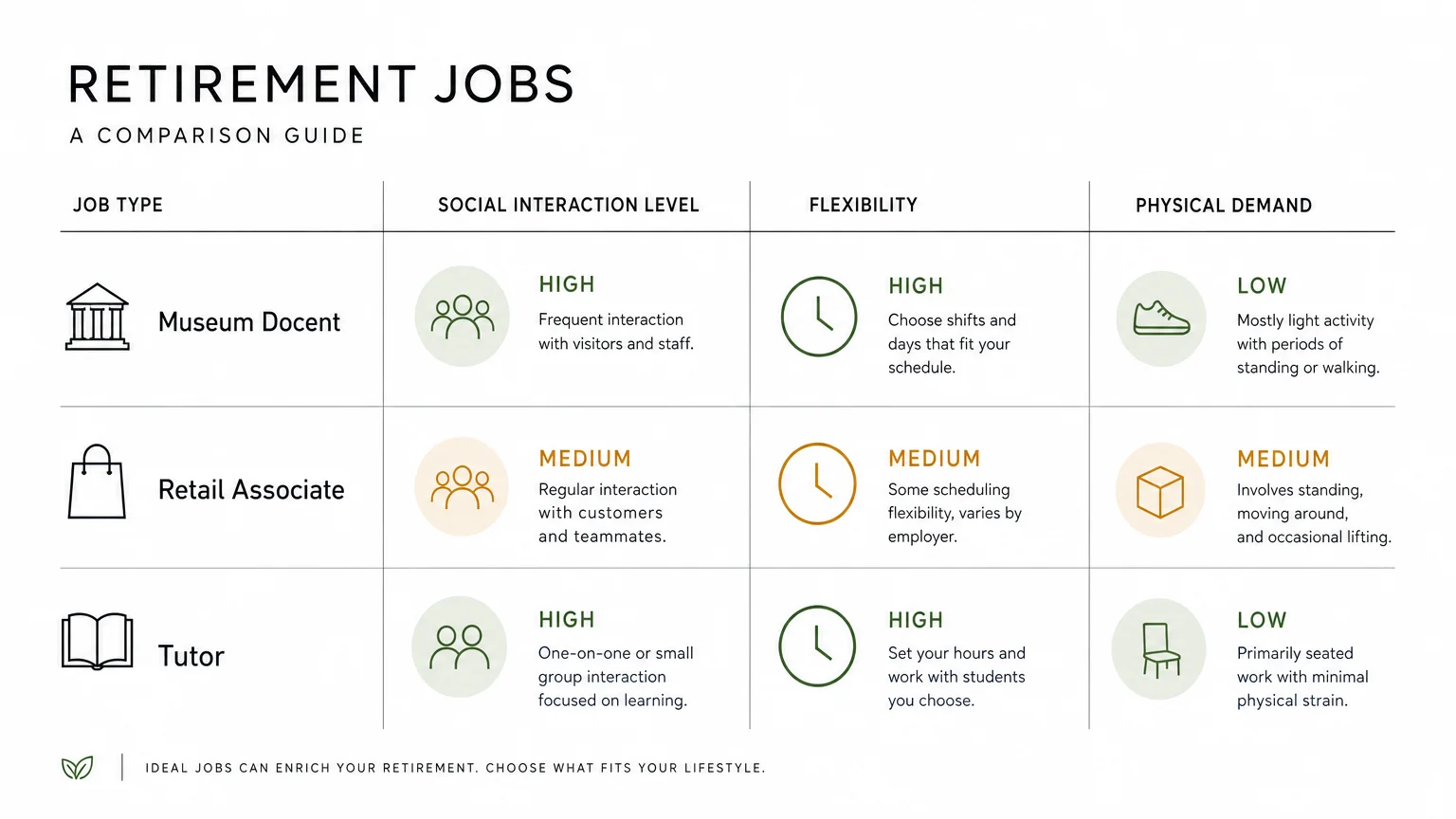
Comparison of Social Retirement Jobs
To help you choose the best fit for your lifestyle, review this quick comparison of the jobs mentioned above. Consider your physical stamina and how much flexibility you need in your weekly schedule.
| Job Category | Primary Social Focus | Physical Demand | Schedule Flexibility |
|---|---|---|---|
| Tour Guide | Tourists & Large Groups | High (Walking/Standing) | Moderate |
| Retail Associate | Customers & Coworkers | Moderate to High | Moderate |
| Coffee Shop Staff | Neighborhood Regulars | High (Fast-paced) | Moderate |
| Substitute Teacher | Students & School Staff | Moderate | Very High |
| Tutor | One-on-One Students | Low (Mostly Sitting) | Very High |
| Consultant | Professional Peers | Low (Office/Remote) | Very High |
| Event Usher | Crowds & Event Staff | Moderate (Standing) | High |
| Front Desk Receptionist | Clients & Staff | Low (Mostly Sitting) | Moderate |
| Library Assistant | Community Members | Moderate (Light lifting) | Moderate |
| Dog Walker | Pet Owners & Neighbors | High (Walking outdoors) | High |

Evaluating Your Physical and Technological Limits
Before committing to a part-time job, you must honestly assess your physical stamina and comfort with modern technology. The goal is to enrich your retirement, not to cause stress or physical pain.
If you experience joint pain or mobility issues, jobs that require standing on concrete floors for four hours—like retail or barista roles—might quickly become unmanageable. Look for accommodations. Many employers happily provide a stool for cashiers or adjust tasks to accommodate physical limitations. Do not hesitate to advocate for yourself during the interview process. If mobility is a strict limitation, prioritize desk roles like consulting, tutoring, or front-desk reception.
Technology poses another common barrier. Modern cash registers resemble iPads, and many scheduling systems operate entirely through smartphone apps. Do not let this intimidate you; these systems are designed to be user-friendly. If you feel hesitant, check your local library or community center. They frequently offer free digital literacy classes tailored specifically for seniors, giving you the confidence you need to handle point-of-sale systems or online scheduling tools.
Managing Your Earnings and Retirement Benefits
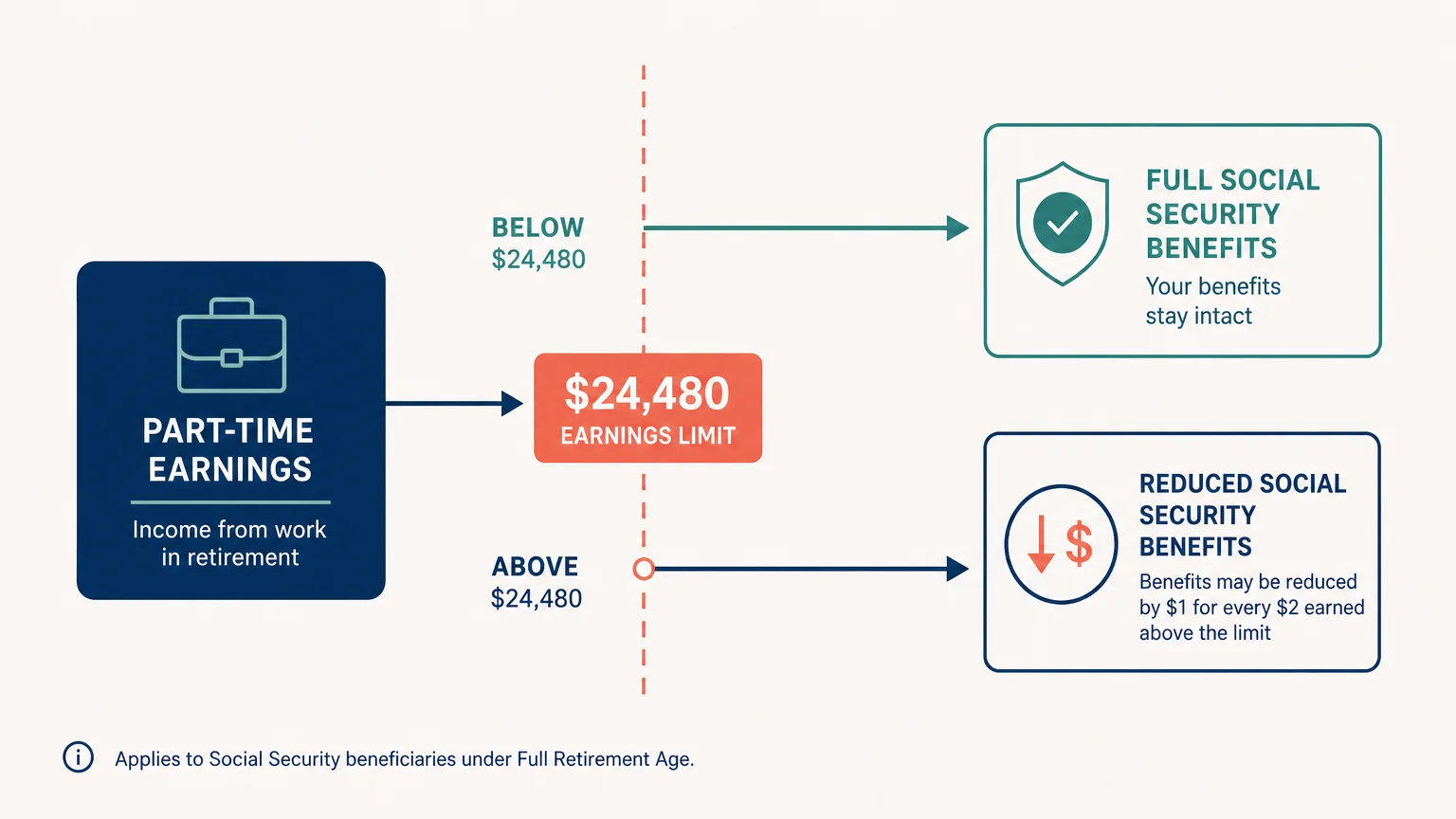
Earning extra money is a wonderful perk, but you must understand how your new paycheck affects your fixed retirement income. If you are not careful, working could temporarily reduce your government benefits or push you into a higher tax bracket.
According to the Social Security Administration (SSA), if you claim benefits before your full retirement age and earn above a specific yearly limit, a portion of your monthly benefit will be temporarily withheld. The SSA adjusts this earnings limit annually. For example, if you exceed the limit, they deduct $1 from your benefit payments for every $2 you earn above the annual threshold. However, this money is not lost forever; once you reach your full retirement age, the SSA recalculates your benefit amount to give you credit for the months your benefits were withheld. Once you reach full retirement age, you can earn as much as you want without any reduction in your Social Security checks.
Additionally, remember that your wages are taxable. Earning part-time income could increase your combined income to a level where a larger portion of your Social Security benefits becomes subject to federal income tax. Consult a tax professional to determine exactly how many hours you should work to maximize your social benefits without unnecessarily complicating your tax situation.
Red Flags and Job Scams to Avoid
Unfortunately, eager job seekers often attract fraudsters. Because older adults frequently look for part-time, flexible work, scammers specifically design fake job listings to steal money and identities.
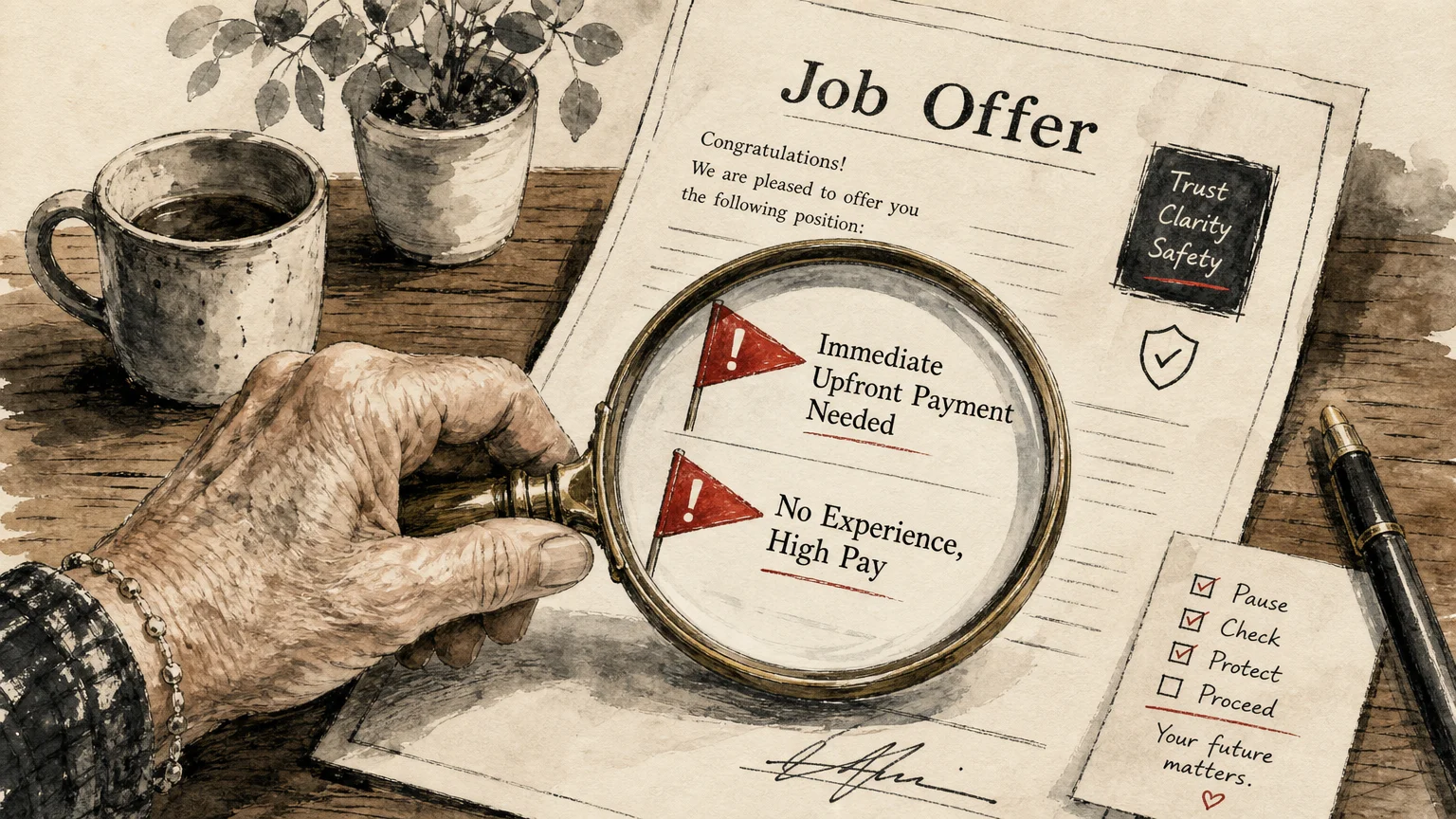
As noted by experts at AARP, scammers often target older job seekers with fraudulent offers that require upfront payments or sensitive personal information. You should never have to pay your own money to secure a job. If a “hiring manager” asks you to purchase your own training materials, pay for a background check via gift cards, or shell out money for a starter kit, walk away immediately.
Another common trap is the check-cashing scam. In this scenario, a fake employer sends you a large check, asks you to deposit it, and instructs you to wire a portion of the funds to a “supplier” for your home office setup. A few days later, the original check bounces, and your bank holds you responsible for the wired money.
Always verify an employer’s credibility. Stick to well-known local businesses, established volunteer organizations, or reputable job boards. If an offer promises exorbitant pay for very little work—especially data entry or envelope-stuffing from home—it is almost certainly a scam.
Frequently Asked Questions
Will a part-time job affect my Medicare premiums?
It is possible, though it requires a significant jump in income. Medicare Part B and Part D premiums are based on your modified adjusted gross income (MAGI) from two years prior. If your part-time wages push your income above the threshold for the Income-Related Monthly Adjustment Amount (IRMAA), you will pay higher premiums. However, most modest, part-time wages do not trigger this surcharge unless you already have substantial income from pensions or investments.
How many hours should a retiree aim to work each week?
Most experts recommend starting slowly—around 10 to 15 hours a week. This provides enough structure to keep you socially engaged but leaves plenty of free time for travel, hobbies, and family. You can always increase your hours later if you find the work energizing and physically manageable.
Do I need to update my resume if I haven’t applied for a job in decades?
Yes, but keep it brief and relevant. Focus on the skills that apply directly to the part-time role you want. You do not need to list every job you have held since the 1970s. To prevent age bias, you can omit the graduation dates from your education section and only list your most recent 10 to 15 years of work history. Emphasize your reliability, communication skills, and willingness to learn.
What if I want to socialize but do not need the extra money?
If you are financially comfortable but crave community interaction, volunteering is an exceptional alternative. Hospitals, animal shelters, food banks, and national parks rely on dedicated senior volunteers. Volunteering provides the exact same social and mental health benefits as a paid job, often with even greater scheduling flexibility.
Are there work-from-home jobs that still offer social interaction?
Yes. If mobility or transportation is an issue, consider online tutoring or virtual customer service roles. While you are physically at home, you spend your shift talking with clients or students via video calls and phone lines. It provides meaningful daily conversation without the physical strain of commuting or standing.
For additional senior resources, visit
Benefits.gov,
National Institute on Aging (NIA),
Centers for Disease Control and Prevention (CDC) and
Medicare.gov.
Disclaimer: The information in this article is for educational purposes only and is not intended to be a substitute for professional financial, legal, or medical advice. Always consult with a qualified expert for advice tailored to your personal situation.









Leave a Reply