

Stretching your retirement budget requires smart shopping strategies, and securing the right warehouse club membership can save you hundreds of dollars annually on groceries, prescriptions, and household essentials. When you live on a fixed income, paying an upfront membership fee might seem counterintuitive, but the long-term savings often outweigh the initial cost. Choosing between Costco, Sam’s Club, and BJ’s Wholesale Club comes down to analyzing their pharmacy discounts, hearing aid centers, optical departments, and package sizes. By evaluating these retailers based on your specific health needs, household size, and location, you can lock in lower prices without overbuying or letting fresh food go to waste.

Why Warehouse Clubs Make Sense for Your Retirement Budget
Transitioning into retirement often means adjusting your daily spending habits to align with a fixed income. While warehouse clubs are famous for catering to large, growing families, they offer equally compelling benefits for older adults living alone or with a spouse. The value of a warehouse club membership extends far beyond buying a ten-pound tub of mayonnaise or a massive crate of paper towels. For retirees, the true value lies in the perimeter of the store—the pharmacy, the optical center, the hearing aid department, and the gas station.
According to AARP, optimizing your daily spending is critical when adjusting to a fixed retirement income, and finding ways to reduce routine health and household costs can significantly ease financial stress. Warehouse clubs consistently offer lower prices on over-the-counter medications, vitamins, and dietary supplements. A single purchase of a generic bulk pain reliever or allergy medication can sometimes offset the entire cost of the annual membership fee.
Furthermore, gasoline savings are a major perk. Most warehouse clubs feature on-site gas stations with prices generally lower than the local average. If you frequently drive to visit grandchildren, attend medical appointments, or take road trips, consistently saving money at the pump adds up quickly. You also gain access to discounted gift cards, travel packages, and auto maintenance services like tire rotations and battery replacements. When you evaluate the membership cost against these diverse services, a warehouse club quickly proves its worth for a retired household.
Comparing the Big Three: Costco, Sam’s Club, and BJ’s Wholesale
The United States is dominated by three major warehouse club chains. Each operates on a similar business model but caters to slightly different shopping preferences. Understanding the nuances of each brand will help you determine which club best supports your lifestyle.
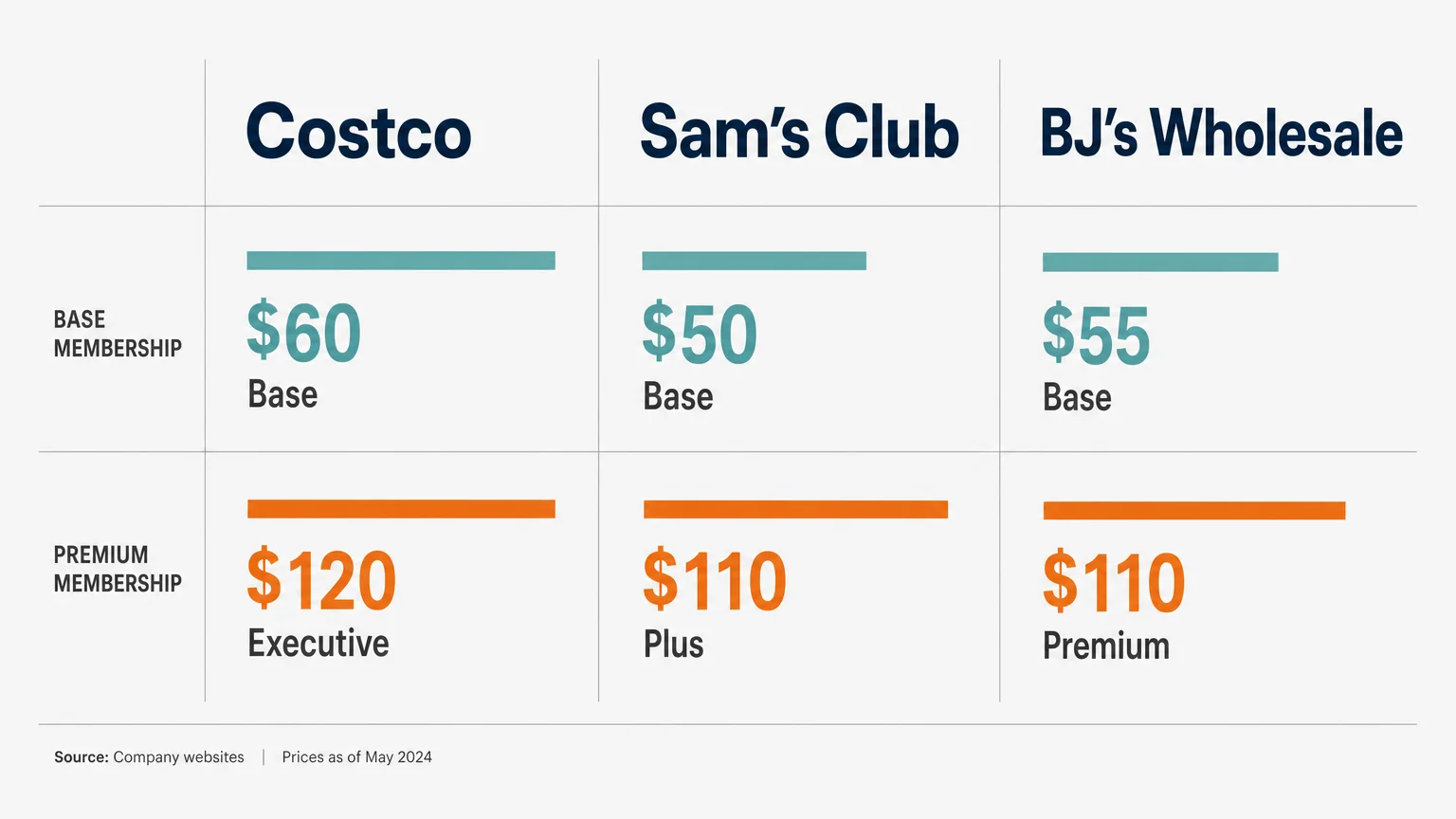
| Feature | Costco | Sam’s Club | BJ’s Wholesale Club |
|---|---|---|---|
| Base Membership Fee | $60 annually | $50 annually | $55 annually |
| Premium Tier Fee | $120 annually (Executive) | $110 annually (Plus) | $110 annually (Club+) |
| Store Brands | Kirkland Signature | Member’s Mark | Wellsley Farms / Berkley Jensen |
| Technology & Convenience | Standard checkout; limited app features | Scan & Go app; excellent curbside pickup | Accepts manufacturer coupons; digital deli ordering |
| Package Sizes | Very large bulk sizes | Large bulk sizes | Moderate bulk; more supermarket-like sizes |
Costco is widely regarded for its exceptional product quality, particularly its Kirkland Signature private label. The brand offers premium products at a fraction of the cost of name brands. Costco also excels in its ancillary services. Their hearing aid centers and optical departments are highly rated for transparency and value. However, Costco does not accept manufacturer coupons, and their stores can be extremely busy, making navigation difficult for those who prefer a quiet shopping environment.
Sam’s Club, owned by Walmart, shines in the technology department. Their “Scan & Go” smartphone app allows you to scan items as you place them in your cart and pay directly on your phone, allowing you to completely bypass the checkout line. This feature is a tremendous benefit if standing in long lines causes you physical discomfort. Sam’s Club also offers highly efficient curbside pickup, which is perfect for days when you need bulk items but do not want to walk the massive aisles.
BJ’s Wholesale Club bridges the gap between a traditional supermarket and a warehouse club. They package goods in smaller, more manageable quantities compared to Costco and Sam’s Club. If you live alone, you will appreciate their smaller produce portions and full-service deli counter. Additionally, BJ’s is the only club among the top three that accepts standard manufacturer coupons. You can stack these external coupons with BJ’s own promotional offers to maximize your savings.

Maximizing Healthcare and Pharmacy Benefits
Healthcare expenses consume a significant portion of many retirement budgets. Out-of-pocket costs for prescriptions, glasses, and hearing aids can quickly derail your financial plans. Warehouse clubs are uniquely positioned to help you manage these expenses.
First, consider the pharmacy. You generally do not need a membership to purchase prescription drugs at a warehouse club pharmacy, as federal and state laws often prohibit pharmacies from requiring a membership to dispense medications. However, membership usually unlocks exclusive prescription discount programs for drugs not covered by your insurance. Research from Medicare.gov highlights the importance of comparing prescription prices, as costs can vary significantly between pharmacies. Checking your specific Medicare Part D formulary against a warehouse club’s cash price can sometimes reveal that paying out-of-pocket with a club discount is cheaper than your insurance copay.
Hearing aids are another major expense. Traditional audiologist offices often charge thousands of dollars for hearing aids, a cost rarely covered by standard Medicare. Costco’s Hearing Aid Centers offer comprehensive screenings and high-quality hearing aids for substantially less than standard retail prices. They provide free hearing tests, free device cleanings, and free follow-up appointments. Sam’s Club offers similar hearing services, making both clubs excellent resources for managing auditory health on a budget.
Optical centers operate similarly. Warehouse clubs employ licensed optometrists for eye exams, and their retail frames and lenses are priced competitively. Whether you need progressive lenses, reading glasses, or contact lenses, shopping at your club’s optical center can yield substantial savings over boutique eye care centers.

Smart Strategies for Bulk Shopping on a Fixed Income
The primary challenge of warehouse shopping for retirees is the sheer volume of the products. Buying too much fresh food results in spoilage, which actively drains your budget. To make your membership work for you, adopt specific shopping strategies designed for smaller households.
- Focus on Non-Perishables: Dedicate your bulk purchases to items that do not expire quickly. Paper towels, toilet paper, laundry detergent, dish soap, and trash bags are excellent warehouse buys. You have the space to store them, and you will eventually use them without the risk of spoilage.
- Stock Your Freezer: Your freezer is your best friend when shopping in bulk. Buy large packages of chicken breasts, ground beef, or fish, and immediately portion them into smaller freezer bags when you get home. You can also purchase frozen vegetables and fruits, which retain their nutritional value and eliminate the stress of eating fresh produce before it goes bad.
- Split Memberships and Purchases: If you have friends, neighbors, or adult children living nearby, consider sharing the bounty. You can split a massive package of muffins, a flat of canned goods, or a double-pack of bread. Sharing purchases allows you to enjoy the low unit cost of bulk goods without the burden of storing or consuming massive quantities.
- Buy Over-the-Counter Medications Sparingly: While warehouse clubs offer great deals on pain relievers and vitamins, these items do expire. A bottle of 1,000 ibuprofen tablets is only a good deal if you can consume them before the expiration date. Check dates carefully and buy quantities that align with your actual usage.
- Utilize Curbside Pickup: Impulse buying is a major budget killer in warehouse clubs. The “treasure hunt” layout is designed to encourage you to buy things you did not plan to purchase. Using curbside pickup forces you to stick to your digital shopping list, protecting your fixed income from unexpected splurges.

Navigating Store Layouts with Mobility Challenges
Warehouse clubs are massive. A single trip often involves walking over concrete floors for extended periods, maneuvering large, heavy shopping carts, and lifting bulky items. If you experience arthritis, joint pain, or general fatigue, these physical demands can make shopping exhausting or even dangerous.
According to the Centers for Disease Control and Prevention (CDC), maintaining mobility is crucial for older adults, but safely navigating large physical spaces requires proper pacing and support. You should never push past your physical limits just to finish a grocery run.
To make the experience safer and more comfortable, take advantage of the accessibility features offered by the stores. All major warehouse clubs provide motorized shopping carts on a first-come, first-served basis. Do not hesitate to use them. If you prefer walking but struggle with heavy lifting, ask an employee for assistance when moving large bags of pet food, cases of water, or heavy laundry detergent into your cart and your car.
Timing your trips also makes a significant difference. Try to shop on Tuesday or Wednesday mornings right after the store opens. The aisles will be less crowded, making it easier to maneuver your cart or motorized scooter without dodging large crowds. Sam’s Club offers “Early Shopping” hours specifically for their Plus members, allowing you to enter the store before the general public. This quiet, unhurried environment is ideal for seniors who want to shop at their own pace.

Common Traps and Pitfalls to Avoid
Even with the best intentions, it is easy to lose money at a warehouse club if you fall into common retail traps. The environment is engineered to make you spend more, so vigilance is necessary to protect your retirement savings.
As noted by experts at the Consumer Financial Protection Bureau (CFPB), tracking everyday expenses and avoiding impulse purchases are key components of maintaining financial health in retirement. The most frequent mistake retirees make is buying in bulk without calculating the unit price. Just because an item is in a warehouse club does not automatically mean it is the cheapest option. Local supermarkets often run aggressive loss-leader sales on items like eggs, milk, and seasonal produce that can beat the warehouse club price. Always keep a mental note—or a small notebook—of the unit prices you typically pay at your local grocery store.
Another pitfall is the premium membership upgrade trap. Cashiers often aggressively pitch the higher-tier memberships (like Costco’s Executive or Sam’s Club’s Plus), which offer 2% cash back on purchases. While this sounds appealing, you must do the math. To recoup the extra $60 fee for a Costco Executive membership, you need to spend $3,000 a year at the store (excluding gas, which does not earn the 2% reward). If you are a single retiree only buying paper goods, prescriptions, and occasional groceries, you will likely not spend enough to justify the higher fee. Stick to the basic membership unless you regularly purchase big-ticket items like appliances, electronics, or vacation packages.
Finally, beware of the “fresh food trap.” Giant bags of spinach, massive clamshells of berries, and three-pound blocks of cheese look appealing, but they perish quickly. Throwing away half a bag of rotting produce eliminates any savings you achieved by buying in bulk. Be brutally honest with yourself about your cooking habits and household consumption before placing perishable items in your cart.
Frequently Asked Questions
Do warehouse clubs offer senior discounts on memberships?
Generally, no. Costco, Sam’s Club, and BJ’s Wholesale do not offer standard senior discounts on their annual membership fees. However, they frequently run promotional sign-up deals for new members throughout the year. You can often find discounted memberships through daily deal websites, mailers, or specific seasonal promotions.
Do I need a membership to use the warehouse club pharmacy?
In most states, the law requires warehouse clubs to allow non-members to use their pharmacies for prescription medications. You can walk in and hand the pharmacist your prescription without showing a membership card. However, non-members typically cannot access the extra discount programs or reduced cash prices reserved specifically for paying members.
Is the premium, higher-tier membership worth it for retirees?
It depends entirely on your spending habits. The premium tiers offer cash-back rewards, but you must spend a certain threshold (usually around $2,500 to $3,000 annually) just to break even on the upgraded fee. If you only buy basics for a one- or two-person household, the basic membership is usually the smarter financial choice.
Can I bring a caregiver or family member with me to shop?
Yes. All major warehouse clubs allow members to bring guests into the store. Your caregiver or family member can help you navigate the aisles, lift heavy items, and pack your vehicle. However, the actual purchase must be paid for by the person holding the active membership card.
How do I handle large, heavy items if I live alone?
If lifting heavy items is a concern, utilize the club’s employee assistance program. Store associates can help load bulky items into your vehicle. Once you are home, consider breaking down heavy packages in your trunk—for example, carrying a few rolls of paper towels inside at a time rather than lifting the entire massive bundle. Alternatively, use curbside pickup or home delivery services offered by the club.
For additional senior resources, visit
Centers for Medicare & Medicaid Services (CMS),
Social Security Administration (SSA),
Consumer Financial Protection Bureau (CFPB) and
Administration for Community Living (ACL).
Disclaimer: The information in this article is for educational purposes only and is not intended to be a substitute for professional financial, legal, or medical advice. Always consult with a qualified expert for advice tailored to your personal situation.









Leave a Reply