
You cannot afford to leave your fall Medicare envelopes sitting unopened on the kitchen counter. Tucking them away unread risks sudden doctor network changes, canceled coverage, and steep prescription price spikes.
Insurers and federal agencies finalize major plan updates every autumn. Opening each piece of mail immediately protects your retirement budget and secures your medical access for the coming year.
Reviewing these notices gives you the exact details you need to take charge before open enrollment deadlines pass. Here is why every single envelope demands your immediate attention today.
In this guide13 sections
- Your Prescription Drug Out-of-Pocket Cap and Deductible Are Changing
- The Annual Notice of Change Reveals Silent Premium Hikes
- Your Doctors and Hospitals May No Longer Be In-Network
- Plan Non-Renewal Notices Require Immediate Coverage Action
- Critical Drug Formulary Shifts Could Double Your Medication Costs
- Color-Coded Letters Protect Your Low-Income Extra Help Subsidies
- SSA Form 1026 Envelopes Carry Strict 30-Day Deadlines
- Loss of Employer Creditable Coverage Can Trigger Permanent Penalties
- Medicare Summary Notices Guard Against Costly Billing Fraud
- Open Enrollment Deadlines Leave Zero Room for Procrastination
- Comparing Your Key Fall Medicare Mailings at a Glance
- A Practical 4-Step System to Sort Your Medicare Mail
- Frequently Asked Questions
Your Prescription Drug Out-of-Pocket Cap and Deductible Are Changing
Medicare prescription drug rules shift every calendar year, directly impacting your wallet. When your plan documents arrive, they reveal the precise figures you must budget for medical expenses.
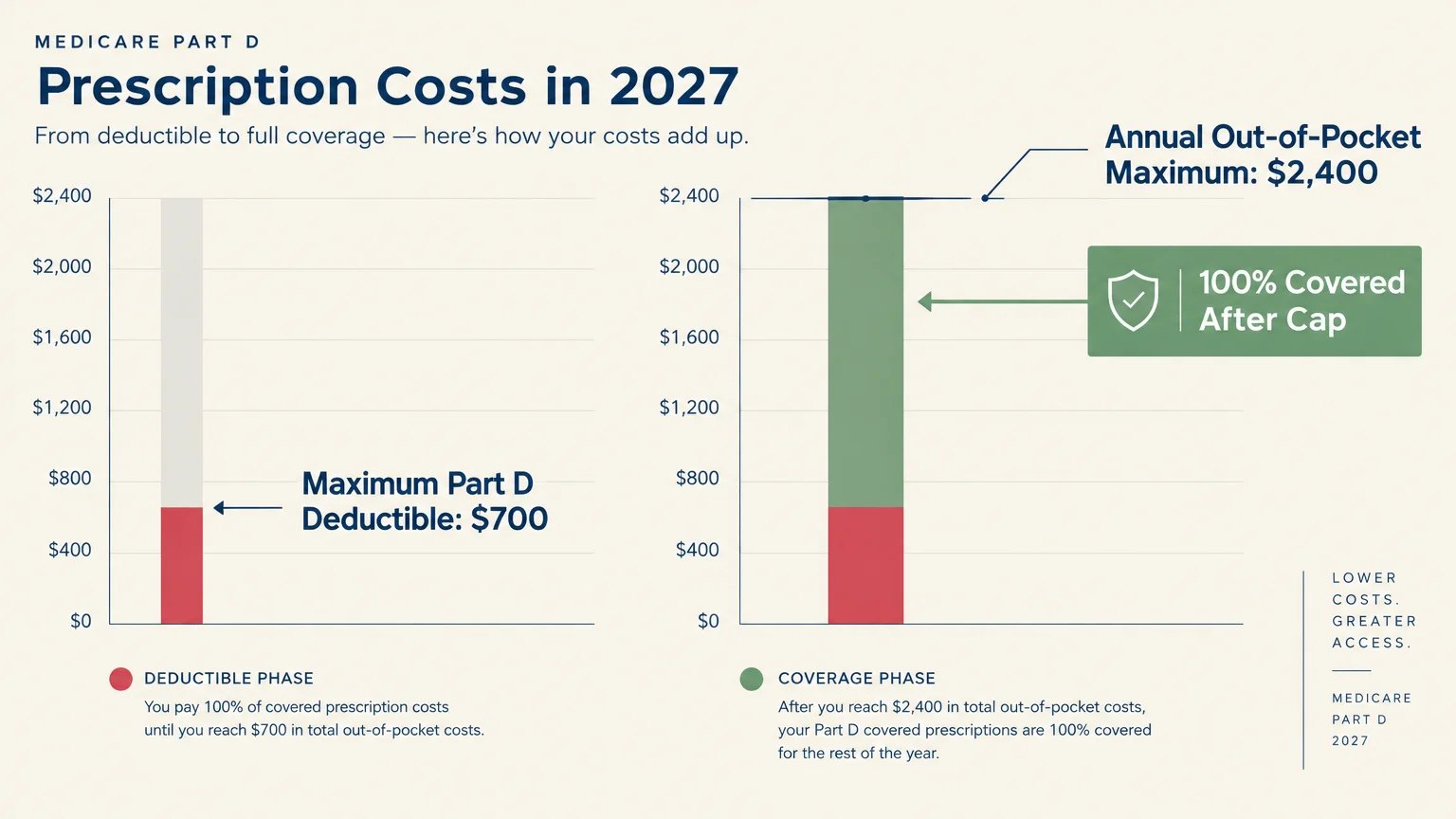
For 2027, the standard annual Part D out-of-pocket maximum is $2,400. Once your covered pharmacy spending hits that benchmark, you pay zero dollars for your covered medications for the remainder of the year.
While that spending ceiling offers real peace of mind, front-end costs are also moving. The maximum allowable Part D deductible rises to $700 for the 2027 plan year.
If your plan charges this maximum deductible, you must pay full price for initial refills. Ignoring your mail means you might experience unexpected sticker shock at the pharmacy counter in January.
According to updates released by the Centers for Medicare & Medicaid Services (CMS), reviewing your specific drug benefits annually prevents disruptions in treatment.
Different insurers structure their deductibles differently across medication tiers. Your fall notices will state clearly whether your daily medications bypass that deductible entirely.

The Annual Notice of Change Reveals Silent Premium Hikes
Private insurers must send you the Annual Notice of Change (ANOC) by September 30. This critical document spells out every single adjustment to your monthly premium, copayments, and coinsurance rates.
Many beneficiaries assume their premium remains unchanged if they take no action. In reality, staying enrolled without reviewing your ANOC means you automatically agree to whatever price increase your insurer sets.
This risk is especially high right now. The federal Part D Premium Stabilization Demonstration, which temporarily capped premium increases in 2025 and 2026, concludes at the end of 2026.
Because insurers are setting 2027 standalone drug plan rates without that federal subsidy, some monthly premiums are rising sharply. Your ANOC is the only place where your insurer lists that new baseline price.
Look for the side-by-side comparison chart inside the booklet. It contrasts your current monthly premium directly against what you will pay starting on January 1.
Failing to inspect this comparison could mean losing hundreds of dollars from your monthly budget. A simple plan switch during open enrollment can easily prevent this unnecessary expense.

Your Doctors and Hospitals May No Longer Be In-Network
Medicare Advantage plans rely on restricted provider networks to manage clinical care. These contracts between insurers, hospital systems, and medical practices expire and get renegotiated throughout the year.
An envelope from your plan could notify you that your trusted primary physician is leaving the network. It may also show that your preferred regional hospital system has terminated its contract.
Seeing an out-of-network provider under an HMO plan usually means paying the entire bill yourself. Even under a PPO plan, out-of-network coinsurance charges can drain your savings quickly.
Medicare Advantage plans carry a legal maximum out-of-pocket limit of $9,850 for in-network medical services in 2027. If you accidentally receive out-of-network care, your total financial liability could climb much higher.
Do not wait until a medical emergency or doctor visit to verify your network status. Open your insurer’s correspondence immediately to verify that your current healthcare team remains covered.
If your doctor plans to exit the network on December 31, you still have time to switch plans. You can locate alternatives that retain your preferred physicians before enrollment closes.

Plan Non-Renewal Notices Require Immediate Coverage Action
Sometimes insurance companies decide to drop specific Medicare Advantage or Part D plans entirely. They may exit a county, consolidate plan offerings, or withdraw from the Medicare market altogether.
If your insurer cancels your plan for 2027, federal regulations require them to send a written notice. This non-renewal notice must be postmarked by October 2, at least 90 days before your coverage ends.
Throwing away this envelope could leave you completely without supplemental coverage on New Year’s Day. If your plan dissolves, you will default back to Original Medicare without prescription drug coverage.
Fortunately, receiving an October non-renewal letter triggers powerful protections. You qualify for a special enrollment window running from December 8 through the final day of February 2027.
You also receive a 63-day guaranteed-issue right after your coverage terminates on December 31. This protection lets you purchase certain Medigap supplemental policies without medical underwriting or health questions.
You can research replacement coverage options directly through Medicare.gov to ensure seamless healthcare continuity. That single envelope acts as your official key to accessing these vital consumer protections.
Critical Drug Formulary Shifts Could Double Your Medication Costs
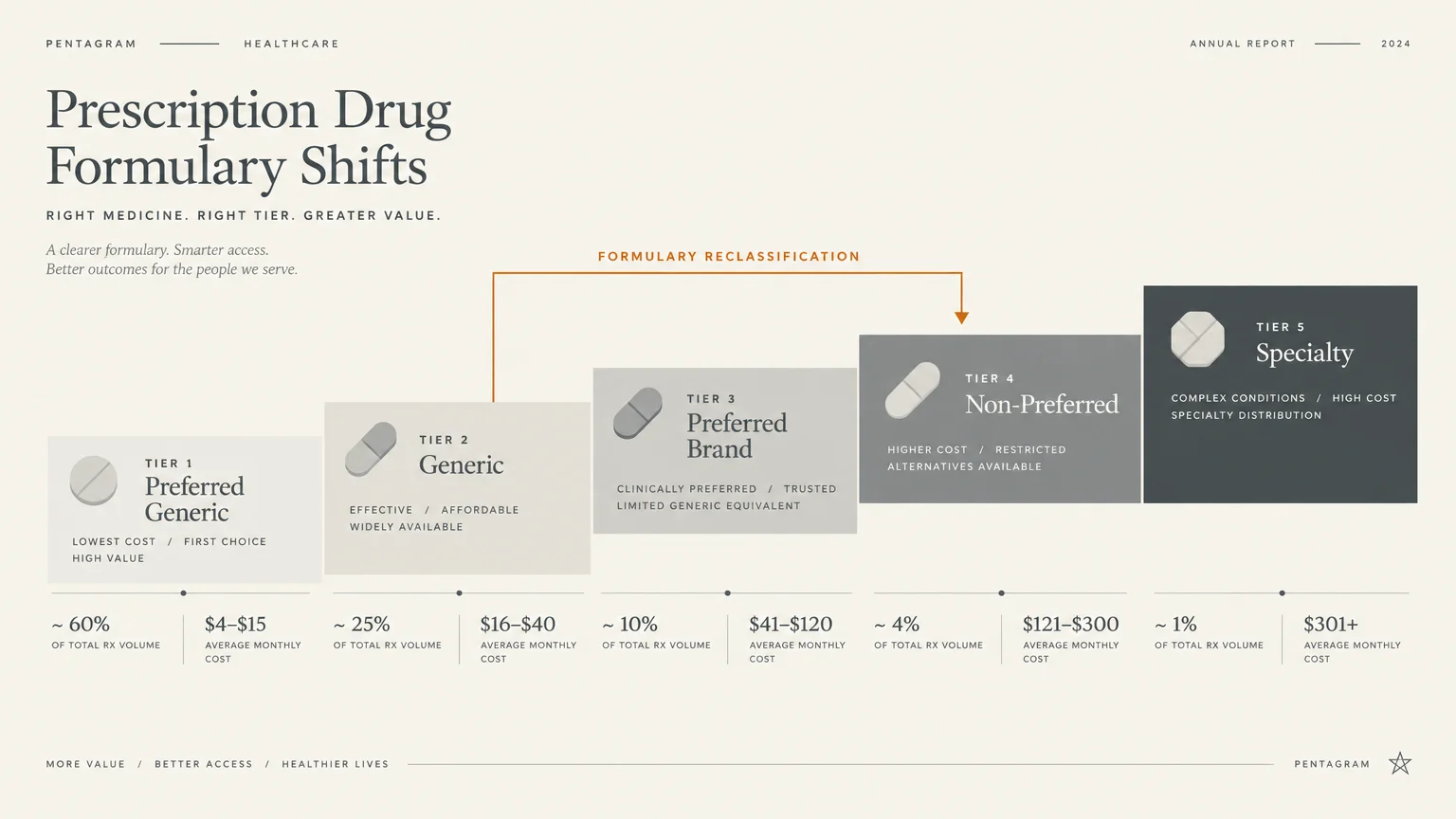
Every prescription drug plan publishes an official list of covered medications known as a formulary. Insurers frequently shuffle medications between pricing tiers from one year to the next.
A medication you currently buy for a modest $10 copayment could move to a specialty tier. On a higher tier, you might be required to pay 35% coinsurance instead of a flat copay.
Your fall mail includes an updated formulary or points you toward an online tool. It clearly highlights which drugs have moved tiers, faced new quantity limits, or been dropped entirely.
Plans also introduce utilization management rules such as prior authorization or step therapy. Step therapy requires you to try cheaper alternatives before the insurer covers your preferred brand-name medication.
Discovering these barriers while standing in line at the pharmacy creates stressful, dangerous delays. Reviewing your formulary now gives your doctor enough time to request an exception or prescribe an alternative.
Take your prescription bottles and compare the exact dosage against the newly mailed formulary list. Catching tier shifts early keeps your out-of-pocket prescription expenses predictable and manageable.

Color-Coded Letters Protect Your Low-Income Extra Help Subsidies
The Part D Extra Help program provides valuable subsidies to help beneficiaries pay for premiums, deductibles, and copays. The federal government uses distinctly colored paper to communicate vital updates regarding these subsidies.
If you or a loved one receive Extra Help, you cannot treat these colorful notices like junk mail. Each distinct shade conveys a specific legal meaning requiring your prompt attention.
- Grey Paper (CMS Product No. 11198): Sent in September to warn you that you no longer automatically qualify for Extra Help. It includes an official application and envelope to reapply immediately.
- Orange Paper: Mailed in early October to notify you that your prescription copayment amounts will change on January 1.
- Blue or Tan Paper: Mailed in late fall to announce Medicare is reassigning you to a different drug plan because your current plan premium exceeds regional subsidy benchmarks.
- Purple Paper: Confirms your deemed status, verifying you automatically qualify for assistance because you receive Medicaid, Supplemental Security Income, or Medicare Savings Program benefits.
- Yellow or Green Paper: Alerts you that Medicare is automatically enrolling you into a Part D prescription plan to ensure you maintain continuous coverage.
A grey notice requires swift action to preserve your financial benefits. If you fail to reapply using the enclosed forms, your drug costs will skyrocket when the new year begins.
Similarly, blue reassignment notices require careful review. Medicare moves you to an affordable plan, but that new plan might not cover your specific daily prescriptions.

SSA Form 1026 Envelopes Carry Strict 30-Day Deadlines
The federal government routinely verifies financial eligibility for low-income programs to ensure compliance. In early September, select beneficiaries receive an envelope containing Social Security Administration Form 1026.
This form is officially titled the Social Security Income and Resources Summary. It asks you to confirm your current household income, liquid financial assets, and property holdings.
According to directives from the Social Security Administration (SSA), you must return this completed document within 30 days of receipt. Missing that narrow deadline can result in the immediate termination of your Extra Help subsidy.
Many seniors mistake this official audit questionnaire for general marketing material. Tossing it aside puts you at risk of losing thousands of dollars in annual prescription assistance.
Open the envelope, verify the listed account balances, and update any discrepancies immediately. Make a copy of the completed paperwork for your personal records before mailing it back.
Using certified mail provides proof of delivery for added peace of mind. Taking these quick precautions ensures your subsidy remains active without administrative interruption.

Loss of Employer Creditable Coverage Can Trigger Permanent Penalties
If you or your spouse continue working past age 65, you may retain coverage under an employer health plan. Prior to October 15, your employer or union must mail you an official Notice of Creditable Coverage.
This notice confirms whether your workplace prescription drug coverage is creditable. Creditable coverage means the plan pays out, on average, at least as much as standard Medicare Part D.
This year’s notice requires extra vigilance. CMS retired the simplified determination method for plan years starting in 2027, forcing employers to use stricter actuarial calculations.
As a result, many workplace drug plans that passed the test last year may lose their creditable status. If your employer’s coverage is no longer deemed creditable, you must take swift action.
Going 63 or more consecutive days without creditable drug coverage triggers a permanent Part D late enrollment penalty. Medicare calculates this penalty every month for the rest of your life once you eventually enroll.
Keep this annual letter in a safe filing cabinet alongside your tax documents. If Medicare ever questions your coverage history, this paper provides conclusive proof that protects you from lifelong fines.

Medicare Summary Notices Guard Against Costly Billing Fraud
Not every envelope from Medicare requires a policy decision or premium payment. Beneficiaries frequently receive Medicare Summary Notices (MSNs) or private insurer Explanation of Benefits (EOB) statements.
Original Medicare mails MSNs every three months, while Medicare Advantage plans mail monthly EOB statements. These documents are clearly labeled with the reminder: “This is not a bill.”
Many people toss these statements into the recycling bin without glancing inside. However, reviewing them represents your first line of defense against medical billing fraud and identity theft.
Consumer alerts published by the Consumer Financial Protection Bureau (CFPB) emphasize that reviewing benefits statements prevents deceptive financial practices. Criminals frequently bill Medicare for medical supplies, genetic tests, and telehealth visits that beneficiaries never received.
Examine every single line item on your summary statement carefully. Confirm that the dates match your actual doctor visits and that the billed procedures were truly performed.
If you discover unfamiliar clinics or charges for durable medical equipment you never requested, act immediately. Contact Medicare or your plan provider to report the suspicious activity and secure your account.
Open Enrollment Deadlines Leave Zero Room for Procrastination
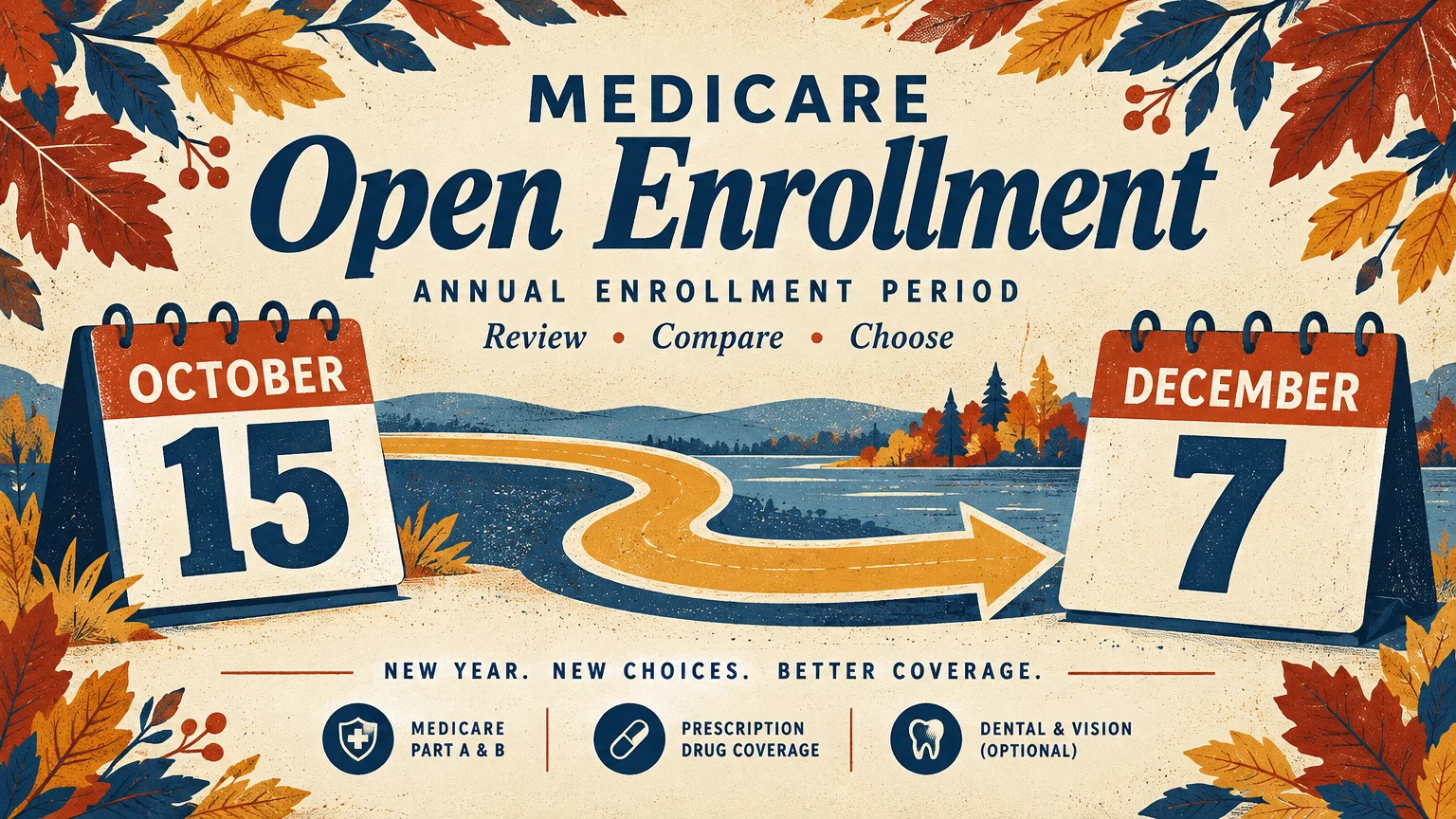
The annual Medicare Open Enrollment period runs from October 15 through December 7 each year. This seven-week window is your primary opportunity to adjust your coverage for the coming calendar year.
During this period, you can switch from Medicare Advantage back to Original Medicare. You can also change Advantage plans or choose a new stand-alone Part D prescription plan.
Waiting until the final days of enrollment creates unnecessary stress. Customer service phone lines face heavy call volumes, and insurance brokers become booked well in advance.
Opening your notices promptly in early October gives you weeks to deliberate without pressure. You have ample time to consult trusted family members, independent brokers, or state health insurance assistance counselors.
Any enrollment change you submit by midnight on December 7 takes effect on January 1. Proactive preparation ensures your new insurance cards arrive in your mailbox before your first doctor appointment.
Do not let procrastination compromise your access to affordable healthcare. Treat your October mail as an urgent call to action, and begin comparing your options right away.
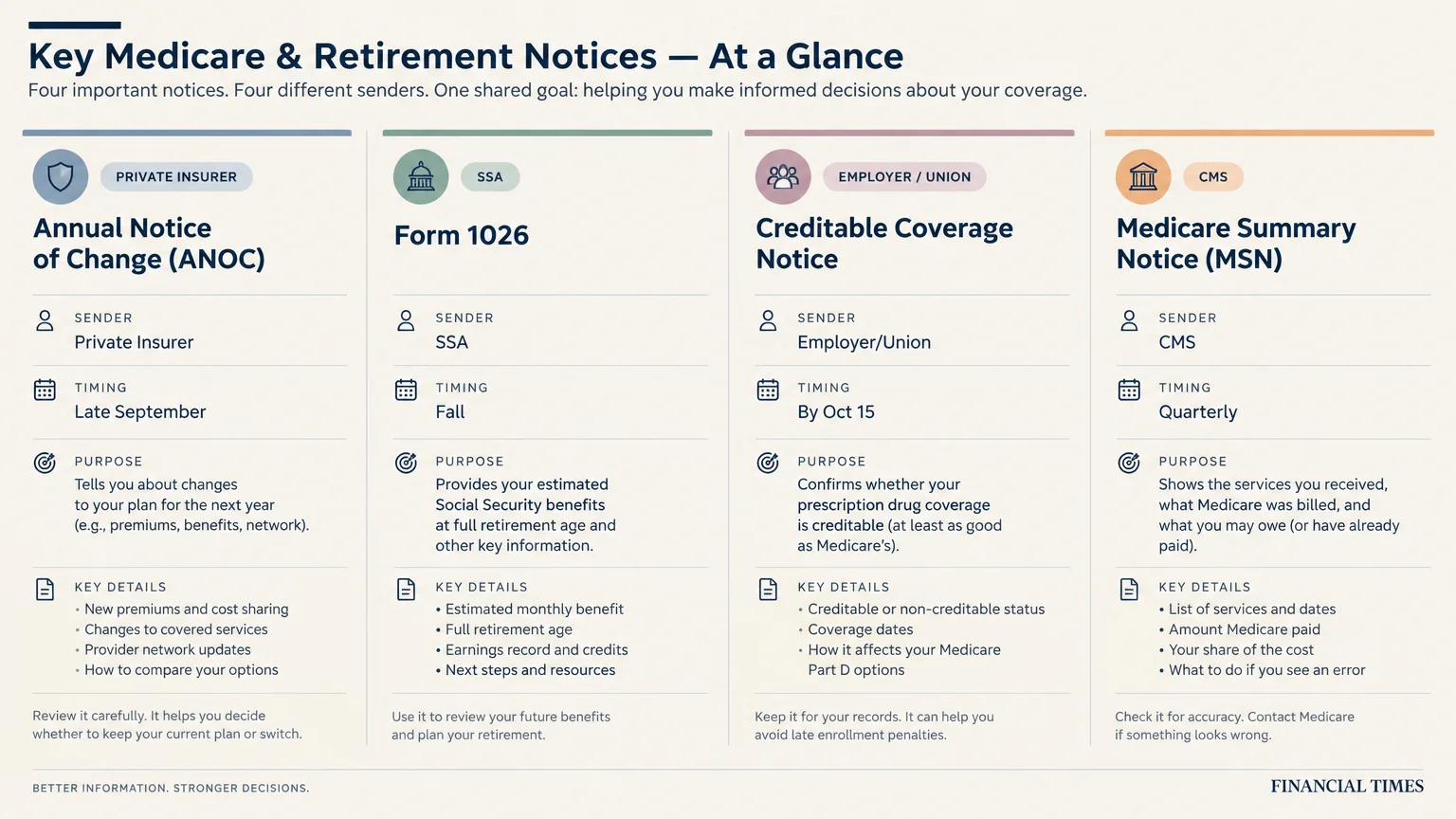
Comparing Your Key Fall Medicare Mailings at a Glance
Keeping track of multiple official notices can feel confusing and overwhelming. Different agencies send distinct documents, each carrying specific deadlines and legal implications for your care.
The comparison table below outlines the primary mailings you receive each fall. Use this simple quick-reference guide to identify incoming mail and prioritize your next steps.
| Document Name | Sender | Typical Arrival | Action Required |
|---|---|---|---|
| Annual Notice of Change (ANOC) | Your Current Plan Insurer | By September 30 | Compare new premiums, copays, deductibles, and drug tier changes for 2027. |
| Medicare & You Handbook | CMS / Federal Government | Late September | Review universal Medicare updates, standard benefit structures, and rights. |
| Plan Non-Renewal Notice | Your Current Plan Insurer | By October 2 | Select replacement coverage before December 31 or use your Special Enrollment Period. |
| Evidence of Coverage (EOC) | Your Current Plan Insurer | By October 15 | Retain as your official comprehensive contract covering benefits and appeals. |
| Notice of Creditable Coverage | Employer or Union Plan | Prior to October 15 | Confirm your workplace prescription plan remains creditable to prevent penalties. |
| SSA Form 1026 (Audit Review) | Social Security Administration | Early September | Fill out and return your financial verification forms within 30 days. |
| Medicare Summary Notice (MSN) | Medicare / CMS | Quarterly | Check line items for incorrect charges, billing errors, or fraudulent claims. |
Refer to this reference chart whenever a new government envelope arrives at your house. Knowing what each letter represents removes fear and helps you take prompt, confident action.
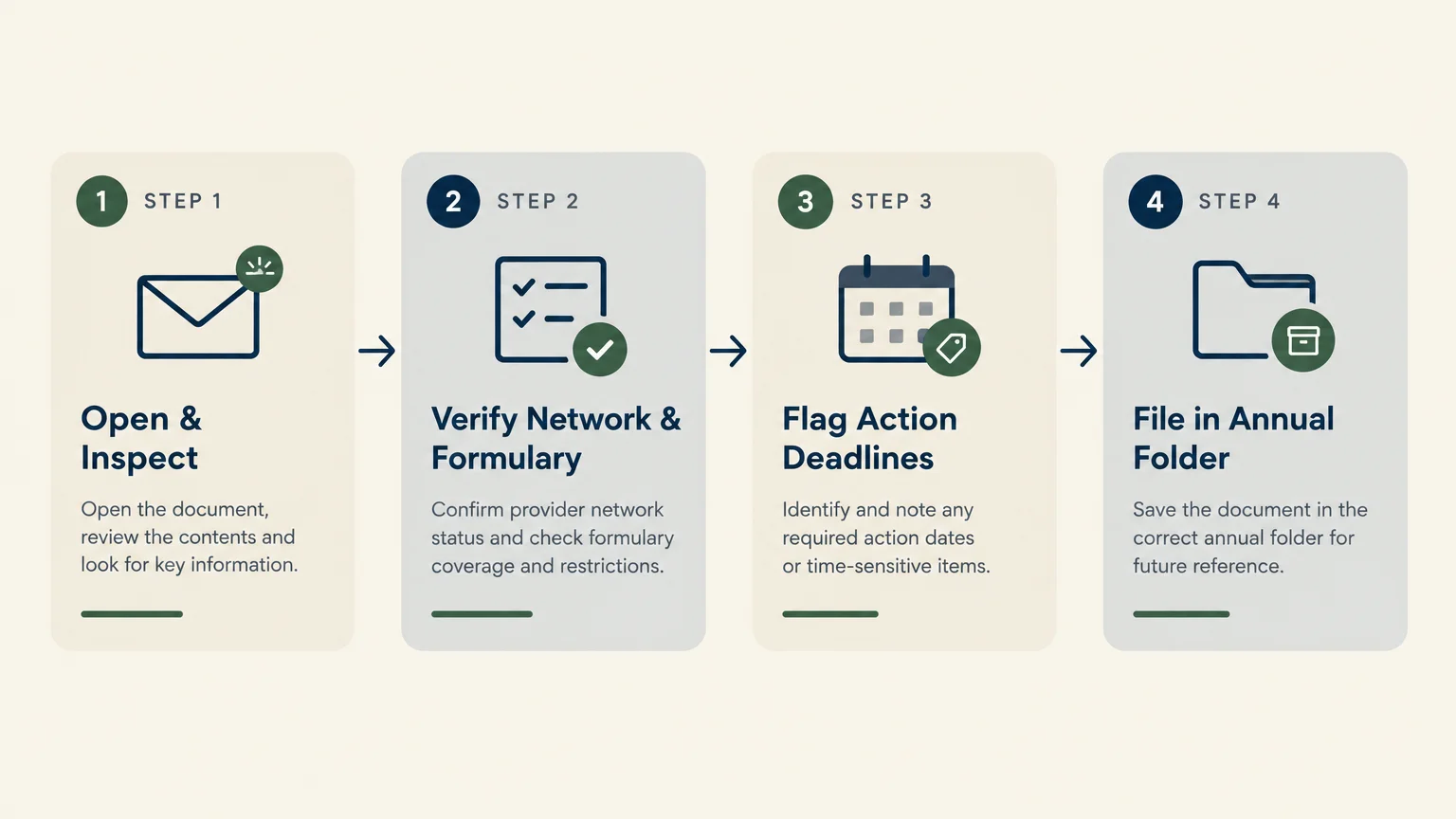
A Practical 4-Step System to Sort Your Medicare Mail
Managing Medicare paperwork does not require endless hours of frustration. Setting up a structured sorting system turns an intimidating stack of mail into an easy checklist.
Follow these four practical steps to review your healthcare notices efficiently and safeguard your coverage.
Step 1: Create a Dedicated Review Station
Designate a specific basket, tray, or kitchen drawer exclusively for incoming healthcare envelopes. Tell everyone in your household to place any envelope referencing Medicare or insurance in that spot.
Never toss these letters onto general mail piles where they can get misplaced. Having a central location ensures no critical deadline slips through the cracks.
Step 2: Inspect the Envelope and Return Address
Examine the sender information on the outside of each envelope carefully. Look for mail from CMS, the Social Security Administration, or your current insurance company.
Be cautious of deceptive marketing mail that mimics official federal documents. Legitimate federal mail features official agency seals and clear return addresses rather than vague marketing labels.
Step 3: Conduct the Red Pen Audit
Sit down with a highlighter or red pen and review your Annual Notice of Change. Highlight three critical numbers: your new monthly premium, your deductible, and your doctor network changes.
Cross-reference your current prescription medication names against the drug tier list. If you spot price spikes or dropped coverage, make a clear note on the front cover.
Step 4: Verify Options and Seek Free Guidance
If your plan made unwelcome alterations, do not panic. You can explore alternative local coverage options online or seek free, unbiased assistance from trained professionals.
You can connect with your local State Health Insurance Assistance Program (SHIP) through the Eldercare Locator for one-on-one help. Counselors offer objective guidance without selling commercial insurance products.
Frequently Asked Questions
What happens if I never open my Annual Notice of Change?
If you ignore your ANOC, you will remain enrolled in your existing plan automatically. However, you will be subject to all new premiums, higher copays, and provider network restrictions starting January 1.
Why did I receive two different Medicare handbooks in the mail?
CMS mails the official general handbook to every Medicare household in late September. Private insurers separately send your specific Evidence of Coverage booklet, which outlines the unique rules for your plan.
How can I tell the difference between real Medicare mail and junk marketing?
Official federal mail displays the seal of the Department of Health and Human Services or the Social Security Administration. Marketing mail from private brokers often contains promotional sales language and lacks official government seals.
What should I do if my doctor is dropped from my Medicare Advantage plan?
You can use the open enrollment window between October 15 and December 7 to switch plans. Search for an alternative Medicare Advantage plan that includes your doctor or consider switching to Original Medicare.
Will I lose my Extra Help subsidy if I miss the SSA Form 1026 deadline?
Yes, failing to return the income verification form within 30 days can result in the suspension of your subsidy. Contact the Social Security Administration immediately if you missed your response deadline to request an extension.
For additional senior resources, visit
National Institute on Aging (NIA), Centers for Disease Control and Prevention (CDC), Medicare.gov, National Institute of Mental Health (NIMH) and National Institutes of Health (NIH).
Disclaimer: The information in this article is for educational purposes only and is not intended to be a substitute for professional financial, legal, or medical advice. Always consult with a qualified expert for advice tailored to your personal situation.