Rising winter utility costs can strain your monthly budget and threaten your personal comfort. You can keep your home warm this winter without draining your savings by using dedicated financial assistance programs.
Federal initiatives, local charitable funds, and utility protections exist specifically to help older adults manage seasonal energy expenses. Many programs offer direct cash grants that you never have to pay back.
Exploring these twelve resources will protect your fixed income and ensure your home stays safe through freezing weather. Taking action early gives you priority access to available funds before winter sets in.
In this guide9 sections
- Why Heating Assistance Matters for Seniors on Fixed Incomes
- Major Federal Energy Assistance Programs
- State and Regional Energy Programs
- Charitable and Community Utility Relief Funds
- Utility Rate Relief and Payment Protections
- Comparing Senior Heating Assistance Programs
- Step-by-Step Guide to Applying for Winter Utility Relief
- Protecting Yourself from Winter Heating Scams
- Frequently Asked Questions
Why Heating Assistance Matters for Seniors on Fixed Incomes
Winter energy expenses place an uneven burden on retirees living on fixed incomes. When temperatures plummet, heating bills can easily double or triple within a single billing cycle.
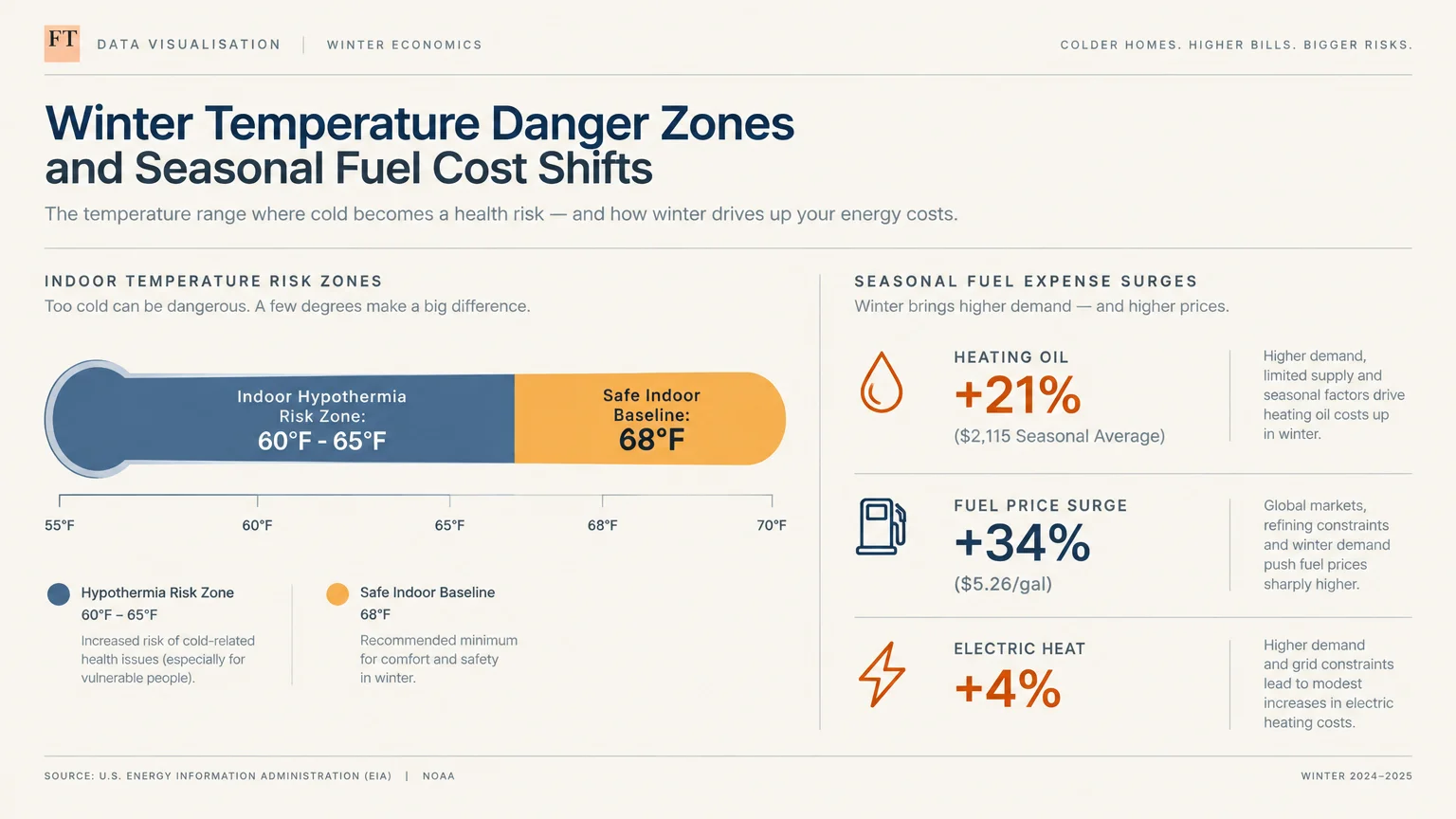
Household heating forecasts show mixed trends across the country. According to federal energy projections, homes using heating oil face a projected 21% jump in seasonal bills, averaging $2,115.
This surge stems from an estimated 34% rise in fuel prices, pushing oil to an average of $5.26 per gallon. Households relying primarily on electric heat will likely see a 4% increase this winter.
Conversely, households heating with natural gas and propane should see lower heating expenses due to higher fuel inventories. Even with lower fuel rates, unexpected winter storms can trigger sudden price spikes.
Cutting back on heating poses severe medical threats for older bodies. Aging diminishes your body’s ability to regulate internal temperature, making you more vulnerable to sudden drops in room temperature.
According to the National Institute on Aging (NIA), hypothermia can develop in older adults exposed to indoor temperatures between 60°F and 65°F. Keeping your living space heated to at least 68°F protects your vascular and respiratory health.
No older adult should ever have to choose between buying prescription medications, buying groceries, and heating their living room. Practical programs exist to bridge this financial gap and keep your heat running safely.
Major Federal Energy Assistance Programs
Federal energy programs provide the largest share of heating bill relief across the country. These initiatives deliver billions in funding each year to help low- and moderate-income seniors maintain safe living environments.
1. Low-Income Home Energy Assistance Program (LIHEAP)
LIHEAP serves as the cornerstone of federal heating assistance for American households. The federal government funds the program, but state and tribal agencies administer daily distribution to eligible residents.
The program sends one-time or seasonal grants directly to your heating utility or fuel vendor. Because these payments are direct grants, you never need to repay them.
By federal statute, states establish their own income eligibility thresholds within specific benchmarks. Limits cannot exceed the greater of 150% of the Federal Poverty Guidelines or 60% of the State Median Income.
For a single-person household, 150% of the Federal Poverty Level equals $23,940 annually, or $1,995 monthly. For a two-person household, that limit sits at $32,460 annually, or $2,705 monthly.
You may qualify automatically through categorical eligibility rules. If you currently receive Supplemental Security Income (SSI) or Supplemental Nutrition Assistance Program (SNAP) benefits, your household meets the income criteria in most states.
Application windows for the winter heating season open between October 1 and November 2. Many states grant priority processing to households with adults aged 60 and older, allowing seniors to apply early on October 1.
2. Weatherization Assistance Program (WAP)
While LIHEAP pays bills directly, the Weatherization Assistance Program lowers your ongoing heating demand permanently. Administered by the U.S. Department of Energy, WAP covers home performance improvements at zero cost to you.
Certified energy auditors assess your residence to pinpoint air leaks, missing insulation, and inefficient mechanical systems. Technicians then install weatherstripping, blow attic insulation, and repair or replace unsafe furnaces.
Income eligibility reaches up to 200% of the Federal Poverty Level. This allows single seniors earning up to $31,920 annually and couples earning up to $43,280 annually to participate.
Households receiving SSI, SNAP, or LIHEAP qualify automatically for weatherization services. The Department of Energy estimates the average home receives $7,500 in energy upgrades, saving households an average of $372 each year.
Both homeowners and renters can qualify for WAP services. Renters must secure written permission from their landlord before contractors perform any structural upgrades.
3. USDA Section 504 Home Repair Program
If you live in a designated rural area, the USDA Section 504 Single Family Housing Repair program provides dedicated repair funding. This program assists very low-income rural seniors who cannot secure traditional home improvement loans.
Homeowners aged 62 and older can receive direct grants to eliminate health and safety hazards. Upgrading an outdated, broken, or dangerous heating system falls directly under approved grant uses.
The maximum lifetime grant allowance is $10,000. You do not repay this grant unless you sell your home within three years of receiving the funds.
The USDA also provides low-interest repair loans of up to $40,000 with a fixed 1% interest rate over a 20-year term. Seniors can combine loan and grant assistance for up to $50,000 in total heating and safety repairs.
Official resources on Benefits.gov outline full geographic boundary maps and local application requirements for rural property owners.
State and Regional Energy Programs
States frequently sponsor their own energy safety nets alongside federal programs. These initiatives address immediate heating emergencies and offer specialized protections tailored to regional winter conditions.
4. Emergency Home Energy Assistance for the Elderly Program (EHEAP)
Several states operate dedicated elder energy initiatives, such as Florida’s EHEAP system run through Area Agencies on Aging. This program targets households containing at least one member aged 60 or older.
EHEAP assists seniors facing immediate energy crises. An emergency includes receiving a utility shutoff notice, having an empty fuel tank, or lacking funds to pay a heating deposit.
The program pays fuel suppliers or electric utilities directly to resolve the pending emergency. Contacting your regional elder affairs office initiates the application process during a crisis.
5. State Winter Disconnection Moratoriums
State utility commissions enforce winter shutoff bans that protect vulnerable households from losing heat. These moratoriums establish clear dates when regulated electric and gas utilities cannot disconnect residential service.
Most state moratoriums take effect on November 1 or December 1 and remain active through March 31 or April 15. The exact calendar window depends entirely on your state’s climate regulations.
Many jurisdictions prohibit shutoffs whenever forecasts predict freezing temperatures within a 24-hour window. States often mandate extra protections if you verify that an adult aged 60 or older lives in the household.
A moratorium does not erase your utility debt; charges continue to accrue on your account. However, these rules prevent life-threatening utility cutoffs while you arrange grant assistance or a payment agreement.
6. Area Agencies on Aging (AAA) Local Fuel Grants
Your regional Area Agency on Aging receives funding under the Older Americans Act to assist seniors with essential needs. Many local agencies maintain flexible crisis funds dedicated to winter fuel delivery.
These grants help older adults who run short on heating oil, firewood, or propane mid-season. Because rules vary locally, AAA case managers hold greater flexibility than strict federal program administrators.
Connecting with your local aging agency helps you locate these hidden community resources quickly. You can easily find your regional agency through the Eldercare Locator directory.
Charitable and Community Utility Relief Funds
Charitable organizations step in when government assistance windows close or when your income slightly exceeds federal caps. Non-profit fuel funds work closely with utility providers to clear past-due balances.
7. Utility Company Hardship and Fuel Funds
Most regulated utilities operate customer-funded hardship programs in partnership with independent non-profits. Examples include the Dollar Energy Fund, Operation Fuel, and Neighbor to Neighbor programs across various states.
These funds gather contributions from utility shareholders, corporate donations, and optional customer round-up programs. Non-profit caseworkers review requests and apply grants directly to overdue accounts.
Hardship grants often provide between $200 and $500 once per heating season. Most funds require you to make a sincere payment effort before awarding hardship dollars.
8. The Salvation Army Heating Assistance Programs
The Salvation Army manages several prominent winter heating partnerships, including HeatShare, Warm Neighbor, and Project SHARE. These local efforts help seniors buy heating oil, propane, natural gas, or wood.
Staff members interview applicants at local community service centers to evaluate overall household need. They frequently combine their own charitable reserves with local utility hardship funds.
Assistance remains available to both homeowners and tenants who carry utility accounts in their own name. Contact your nearest Salvation Army corps community center as soon as you receive a past-due notice.
9. Society of St. Vincent de Paul Utility Aid
The Society of St. Vincent de Paul operates volunteer conferences based in local neighborhood Catholic parishes. Their volunteers, called Vincentians, assist community members of any religious background.
Volunteers frequently schedule in-home visits to understand your personal situation and review past-due bills. They offer direct financial contributions to prevent imminent service disconnections or order fuel refills.
Because they operate on a hyper-local level, parish conferences can approve aid faster than government bureaucracies. Find your local parish conference online or through local social service directories.
10. Community Action Agency Crisis Intervention Grants
Community Action Agencies (CAAs) manage local anti-poverty programs across 99% of American counties. Beyond managing standard LIHEAP grants, they distribute rapid-response crisis intervention funds.
If your furnace stops working during a blizzard, a CAA crisis grant can cover temporary shelter or emergency repairs. Technicians can deliver emergency space heaters or coordinate emergency fuel deliveries within 18 to 48 hours.
Dialing 211 connects you directly to the intake coordinator for the Community Action Agency serving your zip code. Inform the operator immediately if you face an active shutoff notice or empty fuel tank.
Utility Rate Relief and Payment Protections
Managing utility expenses requires controlling your ongoing billing rates alongside seeking grant relief. Regulated energy providers offer structural rate options that stabilize your monthly financial commitments.
11. Electric and Gas Utility Senior Discount Tariffs
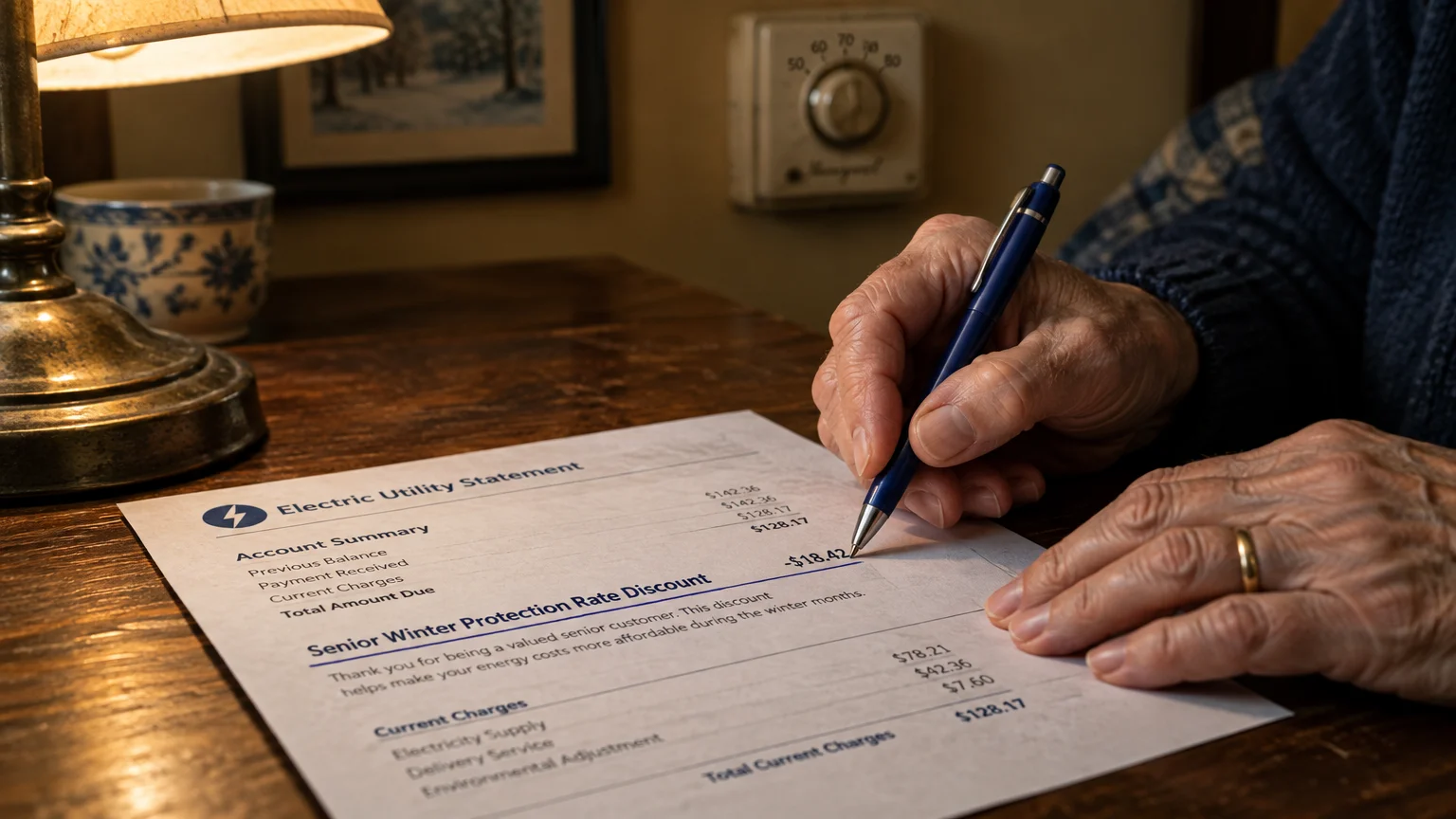
Many investor-owned utilities offer specialized residential rate discounts for customers aged 62 or 65 and older. These discounts lower your base charge or reduce the per-unit cost of natural gas and kilowatt-hours.
Some utilities waive the fixed monthly customer service charge entirely for qualifying older adults. Other providers reduce the total commodity delivery fee by 10% to 30% each month.
Unlike annual grants, an approved senior discount remains active on your billing profile indefinitely. Call your utility company’s customer care division to ask if a senior tariff exists in your service territory.
12. Budget Billing and Levelized Payment Plans
Budget billing does not lower your total annual utility cost, but it eliminates seasonal financial volatility. Energy suppliers calculate your average energy consumption across the preceding 12 months.
The utility then divides that projected total into twelve equal monthly payments. Instead of paying an unpredictable $350 bill in January, you might pay an even $140 every single month.
Levelized billing plans adjust your payment slightly each month to account for actual usage trends, preventing steep settlement balances. Pairing budget billing with an income-qualified senior discount provides predictable stability for retirees.
Comparing Senior Heating Assistance Programs
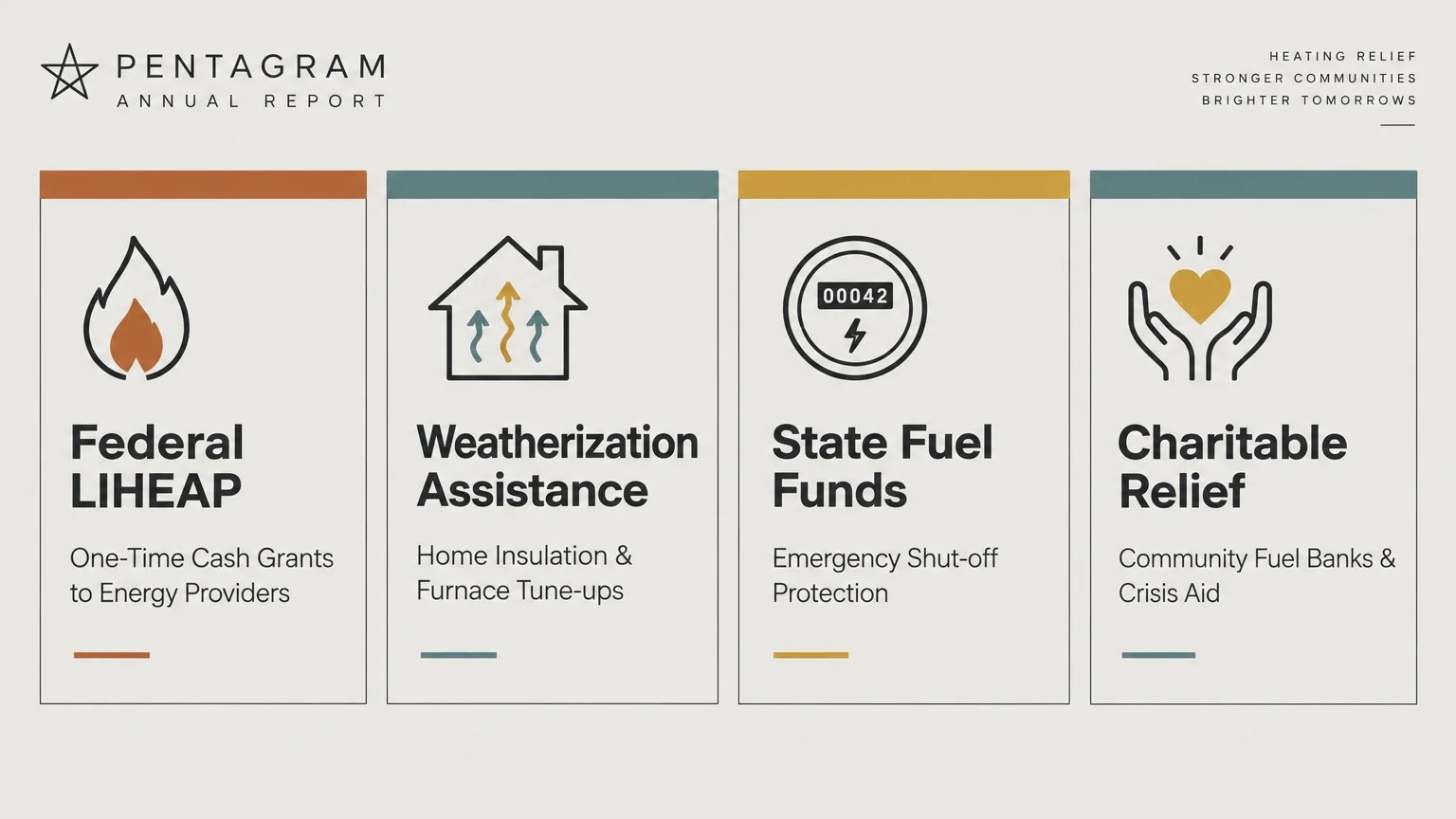
Reviewing program features side by side helps you target the right resources for your current household needs. The table below outlines major heating programs, eligibility criteria, and key benefits.
| Program Name | Target Audience | Income Limits (2026 Guidelines) | Primary Benefit |
|---|---|---|---|
| LIHEAP | Low-income renters and homeowners | Up to 150% FPL ($23,940 single) or 60% SMI | Direct payments to utility or fuel vendor |
| WAP | Income-eligible property owners and tenants | Up to 200% FPL ($31,920 single) | Free insulation, air sealing, and furnace repair |
| USDA Section 504 | Rural homeowners aged 62 and older | Very low income (Below 50% Area Median Income) | Grants up to $10,000 for heating/safety repairs |
| EHEAP | Households with members aged 60 and older | Varies by state (Typically 150% FPL) | Emergency relief for shutoffs and empty tanks |
| Utility Hardship Funds | Customers with past-due utility balances | Varies; often up to 200% FPL | Annual grant applied directly to bill arrears |
| Charitable Aid (Salvation Army/St. Vincent) | Households in crisis facing disconnection | Flexible casework evaluation | Emergency micro-grants and immediate fuel delivery |
Federal poverty levels change each year, so check thresholds annually if your income borders the cutoff. Many programs exclude primary home equity when calculating income eligibility, protecting your financial privacy.
Step-by-Step Guide to Applying for Winter Utility Relief
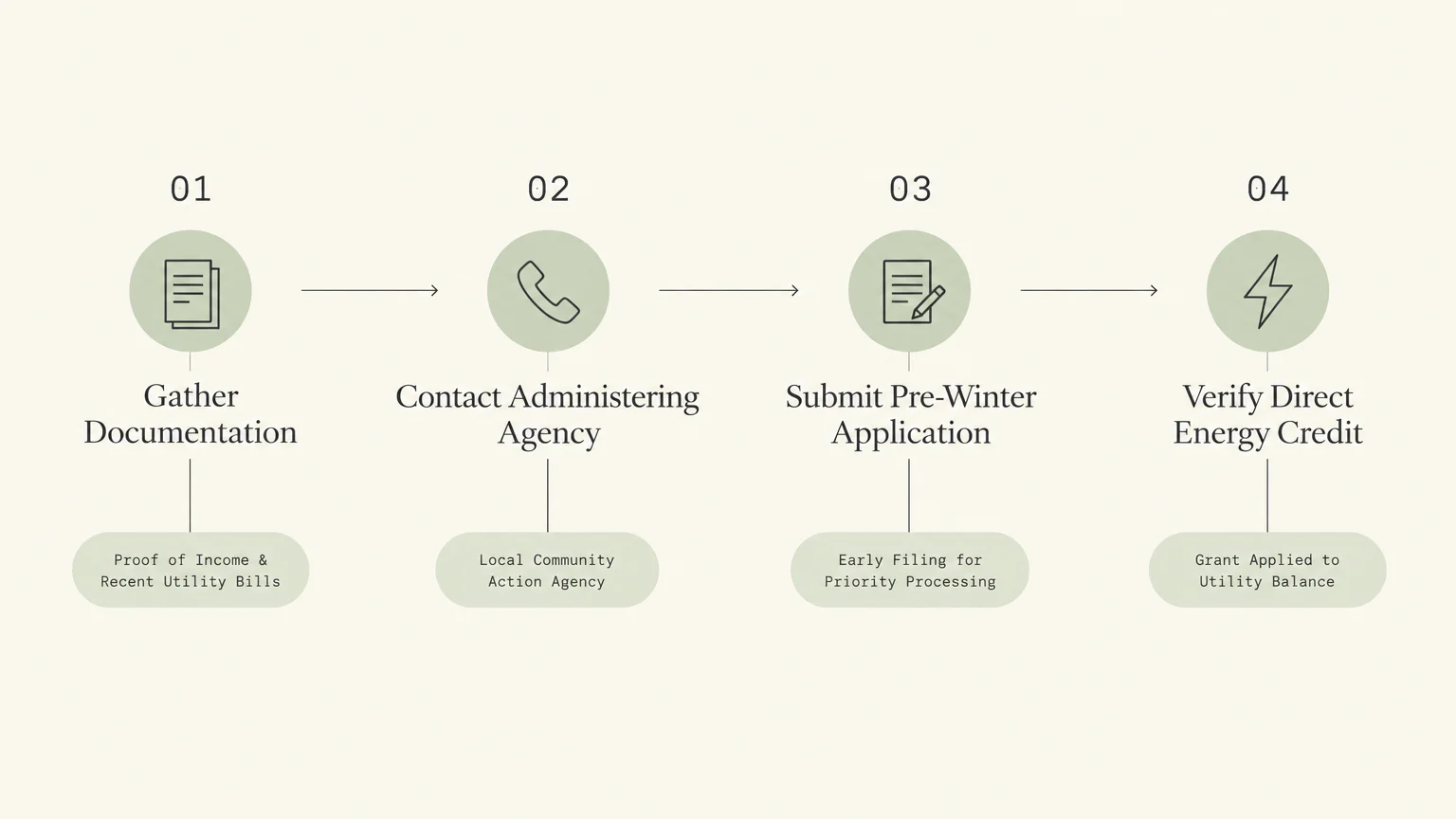
Applying for heating assistance requires clear organization to ensure speedy processing. Gather all required paperwork before beginning the application to prevent delays.
- Collect Proof of Household Income: Locate your most recent Social Security benefit award letter, pension statements, and any investment distribution records. Gather pay stubs if any household member earns wages.
- Assemble Utility and Fuel Documentation: Copy your most recent electric and gas bills, showing your full account numbers and current balances. Gather fuel receipts if you use heating oil, propane, or wood pellets.
- Verify Identity and Household Residency: Provide copies of your driver’s license, state identification card, or birth certificate. Have Social Security numbers ready for every resident in your home.
- Contact Your Intake Agency Early: Submit your application as soon as the priority window opens for seniors. Funding pools are limited and distributed on a first-come, first-served basis.
- Notify Your Utility Provider: Inform your utility company that you have applied for energy assistance. Most utilities place a temporary hold on collection actions while your grant application undergoes review.
You can dial 211 or contact the National Energy Assistance Referral hotline at 1-866-674-6327 for personalized intake support. Coordinators can direct you to local intake offices that offer in-person application assistance.
Protecting Yourself from Winter Heating Scams
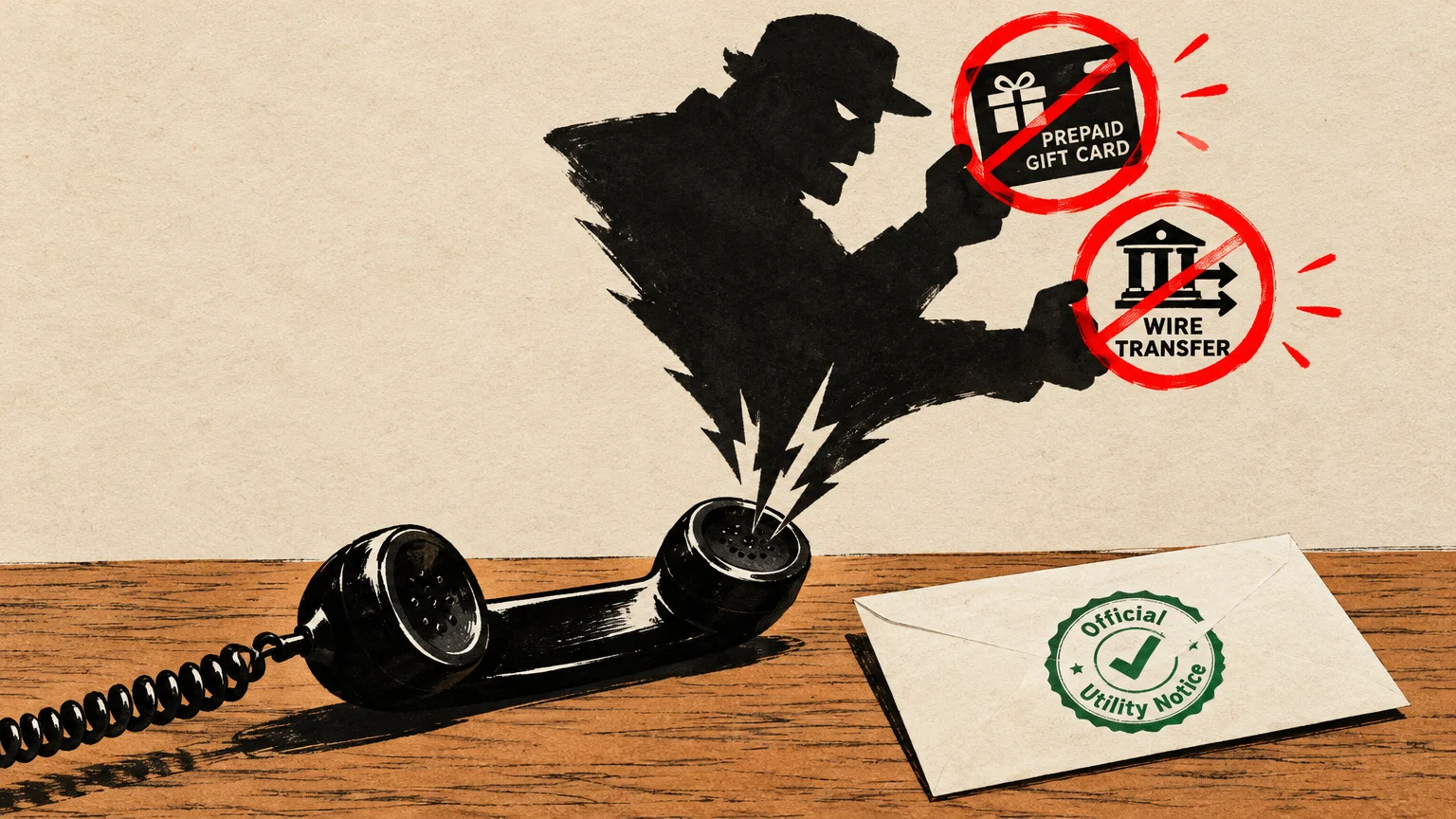
Con artists frequently target seniors during cold winter months using deceptive utility shutoff threats. Scammers exploit fears of losing heat to demand immediate payments over the phone.
A caller might claim your power or natural gas will be disconnected within an hour unless you pay immediately. They often instruct you to purchase prepaid debit cards, gift cards, or wire funds.
Legitimate utility companies never demand payment using gift cards, cryptocurrency, or wire transfers. Regulated utilities must issue written disconnection notices by mail weeks before terminating residential service.
According to the Consumer Financial Protection Bureau (CFPB), consumer reporting tools help protect individuals from deceptive utility billing and financial schemes. If someone threatens you with an instant cutoff, hang up the phone immediately.
Locate the customer service phone number printed on your actual monthly paper statement. Call the company directly to verify your account balance and check whether any past-due flags exist.
Be cautious of unsolicited door-to-door sales representatives offering free furnace inspections or utility rebates. Never share your utility account number or Social Security number with unverified individuals visiting your doorstep.
Frequently Asked Questions
Can I receive heating assistance if my heating costs are included in my rent?
Yes, you can qualify for LIHEAP and weatherization assistance even if heat is included in your monthly rent. Your grant amount will reflect your rental arrangement and local housing allowances.
Will getting heating bill help reduce my Social Security benefits?
No, energy assistance grants do not reduce your Social Security retirement or disability payments. Federal law exempts LIHEAP and energy grants from counting as taxable income or countable assets.
What should I do if I receive a 48-hour utility shutoff notice?
Contact your utility company immediately and notify them that a senior lives in the home. Next, call 211 to request emergency crisis intervention funding through your local Community Action Agency.
Can I apply for more than one heating assistance program at the same time?
Yes, you can combine multiple heating programs to resolve seasonal financial strain. For example, you can receive regular LIHEAP benefits, utilize WAP weatherization upgrades, and enroll in a utility budget billing plan simultaneously.
What if my household income slightly exceeds the LIHEAP limit?
Look into charitable utility hardship funds, local Area Agency on Aging grants, or church-based relief. Many local fuel funds carry higher income thresholds than strict federal programs.
For additional senior resources, visit
Administration for Community Living (ACL), Eldercare Locator, AARP, Alzheimer’s Association and American Heart Association.
Disclaimer: The information in this article is for educational purposes only and is not intended to be a substitute for professional financial, legal, or medical advice. Always consult with a qualified expert for advice tailored to your personal situation.