

Restoring your hearing should never force you to drain your retirement savings or compromise your monthly household budget. While a prescription pair can easily cost between $2,500 and $7,000 out of pocket, multiple charitable organizations and government initiatives provide free hearing aid assistance programs to eligible older adults. High upfront expenses prevent nearly 80 percent of people with hearing loss from getting the help they need. Fortunately, verified national foundations, veteran benefits, and state-backed resources exist specifically to bridge this financial gap. You can access quality prescription devices, custom fittings, and professional ongoing care without breaking the bank once you know where to look.
The True Cost of Hearing Loss for Seniors
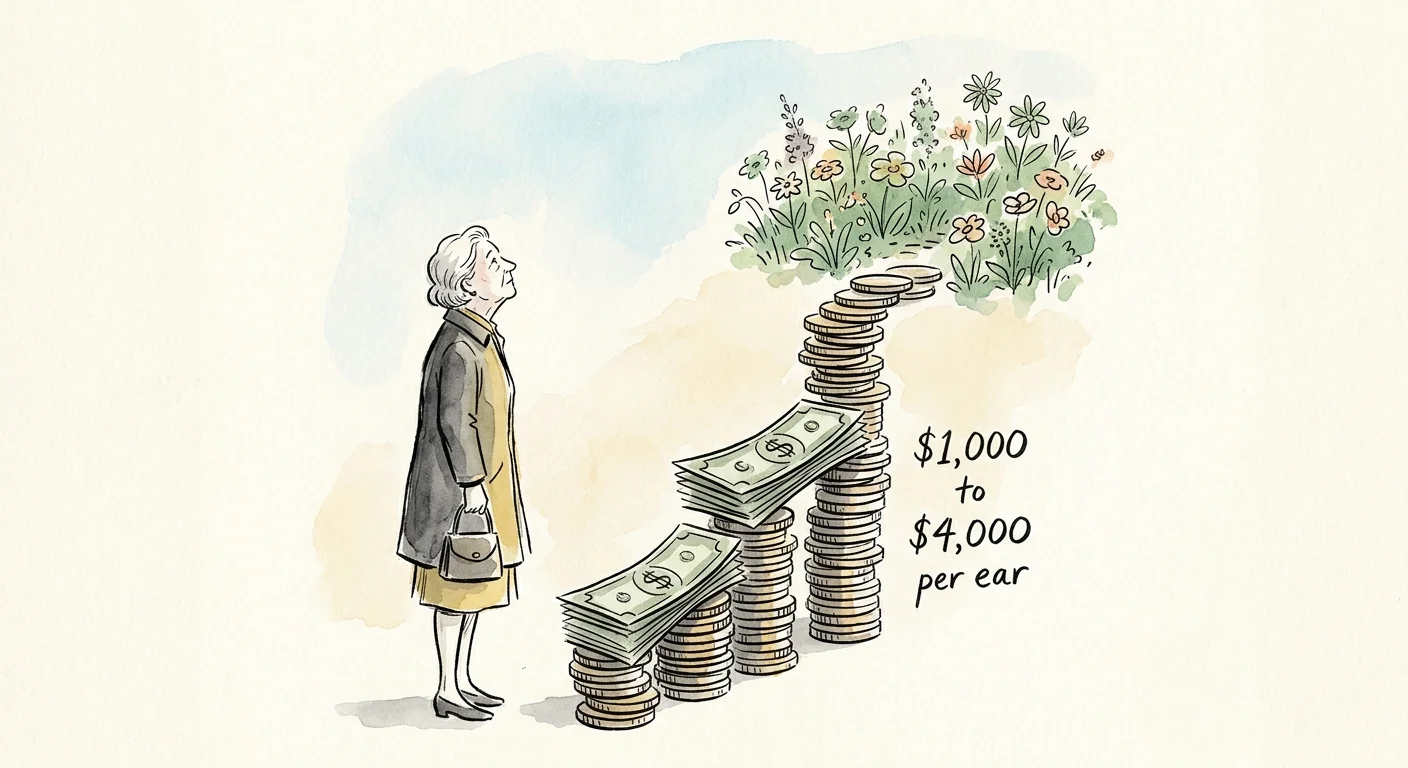
Hearing loss affects more than 48 million Americans, and its prevalence increases sharply as you grow older. Despite its widespread impact, fewer than one in five individuals who could benefit from a hearing device actually wear one. The primary obstacle is not a lack of interest; it is the steep out-of-pocket price tag. Prescription hearing aids generally retail for $1,000 to $4,000 per ear, creating a major financial hurdle for seniors living on fixed incomes.
According to National Institute on Aging (NIA), untreated hearing loss is directly linked to serious physical and cognitive health conditions. When you struggle to hear daily conversations, your brain works overtime to decode sounds, leading to cognitive fatigue. Over time, unaddressed auditory decline increases the risk of social isolation, depression, balance disorders, and accidental falls.
Addressing hearing loss early protects your independence and strengthens your relationships with friends and family. Hearing aids are essential medical instruments that keep you engaged with the world around you. When personal savings cannot cover the bill, seeking out hearing aid financial assistance becomes an essential step toward preserving your quality of life.
Understanding Medicare, Medicaid, and Insurance Limits
Many older adults assume their standard health insurance will pay for hearing devices when hearing loss occurs. Navigating the rules surrounding government coverage requires understanding where traditional benefits stop and where supplemental programs begin.
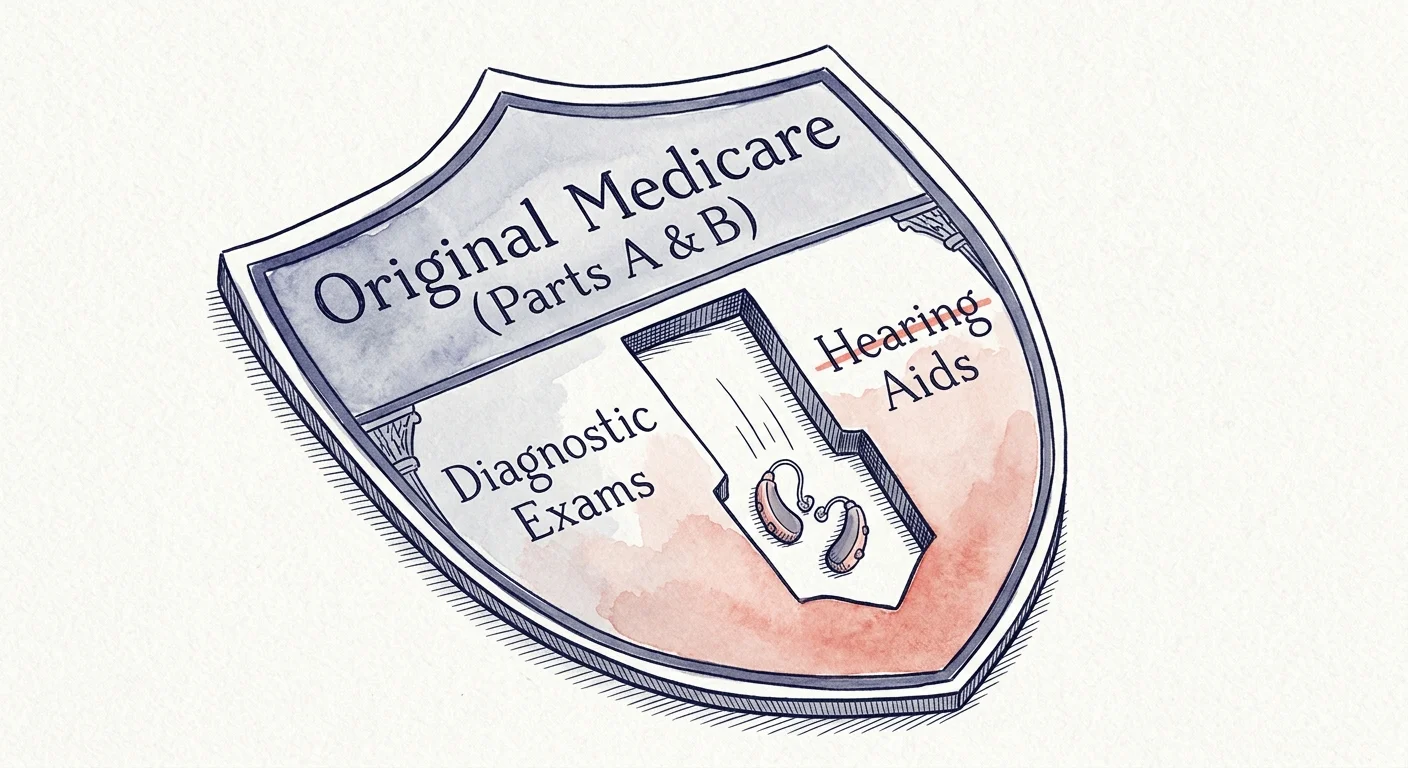
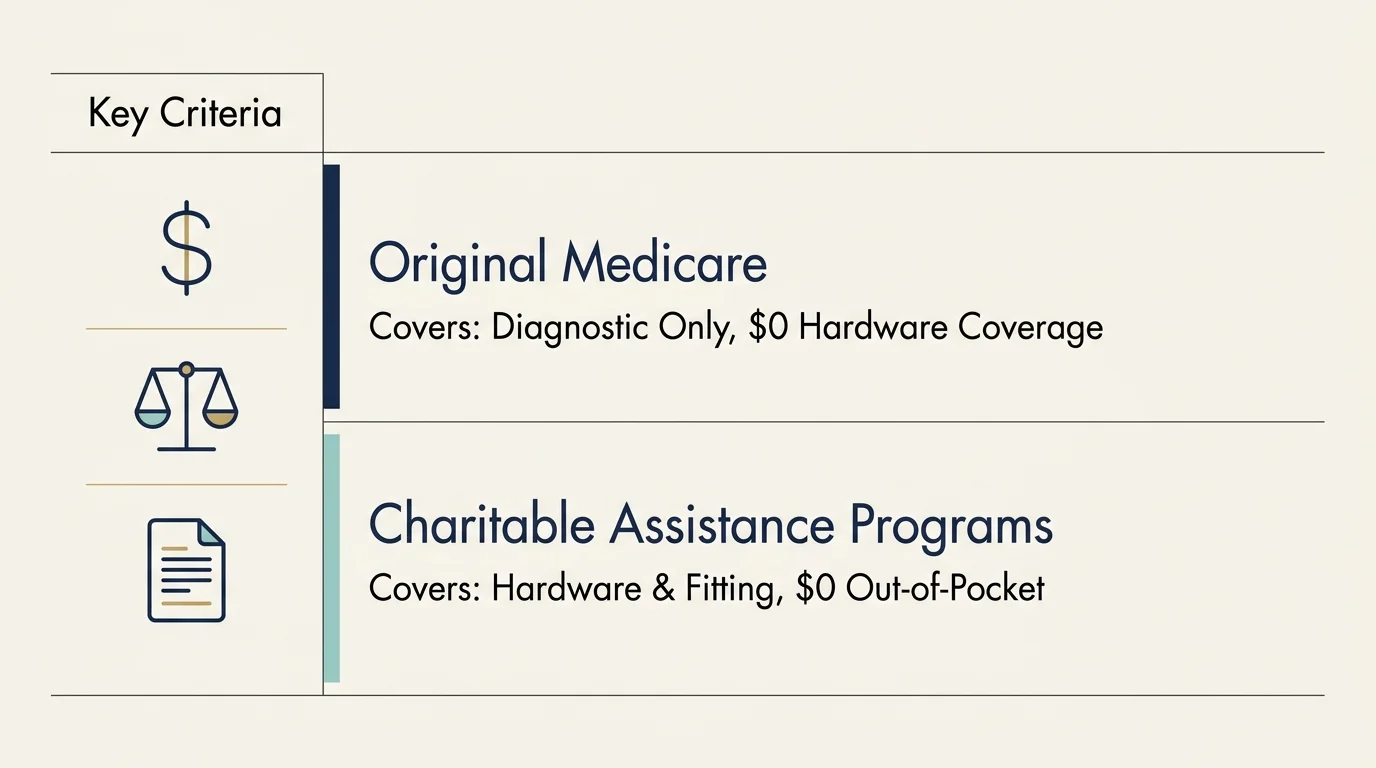
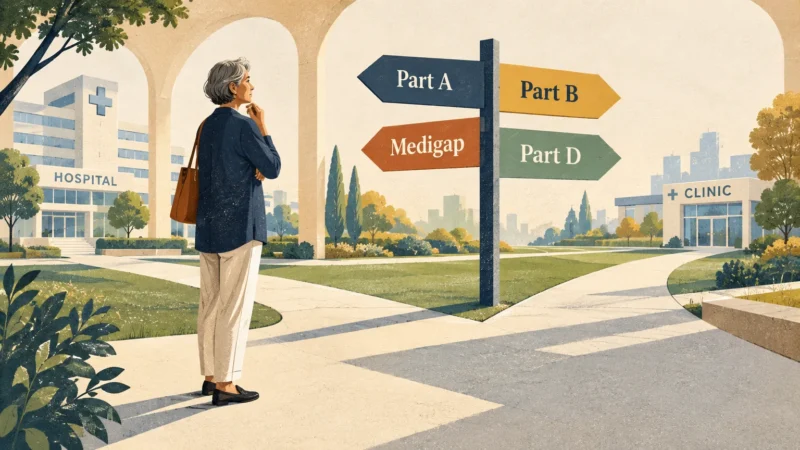
As noted by Medicare.gov, Original Medicare (Parts A and B) does not cover routine hearing exams, hearing aids, or device fittings. Original Medicare pays only for diagnostic hearing and balance examinations when your physician orders them to evaluate an underlying medical condition. You must pay 100 percent of the cost for routine hearing evaluations and the hardware itself under traditional Medicare.
Private insurance options and state programs offer varied levels of support:
- Medicare Advantage (Part C): Many private Medicare Advantage plans include supplemental hearing packages. These plans often provide fixed annual allowances ranging from $500 to $2,000; alternatively, they partner with third-party discount networks to offer reduced copayments on selected device tiers.
- State Medicaid Programs: Adult hearing aid coverage under Medicaid depends entirely on your home state. Roughly 30 states provide some degree of coverage for adult hearing evaluations and hardware, while others restrict hearing benefits exclusively to children.
- Federal Employee and Retiree Health Plans: Certain federal and state government retiree policies include specific hearing aid stipends that refresh every three to five years.
Because traditional safety nets often leave substantial coverage gaps, non-profit organizations and specialized public initiatives step forward to provide low cost hearing aids for seniors in need.

Top 7 Free Hearing Aid Assistance Programs
If you lack insurance coverage and cannot afford commercial retail prices, several dedicated organizations deliver free or significantly subsidized devices. Below are the seven most reliable hearing aid programs for low income seniors and qualifying adults.
1. U.S. Department of Veterans Affairs (VA) Hearing Care
The VA provides one of the most comprehensive hearing healthcare benefits in the nation. If you are a military veteran enrolled in VA healthcare, you may qualify for premium prescription hearing aids, diagnostic evaluations, custom ear molds, maintenance services, and replacement batteries at zero out-of-pocket expense.
To access this benefit, you do not necessarily need a service-connected disability rating for hearing loss. Veterans with general VA healthcare eligibility who experience hearing impairment that interferes with daily living can receive high-end digital devices. You begin by scheduling an audiology consultation at your regional VA medical center or outpatient clinic.
2. Miracle-Ear Foundation (Gift of Sound Program)
The Miracle-Ear Foundation operates the Gift of Sound program to help individuals who have exhausted all other funding sources. This initiative provides brand-new Miracle-Ear digital hearing aids, personalized custom fittings, and lifetime follow-up care through local franchise clinics.
Applicants must show a household income at or below 200 percent of the Federal Poverty Guidelines and have no coverage options through Medicaid, the VA, or private insurance. The foundation charges a non-refundable $200 processing fee per adult applicant to help offset administrative and logistical expenses.
3. Starkey Cares (Hear Now Program)
Starkey Cares administers the Hear Now program as a dedicated resource of last resort for low-income individuals facing severe financial hardship. The program collaborates with local hearing care professionals across the country who volunteer their time to evaluate applicants and fit Starkey hearing devices.
Approved applicants receive customized hearing aids tailored to their unique prescription. The program requires a $300 application fee per approved hearing aid request, which covers the manufacturing, shipping, and administrative costs of the equipment.
4. The Hearing Aid Project (Hearing Charities of America & Sertoma)
The Hearing Aid Project, managed by Hearing Charities of America alongside Sertoma clubs, collects donated hearing devices from across the United States. Skilled technicians inspect, clean, recondition, and calibrate these units to meet strict operational standards.
The program matches refurbished hearing aids with low-income seniors and adults who experience moderate-to-severe hearing loss. Qualified candidates must demonstrate financial need—typically with earnings below 200 percent of the poverty level—and submit an audiogram from a licensed professional showing that amplification will improve their functional communication.
5. Help America Hear (Foundation for Sight & Sound)
Help America Hear is a national program designed to supply brand-new, high-performance prescription hearing aids to individuals with limited financial means. Successful applicants receive two new hearing aids, custom-molded ear pieces, and one full year of routine follow-up care from a participating local provider.
According to Benefits.gov, checking your household earnings against national poverty guidelines helps clarify your eligibility for charitable aid. Help America Hear generally caps household income below $36,000 annually or sets tiered limits based on household size, ensuring that assistance goes directly to those experiencing genuine economic distress.
6. Lions Clubs International (Affordable Hearing Aid Project)
Lions Clubs International has long championed vision and hearing health across local communities. Many district chapters operate community Hearing Aid Banks, gathering donated hearing aids and partnering with local audiologists to test, refurbish, and distribute them to local seniors.
Because each Lions Club functions autonomously, income requirements and device availability vary by region. Some clubs provide hearing aids completely free of charge, while others ask for a modest co-pay ranging from $0 to $250 per device to cover testing and clinic fitting costs.
7. State Vocational Rehabilitation Agencies
If you are an older adult who is currently working, volunteering in a career capacity, or actively seeking employment, your state’s Vocational Rehabilitation (VR) agency can help. Federal and state laws empower VR agencies to remove physical barriers that prevent individuals from maintaining sustainable employment.
If untreated hearing loss threatens your ability to perform your job duties safely and effectively, your state agency can cover 100 percent of the cost for comprehensive audiological testing, high-end hearing aids, specialized telephone amplifiers, and workplace assistive technology.
Program Comparison: Eligibility and Fees
Evaluating your options side by side makes it easier to select the right path for your specific financial situation. The table below outlines key details for these leading assistance programs.
| Program Name | Target Eligibility | Application / Out-of-Pocket Fee | Device Type & Inclusions |
|---|---|---|---|
| VA Hearing Care | Enrolled U.S. military veterans | $0 | New premium digital aids, repairs, ear molds, and free replacement batteries |
| Miracle-Ear Foundation | Household income ≤ 200% Federal Poverty Level; no insurance | $200 non-refundable fee | New Miracle-Ear devices, custom fitting, and lifetime clinic aftercare |
| Starkey Cares (Hear Now) | Low-income individuals with no insurance or Medicaid aid | $300 processing fee | New Starkey digital hearing aids and local professional fitting |
| The Hearing Aid Project | Low-income individuals with moderate-to-severe hearing loss | $0 to nominal processing fee | Refurbished and calibrated prescription hearing devices |
| Help America Hear | Household income under $36,000 or qualifying guidelines | Processing fee varies by tier | Two brand-new digital hearing aids, custom molds, and 1 year of service |
| Lions Clubs International | Local community members demonstrating financial need | $0 to $250 depending on club | New or refurbished hearing aids through regional Hearing Aid Banks |
| State Vocational Rehabilitation | Employed seniors or active job seekers experiencing hearing loss | $0 for qualified participants | Full coverage for diagnostic testing, new hearing aids, and job-site tools |
How to Apply for Hearing Aid Financial Assistance
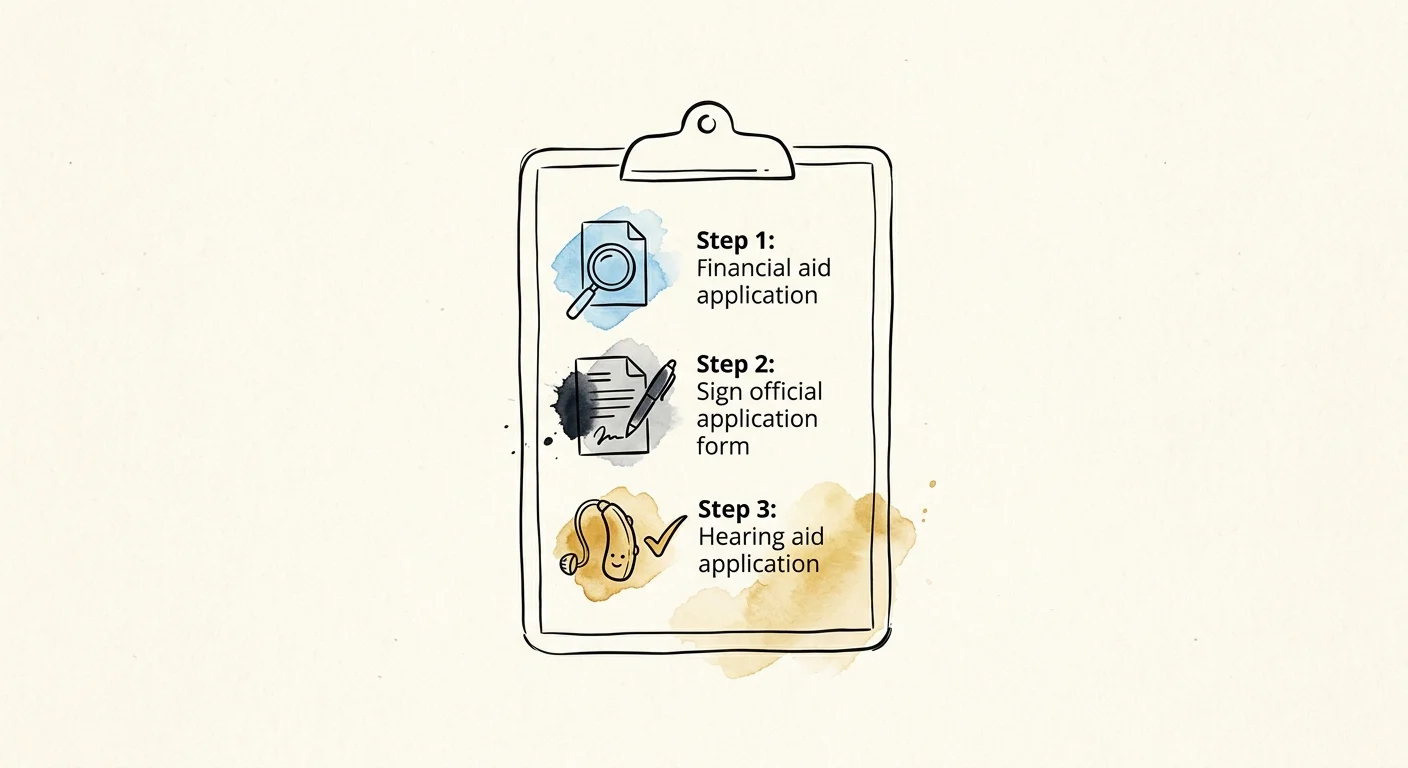
Securing hearing aid assistance requires systematic preparation. Charitable foundations and state agencies receive thousands of requests each month; presenting an organized, complete application package significantly speeds up your approval timeline.
- Obtain a Comprehensive Hearing Evaluation: Schedule a formal diagnostic hearing test with a licensed audiologist or hearing instrument specialist. Most charitable programs require an official audiogram completed within the past 6 to 12 months. Request a copy of your test results and a written prescription specifying the level of amplification you require.
- Gather Proof of Household Income: Collect copies of your most recent federal tax return (Form 1040), your Social Security annual benefit statement (Form SSA-1099), pension summaries, and recent bank statements. If you do not file taxes due to low earnings, obtain a verification letter of non-filing from the IRS.
- Document Insurance Denials: Foundations serving as a last resort require evidence that other programs will not pay for your hearing care. Keep copies of denial letters from Medicaid, Medicare Advantage, or commercial health insurance policies stating that hearing aids are not a covered benefit.
- Connect with Local Senior Advocates: If you need help completing forms or gathering paperwork, contact community advocates. You can locate your Area Agency on Aging through the Eldercare Locator to receive one-on-one application assistance from a trained benefits counselor.
- Submit Applications Carefully: Review your paperwork for missing signatures or omitted documents before mailing or uploading. Keep photocopies of every document for your personal records, and follow up with the sponsoring organization four to six weeks after submission.

Protecting Yourself from Hearing Aid Scams
When searching for where to get affordable hearing aids, you must remain vigilant against aggressive marketing schemes targeting older adults. Unscrupulous companies frequently prey on seniors seeking budget-friendly solutions by offering deceptive products or misleading financing terms.
Watch for these common red flags during your search:
- Misleading Sound Amplifiers: Low-cost Personal Sound Amplification Products (PSAPs) are often advertised on television as revolutionary hearing aids for under $50. PSAPs simply increase volume across all frequencies equally; they do not separate speech from background noise and can damage your remaining hearing if used improperly.
- High-Pressure “Free Screening” Sales Events: Be cautious of direct mail invitations promising free restaurant dinners or free hearing screenings at hotel conference rooms. These events often utilize high-pressure sales tactics to push overpriced retail financing packages on attendees.
- Unrealistic Miracle Claims: Avoid any seller claiming their device can cure tinnitus, completely reverse nerve damage, or restore hearing to childhood levels instantly.
- Missing Trial Periods and Warranties: Reputable manufacturers and assistance foundations always provide written trial periods, return policies, and equipment warranties. Avoid vendors who demand non-refundable cash deposits upfront.
As advised by the Consumer Financial Protection Bureau (CFPB), always review financing contracts thoroughly before signing, and verify the physical credentials of medical equipment suppliers to prevent identity theft and predatory lending.

Over-the-Counter Options and Community Resources
If your household income slightly exceeds the threshold for charitable assistance programs, you still have viable pathways to secure affordable hearing support. Regulatory updates and community-level initiatives provide effective alternatives to high-cost clinic models.
In 2022, the U.S. Food and Drug Administration established an official category for Over-the-Counter (OTC) hearing aids. These medical-grade devices are designed specifically for adults aged 18 and older who experience perceived mild-to-moderate hearing difficulty. OTC hearing aids do not require a prescription, medical exam, or professional audiology fitting, which significantly reduces overhead expenses.
A quality pair of OTC hearing aids typically costs between $500 and $1,600—a substantial savings compared to traditional prescription systems. Many modern OTC models feature smartphone apps that allow you to conduct self-guided hearing assessments and fine-tune frequency responses from your living room.
In addition to OTC technology, consider exploring these local resources:
- University Audiology Clinics: Colleges and universities with graduate speech and hearing departments frequently offer public clinics. Supervised graduate student clinicians perform hearing tests and dispense discounted hearing aids on a sliding-fee scale based on your income.
- Community Health Centers: Federally Qualified Health Centers (FQHCs) provide preventive healthcare to underserved communities. While not all locations dispense hardware, many partner with local civic groups to coordinate hearing healthcare referrals.
- Civic Club Grants: Local fraternal organizations, such as the Elks, Rotary, and Kiwanis clubs, frequently manage discretionary community funds dedicated to helping local seniors purchase essential medical equipment.
Frequently Asked Questions
Can I get free hearing aids if my only income is Social Security?
Yes. If your primary or sole source of income is Social Security, your earnings likely fall within the income guidelines established by major non-profit foundations. Programs such as the Miracle-Ear Foundation, Starkey Cares, and Help America Hear specifically evaluate your total household earnings against the Federal Poverty Guidelines, making low-income retirees strong candidates for assistance.
Does Medicare Advantage cover 100 percent of hearing aid costs?
Most Medicare Advantage plans do not cover the complete cost of premium hearing aids. Instead, they usually offer a supplemental allowance—often between $500 and $2,000 toward the total purchase price—or require fixed copayments for specific device tiers through contracted discount networks. You should contact your plan administrator directly to confirm exact out-of-pocket copays and network restrictions.
What should I do if my assistance application is denied?
If an organization denies your application, request a written explanation for the decision. Common reasons include missing financial documents, an outdated audiogram, or household income that slightly exceeds program limits. You can resolve paperwork issues and reapply; alternatively, you can submit an application to a different charitable program, consult your local Lions Club, or explore affordable OTC hearing aids.
How long does the application process take for charitable hearing programs?
The processing timeframe typically ranges from six to twelve weeks from the date the organization receives your complete application file. Once approved, you will be scheduled for a fitting appointment with a participating local hearing care provider, where custom ear impressions are taken or pre-programmed devices are fitted and adjusted.
Can I donate used hearing aids to help other seniors?
Yes. Organizations like The Hearing Aid Project, Lions Clubs International, and the Hearing Loss Association of America actively accept donations of gently used hearing aids. Their certified technicians clean, repair, and recalibrate these donated devices so they can be redistributed to low-income individuals who cannot afford new equipment.
For additional senior resources, visit
Medicare.gov,
National Institute of Mental Health (NIMH) and
National Institutes of Health (NIH).
Disclaimer: The information in this article is for educational purposes only and is not intended to be a substitute for professional financial, legal, or medical advice. Always consult with a qualified expert for advice tailored to your personal situation.







Leave a Reply