
Your Medicare Advantage plan changes every year, and discovering a dropped medication at the pharmacy counter can devastate your retirement budget. In 2027, federal regulations draw strict coverage boundaries.
Understanding which drugs your insurer refuses to cover protects both your health and your wallet. You can prevent painful financial surprises by reviewing mandatory coverage restrictions before your next doctor visit.
Federal statute explicitly bars Medicare Advantage plans from covering eight specific drug categories under basic benefits. Learning these exclusions empowers you to find affordable alternatives right away.
In this guide9 sections
- Understanding Medicare Part D Exclusions and Advantage Plans
- 8 Medication Categories Excluded in 2027
- Medicare Advantage Drug Exclusions at a Glance
- The 2027 GLP-1 Bridge Program and Weight Loss Rules
- The 2027 Out-of-Pocket Cap: Why Excluded Drugs Cost More
- Protected Drug Classes: What Plans Must Cover
- Actionable Steps to Lower Your Out-of-Pocket Costs
- Key Medicare Enrollment Dates and Formulary Rights
- Frequently Asked Questions
Understanding Medicare Part D Exclusions and Advantage Plans
Medicare Advantage plans package your hospital, medical, and prescription drug benefits into one managed policy. However, private insurance carriers do not possess complete freedom when building their drug lists.
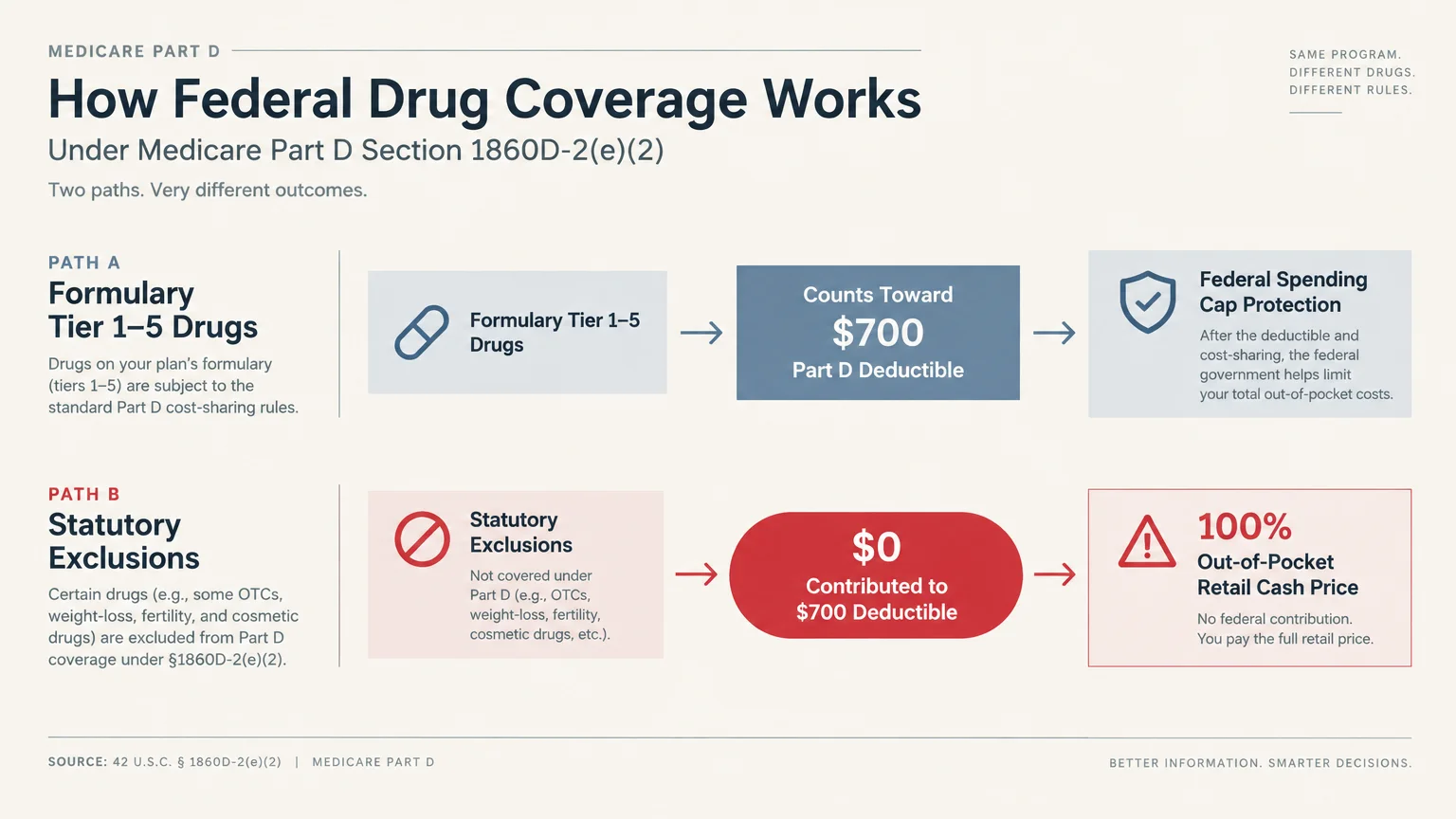
Every Medicare Advantage plan offering prescription coverage must adhere to federal Medicare Part D regulations. Congress established these baseline rules under Section 1860D-2(e)(2) of the Social Security Act.
This federal statute defines exactly which drug classes qualify for Medicare funding. It also identifies specific categories that insurers cannot pay for using standard Part D prescription funds.
Many seniors assume that paying higher private plan premiums unlocks universal drug coverage. Unfortunately, statutory exclusions apply to every insurer across the United States regardless of plan type.
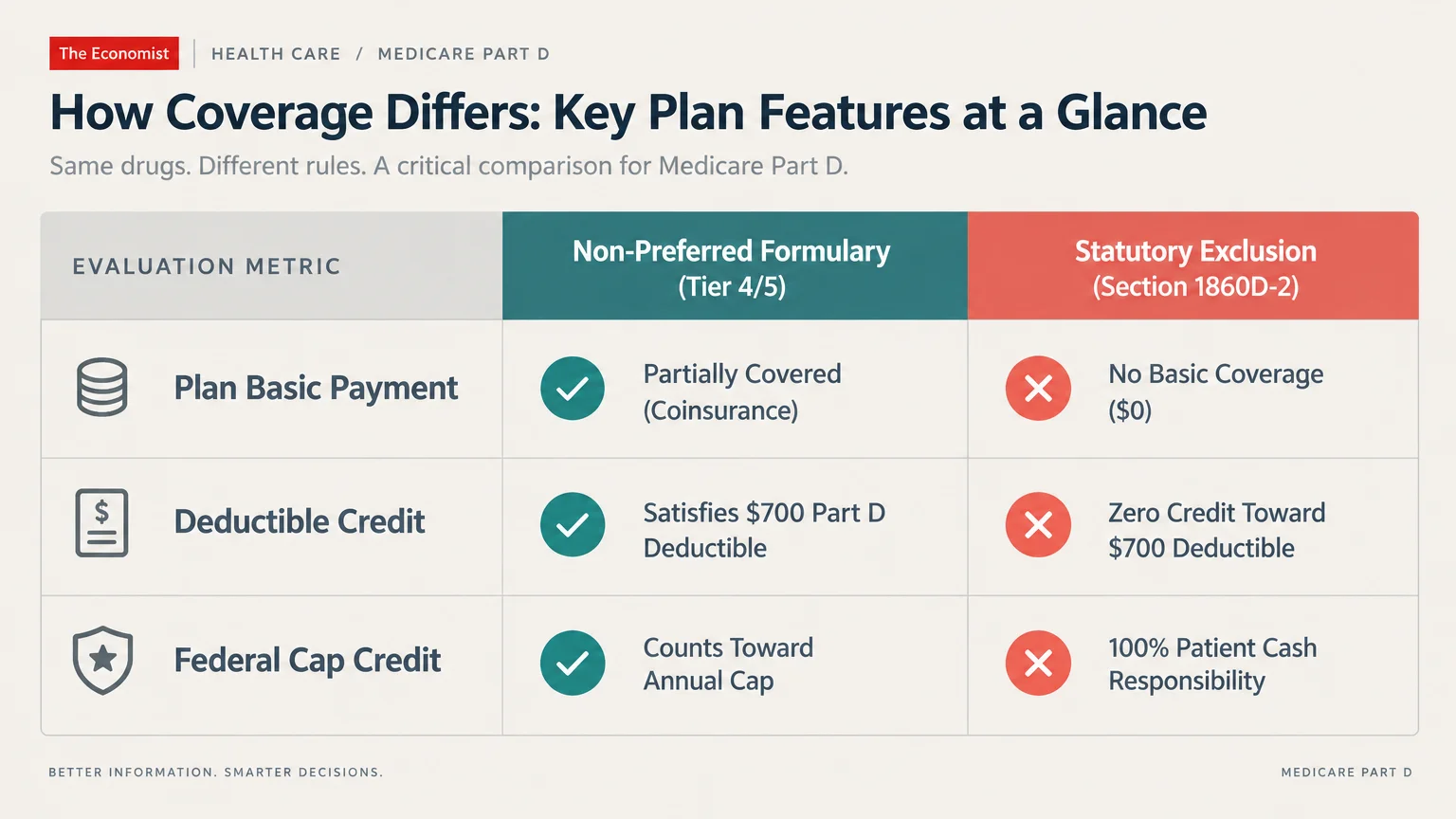
In 2027, the standard Medicare Part D deductible increases to $700. When your physician prescribes an excluded medication, your plan contributes zero dollars toward satisfying this upfront deductible.
Furthermore, money you spend on excluded medications never counts toward federal spending caps. You must shoulder the full retail cash price unless your plan provides an optional supplemental benefit.
Distinguishing between non-preferred formulary drugs and statutory exclusions prevents unexpected bills. While non-preferred drugs remain partially covered, excluded drugs receive no basic coverage whatsoever.
8 Medication Categories Excluded in 2027
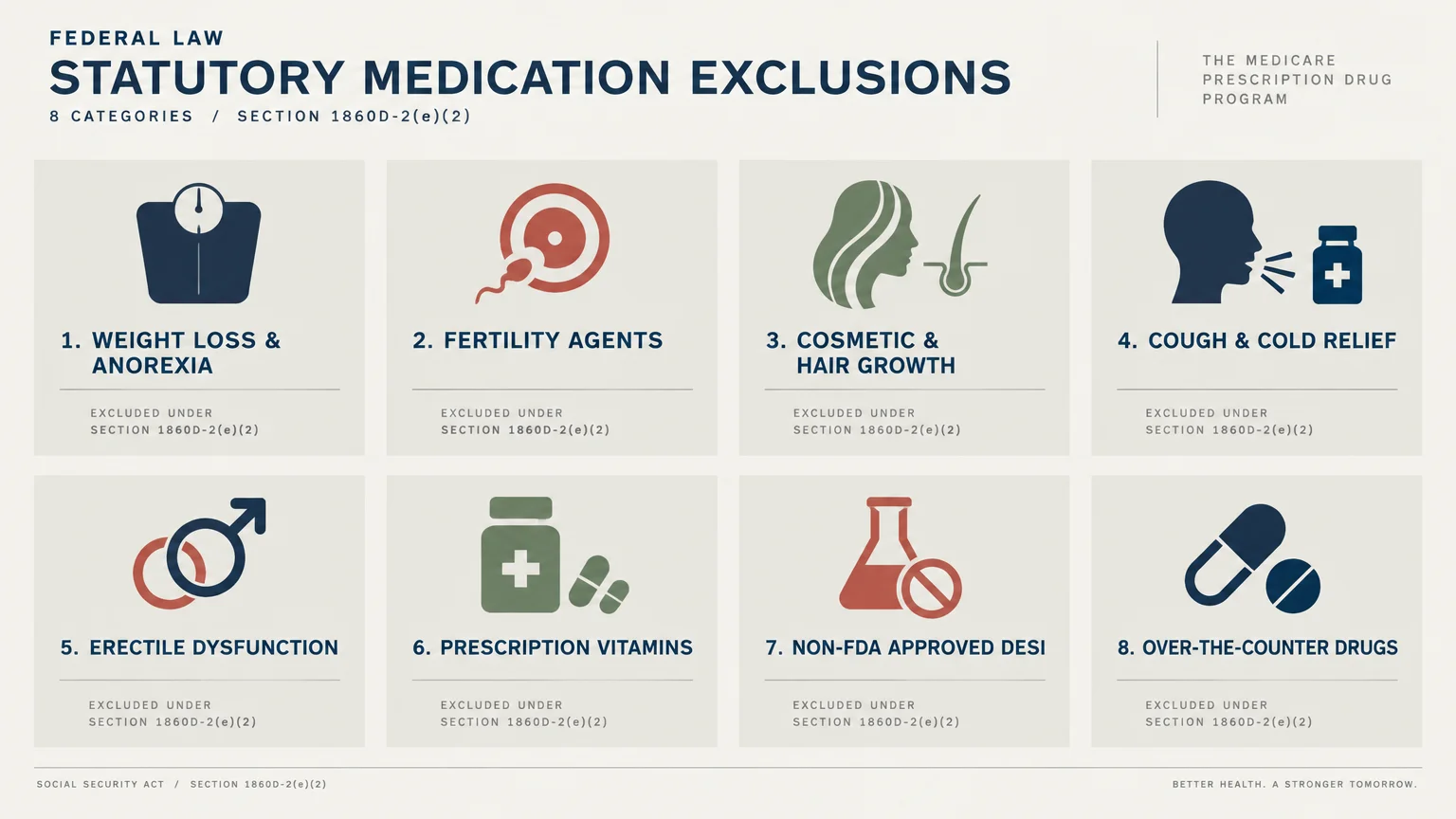
Federal law categorizes exclusions based on therapeutic purpose rather than brand names. Understanding these eight distinct categories helps you identify potential coverage gaps before visiting the pharmacy.
1. Weight Loss and Weight Gain Medications
Federal law prohibits Medicare Advantage plans from covering drugs prescribed solely for weight loss, anorexia, or weight gain. Popular therapies like phentermine, Contrave, and Qsymia remain excluded under standard Part D rules.
This ban also applies to modern GLP-1 medications when doctors prescribe them exclusively for aesthetic weight management. Insurers immediately reject claims lacking an approved primary medical diagnosis code.
Your plan can only cover these advanced injectable therapies if you have an underlying medical condition. Approved indications include type 2 diabetes, severe obstructive sleep apnea, or established cardiovascular disease.
2. Cosmetic Treatments and Hair Growth Agents
Medicare Advantage formularies strictly exclude products designed to improve physical appearance or stimulate hair growth. You must pay full retail price for topical minoxidil or finasteride prescribed for hair loss.
This exclusion also bars coverage for anti-aging skin treatments, including prescription tretinoin creams prescribed for wrinkles. Medicare considers these products aesthetic lifestyle choices rather than medical necessities.
However, your plan does cover dermatological treatments when prescribed for medically diagnosed conditions. For instance, retinoids prescribed for cystic acne, severe rosacea, or psoriasis receive full formulary consideration.
3. Sexual Dysfunction and Erectile Dysfunction Drugs
Federal statute prohibits Part D coverage for medications used to treat sexual or erectile dysfunction. Popular brand-name treatments like Viagra, Cialis, and Levitra receive no coverage for sexual performance therapy.
This coverage restriction applies to both brand-name drugs and their generic chemical counterparts. You cannot use standard Medicare prescription benefits to pay for sildenafil or tadalafil when treating erectile challenges.
Coverage exceptions exist only when a doctor prescribes these medications for separate medical conditions. For example, your insurer covers generic sildenafil when prescribed to treat pulmonary arterial hypertension.
Similarly, daily low-dose tadalafil receives coverage when your urologist prescribes it to treat benign prostatic hyperplasia. Your medical chart must clearly demonstrate this non-sexual urinary tract diagnosis.
4. Symptomatic Cough and Cold Relief Medications
Insurers cannot cover prescription drugs formulated solely to relieve temporary cough and cold symptoms. This restriction removes common therapies like benzonatate capsules and prescription-strength guaifenesin syrups from standard formularies.
Federal guidelines classify acute cough and cold symptoms as self-limiting conditions that do not justify Part D funding. Consequently, older adults must pay cash at the pharmacy counter for these remedies.
Your doctor can often suggest affordable over-the-counter alternatives that provide comparable symptom relief. Inhaling steam, using saline nasal sprays, and staying hydrated offer proven relief without expensive prescriptions.
5. Prescription Vitamins and Mineral Supplements
Basic Medicare Advantage formularies exclude most prescription-strength vitamins and minerals from coverage. You must pay out-of-pocket for high-potency vitamin D, prescription folic acid, and therapeutic multivitamins.
Federal law carves out only three narrow exceptions to this broad nutritional exclusion. Medicare Advantage plans can cover prescription prenatal vitamins, therapeutic fluoride preparations, and prescription niacin used to treat severe hyperlipidemia.
If you take prescription vitamin D to treat bone density loss, prepare to pay cash. Fortunately, retail pharmacies sell high-potency supplements over the counter for significantly less than prescription versions.
6. Fertility and Reproductive Health Drugs
Medicare statute excludes all prescription compounds used to stimulate fertility or promote conception. This exclusion removes medications like clomiphene, chorionic gonadotropin, and follicle-stimulating hormones from Part D coverage.
While this restriction rarely impacts older retirees, it affects younger Americans enrolled in Medicare due to disabilities. No basic Medicare Advantage plan can reimburse fertility procedures or related pharmaceuticals.
Prescriptions written for non-fertility endocrine disorders may still qualify for standard coverage. Your medical provider must verify the primary clinical indication through detailed treatment notes and diagnosis codes.
7. Over-the-Counter Medications and Products
Non-prescription medications never qualify for standard Medicare Part D formulary coverage. Even if your physician writes an official prescription for aspirin or cetirizine, your primary drug benefit denies payment.
Federal regulations require a formal prescription drug classification before Part D funds can apply. Over-the-counter pain relievers, digestive aids, and eye drops fall completely outside these statutory boundaries.
Fortunately, many Medicare Advantage plans provide separate over-the-counter allowance cards as an extra benefit. You can spend these designated quarterly funds on qualifying retail health items at participating stores.
8. Non-FDA-Approved Drugs and Unlisted Off-Label Uses
Medicare Advantage plans cannot cover chemical compounds or therapies that lack formal Food and Drug Administration approval. Compounded medications containing experimental ingredients receive zero reimbursement from Part D plans.
Furthermore, insurers routinely reject off-label prescriptions if the usage lacks support in recognized medical compendia. Medicare relies on authoritative clinical compendia to establish whether an unapproved use is medically necessary.
If your doctor prescribes a medication for an unlisted condition, your plan will deny coverage. You must work with your physician to submit clinical trial evidence through a formal exception request.
Medicare Advantage Drug Exclusions at a Glance
Evaluating your prescriptions against federal guidelines clarifies your out-of-pocket liability. The following table outlines standard exclusions, common medications, and existing medical exceptions.
| Excluded Drug Category | Common Brand or Generic Examples | Statutory Coverage Rule | Covered Medical Exceptions |
|---|---|---|---|
| Weight Loss and Management | Phentermine, Contrave, Qsymia, Wegovy (weight only) | Excluded when prescribed solely for weight reduction or gain. | Type 2 diabetes, sleep apnea, cardiovascular disease risk. |
| Cosmetic and Hair Growth | Minoxidil topical, Finasteride (Propecia), Tretinoin (wrinkles) | Excluded when used to alter appearance or stimulate hair growth. | Severe cystic acne, psoriasis, rosacea, alopecia from medical therapy. |
| Erectile and Sexual Dysfunction | Sildenafil (Viagra), Tadalafil (Cialis), Vardenafil | Excluded when prescribed for sexual or erectile performance. | Pulmonary arterial hypertension (PAH), benign prostatic hyperplasia (BPH). |
| Cough and Cold Relief | Benzonatate, Promethazine with Codeine syrups | Excluded when prescribed solely for symptomatic cold relief. | Chronic pulmonary conditions requiring medical airway clearance. |
| Vitamins and Minerals | Prescription Vitamin D2/D3, B-Complex, Multivitamins | Excluded from standard Part D formularies by federal law. | Prenatal vitamins, prescription fluoride, niacin for high cholesterol. |
| Fertility Treatments | Clomiphene, Menotropins, Human Chorionic Gonadotropin (hCG) | Excluded when prescribed to stimulate ovulation or fertility. | Hormone imbalances unrelated to reproductive enhancement. |
| Over-the-Counter Products | Aspirin, Ibuprofen, Acetaminophen, Allergy antihistamines | Excluded from Part D formularies even with a doctor’s prescription. | Covered exclusively through separate, supplemental plan OTC allowances. |
| Non-FDA or Unlisted Off-Label | Unapproved compounded drugs, unlisted experimental usages | Excluded without formal FDA approval or compendia backing. | Uses supported by Medicare-approved clinical medical compendia. |

The 2027 GLP-1 Bridge Program and Weight Loss Rules
The explosive demand for weight management drugs has created substantial confusion regarding Medicare coverage. While statutory Part D rules still exclude weight loss medications, federal administrators launched a temporary workaround.
The Medicare GLP-1 Bridge Program operates from July 1, 2026, through December 31, 2027. According to the Centers for Medicare & Medicaid Services (CMS), this targeted initiative expands affordable access for high-risk beneficiaries.
Qualifying enrollees pay a flat $50 monthly copayment for specific approved weight-management medications. Participating options include Wegovy injections or oral tablets, Foundayo tablets, and Zepbound KwikPens.
You must pay close attention to packaging when filling Zepbound under this program. CMS only covers the multi-dose KwikPen; single-dose pens and individual glass vials remain entirely excluded from reimbursement.
To qualify, you must be at least 18 years old with a body mass index of 35 or higher. Alternatively, a body mass index of 27 to 34 qualifies you if you have documented weight-related cardiovascular health conditions.
However, this bridge program includes an important financial catch for your retirement budget. Your $50 monthly copayment does not count toward your Part D deductible or out-of-pocket maximum.
Simultaneously, maximum fair prices negotiated under the Inflation Reduction Act take effect on January 1, 2027. These negotiated price cuts apply to 15 major Part D medications, including Ozempic, Rybelsus, and Wegovy.
These negotiated rates reduce manufacturer list prices by 38% to 85% compared to 2024 levels. Nevertheless, CMS clarifies that these lower prices only apply when prescribed for approved medical conditions like diabetes.
The 2027 Out-of-Pocket Cap: Why Excluded Drugs Cost More
The Inflation Reduction Act established a crucial financial protection by capping total out-of-pocket prescription drug spending. In 2027, this federal cap adjusts to $2,400, up from $2,100 in 2026.
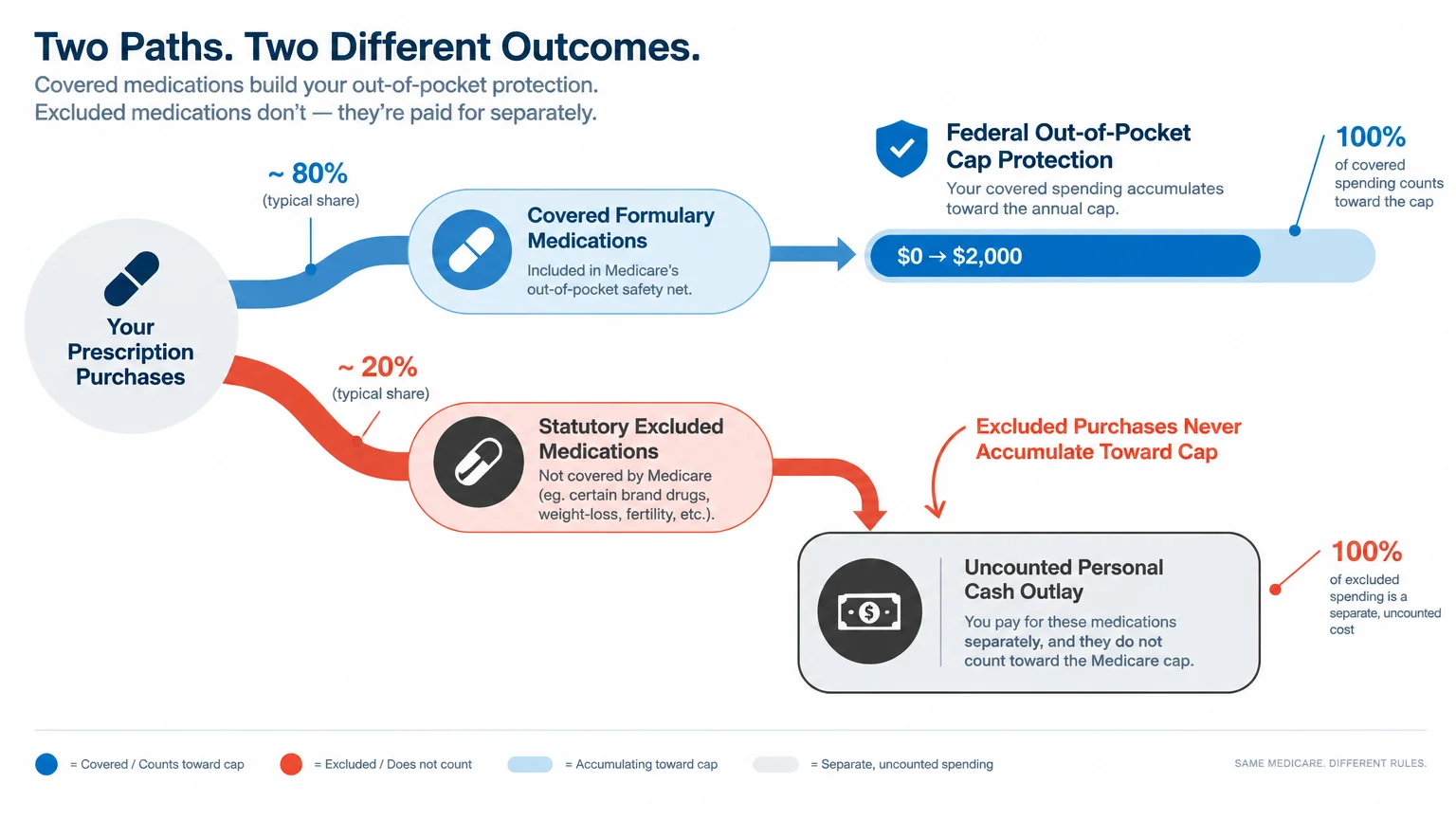
This cap provides tremendous relief for older Americans managing chronic medical conditions with expensive specialty therapies. Once your eligible spending hits $2,400, your Medicare Advantage plan covers 100% of remaining drug costs.
However, many retirees fall into an unexpected financial trap involving statutory drug exclusions. Any money you pay out-of-pocket for non-covered or excluded medications never counts toward this $2,400 threshold.
If you spend $500 every month on excluded medications, you will spend $6,000 across the entire year. Not a single penny of that $6,000 moves you closer to your annual catastrophic protection limit.
Research published by the American Heart Association emphasizes that unexpected medication costs undermine consistent treatment adherence. Seniors on fixed incomes often stop taking vital therapies when forced to absorb unexpected retail expenses.
Reviewing your plan formulary each autumn prevents these painful financial surprises. You must confirm that your ongoing medications count toward true out-of-pocket spending before your new coverage begins.
Protected Drug Classes: What Plans Must Cover
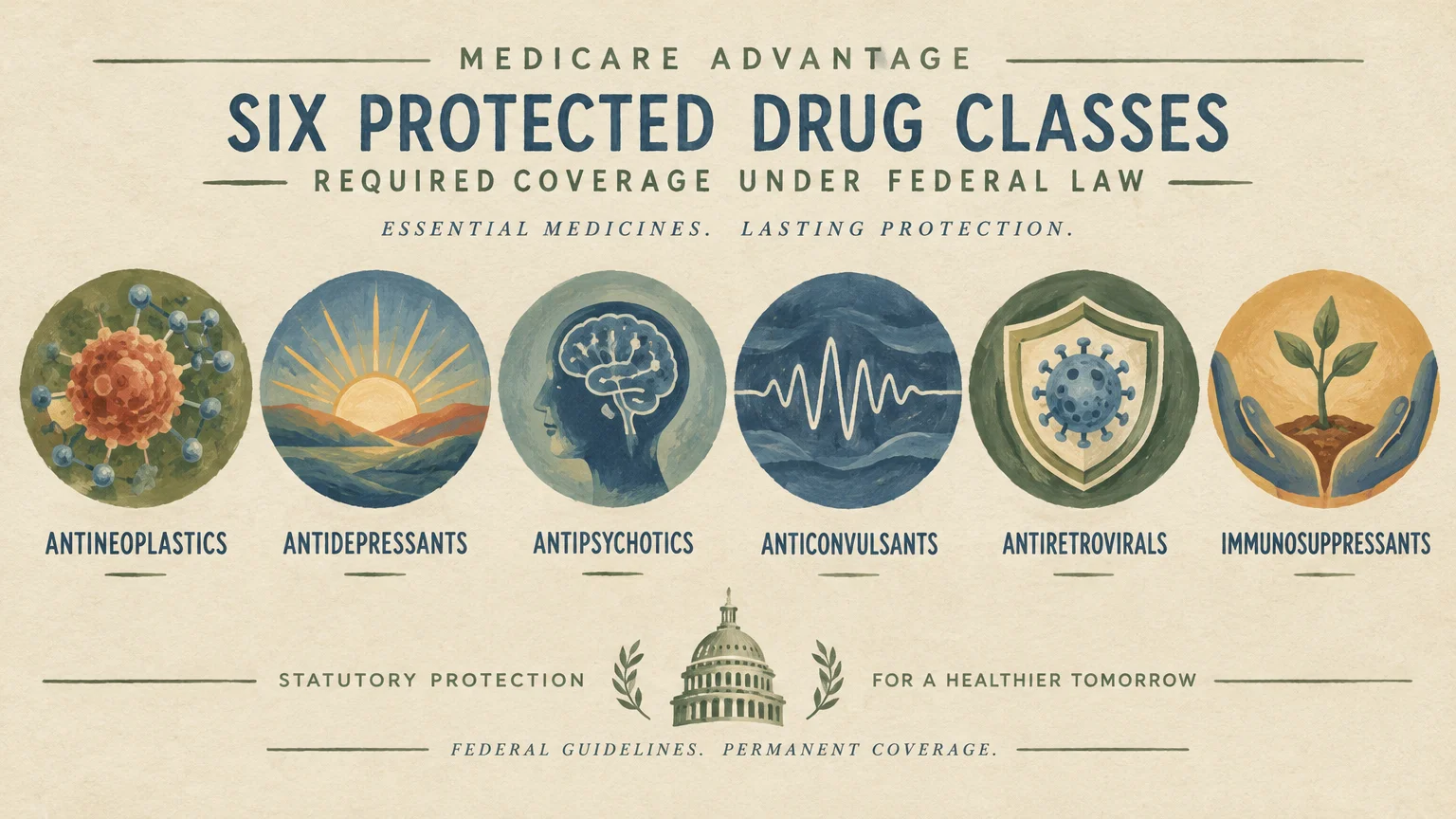
While federal law excludes eight specific drug categories, it also establishes mandatory protections for essential medications. Congress created the six protected drug classes to ensure vulnerable beneficiaries maintain uninterrupted access to critical therapies.
Medicare Advantage plans must cover all or substantially all approved medications within these six designated clinical categories. Insurers cannot arbitrarily remove these medications from their formularies to reduce operating costs.
The six federally protected drug classes consist of:
- Anticonvulsants: Essential medications prescribed to control seizure disorders and manage specific neuropathic pain conditions.
- Antidepressants: Vital compounds used to manage major depressive disorders, clinical anxiety, and chronic mood instability.
- Antineoplastics: Advanced cancer therapies designed to inhibit tumor growth and eliminate malignant cancer cells.
- Antipsychotics: Critical psychiatric medications prescribed to treat schizophrenia, severe bipolar disorder, and acute psychotic episodes.
- Antiretrovirals: Specialized viral-suppression therapies used to treat human immunodeficiency virus (HIV) and prevent disease progression.
- Immunosuppressants: Life-saving compounds prescribed to prevent organ rejection following kidney, heart, lung, or liver transplants.
Your insurer cannot force you to abandon an effective medication that falls within these protected classes. However, plans may still apply reasonable utilization management tools, including prior authorization or tier-placement rules.
If your plan challenges a protected prescription, your physician can submit documentation proving medical necessity. Medicare rules strongly favor maintaining clinical stability for patients taking these essential therapeutic agents.

Actionable Steps to Lower Your Out-of-Pocket Costs
Discovering that your Medicare Advantage plan refuses to cover a needed medication can provoke significant anxiety. Fortunately, you can take deliberate, practical steps to protect your health while containing your expenses.
- Verify your diagnostic coding: Consult your prescribing physician to ensure your medical records accurately reflect covered indications. Proper coding for pulmonary hypertension unlocks coverage for sildenafil that insurers otherwise deny.
- Request a formal formulary exception: Ask your doctor to submit an exception request if no covered alternatives exist. While plans cannot bypass statutory exclusions, they can grant exceptions for non-preferred formulary medications.
- Investigate manufacturer assistance programs: Major pharmaceutical manufacturers operate patient assistance foundations that provide free or discounted medications. Eligibility depends on household income, making these programs ideal for retirees on fixed Social Security incomes.
- Use retail pharmacy discount programs: Commercial discount cards like GoodRx or SingleCare often negotiate prices below standard retail cash rates. Never assume your Medicare insurance provides the lowest available price for off-patent generic medications.
- Maximize your plan OTC benefits: Review your Medicare Advantage plan documents for quarterly over-the-counter allowances. These funds allow you to purchase vitamins, pain relievers, and allergy medications without spending your personal savings.
- Explore therapeutic generic alternatives: Ask your pharmacist whether an older, fully covered generic medication can accomplish your clinical goals. Switching to an approved formulary alternative eliminates coverage battles entirely.
Consumer advocates at AARP consistently advise older adults to compare pharmacy cash pricing before filling prescriptions. Many major retail chains offer generic medication programs providing common maintenance supplies for minimal cash payments.
Key Medicare Enrollment Dates and Formulary Rights
You retain the right to modify your Medicare coverage if your current plan excludes essential prescriptions. Exercising your enrollment rights at the correct time ensures continuous coverage for your healthcare needs.
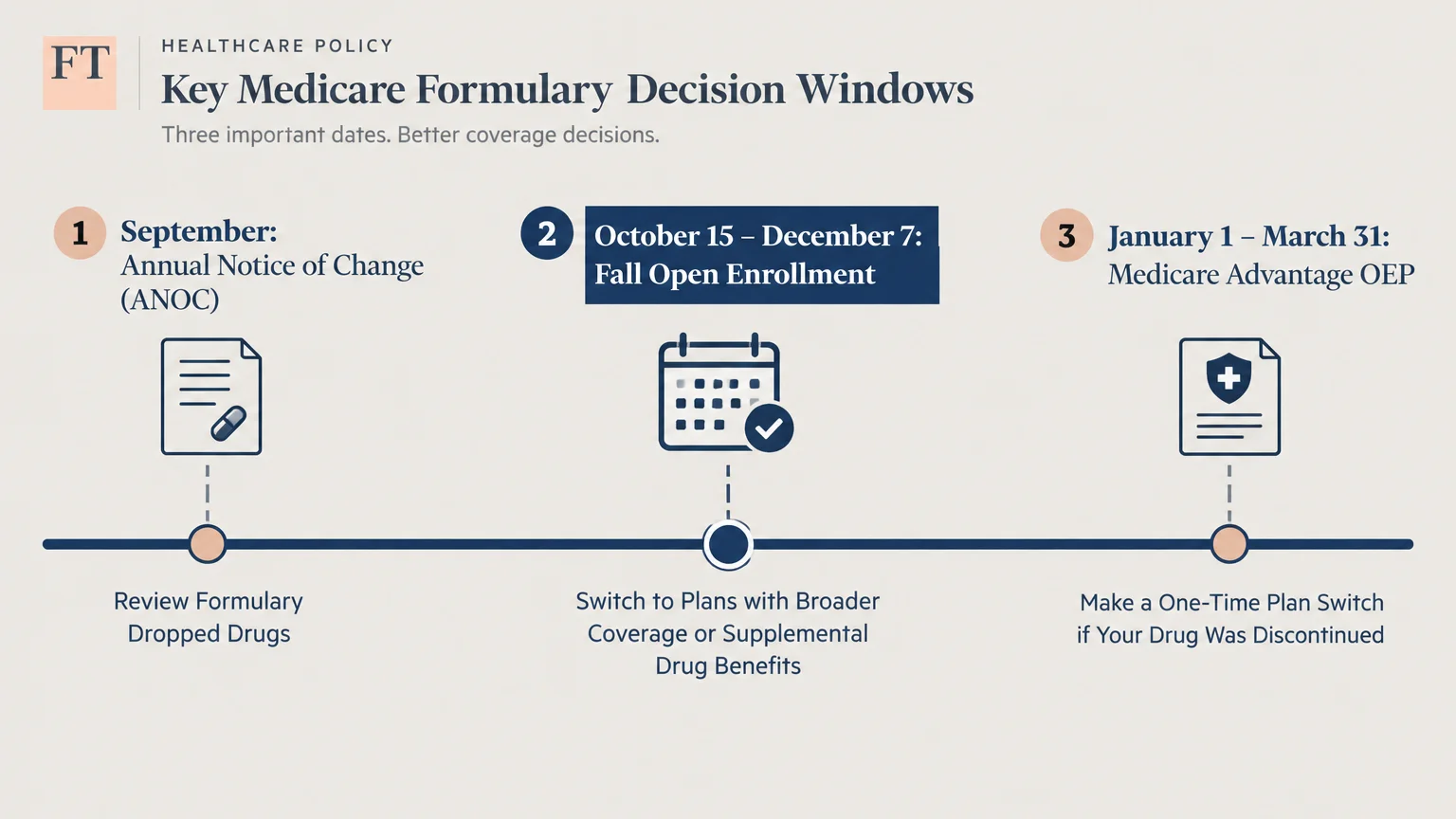
The annual Medicare Open Enrollment Period runs from October 15 through December 7 each year. Any plan selections you finalize during this autumn window take effect on January 1, 2027.
You can review updated formulary lists using the plan finder tools on Medicare.gov every autumn. Comparing plans allows you to verify that your vital medications remain covered for the upcoming calendar year.
If you discover unexpected coverage gaps in January, you have a second opportunity to make changes. The Medicare Advantage Open Enrollment Period runs annually from January 1 through March 31.
During this three-month window, you can switch to another Medicare Advantage plan that includes your prescriptions. Alternatively, you can drop Medicare Advantage, return to Original Medicare, and purchase a standalone Part D plan.
Federal law also enforces a strict 60-day formulary notice requirement on all Medicare Advantage insurers. If your insurer removes a covered medication mid-year, they must provide 60 days advance written notice or a temporary transition supply.
Frequently Asked Questions
Can my Medicare Advantage plan choose to cover an excluded drug?
Insurers cannot use federal Part D funds to cover statutory exclusions on their basic formulary. However, individual Medicare Advantage plans may offer non-covered medications as special supplemental benefits using private plan funds.
Why does Medicare exclude prescription vitamin D if my doctor ordered it?
Federal statute explicitly excludes most prescription vitamins and minerals from Part D funding regardless of medical necessity. Medicare only allows exceptions for prenatal vitamins, clinical fluoride preparations, and prescription-grade niacin used for cholesterol management.
What should I do if my Medicare Advantage plan drops my drug mid-year?
Your insurer must provide at least 60 days advance written notice before removing a formulary medication. Contact your physician immediately to request a transition refill or submit a formal formulary exception appeal.
Does the GLP-1 Bridge Program cover all weight loss injections?
No, the bridge program covers only specific products, including Wegovy, Foundayo tablets, and Zepbound KwikPens. Single-dose pens and vials of Zepbound are strictly excluded from the flat $50 monthly copay program.
Do payments for excluded medications count toward the $2,400 cap in 2027?
No, money spent on statutory Part D exclusions never applies toward your annual $2,400 out-of-pocket maximum. Only spending on approved formulary medications counts toward this federal financial protection limit.
For additional senior resources, visit
Centers for Medicare & Medicaid Services (CMS), Social Security Administration (SSA), Consumer Financial Protection Bureau (CFPB) and Administration for Community Living (ACL).
Disclaimer: The information in this article is for educational purposes only and is not intended to be a substitute for professional financial, legal, or medical advice. Always consult with a qualified expert for advice tailored to your personal situation.