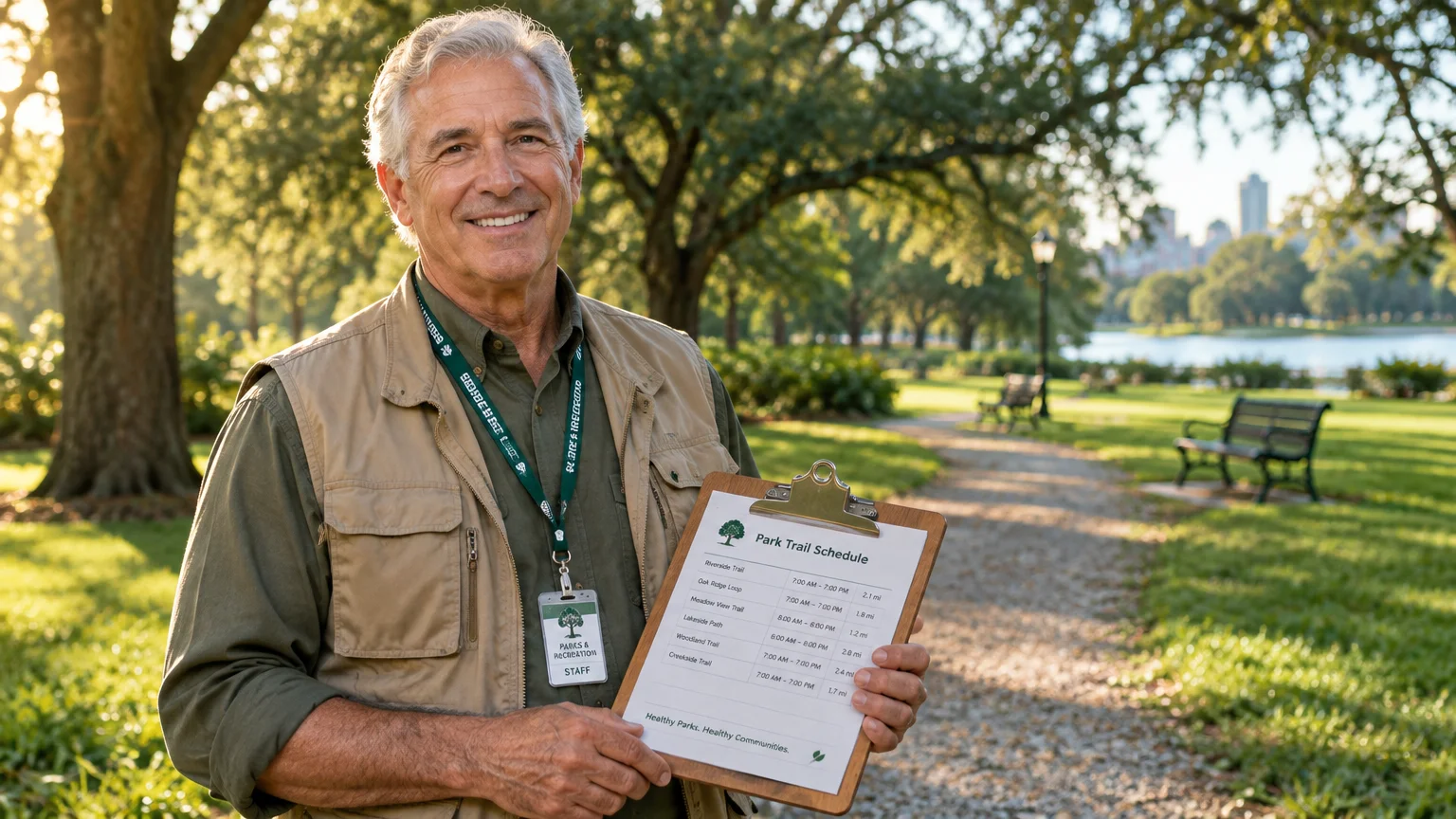
Working part-time for your local parks department offers steady supplemental income, social interaction, and structured physical activity. You can share your lifelong skills while keeping your schedule flexible.
Local recreation agencies across the country actively seek dependable older adults for rewarding seasonal and year-round roles. These positions provide meaningful community service without overwhelming physical demands.
Whether you love the outdoors or prefer working indoors at a neighborhood community center, municipal programs have diverse openings. Here are nine practical part-time jobs tailored for retirees.
In this guide7 sections
- Why City Parks and Recreation Departments Value Older Workers
- Top 9 Part-Time Parks and Recreation Jobs for Retirees
- Comparing Hours, Physical Demands, and Pay Rates
- How Park Employment Affects Your Social Security Benefits
- Step-by-Step Guide to Applying for Municipal Recreation Roles
- Common Pitfalls and How to Protect Your Health and Routine
- Frequently Asked Questions
Why City Parks and Recreation Departments Value Older Workers
More than 10,000 local park and recreation agencies operate across the United States. These departments rely heavily on seasonal and part-time staff to keep facilities running smoothly.
Municipal hiring managers frequently praise older workers for their punctuality, strong work ethic, and emotional maturity. Your patience and communication skills make you ideal for public-facing positions.
According to the Centers for Disease Control and Prevention (CDC), regular physical activity and community involvement reduce the risk of chronic illnesses and cognitive decline in older adults.
Working in parks and recreation allows you to stay physically active on your own terms. You can choose sedentary indoor positions or light outdoor roles based on your comfort level.
Research from the National Institute on Aging (NIA) shows that maintaining active social ties lowers isolation and supports long-term emotional well-being.
A park role connects you with neighbors of all ages, from toddlers learning to swim to fellow retirees playing pickleball. This daily sense of community purpose enriches your retirement years.
Municipal departments also offer predictable daytime shifts that younger, student-heavy applicant pools cannot always cover. Your weekday morning availability gives you a significant hiring advantage.
Top 9 Part-Time Parks and Recreation Jobs for Retirees
Parks and recreation positions range from administrative support to active park stewardship. Review these nine popular roles to find the right match for your abilities.
1. Community Center Front Desk Attendant
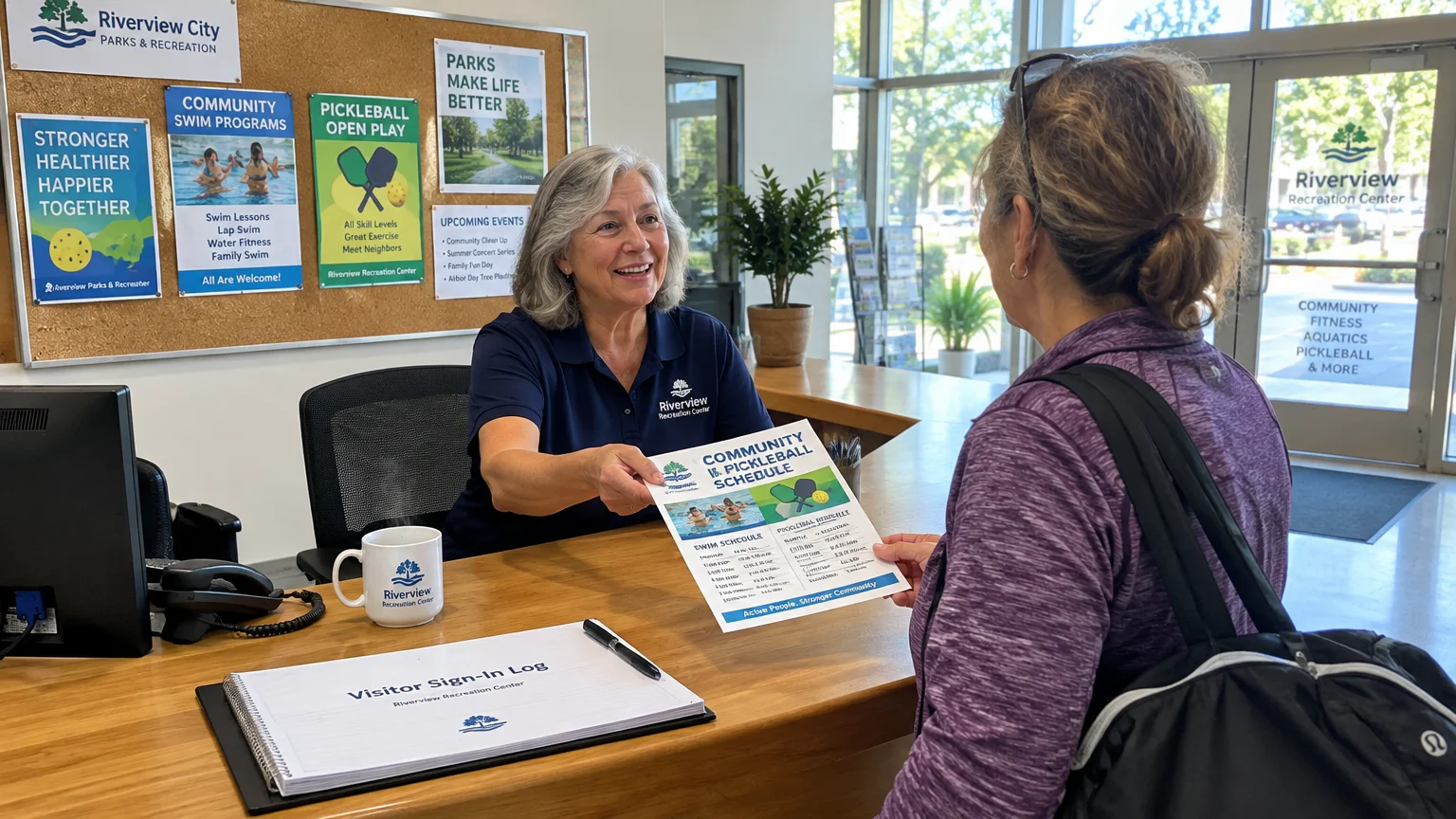
Community centers rely on front desk attendants to greet visitors, answer telephone inquiries, and register participants for seasonal classes. You serve as the friendly face of the neighborhood recreation hub.
Your responsibilities include issuing facility keycards, monitoring entry gates, and answering questions about facility schedules. You also assist visitors with program signup software and collect class fees.
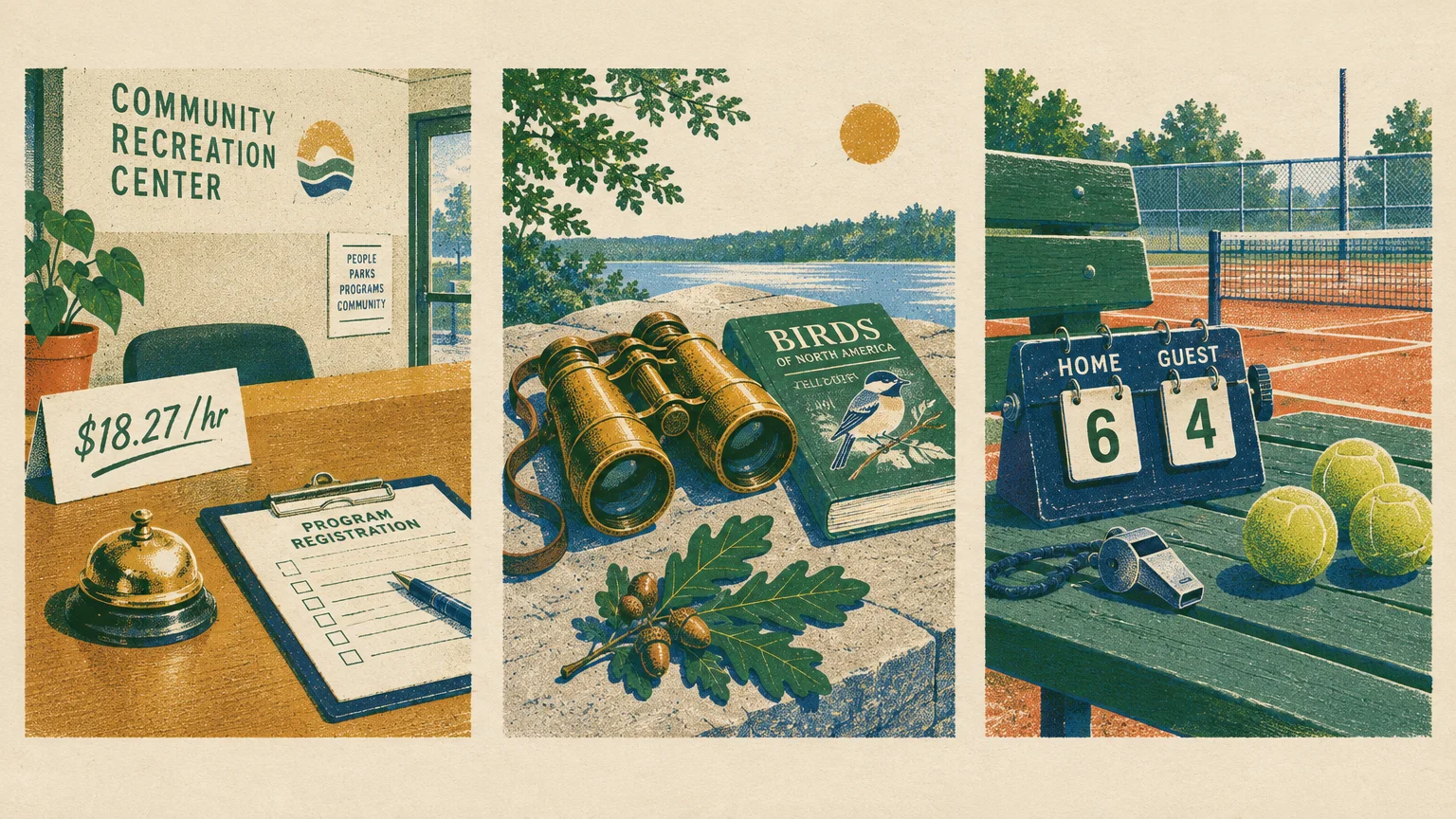
Front desk receptionists and information clerks earn a median wage of $18.27 per hour; the sector projects over 105,000 annual openings. This position is ideal for retirees seeking a climate-controlled environment.
The role requires basic computer literacy, patience, and clear communication skills. Most facilities provide comfortable seated workstations and flexible morning or early afternoon shifts.
2. Municipal Golf Course Starter and Ranger
If you enjoy golf or open green spaces, working as a municipal course starter or course marshal provides a scenic work environment. You direct golfers to the first tee and ensure groups adhere to their assigned tee times.
Course rangers drive golf carts along the fairways to monitor pace of play and ensure players follow course etiquette. You assist players in finding errant balls and coordinate with the clubhouse staff.
Amusement and recreation attendants in these positions earn a median pay of $15.46 per hour, or roughly $32,150 annually across full-time equivalencies. With over 100,000 annual openings nationwide, positions open every spring.
Many municipal golf courses offer employees complimentary or discounted greens fees. This valuable employee perk makes the role especially popular among active golfing retirees.
3. Senior Fitness and Movement Instructor
City recreation centers continuously expand their wellness offerings for aging adults. Municipalities need instructors to lead gentle yoga, chair exercise classes, water aerobics, and walking clubs.
You design low-impact routines that focus on balance, joint mobility, fall prevention, and cardiovascular health. You also create an encouraging, non-intimidating atmosphere where participants feel supported.
Fitness trainers and instructors earn a median hourly wage of $22.67; the role projects a strong 7% growth rate through 2035. Instructors teaching specialized senior classes often earn premium hourly wages.
While some specialized classes require certification from recognized fitness organizations, many agencies sponsor basic instructor training. If you already practice yoga or low-impact aerobics, this job provides an ideal outlet.
4. Park Gate Attendant and Visitor Greeter
Regional and large municipal parks frequently staff entry kiosks to collect parking fees, distribute trail maps, and check vehicle permits. As a gate attendant, you welcome arriving park visitors and share safety guidelines.
You provide directions to trailheads, picnic pavilions, and boat launches while tracking vehicle capacity. You also communicate with park rangers if parking lots reach capacity during busy holiday weekends.
Security and facility gate attendants earn a median wage of $18.28 per hour. The role involves seated work inside a covered booth equipped with heating and air conditioning.
This job requires basic cash handling and polite, assertiveness when explaining park regulations. It offers a relaxed pace on weekday mornings and steady activity during warm weekend afternoons.
5. Youth and Adult Sports League Official
Municipal recreation departments host seasonal leagues for softball, youth basketball, soccer, and pickleball. These leagues require reliable umpires, referees, and scorekeepers to manage games fairly.
As an official, you apply rulebooks, maintain game flow, make objective calls, and ensure player sportsmanship. Scorekeepers operate electronic scoreboards and log official game statistics from the scorer’s table.
Umpires, referees, and sports officials earn a median annual wage of $40,710 across all sports; part-time workers are generally paid per game. Game rates often range from $25 to $50 per match.
Officiating keeps your mind sharp and allows you to stay close to sports you love. If standing or running is difficult, scorekeeper and timekeeper roles offer seated alternatives.
6. Nature Center Docent and Interpretive Guide
Many city parks include botanical gardens, historical properties, nature preserves, and wildlife education centers. These facilities hire docents to lead public walking tours and assist visiting school groups.
You teach visitors about native flora, local bird species, wetlands conservation, and regional history. You might also manage hands-on discovery tables or supervise interactive indoor exhibit spaces.
Tour and travel guides earn a median hourly wage of $18.33; employment in this field is growing at 6% annually. Municipal nature centers welcome retirees who bring enthusiasm and storytelling skills.
The job typically involves walking at a leisurely pace along paved nature paths or crushed gravel trails. It provides an exceptional platform for former educators or nature enthusiasts.
7. Seasonal Park Maintenance and Gardening Assistant
If you prefer working with your hands outdoors, municipal grounds departments need seasonal assistants to maintain public landscapes. You help keep flowerbeds, memorial gardens, and public greenways healthy and attractive.
Daily tasks include planting seasonal annuals, weeding garden beds, mulching paths, pruning low shrubs, and picking up litter. You might also operate light machinery such as push mowers or utility carts.
Landscaping and groundskeeping workers earn a median wage of $18.82 per hour, with overall grounds roles averaging $40,080 annually. Departments often hire seasonal grounds staff from April through October.
This work requires sustained physical stamina, including bending, lifting, and walking on uneven ground. However, it offers quiet outdoor work, fresh air, and visible, satisfying results at the end of each shift.
8. Recreation Program Coordinator for Older Adults
Recreation departments organize diverse programming at local senior centers, including bridge tournaments, book clubs, art classes, and bus day trips. They need organized coordinators to plan and oversee these activities.
You schedule guest speakers, coordinate with local bus drivers, organize supplies, and set up meeting rooms. You also listen to participant feedback to design fun new social events.
Recreation workers in programming and camp leadership roles earn a median wage of $17.58 per hour, or roughly $36,560 per year. The field anticipates approximately 67,000 openings each year.
Because you understand the interests of your peer group, you are uniquely qualified to plan engaging events. This role utilizes administrative and interpersonal skills developed throughout your career.
9. Community Pool Attendant or Lifeguard
Municipal aquatic centers require staff to manage pool check-ins, oversee locker room cleanliness, and ensure water safety. While lifeguard roles require strong swimming abilities, attendant roles do not.
Pool attendants check facility passes, sanitize pool deck furniture, test chemical levels alongside maintenance staff, and enforce pool rules. If you maintain swimming fitness, municipal pools also hire mature lifeguards.
Lifeguards and recreational safety workers earn a median wage of $16.14 per hour. Park agencies face nationwide lifeguard shortages and eagerly train responsible adult applicants.
Parks departments frequently cover the cost of CPR, first aid, and Red Cross lifeguarding certifications for new hires. The work environment is social, warm, and structured around clear safety protocols.
Comparing Hours, Physical Demands, and Pay Rates
Choosing the right part-time job requires balancing pay rates against your physical stamina and schedule preferences. Some positions require active movement outdoors, while others offer comfortable desk settings.
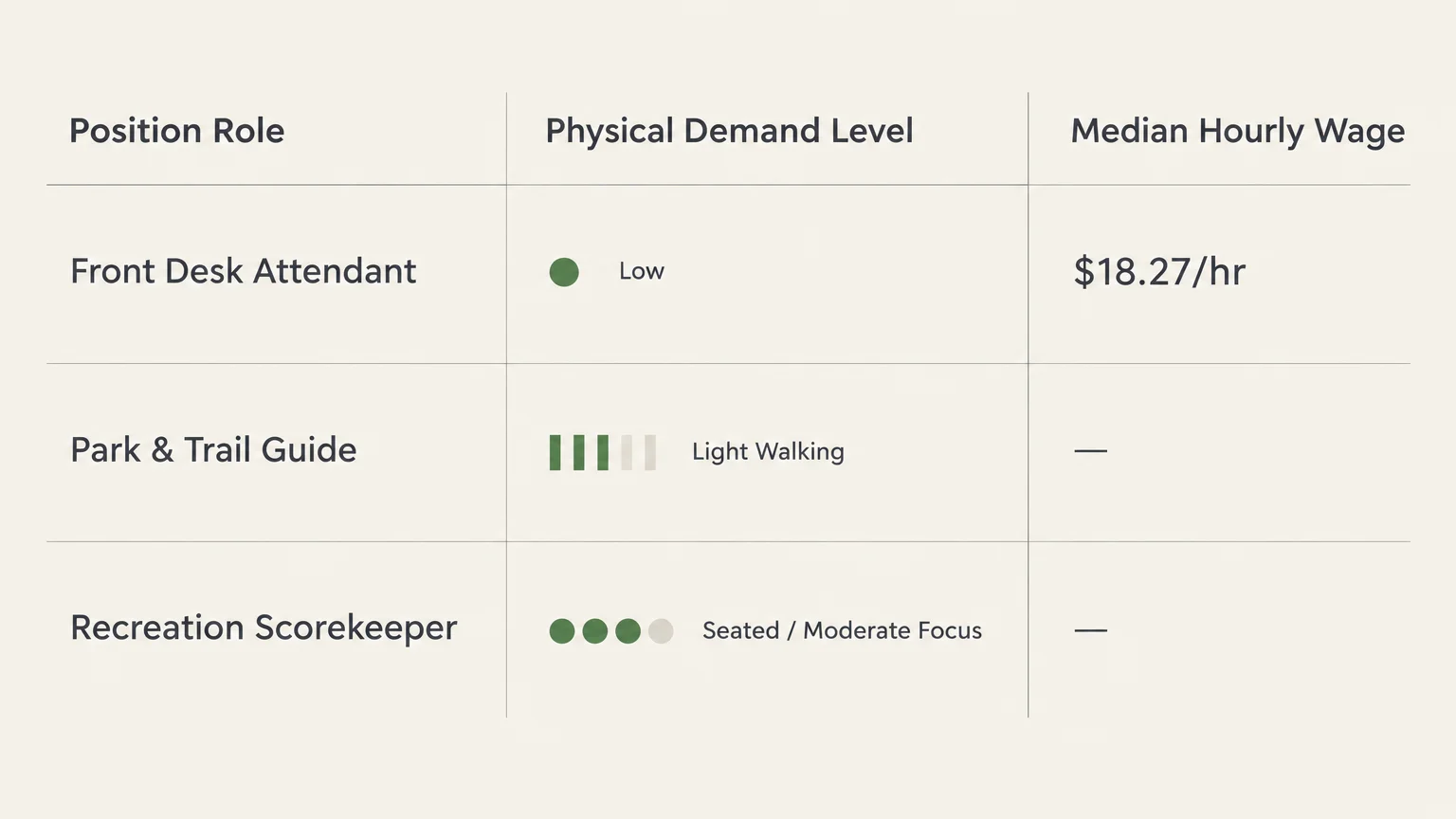
The table below summarizes typical wages, weekly hours, work environments, and physical exertion levels for common municipal recreation jobs.
| Job Role | Median Hourly Pay | Physical Exertion Level | Primary Work Environment | Typical Weekly Hours |
|---|---|---|---|---|
| Front Desk Attendant | $18.27 | Low (Seated desk work) | Indoor recreation center | 15–25 hours |
| Golf Starter / Ranger | $15.46 | Low to Moderate (Riding cart, standing) | Outdoor municipal golf course | 12–20 hours |
| Senior Fitness Instructor | $22.67 | Moderate (Demonstrating exercise) | Indoor studio / pool | 5–15 hours |
| Park Gate Attendant | $18.28 | Low (Seated in booth) | Covered outdoor kiosk | 15–25 hours |
| Sports Official / Scorekeeper | $40,710/yr (Per game) | Low (Scorekeeper) to High (Referee) | Indoor courts / outdoor fields | 6–15 hours |
| Nature Center Docent | $18.33 | Moderate (Walking tours) | Nature preserve / exhibits | 10–20 hours |
| Park Maintenance Assistant | $18.82 | High (Bending, lifting, digging) | Outdoor parks and gardens | 15–30 hours (Seasonal) |
| Senior Program Coordinator | $17.58 | Low to Moderate (Event setup) | Senior / community center | 15–25 hours |
| Pool Attendant / Lifeguard | $16.14 | Moderate to High (Water surveillance) | Outdoor pool / aquatic center | 15–25 hours (Seasonal) |
When assessing these roles, consider your heat tolerance, joint mobility, and seasonal energy levels. A role that matches your physical baseline will bring lasting enjoyment rather than physical exhaustion.
How Park Employment Affects Your Social Security Benefits
Many retirees worry that earning wages from a city job will reduce their monthly Social Security retirement checks. Fortunately, strict earning rules only apply if you have not reached your Full Retirement Age (FRA).
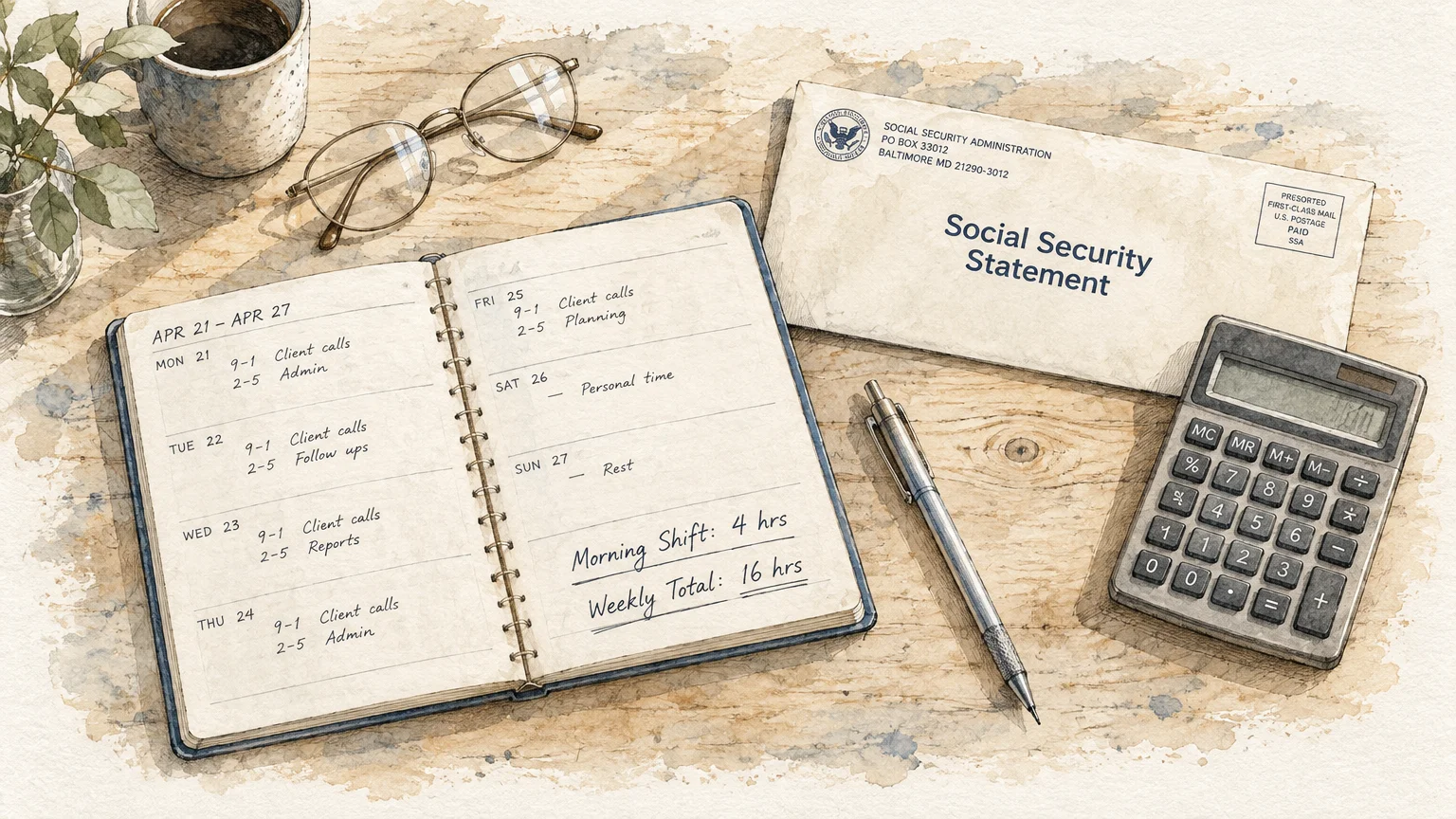
According to the Social Security Administration (SSA), workers below full retirement age can earn up to $24,480 in 2026 without seeing any benefit reductions.
If you earn more than $24,480 in 2026, the government withholds $1 in benefits for every $2 earned above that ceiling. This monthly threshold equals roughly $2,040 in gross earnings.
For example, working 15 hours per week as a front desk attendant at $18.27 per hour produces approximately $14,250 annually. That income sits comfortably below the $24,480 threshold.
If you reach your Full Retirement Age during 2026, the earnings limit rises substantially to $65,160 for the months preceding your birthday. In that scenario, only $1 is withheld for every $3 above the limit.
Once you reach your Full Retirement Age—which is age 67 for anyone born in 1960 or later—the earnings cap disappears entirely. You can earn unlimited wages with zero withholding.
Older job seekers with limited incomes can review eligibility standards on Benefits.gov to explore the Senior Community Service Employment Program (SCSEP).
SCSEP provides subsidized, part-time training positions at public agencies for individuals aged 55 and older whose income falls at or below 125% of the Federal Poverty Level. In 2026, that qualifying limit is $19,950 for a single person.
Step-by-Step Guide to Applying for Municipal Recreation Roles
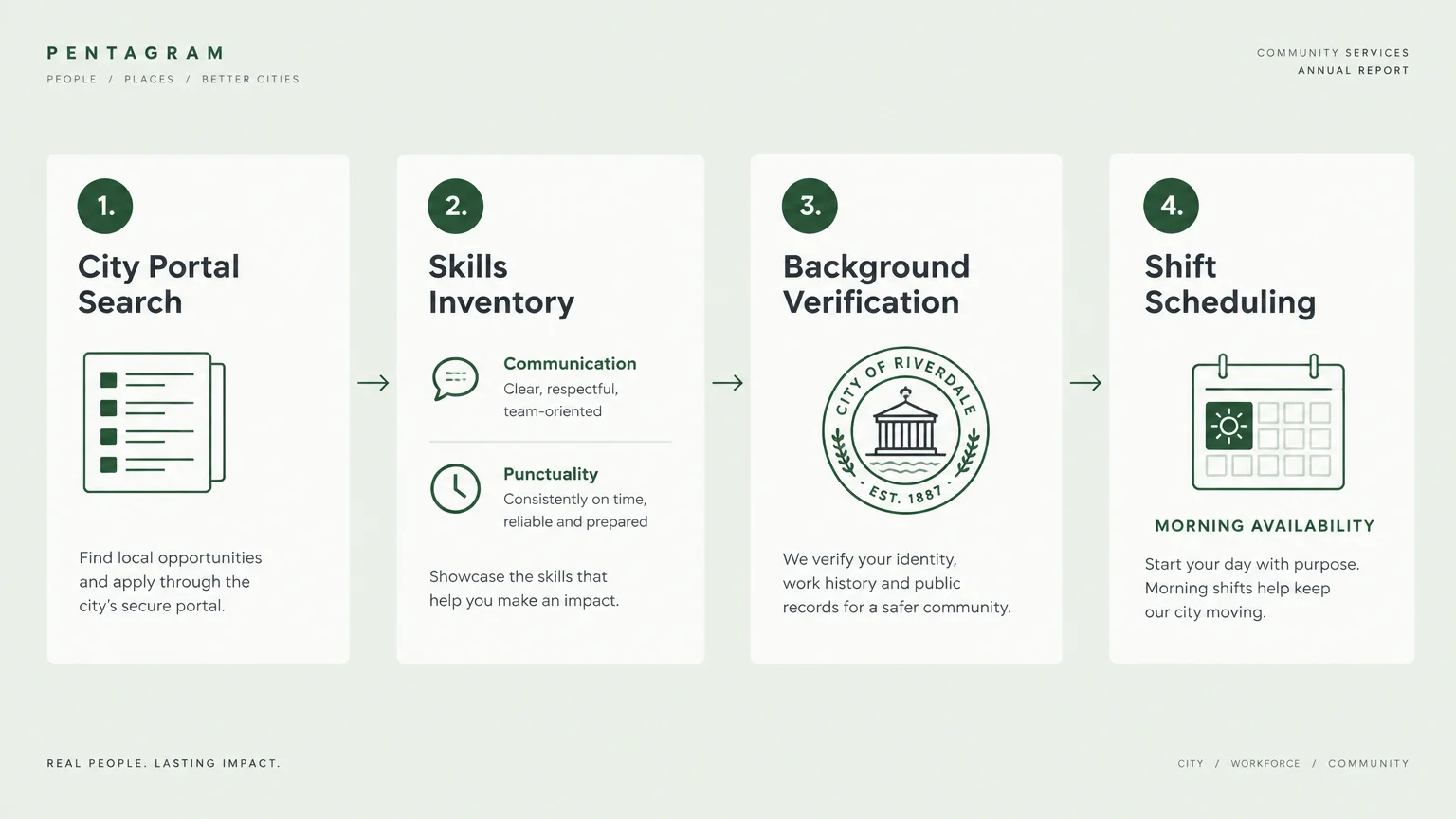
Municipal hiring follows structured civil service protocols that differ from private business hiring. Following a clear plan helps you navigate the local government hiring pipeline efficiently.
-
Locate Official Municipal Job Boards: Most cities and counties post open positions on official city websites or through GovernmentJobs.com. Search departments using terms like “Parks and Recreation,” “Community Services,” or “Senior Center.”
-
Tailor Your Resume for Public Service: Focus your resume on reliability, customer service, teamwork, and past volunteer work. Municipal human resources software scans applications for keywords found directly in the official job description.
-
Prepare for Background Checks and Screenings: Because city parks serve vulnerable populations, including young children and seniors, municipalities conduct comprehensive background checks. Be prepared to provide fingerprints and complete a standard drug screening.
-
Clarify Seasonal vs. Year-Round Positions: Determine whether the job offers permanent part-time hours or seasonal employment. Seasonal positions end after 3 to 6 months, which may match your travel plans perfectly.
-
State Your Scheduling Limits Clearly: Discuss your shift availability during your initial interview. City supervisors appreciate dependable candidates who clearly communicate which weekdays and hours they prefer to work.
Many recreation departments recruit summer staff between January and March. Applying early gives you the best opportunity to secure preferred shifts and locations close to home.
Common Pitfalls and How to Protect Your Health and Routine
While municipal park work provides rewarding structure, working in public recreation presents specific challenges. Anticipating these pitfalls protects your health, retirement finances, and personal happiness.
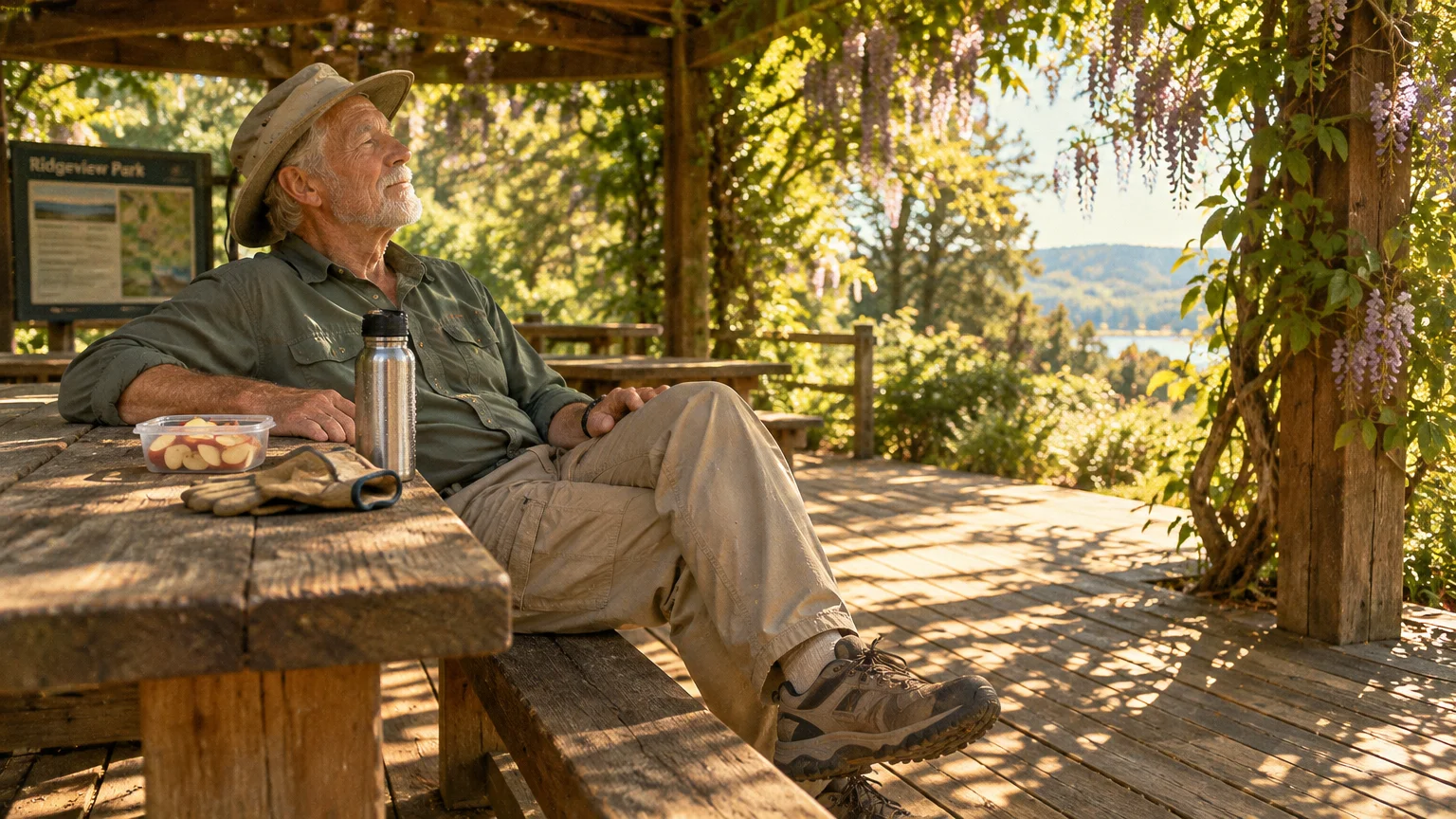
Outdoor roles expose workers to high heat, sudden storms, and extended sun exposure. Guard against heat exhaustion by drinking water frequently, wearing wide-brimmed hats, and taking breaks in shaded pavilions.
Hard concrete surfaces at community centers and pool decks cause joint fatigue. Invest in supportive, non-slip footwear and request anti-fatigue rubber standing mats if you work front desk shifts.
Beware of schedule creep during peak summer tournament seasons. Park supervisors often face staffing shortages and may ask dependable retirees to cover extra evening or weekend shifts.
Set polite, firm boundaries around your availability. Remind supervisors of your part-time status so work does not interfere with family commitments, medical appointments, or travel plans.
Finally, understand local municipal pension rules. Some states exclude part-time workers from pension plans, meaning you will not face complex public pension offset rules that affect Social Security benefits.
Frequently Asked Questions
Can I work for a city recreation department if I have physical limitations?
Yes, municipal parks departments offer many seated and low-impact positions. Roles such as front desk attendant, gatekeeper, and sports scorekeeper accommodate individuals with mobility restrictions.
Under the Americans with Disabilities Act (ADA), city agencies must provide reasonable accommodations for employees. Discuss any physical limitations openly with hiring personnel to find a suitable placement.
Do part-time municipal park jobs offer health insurance or retirement benefits?
Most part-time municipal positions do not offer medical insurance or pension enrollment. Cities generally reserve comprehensive healthcare benefits for employees working more than 30 to 35 hours per week.
However, part-time employees often receive paid sick leave and access to city-sponsored employee assistance programs. You also enjoy free or discounted access to municipal fitness centers and pools.
Will working a city job increase my Medicare Part B premiums?
Part-time wages rarely increase Medicare premiums. The standard Medicare Part B monthly premium is determined by your modified adjusted gross income from two years prior.
Unless your part-time earnings push your total household income over substantial Income-Related Monthly Adjustment Amount (IRMAA) thresholds, your standard Medicare premium remains unaffected.
What is the typical hiring timeline for municipal recreation jobs?
Municipal hiring processes take longer than private business hiring. Expect the process to take anywhere from 4 to 8 weeks from initial application to your first day on the job.
Cities must adhere to civil service posting guidelines, conduct panel interviews, and process criminal background clearances. Submitting your application well before the season begins ensures a timely start.
Do I need formal certifications to teach recreation classes at a community center?
Certification requirements depend on the class topic and city policies. High-intensity fitness and aquatic instruction usually require accredited certifications and current CPR training.
For informal leisure classes such as knitting, chess, gardening, or history discussion groups, practical expertise and enthusiasm are usually the only prerequisites. Many centers welcome community hobbyists to lead sessions.
For additional senior resources, visit
American Heart Association, Benefits.gov, National Institute on Aging (NIA), Centers for Disease Control and Prevention (CDC) and Medicare.gov.
Disclaimer: The information in this article is for educational purposes only and is not intended to be a substitute for professional financial, legal, or medical advice. Always consult with a qualified expert for advice tailored to your personal situation.