

Switching your Medicare plan this winter can safeguard your retirement budget and secure access to your trusted doctors. A quick review of your options today protects you from costly medical surprises tomorrow.
Federal regulations, prescription formularies, and provider networks shift significantly each season. Even minor changes to copays or drug tiers can quietly drain your fixed income.
This practical checklist walks you through every essential detail before you change Medicare plan coverage. You will discover exactly what to verify so you can make confident, informed healthcare decisions.
In this guide9 sections
- Winter Medicare Enrollment Windows and Key Deadlines
- Doctor Networks and Hospital System Access
- Prescription Formularies and Part D Cost Caps
- Out-of-Pocket Maximums and Deductibles
- Plan Terminations and Automatic Crosswalks
- Prior Authorizations and Supplemental Benefits
- Medigap Guaranteed Issue Rights and Underwriting
- Costly Medicare Switching Traps to Avoid
- Frequently Asked Questions
Winter Medicare Enrollment Windows and Key Deadlines
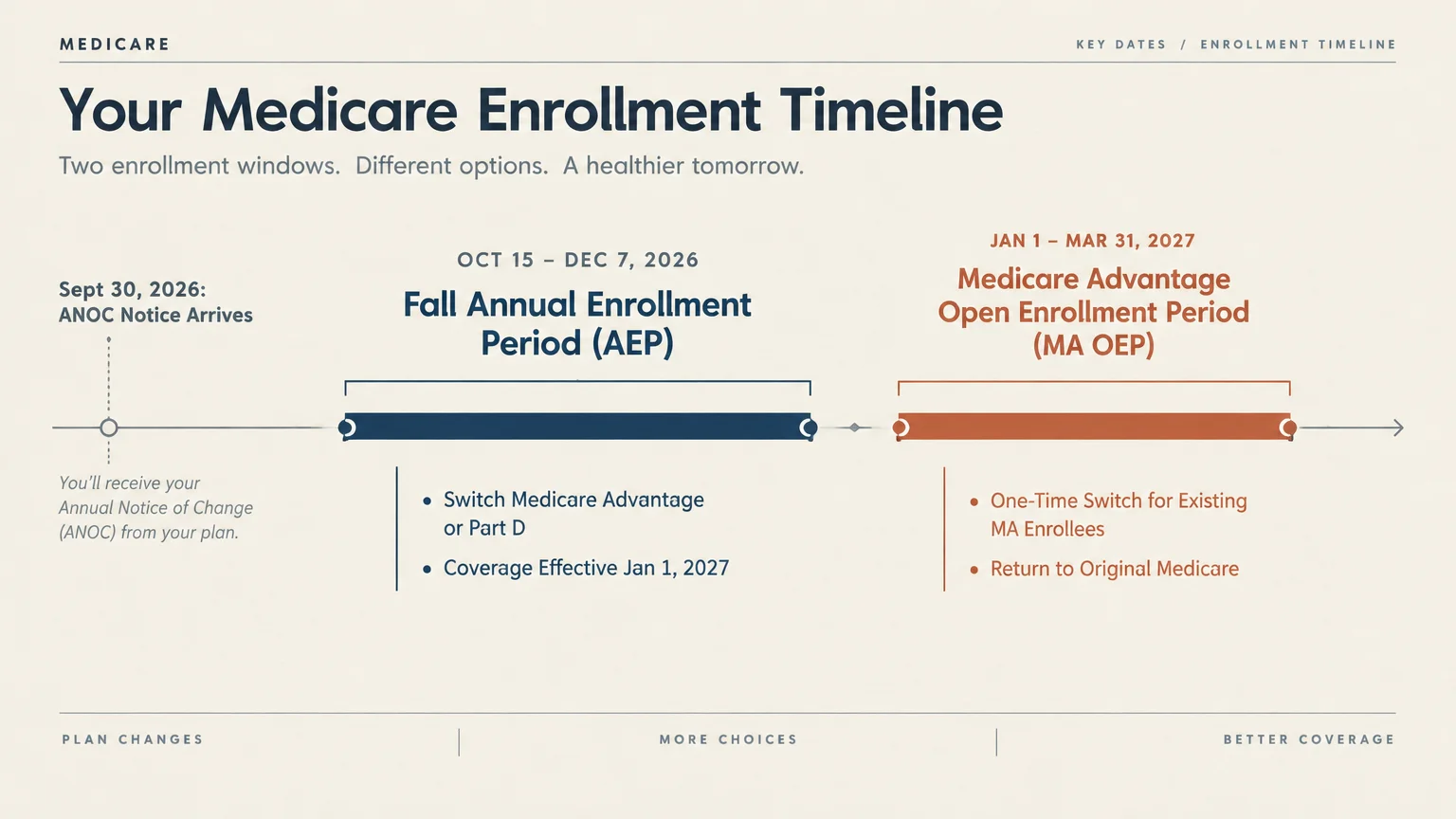
Every winter brings critical enrollment opportunities for Medicare beneficiaries across the country. Understanding these exact dates prevents coverage lapses and protects you from lasting late enrollment penalties.
The Fall Annual Enrollment Period (AEP) runs from October 15 to December 7, 2026. Any coverage updates you make during this window take effect on January 1, 2027.
During this period, you can switch between Original Medicare and Medicare Advantage. You can also join, drop, or change your standalone Part D prescription drug plan.
Existing plans were legally required to mail your Annual Notice of Change (ANOC) by September 30, 2026. This vital document outlines all upcoming alterations to your premiums, copayments, and provider networks.
If you miss the December 7 deadline, your options narrow considerably. However, beneficiaries already enrolled in private coverage gain a second opportunity during the colder winter months.
The Medicare Advantage Open Enrollment Period (MA OEP) takes place from January 1 to March 31, 2027. This specific window applies strictly to individuals who currently hold a Medicare Advantage policy.
During this three-month window, you can make a one-time switch to an alternative Medicare Advantage plan. Alternatively, you can drop private managed care to return to Original Medicare.
If you return to Original Medicare during this period, you can also join a standalone Part D plan. According to Medicare.gov, your new coverage begins on the first day of the month after your application arrives.
Beneficiaries enrolled in Original Medicare alone cannot use the January-to-March window to join a Medicare Advantage plan. That option remains exclusive to the fall enrollment window.
Certain life events trigger a Special Enrollment Period (SEP) outside standard enrollment periods. Moving out of your plan service area or losing employer coverage qualifies you for an SEP.
Mark these distinct deadlines on your calendar immediately. Missing them locks you into your existing policy for an entire calendar year.

Doctor Networks and Hospital System Access
Your ongoing health outcomes depend heavily on maintaining relationships with trusted medical providers. You must verify provider participation thoroughly before initiating any Medicare plan change.
Check 1: Confirm Primary Care Doctors and Specialists
Medicare Advantage plans contract with private networks of physicians and medical groups. These plans primarily operate as Health Maintenance Organizations (HMOs) or Preferred Provider Organizations (PPOs).
HMO plans generally mandate that you obtain medical care exclusively from in-network providers, except in urgent emergencies. Seeking non-emergency care outside an HMO network means paying the entire medical bill yourself.
Many HMOs also require you to choose a primary care physician who manages all referrals to specialists. If you require regular specialist care, referral requirements can cause unwanted appointment delays.
PPO plans offer greater flexibility to consult out-of-network doctors without referrals. However, your copayments and coinsurance rates climb significantly when you step outside the contracted network.
Always verify whether your trusted cardiologists, oncologists, dermatologists, and physical therapists belong to the exact network you are considering. Independent medical groups frequently renegotiate or terminate insurer contracts year-round.
Online provider search directories often display outdated or inaccurate listings. Never rely solely on an insurer website when confirming physician participation.
Call your doctor’s billing office directly before submitting any enrollment paperwork. Provide the insurer’s exact contract name and plan ID number to verify their active participation.
Check 2: Verify Hospital Systems and Regional Health Facilities
Verify which hospital systems and emergency departments participate in the plan’s contracted network. If an acute illness occurs, being transported to an out-of-network facility can generate unexpected out-of-pocket costs.
Some insurers split hospital networks into distinct pricing tiers. Receiving care at a preferred Tier 1 hospital costs substantially less than receiving treatment at a Tier 2 contracted hospital.
Check whether the plan includes local outpatient surgical centers, diagnostic imaging clinics, and urgent care centers. Having convenient local facilities ensures affordable access when minor medical emergencies arise.
Travel considerations matter if you spend winter months in another state as a snowbird. Most Medicare Advantage HMOs do not cover non-emergency care outside your home county.
If you reside in multiple regions throughout the year, investigate plans offering national visitor networks. Alternatively, Original Medicare with a supplement provides seamless access to any Medicare-participating doctor nationwide.
Prescription Formularies and Part D Cost Caps
Prescription medications represent a primary ongoing expenditure for retirees living on fixed incomes. Checking drug lists carefully before changing coverage protects your monthly cash flow.
Check 3: Inspect Drug Formularies and the $2,400 Out-of-Pocket Cap
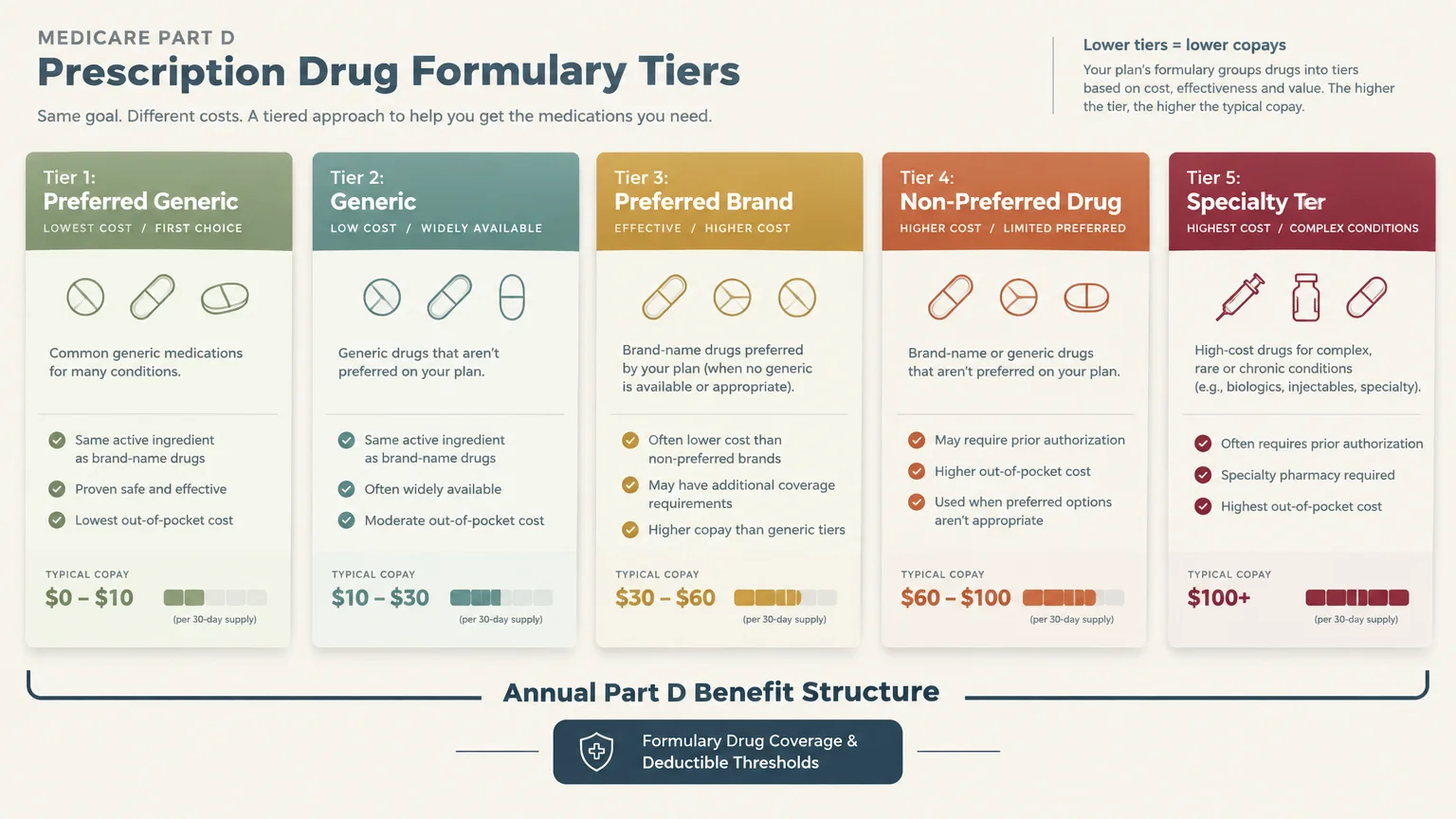
Every Medicare drug plan maintains a formulary, which is a list of approved prescription medications. Plans categorize these medications into distinct pricing tiers that determine your exact out-of-pocket copayments.
Tier 1 generally includes low-cost preferred generic drugs, while Tier 2 covers non-preferred generics. Tier 3 features preferred brand-name drugs, Tier 4 contains non-preferred brands, and Tier 5 includes high-cost specialty therapies.
A major consumer protection takes effect for the upcoming plan year. The annual cap on out-of-pocket prescription drug costs rises to $2,400 in 2027, up from $2,100 in 2026.
Once your qualifying True Out-of-Pocket (TrOOP) spending reaches $2,400, your drug plan covers 100% of covered Part D costs. You pay $0 for your covered medications for the remainder of that calendar year.
However, the maximum annual Part D deductible increases to $700 in 2027, up from $615 in 2026. You must pay this deductible upfront before your plan begins paying its share for tier-eligible prescriptions.
According to the Centers for Medicare & Medicaid Services (CMS), the projected national average monthly premium for standalone Part D plans will be roughly $36 in 2027.
A temporary federal premium stabilization subsidy expires at the end of 2026. Consequently, standalone drug plan offerings have dropped sharply to an average of 11 plans per area, down from 30 five years ago.
Fewer standalone options make careful shopping essential. If your current standalone plan raises its premium drastically, compare remaining alternatives before the enrollment window closes.
Check 4: Track Negotiated Drug Prices and GLP-1 Bridge Access
Historical federal drug negotiations under the Inflation Reduction Act take effect on January 1, 2027. Medicare has established discounted negotiated prices for 15 widely prescribed Part D medications.
These medications include diabetes and cardiovascular therapies like Ozempic, Janumet, and Rybelsus. The list also features respiratory inhalers Trelegy Ellipta and Breo Ellipta, alongside Linzess, Austedo, and Otezla.
Cancer and chronic therapies like Xtandi, Ibrance, and Ofev are also subject to new price limits. Enrollees taking these specific therapies could see significant reductions in their monthly prescription costs.
Furthermore, eligible beneficiaries taking GLP-1 therapies can access the new Medicare GLP-1 Bridge program. This program provides qualifying enrollees access to certain weight-loss and metabolic medications for a flat $50 monthly copayment.
Compile a complete list of your current prescriptions, including exact milligram dosages and monthly refill quantities. Enter this information into official plan comparison tools to project your accurate out-of-pocket spending.

Out-of-Pocket Maximums and Deductibles
Insurance advertisements heavily promote low monthly premiums while minimizing significant copayment obligations. You must evaluate the maximum financial exposure of any policy before committing your healthcare future.
Check 5: Examine Medical MOOP Limits
Medicare Advantage plans include a mandatory Maximum Out-of-Pocket (MOOP) limit. This federal ceiling restricts the total dollar amount you must pay each year for covered Part A and Part B medical care.
For 2027, the federal in-network MOOP ceiling increases to $9,850, compared to $9,250 in 2026. For PPO plans covering out-of-network care, the combined in- and out-of-network ceiling climbs to $14,800.
Prescription drug copayments do not count toward this medical spending limit. Your medications accumulate under the separate $2,400 Part D prescription drug cap.
CMS projects that the average monthly premium for Medicare Advantage plans will drop to $12.00 in 2027. Approximately 70% of available Medicare Advantage plans feature a $0 monthly plan premium.
A $0 premium does not equate to free medical care. Experiencing a serious medical condition or major surgery can rapidly push your spending toward the $9,850 out-of-pocket maximum.
Understand Baseline Original Medicare Costs
If you prefer Original Medicare, you must account for standard Part A and Part B deductibles and coinsurance. Part B covers physician services, outpatient treatments, laboratory screenings, and durable medical supplies.
The standard Part B monthly premium is $202.90 in 2026 and is projected by Medicare Trustees to reach $209.50 in 2027. Higher-income retirees pay additional IRMAA surcharges based on their 2025 tax returns.
The annual Part B deductible rises from $283 in 2026 to a projected $292 in 2027. Once satisfied, you typically pay 20% coinsurance for doctor visits and outpatient therapies.
The inpatient hospital Part A deductible increases from $1,736 in 2026 to a projected $1,788 in 2027 per benefit period. A benefit period resets after you have been out of the hospital for 60 consecutive days.
Fortunately, the Social Security Administration (SSA) confirmed a 3.6% Cost-of-Living Adjustment (COLA) for 2027. This average monthly increase of roughly $75 helps absorb rising Part B premiums.
| Medicare Cost Element | 2026 Benchmark | 2027 Official / Projected |
|---|---|---|
| Part D Out-of-Pocket Cap (TrOOP) | $2,100 | $2,400 |
| Part D Maximum Deductible | $615 | $700 |
| Average Standalone Part D Premium | Varies by State | ~$36.00 / month |
| Medicare Advantage In-Network MOOP Ceiling | $9,250 | $9,850 |
| Medicare Advantage PPO Combined MOOP Ceiling | $13,900 | $14,800 |
| Average Medicare Advantage Premium | $14.37 / month | ~$12.00 / month |
| Part B Monthly Standard Premium | $202.90 | $209.50 (Projected) |
| Part B Annual Deductible | $283 | $292 (Projected) |
| Part A Inpatient Hospital Deductible | $1,736 | $1,788 (Projected) |
| Social Security COLA Increase | 2.5% | 3.6% (~$75/month avg) |
Reviewing these baseline numbers helps you estimate your potential annual liability. Balancing monthly premiums against prospective out-of-pocket limits protects your retirement savings from unexpected hospital stays.

Plan Terminations and Automatic Crosswalks
The Medicare Advantage landscape is experiencing substantial shifts as private insurers restructure unprofitable plans. Knowing whether your policy faces termination or changes ensures you maintain uninterrupted healthcare.
Check 6: Review Termination Notices and Crosswalk Assignments
Private insurance carriers periodically withdraw from counties or eliminate specific plan structures. Approximately 3.2 million Medicare Advantage enrollees face plan terminations for 2027 without an automatic carrier replacement.
If your insurer cancels your policy, they must send an official notice detailing your coverage end date. You must actively choose a new plan, or Medicare automatically moves you to Original Medicare.
In addition, insurers are reassigning roughly 2.1 million enrollees to different policies through automatic crosswalking. Companies use crosswalking when consolidating multiple plans into a single product line.
Never assume your new crosswalk plan matches your current benefits. The reassigned policy may feature different cost-sharing tiers, higher deductibles, or a reshuffled physician network.
Examine your September Annual Notice of Change to determine if your insurer scheduled you for a crosswalk. If the assigned policy does not suit your health needs, you can switch during open enrollment.
Beneficiaries whose plans exit their region entirely receive vital consumer protections. You qualify for a Special Enrollment Period, providing extra time to select alternate coverage without penalties.
Furthermore, plan terminations trigger a federal Guaranteed Issue right for Medigap supplemental insurance. This allows you to purchase a supplement policy without answering medical health questions.

Prior Authorizations and Supplemental Benefits
Private insurance policies frequently offer enticing supplemental perks while enforcing strict administrative hurdles. Scrutinizing prior authorization requirements and benefit caps protects you from treatment denials.
Check 7: Prior Authorization Rules and Electronic Portals
Prior authorization requires your doctor to seek insurance company approval before scheduling specific tests, surgeries, or treatments. If the insurer denies approval, you must file formal appeals or pay the bill yourself.
Insurers commonly mandate prior authorization for advanced imaging tests, inpatient hospital stays, skilled nursing care, and expensive biologic medications. These administrative checkpoints can cause critical treatment delays.
Beginning January 1, 2027, Medicare Advantage plans must deploy electronic prior authorization systems. This federal standard lets you track authorization requests and insurer determinations directly through your secure member portal.
Review which clinical services require pre-authorization under your prospective policy. Opting for a plan with fewer administrative barriers minimizes stress when medical conditions require immediate intervention.
Check 8: Scrutinize Dental, Vision, and Allowance Limits
Marketing commercials highlight extra perks like dental coverage, vision allowances, hearing aids, and grocery flex cards. While these additions appear attractive, their real-world value is often modest.
Many Medicare Advantage dental benefits cap annual reimbursements at $500 or $1,000. That allowance covers routine preventive cleanings, but it leaves you paying major costs for crowns, bridges, or root canals.
Eyewear allowances often provide a limited credit toward prescription frames once every two years. If your lenses require bifocal corrections or protective coatings, you still face substantial out-of-pocket expenses.
Prepaid grocery or over-the-counter wellness cards often feature strict monthly expiration dates. Unspent funds typically vanish at the end of each month rather than accumulating over the calendar year.
Never select a healthcare plan solely based on marketing perks or flex allowances. Always prioritize comprehensive hospital, physician, and prescription drug coverage over secondary convenience benefits.
Medigap Guaranteed Issue Rights and Underwriting
Moving between Medicare Advantage and Original Medicare paired with a Medigap policy requires careful legal navigation. Misunderstanding underwriting rules can permanently jeopardize your ability to obtain supplemental coverage.
Check 9: Medigap Guaranteed Issue and Medical Underwriting
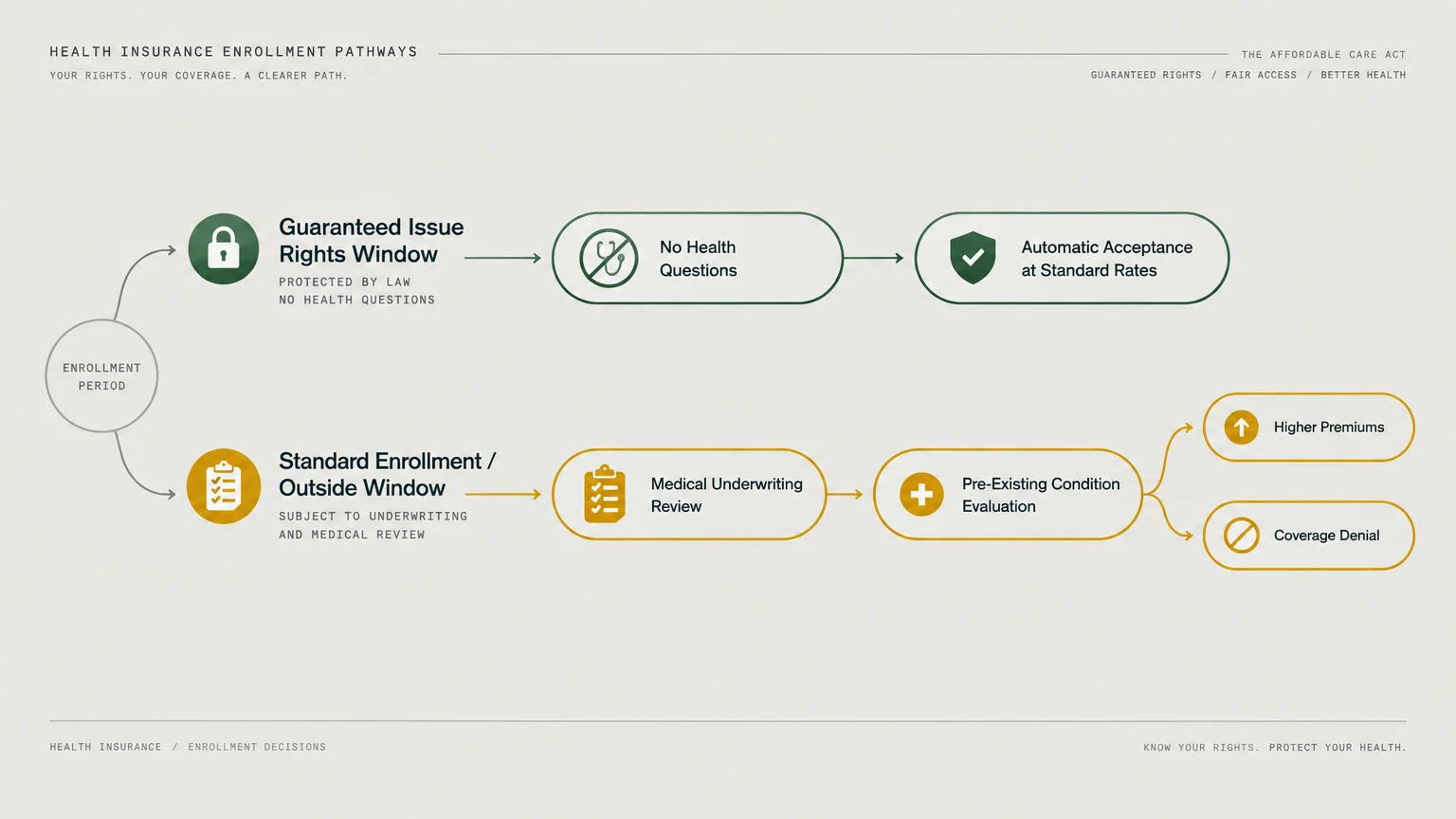
During your initial six-month Medigap Open Enrollment Period when you first enroll in Part B, insurers cannot deny you coverage. They must issue any policy they sell regardless of existing health conditions.
Once that six-month window closes, Medigap insurers in most states subject applicants to strict medical underwriting. Carriers can examine your medical history, reject your application, or charge substantially higher monthly premiums.
Common health conditions like heart disease, diabetes, cancer history, or rheumatoid arthritis can disqualify you from buying a Medigap plan. Consequently, dropping a Medigap policy to join Medicare Advantage carries permanent financial consequences.
However, specific federal protections safeguard beneficiaries in defined situations. If you enrolled in Medicare Advantage when first turning 65, you qualify for a 12-month trial right.
Within that first year, you can drop Medicare Advantage and repurchase your previous Medigap policy without medical underwriting. This trial period gives you freedom to test private coverage safely.
Additionally, if your Medicare Advantage insurer exits your county or terminates operations for 2027, you receive federal Guaranteed Issue rights. You can purchase designated Medigap plans without health screening.
Always obtain written confirmation of your new Medigap policy acceptance before canceling any existing coverage. Canceling prematurely can leave you exposed to devastating hospital coinsurance costs.

Costly Medicare Switching Traps to Avoid
Reviewing numerous plan brochures and commercial advertisements can quickly create confusion. Being aware of frequent enrollment pitfalls ensures you protect both your health and retirement assets.
Trap 1: Selecting Coverage Based Strictly on $0 Premiums
Zero-dollar premium plans frequently tempt retirees seeking to lower monthly expenses. However, these plans often offset low upfront costs by implementing high specialist copayments and higher out-of-pocket maximums.
Calculate your total annual healthcare expenses, including expected physician visits, prescription copays, and diagnostic screenings. A policy charging a modest monthly premium may cost significantly less over an entire year.
Trap 2: Overlooking Pharmacy Network Classifications
Medicare drug plans divide contracted pharmacies into preferred, standard, and out-of-network facilities. Filling your prescriptions at a preferred pharmacy can save hundreds of dollars each year compared to standard locations.
Verify that your local neighborhood drugstore or preferred retail pharmacy belongs to the plan’s preferred network tier. Many enrollees also achieve lower copayments by utilizing 90-day mail-order delivery services.
Trap 3: Falling Prey to Aggressive Sales Calls and Marketing
The Consumer Financial Protection Bureau (CFPB) warns seniors about aggressive insurance sales tactics and misleading marketing materials during open enrollment seasons.
Never reveal your Medicare number, Social Security number, or financial account details to unsolicited telephone callers. Certified insurance brokers and carriers cannot place unsolicited cold calls under federal marketing regulations.
If you encounter high-pressure sales pitches or suspect fraudulent activity, end the conversation immediately. Report deceptive insurance practices to state insurance commissioners or federal Medicare oversight authorities.
For free, unbiased one-on-one enrollment guidance, contact your local State Health Insurance Assistance Program (SHIP). You can locate your regional SHIP counselor through the Eldercare Locator.
Frequently Asked Questions
Can I change my Medicare plan after the December 7 deadline?
Yes, but only if you currently hold a Medicare Advantage policy. You can use the Medicare Advantage Open Enrollment Period between January 1 and March 31, 2027, to switch plans or return to Original Medicare.
Beneficiaries enrolled strictly in Original Medicare cannot use this winter window to join a Medicare Advantage plan. They must wait until the next fall enrollment period unless they qualify for a Special Enrollment Period.
What happens if my primary doctor leaves my plan mid-year?
You must generally select an alternative in-network doctor or pay full out-of-pocket costs for care. A physician leaving a plan’s network does not automatically qualify you for a Special Enrollment Period to switch insurers.
If you are undergoing active treatment for serious illnesses like cancer, continuity-of-care rules may allow you to continue seeing that doctor temporarily at in-network rates.
How does the 2027 Part D drug cap protect my savings?
The annual Part D cap limits your out-of-pocket costs for covered medications to $2,400 in 2027. Once your True Out-of-Pocket spending hits that ceiling, your plan pays 100% of covered drug costs for the year.
This cap applies to all Part D plans and Medicare Advantage plans with prescription drug coverage. It offers vital financial protection for seniors requiring costly brand-name medications.
Will switching Medicare plans affect my monthly Social Security benefits?
Switching plans does not alter your underlying Social Security benefit amount. However, if you choose to have premiums deducted automatically from your check, changes in premium amounts will affect your net monthly deposit.
The 3.6% Social Security COLA increase for 2027 helps offset standard Part B premium adjustments. Most retirees will see a net positive increase in their monthly payments.
How do I know if my plan is being terminated for 2027?
Insurers must mail formal termination notices by October 2, 2026, if they are discontinuing coverage in your area. This written notice outlines your options and explains your rights to select new coverage.
If your plan is terminated without a replacement, you receive a Special Enrollment Period and federal Guaranteed Issue rights to purchase a Medigap supplement without medical underwriting.
For additional senior resources, visit
National Institute of Mental Health (NIMH), National Institutes of Health (NIH) and Centers for Medicare & Medicaid Services (CMS).
Disclaimer: The information in this article is for educational purposes only and is not intended to be a substitute for professional financial, legal, or medical advice. Always consult with a qualified expert for advice tailored to your personal situation.