

You can still find an active, independent retirement community where homes sell for less than $100,000. Across the country, established neighborhoods provide vibrant social life and comfortable living well below national real estate price tags.
Securing an affordable home requires understanding unique property models, land leases, and monthly community fees. Careful research protects your retirement budget and ensures your savings last as long as you need them.
This guide highlights verified communities offering properties under six figures and outlines the crucial financial details you must inspect before buying.
In this guide10 sections
- The Reality of Senior Housing Under $100,000
- Established 55+ Communities Across the Country
- Manufactured Housing: Land-Lease vs. Resident Ownership
- Florida Condo Regulations and Hidden Structural Costs
- Calculating the True Monthly Cost of Living
- Age Restrictions and Protections Under Federal Law
- Aligning Housing Costs with Fixed Retirement Incomes
- Community Comparison and Due Diligence Checklist
- Costly Mistakes and Traps to Avoid
- Frequently Asked Questions
The Reality of Senior Housing Under $100,000
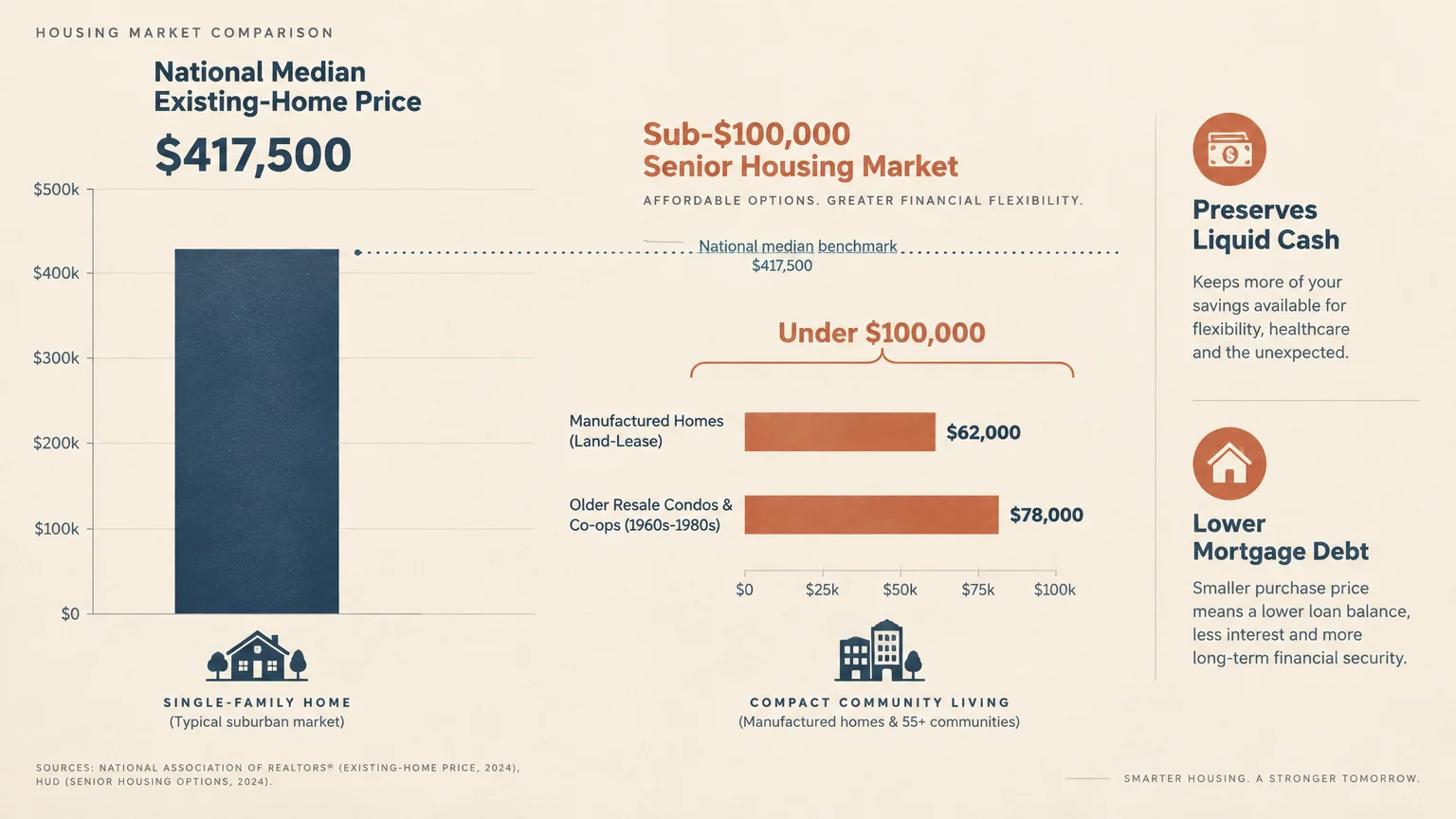
According to the National Association of Realtors, the national median existing-home price reached $417,500 in September 2026. That steep benchmark makes finding a retirement home under $100,000 feel like searching for a needle in a haystack.
Sub-$100,000 properties do exist, but they rarely resemble standard single-family suburban houses. Instead, you will encounter two primary housing types: manufactured homes situated in land-lease communities, and smaller condominiums or housing cooperatives.
Most of these properties sit within communities built during the 1960s, 1970s, or 1980s. These older developments often boast prime locations, mature landscaping, and active resident clubs that rival newer, more expensive neighborhoods.
Lower purchase prices allow you to preserve liquid cash rather than tying your net worth into real estate. You avoid heavy mortgages, which shields your monthly budget from high borrowing costs.
However, lower purchase prices often come with a trade-off in the form of recurring monthly charges. You must evaluate the entire financial package—purchase price plus monthly dues—to determine if a home truly fits your budget.

Established 55+ Communities Across the Country
Affordable senior developments operate nationwide, giving you geographic flexibility based on your climate preferences and lifestyle goals. Several well-known developments consistently offer resale units priced below six figures.
In the Southwest, Sun City, Arizona, remains a gold standard for active senior living. As one of the earliest master-planned retirement havens in the nation, Sun City provides an extensive network of recreation centers, golf courses, and craft clubs.
While detached homes in Sun City command higher prices, older resale condominiums and compact patio homes frequently list below $100,000. These properties provide full access to community amenities while keeping your acquisition costs remarkably low.
In South Florida, developments such as Kings Point in Delray Beach and several Century Village locations offer accessible condo living. These sprawling complexes feature dedicated bus transit, expansive theatrical clubhouses, and multiple swimming facilities.
You can regularly find one-bedroom and two-bedroom condominiums in these Florida communities priced between $60,000 and $95,000. These units cater directly to retirees seeking an active social scene in a warm winter climate.
On Florida’s Gulf Coast, Seven Lakes Golf and Tennis in Fort Myers presents an attractive option. This 1,096-unit community features six heated pools, active tennis courts, and an executive 18-hole golf course with no green fees.
Resale units at Seven Lakes frequently appear in the $90,000 range. Residents enjoy bundled amenities and a continuous schedule of community events without paying luxury purchase prices.
If you prefer four distinct seasons and mountain scenery, consider Fairfield Glade in Crossville, Tennessee. Perched on the Cumberland Plateau, this resort community features championship golf courses, pristine lakes, and miles of paved nature trails.
Fairfield Glade contains modest townhomes and one-bedroom condominium units that list for under $100,000. Tennessee also charges no state income tax, making it an exceptional location for stretching retirement income.
For those wishing to remain in the Mid-Atlantic, Rossmoor Village in Monroe, New Jersey, provides a gated sanctuary. This established neighborhood features an 18-hole golf course, club facilities, and an attentive maintenance department.
One-bedroom co-op and condo floor plans in Rossmoor Village start around $73,500. This low entry price gives retirees an affordable way to stay close to family and medical networks in New York and Philadelphia.
Manufactured Housing: Land-Lease vs. Resident Ownership
Modern manufactured homes offer energy efficiency, open floor plans, and accessible layouts with step-in showers and wide hallways. Many 55+ communities feature pristine pre-owned manufactured homes listed well under $100,000.
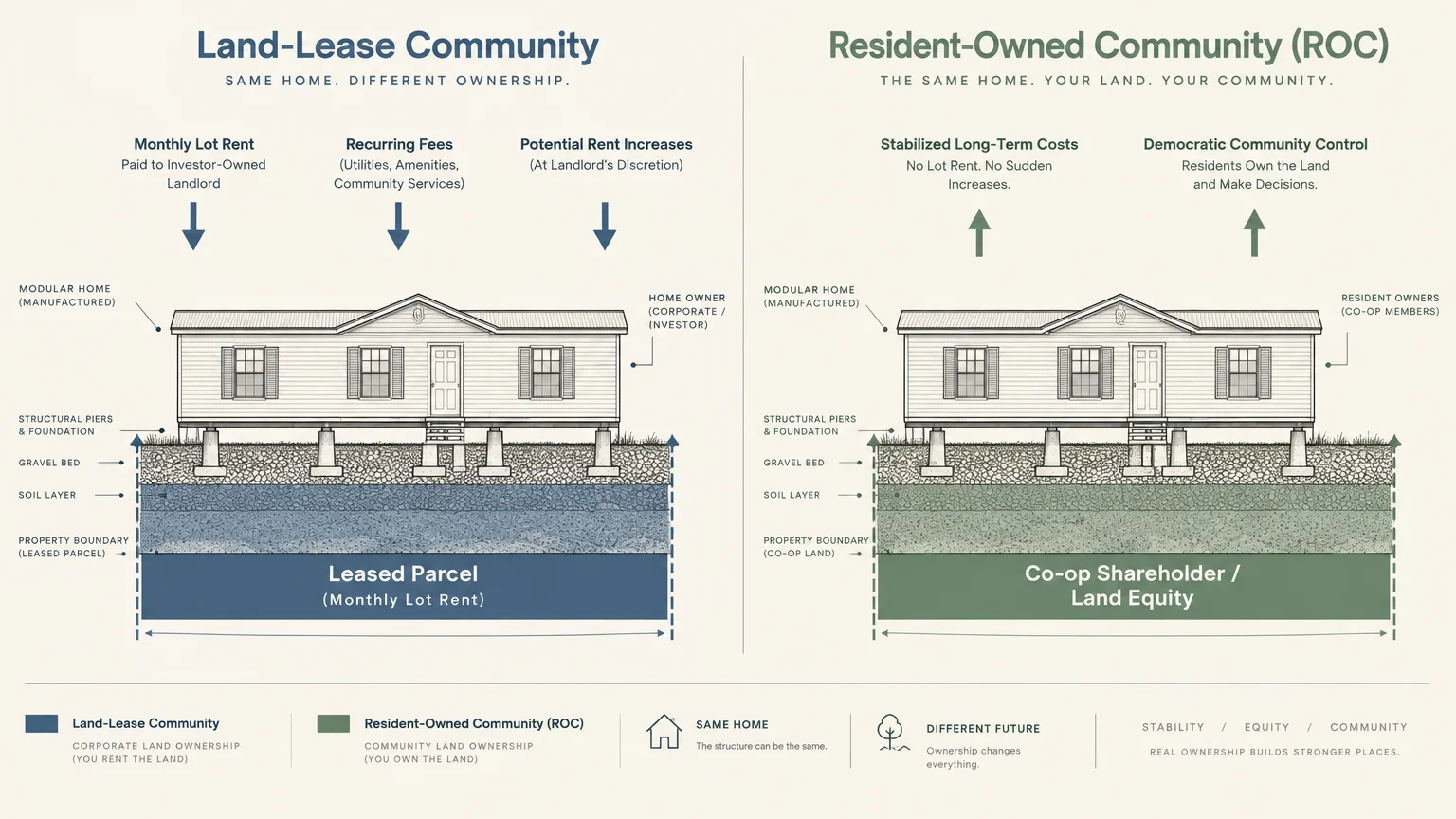
When you purchase a manufactured home under $100,000, you generally enter a land-lease agreement. Under this arrangement, you own the physical house, but an investor or park operator owns the land beneath it.
As a homeowner in a land-lease park, you pay monthly lot rent to cover your ground space and community amenities. Data shows that the national average site lot rent reached $782 per month in 2025 and 2026.
Occupancy rates in manufactured housing communities nationwide now exceed 95%. High demand gives park owners leverage to increase monthly lot rent by predictable or unpredictable margins each year.
Financing a manufactured home also differs from buying a traditional stick-built house. Because you do not own the underlying land, banks classify the structure as personal property rather than real estate.
According to the Consumer Financial Protection Bureau (CFPB), personal property or chattel loans often carry higher interest rates and shorter repayment periods than conventional mortgages. Paying cash for an affordable manufactured home avoids these high financing charges entirely.
If you prefer greater stability, search for resident-owned communities, often referred to as ROCs. In an ROC, residents form a cooperative corporation that owns the park land, giving you voting power over rent increases.
Florida Condo Regulations and Hidden Structural Costs
Florida remains a primary destination for low-cost retirement condominiums, but buyers must navigate recent legislative reforms. State lawmakers passed significant structural safety reforms following the Surfside building collapse.
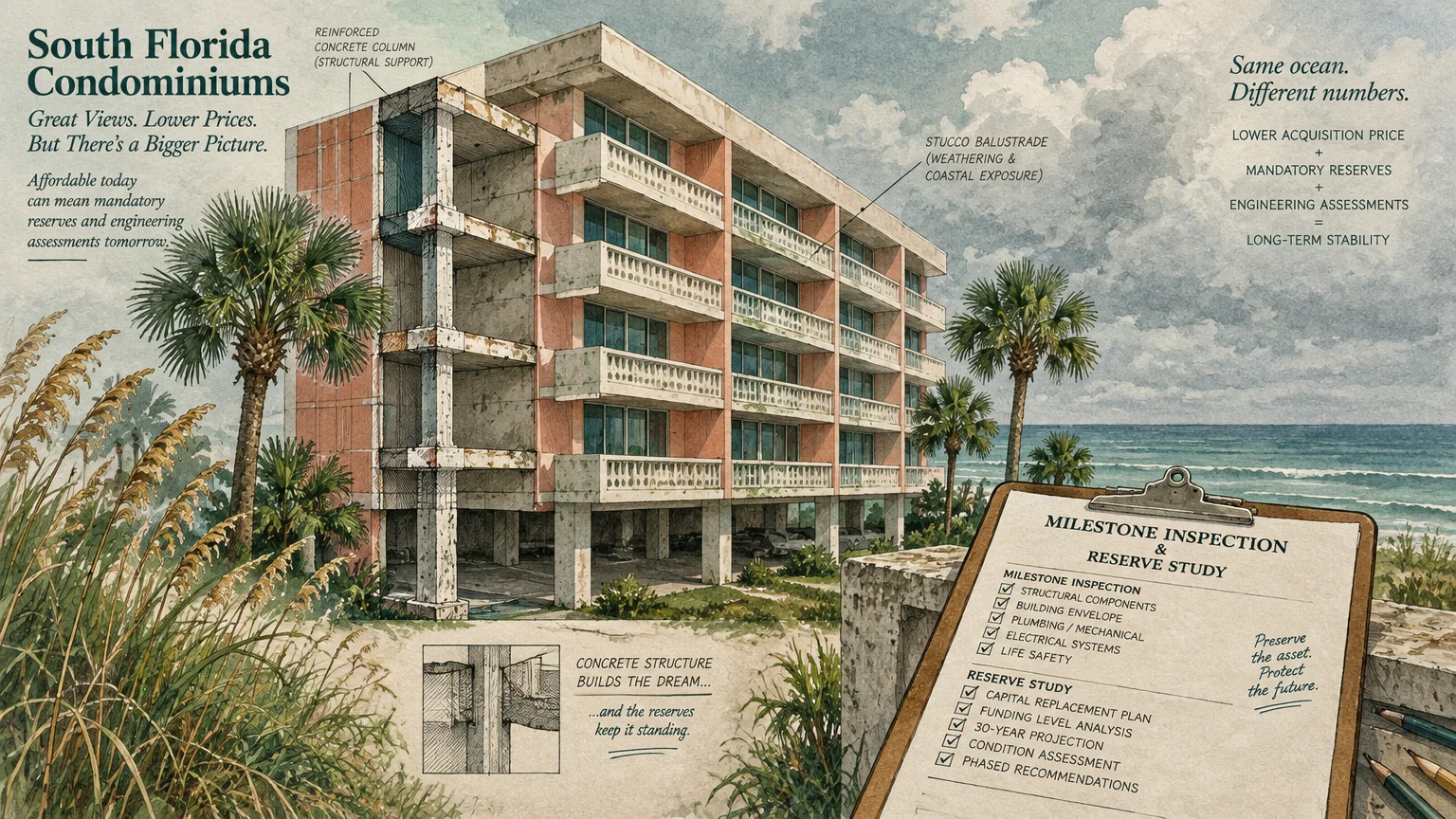
Under Florida statutes SB 4-D and HB 913, condominium associations with buildings of three or more habitable stories must conduct a Structural Integrity Reserve Study. Associations must fully fund cash reserves for roofs, load-bearing walls, foundations, and electrical systems.
HB 913 established a reserve study compliance deadline of December 31, 2025, or December 31, 2026, when coordinated with milestone inspections. The legislation also raised the mandatory reserve item threshold to $25,000.
Older developments that deferred maintenance for decades can no longer waive reserve funding through member votes. To comply with state law, many associations have levied mandatory special assessments running into thousands of dollars per owner.
These sudden financial demands explain why you see older Florida condominiums listed for bargain prices under $100,000. Current owners often list their units cheaply to escape impending special assessments and doubling monthly maintenance dues.
Before making an offer on any Florida condo, demand a copy of the latest reserve study and recent board meeting minutes. You must verify whether the building faces upcoming structural assessments that could wipe out your initial purchase savings.
Calculating the True Monthly Cost of Living
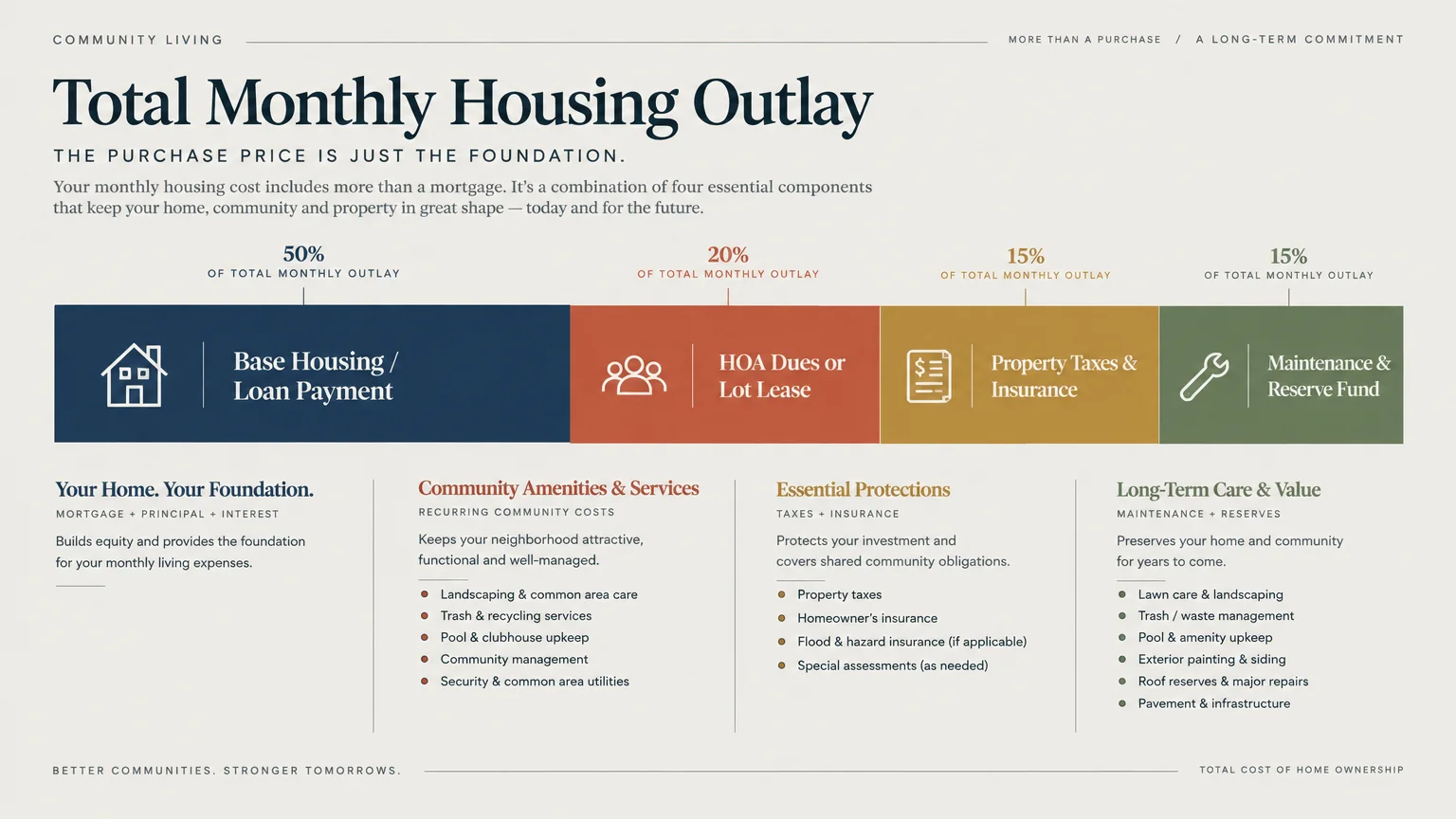
A home priced at $85,000 can easily cost more each month than a home priced at $150,000 if recurring fees are high. You must calculate your comprehensive monthly outflow before committing to any purchase.
In condominium communities, monthly Homeowners Association (HOA) fees cover exterior maintenance, security, trash removal, and recreational facilities. In older developments with extensive amenities, these monthly fees frequently range from $400 to over $1,000.
Some communities charge a mandatory one-time capital contribution or entrance fee at closing. These upfront fees can range from several hundred to several thousand dollars to bolster community reserve accounts.
Property taxes represent another recurring expense, though 55+ condos generally carry modest tax assessments. Research local county property tax exemptions, which often provide senior discounts or homestead exemptions for permanent residents.
Insurance coverage requirements also require careful calculation. Condominium owners need an HO-6 policy for interior walls and personal property, while manufactured home owners require specialized mobile home policies.
Coastal regions present additional insurance hurdles due to rising hurricane and windstorm premiums. Always obtain binding insurance quotes on a prospective property during your contractual inspection window.
Age Restrictions and Protections Under Federal Law
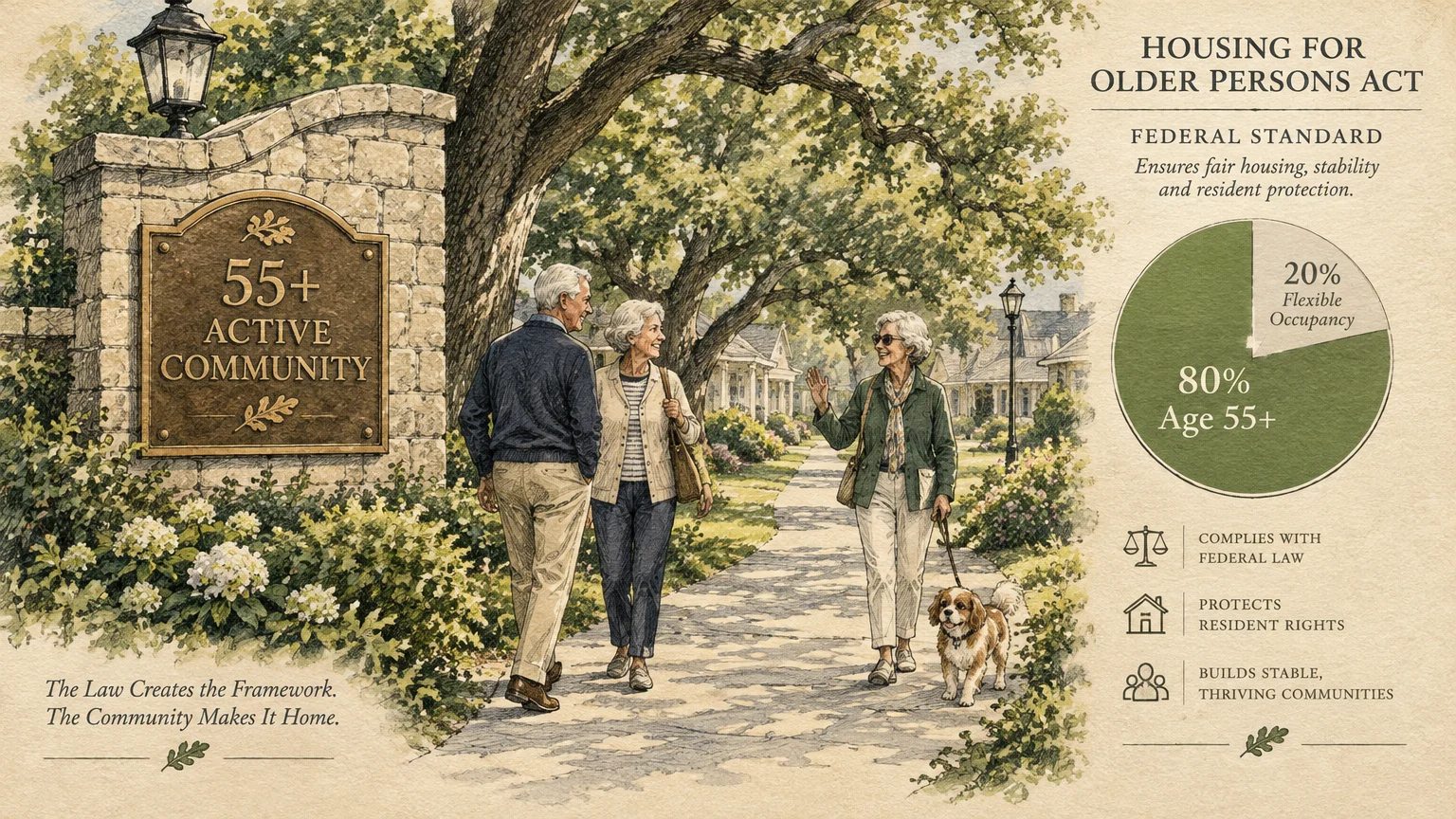
Age-restricted developments operate under strict federal guidelines designed to protect their unique neighborhood atmosphere. Congress established these standards through the Housing for Older Persons Act of 1995, which amended the Fair Housing Act.
Under the law’s well-known 80/20 rule, a 55+ community must have at least 80% of its occupied units inhabited by at least one person aged 55 or older. The community must publish and follow policies that demonstrate explicit intent to house older persons.
Federal law permits individual communities to establish stricter guidelines for the remaining 20% of their housing units. Many communities choose not to use the 20% exception at all, requiring all purchasing households to include a qualifying senior.
Communities designated for residents aged 62 and older must adhere to an even stricter standard. In a 62+ community, 100% of residents must meet the minimum age requirement, with no exemptions for younger household members.
Review the community’s covenants, conditions, and restrictions regarding younger family members and guest stays. Most 55+ communities limit visits from grandchildren or younger relatives to 30 or 60 days per calendar year.
If you share a household with an adult child or a younger spouse, verify the community bylaws before submitting an offer. Confirm that your family arrangement complies with community rules to avoid costly legal disputes or forced resales.
Aligning Housing Costs with Fixed Retirement Incomes
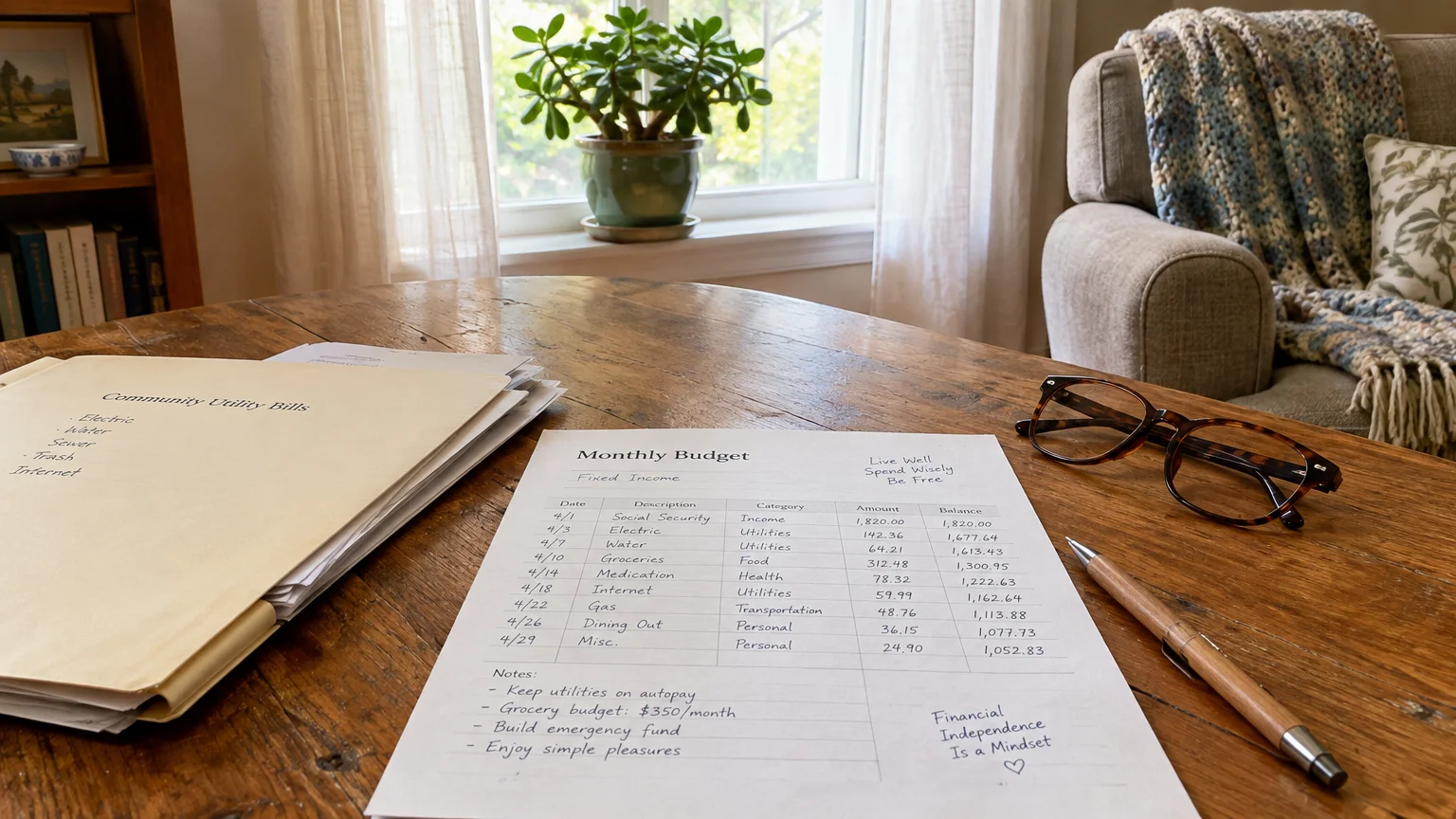
Balancing housing costs against your monthly income provides long-term financial security. Fixed retirement incomes require careful budgeting to absorb annual cost-of-living adjustments and inflationary price hikes.
According to the Social Security Administration (SSA), the average monthly benefit for a retired worker is approximately $2,084 to $2,086 in late 2026. That equates to roughly $25,000 per year for an individual retiree relying primarily on Social Security.
The SSA announced a 3.6% cost-of-living adjustment effective January 2027, boosting the average retired worker’s benefit by about $75 each month. Even with annual increases, fixed incomes leave little margin for unexpected housing assessments.
Financial planners recommend capping total housing costs at 30% of your gross monthly retirement income. If you receive $2,100 per month, your combined lot rent, HOA fees, property taxes, and insurance should not exceed $630.
Retirees with modest incomes can explore support programs through Benefits.gov to reduce secondary living costs. The platform helps seniors identify local utility subsidies, property tax deferral programs, and nutritional assistance.
Healthcare accessibility is another critical factor when choosing an affordable retirement community. Review plan options and medical provider networks on Medicare.gov before relocating across county or state lines.
Moving outside your current Medicare Advantage network can disrupt care and increase out-of-pocket medical bills. Make sure your preferred specialists and regional hospital networks accept your coverage in your prospective retirement destination.
Community Comparison and Due Diligence Checklist
Understanding the fundamental differences between various affordable housing structures helps you choose the right environment. Each ownership structure carries distinct financial requirements, rights, and maintenance obligations.
| Housing Structure | Typical Price Range | Monthly Fee Type | Pros | Cons |
|---|---|---|---|---|
| Manufactured Home (Land-Lease) | $40,000 – $90,000 | Lot Rent ($600 – $1,100) | Standalone walls; modern floor plans; no shared ceilings. | Monthly land rent can increase; personal property financing. |
| Older 55+ Condominium | $60,000 – $100,000 | HOA / Condo Dues ($350 – $900) | Real estate ownership; shared amenities; exterior upkeep covered. | Risk of special assessments; strict association oversight. |
| Housing Cooperative (Co-op) | $50,000 – $85,000 | Carrying Charge ($400 – $800) | Lower purchase costs; property taxes often included in fee. | Board approval required to buy/sell; financing is difficult. |
| Resident-Owned Park (ROC) | $75,000 – $100,000+ | Co-op Fee ($250 – $500) | Residents control rent; long-term financial stability. | Higher upfront share price; limited inventory available. |
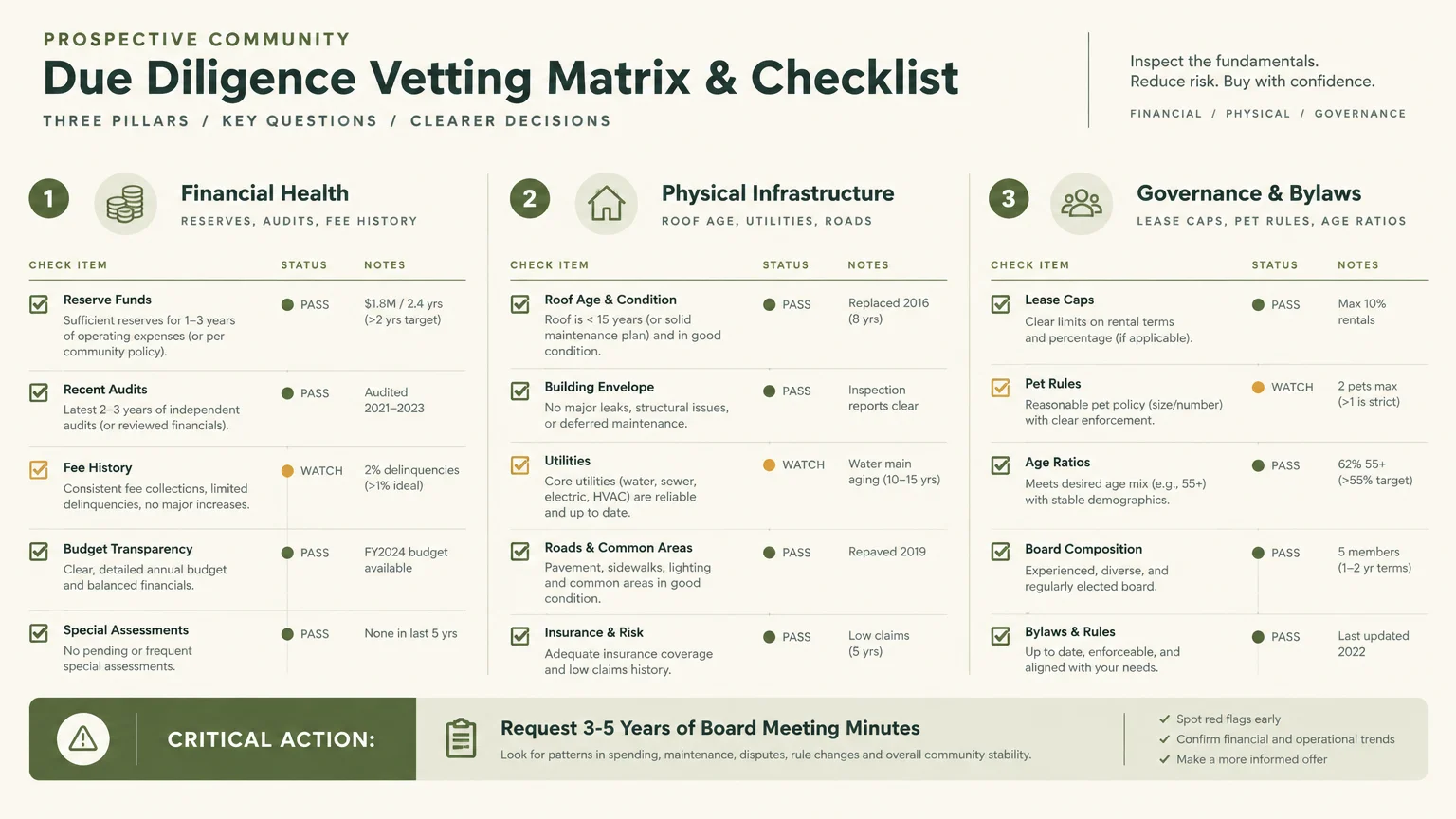
Thorough due diligence prevents unpleasant surprises after you close on a home. Work through this practical vetting checklist whenever you evaluate a prospective retirement property:
- Inspect association financial reserves: Review the community’s operating budget and structural reserve studies. Ensure the reserve fund holds sufficient cash to replace roofs, repave roads, and maintain community clubhouses.
- Examine board meeting minutes: Read the past twelve months of board meeting minutes. Look for discussions regarding upcoming fee increases, deferred maintenance, litigation, or proposed special assessments.
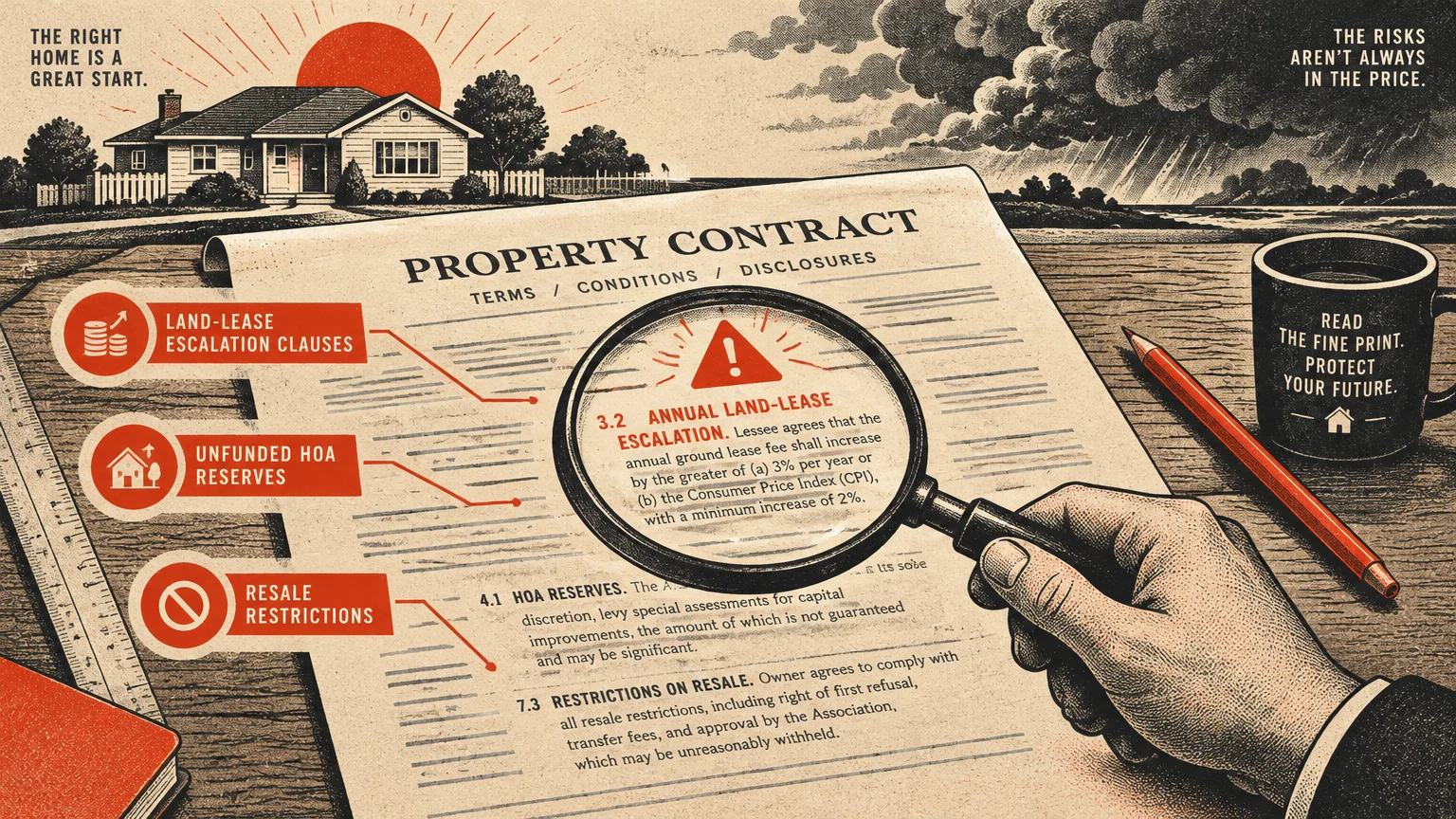
- Audit the lot lease contract: For manufactured homes, read the land-lease contract carefully. Check whether lot rent increases are pegged to inflation or left entirely to management discretion.
- Schedule a private structural inspection: Hire an independent, licensed home inspector specializing in older condos or manufactured homes. Have them inspect the plumbing, electrical panel, subfloors, and HVAC unit.
- Evaluate parking and vehicle rules: Verify rules concerning recreational vehicles, golf carts, and guest parking. Some communities restrict commercial vehicles or charge extra fees for secondary vehicle parking.
- Test the commute to healthcare facilities: Drive from the neighborhood to the nearest emergency room, pharmacy, and primary care clinic. Ensure traffic patterns and distances remain manageable for your daily needs.
Costly Mistakes and Traps to Avoid
Focusing entirely on a sub-$100,000 sticker price can lead to costly financial miscalculations. Avoiding these frequent traps keeps your retirement move rewarding and secure.
Never buy a home without inspecting the physical structure, even if you are purchasing the property as-is. Repairing an aged central air conditioning system or fixing degraded subflooring can instantly add $10,000 to your moving costs.
Do not assume that all 55+ communities permit you to rent out your home in the future. Many communities enforce strict leasing caps or prohibit renting entirely during your first two years of ownership.
Avoid communities with high ratios of delinquent HOA dues among existing residents. When multiple owners stop paying monthly maintenance fees, the association must pass those deficits onto paying residents through fee increases.
Pay close attention to master insurance policies in condominium developments. Ensure the association carries adequate property, flood, and liability coverage to protect against catastrophic weather events.
Finally, visit the community during different times of the week before making an offer. Talk with existing neighbors at the clubhouse or pool to gain firsthand insights into management responsiveness and overall community spirit.
Frequently Asked Questions
Can I use a conventional mortgage to buy a manufactured home under $100,000?
You cannot secure a conventional mortgage if the home sits on leased land. You must pay cash, arrange personal property chattel financing, or explore government-backed Title I manufactured home loans.
Can my adult child under age 55 live with me in a 55+ community?
Individual community bylaws determine whether adult children can reside in the home. Most 55+ communities allow adult children over age 18 or 19 to live with a qualifying senior, but they prohibit minors.
What happens if a condominium association issues a special assessment I cannot afford?
Associations place liens on units with unpaid assessments, which can ultimately lead to foreclosure. Some associations offer structured monthly payment plans, but you must factor potential assessment risks into your emergency reserves.
Why are so many South Florida retirement condos selling for less than $100,000?
Recent state structural safety laws mandate comprehensive inspections and fully funded reserves for older multi-story buildings. These requirements have caused monthly HOA fees and special assessments to spike, prompting owners to sell at steep discounts.
Do homes under $100,000 appreciate in value over time?
Manufactured homes on leased land typically appreciate more slowly than traditional real estate and can depreciate as they age. Older condominiums experience modest appreciation, but high association dues can suppress future resale values.
For additional senior resources, visit
Administration for Community Living (ACL), Eldercare Locator, AARP, Alzheimer’s Association and American Heart Association.
Disclaimer: The information in this article is for educational purposes only and is not intended to be a substitute for professional financial, legal, or medical advice. Always consult with a qualified expert for advice tailored to your personal situation.