
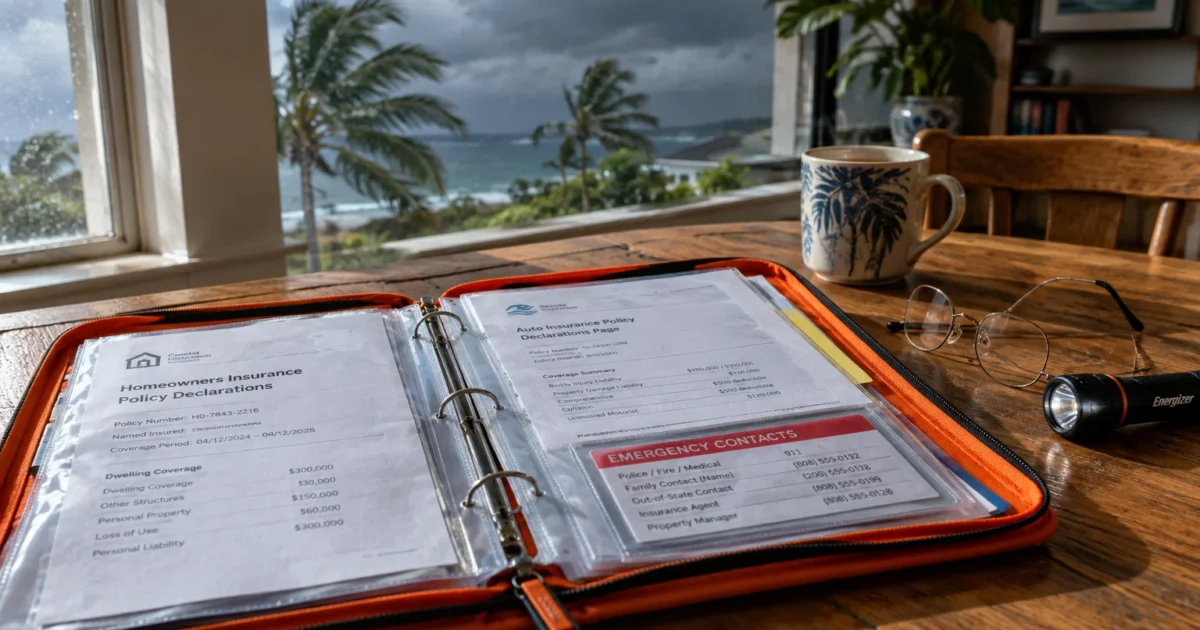
Gathering your vital paperwork before tropical winds arrive protects your home and financial security. Having the right insurance documents ready ensures you can file claims quickly and secure immediate disaster relief.
The official Atlantic hurricane season runs annually from June 1 through November 30. Preparing early gives you the upper hand before store shelves empty and storm warnings escalate.
This comprehensive hurricane insurance checklist outlines every document you need to protect your savings and independence. Let us assemble your emergency records step by step.
Why Hurricane Season Preparation Starts With Paperwork
Severe weather challenges everyone, but older adults face distinct risks when tropical systems make landfall. Mobility limitations, fixed incomes, and chronic health conditions turn unexpected storm damage into a genuine crisis.
During Hurricane Ian in 2022, state records revealed that more than 60 percent of documented storm fatalities were individuals aged 60 or older. Many survivors struggled for months simply trying to prove ownership of their damaged property.
According to research from AARP, older Americans experience greater financial strain after climate disasters because rebuilding costs rapidly deplete fixed retirement savings. Delayed insurance claims only deepen that hardship.
When wind or storm surge damages your dwelling, adjusters require immediate proof of coverage. Searching through soaked file cabinets or disorganized drawers adds unnecessary panic to an already stressful evacuation.
Organizing your disaster preparedness documents ahead of time eliminates costly delays. A well-prepared records binder gives you immediate access to phone numbers, policy details, and identification when you need them most.
Essential Property Policies: Homeowners, Flood, and Windstorm
Many homeowners assume their standard insurance policy covers every type of storm damage. Unfortunately, standard policies contain specific exclusions that leave seniors vulnerable to catastrophic out-of-pocket costs.
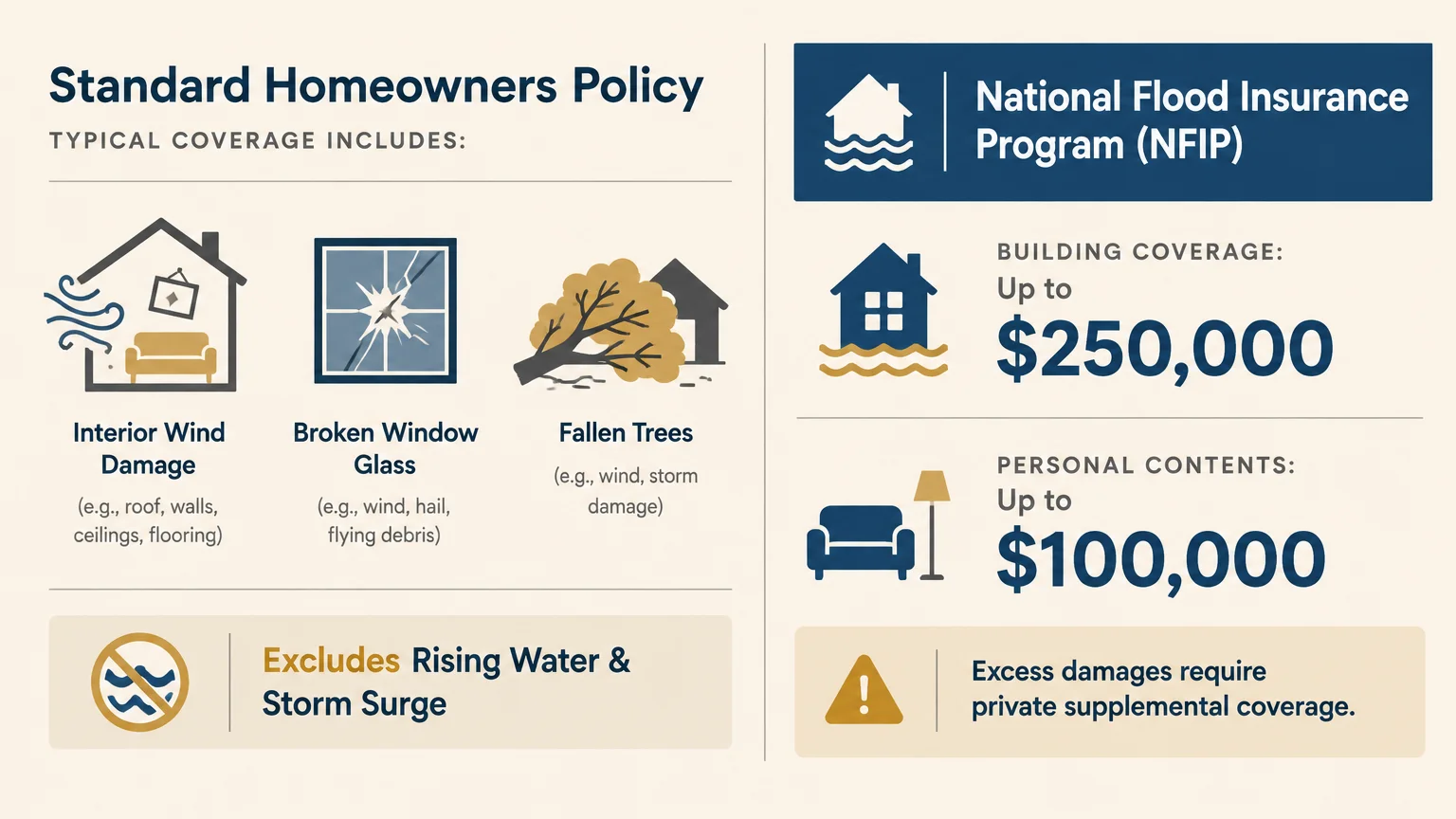
A standard homeowners policy generally covers interior wind damage, broken windows, and falling trees. However, standard policies almost universally exclude damage caused by rising water, coastal storm surges, and overflowing rivers.
To protect your home against flood waters, you must maintain a separate policy through the National Flood Insurance Program (NFIP) or a private carrier. Standard NFIP residential policies cap building coverage at $250,000 and personal contents at $100,000.
If your home structural replacement cost or belongings exceed those federal limits, you may need a private excess flood policy. Evaluate these caps carefully against current local rebuilding costs.
Timing is critical when securing flood coverage. Voluntary NFIP policies enforce a mandatory 30-day waiting period before coverage takes effect, meaning you cannot buy protection once forecasters track a tropical system.
In high-risk coastal zones, your insurer may also exclude wind and hail damage from your base homeowners policy. In these areas, you must purchase a separate windstorm policy or rider to ensure complete protection.
You should locate and organize the following property records right now:
- Policy Declarations Pages: The summary page for your homeowners, flood, and windstorm policies listing policy numbers, coverage limits, and agent contacts.
- Full Policy Booklets: The complete printed contracts detailing specific hurricane riders, endorsements, and exclusions.
- Proof of Premium Payments: Recent bank statements or receipts showing your policy premiums remain active and paid in full.
- Mortgage and Escrow Statements: Current contact information for your mortgage lender if your insurance payments flow through an escrow account.
- Mobile Home Titles: Specific structural and anchor tie-down certificates if you reside in a manufactured or mobile home community.
Hurricane Deductibles: Deciphering the Fine Print and Percentage Costs
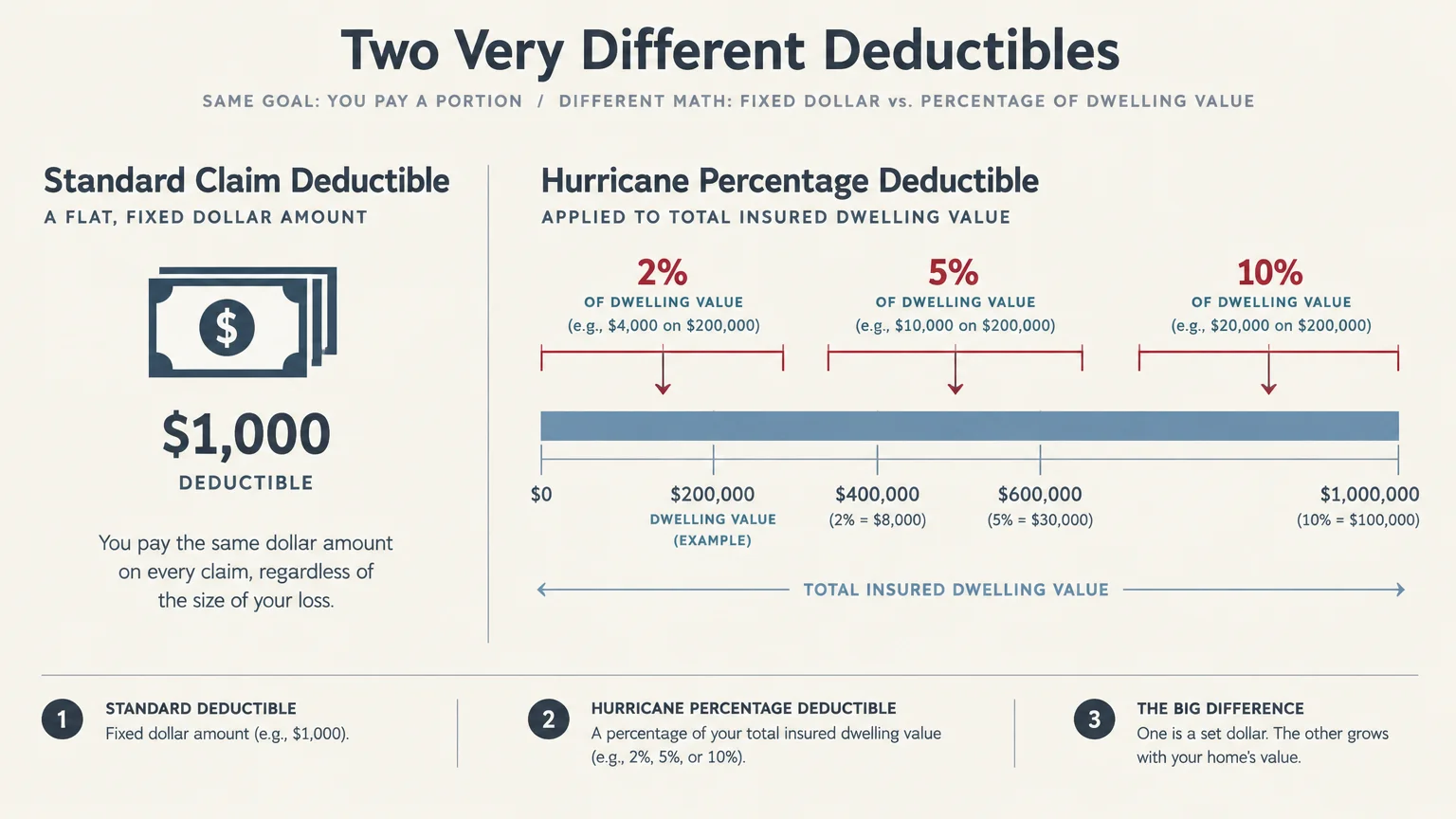
Many retirees expect to pay a familiar flat deductible, such as $500 or $1,000, after a severe storm. Hurricane claims, however, usually operate under very different contractual rules.
In 19 coastal states and Washington, D.C., insurance regulations permit carriers to enforce percentage-based hurricane or named-storm deductibles. These deductibles typically range from 1% to 5%, and sometimes reach 10%.
This percentage applies to your home’s total insured structural value, not the total cost of the physical damage. This contractual nuance can produce substantial out-of-pocket expenses before your insurer pays a single dollar.
Consider a home insured for $300,000 with a mandatory 5% hurricane deductible. In this scenario, you must pay $15,000 out of pocket toward storm repairs before your policy benefits apply.
The Consumer Financial Protection Bureau advises consumers to maintain emergency liquid savings specifically earmarked for unexpected property deductibles. For retirees on fixed monthly pensions, knowing this dollar amount prevents devastating surprises.
| Insured Home Value (Coverage A) | 2% Named Storm Deductible | 5% Hurricane Deductible | 10% Coastal Deductible |
|---|---|---|---|
| $200,000 | $4,000 | $10,000 | $20,000 |
| $300,000 | $6,000 | $15,000 | $30,000 |
| $400,000 | $8,000 | $20,000 | $40,000 |
| $500,000 | $10,000 | $25,000 | $50,000 |
Review your declarations page carefully to confirm whether your deductible triggers for any named tropical storm or strictly for Category 1 and higher hurricanes. The specific trigger language dictates when that higher deductible takes effect.
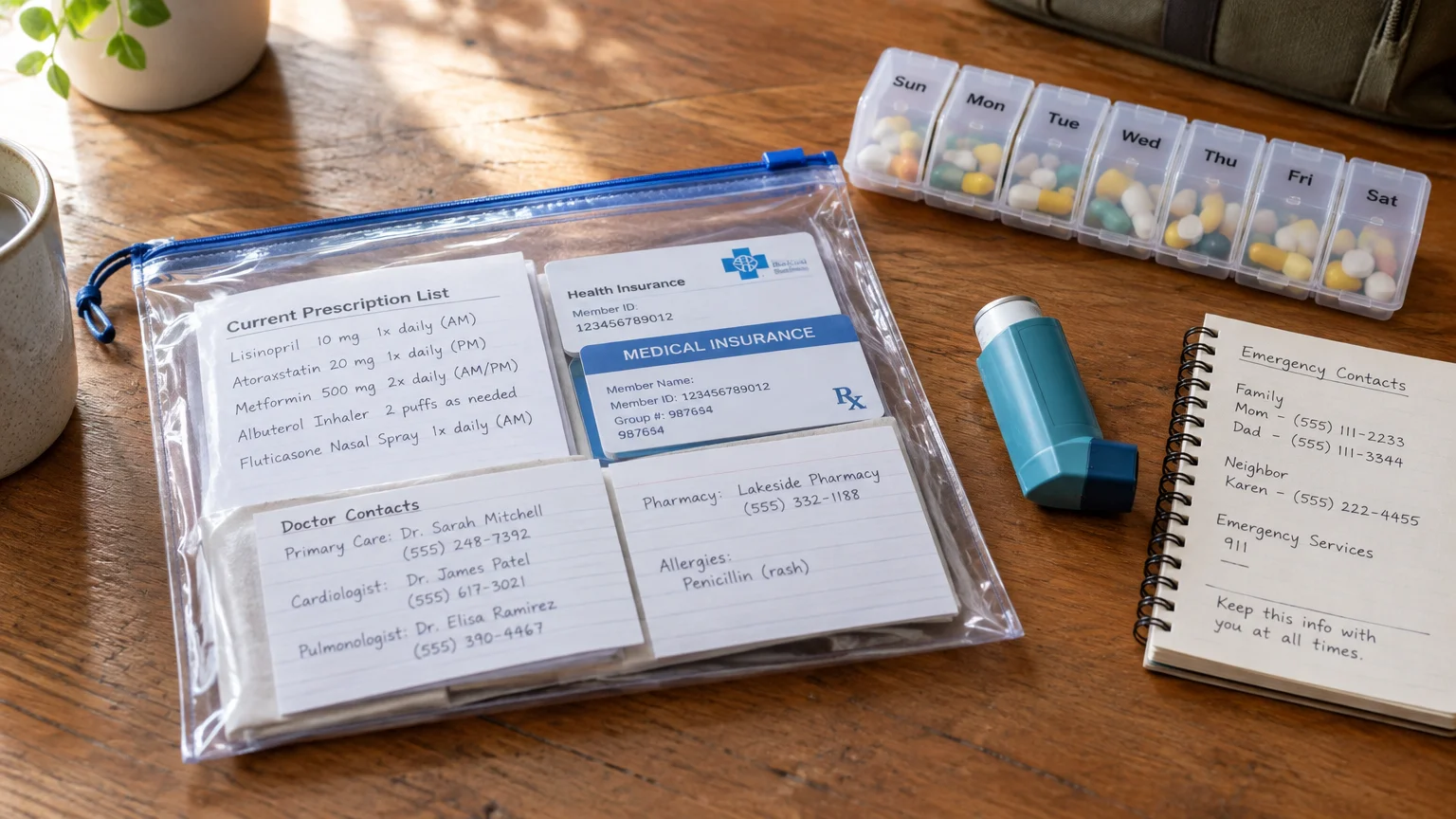
Critical Health and Medical Records to Safeguard
When people assemble insurance paperwork for storms, they frequently focus exclusively on real estate. Yet protecting your medical access and health insurance documentation is equally essential during an extended evacuation.
Power outages from hurricanes frequently shut down pharmacies, local clinics, and hospital electronic records systems. Having tangible documentation ensures you receive critical prescription refills and urgent treatments without dangerous disruptions.
Guidance from the National Institute on Aging emphasizes that older adults should maintain a comprehensive list of medications, dosages, and medical equipment needs during emergencies. This simple preparation protects individuals with complex care regimens.
Gather your healthcare paperwork into your primary storm binder:
- Health Insurance Cards: Front and back photocopies of your original red, white, and blue Medicare card, along with Medicare Advantage or Medigap supplemental plan cards.
- Prescription Drug Coverage Details: Your Part D plan cards, preferred pharmacy contact numbers, and a complete list of generic and brand-name medications.
- Physician and Specialist Directory: A single reference sheet listing names, office addresses, emergency phone lines, and hospital affiliations for all your regular doctors.
- Medical Equipment Documentation: Model numbers, serial numbers, and supplier contact details for oxygen concentrators, mobility scooters, CPAP machines, and dialysis supplies.
- Immunization and Chronic Care Summaries: Brief medical histories detailing heart conditions, diabetes care plans, allergies, and recent vaccination records.
If you rely on battery-operated or plug-in medical devices, document your electric utility company’s priority restoration registry status. Keep that confirmation letter tucked securely inside your medical records folder.
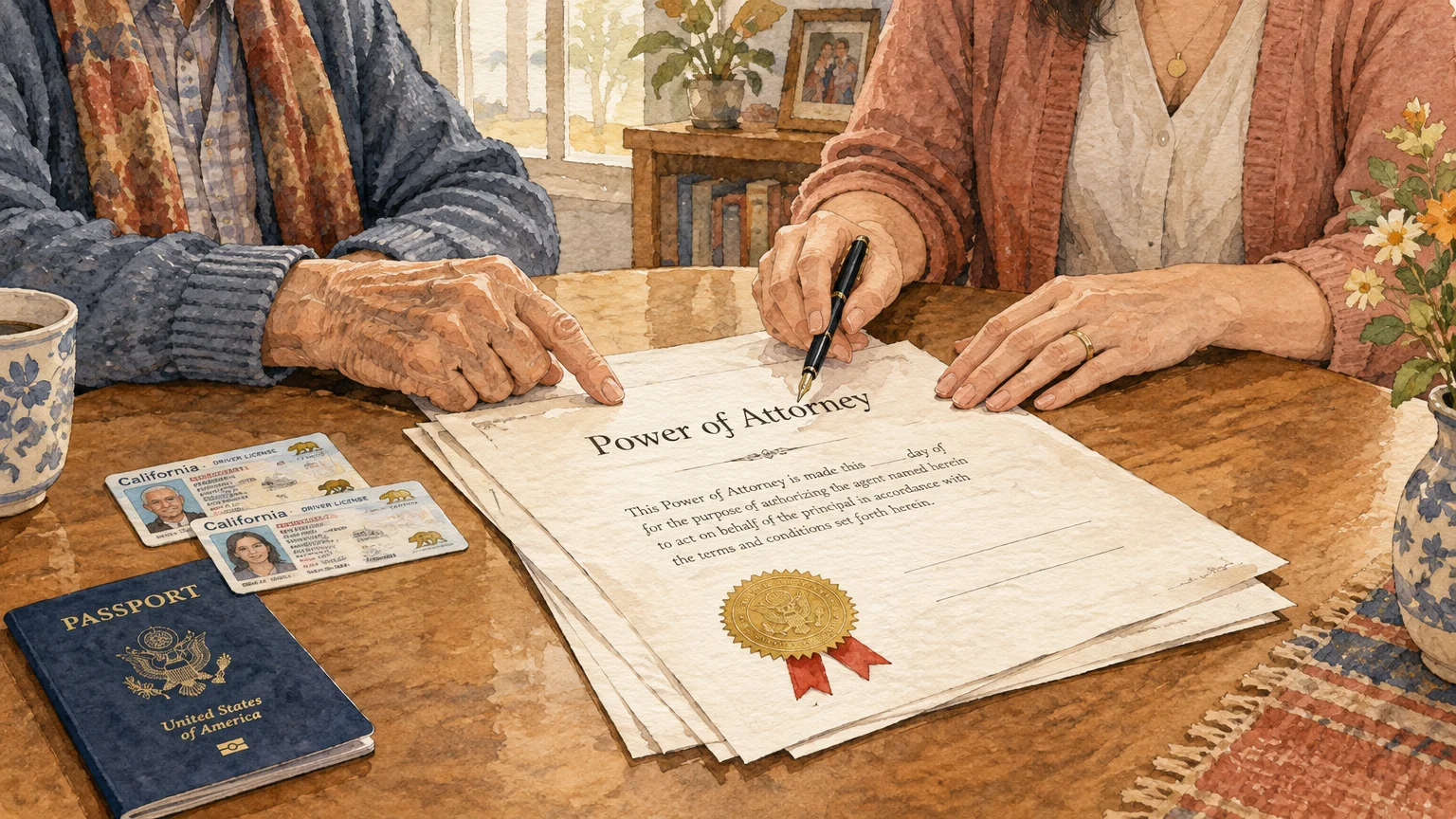
Legal Authority: Powers of Attorney and Identification Essentials
Severe hurricanes frequently cause unexpected physical separations between family members. An adult daughter or son may need to manage insurance claims, arrange housing, or coordinate medical care on your behalf.
Without formal legal authority documentation, financial institutions, insurance adjusters, and federal agencies will refuse to speak with your designated family caregiver. Privacy laws strictly prevent unauthorized individuals from managing your accounts.
Including legal authority documents in your disaster file ensures trusted relatives can advocate for you immediately. If an injury or illness occurs during evacuation, these instruments streamline every administrative process.
Ensure your emergency binder contains certified or clean physical copies of the following legal instruments:
- Durable Financial Power of Attorney: Grants your chosen agent legal authority to sign insurance checks, approve contractor agreements, and manage your bank accounts if you become incapacitated.
- Healthcare Proxy or Medical Power of Attorney: Designates a trusted loved one to make critical medical decisions if you cannot express your wishes.
- HIPAA Privacy Authorization Forms: Explicitly allows doctors and hospital staff to share your diagnostic and treatment updates with family members.
- Living Will and Advance Directives: Outlines your exact preferences for life-sustaining medical care during critical emergencies.
- Government Identification: Clear color copies of your driver’s license, state ID card, U.S. passport, and Social Security card.
- Real Estate and Ownership Records: Copies of your home deed, vehicle titles, property tax receipts, and current lease agreements if you rent.
If your legal paperwork references a living trust, include the trust agreement’s certificate or abstract page. Adjusters require this document to verify who holds legal authority to cash settlement checks made payable to a family trust.

Documenting Your Possessions: A Step-by-Step Home Inventory Guide
After a catastrophic storm strikes, recalling every item inside your closets, garage, and kitchen becomes virtually impossible. Shock and trauma naturally cloud memory when dealing with the immediate aftermath of a disaster.
Creating a thorough home inventory beforehand provides indisputable proof of your personal belongings. Adjusters settle claims significantly faster when homeowners provide clear photographic evidence rather than handwritten estimates.
You do not need sophisticated software or extensive technical skills to complete this project. A simple video walkthrough or organized photo album provides all the evidence an insurance adjuster needs.
Follow this straightforward process to document your home and personal property:
- Conduct a Slow Video Walkthrough: Use a smartphone or digital camera to record every room, opening cabinet doors, closets, and storage chests while narrating what you see.
- Photograph Valuable Furnishings and Collections: Take clear, well-lit photos of furniture, antiques, musical instruments, fine jewelry, and specialized tool collections.
- Capture Model and Serial Numbers: Photograph the manufacturer plates located on the backs of televisions, major kitchen appliances, computers, and heating equipment.
- Document Senior-Specific Home Modifications: Capture receipts and close-up images of wheelchair ramps, walk-in safety tubs, stair lifts, and specialized bathroom handrails.
- Preserve Receipts and Appraisals: Store paper receipts, certified appraisals, and purchase agreements for expensive items inside your document file.
Senior-specific home accessibility improvements carry high replacement costs that adjusters easily overlook. Having documented invoices ensures your insurer includes these vital modifications in your total structural settlement.
Once you record your inventory, upload the digital files to secure online storage or hand an extra memory card to an out-of-town family member. Redundancy guarantees your hard work survives even if your computer sustains damage.
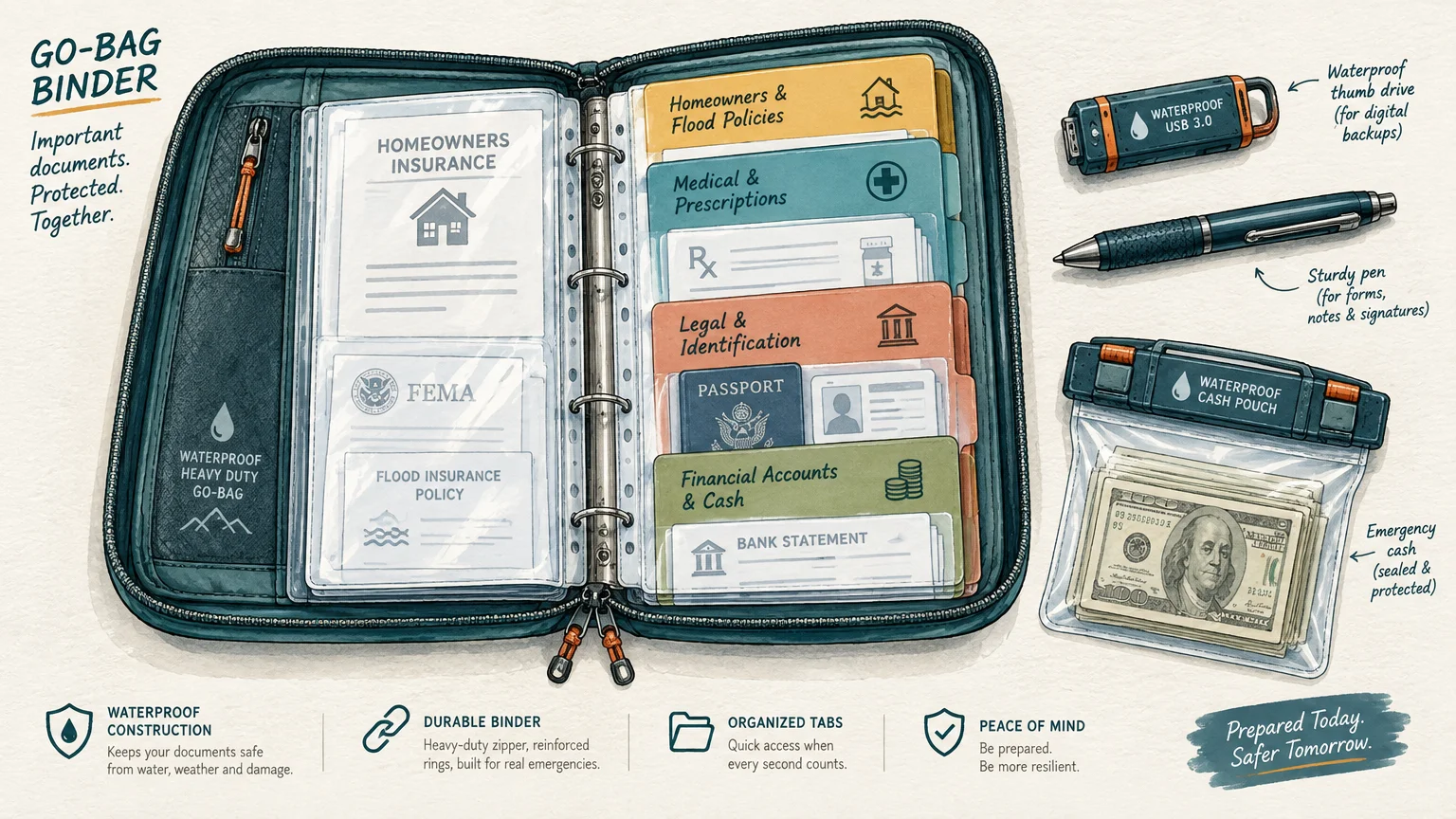
Building Your Waterproof Grab-and-Go Document Binder
Having complete insurance paperwork helps very little if those files sit trapped inside a flooded home while you stay at an evacuation shelter. You must store your records in a portable, protected system ready for immediate travel.
Disaster preparedness documents require physical protection against both wind-driven rain and extreme heat. A dedicated grab-and-go binder protects your life’s paperwork from physical destruction.
Select a durable, zippered binder or an expandable accordion folder constructed from water-resistant and fire-retardant materials. Look for lightweight cases featuring secure handles that you can carry effortlessly without straining your joints.
Assemble your emergency paperwork binder using these practical steps:
- Insert Clear Heavy-Duty Plastic Page Protectors: Slide each policy sheet, deed, and identification card into individual plastic sleeves to shield pages from moisture.
- Organize With Color-Coded Tab Dividers: Separate your binder into distinct sections labeled Property Insurance, Vehicle Policies, Health Records, Legal Documents, and Home Inventory.
- Include an Encrypted USB Thumb Drive: Store high-resolution scans of all paperwork, video home walkthroughs, and tax returns on a password-protected digital flash drive.
- Pack an Emergency Cash Reserve: Place small-denomination bills ($1, $5, $10, and $20) inside a sealed waterproof pouch; ATMs and credit card machines fail when power grids collapse.
- Add a Waterproof Pen and Notepad: Keep writing supplies handy so you can write down claim numbers, adjuster names, and FEMA representative notes during the storm recovery phase.
Store your completed binder in a secure, accessible location on an upper floor or high shelf rather than in a ground-level basement or floor cabinet. Inform your designated family members or local emergency contacts exactly where to find it.
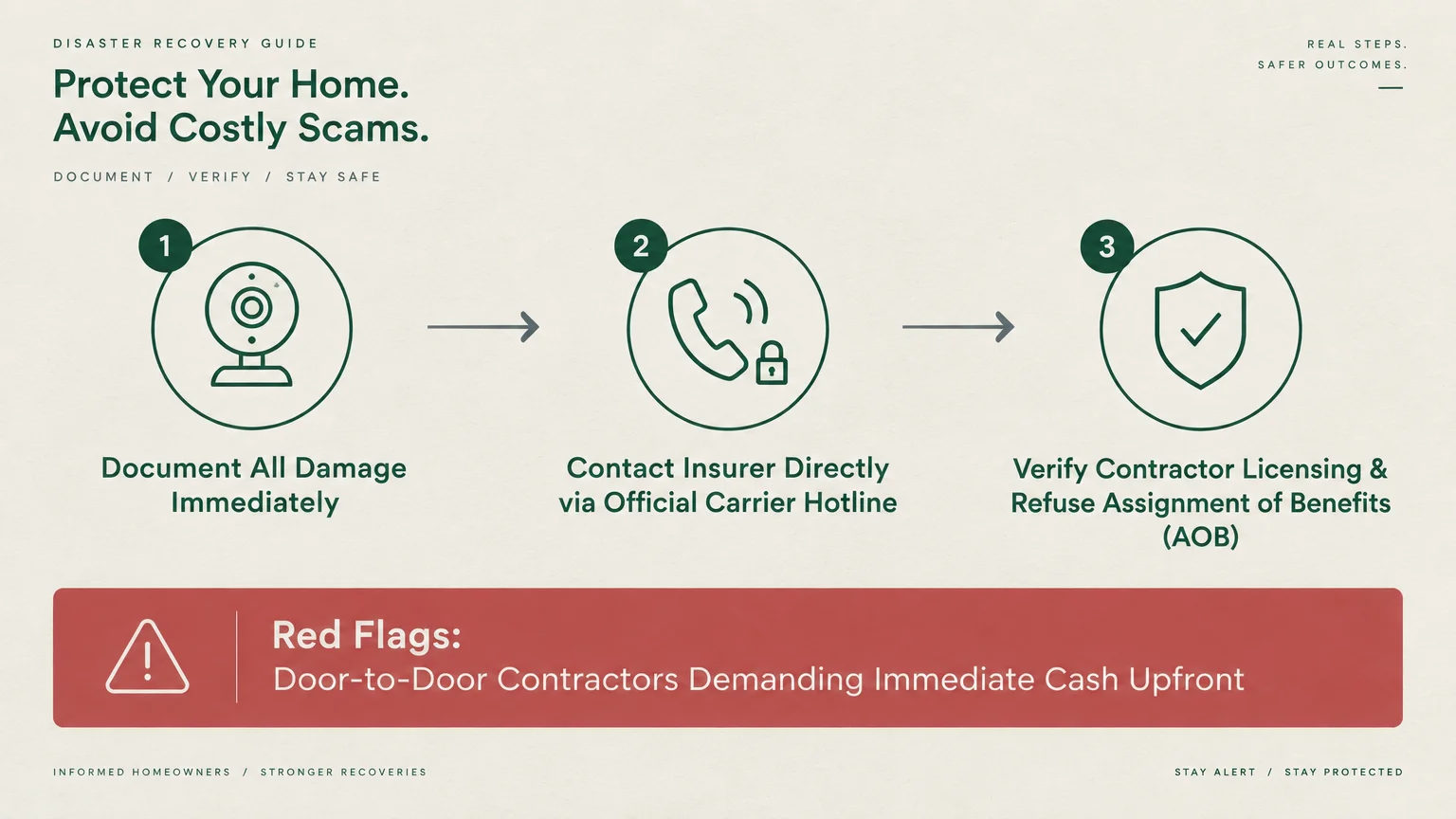
Filing Claims and Protecting Yourself From Post-Storm Scams
The days immediately following a hurricane are chaotic and demanding. Navigating the claims process with your emergency paperwork in hand allows you to start recovery ahead of the crowd.
Contact your insurance carrier or agent as soon as safety permits. Thousands of policyholders file claims simultaneously after major storms, and insurers assign adjusters on a first-come, first-served basis.
Federal disaster assistance provides supplemental relief, but it does not replace comprehensive private coverage. For Fiscal Year 2025, the Federal Emergency Management Agency (FEMA) capped the Individuals and Households Program (IHP) at $43,600 for Housing Assistance and $43,600 for Other Needs Assistance.
FEMA requires applicants to file private insurance claims first before federal grants step in to address unmet basic needs. You can explore federal disaster programs and eligibility rules through Benefits.gov during recovery periods.
Under federal regulations implemented in March 2024, FEMA simplified the application process and removed prior rules that denied repair aid for homes with pre-existing damage. Seniors with older residences can now receive assistance for storm impacts even if prior deferred maintenance existed.
Unfortunately, predatory contractors and fraudulent operators actively target vulnerable older homeowners following natural disasters. Unscrupulous door-to-door solicitors often push aggressive repair schemes on distressed retirees.
Protect your insurance settlement and your property rights by following these safety principles:
- Never Sign an Assignment of Benefits (AOB) Contract: Do not sign paperwork transferring your direct insurance claim rights and settlement funds over to a third-party roofing or repair contractor.
- Verify Professional Licenses and Liability Coverage: Demand to see state licensing credentials, workers’ compensation policies, and proof of general liability insurance before allowing workers onto your property.
- Reject Unsolicited Cash-Only Demands: Reputable contractors never require full upfront payments in cash or pressure you to sign contracts before adjusters inspect the damage.
- Demand Written, Itemized Estimates: Insist on comprehensive estimates specifying materials, labor timelines, and warranty terms before approving any major repair work.
- Consult Your Local Building Department: Verify whether planned structural repairs require municipal permits before authorizing contractors to begin construction.
Frequently Asked Questions
Can I purchase flood insurance right before a hurricane makes landfall?
No, you cannot buy flood insurance at the last minute. The National Flood Insurance Program enforces a strict 30-day waiting period from the date of purchase before coverage becomes active.
Private flood insurers also suspend writing new policies as soon as the National Hurricane Center issues tropical storm watches or warnings. You must arrange flood coverage well before storm threats emerge.
What should I do if my insurance documents are ruined during a storm?
Contact your insurance agent, carrier, or mortgage lender immediately to request duplicate electronic copies of your policy declarations pages. Most national insurers maintain secure digital archives accessible via secure phone lines and mobile apps.
If you stored digital scans on an encrypted flash drive or in secure cloud storage, you can access those records from any computer. Keep your policy numbers recorded on a card in your wallet as an extra backup.
How does FEMA assistance interact with my private homeowners insurance?
By federal law, FEMA cannot duplicate benefits provided by your private homeowners or flood insurance policies. You must file claims with your private carriers first and submit their settlement or denial letters to FEMA.
If your private insurance payout falls short of basic living needs or your policy denies the claim, FEMA grants may help bridge the gap. FEMA assistance focuses on restoring safe, sanitary living conditions rather than full property replacement.
Does Medicare cover lost medications or broken medical devices after a hurricane?
Original Medicare and Medicare Advantage plans follow specialized emergency protocols when the federal government declares a formal disaster. Plans frequently waive “refill-too-soon” restrictions to replace essential medications lost during an evacuation.
For damaged durable medical equipment like oxygen concentrators or wheelchairs, contact your Medicare Advantage plan or 1-800-MEDICARE immediately. They provide expedited approval paths to replace medically necessary equipment destroyed by storm events.
What is the difference between a hurricane deductible and a standard deductible?
A standard deductible is a fixed dollar amount, such as $500 or $1,000, that you pay for common losses like pipe leaks or kitchen fires. You pay this flat fee regardless of total home value.
A hurricane deductible is a percentage of your home’s total insured structural value, typically between 1% and 5%. It triggers only when sustained storm conditions meet specific named-storm criteria defined in your state’s insurance statutes.
For additional senior resources, visit
Administration for Community Living (ACL), Eldercare Locator and AARP.
Disclaimer: The information in this article is for educational purposes only and is not intended to be a substitute for professional financial, legal, or medical advice. Always consult with a qualified expert for advice tailored to your personal situation.









Leave a Reply