
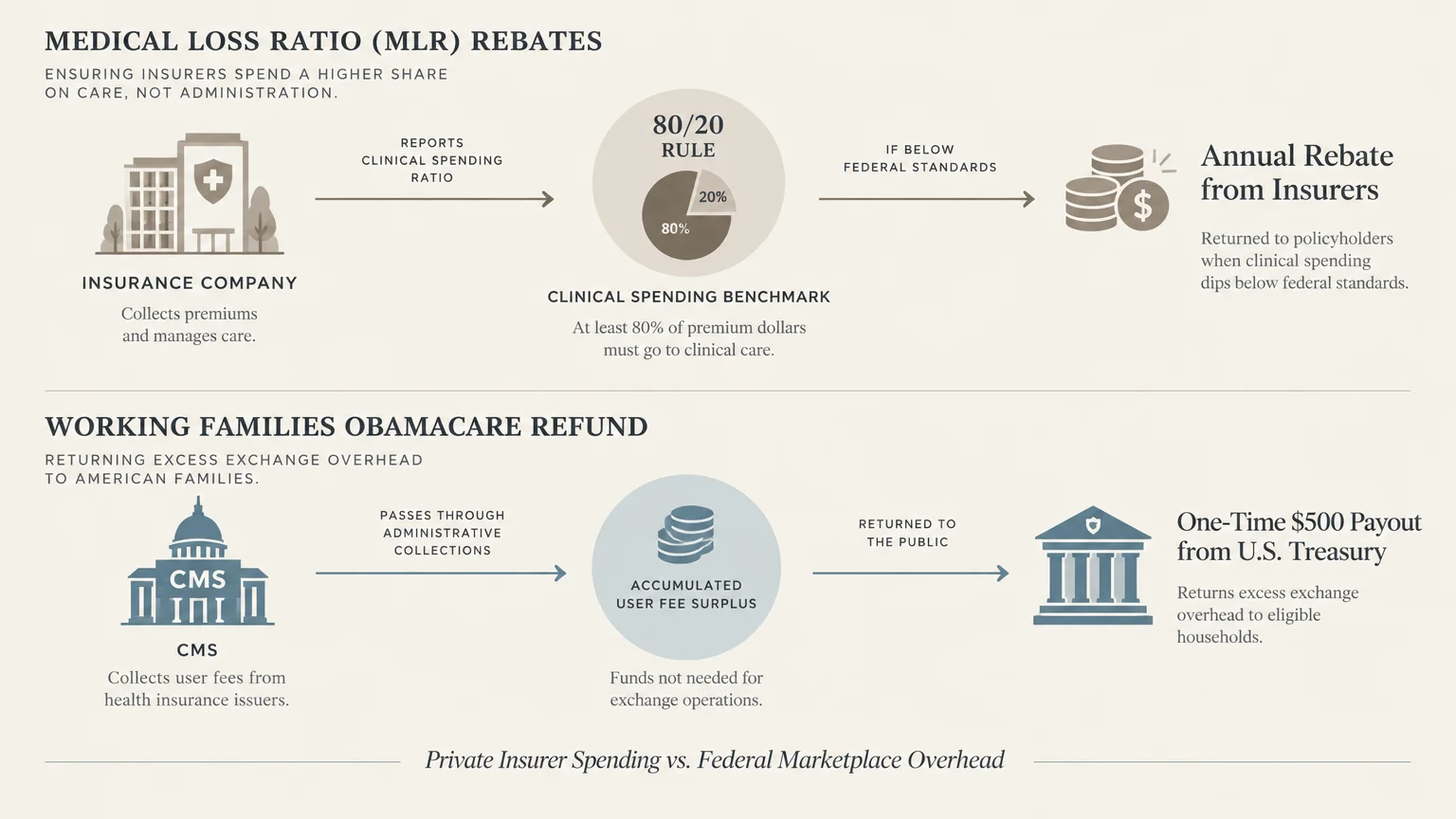
Obamacare Refund vs. Annual Medical Loss Ratio Rebates
You may also wonder how this $500 distribution compares to standard insurance rebates. Every year, private insurance companies issue what federal regulations call Medical Loss Ratio rebates.
The Affordable Care Act requires private health insurers to spend most premium revenues directly on medical care. Insurers selling individual plans must spend at least 80% of premiums on patient treatments and healthcare quality.
For large employer group plans, insurance companies must spend at least 85% on medical care. Insurers can use only the remaining 15% to 20% for administrative overhead and profit.
When an insurer spends less than these required percentages, it must refund the difference to policyholders. Private insurers distributed approximately $759.2 million in regular MLR rebates by September 30, 2026.
Crucially, MLR rebates come straight from your private insurance company, not the federal government. Your insurer mails a corporate check or credits your future monthly premium directly.
In contrast, the $500 refund comes directly from the U.S. Treasury Department. It repays surplus exchange user fees rather than clinical spending shortfalls.
If you held an unsubsidized policy with an insurer that failed its spending threshold, you could receive both. You would collect your private carrier rebate alongside the $500 federal surplus check.