

Navigating healthcare coverage, retirement income, and long-term care decisions can feel overwhelming when you face complex bureaucracies on your own. Reputable senior advocacy organizations provide free or low-cost guidance, legal protections, and practical assistance to help you secure every benefit you have earned. From recovering unclaimed financial aid and appealing Medicare claim denials to resolving nursing home grievances and safeguarding Social Security, dedicated advocates defend your independence and legal rights. Whether you need immediate support resolving a local care issue or want an experienced team fighting for older adults on Capitol Hill, connecting with the right organization gives you vital support and peace of mind.

Why Senior Advocacy Matters for Your Rights and Benefits
Aging brings significant transitions that touch your finances, physical health, and living arrangements. While federal, state, and local programs exist to support older adults, the systems governing those programs are often labyrinthine. Many seniors leave vital support on the table simply because they do not know what programs exist, or because the application paperwork feels insurmountable. Advocacy organizations serve as your personal allies; they translate convoluted legal language, untangle bureaucratic red tape, and ensure public agencies treat you fairly.
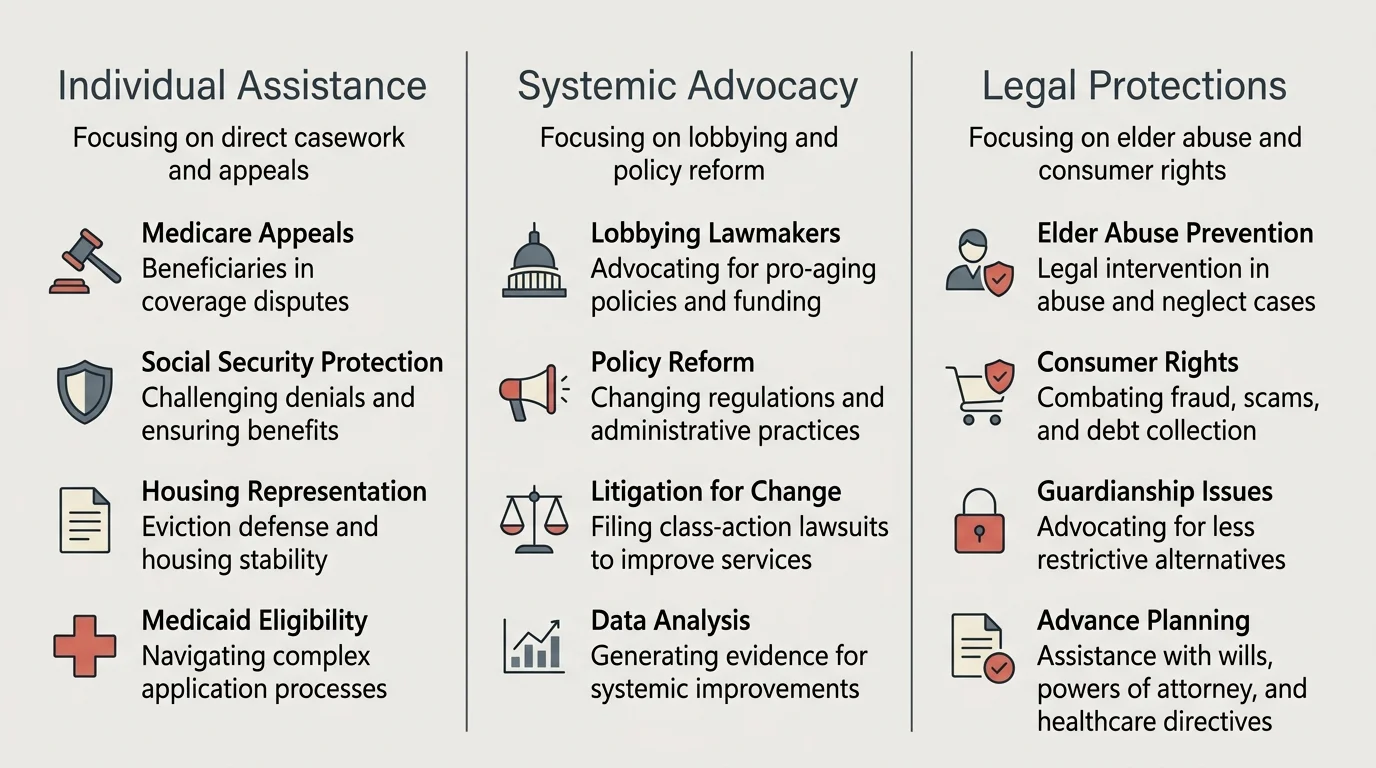
Senior advocacy operates at two distinct levels: systemic policy advocacy and direct individual assistance. At the systemic level, these groups lobby lawmakers to protect Social Security cost-of-living adjustments, expand Medicare coverage, lower prescription drug prices, and strengthen elder abuse protections. At the individual level, caseworkers, volunteers, and legal specialists work directly with you. They assist you with appealing denied medical claims, securing home-delivered meals, finding affordable housing, or addressing neglect in residential care facilities.
Facing these challenges alone can drain your savings and cause unnecessary stress. Knowing which organization specializes in your specific issue empowers you to make informed decisions quickly. Whether you live on a modest fixed income, manage a chronic illness, or care for an aging spouse, connecting with established elder rights advocates ensures you have knowledgeable professionals standing firmly in your corner.
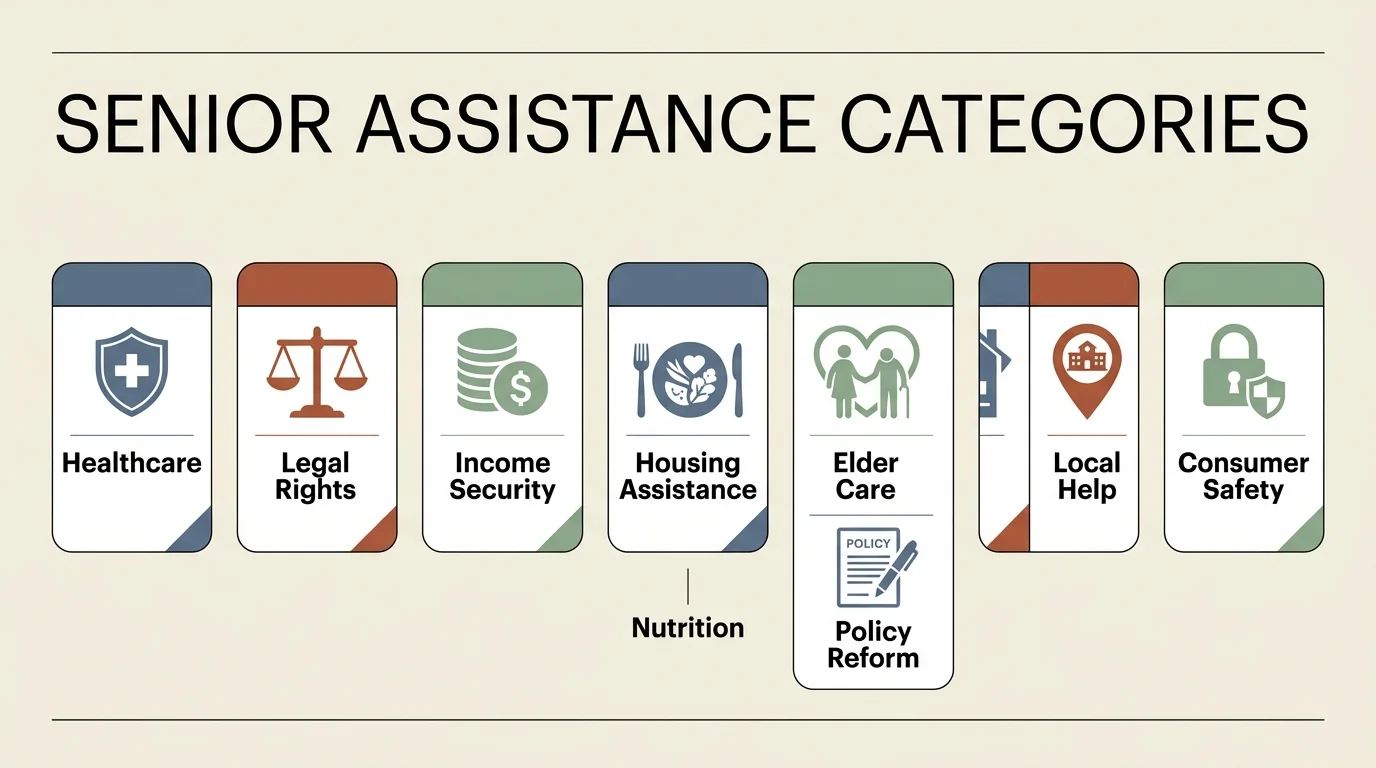
9 Essential Senior Advocacy Organizations Worth Contacting
The following nine organizations represent the most reputable, impactful, and trustworthy elder advocacy groups in the United States. Each organization brings specialized expertise to the table, ranging from public policy and legal aid to direct nutrition delivery and local care coordination.
1. AARP (American Association of Retired Persons)
With tens of millions of members, AARP is the largest and most influential senior organization in the country. While widely recognized for commercial discounts on travel, insurance, and dining, AARP is primarily a non-partisan advocacy power that lobbies federal and state legislatures on behalf of older Americans. The organization focuses heavily on safeguarding Social Security, capping out-of-pocket prescription medication costs, expanding family caregiver tax credits, and defending age discrimination protections in the workplace.
Beyond legislative lobbying, AARP provides hands-on community resources. These include free tax preparation assistance through the AARP Foundation Tax-Aide program, driver safety refresher courses, and job search resources for older job seekers. Membership costs $20 per year (often discounted to $15 for your first year with automatic renewal) and includes a free secondary membership for another adult in your household. While membership is open to anyone aged 18 and older, their programs specifically address the challenges facing adults aged 50 and above. You can contact AARP member services at 1-888-687-2277.
2. National Council on Aging (NCOA)
The National Council on Aging is a respected nonprofit organization dedicated to improving the health and financial security of older adults, particularly those facing economic hardship. NCOA focuses on practical solutions that help seniors remain healthy, secure, and independent in their own homes and communities.
One of NCOA’s most valuable contributions is BenefitsCheckUp® (accessible online at BenefitsCheckUp.org). This free, confidential online screening tool connects older adults with more than 2,000 to 2,500 federal, state, and private benefit programs. According to research by the National Council on Aging, over 9.1 million adults aged 65 and older are eligible for, but not enrolled in, critical programs like the Supplemental Nutrition Assistance Program (SNAP), Supplemental Security Income (SSI), and Medicare Savings Programs. This gap leaves an estimated $58 billion in unclaimed benefits each year. NCOA also offers evidence-based community programs for falls prevention and chronic disease management.
3. Eldercare Locator (Administration for Community Living / USAging)
When you need local help but do not know where to start, the Eldercare Locator should be your first phone call. Established through the Administration for Community Living (ACL) and administered by USAging, this free, federally funded public service connects older adults and family caregivers directly to local resources across the nation.
The service links callers with their designated Area Agency on Aging (AAA), Title VI Native American aging programs, and local service providers. Through this single portal, you can find reliable local assistance for:
- In-home personal care and homemaker chore services
- Door-to-door senior transportation for medical appointments and shopping
- Respite care programs for family caregivers needing temporary relief
- Home modification and repair grants for aging in place
- Adult day care centers and community dining sites
You can access resources online at Eldercare Locator or speak directly to an information specialist by calling their toll-free hotline at 1-800-677-1116 (Monday through Friday, 8:00 a.m. to 9:00 p.m. Eastern Time).
4. National Long-Term Care Ombudsman Program / Consumer Voice
If you or a loved one resides in a nursing home, assisted living facility, or residential board-and-care home, the Long-Term Care Ombudsman Program provides vital consumer protection. Established under Title VII of the federal Older Americans Act (OAA), this program operates across all 50 states, the District of Columbia, Puerto Rico, and Guam. Ombudsmen are trained advocates who resolve complaints and protect the health, safety, welfare, and legal rights of facility residents.
Working closely with The National Consumer Voice for Quality Long-Term Care and the National Long-Term Care Ombudsman Resource Center (NORC), ombudsmen investigate and resolve more than 200,000 complaints every year. They handle issues concerning involuntary discharges, improper medication administration, physical or emotional abuse, lack of respect for resident dignity, and substandard dietary care. Ombudsman services are entirely free and strictly confidential; they will never take action without the explicit consent of the resident or their legal representative.
5. Medicare Rights Center
Understanding Medicare rules, enrollment deadlines, and coverage restrictions can challenge even the most financially savvy seniors. The Medicare Rights Center is the nation’s largest independent, nonprofit consumer advocacy organization dedicated to helping older adults and people with disabilities navigate the complex Medicare system.
While official enrollment occurs through Medicare.gov, the Medicare Rights Center acts as an independent consumer ally. Their team of professional caseworkers helps you understand your coverage choices, contest unfair coverage denials, and appeal private Medicare Advantage plan decisions. They also run MedicareInteractive.org, a comprehensive, free online educational database that provides clear answers to virtually any Medicare question. You can access free counseling and appeals guidance through their national consumer helpline at 1-800-333-4114.
6. Alliance for Retired Americans (ARA)
Founded in 2001 by the AFL-CIO, the Alliance for Retired Americans is a powerful grassroots advocacy coalition comprising over 4.3 million retired union members, senior activists, and community allies across more than 39 state chapters. The ARA focuses on political and legislative mobilization to safeguard retirement security for current and future generations.
The organization lobbies members of Congress directly, holds public town halls, and publishes an annual Congressional Voting Record tracking how every federal lawmaker votes on issues critical to older Americans. Their core priorities include expanding Social Security benefits, strengthening traditional Medicare, opposing the privatization of public safety net programs, and lowering prescription drug costs. Individual memberships start at $10 annually, offering an accessible avenue for retirees who want to engage in civic activism and policy defense.
7. SAGE (Services & Advocacy for LGBTQ+ Elders)
Founded in 1978, SAGE is the country’s oldest and largest advocacy organization dedicated specifically to improving the lives of lesbian, gay, bisexual, transgender, and queer older adults. LGBTQ+ seniors frequently face distinct challenges, including higher rates of social isolation, thin family support networks, and fears of discrimination in retirement communities and medical settings.
SAGE advocates for federal and state non-discrimination protections in senior housing and healthcare. The organization runs the National Resource Center on LGBTQ+ Aging, providing cultural competency training to healthcare workers and senior living providers nationwide. SAGE also operates local community centers and social engagement programs to combat loneliness. For seniors in need of emotional support or crisis intervention, calls are connected through the national 988 Suicide & Crisis Lifeline.
8. Meals on Wheels America
Nutritional security and social connection form the bedrock of healthy aging. Meals on Wheels America is the leadership organization supporting a national network of roughly 5,000 local, community-based nutrition programs across the United States. Supported by federal statutory funding under Title III-C of the Older Americans Act alongside generous private donations, this network delivers 244 million nutritious meals to 2.6 million older adults each year.
Meals on Wheels provides far more than food. For millions of homebound seniors living alone, the volunteer who delivers the meal provides a vital daily safety check and a friendly conversation that combats debilitating loneliness. Local programs often coordinate additional services, including pet food delivery for service animals, minor home safety repairs, and emergency shelf-stable meal kits for severe weather events. If you or a loved one struggles to shop for or prepare balanced meals, contact your local chapter to inquire about subsidized delivery options.
9. Justice in Aging
Justice in Aging (formerly the National Senior Citizens Law Center) is a specialized legal advocacy group founded in 1972. Rather than providing everyday local social services, Justice in Aging uses the power of law to fight systemic senior poverty and protect the legal rights of low-income older adults, with particular focus on women, people of color, LGBTQ+ seniors, and immigrants.
Their team of attorneys engages in strategic impact litigation, administrative advocacy, and public policy reform to preserve vital safety-net programs. They focus heavily on expanding access to Medicaid Home and Community-Based Services (HCBS), protecting Supplemental Security Income benefits, stopping unlawful nursing home evictions, and eliminating barriers to healthcare equity. While they do not generally represent individual walk-in clients, they train thousands of legal aid attorneys across the country and provide the legal firepower necessary to protect vulnerable seniors against unlawful government cuts or corporate exploitation.
Comparing Key Senior Advocacy Organizations
To help you quickly identify the best organization for your current needs, review the comparison table below:
| Organization | Primary Focus Area | Cost to Access Help | Best Contact Method |
|---|---|---|---|
| AARP | Federal lobbying, tax help, discounts, driver safety | $20/year membership ($15 first year) | 1-888-687-2277 / Online portal |
| National Council on Aging | Unclaimed benefits screening, fall prevention | Free | BenefitsCheckUp.org |
| Eldercare Locator | Local community services, transit, home care | Free (federally funded) | 1-800-677-1116 / eldercare.acl.gov |
| Long-Term Care Ombudsman | Nursing home & assisted living rights/complaints | Free | Local Ombudsman via State Agency |
| Medicare Rights Center | Medicare counseling, denials, appeals support | Free counseling helpline | 1-800-333-4114 / MedicareInteractive.org |
| Alliance for Retired Americans | Grassroots lobbying, Social Security advocacy | $10/year membership | retiredamericans.org |
| SAGE | LGBTQ+ elder rights, housing equality, training | Free resources & programs | sageusa.org / Call 988 for support |
| Meals on Wheels America | Home meal delivery, wellness checks, socialization | Free to low-cost sliding scale | mealsonwheelsamerica.org / Local chapter |
| Justice in Aging | Legal advocacy, Medicaid defense, poverty policy | Free (systemic legal defense) | justiceinaging.org |

How to Prepare Before Reaching Out for Help
When you contact an advocacy group or agency helpline, thorough preparation ensures you receive accurate answers without unnecessary delays. Follow these steps to maximize your consultation:
- Clarify Your Primary Objective: Write down a brief summary of the exact problem you need resolved. Are you disputing an insurance denial, looking for in-home meal delivery, or reporting unsafe conditions in a residential facility? Keeping your initial statement focused helps the intake specialist direct you to the correct department immediately.
- Gather Relevant Documentation: Collect all paperwork related to your inquiry before dialing the phone. Keep your Medicare card, private insurance policies, letters of denial, recent tax returns, and household income summaries organized in a dedicated folder.
- Record Names and Dates: Maintain a dedicated notebook for your advocacy calls. Write down the date and time of every conversation, the first and last name of the representative who assisted you, their direct extension, and any case or reference numbers assigned to your file.
- Prepare Direct Questions: Formulate three or four clear questions in advance. For instance: “What specific appeal form must I submit?” or “What is the exact deadline to challenge this notice?”
- Designate an Authorized Representative if Needed: If you are calling on behalf of an aging parent or spouse, ensure you have valid legal authorization on file, such as a Healthcare Power of Attorney (DPOA) or a signed HIPAA medical disclosure release. Organizations cannot discuss private health details without proper legal consent.

Protecting Yourself from Advocacy Imposter Scams and Predatory Fees
Because millions of older adults search online for help with retirement benefits, dishonest commercial entities and scammers frequently target vulnerable seniors. Fraudulent companies often disguise themselves as legitimate government departments or nonprofit advocacy groups, only to charge high upfront fees for services that public organizations provide for free.
According to consumer warnings from the Consumer Financial Protection Bureau (CFPB), older adults must exercise caution when sharing personal information or paying for benefits assistance. Be vigilant against the following common warning signs:
- Charging Fees for Free Government Applications: Never pay a private company to fill out applications for SNAP, Medicaid, or Medicare Savings Programs. Free tools like NCOA’s BenefitsCheckUp and your local Area Agency on Aging will help you apply at zero cost.
- Unsolicited Calls Demanding Personal Information: Legitimate senior advocacy groups and government agencies do not call you unexpectedly demanding your Social Security number, banking details, or Medicare ID numbers.
- Guarantees of Legal Windfalls or Instant Grants: Avoid any organization promising guaranteed government grants or secret benefit increases in exchange for an upfront processing fee.
- Deceptive Domain Names and Logos: Fraudulent websites often mimic official government portals by using official-looking seals, eagles, and misleading domain names. Verify that government sites end in
.govand reputable nonprofits end in.org.
Frequently Asked Questions
What is the difference between a government agency and a senior advocacy organization?
Government agencies (such as the Centers for Medicare & Medicaid Services or the Social Security Administration) establish policy rules, manage benefit programs, and distribute funds. Senior advocacy organizations are independent nonprofit entities that guide you through those rules, represent your interests when disputes arise, and lobby lawmakers to improve public policies. While agencies administer the programs, advocates make sure those programs treat you fairly.
Do I have to pay money to receive assistance from senior advocacy groups?
The vast majority of direct senior advocacy services are completely free. Federally funded networks like the Eldercare Locator, the Long-Term Care Ombudsman Program, and the Medicare Rights Center provide consumer counseling and dispute assistance at no charge. While membership-based organizations like AARP ($20/year) and the Alliance for Retired Americans ($10/year) charge small annual dues to support their legislative work, essential public assistance screening tools and community helplines remain entirely free to the public.
What immediate steps should I take if a care facility threatens to discharge my family member?
If a nursing home or assisted living facility issues an involuntary discharge or eviction notice, contact your local Long-Term Care Ombudsman immediately through your State Agency on Aging. Long-term care facilities must follow strict federal and state notice requirements before discharging a resident. An ombudsman can review the written notice, help you file an administrative appeal, and represent your loved one’s rights to prevent an unsafe or illegal transfer.
Can a senior advocacy group help me appeal a denied medical claim?
Yes. Nonprofit advocacy groups like the Medicare Rights Center specialize in walking beneficiaries through the multi-level Medicare appeals process. Their counselors explain why the claim was denied, help you secure supporting medical necessity documentation from your physician, and ensure you meet strict statutory filing deadlines for Part A, Part B, and Medicare Advantage (Part C) appeals.
How do I verify whether an unfamiliar senior organization is legitimate?
Before sharing any personal information or making a financial donation, verify the organization’s nonprofit status and transparency ratings through charity watchdog platforms like Charity Navigator, GuideStar (Candid), or the Better Business Bureau (BBB) Wise Giving Alliance. You can also confirm whether a local eldercare provider is legitimate by calling the Eldercare Locator at 1-800-677-1116.
For additional senior resources, visit
AARP, Alzheimer’s Association, American Heart Association, Benefits.gov and National Institute on Aging (NIA).
Disclaimer: The information in this article is for educational purposes only and is not intended to be a substitute for professional financial, legal, or medical advice. Always consult with a qualified expert for advice tailored to your personal situation.









Leave a Reply